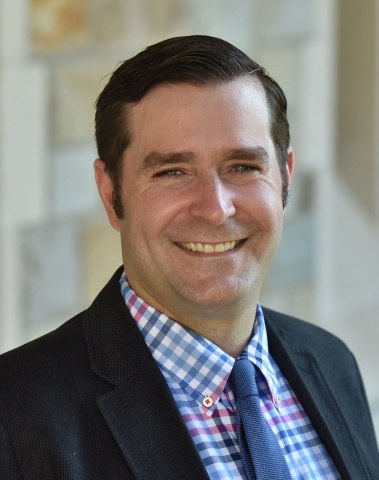
Dael A. Norwood is an Associate Professor in the Department of History at the University of Delaware's College of Arts & Sciences. His research centers on nineteenth-century American history, emphasizing the global dimensions of U.S. political economy and international commerce. Specializes in global political economy of U.S. commerce Focuses on sovereignty, citizenship, and race in early America Currently researching the emergence of 'businessman' as political identity His publications explore themes like transnational trade networks, constitutional development through commerce, and historiographical methods in economic history. Professor Norwood teaches courses on American global history, capitalism, and political economy, integrating his research into classroom practice.
Prof. Wendy Harcourt is a Full Professor of Gender, Diversity, and Sustainable Development at the International Institute of Social Studies (ISS) of Erasmus University Rotterdam. She specializes in feminist political ecology, gender and development studies, and post-development critiques. Her work bridges academic research with activism, particularly through initiatives like the EU-funded WEGO-ITN network. She has authored/edited over 200 publications, including seminal works like Body Politics in Development (2009), which won the 2010 Feminist Women’s Studies Association Book Prize. Her research focuses on decolonial approaches to sustainability, feminist methodologies, and the intersections of gender, environment, and community wellbeing. Notable recent projects include open-access books on Feminist Political Ecologies (2023) and Feminist Methodologies (2022). Prof. Harcourt actively engages with civil society networks, journal editorial boards, and global policy dialogues, advocating for transformative social and ecological justice. Affiliations: ISS-Routledge Series on Gender, Development and Sexuality (Series Editor) Leadership: Coordinator of WEGO-ITN Innovative Training Network Networks: Member of Society for International Development’s Governing Council Her recent publications emphasize radical rethinking of knowledge systems, particularly through feminist lenses, addressing crises such as climate change and economic instability. She co-organized events like the Prince Claus Chair Postdoctoral Seminar Series (2022) to foster critical dialogue on Latin American thought.
Camila Alvarez is an Assistant Professor of Sociology at the University of California, San Diego. Her research focuses on environmental sociology, environmental justice, and critical quantitative methodology, particularly examining how social inequalities are reinforced through environmental problems. She employs statistical methods combined with theoretical frameworks from political economy and the sociology of race and ethnicity. Her notable work includes analyzing military contributions to environmental disparities, structural racism's impact on air toxics exposure, and intersectional approaches to climate action. In 2022, she received the Career Enhancement Fellowship from the Mellon Foundation. Key research themes include militarized riskscapes, fenceline community dynamics, and the environmental consequences of urbanization. Her publications appear in journals like Social Problems , Social Science & Medicine , and Environmental Justice . Alvarez’s scholarship bridges quantitative rigor with critical social theory, addressing gaps in environmental justice research and advocating for policy interventions that center marginalized communities.
Ryan Cecil Jobson is the Neubauer Family Assistant Professor of Anthropology at the University of Chicago, affiliated with the Center for the Study of Race, Politics, and Culture, and the Center for Latin American Studies. His work focuses on energy and extractive resource development, technology and infrastructure, and racial capitalism in the Americas. He holds a PhD from Yale University (2017) and specializes in the Caribbean and the Americas, examining issues like climate change, sovereignty, and decolonization. Recent projects include a forthcoming book, *The Petro-state Masquerade: Oil, Sovereignty, and Power in Trinidad and Tobago* (2024), analyzing Trinidad and Tobago’s fossil fuel governance and its 'masquerade of permanence.' Jobson also works on a collection of essays on climate habitability in the Caribbean and a theoretical manuscript on anthropological methods amid climate extinction. His research critiques postcolonial state narratives, linking fossil fuels to political power while highlighting grassroots resistance. He has published widely on topics like petro-state dynamics, extractivism, and decolonial theory, with affiliations strengthening interdisciplinary engagement in race, culture, and global studies.
Richard Gonzalez is the Amos N. Tversky Collegiate Professor of Psychology and Statistics at the University of Michigan, with joint appointments in Statistics and Marketing. He is affiliated with the Research Center for Group Dynamics, Center for Human Growth and Development, UM Comprehensive Cancer Clinic, and Center for Computational Medicine and Bioinformatics. He leads the Biosocial Methods Collaborative at the Institute for Social Research and co-founded the Design Science Program. He earned his Ph.D. in Psychology from Stanford University in 1990, with research focusing on judgment and decision making, applied statistics, and medical decision making. His work bridges theoretical models with practical applications in healthcare technology, product design, and aging studies. His recent research emphasizes AI-driven medical diagnostics (e.g., dementia detection via Vision Transformers), caregiving dynamics, and social determinants of health. He collaborates across disciplines, integrating methods from psychology, statistics, and computational science to address complex societal challenges. His affiliations span multiple centers, reflecting a commitment to interdisciplinary research. His work on dyadic health profiles and pandemic caregiving adaptations highlights his focus on systemic and relational aspects of health.
Dr Shiva Chandra is a post-doctoral research fellow at the Sydney Centre for Healthy Societies at the University of Sydney. He completed his PhD at the University of Sydney, focusing on the relationships and identities of gay men of South Asian descent. His research spans sexuality, gender, race, digital media, youth, and wellbeing, with a focus on queer attachment, belonging, and the social responsibility of research at the intersection of academia and community development. Key research areas: Queer studies, antimicrobial-resistant STIs, digital media, personal communities, postcolonial identity, youth wellbeing Recent projects: Examined GBTQ+ safe sex practices, antimicrobial resistance in STIs, and digital family dynamics Collaborations: Partnered with Facebook, UNICEF, LEGO, Australian eSafety Commissioner, and ACON Scientific awards: Deputy Vice-Chancellor and Vice-President, Research, Enterprise and International Award (2021) for UN Food Systems Dialogues Team Publications emphasize community-engaged research, antimicrobial resistance, digital media impacts on queer youth, and intersectional approaches to family dynamics. His work includes policy recommendations for organizations like UNICEF and person-centred design frameworks.
Amir Husak is an Assistant Professor of Media Studies at The New School’s School of Media Studies, where he combines film, video, sound, interactive media, essay, and experimental techniques to explore documentary as a social practice. His work investigates representations of history, migration, and memory through interdisciplinary lenses. PhD in Arts and Communication from University of Leeds (UK) MA in Media Studies from The New School Husak’s research focuses on the intersection of documentary, digital media, and social activism, emphasizing cultural memory, sound studies, and migration studies. His creative practice engages with themes of industrial ruins, urban identity, and political conflict in regions like the Balkans, the U.S., and Brazil. Recent publications highlight trends in interactive documentary, socially engaged art, and transnational activism. His 2022 e-Flux Journal article examines Yugoslav film history, while his 2018 Alphaville contribution analyzes interactive documentary as a tool for social change. The 2016 co-edited volume Crisis, Art, Action explores activist media in Bosnia and Herzegovina. Scientific Awards: Fulbright research fellowship at Humboldt-Universität zu Berlin (2012-2013) Husak serves as Artistic Director of the BHFF NYC Film Festival, showcasing cinema from Southeast Europe and its diasporas, and is on the Advisory Board of the Interactive Film and Media Journal (ISSN 2564-4173).
Maggie Bennett-Brown is an Assistant Professor in the Department of Communication Studies at Texas Tech University's College of Media & Communication. She holds affiliations as a Research Fellow at the Kinsey Institute and is active in professional organizations such as the International Communication Association and the Society for the Scientific Study of Sexuality. Her research focuses on the intersection of health and interpersonal communication, particularly how affectionate communication impacts mental/physical health in intimate relationships. Dr. Bennett-Brown earned her PhD from the University of Connecticut (2019), MA from the University of Missouri-St. Louis (2015), and BA from Truman State University (2013). Her methodological expertise spans quantitative surveys, experimental research, and qualitative content analysis. Her work emphasizes the biological and psychological effects of communication during moments of intimacy, particularly exploring how positive/negative communication influences individual and relational well-being. Recent studies examine topics like oxytocin's role in post-sex disclosures, pornography's impact on relationship satisfaction, and PrEP usage among marginalized communities. Awards: Top 4 Paper Panel (2021 ICA), Top 2 Paper Panel (2017 NCA) Teaching: Quantitative Methods, Health Communication, Communication Theory Labs/Teams: Kinsey Institute collaborations, Texas Tech Communication Research Group
Dr. Jaclyn Kirsch is an Assistant Professor in the School of Social Work at The University of Texas at Arlington. Her work focuses on improving mental health outcomes for forced migrant populations and communities in low/middle-income countries. She employs transformative mixed methods and community-based research to address collective trauma and develop group interventions. Current projects include studies on language interpreters' trauma, mental health in Belize, and Afghan women's displacement experiences. Dr. Kirsch holds a PhD in Social Work (Ohio State University, 2023), an MPH (2015), MSW (2015), and BA in Psychology (2012). Education: PhD in Social Work, The Ohio State University, 2023 MPH in Public Health, The Ohio State University, 2015 MSW in Social Work, The Ohio State University, 2015 BA in Psychology, The Ohio State University, 2012 Her research interests include forced migration impacts, simulation-based learning for social workers, and community-driven interventions. Notable grants include a $20,000 pilot study on health services access for limited English proficient patients (UT Arlington, 2024) and a $4,888 grant for simulation-based interpreter training (CRTLE, 2024). She actively serves on committees like the Interprofessional Education Committee and chairs the Dallas Refugee Mental Health Coalition. Dr. Kirsch’s teaching spans courses on advanced micro practice, diverse populations, and US immigration policy. She advises master’s theses and has collaborated on over 20 peer-reviewed publications since 2021, focusing on refugee mental health, pandemic impacts, and systemic disparities in child welfare. Her work emphasizes interdisciplinary collaboration, with affiliations including the Society for Social Work Research and the Bhutanese Community of Central Ohio. Recent presentations include keynotes on refugee health disparities and pandemic leadership at national conferences.
Margaret M. Chin is a Professor of Sociology at Hunter College and the CUNY Graduate Center. She is affiliated with the Asian American Center at Hunter College, Roosevelt House Public Policy Institute, and CUNY's Asian/Asian American Research Institute. Her work examines Asian American experiences, immigration, and workplace inequality. Educated at Harvard (B.A.) and Columbia (Ph.D.), she has authored award-winning books, including Sewing Women and Stuck , and co-authored The Peer Effect . Education: Harvard University (B.A.), Columbia University (Ph.D.) Research Interests: Her research focuses on Asian American communities, labor dynamics in industries like garment and finance, immigration impacts, and systemic barriers in corporate environments. She uses ethnography and interview-based analysis to explore topics such as the 'bamboo ceiling' and peer influence on identity formation. Grants & Awards: Recipient of NSF Dissertation Grant, Woodrow Wilson Fellowship, and PROSE Award. Her work has been featured in The Atlantic , Washington Post , and MarketWatch . Advocacy & Leadership: Board member of the Tenement Museum and co-founder of the Coalition for a Diverse Harvard. She actively engages in policy debates on affirmative action and racial equity in education and employment.
Stephen J. Ellmann was the Martin Professor of Law at New York Law School, remembered for his expertise in legal ethics, clinical legal education, and South African law. He held a J.D. from Harvard Law School (1976) and a B.A. from Harvard (1972). His career included roles as a law clerk to Judge Elbert Tuttle, a staff attorney at the Southern Poverty Law Center, and Director of Clinical and Experiential Learning at NYLS. Education: Harvard University (J.D., 1976; B.A., 1972) Ellmann’s research focused on legal ethics, clinical pedagogy, constitutional law, and South Africa’s post-apartheid legal systems. He founded the Clinical Theory Workshop and co-chaired NYLS’s South Africa Reading Group. His notable works include analyses of human rights in South Africa and critiques of emergency powers post-9/11. Awards: Sanford D. Levy Memorial Award (legal ethics), Otto Walter Faculty Scholarship Prize (2016, for work on South African rule of law) His legacy includes shaping clinical legal education and advocating for justice through scholarship and activism. No specific grant details are listed, but his contributions to legal education and human rights are widely recognized. He was actively involved in interdisciplinary studies on South Africa, fostering collaboration through the South Africa Reading Group.
Dr. Jelili "Gana" Adebiyi is an Assistant Professor in the Earth, Environmental and Geographical Sciences department at Northern Michigan University (NMU), where he began teaching in 2022. His research focuses on sustainable food systems, agri-food system justice, and international development, with a multidisciplinary approach to institutional, gender, and environmental challenges. He holds a PhD from Michigan State University and additional degrees in community planning, human sciences, and environmental management. Education: PhD, Michigan State University Master of Community and Regional Planning, Iowa State University MS, Iowa State University Master of Human Sciences, International Islamic University Malaysia BS, University of Lagos Research Interests: Dr. Adebiyi’s work integrates systems thinking to address sustainability challenges in agri-food systems. He examines adoption decision-making, environmental management, and innovation systems, particularly in contexts of gender and racial justice. Current projects include studies on agroecological practices in the Upper Peninsula and waste reduction initiatives at NMU. Advising & Grants: He collaborates with students on projects like post-consumer waste audits and consumer plastic consumption analysis. Prior roles include positions at Michigan State University, Nungu Business School, and the Leaders of Africa Institute.
Lisa Armstrong is an Assistant Professor at the Craig Newmark Graduate School of Journalism, University of California, Berkeley. A renowned investigative journalist, she focuses on criminal justice reform, human rights, and public health in incarcerated populations. Her reporting has appeared in The Intercept , The New Yorker , and Rolling Stone , with extensive coverage of HIV/AIDS in post-earthquake Haiti, systemic injustices in U.S. prisons, and the psychological impacts of solitary confinement. She has produced documentaries such as Little Boy Lost and reported via grants from The Pulitzer Center, NYU, and the Carter Center. Education & Experience: 12 years as Associate Professor at Craig Newmark School of Journalism Reported globally: Sierra Leone, Kenya, Philippines, and Haiti (2010–2014) Research Interests: Armstrong’s work bridges journalism and activism, emphasizing: Investigating racial disparities in sentencing Documenting health crises in prisons Training journalists on ethical reporting of marginalized communities Awards & Recognition: National Press Club’s Joan Friedenberg Award (Online Journalism) 2021 Knight-Wallace Reporting Fellowship 2019 United States Artists Fellow in Writing Teaching & Impact: Teaches courses like Berkeley Changemaker: Creating New Models for Journalism and Feature Writing . Her work with The Marshall Project highlighted pandemic-era prison policies, while her documentaries blend art and advocacy to drive systemic change.
Richard S Chew is a Professor and Chair of the Department of History and Philosophy at Virginia State University (VSU), located in the College of Humanities and Social Sciences. He holds a Ph.D. in History from The College of William and Mary (2002), an M.A. in History from the same institution (1992), and a B.A. with Honors in History and Economics from Bucknell University (1991). His academic career includes roles as a Post-Doctoral Fellow at the Library Company of Philadelphia (2003-2004) and Visiting Assistant Professor at Bucknell University (2001-2003). Chew’s research focuses on early American history, with emphases on economic systems, constitutional frameworks, and social dynamics. His work spans topics such as the Manufacturing Revolution in Baltimore, Jim Crow constitutionalism, and the economic foundations of U.S. free trade ideology. He regularly teaches courses on U.S. history, colonial America, and the American Revolution. His peer-reviewed articles and conference presentations reflect a commitment to interdisciplinary scholarship, blending economic, political, and social perspectives. He has served extensively on academic committees at VSU, including leadership roles in accreditation, curriculum development, and faculty governance. Chew’s service contributions include chairing departmental searches, promotion committees, and leading initiatives like the SACSCOC accreditation narrative (2016-2018). Chew has no listed scientific awards but is recognized for his academic leadership and pedagogical innovation, including his work on teaching strategies like the 'Learning Cycle.' His research and service highlight a dedication to advancing historical scholarship and institutional excellence in higher education.
Kevin Stange is a Professor of Public Policy and Education (by courtesy) at the University of Michigan's Ford School of Public Policy, where he serves as co-director of the Education Policy Initiative and director of the PhD Program. He is also a Research Associate at the National Bureau of Economic Research and a faculty affiliate of the Center for the Study of Higher and Postsecondary Education at the Marsal Family School of Education. His educational background includes: Bachelor of Science in Mechanical Engineering and Economics, Massachusetts Institute of Technology (1999) Ph.D. in Economics, University of California, Berkeley (2008) Stange's research focuses on empirical labor and public economics within education contexts. He investigates how higher education shapes labor market trajectories, geographic mobility, and responses to skill demand shifts. Current projects examine Michigan's financial aid programs and college major impacts on career outcomes, utilizing large-scale datasets like College and Beyond II to analyze postsecondary pathways and institutional effectiveness. His recent publications (2023-2025) emphasize college major effects on earnings inequality, financial aid efficacy, community college transfer pathways, and graduate mobility patterns. These works leverage administrative data to address policy-relevant questions about educational equity and labor market alignment. Key recognition includes: Robert Wood Johnson Scholar in Health Policy Research Stange has secured major funding from the U.S. Department of Education, National Science Foundation, Spencer Foundation, W.T. Grant Foundation, Robert Wood Johnson Foundation, and Russell Sage Foundation. During 2022-2023, he served as Senior Advisor to the Under Secretary at the U.S. Department of Education, applying his research expertise to federal policy. He co-directs the Education Policy Initiative, which produces evidence-based research for education practitioners, and spearheaded the College and Beyond II dataset containing 50 million course records from 19 universities. This resource enables comprehensive analysis of student pathways and institutional effectiveness across diverse higher education contexts.