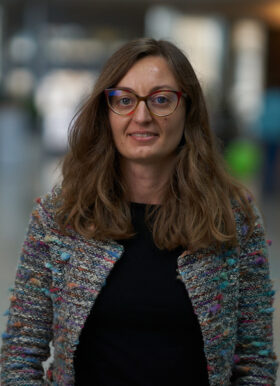
Madeleine Lowery is a Professor in the School of Electrical and Electronic Engineering at University College Dublin. She leads the Personal Sensing research group, focusing on engineering approaches to study the human nervous system in health and disease, with applications in therapies for impaired motor function. Her interdisciplinary research integrates neural engineering, electromyography, and biomedical signal processing. Specializes in neuromuscular systems and neural control of movement Develops myoelectric control systems for artificial limbs Designs high-density electrode systems for neural activity recording Investigates deep brain stimulation mechanisms in Parkinson’s disease models Her research spans neurodegenerative disorders (ALS, Huntington’s disease) and rehabilitation technologies , including wearable sensors for gait and sleep analysis. Key methodologies involve computational modeling , adaptive control systems , and biomedical signal analysis .
Haiyang Chao is an Associate Professor at the Department of Aerospace Engineering, College of Engineering, University of Kansas. His research focuses on Unmanned Aircraft Systems (UAS) with emphasis on control systems, wind estimation, remote sensing, and cooperative UAV operations. Recent work includes FireCrowdSensing for prescribed fire monitoring Wake vortex hazard estimation for airport UAS operations Thermal imaging for fire spread measurement Vertical wind velocity analysis in fire plumes System identification techniques for flying-wing UAVs Honors include the 2016 Summer Faculty Fellowship at Air Force Research Lab. He leads the Cooperative Unmanned Systems Lab (CUSL) and collaborates with NASA on gust sensing projects. Teaching interests include Avionics, Control Systems, and Autonomous Aerospace Vehicles.
Dennis Prangle is an Associate Professor in Statistics at the University of Bristol, conducting research at the intersection of Bayesian statistics and machine learning. His academic profile demonstrates expertise in developing novel computational inference methods with applications across multiple scientific domains. Dr. Prangle's primary research interests include: Approximate inference methods such as simulation-based inference and variational techniques Likelihood-free inference through Approximate Bayesian Computation (ABC) Experimental design for high-dimensional problems Applications in population genetics, physics, ecology, and epidemiology Stochastic differential equations and composite likelihood approaches His publication record shows consistent methodological contributions with increasing integration of machine learning techniques. Recent work focuses on normalizing flows with flexible tails for improved density estimation, Bayesian emulation of complex systems, and optimal combination of composite likelihoods. His research bridges theoretical statistics with practical applications in financial modeling, infrastructure engineering, and fair classification algorithms. Dr. Prangle maintains an active academic blog where he discusses technical aspects of Bayesian statistics, experimental design, and computational methods, demonstrating his commitment to scholarly communication. His detailed posts on topics like Fisher information gain versus Shannon information gain in experimental design highlight his theoretical contributions to the field.
Dr. Ira Kurtz is a Professor of Medicine at the University of California, Los Angeles (UCLA), and Chief of Nephrology. He is also a Member of the Brain Research Institute. His research focuses on renal physiology, acid-base homeostasis, and molecular transport mechanisms, particularly within the SLC4 transporter family. His work spans structural biology, molecular dynamics, and clinical nephrology. His scientific contributions include structural characterization of SLC4 transporters using cryo-EM and molecular dynamics simulations, revealing key insights into ion translocation pathways and conformational dynamics. He has extensively studied the molecular basis of proximal renal tubular acidosis and electrolyte disorders, with particular emphasis on NBCe1 transporter function and regulation. Dr. Kurtz's publications demonstrate expertise in renal acid-base physiology, membrane transporter characterization, and clinical applications. His work connects fundamental molecular mechanisms with human diseases, including corneal endothelial dystrophies, thrombotic microangiopathy from anti-VEGF treatments, and genetic disorders affecting ion transport. His research methodology integrates computational biology, structural biology, and translational medicine approaches. He has developed novel quantitative models for acid-base analysis and electrolyte disorders, challenging established paradigms like the Stewart approach through critical evaluation of bicarbonate-centered models.
James McCracken is a tenured Professor of Psychiatry and Biobehavioral Sciences at UCLA's David Geffen School of Medicine. As Director of the Division of Child and Adolescent Psychiatry at the Semel Institute for Neuroscience and Human Behavior, he leads the NIMH-funded Research Center 'Translational Research to Enhance Cognitive Control' focusing on novel treatments for cognitive deficits in child psychiatry. His research spans pharmacogenomics, neurodevelopmental disorders (ASD, ADHD, OCD), and autonomic neurophysiology. Key affiliations: Center for Autism Research and Treatment (CART), ADHD Brain Research Institute, Society for Neuroscience Research themes: Pharmacologic interventions for neurodevelopmental disorders, white matter sex differences, EEG biomarkers, and genome-wide association studies Leadership roles: Principal Investigator for multiple NIMH grants, editorial board member for the Journal of Child and Adolescent Psychopharmacology His recent publications (2023-2025) emphasize precision medicine in ASD, OCD genetics, and pupillary response as a neurophysiological marker. Awards include the APA Young Psychiatrist Research Award and listings in Best Doctors and Top Doctors databases. Scientific Awards American Psychiatric Association Young Psychiatrist Research Award Best Doctors in America America's Top Doctors Publications Over 150 peer-reviewed articles across child psychiatry Leading research in pharmacogenomics and neuroimaging
Yvonne C Lee, MD, MMSc is the Helen Myers McLoraine Professor of Rheumatology in the Department of Medicine at Northwestern University Feinberg School of Medicine. She holds multiple institutional affiliations including the Center for Circadian and Sleep Medicine, Center for Human Immunobiology, Institute for Public Health and Medicine (IPHAM), and Northwestern University Clinical and Translational Sciences Institute (NUCATS). Her clinical practice is based at Northwestern Memorial Hospital and Shirley Ryan AbilityLab. Dr. Lee's research focuses on understanding pain mechanisms in rheumatoid arthritis and other systemic rheumatic conditions, with emphasis on pain centralization and non-inflammatory pain pathways. Her work integrates clinical trials, quantitative sensory testing, neuroimaging, and patient-reported outcomes to develop effective pain management strategies. She leads multiple active clinical trials including CPIRA-2, IMPACT-Pain-RA, PROMOTER, and CATCH-US investigating pain centralization biomarkers and treatment responses in rheumatoid arthritis. Analysis of Dr. Lee's recent publications reveals a consistent research trajectory centered on pain centralization in rheumatic diseases, particularly examining the relationship between sleep disturbance, quantitative sensory testing abnormalities, and patient-reported pain outcomes. Her work increasingly incorporates multi-modal pain assessment and biomarker discovery to address unmet needs in chronic pain management for rheumatoid arthritis patients. Department of Medicine Teaching Award, Northwestern University Feinberg School of Medicine (2020) Department of Medicine Teaching Award, Northwestern University Feinberg School of Medicine (2019) Innovation Discovery, Partners Healthcare (2016) Chair's Research Award, Brigham & Women's Hospital (2014) Dr. Lee serves as Associate Editor for Arthritis and Rheumatology and has held editorial positions at Arthritis Care & Research and Pain Medicine. She leads multiple NIH-funded clinical trials with significant grant support, focusing on pain mechanisms in rheumatoid arthritis. Her mentorship extends through her role in the American College of Rheumatology Research and Publications Subcommittee and Early Career Investigator Subcommittee. Dr. Lee directs research initiatives within the Center for Circadian and Sleep Medicine and Center for Human Immunobiology, collaborating with interdisciplinary teams to investigate the intersection of immune dysregulation, sleep disturbances, and pain processing in rheumatic diseases. Her laboratory work integrates clinical phenotyping with quantitative sensory testing and neuroimaging to characterize pain pathways.
Daniel Polihronov is Assistant Professor at Sofia University "St. Kliment Ohridski", Faculty of Education, Department of Theory of Education. He lectures across bachelor’s and master’s programmes in preventive pedagogy, resocialisation, and social work with children and deviant youth. Education: PhD (field inferred: Pedagogy/Social Education) Research Interests: Dr Polihronov focuses on prevention and correction of deviant behaviour , intercultural education , and the use of literature as a tool for social-pedagogical intervention . His work spans psychoactive-substance prevention programmes, literacy development in multicultural settings, and penitentiary pedagogy. Across 2020-2024 he has led or participated in multiple projects funded by the Bulgarian state budget, the EU Operational Programme “Science and Education for Smart Growth”, and the European Economic Area Financial Mechanism. These projects address substance-use prevention, educational inclusion of vulnerable groups, and professional training for social-work practitioners. Publications & Trends: His recent scholarship (2019-2024) reveals a strong trajectory exploring how children’s and adolescent literature can foster moral judgement, intercultural dialogue, and prevention of delinquency. Parallel strands investigate the impact of pandemic conditions on substance use and the design of evidence-based school programmes. Research Leadership & Grants: Project manager: “Social and Pedagogical Aspects of the Problem of the Use of Psychoactive Substances” (2021-2022, state budget) Principal investigator: “Formation of socio-pedagogical and legal concepts among students…” (2022, NP “Young Scientists”) Key expert: BG05M2ОP001-2.011-0001 “Support for Success” – early-warning toolkit for at-risk students Partner: BGLD-2.002-0001-C01 “Capacity building for educational and social inclusion…” (EEA Grants 2021-2022) Languages: English, Russian Contact: d.polihronov@fp.uni-sofia.bg | Phone: (+359 2) 9308 568
Sergey Ivanov is a Senior Researcher at ITMO University (Saint Petersburg, Russia) and a Post Associate Professor at the Institute of Design & Urban Studies. His research focuses on simulating real-world processes in social and environmental science, utilizing high performance/distributed computing and complex systems modeling. Expertise: Social and environmental process simulation, complex systems, decision-making algorithms Projects: Early Warning System for St Petersburg Flood Protection Barrier Teaching: Courses in Discrete Mathematical Modeling, Discrete Decision Making, and Urban Informatics Scientific Recognition: Recipient of the President of Russia's grant for young scientists With over 50 publications and extensive experience in Russian and international projects, he contributes to computational science and urban systems research. Contact: svivanov@itmo.ru | Personal Homepage
Gaia Tavoni, PhD, is an Assistant Professor in the Department of Neuroscience at Washington University in St. Louis School of Medicine, where she leads the Tavoni Lab. Her research investigates fundamental principles of brain function through theoretical and computational approaches, focusing on neural coding, sensory processing, decision-making, and memory optimization. Education: BS in Physical Engineering, Polytechnic of Turin (2010) International MS in Physics of Complex Systems (2012) PhD in Physics, École Normale Supérieure, Paris (2015) Post-doc in Theoretical Neuroscience, University of Pennsylvania (2020) Research Interests: Dr. Tavoni develops unified frameworks connecting computational, algorithmic, and implementational perspectives in neuroscience. Key areas include: multimodal sensory coding principles, neuroplasticity mechanisms, economic decision circuits, Bayesian inference theories, and memory optimization in heterogeneous networks. Her lab employs biophysical models, information theory, and statistical mechanics to study how neural networks optimize behavior. Publication Trends: Recent work demonstrates strong emphasis on normative theories of neural computation, with publications spanning sensory integration, memory capacity optimization, and adaptive inference. Articles frequently integrate mathematical modeling with experimental neuroscience to explain cortical feedback mechanisms, decision circuits, and cognitive trade-offs. Awards: Sloan Fellowship (2024) PRX Life Reviewer Excellence Award (2024) Swartz Foundation Fellowship (2017) Computational Neuroscience Postdoctoral Fellowship (2015) Lab & Team: Directs a team including postdoctoral researchers (Mahsa Khoshkhou, Ryan McGee, Kaining Zhang), graduate student Eleonora Bano, and research assistant Timothy Crimmins. The lab focuses on neural circuit optimization and collaborates with groups like the Padoa-Schioppa Lab for economic decision research.
Ruoxi Jia is an Assistant Professor in the Bradley Department of Electrical and Computer Engineering at Virginia Tech, affiliated with the Sanghani Center for Artificial Intelligence and Data Analytics. She holds a Ph.D. from UC Berkeley and a B.S. from Peking University. Her research focuses on machine learning, security, privacy, and cyber-physical systems, with recent emphasis on data-centric AI and trustworthy machine learning. Education: Ph.D., Electrical Engineering and Computer Sciences, UC Berkeley (2018) B.S., Peking University Research interests include adversarial machine learning, AI safety, data valuation, and privacy-preserving techniques. Her work addresses challenges in AI ethics, backdoor detection, and scalable model security. Recent publications explore topics like defense mechanisms against poisoning attacks, large model safety surveys, and red teaming strategies. She actively seeks students (PhD, Masters, interns) and emphasizes collaboration through her group. Her work bridges theoretical foundations and practical applications in AI and cybersecurity, with contributions to both technical and ethical dimensions of modern machine learning systems.
Tom Francart is a Professor at the Department of Neuroscience, Faculty of Medicine, KU Leuven. He leads research in auditory attention, EEG decoding, and speech processing, with affiliations to iSi Health, LBI (KU Leuven Brain Institute), and Leuven.AI. His research focuses on: Neural decoding of auditory attention using EEG Objective measures for aphasia and hearing impairment Brain-computer interfaces for hearing aids Audiovisual integration in speech perception Machine learning applications in auditory neuroscience Recent publications analyze neural tracking of speech in aphasia, transformer-based EEG decoding, and audiovisual context integration. He supervises projects on cochlear implants, attention decoding algorithms, and post-stroke recovery.
Karen Eilbeck is Professor of Biomedical Informatics and Adjunct Associate Professor of Human Genetics at the University of Utah , where she directs a bioinformatics research lab focused on precision medicine and genomic data management. Education B.S., University of Salford, United Kingdom Ph.D., University of Manchester, United Kingdom Research Interests The Eilbeck lab leverages computer science and ontology engineering to address contemporary questions in genomics and molecular biology. Central themes include: Development of ontologies such as the Sequence Ontology (SO) and Non-Coding RNA Ontology (NCRO) to standardize and structure biological data. Design of ontology-enabled software tools that enhance data sharing, variant interpretation, and precision medicine workflows. Metagenomic pathogen detection, clinical genome interpretation, and integration of multi-omics datasets to advance personalized healthcare. Publication Trends Recent publications (2023-2025) emphasize AI-driven clinical decision support, standardized genomic terminology, and large-scale infectious-disease risk modeling. Earlier works (2005-2018) established foundational ontologies and data formats (GVF, VCF) now widely adopted by the genomics community. Contact & Resources Email: keilbeck@genetics.utah.edu Lab website: available via University of Utah Department of Biomedical Informatics Full publication list: PubMed search | Google Scholar
Francesc Moya Serra serves as a Senior Lecturer in Immersive and Interactive Audio and Media at the University of Westminster, teaching across MA Audio Production, MA Interactive Media Practice, MA Digital Media: Storytelling and Production, and BA (Hons) Commercial Music programs. He additionally teaches at the University of Brighton, BIMM London, London South Bank University, and Buckinghamshire New University, and acts as External Examiner for London College of Music (UWL), Middlesex University, and SAE Institute. Education: BA (Hons) MA PGCert HE Fellow of the Higher Education Academy (FHEA) His UKRI-funded research centers on spatial audio applications in digital health, with expertise spanning immersive audio, interactive audio, XR, sound art, and generative music systems. He explores the integration of audio technology with health contexts and creative expression through interactive media. Publication trends reveal progression from generative music frameworks (2021) to advanced 3D sound design instruments (2025), emphasizing practical audio tools for immersive environments and health applications across audio engineering, computer music, and digital media disciplines. Scientific Awards: No awards documented in available information Dr. Moya Serra supervises students in immersive/interactive audio and media fields, supported by active UKRI grant funding for spatial audio innovation in digital health. His professional showreel demonstrates extensive work in sound design, post AV, and sound art across academic and creative domains.
Jessica Tillipman serves as the Associate Dean for Government Procurement Law Studies and Government Contracts Advisory Council Distinguished Professorial Lecturer at George Washington University Law School. She is an internationally recognized expert specializing in integrity, compliance, and emerging technology issues in government procurement law. Her academic leadership extends to directing GW Law's Government Procurement Law Program, one of the most comprehensive programs of its kind in the United States. Dean Tillipman earned her BA cum laude from Miami University (Oxford, OH) in 2000 and obtained her JD with honors from the George Washington University Law School in 2003. Her educational background provided the foundation for her specialized expertise in government contracts and anti-corruption law. Her research interests focus on the intersection of government procurement, ethics, and emerging technologies. She has pioneered work examining how artificial intelligence impacts government contracting processes, advocating for ethical AI implementation in public procurement. Her scholarship addresses critical issues including organizational conflicts of interest, suspension and debarment systems, anti-corruption compliance, and the evolving regulatory landscape of federal acquisition. She has been instrumental in developing frameworks for ethical AI procurement that respect civil rights while maintaining competitive integrity. Her 15 most recent publications demonstrate a clear trajectory toward increasingly sophisticated analysis of procurement integrity systems, with growing emphasis on technology's role in government contracting. Her work spans foundational topics like Federal Acquisition Regulation compliance to cutting-edge issues like AI risk management in public procurement, reflecting her dual expertise in traditional government contracts law and emerging technological challenges. Government Contracts Advisory Council Distinguished Professorial Lecturer Senior Advisor to the American Bar Association, International Anti-Corruption Committee Faculty Advisor to the Public Contract Law Journal Member of the National Contract Management Association Board of Advisors Advisory Board member of The Government Contractor Dean Tillipman actively mentors the next generation of government contracts attorneys through her teaching and advisory roles. She serves as Senior Editor of The FCPA Blog, a leading Foreign Corrupt Practices Act resource, and frequently organizes and presents at domestic and international government procurement conferences. Her practical experience includes service as a law clerk to the Honorable Lawrence S. Margolis of the U.S. Court of Federal Claims and as an associate at Jenner & Block specializing in Government Contracts and White Collar Criminal Defense. She maintains active involvement with professional organizations including the bars of the United States Court of Federal Claims, the state of Virginia, and the District of Columbia. Her commentary regularly appears in major media outlets, and she has testified before congressional committees on critical procurement integrity issues.
Ibrahim Orhan serves as a Lecturer at KTH Royal Institute of Technology within the Division of Health Informatics and Logistics. His primary responsibilities include teaching core courses such as Communication Networks (HE1033), Mobile Communications and Wireless Networks (HI1035), and Routing in IP Networks (HI2002), while also supervising first-cycle degree projects in Computer and Electrical Engineering. His research centers on wireless sensor networks with specialized applications in healthcare and education. Key focus areas include time synchronization protocols for multi-sensor systems, performance monitoring in contention-based networks, and data fusion techniques for health monitoring applications like fall detection. Recent work demonstrates a strategic expansion into educational technology through serious games for engineering education. Analysis of his 15 most recent publications (2006-2023) reveals an evolving research trajectory: initial work concentrated on fundamental wireless network performance (2008-2011), shifting toward healthcare applications (2012-2016), and culminating in educational technology innovations (2023). Persistent themes include Bluetooth synchronization, mobile sensor integration, and quality-of-service management in resource-constrained environments. Dr. Orhan actively supervises undergraduate degree projects in computer and electrical engineering, though specific student names aren't publicly listed. His research has been supported through KTH institutional channels, with publications spanning IEEE conferences, specialized journals like the International Journal of Serious Games, and collaborative projects focused on ambient assisted living solutions.