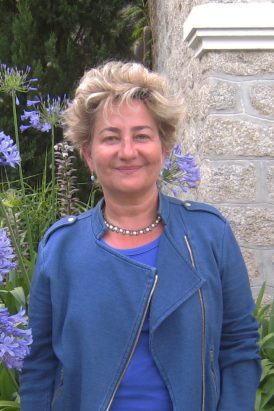
Prof. Dr. Ulrike Freitag is Director of the Leibniz-Zentrum Moderner Orient (Berlin) and holds a special professorship in Islamic Studies at Freie Universität Berlin. Her research focuses on social and cultural history of the Arab world, urban history, and transregional connections in the Indian Ocean. She has directed major projects like 'An Oasis Facing Globalisation: Hegra’s History since the 19th Century' and authored seminal works such as A History of Jeddah . Education: Habilitation (Islamic Studies, 2002, Bonn), PhD (1991, Freiburg), MA (1987, Freiburg). Key research stays include Damascus (1984-85, 1987-90), Yemen, and Southeast Asia. Research Interests: Urban development, migration networks, Ottoman heritage, Saudi state formation, and transregional Islamic dynamics. Current projects explore Jeddah’s urban history and transregional entanglements in the Arabian Peninsula. Engagement: Editorial roles for Journal of Arabian Studies , ZMO Studien , and advisory boards for institutions like the Leibniz Institute of European History. Awarded fellowships from Käthe-Hamburger Kolleg and LUCIS. Supervised over 20 doctoral theses on topics ranging from Ottoman governance to Gulf intellectual history. Publications: Over 150 articles, 8 monographs, and 6 edited volumes. Her work blends archival research with transregional perspectives, emphasizing marginalized voices and material culture. Recent focus on pandemic impacts and Saudi-Iranian geopolitical dynamics.
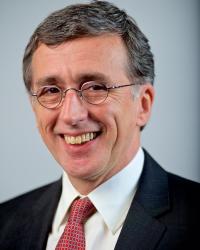
Sebastian Conrad is a Professor of Modern History and Global History at the Friedrich Meinecke Institute, Freie Universität Berlin. He earned his academic credentials through training in German and Japanese history, later expanding into colonial/postcolonial and global history. His roles include directing the MA program 'Global History' and the graduate school 'Global Intellectual History,' alongside leading the Cluster of Excellence 'Temporal Communities.' Research focuses on global history frameworks, including colonialism, nationalism, and the Enlightenment's global dimensions. Notable works include What is Global History? (2016) and Die Königin: Nofretetes globale Karriere (2024), exploring cultural globalization and historical iconography. He has held fellowships at institutions like the Institute for Advanced Study in Berlin and has authored over 20 books and numerous articles. Advises PhD projects on topics like veterans' movements, waste moralities, and Ottoman political communities. Awards include membership in the Berlin-Brandenburg Academy and Academia Europaea. His work bridges historical scholarship with contemporary debates on memory, colonial restitution, and global interconnectedness.
Mustafa Kirca serves as Associate Professor of English and Comparative Literature at Çankaya University in Ankara, Turkey, where he is affiliated with the Department of Translation and Interpreting Studies. His academic profile demonstrates extensive engagement with contemporary literary theory, postcolonial studies, and comparative literature, with particular focus on the Turkish context. Kirca's research interests span postmodernist fiction, postcolonial theory, literary translation, gender studies, and cultural identity. His scholarly work consistently examines the intersections between literature, philosophy, and cultural politics, with special attention to how global literary phenomena are received and transformed in Turkish intellectual contexts. He has made significant contributions to understanding the relationship between translation studies and comparative literature, advocating for border-crossing approaches that challenge traditional disciplinary boundaries. Analysis of Kirca's publications reveals consistent engagement with postcolonial narrative strategies, particularly textual decolonization approaches that challenge Eurocentric discourses. His work frequently examines how contemporary authors like Murakami, Rushdie, and Carter negotiate cultural hybridity and identity formation. A notable thread throughout his scholarship is the examination of how literary texts engage with philosophical concepts, from Kierkegaardian existentialism to postmodern historiography, often through the lens of translation and cross-cultural reception. Kirca has co-edited several significant scholarly collections including Iris Murdoch and Her Work: Critical Essays (2010), B/Orders Unbound: Marginality, Ethnicity and Identity in Literatures (2017), and Multicultural Narratives: Traces and Perspectives (2018), demonstrating his collaborative scholarly approach and broad intellectual interests. His editorial work has created important platforms for interdisciplinary dialogue in literary and cultural studies. As an active academic, Kirca has contributed to numerous conferences on Language, Literature and Culture, with particular emphasis on how contemporary literature engages with themes of fear, identity, and cultural transformation in the post-millennial era. His work demonstrates consistent scholarly productivity with publications spanning from 2009 to the present, including the forthcoming 2025 work on Murakami's Killing Commendatore .
Dr. Caglar Ezikoglu is a Lecturer in International Relations at the School of Social Science and Humanities, University of Wolverhampton (FABSS). He holds a PhD in International Politics (Aberystwyth, 2019) and an MA in European Politics (Sussex, 2013). His academic journey spans institutions including Leeds Beckett University (Visiting Lecturer, 2023-2025), University of Birmingham (Teaching & Research Fellow, 2023-2025), and Cankiri Karatekin University (Lecturer, 2019-2023). Education: PhD, International Politics, Aberystwyth University (2014-2019) MA, European Politics, University of Sussex (2012-2013) MA, Political Science, Ankara University (2009-2012) BA, Political Science, Ankara University (2005-2009) Ezikoğlu’s research synthesizes populism , authoritarianism , and political behavior with a regional focus on Turkey , the Middle East , and comparative historical studies (e.g., Ancient Rome). His work interrogates themes such as democratic erosion , religious freedom , and media’s role in political hegemony . Recent publications (2024-2025) bridge political theory , comparative case studies , and public policy analysis , often critiquing authoritarian trends in Turkey and beyond. His upcoming book compares Catonism in Rome to Erdogan’s populism , while a 2024 article in Intellectual Discourse examines economic voting behavior collapse in Turkey. Scientific Awards: Nominated for BISA Early Career Excellence Teaching Prize (2024) Nominated for PSA Sir Bernard Crick Teaching Prize (2024) Awarded British Academy’s GLOBAL TALENT VISA (Exceptional Promise, 2025) Received a Turkey Fellowship (2023-2024) Awarded BISA Conference Bursaries (2015-2017) He serves as Co-Convenor for the PSA International Relations Specialist Group and Editor for Open Theology (Web of Science Q1). As a Country Expert for V-Dem (2021-2025) and Senior Commissioning Editor for E-International Relations (2017-2020), he contributes to global academic networks.
Kathryn Babayan is a Professor at the University of Michigan , affiliated with the Middle East Studies department. Her research focuses on the cultural, social, and political histories of the Persianate world, particularly Iran, Iraq, Anatolia, and Central Asia. Her work integrates gender and sexuality studies , Safavid dynasty analysis , and material culture approaches to explore historical narratives. She is currently researching literacy practices in early modern Isfahan through her book The City as Anthology , examining how anthologies (majmu'a/muraqqa') reshaped urban experience and individual sovereignty. Collaborations include co-authoring Slaves of the Shah with Susan Babaie, Massumeh Farhad, and Ena Baghdiantz-McCabe, and co-editing Islamicate Sexualities with Afsaneh Najmabadi. Her publications bridge historiography , religion , and visual culture .
Ayşe Hilal Uğurlu is an Associate Professor in the Department of Architecture at MEF University's Faculty of Arts, Design and Architecture. She completed her PhD in the History of Architecture program at Istanbul Technical University in 2012 with a dissertation titled 'Selim III's Istanbul: Building Activities In The Light Of Political and Military Transformations.' Uğurlu has held prestigious fellowships including a senior fellowship from ANAMED at Koç University (2014), a Barakat Trust Post-Doctoral Fellowship at Oxford University (2017-18), and Barakat Trust Major Awards (2018-19). Her research focuses on the social, political, and architectural history of the Ottoman Empire, with particular attention to the 18th-19th centuries. Uğurlu has co-edited three significant books: 'Ottoman Architectural Culture' (2016), 'Sacred Spaces + Urban Networks' (2019), and 'The Friday Mosque in the City: Liminality, Ritual, and Politics' (2020). She is currently leading a research project with Dr. Deniz Türker exploring the roles of Ottoman royal women during the 18th-19th centuries, funded by MEF University Scientific Research Projects (2023-2025) and scheduled for publication by Cambridge University Press in 2025. Uğurlu's scholarly work reveals a consistent focus on the intersection of architecture, politics, and religious practice in Ottoman Istanbul. Her publications demonstrate particular expertise in imperial mosques, sacred spaces, and the transformation of religious practices during the 19th century. Her research often examines how architectural spaces functioned as political tools and social nuclei within Ottoman urban environments. Senior fellowship from ANAMED (Research Center for Anatolian Civilizations) at Koç University (2014) Barakat Trust Post-Doctoral Fellowship at the Khalili Research Centre, Oxford University (2017-18) Barakat Trust Major Awards (2018-19) Uğurlu actively contributes to academic discourse through numerous publications and conference presentations. Her current research project on Ottoman royal women represents a significant contribution to understanding women's roles in imperial power structures. While specific information about her advising activities isn't detailed in the source material, her extensive publication record and ongoing research projects indicate active engagement with academic scholarship and likely mentorship of students.
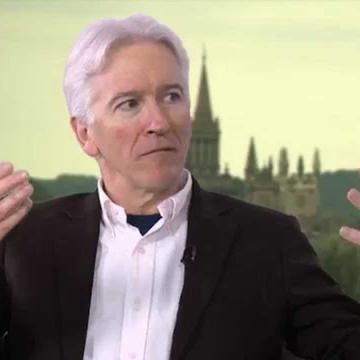
Eugene Rogan is Professor of Modern Middle Eastern History at the University of Oxford and a Fellow of St Antony's College, where he also serves as Director of the Middle East Centre. He is affiliated with the Faculty of Asian and Middle Eastern Studies, a leading center for area studies in the UK. His research focuses on the modern history of the Arab world, particularly during the 18th to 20th centuries. Key areas include the Arab provinces of the Ottoman Empire, the First World War in the Middle East, and the 1948 Palestine War. His current project re-examines the 1860 massacres in Damascus as a case of sectarian conflict and state reconstruction. Rogan’s publications have significantly shaped the historiography of the modern Middle East. His recent books, such as The Arabs: A History and The Fall of the Ottomans , reflect a consistent engagement with themes of empire, resistance, and national identity. The articles and books listed demonstrate a strong emphasis on military, political, and social transformations in the region, with recurring attention to colonialism, state formation, and collective memory. Fellow of the British Academy (2017) He teaches undergraduate and postgraduate courses, including The Middle East in the Age of Empire, 1830–1971 and The History of the Middle East, 1860–1970 . While no students or grants are explicitly listed, his leadership of the Middle East Centre indicates active mentorship and research direction. He is involved in public-facing scholarship, regularly participating in lectures and media engagements. Rogan leads the Middle East Centre at St Antony's College, a hub for interdisciplinary research, conferences, and publications on the region. The center fosters collaboration among scholars, policymakers, and public intellectuals, amplifying the impact of his academic work.
Reşat Kasaba is a Professor at the Henry M. Jackson School of International Studies, University of Washington, holding the Anne H.H. and Kenneth B. Pyle Chair in American Foreign Policy. He has taught for over 30 years, specializing in Middle Eastern history, U.S. foreign policy, and socio-political dynamics. His research focuses on migration, state-society relations, urbanization, and Turkey's modern political trajectory. Kasaba currently directs the Near and Middle Eastern Studies Ph.D. program and previously served as Jackson School director (2010-2020). Education: PhD in Sociology (SUNY Binghamton, 1986), MA Sociology (SUNY Binghamton, 1978), BSc Economics/Statistics (Middle East Technical University, 1976) Award: UW Distinguished Teaching Award Research examines transnational migration patterns, Ottoman legacy in modern Turkey, and socio-economic transformations. His recent work analyzes urban-rural divides in Turkey and U.S. foreign policy impacts. He actively engages in global academic networks as former APSIA president and MESA board member.
Barbara Henning is Professor of Turkology at the University of Hamburg's Asia-Africa Institute. Previously a junior professor for Islamic History in the Eastern Mediterranean at Johannes Gutenberg University Mainz, she holds degrees in Islamic Studies, Arabic Studies, Ethnology (BA), and Turkic Studies (MA) from Halle, Bamberg, and Paris. Her doctoral research at Bamberg (2016) examined the Ottoman-Kurdish Bedirhani family. She has held positions at the German Foreign Office and participated in the DFG priority program Transottomanica. Henning's research investigates Ottoman-Kurdish history, Arab provinces under Ottoman rule, imperial elites, identity/memory politics, and concepts of social boundary drawing. Current projects explore social differentiation among Prophet's descendants and post-Ottoman educational history in Northern Iraq. She co-manages the 'Urban Differentiation Potentials' graduate program and holds memberships in DFG-GRK 2304 Byzantium and Euro-Mediterranean War Cultures, the DFG Network Post-Ottoman Transformations, and the Arab-German Young Academy (AGYA).
Adeeb Khalid is the Jane and Raphael Bernstein Professor of Asian Studies and History at Carleton College, where he has been a faculty member since 1993. His scholarship bridges Central Asian history, Soviet studies, and postcolonial theory, with a focus on cultural transformations under imperial and revolutionary contexts. PhD and MA from University of Wisconsin-Madison President of Central Eurasian Studies Society (2005-06) Executive Board, Association for Slavic, East European, and Eurasian Studies (2013-15) Key research areas include: Modern Central Asian history (1860s-present) Islam under Russian/Soviet rule Nation-building and colonialism Comparative imperial formations Language and identity politics Anticolonial movements in Eurasia His publications have been translated into Russian, Chinese, Turkish, and Korean. Recent articles examine: Post-Soviet Islamic historiography Colonial Turkestan's exclusion/inclusion dynamics Decolonizing Central Asian national identities Methodological debates in area studies Scientific recognitions: Wayne S. Vucinich Book Prize (2008) Reginald Zelnik Book Prize (2016) Honorable Mention, Joseph Rothschild Prize Active in international academic collaborations, Khalid has held visiting positions at Maison des Sciences de l'Homme in Paris and the Library of Congress's Kluge Center. He teaches courses on Russian Empire, Soviet Revolution, and Middle Eastern cultural history.
Mark Mazower is the Ira D. Wallach Professor of History at Columbia University, where he has established himself as a leading historian specializing in modern Greece, 20th-century Europe, and international history. He also serves as the Stavros Niarchos Foundation Director of the Columbia Institute for Ideas and Imagination in Paris, which brings together scholars with leading artists, writers, composers and filmmakers from around the world to foster innovative interdisciplinary collaboration. His educational background includes a D.Phil. from Oxford University (1988), an M.A. from Johns Hopkins University (1983), and a B.A. from Oxford University (1981). This strong academic foundation has positioned him as a preeminent historian with expertise spanning multiple historical periods and geographical regions. Mazower's research focuses on modern Greek history, 20th-century European history, and international history, with recent work examining the historical evolution of the Greek islands over the very long term. His scholarship bridges academic rigor with public engagement, as he frequently contributes commentary on international affairs and book reviews to major publications including the Financial Times , The Nation , the London Review of Books , and the New York Review of Books . In 2016, he expanded his public engagement through the film Techniques of the Body , a meditation on the refugee crisis in Greek history created with director Constantine Giannaris. His publications reveal a consistent focus on understanding the complex interplay between national histories and broader international frameworks. Mazower's work often examines how local experiences intersect with global forces, particularly in the context of war, occupation, state formation, and the development of international institutions. His approach combines deep archival research with conceptual innovation, making significant contributions to our understanding of European history, Greek history, and international relations. Mazower's scholarly achievements have been recognized with numerous prestigious awards: Gennadius Prize (2023) Honorary Citizenship from the Republic of Greece (2022) Fellow of the British Academy (2019) D. Litt., honoris causa , Catholic University of Leuven (2019) D. Litt., honoris causa , University of Athens (2015) Dido Sotiriou Award of the Hellenic Authors Society (2012) Society of Columbia Graduates Great Teacher Award (2011) Fellow, American Academy of Arts and Sciences Hitler's Empire: Trilling Award and LA Times Book Prize for History (2009) Salonica, City of Ghosts: Duff Cooper Prize (2005) As an educator at Columbia University, Mazower has mentored numerous students in the Department of History, guiding research in modern European history, Greek history, and international history. His leadership extends to directing the Columbia Institute for Ideas and Imagination in Paris, which has received significant funding from the Stavros Niarchos Foundation to support interdisciplinary collaboration between scholars and creative artists from around the world. At the Columbia Institute for Ideas and Imagination, Mazower has created a unique intellectual environment where historians work alongside artists, writers, and filmmakers to explore new approaches to understanding complex historical and contemporary issues. This innovative space reflects his commitment to bridging academic scholarship with creative expression and public engagement, fostering dialogue across disciplinary boundaries to address pressing global challenges.
Ayşe Zişan FURAT is a Professor of Eurasian Studies at the Research Institute of Turkology, Istanbul University, a position she has held since February 2022. She is affiliated with the Department of Eurasian Studies and previously served in the Faculty of Theology and the Department of Philosophy and Religious Studies. Her institutional base is the Türkiyat Araştırmaları Enstitüsü, located in Beyazıt, Istanbul. Education: B.A. in History of Science, Istanbul University, 2001 M.A. in Religious Education, Department of Philosophy and Religious Studies, Istanbul University, 2004 Ph.D. in Religious Education, same department, 2009 Her research focuses on religious and cultural transformation across Eurasia, with particular attention to the history of science and education in Islamic and Turkic contexts. She investigates the interplay between religious institutions, educational systems, and cultural evolution in Anatolia, the Balkans, Central Asia, and the Ottoman Empire. Her work bridges humanities, religious studies, and historical sociology, emphasizing cross-cultural exchanges and knowledge transmission. The most recent publications reflect a strong thematic continuity in studying religious education, manuscript cultures, scientific traditions, and interfaith dynamics across Eurasia. Her scholarly output spans from the medieval to modern periods, combining historical analysis with cultural theory. Keywords across her articles include Religious Studies, History of Science, Eurasian Studies, and Cultural History, indicating a multidisciplinary approach grounded in the humanities. Scientific Contributions and Recognition: 115 publications indexed in Web of Science H-index of 12 (WoS), 14 (Google Scholar), 31 (TrDizin) Participation in 48 research projects Supervision of 14 theses Active contributor to UN Sustainable Development Goals through humanities research Ayşe Zişan FURAT has made significant contributions to academic advising and collaborative research. She has supervised numerous graduate theses and participated in extensive research projects, reflecting a strong commitment to academic mentorship and interdisciplinary inquiry. While specific grants are not listed, her high project count suggests active engagement in funded research. She is a key figure in advancing Turkic and Eurasian studies within the Turkish academic landscape. She is affiliated with the Research Institute of Turkology, a leading center for Turkish and Eurasian studies at Istanbul University. The institute supports interdisciplinary research on Turkic peoples, languages, religions, and cultures across Eurasia, and she contributes to its mission through her scholarship and academic leadership.
Heghnar Zeitlian Watenpaugh is Professor of Art History at the University of California, Davis, where she has been a faculty member since 2005. She is also a Faculty Associate in the Graduate Programs in Cultural Studies, Women and Gender Studies, Performance Studies, Jewish Studies, and Medieval and Early Modern Studies. Her research focuses on the visual cultures of the Middle East, particularly architectural preservation, museums, and cultural heritage. She earned her Ph.D., M.A., and B.A. (summa cum laude) from the University of California, Los Angeles, and an A.A. from Beirut University College. Her research has been supported by prestigious fellowships from the Guggenheim Foundation, the National Endowment for the Humanities, the J. Paul Getty Trust, Fulbright-Hays, and the Social Science Research Council. Watenpaugh’s research spans art and architectural history, cultural heritage, Islamic art, Ottoman urbanism, provenance and restitution, and the intersections of art, conflict, and human rights. Her work often centers on survivor objects—artifacts that endure genocide and displacement—and their role in justice and memory. She has published extensively in journals such as International Journal of Middle East Studies , Journal of the Society of Architectural Historians , and Muqarnas . Her recent publications, including The Missing Pages (2019) and several 2023 articles, reflect a strong trend toward the study of cultural survival, restitution, and the ethical dimensions of museum collections. Her scholarship bridges academic rigor with public engagement, appearing in The New York Times , Newsweek , and The Los Angeles Times , and featured in BBC podcasts. Spiro Kostof Book Award, Society of Architectural Historians (2006) Ömer Lütfi Barkan Article Prize, Ottoman and Turkish Studies Association (2015) Best Article Prize, Syrian Studies Association (2007) Gold Medal in World History, Independent Publisher Book Awards (2020) Book Award, Society for Armenian Studies (2020) Book Award, Ottoman and Turkish Studies Association (2020) Shortlisted, William Saroyan International Prize for Writing (Non-Fiction, 2020) Guggenheim Fellowship NEH Public Scholar Aga Khan Career Development Professor, MIT Watenpaugh has advised numerous scholarly initiatives and served on the boards of the Society of Architectural Historians, Historians of Islamic Art Association, and Syrian Studies Association. She is currently President of the American Research Institute of the South Caucasus. Her teaching includes courses on Islamic art, the Islamic city, arts of the Islamic book, and art, architecture, and human rights. She also leads seminars on visual theory, cultural conflict, and the exhibition of Islamic art. She is affiliated with multiple research centers and collaborates internationally on heritage preservation, particularly in post-conflict zones. Her public scholarship program at UC Davis reflects her commitment to bridging academic and public discourse on cultural heritage.
Nessim Znaien serves as Assistant Professor of History of Colonial and Postcolonial Maghreb at Philipps University of Marburg's Center for Near and Middle Eastern Studies (CNMS) since 2022, where he heads the Maghreb Field of Expertise team. His academic trajectory spans French institutions including Aix-Marseille University and research roles at the French Research Institute on Contemporary Maghreb in Tunis. His educational background includes: PhD in History, Université Paris 1-Panthéon Sorbonne (2012-2017) with thesis 'The Grapes of domination. Social History of Alcohol in Tunisia under Protectorate (1881-1956)' MA in History, École Normale Supérieure de Lyon (2011-2012) CAPES in History (2009) Bachelor’s degree in Modern Standard Arabic, Aix-Marseille University (2014-2018) University degrees in Italian (B2) and Turkish (B1) from Aix-Marseille University (2018-2021) Znaien's research centers on 19th-20th century North African history through material and food studies, examining colonial societies' structures and Tunisian historiography. His work uniquely bridges alcohol history with broader socio-economic patterns, revealing how substances like wine, bread, and harissa became sites of colonial control, cultural resistance, and identity formation. This approach illuminates the intersection of environmental, economic, and cultural forces in Mediterranean colonial contexts. His extensive publication record demonstrates consistent thematic focus on colonial North Africa's social history, with recurring analysis of alcohol systems, food economies, and material culture. The work shows sophisticated methodological integration of environmental history, economic anthropology, and postcolonial theory, particularly examining how colonial policies reshaped local consumption patterns and production systems across Tunisia, Algeria, and Morocco. No scientific awards are documented in the provided materials. Znaien actively contributes to academic infrastructure through research leadership and peer review. He coordinated a €30,000 Foundation for Research on Alcoholism project (2014-2019) on 'Alcohol under the French Empire,' participated in ERC's TARICA project (2017-2020) analyzing post-Arab Spring North Africa, and contributed to the French 'Bourgeon Project' (2017-2019) on Muslim world alcohol histories. He serves on scientific boards for L'Année du Maghreb and the Digital Encyclopedia of European History, while reviewing for journals including Journal of Medical History and Journal of North African Studies. As head of the Maghreb Field of Expertise team at CNMS, Znaien directs research on contemporary North African societies while maintaining strong connections to Tunisian academic networks through his editorial roles and ongoing historiographical analyses of post-revolutionary Tunisia.
Tolga U. Esmer is an Associate Professor in the Department of Historical Studies at Central European University (CEU), where he has been teaching since 2009. He is affiliated with the Doctoral School of History and the Center for Eastern Mediterranean Studies. Prior to joining CEU, he taught Islamic and Ottoman history at Northwestern University and Pennsylvania State University in the United States. MA, University of Washington, Department of Near Eastern Languages and Civilizations (2000) Ph.D., University of Chicago, Department of History (2009) His research and teaching focus on Ottoman, Middle Eastern, Balkan, and Mediterranean history, with thematic interests in comparative empire, the history of everyday life, gender and masculinity, crime, corruption, governance, violence, state-building, social rebellion, Muslim-Christian relations, and the history of emotions. He approaches these themes through an anthropological and interdisciplinary lens, emphasizing socio-cultural dynamics in imperial contexts. The 15 most recent articles in his body of work reflect a consistent engagement with the intersections of violence, sovereignty, and social order in the late Ottoman Empire. His publications span journals such as Past & Present and Comparative Studies in Society and History , covering subfields like banditry, emotional communities, borderlands, property practices, and trans-imperial knowledge networks. A central theme across these works is the re-examination of informal power structures and their role in shaping state-society relations during periods of transformation. He is currently completing a major monograph titled Economies of Violence: Tales of Banditry, Corruption, and Sovereignty in the Late Ottoman Empire (1790s–1820s) , which re-conceptualizes banditry as a politicized phenomenon reflecting broader societal tensions and negotiations of power. Flora Ghazaryan – Confessional Relations in 19th-century Ottoman Constantinople Ahmet Bilaloglu – Trans-Imperial Knowledge Networks (co-supervised) Eda Guclu – Social Practices of Property in Istanbul Scott Michael Rank – Christian-Muslim Polemics in the Ottoman Print Sphere Dr. Esmer has participated in academic events such as 'Emotions and Religious Sentiments across Central and Eastern Europe and the Eastern Mediterranean' (2018) and 'Dangerous Gifts & Pernicious Transactions' (2017), reflecting his interdisciplinary reach. While no scientific awards are listed in the provided text, his publication record and supervisory roles indicate an active and influential scholarly profile.