Dr. Ahmed Hassan Ahmed is a Senior Lecturer in Accounting and Finance at the University of Dundee's School of Business since 2018, currently serving as Research Integrity Lead. He holds a PhD in Accounting from the University of Dundee, following an MRes in Accounting and Finance and undergraduate studies at Sohag University in Egypt. His research focuses on corporate reporting practices, financial governance mechanisms, and emerging markets challenges. Notable areas include corporate internet reporting in Egypt, IFRS implementation in developing countries, and the intersection of corporate social responsibility with financial performance. He has been recognized with prestigious awards including the Emerald Literati Award (2018, 2020) and Excellence in Teaching Award (2023). Education: Bachelor's Degree: Sohag University, Egypt MRes in Accounting & Finance: University of Dundee PhD in Accounting: University of Dundee Teaching responsibilities include leading modules on research methods, international reporting, and financial statement analysis. He actively contributes to academic discourse through conference participation and editorial roles, including organizing the BAFA Scotland Conference in 2024.
Alexandros Kostopoulos is a Researcher at the Athens University of Economics and Business (AUEB), Department of Informatics. He holds a Ph.D. in Information Systems from AUEB (2009-2013), focusing on Economic Mechanisms for Future Internet Technologies. His professional roles include Research Engineer at Hellenic Telecommunications Organization (OTE), Post-Doctoral Researcher at FORTH-ICS, and Network and Systems Engineer at the Hellenic Army. His work spans multiple institutions including OTE Group and FORTH-ICS. Education details: Ph.D. in Information Systems (AUEB, 2009-2013) M.Sc. in Informatics (University of Piraeus, 2007-2009) M.Sc. in Management and Economics of Telecommunication Networks (National Kapodistrian University of Athens, 2005-2007) B.Sc. in Business Administration (University of Piraeus, 2001-2005) His research interests focus on Network Economics , Future Internet Architectures , and Telecom Market Dynamics . He explores economic incentives for protocol adoption, privacy mechanisms in information-centric networks, and cloud-based resource management strategies. His work integrates business models with technical advancements to address challenges in 5G/6G deployment and wireless network optimization. His recent publications emphasize 6G business frameworks, 5G network slicing, and AI-driven resource management. He has contributed to projects like 5G-ESSENCE, SESAME, and COHERENT, advancing edge services and telecom infrastructure innovation. Scientific Awards: None explicitly listed. Key contributions include: Developed frameworks for evaluating 6G architectures' economic viability Designed privacy-preserving solutions using homomorphic encryption Explored energy-aware pricing models in cloud environments He collaborates with institutions like OTE, FORTH-ICS, and the European Commission on projects like WISEGRID (Smart Grids), PRIVACY FLAG (IoT privacy), and CREDENTIAL (Cloud Identity).
Dr Colin Perkins is a Senior Lecturer (Associate Professor) in Computing Science at the University of Glasgow, serving as Chair of the Internet Research Task Force (IRTF). He leads research in network transport protocols, focusing on real-time multimedia and protocol standardization. His work includes contributions to QUIC, post-Sockets APIs, and improving Internet protocol specifications. Education: BEng (Electronic Engineering, 1992) and PhD (1996) from the University of York's Department of Electronics. Research Interests: Transport protocols for real-time multimedia Network protocol design and implementation Standardization processes in IETF QUIC protocol implications Post-Sockets API development Professional Roles: Co-chair of the RTP Media Congestion Avoidance Techniques (RMCAT) IETF working group Past co-chair of Audio/Video Transport and Multiparty Multimedia Session Control groups Member of Glasgow Systems Section (GLASS) and Networked Systems Research Group Awards: Fellow of the Higher Education Academy Senior Member of IEEE Grants & Labs: Active in Scottish Networking Event (SCONE) initiatives and collaborative projects on network measurement, protocol analysis, and distributed systems.
Svetla Trifonova Marinova is a Professor of International Business and Marketing at Aalborg University, Denmark. She holds a PhD in International Business from Copenhagen Business School, an MBA from the University of Warwick, and an MSc in Economics from Varna University of Economics. Her research focuses on internationalization of emerging economies and firms, foreign direct investment, SME strategies, and value creation in global contexts. She has published over 110 journal articles and 10 books, including notable works on post-pandemic globalization and emerging market dynamics. Education: PhD in International Business, Copenhagen Business School MBA in Business Administration, University of Warwick MSc in Economics, Varna University of Economics Her research explores value creation through a multidimensional lens encompassing economic, psychological, sociological, and environmental dimensions. Recent work emphasizes the post-pandemic geopolitical landscape and the redistribution of global markets. She has led projects on climate change impacts on agri-food exports, virtual international teams, and CSR practices in multinational enterprises. Marinova has received the Best Paper Award (2024) from The Consortium for International Marketing Research. Her advising includes supervising PhD student Wang Die. Active in academic leadership, she has organized conferences, reviewed manuscripts, and contributed to editorial roles at Palgrave Macmillan and Routledge. She has engaged with media outlets, including op-eds in China’s People’s Daily and features on emerging economies during the global crisis. Her research networks span Europe, Asia, and Latin America, addressing topics like digital infrastructure, export barriers, and cross-cultural strategic alliances.
Darren Wershler is an Associate Professor of English at Concordia University and holds a Tier 2 Research Chair in Media & Contemporary Literature. His work bridges avant-garde art/literature with communication studies/media history, emphasizing interdisciplinary connections between academia and broader cultural contexts. Education: PhD (York University, 2005), MA (University of Alberta), BA (University of Manitoba, First Class Honours). Research focuses on media archaeology, video game studies, and digital rights. He co-founded the Residual Media Depot, housing North America's largest institutional collection of vintage video game consoles and modified hardware. Key research areas include material culture of analog/digital technologies, media policy, and experimental poetics. Awards include SSHRC grants, the Alcuin Citation, and ReLit nomination. He collaborates across disciplines through initiatives like the Artmob project and the Milieux Institute. Notable works include The Iron Whim (2007), a groundbreaking study of typewriting's cultural impact; Guy Maddin's My Winnipeg (2010), analyzing Canadian avant-garde cinema; and collaborative projects like Dynamic Fair Dealing (2020) addressing digital cultural rights. Teaching: Media Archaeology, Video Game Theory, Graduate Research Methods Labs/Initiatives: Media History Research Centre, Residual Media Depot Publications: 12 authored/co-authored books spanning academic and creative works
Mark Rivardo, Ph.D., is a Professor of Psychological Science at Saint Vincent College. He holds a Ph.D. from Bowling Green State University, alongside M.A. and B.S. degrees from Bowling Green State University and Saint Vincent College, respectively. His research focuses on cognitive psychology, eyewitness memory, stereotype threat, and social psychology phenomena such as mental health stigma and anxiety reduction. He teaches advanced courses like Capstone Research Thesis and Cognitive Psychology. Dr. Rivardo's work spans over two decades, with publications in high-impact journals like the North American Journal of Psychology . His research explores topics ranging from collaborative recall effects on misinformation to the impact of therapy animals on student anxiety. He has examined societal issues such as internet addiction's mental health correlations and the interplay between dress/speech style and witness credibility. His collaborative projects highlight interdisciplinary approaches, including studies on law enforcement language training and the cognitive mechanisms underlying inattentional blindness. Despite prolific output, no specific awards are listed, though his work consistently addresses practical applications in forensic, clinical, and educational settings.
Susana Sampaio-Dias is a Senior Lecturer in Journalism at the University of Portsmouth, affiliated with the Faculty of Creative & Cultural Industries and the School of Film, Media and Creative Technologies. She is also a member of the Centre for European & International Studies Research (CEISR). She holds a PhD from Cardiff University and has a strong professional background as a journalist and news producer at RTP, Portugal's public broadcaster. Her educational background includes a PhD in Journalism, Media and Cultural Studies from Cardiff University, a Postgraduate Diploma in International Human Rights Law and Communication Law and Copyright, an MA in Journalism Studies, and a BA in Journalism—all from the University of Coimbra, Portugal. Susana's research centers on human rights and journalism, with a focus on press freedom, gender and journalism, and the security of journalists, particularly in relation to gendered online harassment. She explores news production through ethnographic methods and investigates journalism in Lusophone Africa, especially Guinea-Bissau. Her work also addresses environmental communication, digital news, and the Responsibility to Protect framework. Her research contributes to several UN Sustainable Development Goals, including gender equality and peace, justice, and strong institutions. Her recent publications reveal a strong thematic focus on gendered online harassment, the intersection of caregiving and journalistic labor, and environmental storytelling in West Africa. She frequently employs qualitative and ethnographic methods, often collaborating with researchers across Europe and Africa. Her work bridges academic research and practical journalism, contributing to policy and safety guidelines. She actively contributes to academic discourse as a peer reviewer for journals such as Journal of Multicultural Discourses , Social Sciences and Humanities Open , and Political Studies Review . She has presented at numerous international conferences and is involved in multiple research projects, including the ongoing Primaction project on primate conservation through media engagement in Guinea-Bissau. Susana leads and collaborates on research projects related to digital threats, citizenship, and transnational civil society. She is a Principal Investigator on the Primaction project and has served as a Co-Investigator on initiatives such as CRaB: Citizenship, 'Race' and Belonging and projects on internet norms and civil society. She is currently accepting PhD students and supervises research in human rights, gender, and journalism.
Nicolò Gozzi serves as a Senior Research Scientist at the National Research Council of Italy (CNR), specializing in computational approaches to public health challenges. His work bridges epidemiology, network science, and data analytics to address complex disease dynamics through interdisciplinary collaboration with institutions including Northeastern University and the Bruno Kessler Foundation. Gozzi's research focuses on Computational Epidemiology, Digital Epidemiology, Network Science, and Data Science. He pioneers methods for modeling behavioral responses during pandemics, analyzing mobility networks, and developing forecasting systems. His work integrates digital surveillance with traditional epidemiological frameworks to study vaccine impacts, health inequities, and intervention effectiveness—particularly evident in his extensive contributions to COVID-19 and influenza research. Analysis of his 15 most recent publications reveals a consistent trajectory in modeling infectious disease dynamics through computational frameworks. His work spans behavioral epidemiology (examining vaccination decisions and risk compensation), network resilience (assessing mobility patterns during interventions), and digital infrastructure applications (including cybersecurity analogies). A defining characteristic is his use of real-world data for policy-relevant forecasting, demonstrated through projects like Influcast and RespiCast. Gozzi leads or contributes to critical public health infrastructure projects including Epydemix (an open-source epidemic modeling toolkit), AWaRe (global antimicrobial stewardship), Influcast (influenza forecasting), and RespiCast (European respiratory disease hub). These initiatives emphasize collaborative, data-driven approaches to disease surveillance and intervention planning across multiple geographic and institutional contexts.
Stephanie Forrest is a Professor in the School of Computing and Augmented Intelligence (SCAI) at Arizona State University (ASU), where she also serves as Director of the Biodesign Center for Biocomputation, Security and Society. She is an External Faculty member of the Santa Fe Institute (SFI), where she previously held leadership roles including Co-Chair of the Science Board (2010–2013) and Interim Vice President for Academic Affairs (1999–2000). Prior to joining ASU, she was a Regents Distinguished Professor and Department Chair of Computer Science at the University of New Mexico (2006–2011). B.A., St. John's College M.S., Ph.D., University of Michigan, Computer Science Her research lies at the intersection of biology and computation, focusing on computational immunology, automated software repair, evolutionary computation, and modeling complex systems such as cancer and immune responses. She pioneers bio-inspired algorithms for cybersecurity and develops evolutionary techniques for software optimization and repair. Her work integrates principles from immunology, genetics, and complex adaptive systems to solve problems in computer science. The trends in her recent publications reveal a sustained focus on automated program repair using evolutionary computation, GPU code optimization, and modeling biological systems. Her work increasingly combines machine learning with mutation-based search, explores semantic representations in code repair, and applies bio-inspired models to real-world software and security challenges. ACM/AAAI Allen Newell Award (2011) Presidential Young Investigator Award (1991) Stanislaw Ulam Memorial Lectures, SFI (2013) IEEE Fellow UNM Annual Research Lecture (2012) IEEE S&P Test of Time Award (2020) ICSE Most Influential Paper Award (2019) ACM/SIGEVO Impact Award (2019) SEAMS Best Paper Award (2019) WEIS Best Paper Award (2015) Stephanie Forrest has advised numerous students and researchers, often in collaboration with W. Weimer, C. Le Goues, and M. Moses. Her research is supported by major funding agencies including the National Science Foundation (NSF), Defense Advanced Research Projects Agency (DARPA), Air Force Research Laboratory (AFRL), and the Santa Fe Institute. She has also contributed to public policy as a Jefferson Science Fellow at the U.S. Department of State (2013–2014), advising on cyber-policy. She currently chairs the Government Affairs Committee of the Computing Research Association (CRA). She leads the Biodesign Center for Biocomputation, Security and Society, which brings together interdisciplinary teams to study the co-evolution of technology and society. Her research group has developed tools for intrusion detection (e.g., STIDE, pH, RISE), automated software repair (e.g., GenProg), and biological modeling (e.g., CancerSim). Current projects include engineering diversity for enhanced cybersecurity, measuring internet censorship, and modeling immune and cancer systems.
Maria Isabel Alves Duarte is an Associate Professor at Lusófona University of Humanities and Technologies, School of Economic Sciences and Organizations. She holds a PhD in Development Sociology (1993) from Westfaelische Wilhelms Universitaet Muenster and has contributed extensively to research in Human Resources Management, Organizational Sociology, and Sustainable Tourism. Her research focuses on workforce resilience, digital transformation in maritime heritage, and competitiveness of SMEs. Key trends in her recent publications include the impact of technology on virtual teams, skill mismatch in labor markets, and strategies for post-pandemic workforce management. She has published in journals like Human System Management , European Journal of Family Business , and conference proceedings such as the II International Meeting of ISSOW . Her work spans book chapters, books, and conference articles, with notable contributions to maritime heritage communication and HR strategies in tourism.
Margrit Pernau serves as Senior Researcher at the Center for the History of Emotions at the Max Planck Institute for Human Development in Berlin, while holding an extraordinary Professorship at Freie Universität Berlin since 2012. Her academic journey began with a Dr. phil. in Modern History from the University of Heidelberg in 1991, followed by a Habilitation from the University of Bielefeld in 2007. Her scholarly work spans multiple disciplines with a focus on the history of emotions, particularly as manifested in South Asian contexts. Pernau has pioneered research on emotional communities in colonial and post-colonial India, developing innovative methodologies that bridge conceptual history with transnational perspectives. Her work examines how emotions function as historical forces that shape social structures, political movements, and cultural transformations. Pernau's publication record demonstrates remarkable consistency and evolution over three decades, with her most recent works exploring decolonial approaches to conceptual history and the multiplicity of temporalities in non-Western contexts. Her scholarship reveals a consistent trajectory from studying specific historical cases in Indian history toward developing broader theoretical frameworks for understanding emotions across cultural contexts. As editor of special sections and issues, Pernau has significantly shaped scholarly discourse in her field, particularly through her work on 'Concepts from the Global South' which challenges Eurocentric historical frameworks. Her publications reveal deep engagement with both primary historical sources and cutting-edge theoretical developments in conceptual history. Through her leadership of major research projects including 'Emotions and Temporalities - Feeling for the Future (South Asia 1912-1970)' and 'The Emotions of New Education. A Transnational History of Jamia Millia Islamia, Delhi,' Pernau has established significant collaborative networks across international academic communities. Her work with the 'History of Emotions - Insights into Research' internet portal has created valuable resources for scholars worldwide. The Center for the History of Emotions, where Pernau conducts her research, functions as a vibrant intellectual hub that brings together historians, anthropologists, and scholars from multiple disciplines to develop innovative approaches to studying emotions historically. Under her intellectual leadership, the center has become a global reference point for historical emotion studies.
Sarah Pfoser is a researcher at the University of Applied Sciences Steyr , affiliated with the Research Center Steyr and the Center of Excellence Logistics (LOGISTIKUM) . Her work focuses on sustainable logistics, circular economy, and alternative fuels in transport. She leads projects like 'Sustainable insulation solutions for frozen food shipping' and 'E-grocery packaging of the future,' emphasizing environmental impact reduction. Education: Not explicitly stated in the text. Academic titles include Mag. Dr. rer. pol. (not included in 'name' per instructions). Research Interests: Combines technical logistics (e.g., insulation solutions, reusable packaging) with policy (e.g., decarbonization strategies). Key areas: Synchromodality, liquefied natural gas (LNG) in transport, and sustainable packaging for e-commerce. Awards: Autumn-Award 2016 FH OÖ Jungforscherpreis 2017, 2021 Green Marketing Award 2022 Grants & Projects: Principal Investigator/Co-Investigator in 16 projects (2013–2026), including EU-funded initiatives on return logistics, post-bottle recycling, and retail digitalization. Labs/Teams: Active in LOGISTIKUM and cross-disciplinary teams addressing Austria’s transport and sustainability challenges.
Ferdi Doğan is an Assistant Professor in the Department of Computer Engineering at Adıyaman University. He holds a PhD in Software Engineering (2021, Fırat University), an MSc in Computer Systems (2012, Sakarya University), and a BSc in Computer Systems (2002, Selçuk University). His research focuses on artificial intelligence, machine learning, deep learning, image processing, and cybersecurity. He has led TÜBİTAK projects on AI-driven solar panel defect detection, SCADA system security, and post-earthquake psychological analysis using AI. He is a member of IEEE and ACM, and has presented at over 10 international conferences. Professional Experience: Joined Adıyaman University as a Lecturer in 2007, became Department Head (2011-2019), and is currently Director of the Research and Application Center. He advises graduate theses and consults on TÜBİTAK projects. His applied research includes AI in agriculture, solar energy, and SCADA security algorithms. Teaching: Courses include Artificial Neural Networks, Internet Programming, and Software Engineering. He has taught at both undergraduate and graduate levels since 2002, with over 50 recorded courses in programming, algorithms, and web design. Awards: No specific awards listed but has secured TÜBİTAK grants and participated in international projects. His work has been cited over 12 times in peer-reviewed journals.
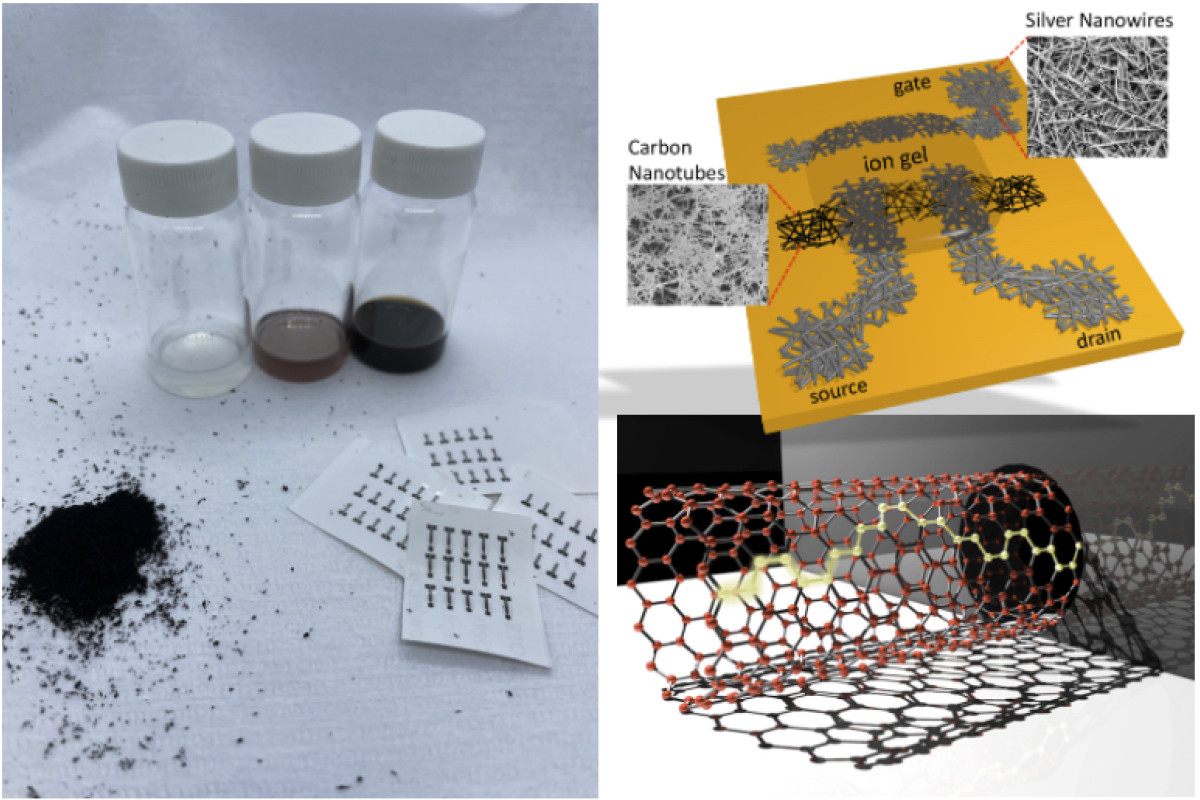
Aaron Franklin is the Addy Distinguished Professor in the Departments of Electrical & Computer Engineering and Chemistry at Duke University, where he also serves as Associate Dean for Faculty Affairs in the Pratt School of Engineering. He holds a Ph.D. in Electrical Engineering from Purdue University (2008) and a B.S.E. from Arizona State University (2004). Prior to Duke, he worked at IBM's T.J. Watson Research Center (2008–2014). His research focuses on nanomaterial-enabled electronics, including nanotransistors, printed electronics, and biomedical sensors. He leads the Franklin Group, exploring applications in high-performance devices, recyclable electronics, and IoT systems. Franklin has over 100 publications, 50+ patents, and co-founded two startups, one acquired by a Fortune 500 firm. He is an IEEE Fellow and NAI Fellow (2024). Education: B.S.E. Electrical Engineering, Arizona State University, 2004 Ph.D. Electrical Engineering, Purdue University, 2008 Research interests emphasize nanomaterials (carbon nanotubes, 2D materials) for next-gen electronics. His group develops ultra-sensitive biosensors, printed recyclable circuits, and scalable transistor technologies. Key areas include low-voltage transistors, flexible electronics, and energy-efficient neuromorphic systems. Recent work highlights include: 1) memcapacitive synapse arrays for motion detection; 2) symmetry-engineered 2D FETs; 3) recyclable LCD backplanes using printed carbon nanotubes. His 2024 Nature Electronics paper on carbon nanotube-coated transistors advances low-dimensional electronics. Awards: IEEE Fellow (2024) NAI Fellow (2024) National Institutes of Health grants Grants and startups: Active NSF-SNSF collaborations on 2D semiconductor thermal properties. Co-founded Tyrata (acquired by Bridgestone). Teaches courses like Foundations of Nanoscale Science and Emerging Nanoelectronic Devices. Labs/Teams: Franklin Group at Duke's Pratt School, collaborating with biomedical and materials science researchers. Focus areas include aerosol jet printing, electronic tattoos, and IoT sensor development.
Rotem Shneor is a Professor at the University of Agder in Norway, affiliated with the School of Business and Law and leading the Crowdfunding Research Center . He holds a PhD in International Management and a Master's in International Business. Research Focus: Crowdfunding behavior, entrepreneurial finance, internet marketing, and cognitive aspects of entrepreneurship. Editorial Roles: Editor-in-Chief of the Journal of Alternative Finance since 2023; co-edited Advances in Crowdfunding: Research and Practice and special issues for the Baltic Journal of Management. Teaching: Courses in entrepreneurship, crowdfunding, international marketing, and consumer behavior at bachelor’s, master’s, and PhD levels. Industry Collaboration: Works with crowdfunding platforms and FinTech actors globally. Recent Publications span crowdfunding success factors, gender differences in contribution intentions, trust-based marketing frameworks, and cross-country comparative studies. His work appears in journals like Journal of Business Research , Decision Support Systems , and Venture Capital . Media Engagement: Regular commentator on crowdfunding trends in Nordic, European, and global contexts, with contributions to newspapers ( fvn.no , e24.no ) and radio.