معرفی
Aaron Franklin is the Addy Distinguished Professor in the Departments of Electrical & Computer Engineering and Chemistry at Duke University, where he also serves as Associate Dean for Faculty Affairs in the Pratt School of Engineering. He holds a Ph.D. in Electrical Engineering from Purdue University (2008) and a B.S.E. from Arizona State University (2004). Prior to Duke, he worked at IBM's T.J. Watson Research Center (2008–2014). His research focuses on nanomaterial-enabled electronics, including nanotransistors, printed electronics, and biomedical sensors. He leads the Franklin Group, exploring applications in high-performance devices, recyclable electronics, and IoT systems. Franklin has over 100 publications, 50+ patents, and co-founded two startups, one acquired by a Fortune 500 firm. He is an IEEE Fellow and NAI Fellow (2024).
Education:
- B.S.E. Electrical Engineering, Arizona State University, 2004
- Ph.D. Electrical Engineering, Purdue University, 2008
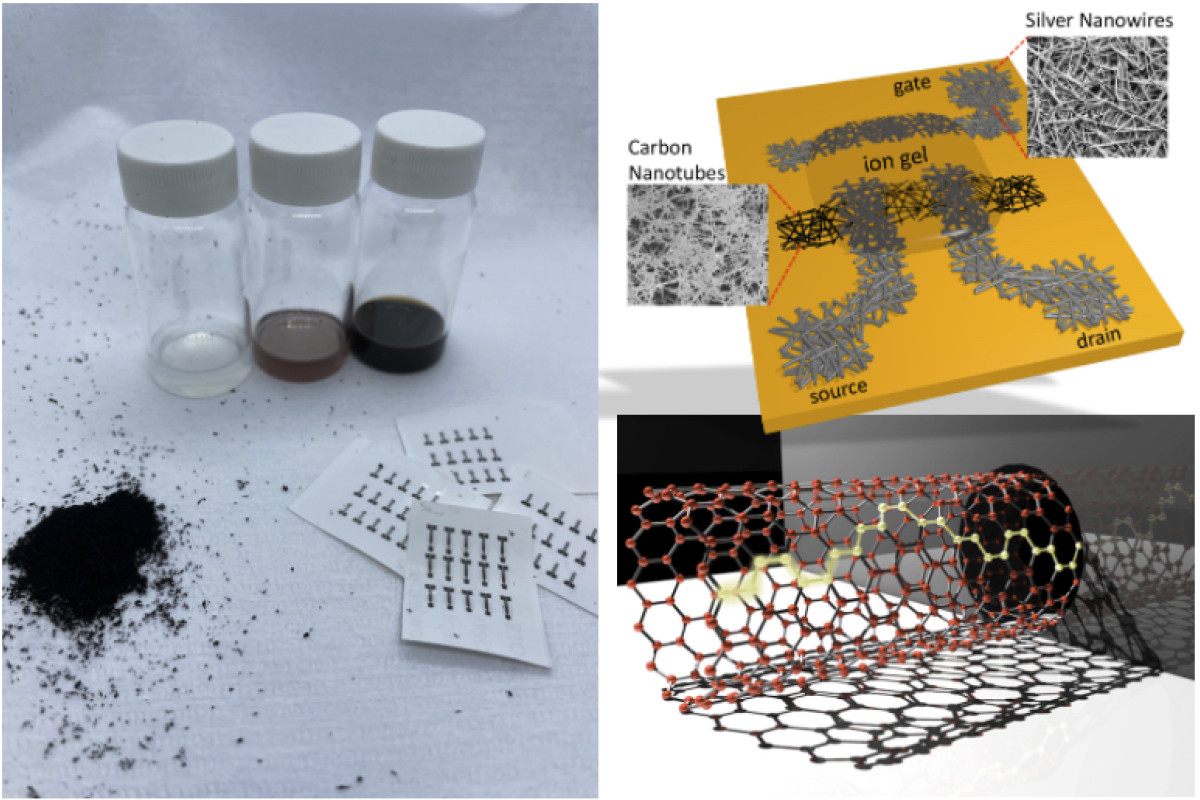
Research interests emphasize nanomaterials (carbon nanotubes, 2D materials) for next-gen electronics. His group develops ultra-sensitive biosensors, printed recyclable circuits, and scalable transistor technologies. Key areas include low-voltage transistors, flexible electronics, and energy-efficient neuromorphic systems.
Recent work highlights include: 1) memcapacitive synapse arrays for motion detection; 2) symmetry-engineered 2D FETs; 3) recyclable LCD backplanes using printed carbon nanotubes. His 2024 Nature Electronics paper on carbon nanotube-coated transistors advances low-dimensional electronics.
Awards:
- IEEE Fellow (2024)
- NAI Fellow (2024)
- National Institutes of Health grants
Grants and startups: Active NSF-SNSF collaborations on 2D semiconductor thermal properties. Co-founded Tyrata (acquired by Bridgestone). Teaches courses like Foundations of Nanoscale Science and Emerging Nanoelectronic Devices.
Labs/Teams: Franklin Group at Duke's Pratt School, collaborating with biomedical and materials science researchers. Focus areas include aerosol jet printing, electronic tattoos, and IoT sensor development.