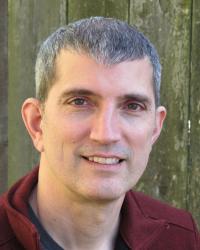
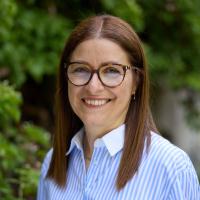
James Tweedie is a Professor in the Department of Cinema and Media Studies at the University of Washington. His research focuses on 20th-century film, globalization, modernist cinema, and post-WWII film history. Academic Rank: Professor Department: Cinema and Media Studies University: University of Washington His work explores intersections between film, urban networks in East Asia, and the evolution of new media in the late 20th century. Current projects include a history of Hollywood art direction and production design. Scientific Awards: Katherine Singer Kovács Book Award (2014) Academy Scholar by the Academy of Motion Picture Arts and Sciences He has authored and co-edited influential publications on cinema and taught courses on global film networks and modernist cinema.
Justin Harvey is a Lecturer at the University of Technology Sydney (UTS) within the Faculty of Design, Architecture and Building, specializing in Media Arts and Production. He is an active member of the Creative Practice Research Group and serves on the Faculty Board and Faculty Research Committee. Harvey holds a PhD in Media Art & Design from the University of New South Wales and a Bachelor of Arts in Communication (Media Arts & Production) with First Class Honors from UTS. Harvey's research interests focus on creative uses of generative Artificial Intelligence, experimental approaches to media art making, and creative practice led research. His artistic practice spans moving image, installation, and virtual reality experiences, with a particular fascination for human-machine interaction and the creative potentials of digital technologies. He explores glitch aesthetics, digital video feedback, and imagery generated using diffusion models, often collaborating with AI systems in unexpected ways. Harvey has exhibited his work internationally at venues including VIVID Sydney, ISEA (International Symposium on Electronic Art) in Vancouver, Hong Kong, and South Korea. His 2023 collaboration with generative AI, Unprompted Studies 1-3 , was a finalist in the Fisher's Ghost Art Award. In 2024, he was selected as a Scholar in the Sydney Powerhouse Museum's Research Scholars Program for the "Knit Forward" project, which reimagines historical garments using generative AI and seamless knitwear technology. His research on creative applications of GenAI directly informs his teaching in Experimental Media and Creative Project Development. Harvey has extensive studio-based teaching experience since 2010, covering subjects such as Situated Media Installation Studio, Drama Production, and Experimental Media. Fisher's Ghost Art Award (2023 finalist) Powerhouse Museum Scholars Program funding (2024) UTS ECR Capability Development Initiative funding (2024) FASS ECR Funding (2024) Harvey supervises PhD and Masters of Research students in creative practice research and has mentored hundreds of students through capstone projects in drama, documentary, animation, and media arts installation. His current research projects include collaborations with Dr. Doris Li on reimagining historical garments using AI, and exploring the intersection of Surrealist techniques with generative AI in works like Oneironaut , exhibited at VIVID Sydney 2025.
Nicola Zambon is a researcher at the Institute for Religious Studies (WE 8), Free University of Berlin , with a focus on Phenomenology , Modern Philosophy , and Philosophy of Religion . He holds an Abilitazione Scientifica Nazionale in practical and theoretical philosophy and history of philosophy (2023) and completed his PhD at Ludwig-Maximilians-Universität München (2014). His research explores self-deception , myth theory , and phenomenological anthropology , with a particular emphasis on Kant, Nietzsche, and Blumenberg. Education PhD in Philosophy, Ludwig-Maximilians-Universität München (2014) Habilitation, Italy (2023) Studies in Bologna, Mainz, Freiburg im Breisgau (2002–2009) Research Interests : Zambon's work bridges phenomenology (Husserl, Heidegger, Merleau-Ponty, Blumenberg) with modern philosophy (Spinoza, Kant, Vico) and philosophy of religion/psychoanalysis . He investigates self-deception through Kantian moral philosophy, myth theory in contemporary culture, and anthropological concepts like tactility and the life-world. His forthcoming monograph on visibility (2025) extends these themes. Recent Publications include studies on self-deception (2024), Blumenberg's dialectics of Enlightenment (2022), and Kant's moral anthropology (2020). His edited works feature in the Zeitschrift für Kulturphilosophie and Phänomenologische Forschungen . Scientific Awards : Oskar-Karl-Forster-Preis der LMU München (2014) Grants and Fellowships : Nietzsche-Fellowship, Klassik Stiftung Weimar (2023) Fellow, Research Institute for Philosophy Hannover (2022–2023) DAAD/FMSH Research Grant, Paris (2015) DFG Research Grant, Paris (2016–2017) Academic Activities : Zambon is a member of the Käthe-Kluth-Nachwuchsgruppe (2024–2027) and the Hans Blumenberg-Gesellschaft . He teaches courses on Blumenberg's philosophy , Nietzsche , and modern religious thought at FU Berlin and international institutions like the University of Turin (visiting professor, 2025).
Kamran Asdar Ali serves as Professor and Department Chair of Anthropology at the University of Texas at Austin within the College of Liberal Arts. He maintains additional affiliations with the South Asia Institute (where he directed from 2011-2017), Population Research Center, and Women and Gender Studies program. Holding a Ph.D. from Johns Hopkins University, he specializes in interdisciplinary research bridging anthropology, gender studies, and area studies. His scholarly focus encompasses Gender, Sexuality, Health, Political Economy, Post-colonialism, Labor History, and Popular Culture, with regional expertise in the Middle East and South Asia. His work critically examines family planning and medical anthropology in Egypt alongside class politics, ethnic identity, and cultural production in Pakistan, demonstrating consistent engagement with decolonial frameworks and political economy. Professor Ali's academic leadership is evidenced by his monographs "Planning the Family in Egypt: New Bodies, New Selves" (2002) and "Communism in Pakistan: Politics and Class Activism 1947-1972" (2015), along with co-edited volumes including "Gendering Urban Space in the Middle East, South Asia and Africa" (2008) and "Gender, Politics, and Performance in South Asia" (2015). His research excellence has been recognized through prestigious fellowships: Member of the Institute for Advanced Study at Princeton (1998-99) Senior Fellow at ISIM, University of Leiden (2005) Fellow at the Wissenschaftskolleg in Berlin (2010-2011) As Department Chair and frequent instructor of courses including Theories of Culture & Society and Cities and Citizenship, he actively shapes curriculum while mentoring emerging scholars in anthropological theory and Middle Eastern/South Asian studies despite no explicit student listings in available documentation.
Mona Kasra is an Iranian-American Associate Professor of Digital Media Design in the Department of Art at the University of Virginia. Her work bridges new media art, projection design, and immersive theatre, exploring political and theoretical implications of visual media technologies across cultural contexts. Ph.D. in Arts & Technology from University of Texas-Dallas M.F.A. in Video/Digital Art from California State University Northridge B.A. in Graphic Design from Art University of Tehran Her research focuses on hybrid practices integrating digital technologies with live performance, emphasizing audience immersion and narrative reconfiguration. Key areas include: Projection mapping for theatrical spaces Interactive media installations Cross-cultural digital storytelling Immersive audience experiences Time-space manipulation in performance Recent creative works demonstrate trends in: Site-specific installations (abandoned buildings, warehouses) Collaborative design with choreographers/musicians Exploration of identity in hyper-mediated environments Integration of indigenous rituals with modern technology Academic leadership roles include: Faculty co-lead, Karsh Institute’s Digital Technology for Democracy Lab Chair of ACM SIGGRAPH (2023-2024) Board member, New Media Caucus Executive Committee member (2019-2025), UVA Scientific awards: Helen Hayes Award nominations for media design (2022) United Scenic Artists Local 829 membership Her transdisciplinary approach has been supported by grants including the Arts Enhancement Grant and collaborations with institutions like the Smithsonian's Lemelson Center.
Christoph Becker is a Full Professor at the University of Toronto, holding joint appointments in the Faculty of Information and the School of the Environment. He leads the Just Sustainability Design lab, focusing on transforming computing to align with sustainability and social justice. His research bridges critical theory, digital curation, and software engineering, emphasizing long-term societal impacts of technology. Education: PhD in Computer Science, Vienna University of Technology (2010) MSc in Economics & Computer Science, Vienna University of Technology (2007) MS and BSc in Computer Science, Vienna University of Technology (2006/2004) Research Interests: Sustainable computing, digital preservation, ethics in technology, and participatory design. His work critically examines the politics and values embedded in technology design, with projects addressing urban sustainability and equitable systems. His 2023 book Insolvent: How to Reorient Computing for Just Sustainability won multiple awards and is a seminal text in the field. Awards: Finalist, AAP PROSE Awards 2024 (Engineering and Technology) Best Paper Award, 6th International Conference on ICT for Sustainability (2019) Emerald Literati Network Award (2016) Connaught New Research Award (2015-2016) Grants & Leadership: Director of the Digital Curation Institute (2014-2024), funded by NSERC, CFI, and Ontario Research Fund. Supervises multiple PhD/Master’s students, including Eshta Bhardwaj and Han Qiao. Active in organizing workshops on ethics, requirements engineering, and sustainability. Labs & Initiatives: Leads the Just Sustainability Design lab, advocating for computing practices that prioritize environmental and social equity. Collaborates with global organizations on digital preservation tools and policies.
Hilary Neroni is a Professor of English and Film Studies at the University of Vermont (UVM), affiliated with the College of Arts and Sciences. She received her Ph.D. from the University of Southern California’s School of Cinematic Arts in 1999. Her research focuses on ideology in film and media, particularly examining representations of gender, race, and violence, with a strong emphasis on feminist theory, psychoanalysis, and Marxism. Her major works include *The Violent Woman*, analyzing gender and violence in contemporary cinema; *The Subject of Torture*, exploring post-9/11 depictions of torture in TV/film; and *Feminist Film Theory and Cléo from 5 to 7*, a pedagogical text linking feminist theory to film analysis. She has also written extensively on women filmmakers like Claire Denis and Jane Campion. Neroni teaches courses spanning film theory, genre studies, documentary film, and feminist critique. Her awards include the 2016 NEPCA/ACA Peter C. Rollins Book Prize and a BAFTSS Honorable Mention. She actively engages with contemporary cultural debates, such as the symbolism of Confederate monuments in Vermont, through psychoanalytic and Lacanian frameworks. Her scholarship bridges theoretical rigor and practical film analysis, interrogating how media shapes—and is shaped by—cultural anxieties and power structures. She advises students in film studies and maintains a robust publication record across peer-reviewed journals and edited collections.
Averil Ma, MD is a Professor of Medicine at the University of California, San Francisco (UCSF) School of Medicine. He serves as Director of the UCSF IBD Center and Chief of the Division of Gastroenterology. His research focuses on molecular and cellular mechanisms underlying inflammation and cancer, particularly studying ubiquitin-regulating proteins like A20. He holds notable roles such as Chair of the NIH CMI-A Study Section (2010-2012) and Founding Chair of the KRF Scientific Advisory Board (2009). Education: A.B. in Biochemistry from Harvard College (1980), M.D. from Columbia University (1984), Internal Medicine residency at Massachusetts General Hospital (1987), and Gastroenterology fellowship at Columbia (1989). Research interests include host-commensal interactions in the gut, innate immunity, and ubiquitin-dependent immune regulation. His lab investigates A20’s role in preventing inflammation and cancer via NF-κB signaling, inflammasome control, and tissue integrity. Techniques used include CRISPR, mass spectrometry, and mouse models. Key awards include election to the American Society for Clinical Investigation (2001) and AGA/GRG Young Investigator Award (2001). Publications focus on A20’s functions in inflammation, cancer, and autoimmune diseases, with contributions to understanding ubiquitin pathways and therapeutic targets for IBD, psoriasis, and SLE.
Aleksandar Pavkovic is an Associate Professor and Honorary Associate Professor at the School of International Studies, Macquarie University. His research focuses on secession, nationalism, self-determination, and statehood. He holds a Bachelor of Philosophy from the University of Oxford (1972), a Doctor of Sciences in Philosophy from the University of Beograd (1983), and a Graduate Diploma in Applied Science (Information) from the University of Technology Sydney (1990). His major research projects include studies on declarations of independence, national anthems in South-East Europe, and legal frameworks governing secession. Pavkovic has authored over 170 publications, including books like The Right of Self-Determination in International Law and World Politics (1997) and edited volumes such as The Routledge Handbook of Self-Determination and Secession (2023). His work analyzes the interplay between legal norms and political realities in secessionist movements, nationalism, and ethnic conflict resolution. Key Projects: The Case for Secession: Nationalism and Declarations of Independence (2019) Constructing Nationhood Through National Anthems (2013) Creating New States Out of Old Ones (2006) Research Themes: Normative and legal aspects of secession Ethnic nationalism and self-determination State creation and dissolution processes Pavkovic's recent work emphasizes corrective justice in state creation and historical analyses of self-determination rights. His scholarship bridges international law, political theory, and historical case studies, particularly in post-Yugoslav contexts.
Ana Catarina dos Santos Pereira is an Assistant Professor at the Faculty of Arts and Humanities, University of Beira Interior (UBI), and a researcher at LabCom - Communication and Arts. She holds a PhD in Communication Sciences (Cinema and Multimedia) and serves as Master's Director in Cinema at UBI. Her academic career spans from 2010-2023, including roles as course director and Sopcom seminar coordinator. PhD: Communication Sciences (Cinema and Multimedia), UBI MA: Human Rights, University of Salamanca BA: Communication Sciences, NOVA University Lisbon Her research focuses on feminist film studies , pedagogy in arts , and Portuguese-language cinema , particularly examining self-representation, queer creative acts, and gender dynamics. Articles like 'Reconfiguring cinema' and 'Seeing Ghosts' demonstrate her engagement with transnational queer narratives and memory construction . She received the prestigious UBI-CGD Young Researcher Award in Arts (2025) for her leadership in the ongoing 'Speculum' project (FCT EXPL/ART-CRT/0231/2021). Her academic contributions include organizing committees for the Porto Femme International Film Festival and editing volumes like 'Cinema and Other Arts'. Advisor: Directed 2025 Dissertação ou Trabalho de Projeto Organizer: Multiple academic conferences and publications Grants: FCT sabbatical leave (SFRH/BSAB/143117/2018), doctoral grant (SFRH/BD/69950/2010) Labs/Teams: LabCom-Communication and Arts research center, Speculum project team, and Porto Femme International Film Festival jury panel. Her work bridges academic research with practical applications in film education and feminist cultural production.
Yee Man (Margaret) Ng is an Associate Professor in Journalism and the Institute of Communications Research at the University of Illinois. She combines data science methodologies with communication research to study social media dynamics, digital journalism, and technology adoption patterns. Her research interests include: Computational social science Social media analytics Data visualization techniques Communication technology impacts Journalism innovation Post-adoption technology behavior Ng's methodology integrates big data analysis, machine learning algorithms, and traditional survey/experimental approaches. Current work extends diffusion of innovations theory by examining social media users' discontinuance and readoption behaviors. Academic contributions span both empirical research and educational practice. She has taught courses like: JOUR 460 - Data Storytelling JOUR 410 - Data Storytelling for Journalism JOUR 425 - Multimedia Editing and Design JOUR 199 - Hands-on Media Technology Her publications analyze topics ranging from YouTube's recommendation algorithms to digital sustainability in news media, with particular focus on: Platform migration patterns Algorithmic content moderation Political communication dynamics Media technology adoption Regional web usage differences Incivility measurement techniques
Dr. Katherina Kinzel Dr. Katherina Kinzel is an Assistant Professor in the Department of Philosophy and Religious Studies at Utrecht University, specializing in the History of Philosophy. Her work focuses on Critical Theory, Neo-Kantianism, and the Philosophy of History, with particular emphasis on abstraction critique and reification in modern thought. She holds a BA and PhD in Philosophy. Research: Current projects include the critique of abstraction in Critical Theory (Lukács, Adorno) and reification’s role in ecological crises. Past research explored neo-Kantian responses to historicism and relativism, particularly through figures like Windelband and Rickert. Publications: Over 20 peer-reviewed articles since 2012, including works on Cassirer’s teleology, neo-Kantian conceptualism, and women philosophers in 19th-century German thought. Edited volumes include The Emergence of Relativism (2019). Affiliations: Faculty of Humanities, Utrecht University. Active in interdisciplinary debates on historical methodology and epistemology.
Dr. Maria Luísa Coelho is a Camões Lector in Portuguese and College Lecturer at Lady Margaret Hall, University of Oxford. Her research focuses on interdisciplinary and transcultural approaches to Portuguese art and literature, emphasizing feminist perspectives, transnational dialogues, and diasporic identities. She teaches Portuguese language modules, specialized literature papers (e.g., Lídia Jorge), and contributes to the MSt in Women's Gender and Sexualities Studies through a course on 'Gender Bodies in Visual Art and Culture.' Her work bridges art and literature, exploring themes like gendered identities, cultural hybridity, and migration. Her research themes include Brazilian and Portuguese studies, contemporary creative multilingualism, critical theory, and visual/material culture. Notable projects analyze Anglo-Portuguese cultural relations and Afropean women artists. She has edited special issues on transnational Portuguese women writers and published extensively on artists like Helena Almeida and Bartolomeu Cid dos Santos. Teaching responsibilities include supervising theses and lecturing on art theory for the Sarah Lawrence Programme. Her publications (2016–2024) reflect deep engagement with feminist art practices, diasporic narratives, and the interplay between art and political contexts such as Estado Novo Portugal.
Kaarina Aitamurto is a scholar of religion specializing in Islam and contemporary Paganism in Russia, affiliated with the Faculty of Arts at the University of Helsinki. She holds a position at the Aleksanteri Institute - Finnish Centre for Russian and East European Studies, focusing on interdisciplinary research blending social sciences and humanities. Her research interests include nationalism, migration, and the governance of religion in Russia, particularly Islam and Slavic Paganism (Rodnoverie). She co-leads projects such as 'Migration, Shadow Economy and Parallel Legal Orders in Russia' and co-edits Aleksanteri Insight . Her work addresses topics like desecularization, religious representation, and the intersection of politics and culture in post-Soviet contexts. Aitamurto has advised doctoral and master's theses, participated in international conferences, and contributed to academic publications. Her recent studies highlight the political alliances within Pagan movements, the social dynamics of Islamic sects in Russia, and the impact of illiberalism on migration. She frequently collaborates with institutions like the University of Bologna and the Free University of Berlin. Labs/Teams: Active in the Aleksanteri Institute, contributing to its research on Eurasia and global migration. Engaged in editorial roles for journals and book series, fostering academic discourse on Russian and East European studies.
Silvia Castelli is an Assistant Professor in the Faculty of Religion and Theology at Vrije Universiteit Amsterdam. She specializes in New Testament studies and Early Judaism, with a focus on textual criticism and Jewish-Greek literature. Her affiliations include the research teams 'New Testament and Christian Origins' and 'Contextual Biblical Interpretation.' She holds a dual PhD in Jewish Studies (University of Turin) and a second PhD on NT textual criticism (VU Amsterdam, 2020). Education includes MA and PhD studies in Classical Studies and Jewish Studies, with fellowships at the Leibniz Institute (Mainz), Hebrew University (Jerusalem), and Yale. She has taught at institutions like the University of Trento and Leiden University, coordinating Greek language courses at VU. Research interests span NT textual criticism methodologies, Josephus' biblical interpretations, and intersections between biblical hermeneutics and spiritual care. Recent work explores 'patientia' (patience) in antiquity and collaborates on projects about imperial responses in Roman historiography. Awards include the Aurelio Bernardi Prize (1997), Lady Davies Fellowship (2001), and the 2020 Brill publication of her second PhD. She supervises three PhD students and chairs the SBL unit on 'Biblical Studies and Spiritual Care.'