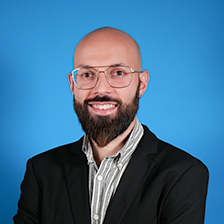
PD Dr. Dieter Kerwer serves as a Lecturer at the Geschwister-Scholl Institute of Political Science within the Faculty of Social Sciences at Ludwig Maximilian University of Munich (LMU). Holding the title of Privatdozent (PD), he possesses habilitation-level qualifications for independent university teaching in the German academic system. His research focuses on core political science domains including European Union governance structures, comparative public policy analysis, and democratic institutional frameworks. The Geschwister-Scholl Institute, named after the WWII resistance group, maintains prominence in European integration studies and democratic theory. Dr. Kerwer's academic role centers on teaching advanced political science courses within LMU's social sciences curriculum. His position as Privatdozent signifies completion of Germany's highest teaching qualification beyond the doctoral degree, enabling independent course leadership while maintaining non-tenured faculty status. Contact is available through institutional email: Dieter.Kerwer@gsi.uni-muenchen.de .
Barbara Marana is a Researcher in Topography and Cartography at the University of Bergamo, School of Engineering, Department of Engineering and Applied Sciences (DISA). She has maintained an active academic career since 2003, progressing from Research Fellow to Confirmed Researcher in 2008, while also serving as an Adjunct Professor for Information Systems for the Territory and Topography courses from 2015-2023. Her educational background includes a Doctorate in Geodetic and Topographic Sciences from the Polytechnic University of Turin (1993-1997) and a Degree in Electronic Engineering with specialization in Automatic Control from the Polytechnic University of Milan (1991). She possesses strong English language skills and has authored over 60 scientific publications throughout her career. Dr. Marana's research focuses on the application of Geomatics technologies to cultural heritage preservation, environmental monitoring, and urban planning. Her work demonstrates particular expertise in GIS applications, LIDAR technology, 3D scanning, and photogrammetry for documenting and analyzing historical sites, military landscapes, and natural environments. She has developed innovative approaches for integrating these technologies to create detailed spatial analyses that support conservation efforts and sustainable development initiatives. Her recent work shows increasing emphasis on interdisciplinary applications, particularly in environmental monitoring and cultural heritage documentation. Analysis of her publication record reveals consistent thematic development across multiple domains: Early work focused on 3D modeling and documentation of archaeological sites in Central Sicily Mid-career publications expanded into military archaeology and LIDAR visualization techniques Recent research demonstrates sophisticated integration of multiple geospatial technologies for environmental applications, including air pollution analysis and climate change impact assessment Dr. Marana has received recognition for her contributions to geospatial science education through innovative teaching methods including challenge-based learning approaches to digital mapping instruction. Her educational work aligns with Sustainable Development Goals 4 (Quality Education) and 11 (Sustainable Cities and Communities). She leads research projects focused on cultural heritage documentation, particularly using 3D scanning and BIM technologies for historical structures, and maintains active collaborations on projects involving the Grotto of Saints in Enna and the Necropolis of Realmese in Calascibetta. Her methodology consistently combines traditional surveying techniques with advanced technologies including terrestrial laser scanning, UAV systems, and multispectral imagery.
Dr. Temitope Omotola Odusanya (known as Temi) is an Assistant Professor in Law and the Leader of the Master of Laws (LLM) Programme at Robert Gordon University's School of Law & Social Sciences. An award-winning academic and champion of Global Gender Parity, she brings extensive international experience from Nigeria, South Africa, India, and the UK to her role as a dynamic legal educator and researcher. PhD in Law and Diplomacy from Babcock University, Nigeria LLM in Corporate Governance and Law from University of Portsmouth, UK LLB (Hons) from University of Buckingham, UK Called to the Nigerian Bar Dr. Odusanya's research centers on gender parity across multiple legal domains, with particular expertise in corporate governance, boardroom diversity, property law (especially Scottish property law), and the intersection of gender with sustainability, intellectual property, and international humanitarian law. Her work consistently examines how legal frameworks can advance gender equality and social justice, often framed within the context of the United Nations Sustainable Development Goals. Her recent publication trend shows significant scholarly productivity with multiple high-impact outputs in 2024-2025, including journal articles in Scots Law Times and Law Teacher, book chapters with publishers like Springer, and numerous international conference presentations. These works demonstrate her evolving research trajectory from foundational corporate governance studies toward more specialized investigations of gender parity intersections with environmental sustainability, AI, intellectual property, and climate action. Active contributor to UN Sustainable Development Goals 4 (Quality Education), 5 (Gender Equality), and 10 (Reduced Inequalities) Founder of the Gender Parity Initiative Regular international keynote speaker on gender equality topics Recipient of unspecified academic awards (described as 'award-winning academic') As an educator, Dr. Odusanya teaches core law modules including Property Law, Property Rights in Land, Conveyancing, Business Law, and Corporate Governance, serving as Course Leader for the LLM Programme. She supervises undergraduate and postgraduate students while continuously developing her teaching practice through equality and inclusion training. Her international teaching experience, including recent work in India through Professors Without Borders, demonstrates her commitment to global educational excellence and gender equality. Her research on gender parity in corporate governance and sustainability informs her teaching, creating a synergistic relationship between her scholarly work and classroom practice. Dr. Odusanya leads research initiatives focused on gender parity across multiple legal domains, with particular emphasis on corporate governance, property law, and the intersection of gender with sustainability and emerging technologies. Her work often involves international collaboration, as evidenced by co-authored publications and presentations at global conferences. She actively engages with policymakers and practitioners through her consultancy work with law firms, government agencies, and academic institutions, ensuring her research has practical impact in advancing gender equality worldwide.
Bolette Frydendahl Larsen serves as a Guest Researcher in the Department of Nordic Studies and Linguistics at the University of Copenhagen, specializing in the history of gender and sexuality, power/knowledge regimes, biopolitics, and psychiatric history through feminist, queer, and crip theoretical lenses. Her work critically examines institutional practices and diagnostic frameworks in Scandinavian contexts. Dr. Larsen completed her PhD analyzing psychiatric knowledge at Danish reform schools for girls during the 20th century, documenting how diagnoses like 'psychopathy' evolved to categorize 'difficult young girls' and enforce institutional boundaries. This foundational research underpins her ongoing investigations into marginalized communities and medical power structures. Her research interests focus on historical intersections of gender, sexuality, and psychiatric diagnosis, particularly regarding young girls in reform schools and LGBTQ+ communities during the AIDS crisis. She employs new cultural history methodologies to dissect power dynamics in medical institutions, emphasizing how diagnostic labels shape social exclusion and identity formation across Scandinavian history. Recent publications (2023-2025) reveal concentrated exploration of Scandinavian HIV/AIDS historiography, historical psychiatric diagnosis in child welfare, and contemporary LGBTQ+ media representation. Key thematic threads include the biopolitical management of populations, social construction of deviance, epidemic response narratives, and the lived experiences of stigmatized groups—demonstrating consistent engagement with power, identity, and institutional control. No scientific awards or major honors were documented in the available materials. Dr. Larsen possesses extensive teaching and supervision experience, having instructed at Lund University's Department of Gender Studies (2014-2021) with courses including 'Gender and Law' and 'Introduction to Gender Studies,' while supervising BA/MA theses. Earlier roles included teaching at Lund's Department of History (developing a specialized history of childhood course) and Roskilde University's Department of Communication, reflecting sustained commitment to gender studies education and student mentorship.
Xavier Vives serves as a Lecturer at the Higher School of International Trade (ESCI-UPF), part of Pompeu Fabra University in Barcelona, where he holds a dedicated role within the Career Service department focusing on student professional development and employment pathways. His academic qualifications include: Master’s Degree in Health and Safety Diploma in Labour Relations With six years of specialized consultancy experience for multinational corporations, Vives possesses deep expertise in Human Resources Management frameworks, Labour Law compliance, and Health and Safety protocols within workplace environments. His professional background encompasses comprehensive personnel management systems including recruitment, remuneration structures, training programs, and IT integration within HR departments. He has particular proficiency in navigating complex legal formalities with national institutions such as social security agencies, health insurance bodies, and the Ministry of Employment. Within the university context, Vives leverages his dual background in legal advisory services for academic institutions and corporate HR strategy to guide business students through career transitions, emphasizing practical application of labour regulations and safety standards in international business environments.
M. Garrett Roth is an Associate Professor in the Department of Finance and Economics at the Dahlkemper School of Business, Pennsylvania Western University. He teaches core courses including Introduction to Microeconomics, Intermediate Microeconomics, Public Finance, and Game Theory while actively serving on university committees such as the Dahlkemper School of Business Curriculum Committee (previously as chair) and the Political Economy Discussion Group (current co-leader). Roth holds the presidency of the Pennsylvania Economic Association for 2024-2025. His educational background comprises a PhD in Economics from SUNY Binghamton (2010; dissertation: Political Candidates as Dynamic Optimizers ), an MS in Economics from Lehigh University (2005), and a BS in Business Economics from Lehigh University (2004). Roth's research applies economic logic across political science, law, philosophy, psychology, and finance. Key interests include public opinion's relationship with fiscal policy, political determinants of pork barrel spending, and time preference in political institutions. Much of his work emerges from collaboration with William McAndrew, yielding interdisciplinary insights through empirical and theoretical frameworks. His publication record (2011-2023) reveals consistent engagement with political economy and institutional analysis. Dominant themes include congressional pork barrel dynamics, media discrimination patterns, political candidate marketing strategies, polarization mechanisms, economics pedagogy, property rights systems, academic labor markets, forensic science organization, prison gang structures, and multicandidate electoral models. Methodologically, his work blends empirical testing with game-theoretic modeling to examine institutional behavior.
Åke Viberg is a Professor in General Linguistics at the Department of Linguistics and Philology, Uppsala University, specializing in Swedish language studies within global linguistic frameworks. His work bridges theoretical and empirical approaches to semantic analysis across languages. Viberg's research centers on contrastive and typological linguistics, with deep expertise in lexical semantics and corpus-based methodologies. He investigates how languages encode sensory experiences (particularly smell and vision), motion events, and emotional concepts, focusing on Swedish in cross-linguistic comparison. His work reveals systematic patterns in verb semantics across domains like perception, possession, and communication, demonstrating how cultural and cognitive factors shape lexical expression. Analysis of his 2009-2024 publications shows consistent focus on granularity in event verbalization, sensory semantics, and cross-linguistic variation in verb systems. Key trends include typological profiling of Swedish against European languages, corpus-driven studies of 'get' and posture verbs, and theoretical modeling of semantic fields. His research demonstrates how seemingly minor lexical differences reflect fundamental cognitive and cultural distinctions in language organization.
Magda Hengst serves as a Lecturer in the Department of Social Work at NHL Stenden University of Applied Sciences, with dual affiliations at the Youth Care research group and Dutch Step Academy. Her academic work centers exclusively on supporting (step)parenthood within blended family structures across the Netherlands. Her research program investigates critical dynamics in stepfamily formation, emphasizing parental challenges during family reconfiguration, emotional integration of children, and evidence-based intervention models. Special attention is given to stepparent-child relationship development and conflict resolution strategies in multi-household parenting arrangements. Magda's publication output, though limited in the provided data, demonstrates consistent focus on qualitative aspects of blended family life. Her 2019 work "Mine are the sweetest." examines possessive dynamics in step-sibling relationships through narrative analysis, contributing to clinical social work literature on family attachment patterns. Through the Dutch Step Academy partnership, she actively translates research into practical frameworks for family therapists and social workers, while the Youth Care research group connection facilitates longitudinal studies on child wellbeing outcomes in non-traditional family units.