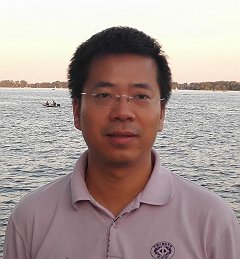
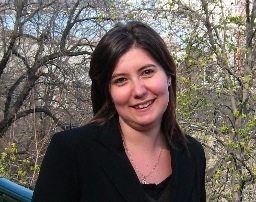
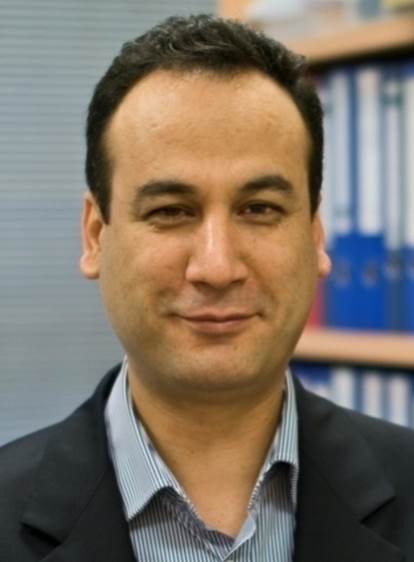
Fei He is an Associate Professor at Tsinghua University's School of Software, where he leads the THUFV research lab focused on formal verification and program analysis. His research spans formal methods, automated reasoning, and program verification, with applications in concurrent systems, networking (P4 programs), and probabilistic systems. Education & Employment: PhD from Tsinghua University (2008) Visiting Scholar at Carnegie Mellon University (2010-2011) and Politecnico di Milano (2006-2007) Faculty positions at Tsinghua since 2008 (Assistant Professor 2008-2011, Associate Professor 2011-present) Research: He's developed innovative techniques in SMT solving for concurrency verification, termination analysis, and regression verification. His tools like Deagle have won gold medals at SV-COMP. Current work focuses on probabilistic program verification and network program analysis. Publications: His 80+ publications demonstrate consistent contributions across formal methods (PLDI, OOPSLA, ICSE), networking (NSDI, INFOCOM), and software engineering (TSE, TOSEM), with recent emphasis on data-driven verification and automated invariant inference. Awards: Gold Medals in SV-COMP ConcurrencySafety (2022, 2023, 2025) Best Paper Awards at PPoPP 2022 and SETTA 2022 Advising: Mentors 13 PhD/Master's students in THUFV lab, with graduates joining Huawei, MPI-SP, and research institutions. Secured multiple NSF China grants for trustworthy software research. Service: Associate Editor for Theory of Computing Systems, program committees for PLDI/ICSE/OOPSLA, and former Local Chair for ISSTA 2019.
Adilson Motter is the Charles E. and Emma H. Morrison Professor of Physics and Astronomy and (by courtesy) Engineering Sciences and Applied Mathematics at Northwestern University. He serves as Director of the Center for Network Dynamics (CND) and has been a faculty member since March 2006. His academic appointments include affiliations with the Chemistry of Life Processes Institute (CLP), Molecular Biophysics Program, NSF-Simons National Institute for Theory and Mathematics in Biology (NITMB), Paula M. Trienens Institute for Sustainability and Energy, Graduate Program in Applied Physics, Center for Interdisciplinary Exploration and Research in Astrophysics (CIERA), Institute for Quantum Information Research and Engineering (INQUIRE), and Northwestern Institute on Complex Systems (NICO). Professor Motter received his Ph.D. in 2002 from UNICAMP (University of Campinas), Brazil, where he worked with Professor Patricio S. Letelier. Prior to joining Northwestern, he held positions as Guest Scientist at the Max Planck Institute for the Physics of Complex Systems in Germany and as Director's Funded Postdoctoral Fellow at the Center for Nonlinear Studies at Los Alamos National Laboratory. Professor Motter's research focuses on the dynamical behavior and control of complex systems and networks. His work spans theoretical and computational approaches to understanding phenomena in physical, biological, and engineered systems. Key research areas include: Cascading dynamics and network resilience Spontaneous synchronization and symmetry phenomena Network control theory and applications Quantum networks and information transfer Machine learning applications to network science Data-driven discovery in complex systems Applications to quantitative biology, biomedical research, renewable energy, smart power grids, microfluidics, and metamaterials Analysis of Professor Motter's recent publications reveals a strong interdisciplinary focus spanning physics, engineering, biology, and computer science. His work demonstrates consistent innovation in network science, with recent contributions advancing quantum networking architectures, understanding power grid limitations for electric vehicle integration, developing machine learning approaches for genetic analysis, and exploring fundamental synchronization phenomena. A notable trend is the increasing application of his theoretical frameworks to real-world challenges in energy systems, biomedical research, and quantum information technology. Professor Motter has received numerous prestigious awards and honors: Alfred P. Sloan Research Fellowship (2009) Weinberg Award for Excellence in Mentoring Undergraduate Research (2009) Northwestern-Argonne Early Career Investigator Award for Energy Research (2010) NSF Faculty Early Career Development (CAREER) Award (2011) Erdös-Rényi Prize in Network Science (2013) Fellow of the American Physical Society (2013) Simons Foundation Fellowship in Theoretical Physics (2015) Fellow of the American Association for the Advancement of Science (2015) Scialog Fellow (2015) Outstanding Referee, American Physical Society (2016) Fellow of the Network Science Society (2020) Senior Scientific Award, Complex Systems Society (2022) Professor Motter has demonstrated exceptional commitment to mentoring, as evidenced by the Weinberg Award for Excellence in Mentoring Undergraduate Research. His research group has received significant funding through multiple NSF grants, including his CAREER award, and collaborations with Argonne National Laboratory. Current research directions include mechanical metamaterial networks, quantum network science, and other areas of complex systems. The group has been actively recruiting postdoctoral researchers and has seen students recognized with awards and research grants. As Director of the Center for Network Dynamics (established September 2023), Professor Motter leads a multidisciplinary team exploring network phenomena across various domains. The Center has hosted significant events including the 'Brain Architecture and Computing 2024' workshop and is organizing the 2025 CDC Workshop on Neurocomputation and Dynamics in Rio de Janeiro. The Motter Group maintains active collaborations with experimentalists and researchers from diverse disciplines, facilitating the translation of theoretical insights into practical applications.
Teis Hansen is a Professor of Innovation and Entrepreneurship at the Department of Food and Resource Economics , University of Copenhagen, with a side-position at SINTEF 's Department of Technology Management in Norway. His academic background includes a PhD in Economic Geography (2012) and an MSc in Regional and Urban Planning Studies (2008, LSE). His research spans innovation studies, sustainability transitions, and economic geography , focusing on spatial innovation dynamics, transformative policy, green urban development, foundational economy, and technology transfer between developed and emerging economies. Empirical work covers bioeconomy, energy-intensive industries, maritime transport, plastics, and energy systems. Recent collaborations include international partnerships in Norway, Sweden, and Denmark. His 112 research outputs include 63 journal articles, 9 book chapters, and policy-relevant reports. Key publications address climate change mitigation frameworks, carbon capture feasibility, and circular bioeconomy transitions .
Deepa Camenga, MD, MHS, FAAP is an Associate Professor of Emergency Medicine at Yale School of Medicine with secondary appointments in Chronic Disease Epidemiology and General Pediatrics. She serves as the Associate Director of Pediatric Programs for the Yale Program in Addiction Medicine, where she leads clinical, educational, and policy efforts to improve healthcare for children impacted by substance use. As a board-certified physician in pediatrics and addiction medicine, Dr. Camenga specializes in adolescent addiction and is one of the few clinicians in Connecticut who prescribes medication treatment for adolescents with opioid use disorder. Dr. Camenga's educational background includes: BA from Yale University (2000) MD from University of Rochester School of Medicine & Dentistry (2005) Residency at University of Rochester Golisano Children Hospital (2008) Chief Resident at Children's Strong Hospital, Rochester (2009) Postdoctoral Fellowship and MHS in Health Services Research through the Robert Wood Johnson Foundation Clinical Scholars Program at Yale (2012) Dr. Camenga's research focuses on reducing the morbidity and mortality associated with adolescent substance use and substance use disorders. Her work specifically aims to improve identification and treatment of drug and tobacco use in healthcare settings, with a particular interest in developing technology-enhanced interventions to reduce substance use among adolescents and young adults. She employs both quantitative and qualitative methodologies to examine adolescent substance use patterns, cessation motivations, and the effectiveness of interventions in clinical and community settings. Her research has significant implications for public health policy and clinical practice guidelines related to youth substance use. Dr. Camenga's recent publications demonstrate a strong focus on adolescent vaping behaviors, impaired driving among youth, and digital interventions for substance use prevention. Her work spans multiple methodologies including longitudinal studies, system dynamics modeling, and mixed-methods approaches. Key themes in her research include the impact of flavored products on youth nicotine dependence, the social and environmental factors influencing risky behaviors, and the development of evidence-based approaches to substance use prevention and treatment for adolescents. Dr. Camenga is actively involved in national professional organizations and committees: Member of the American Academy of Pediatrics Committee on Substance Use and Prevention (since 2016) Member of the American Academy of Pediatrics Meeting Planning and Participation Committee (since 2018) Former Committee Member of the Academic Pediatric Association (2013-2015) Dr. Camenga has developed several innovative clinical programs, including a school-based health center tele-consult program and an inpatient adolescent addiction medicine consult service. She treats adolescents and young adults at the APT Foundation and leads an addiction medicine tele-consult service for local school-based health centers. Her work extends to the Yale DrivSim Lab, where she collaborates on studies examining the neurocognitive aspects of risky driving and substance use among youth. Dr. Camenga also chairs the American Academy of Pediatrics Committee on Substance Use and Prevention, positioning her as a national expert in pediatric addiction medicine.
Dr. Silvia Bonomi serves as an Associate Professor in the Department of Computer, Control and Management Engineering at Sapienza University of Rome, where she has held academic positions since 2006. Her career progression includes Research Fellow (2010-2011), Tenure Track Assistant Professor (2016-2019), and current Associate Professor appointment since 2019. She maintains her office in Room B114 and is actively engaged in research and teaching within the university's engineering faculty. Her educational background includes: PhD in Computer Engineering, Sapienza University of Rome and Institut de Formation Supérieure en Informatique et Communication (IFSIC/IRISA), Rennes, France (completed under advisors Prof. Roberto Baldoni and Prof. Michel Raynal) Dr. Bonomi's research critically examines dynamic distributed systems where entities autonomously join and leave networks, with applications spanning VANETs, airborne networks, social networks, and distributed cloud services. She pioneers work in Byzantine fault tolerance for mobile environments, blockchain security with emphasis on smart contract vulnerability analysis, and resilient cybersecurity frameworks integrating human factors. Her investigations into publish-subscribe systems focus on quality-of-service enhancements, while her peer-to-peer systems research addresses fundamental connectivity challenges in large-scale decentralized environments. This interdisciplinary approach bridges theoretical distributed computing with practical cybersecurity applications. Analysis of her 15 most recent publications (2021-2024) reveals dominant trends in blockchain security (particularly smart contract vulnerability taxonomies and analysis tool efficacy) and fault-tolerant distributed systems (reliable communication under Byzantine faults in dynamic networks). Her work increasingly integrates human factors into cybersecurity models and develops visual analytics for business-centric risk assessment. Publications span top venues including IEEE CSR, OPODIS, SAFECOMP, and journals like Computers & Security, demonstrating consistent contributions to both theoretical foundations and practical cybersecurity implementations.
E. Geoffrey Love is an Associate Professor of Business Administration at the University of Illinois at Urbana-Champaign, part of the Gies College of Business. He serves as Academic Co-Director of the Hoeft Technology and Management Program and Academic Director of the Carle Executive Education Program. With a PhD in Organizational Behavior from Harvard University (1997) and an AB in Applied Mathematics (1982), Love specializes in organizational innovation, corporate reputation, and institutional change. His research explores how firms navigate social evaluations, strategic innovation, and leadership dynamics. Education: PhD in Organizational Behavior (Harvard, 1997); AB in Applied Mathematics (Harvard, 1982) Positions: Academic Co-Director, Hoeft T&M Program (2024–present); Associate Professor (2016–present); Assistant Professor (2009–2016) Love's research interests span organizational design, leadership, and the impact of CEOs on corporate reputation. His work integrates institutional theory, strategic management, and behavioral insights. Notable studies include the dynamics of corporate reputation following downsizing, CEO succession, and the role of chief innovation officers. His recent articles highlight attention-based strategic leadership and innovation ecosystems across G-20 nations. Awards: Dean’s Impact Award (2022), Excellence in Graduate Teaching Award (2022) Love advises on multi-functional leadership and innovation strategy, emphasizing interdisciplinary education through programs like Hoeft T&M. His grants include funding for 'Attentional Control and Organizational Intelligence' (2024–2026). He teaches courses on strategic innovation, organizational behavior, and entrepreneurial management, leveraging over two decades of academic and industry insights.
Dr. Kosala Gunawardane is an Associate Professor in Renewable Energy Engineering at the University of Technology Sydney (UTS), School of Electrical and Data Engineering. Previously, she held roles as Associate Professor and founding Director of the Centre of Future Power and Energy Research (CFPER) at Auckland University of Technology (AUT), New Zealand. She also served as Deputy Program Leader in the Blue Economy Corporate Research Centre in Australia. Her academic journey includes a PhD in Power Electronics (University of Waikato, 2014) and a BEng in Electronics and Telecommunications Engineering (University of Moratuwa, Sri Lanka, 2005). She is an IEEE Senior Member and former Vice Chair of the IEEE Women in Engineering NZ North Chapter. Dr. Gunawardane’s research focuses on renewable energy systems, hydrogen and fuel cells, DC microgrids, supercapacitor applications, and power electronics. She has secured significant funding from NZ government and Australian CRC grants as a primary investigator. Her work emphasizes sustainable energy solutions, including grid stability, energy storage optimization, and offshore renewable systems. Her research highlights include pioneering hybrid energy storage systems, advanced DC circuit breaker designs, and hydrogen integration in microgrids. She has published over 111 articles and edited sections on hydrogen energy conversion and management. Awards include a 2018 finalist position in the NZ Women of Influence (Science & Innovation category). Dr. Gunawardane leads funded projects such as the Blue Economy CRC’s offshore power systems and UTS’s energy transition initiatives. She actively contributes to IEEE conferences as an organizer and associate editor of the IEEE Transactions on Power Electronics. Her teaching spans circuit analysis, sustainable energy systems, and energy policy.
Jianqi Xi is an Assistant Professor in the Department of Nuclear, Plasma & Radiological Engineering at the University of Illinois Urbana-Champaign, affiliated with The Grainger College of Engineering. His research focuses on nuclear materials, combining multiscale modeling with experimental techniques to understand material degradation under radiation and corrosive environments. He holds a Ph.D. in Materials Science and Engineering from the University of Tennessee-Knoxville (2017). Before joining UIUC, he held postdoctoral and industry positions at the University of Wisconsin-Madison and ThermoFisher Scientific. Research Interests: Fusion Materials Design Radiation-Corrosion Synergy Multiscale Modeling of Microstructure Evolution Data-Driven Materials Innovation Molten Salt Corrosion Recent publications emphasize atomic-scale mechanisms in silicon carbide (SiC) corrosion, radiation damage mitigation, and advanced ceramics design. His work bridges computational simulations with experimental validation to address challenges in nuclear energy systems. Awards include the Joseph E. Spruiell Award (2017) and recognition as an Outstanding Reviewer (2018). He leads the Modeling of Nuclear Materials (MNM) Group , focusing on interdisciplinary approaches to accelerate material discovery for next-generation nuclear reactors. Current openings exist for researchers interested in computational materials science and experimental collaborations.
Nazli Goharian is a Clinical Professor of Computer Science at Georgetown University and Associate Director of the Information Retrieval Lab. She holds a PhD from Florida Institute of Technology and joined Georgetown in 2010 after industry experience and previous academic positions at Illinois Institute of Technology. Education: PhD Computer Science, Florida Institute of Technology (2001) MSc Computer Science, George Mason University (1995) BSc Computer Science, Dortmund University (1992) Her research spans information retrieval, text mining, and natural language processing with applications in health/medical domains. She focuses on developing computational methods for medical search, mental health analysis from social media, clinical text summarization, and adverse drug reaction detection. Her recent publications (2020-2016) predominantly focus on neural ranking models, transformer architectures for document retrieval, and clinical NLP applications. Notable trends include work on BERT-based re-ranking, zero-shot multilingual retrieval, and ontology-aware medical summarization. Awards & Honors: EMNLP 2017 Best Long Paper Award COLING 2018 Honorable Mention & Area Chair Favorite Julia Beveridge Award for Faculty (IIT, 2009) Multiple Teaching Excellence Awards (2002-2007) Research Leadership: She has supervised 6 PhD students to completion with placements at leading institutions. Secured over $500,000 in research funding from NSF, Adobe, and international partners. Founded the Semi-Annual Graduate Research Presentation Days at Georgetown and served as Program Chair for ECIR 2024. She leads the Information Retrieval Lab which focuses on developing novel algorithms for efficient document retrieval, cross-lingual search, and specialized applications in healthcare text analysis.
Mustafa Ünel is a Professor and Program Coordinator for Mechatronics Engineering at Sabanci University's Faculty of Engineering and Natural Sciences. He directs the Control, Vision and Robotics Research Lab and serves as a Senior Researcher at SU-IMC. His research spans robotics, computer vision, and machine learning applications in industrial systems. He earned a PhD in Electrical Engineering from Brown University and has held academic positions at Gebze Institute of Technology and Yale University. Current research projects include autonomous vehicle navigation, system health prediction, and aerospace manufacturing technologies funded by TUBITAK and Ford Otosan. He has supervised over 50 graduate theses and teaches courses including Autonomous Mobile Robotics, Nonlinear Control, and Computer Vision. His industrial collaborations focus on AI applications in automotive systems and construction automation.
Paul Rohmeyer is an Adjunct Professor at Stevens Institute of Technology's School of Business, holding roles such as Associate Teaching Professor (2015-Present) and former Program Director for the MSIS program (2017-2019). He holds a PhD in Information Management from Stevens (2006) and has extensive industry experience in IT governance, risk management, and leadership roles across AXA Financial, SAIC/Bellcore, and American Home Products. His research focuses on Information Security Management, Risk Assessment, Project Management, and Business Intelligence. Notable work includes his 2018 book on Financial Cybersecurity Risk Management and studies on network dynamics impacting company profitability (2015), cloud computing risks (2015), and cybersecurity policy frameworks (2012). Rohmeyer is a Ponemon Institute Fellow and actively contributes to professional organizations like ISACA and PMI. He teaches advanced courses in cybersecurity, data management, and project management at both graduate and undergraduate levels, including MIS 646 Information Security Management and FIN 545 Risk Management for Financial Cybersecurity. His career spans academic leadership and executive IT roles, with a strong emphasis on bridging theoretical research and practical applications in organizational security and technological innovation.
Donald French is a Full Professor in the Department of Mathematical Sciences at the University of Cincinnati, holding this position since 1999. Additionally, he has been a Contractor/Consultant at Wright-Patterson Air Force Base since 2010. He earned a PhD in Applied Mathematics from Cornell University (1985), an MS in Applied Mathematics from Cornell (1983), and a BA in Mathematics and Physics from the State University of New York at Oswego (1980). His research focuses on interdisciplinary mathematical modeling, particularly in Cellular Physiology and Neuroscience. Key areas include inverse problems in olfactory cilia dynamics, neuronal networks, and biofilms. He has also contributed extensively to numerical analysis, specializing in error analysis for finite element methods, meshfree techniques, and discontinuous Galerkin methods. Research Highlights: Development of energy-preserving numerical schemes for time-dependent PDEs in phase transitions and viscoelasticity. Analysis of meshfree and discontinuous Galerkin methods for diffusion problems. Collaboration with Steven Kleene on olfactory cilia modeling since 2001. His work spans computational neuroscience, fluid dynamics, and aerospace engineering, with recent advancements in trajectory planning for unmanned vehicles using PDE-based models. French has secured over $600,000 in NSF grants for projects like ion channel distribution modeling (2005–2009) and mathematical physiology career development (2002–2004). French has held leadership roles, including Graduate Program Director at UC (2015–2017 and 1999–2001), and served on Taft Research and departmental committees. His teaching includes advanced courses in numerical analysis, PDEs, and mathematical biology, which he helped pioneer at UC.
Wolfgang Bösch is a Professor at Graz University of Technology's Institute of Microwave and Photonic Engineering, specializing in advanced RF components and measurement techniques. His research advances high-frequency systems through innovations in antenna technology and electromagnetic theory. Research domains include: metamaterial-based antennas, precision measurement calibration, microwave filter optimization, and 3D-printed RF components. Recent work demonstrates strong focus on millimeter-wave systems and reconfigurable antenna arrays. Publications highlight expertise in: machine learning for filter design, metasurface applications, PCB transitions for high-frequency systems, and uncertainty quantification in RF engineering. Research consistently addresses miniaturization and performance optimization challenges. Awards recognize contributions to measurement science and antenna design: Fellow of IET, Houska Prize, and best paper awards. Current laboratories investigate liquid crystal antenna systems and error calibration methodologies for next-generation wireless systems.
Stacey F. Bent is the Jagdeep and Roshni Singh Professor in the School of Engineering at Stanford University, where she serves as Professor of Chemical Engineering with courtesy appointments in Chemistry, Electrical Engineering, and Materials Science and Engineering. She also holds the position of Vice Provost for Graduate Education and Postdoctoral Affairs and is a Senior Fellow at the Precourt Institute for Energy. Her academic journey began with a B.S. in Chemical Engineering from UC Berkeley (1987) followed by a Ph.D. in Chemistry from Stanford University (1992), after which she completed postdoctoral work at AT&T Bell Laboratories and served as an assistant professor at New York University before joining Stanford in 1998. Dr. Bent's research focuses on understanding and controlling surface and interfacial chemistry with applications in semiconductor processing, micro- and nanoelectronics, nanotechnology, and sustainable energy. Her group employs molecular-level approaches to study semiconductor surface functionalization, atomic layer deposition mechanisms, nanoscale light absorption materials, photovoltaic interface engineering, and catalyst/electrocatalyst deposition. Her lab maintains extensive facilities including over ten ALD/MLD reactors, ultra-high vacuum chambers with in situ XPS capabilities, and various characterization tools for materials analysis. Her recent publications reveal strong focus areas in atomic layer deposition techniques, battery interface engineering, catalyst design for syngas conversion, and nanoscale patterning technologies. The research spans fundamental surface science to practical energy applications, with particular emphasis on developing precise materials synthesis methods for advanced electronic and energy systems. Among her numerous accolades are election to the National Academy of Engineering (2020), the ACS Award in Surface Chemistry (2018), and the ALD Innovator Award (2021). She has also received multiple teaching awards including the Tau Beta Pi Award for Excellence in Undergraduate Teaching (2006) and the Stanford Medal for Faculty Excellence Fostering Undergraduate Research (2013). Braskem Award for Excellence in Materials Engineering and Science (AIChE) (2021) ALD (Atomic Layer Deposition) Innovator Award (2021) National Academy of Engineering (2020) ACS Award in Surface Chemistry (2018) Fellow of the American Chemical Society (2013) AVS Fellow (2006) Dr. Bent has mentored over 70 graduate students and postdocs who have gone on to successful careers in academia, industry, and government. Her research group maintains strong collaborations with national laboratories and industry partners, particularly in semiconductor manufacturing and energy technologies. She previously served as Director of the TomKat Center for Sustainable Energy for 10 years and as co-Director of the Center on Nanostructuring for Efficient Energy Conversion (CNEEC), a DOE Energy Frontier Research Center. The Bent Research Group operates state-of-the-art facilities including multiple ALD/MLD reactors capable of depositing over 30 materials, in situ characterization tools, and access to Stanford's shared equipment facilities for advanced materials analysis. The group's international composition (with members from over 10 countries) reflects its global impact in surface science and materials engineering.
Doug L. James is a Full Professor of Computer Science at Stanford University since 2015, following roles as Associate Professor at Cornell University (2006-2015) and Assistant Professor at Carnegie Mellon University (2002-2006). He holds a PhD in Applied Mathematics from the University of British Columbia (2001), alongside earlier degrees from the same institution and the University of Western Ontario. His research focuses on computer graphics, sound synthesis, and physically-based modeling, with notable contributions to fluid simulation, cloth animation, and medical modeling. Key achievements include the 2012 Technical Achievement Award from the Academy of Motion Picture Arts and Sciences for 'Wavelet Turbulence,' and the 2013 Katayanagi Prize. He serves as a consulting Senior Research Scientist at Pixar Animation Studios and has led roles like Technical Papers Chair at SIGGRAPH 2015. His work integrates physics-based principles with interactive systems, emphasizing real-time applications and data-driven methods. Research interests span sound synthesis for animations (e.g., cloth, water, impact sounds), deformable models for medical simulation, and tools like 'svMorph' for virtual surgery planning. His publications reflect a blend of algorithmic innovation and practical applications in film, gaming, and healthcare.