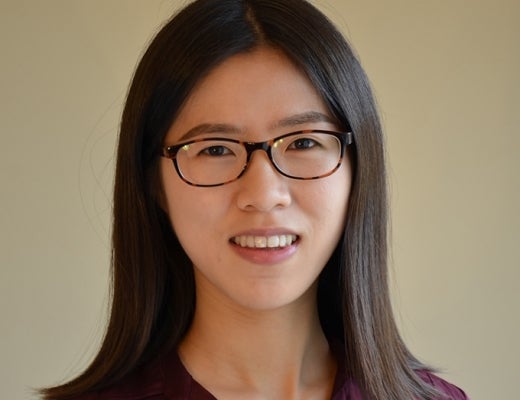
Na Du is an Assistant Professor in the Department of Informatics and Networked Systems at the University of Pittsburgh's School of Computing and Information. She holds a PhD in Industrial & Operations Engineering from the University of Michigan (2021) and a Graduate Certificate in Data Science. Her research focuses on human factors in smart cities, human-centered computing, and user experience design. She is affiliated with the Intelligent Systems Program, Pitt Cyber, and the Center for Governance and Markets. Education: PhD in Industrial & Operations Engineering (University of Michigan, 2021); Undergraduate in Psychology (Zhejiang University). Research emphasizes explainable AI, human-AI teaming, and smart technologies. Recent grants include funding from Honda Research Institute and Pitt Cyber Accelerator for projects on emotions in Human-AI interaction and Metaverse privacy awareness. Her work has been recognized with awards like the HFES Best Paper Award and the IOE Outstanding Student Award. Advising includes PhD students and researchers in human factors and UX design. The HAT Lab under her leadership explores interdisciplinary challenges in human-computer interaction and smart systems.
Tanja Narancic is an Assistant Professor at the School of Biomolecular and Biomedical Science at University College Dublin (UCD). She is also an academic collaborator at the Bioeconomy Research Centre BiOrbic, where she coordinates multiple research projects among PIs, PostDocs, PhD students, and designs projects proposed by industrial partners. Dr. Narancic earned her PhD in Applied Microbiology from the University of Belgrade, Serbia in 2012, followed by postdoctoral research at the Institute of Molecular Genetics and Genetic Engineering in Belgrade. In 2013, she joined University College Dublin as a Postdoctoral Research Fellow under Prof. Kevin O'Connor, where she investigated microbial metabolic pathways using proteomics, metabolomics, and synthetic biology tools as part of FP7 and H2020 projects. She became a Research Fellow at BiOrbic in 2019 before advancing to her current position as Assistant Professor. Her research focuses on elucidating bacterial metabolism and leveraging synthetic biology tools to exploit bacteria for producing high-value products. Key research areas include: Proteomics, Metabolomics, and Transcriptomics for microbial pathway analysis Metabolic engineering for bioproduction Biocatalysis and enzyme optimization Protein engineering and purification Polyhydroxyalkanoate (PHA) production from waste streams Plastic upcycling and biodegradation technologies Dr. Narancic's publication record demonstrates a strong focus on converting plastic waste into valuable biodegradable materials through innovative biotechnological approaches. Her recent work has centered on developing microbial systems for upcycling polyethylene terephthalate (PET), polyolefins, and other recalcitrant plastics into polyhydroxyalkanoates (PHAs) and other high-value products. She has made significant contributions to understanding the metabolic pathways involved in plastic monomer conversion and has developed engineered strains with enhanced capabilities for plastic upcycling. As a principal investigator, Dr. Narancic leads multiple significant research projects including the Ad Astra Studentship (2023-2028), the UPLIFT project on sustainable plastics for food packaging (2021-2025), and the PROMOFER project (2024-2028) on optimizing PHB production. She also serves as a reviewer for numerous prestigious journals including Enzyme and Microbial Technology, Journal of Applied Microbiology, and Microbial Biotechnology. Her teaching portfolio includes coordination of multiple modules such as Bioprocessing, Metabolism and Disease, and SynBio for Bioeconomy, demonstrating her commitment to educating the next generation of scientists in both fundamental and applied aspects of biomolecular science.
Noorbakhsh Amiri Golilarz is an Assistant Professor in the Department of Computer Science at The University of Alabama, College of Engineering. He has established himself as a prominent researcher in artificial intelligence, particularly in computer vision, deep learning, and image processing. His educational background includes: Postdoctoral Research Fellow, Computer Science, Boston College (2023) Ph.D., Electrical and Computer Engineering, Southern Illinois University Carbondale (2023) D. Eng., Computer Science and Technology, University of Electronic Science and Technology of China (2021) M.S., Electrical and Electronic Engineering, Eastern Mediterranean University (2017) B.S., Electrical Engineering, University of Guilan (2012) Dr. Golilarz's research spans multiple domains of artificial intelligence with a particular focus on computer vision, deep learning, and image processing applications. His work addresses challenges in medical imaging, satellite imagery, and cognitive neuroscience. He has made significant contributions to image denoising techniques, control chart pattern recognition, and AI applications in healthcare. His recent work has expanded into generative AI, large language models, and secure machine learning operations. His publication portfolio demonstrates consistent productivity with over 2500 citations and an h-index of 25. His most impactful work includes applications of blockchain and federated learning for COVID-19 detection, optimized support vector machines for medical diagnosis, and innovative image denoising techniques using metaheuristic optimization algorithms. Among his professional achievements: Co-founded AI Letters journal in 2024, serving as Associate Editor-in-Chief Served as Lead Guest Editor and Topic Editor for several SCI-indexed journals Held the role of Conference Program Chair Dr. Golilarz has supervised numerous graduate students and research projects, with his work spanning theoretical advancements in AI algorithms to practical applications in healthcare, energy systems, and cybersecurity. His research group has established collaborations with institutions including Boston College and Mississippi State University.
Prof Kulwant Singh is a Professor of Strategy and Policy at the NUS Business School, National University of Singapore. His research focuses on strategy, management, organizational behavior, applied economics, and business systems in regional and global contexts. He holds a permanent academic appointment since January 2022. Teaching philosophy emphasizes contextualizing content for Singapore/Asia-Pacific business environments through case studies and combining theoretical frameworks with practical applications. He prioritizes interactive seminars to enhance student engagement and theoretical understanding in strategy education. Research interests include corporate diversification strategies, political ties' impact, alliance portfolio management, institutional transitions, and innovation dynamics in emerging markets. His work bridges universal strategic theories with Asia-specific business practices. Award-winning contributions include developing teaching materials for regional business contexts and advancing understanding of strategic competition in complex environments. Active in academic leadership through conference organization and editorial roles in strategy research.
Raphael Hauser is an Associate Professor in Numerical Mathematics at the University of Oxford's Mathematical Institute, Director of Graduate Studies - Teaching, and Tanaka Fellow in Applied Mathematics at Pembroke College. His affiliations include membership in the Data Science, Numerical Analysis, and Mathematical and Computational Finance research groups, as well as a fellowship at the Alan Turing Institute. Education: PhD in Operations Research, Cornell University, Ithaca, USA Dipl. Math. ETH, Swiss Federal Institute of Technology (ETH Zurich), Switzerland Research interests span data science, numerical optimisation, medical imaging, distributed computing, and applied probability/statistics. His work integrates mathematical rigor with practical applications, particularly in optimization algorithms, machine learning theory, and medical imaging technology. Publications focus on optimization theory, stochastic processes, medical imaging systems, and computational finance, with recurring themes in non-convex optimization guarantees, PCA variants, and X-ray tomography innovations. Awards: Oxford University Teaching Award (2007) SIAM Optimization Prize (2005) SIAM Student Paper Prize (2000) Advising includes 15+ DPhil students and 40+ MSc students, with projects in optimization, finance, imaging, and machine learning. Current postdocs and students are affiliated with the Alan Turing Institute and industrial partners like Siemens and Macquarie Group. He leads teams in the Mathematical Institute's research groups and collaborates with the Alan Turing Institute on large-scale data science initiatives.
Josie Hughes is a Tenure Track Assistant Professor at the Swiss Federal Institute of Technology Lausanne (EPFL) within the School of Engineering's Institute of Mechanical Engineering. She leads the Computer Robot Design and Fabrication Laboratory (CREATE Lab) and serves on the doctoral program committee for Robotics, Control and Intelligent Systems. Her roles include teaching courses in product development, engineering design, and data-driven manufacturing methods while maintaining active research and student supervision. Her research centers on soft robotics with emphasis on adaptive design, fabrication techniques, and real-world applications. Key areas include agricultural robotics (exemplified by the GraspBerry raspberry harvester), biomimetic materials like self-healing e-skins, and developmental robotics (BabyBot project). She pioneers approaches integrating morphological computation, variable stiffness mechanisms, and machine learning for robotic control, while championing open-source principles and diversity in robotics through accessible educational initiatives like balloon robot kits. Analysis of her recent publications reveals dominant trends in soft robotics adaptability, particularly in variable-stiffness structures, sensor integration, and task-specific optimization. Her work bridges fundamental material science with practical applications in agriculture, food science, and human-robot interaction, frequently employing computational methods like Bayesian optimization and neural networks for design and control. Scientific awards: No specific awards were mentioned in the source materials. Dr. Hughes actively supervises 16 doctoral students across diverse projects including soft grippers for agriculture, biomimetic locomotion, and robotic manipulation systems. Her advising portfolio shows strong alignment with her research themes, with current students working on topics like modular soft arms, agricultural automation, and developmental robotics. While grant details weren't specified, her high publication volume indicates robust research funding. The CREATE Lab under her leadership focuses on holistic co-design of hardware and software for soft robotic systems, with notable projects including the GraspBerry agricultural harvester and BabyBot developmental platform. The lab emphasizes open-source development and educational outreach, maintaining strong industry and academic collaborations while pushing boundaries in reconfigurable robotics and human-centered applications.
David Landriault is a Professor in the Department of Statistics and Actuarial Science at the University of Waterloo, Canada, and a Canada Research Chair in Risk Theory. His research focuses on Actuarial Science, Quantitative Risk Management, Applied Probability, and Stochastic Processes, particularly in ruin theory, drawdown analysis, and stochastic control for insurance and finance applications. Education: PhD in Mathematics (2005), MSc in Mathematics (2003), BSc in Actuarial Science (2002) from Laval University. Affiliations: University of Waterloo (postdoctoral fellowship, 2006); Canada Research Chair in Risk Theory. Research Interests Risk and Ruin Theory Stochastic Control in Insurance and Finance Drawdown and Occupation Time Analysis Regime-Switching Models Reinsurance Design and Optimization Time-Dependent Risk Models Scientific Awards Fellow of the Canadian Institute of Actuaries (F.C.I.A.), 2009 Fellow of the Society of Actuaries (F.S.A.), 2006
Alexandre RUBESAM is an Associate Professor at IÉSEG School of Management (France), specializing in Finance with a focus on asset pricing, financial econometrics, and quantitative trading. He holds a Ph.D. in Finance from Cass Business School (UK), an MSc in Statistics from the State University of Campinas (Brazil), and a Bachelor in Statistics from the same university. Education: Ph.D., Finance, Cass Business School, UK (2008) MSc., Statistics, State University of Campinas, Brazil (2004) Bachelor, Statistics, State University of Campinas, Brazil (2001) His research interests span behavioral finance, risk management, machine learning applications in finance, and portfolio optimization. Notably, he explores topics like market herding during crises, volatility forecasting, and the low-beta anomaly through behavioral lenses. Prof. Rubesam has authored influential papers on information transmission in financial markets, risk parity strategies, and the efficacy of linear models in volatility prediction. His work bridges theoretical finance with practical applications, such as developing machine learning-based portfolio construction methods for emerging markets. Awards: 2007 Dimitris N. Chorafas Foundation Prize 2006 Best Paper Award, Cass Business School His professional roles include Chief Risk Officer at Itaú-Unibanco (2013–2017) and Quantitative Researcher/Trader at Principia Capital Management (2009–2011). He is a member of LEM (Laboratory of Economics and Management) and teaches courses on financial programming, risk management, and portfolio analysis.
Prof. Dr. Christian Homburg holds the Chair of Business-to-Business Marketing, Sales & Pricing at the University of Mannheim's Faculty of Business Administration. Since 2007, he has been a Professorial Fellow at the University of Melbourne. His research spans marketing strategy, sales management, pricing, and customer relationship management, with a focus on business-to-business contexts. He collaborates with global firms such as Accenture, BOSCH, SAP, and BASF. Research Interests: Prof. Homburg explores topics like sales force automation, key account management, IoT in marketing, and augmented reality in sales. His work bridges academic theory and practical implementation, emphasizing organizational systems driving customer and competitor responsiveness. Scientific Awards: Hermann Billing Prize (1989) Multiple Best Paper Awards from the American Marketing Association (1997-2010) Louis W. Stern Award (2009) Best Paper Awards from Journal of the Academy of Marketing Science and Journal of Business to Business Marketing Publications: Author of 7+ editions of Marketing Management , co-editor of the Handbook of Customer Loyalty Management , and contributor to leading journals like Journal of Marketing and Strategic Management Journal .
Michael Wara is a Senior Research Scholar at the Stanford Woods Institute for the Environment and Director of the Climate and Energy Policy Program. He holds a JD from Stanford Law School, a PhD in Ocean Sciences from UC Santa Cruz, and a BA from Columbia University. His work bridges legal, scientific, and policy domains to address climate and energy challenges through bipartisan technical assistance and research collaboration with economists, engineers, and scientists. His research focuses on carbon pricing mechanisms, energy innovation, and regulatory solutions for climate policy. He advises policymakers on designing effective laws and regulations, with particular expertise in international environmental treaties like the ozone and climate regimes. Wara also teaches courses on energy law, wildfire policy, and carbon taxation at Stanford Law School. Key contributions include analyzing the economic impacts of EPA regulations, evaluating California’s carbon market mechanisms, and advancing strategies to decarbonize building electrification. His interdisciplinary approach emphasizes practical solutions to global environmental challenges, leveraging Stanford’s expertise in energy systems and policy. Wara’s policy practicum courses engage students in real-world projects such as evaluating carbon pollution standards and wildfire management policies. His work frequently appears in peer-reviewed journals and media outlets like The Atlantic and New York Times , addressing topics like the Supreme Court’s EPA rulings and wildfire insurance issues.
Rahul Sarkar is a Postdoctoral Fellow at the University of California, Berkeley, affiliated with the Department of Mathematics . He was previously a Ph.D. student in the Institute for Computational and Mathematical Engineering (ICME) at Stanford University, graduating in 2022 under the advisement of Biondo Biondi and András Vasy. Research Interests : Quantum information theory, inverse problems, machine learning, microlocal analysis, and numerical methods for PDEs. Scientific Contributions : Developed novel quantum computing algorithms and numerical schemes for geophysical imaging, with applications in seismic tomography and quantum signal processing. Teaching : Taught courses at Stanford including Introduction to Quantum Computing and 3D Seismic Imaging , with roles as instructor and course assistant. Awards : Schlumberger Innovation Fellowship (2019-2020). His work bridges mathematical analysis and quantum computation , with a focus on solving real-world problems through interdisciplinary approaches. He has collaborated with institutions like IBM and Schlumberger to apply quantum algorithms to geoscience and financial optimization.
Chandra Chekuri is the Paul and Cynthia Saylor Professor in the Department of Computer Science at the University of Illinois Urbana-Champaign, situated within the Grainger College of Engineering. He has been actively contributing to theoretical computer science for over two decades, with significant leadership roles including serving as Editor-in-Chief of the prestigious SIAM Journal on Computing since May 2025. His academic journey began with a B.Tech in Computer Science from the Indian Institute of Technology, Madras in 1993, followed by a Ph.D. in Computer Science from Stanford University in 1998. Prior to joining UIUC, he spent eight years as a Member of Technical Staff at Bell Labs, Lucent Technologies. Chekuri's research focuses on theoretical computer science with particular emphasis on the design and analysis of algorithms, discrete and combinatorial optimization, approximation algorithms, mathematical programming, and graph theory. His work explores fundamental connections between discrete structures and optimization problems, with applications spanning network design, data analysis, and computational complexity. His recent publications demonstrate a continued focus on hypergraph algorithms, submodular function optimization, and graph partitioning problems, showing how theoretical insights can yield practical algorithmic improvements. His approach often combines continuous relaxations with discrete rounding techniques to develop approximation algorithms for NP-hard problems. As Editor-in-Chief of SIAM Journal on Computing, Chekuri leads one of theoretical computer science's most respected publications, which covers analysis and design of algorithms, algorithmic game theory, computational complexity, and other mathematical aspects of computer science. His editorial leadership follows previous service as Associate Editor for several major journals including SIAM Journal on Computing, Mathematics of Operations Research, and Mathematical Programming. ACM Fellow (January 2024) Scott Fisher Teaching Award (for year 2022-23) from CS Department Chekuri has advised numerous PhD students to completion, including Kent Quanrud, Vivek Madan, Shalmoli Gupta, and Chao Xu, with several currently in progress such as Tanvi Bajpai, ElFarouk Harb, Rhea Jain, and Weihao Zhu. His teaching portfolio includes graduate courses on Randomized Algorithms, Approximation Algorithms, Algorithms for Big Data, and Combinatorial Optimization. He has served as Director of the Graduate Program in the Department of Computer Science from May 2014 to August 2017, demonstrating significant administrative leadership within the department.
Assoc Prof Ying Chen is an Associate Professor at the National University of Singapore , affiliated with the Department of Mathematics, Asian Institute of Digital Finance (as Academic Director of PhD Program in Digital FinTech 2022–2024), Risk Management Institute (2019–2023), Department of Statistics and Data Science (2019–2023), and Department of Economics (2018–2023). She also contributes to NUS Graduate School for Integrative Sciences and Engineering since 2016. Research Interests include: AI forecasting and quantum computing for finance Nonstationary time series and functional data analysis Energy data analytics and precision medicine Network autoregression and spatial-temporal modeling Explainable AI and citation metrics Portfolio liquidation and market-making algorithms Article Trends demonstrate expertise in: Adaptive forecasting for gas flows and electricity prices Blockchain network influence detection Quantum computing applications in finance Functional autoregression with mixed predictors Credit rating fairness and explainability High-resolution implied volatility modeling Scientific Awards include: ISI Elected Member (2016–) International Statistical Institute Council (2023–2027) IASC Scientific Secretary (2017–2019, 2023–2025) Advisory roles for EU FIN-TECH and xAIM projects
Professor Yasamin Mostofi is a faculty member in the Department of Electrical and Computer Engineering at the University of California, Santa Barbara. She is also affiliated with the Department of Computer Science and the Center for Control, Dynamical Systems and Computation. Her work bridges wireless systems, robotics, and machine learning. PhD, Stanford University MS, Stanford University MS, Sharif University of Technology Research Interests : Her lab focuses on wireless systems and autonomous agents , developing novel mathematical models for RF sensing and communication-aware robotics. Current directions include WiFi/millimeter wave/6G-based imaging and analytics, networked robotics for cellular systems, human-robot collaboration, and machine learning integration. Recent Publications : Her work spans through-wall crowd analytics , robot-assisted connectivity , and vision-aided wireless sensing , with applications in smart health, security, and retail optimization. Key trends include cross-modal integration (WiFi and vision), synthetic data generation, and real-world clinical validation. Scientific Recognition : Presidential Early Career Award for Scientists and Engineers (PECASE) Antonio Ruberti Prize, IEEE Control Systems Society NSF CAREER Award IEEE Region 6 Outstanding Engineer Award IEEE Fellow (2020) Advising and Leadership : She mentors PhD students in systems research, with graduates joining leading companies like Qualcomm and Google. She co-founded NPJ Wireless Technology (Nature Portfolio) and serves on editorial boards including IEEE Transactions on Control of Network Systems .
Dr. Dmytro Matsypura is an Associate Professor in the Discipline of Business Analytics at the University of Sydney Business School. He holds a BA (Hons) from Kyiv Polytechnic Institute (KPI), an MS (Hons) from KPI, and a PhD from the University of Massachusetts Amherst. His research focuses on optimization methodologies, network science, and their applications in finance, transportation, ecology, and graph theory. He is a recipient of multiple teaching awards, including the Wayne Lonergan Outstanding Teaching Award (Early Career) in 2010. Education: PhD in Management Science, University of Massachusetts Amherst (2006) MS (Hons) in Information Systems, Kyiv Polytechnic Institute (2000) BA (Hons) in Business Administration, Kyiv Polytechnic Institute (1998) Research Interests: Dr. Matsypura’s work spans operations research and management science, with a focus on mathematical optimization and network science. His methodological contributions include developing efficient optimization algorithms, while his applied research addresses real-world challenges in finance, engineering, and ecology. Notable applications include wildfire fuel management, portfolio margining, and credit card fraud detection via graph-based models. Awards and Recognition: Teaching Excellence Award (2008, 2013, 2018) Wayne Lonergan Outstanding Teaching Award (Early Career) (2010) Grants and Projects: Current projects include Bushfire Analytics: Optimization of Fuel Reduction (2023, ARC Discovery Project). His research frequently integrates interdisciplinary collaborations, such as applying graph theory to biomedical problems and cybersecurity. Labs/Teams: Active in the Sydney Environment Institute, contributing to projects at the intersection of analytics and sustainability. Collaborates with industry on fraud detection and supply chain optimization.