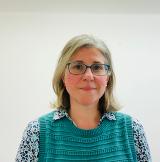
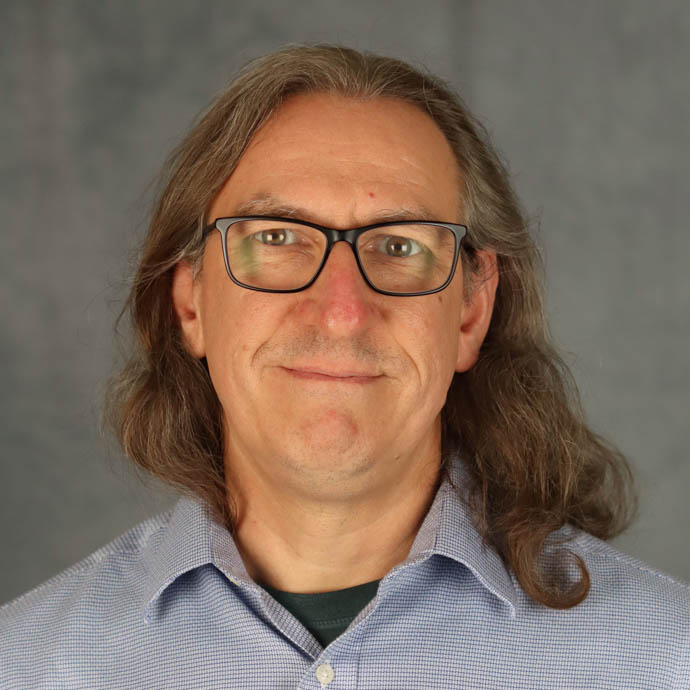
Helen Taylor is a Lecturer in Human Resource Management at the School of Business, Charles Sturt University (Port Macquarie campus), specializing in critical management studies with focus areas including entrepreneurship, diversity and inclusion, and hybrid working environments across social enterprises, higher education, and public sectors. Her educational qualifications include a PhD, Master of Management (MaM), and Bachelor of Arts (BA). Research interests encompass: Critical Management Studies Entrepreneurship in regional contexts Diversity and inclusion in primary industries & public sector Management Education Current projects examine hybrid working in public sector management, intersectionality in social entrepreneurship, and EDI frameworks in academia. Recent publications analyze post-pandemic remote work disruptions, feminist evaluation methodologies, and co-design approaches for gender equity initiatives. Her work demonstrates strong thematic alignment with organizational behavior, gender studies, and workplace transformation. Dr. Taylor actively contributes to practical applications through: Science in Australia Gender Equity (SAGE) Athena SWAN accreditation reports UTS Centre for Social Justice and Inclusion Partnership Framework development Ongoing public sector consultations on hybrid work challenges She teaches MGT307 Applied Entrepreneurial Projects and HRM512 Values and Conflict in Organisations, integrating research insights into entrepreneurship and employment relations curricula.
Professor Nikoleta Jones is a leading environmental sociologist at the University of Warwick's School of Global Sustainable Development, specializing in the social dimensions of biodiversity conservation and climate change policy. Formerly a Principal Research Associate at the University of Cambridge, she has secured over £2.2 million in research funding including an ERC grant for the FIDELIO project which collaborates with 20 European park authorities. Her research integrates mixed-methods approaches to analyze social impacts of protected areas, forest management, and climate adaptation policies. She develops behavioral predictive models incorporating spatial-temporal elements, with core interests in equitable governance, social capital dynamics, and policy implementation across European and Global South contexts including Madagascar. Her work directly informs EU Biodiversity Strategy targets and UK net zero commitments. Recent publications reveal strong thematic concentration on spatial distribution of social impacts, equitable governance frameworks, and socio-economic drivers of conservation support, with methodological innovations in Bayesian modeling and participatory assessment tools. Geographic focus spans European protected areas, Madagascar's deforestation challenges, and UK rewilding initiatives. Scientific Awards: Senior Fellow of the Higher Education Academy Professor Jones has supervised 3 PhD completions and currently mentors 5 doctoral candidates alongside over 25 Master's dissertations. She designs and leads postgraduate modules in sustainability while directing the Social Capital and Impact Assessment Tool for Protected Areas (SOCIAT). Her FIDELIO project established Europe's largest social impact database for protected areas, directly influencing Global Biodiversity Framework implementation. She leads a multi-institutional research consortium under the FIDELIO project, coordinating with park authorities across 20 European sites to develop evidence-based policy tools. Her team's work on SOCIAT provides standardized frameworks for measuring social impacts in conservation governance.
Dr. Justyna Wubs-Mrozewicz is an Associate Professor in Medieval History at the University of Amsterdam, Faculty of Humanities, Department of History, European Studies & Religious Studies. She works from the Oost Indisch Huis (room C.107) at Kloveniersburgwal 48 in Amsterdam. Her research focuses on premodern conflict management, maritime trade networks, and the Hanseatic League, with particular attention to commercial cities in Northern Europe during the late medieval period. Dr. Wubs-Mrozewicz leads the NWO VIDI project "Managing multi-level conflicts in commercial cities in northern Europe (c. 1350-1570)," which proposes a five-partite model of conflict management consisting of prevention, provocation, maintenance of the status quo, escalation, and resolution. Her research combines insights from economic, legal, and political history to analyze how conflict managers in premodern cities safeguarded urban autonomy through sophisticated management strategies. Prior to her current position, she held research appointments at Leiden University, the University of Groningen, and other institutions across Europe. Her research interests include premodern conflict management, mobility, identity and alterity, intergroup dynamics, language and communication; the Hanse, premodern Scandinavia; premodern commercial cities in Europe; premodern maritime trade in Europe; and food and drink in medieval Europe. She employs a primarily social history approach while engaging with topics from political, economic, legal, and cultural history. Her publications reveal a consistent focus on how merchants and city officials developed sophisticated strategies to manage conflicts across multiple levels, from individual disputes to international tensions. Her work demonstrates the importance of understanding historical conflict management for contemporary Alternative Dispute Resolution (ADR) and economic diplomacy, showing why we should look beyond conflict resolution to consider the full spectrum of conflict management strategies. Among her notable achievements is the Humanities Education Award 2019 for an MA course, along with prestigious research grants including an NWO VIDI (2018-2023), NWO VENI (2011-2015), and NWO Rubicon (2009-2010) project. She has also served on various grant committees including as a member of an NWO grant committee and the Aspasia grant committee at the University of Amsterdam. As an educator, Dr. Wubs-Mrozewicz teaches courses on medieval history, commercial revolutions, group dynamics across centuries, food and drink in the Middle Ages, and Scandinavian cultural history. She supervises BA, MA, and PhD students while emphasizing research and writing skills development. She has also been involved in public outreach through media appearances, participation in the documentary series "Gouden Eeuw," and articles for wider audiences including children.
Maria Aranda Lopez is a University Professor in the Department of Psychology at the University of Jaén, Spain, specializing in Social Psychology with a focus on gender dynamics, LGBTQIA+ rights, and social behavior. Her research integrates psychological theory with real-world social issues across Iberoamerican contexts. She earned her PhD from the University of Jaén in 2013 with the thesis "Induction of temporary self-regulatory processes and their effect on conscious and automatic aspects of gender attitudes," supervised by Dr. Beatriz Montes Berges. Her academic foundation centers on psychological evaluation methodologies and intervention strategies for social vulnerability. Her research interests include Social Psychology, Gender Studies, LGBTQIA+ Studies, Emotional Intelligence, Social Interactions, and Violence against Women. She actively investigates how social networks influence youth risk behaviors and examines systemic gaps in LGBTQIA+ protections across national frameworks. Her work bridges psychological theory with policy-relevant social analysis. Analysis of her 15 most recent publications (2023-2025) reveals a dominant focus on social justice issues, particularly LGBTQIA+ rights and social vulnerability in Spain, Italy, and Greece. Key trends include cross-national studies on protection systems, gender-based violence, and youth social interactions, with recurring themes of social policy gaps and human rights frameworks. While the dataset includes non-psychology articles, her core contributions center on social psychological analysis of structural inequalities. She leads the research group "Psychological Evaluation and Intervention," which develops assessment tools and intervention protocols for social vulnerability contexts. Her work emphasizes practical applications in educational and community settings, particularly regarding gender attitudes and social inclusion.
Isabel Margarita Reyes Nettle is a Full Professor in Architecture at the School of Architecture and Design, Pontificia Universidad Católica de Valparaíso (PUCV), Chile. Her academic career focuses on urban design, sustainable architecture, and cultural landscapes, with a strong emphasis on coastal and desert environments. She can be contacted at imreyes@ead.cl. Courses Taught: The Age of Humanism (ARQ 2462), Architecture Degree Workshop 1 (ARQ 3120), Architecture Degree Workshop 2 (ARQ 3130), General Poetics, Foundation Seminar, and Amereida Workshops (2018-2025). Research: Key projects include 'Americas translated place' (2021) and over 40 'Crossings' projects spanning 1977-2017, exploring architectural narratives through physical and conceptual journeys like 'Journey of Sorrows' (2008) and 'Crossing the Border' (2014). Publications: Her work addresses urban renewal (e.g., Valparaíso port district, 2014), CSR in port industries, and geometric design principles (e.g., Pascal's Triangle, 2014). Advised Students: Barrios, Carrillo, and Abarca (2012-2014).
Laurence Murillo is a Lecturer at the University of La Rochelle, attached to the AMARE research team and affiliated with the INEE institute. His academic rank corresponds to Lecturer in the CNU 65 research section. His primary research interests include energy metabolism, cellular adaptation mechanisms, environmental factors, pesticides, and marine organisms. His publications focus on environmental impacts on marine species, pesticide neurotoxicity, metabolomics, and ion channel regulation. Recent studies explore AI applications in port ecosystem monitoring, metal contamination effects on bivalves, and pesticide synergy mechanisms. As coordinator of supervised projects since 2015, he mentors students including DUT intern T. Maunier. His research spans coastal ecology, neurotoxicology, and molecular biology, with no scientific awards mentioned in the provided texts.
Joanna Williams is a Professor of Sustainable Development at University College London's Bartlett School of Planning and a Visiting Professor at the Technical University of Delft, Netherlands. She serves as Director of the Circular Cities Hub, an international network researching the implementation of circular cities and urban systems. Her educational background includes: Doctor of Philosophy from University College London (2003) Diplom from Technische Universiteit Delft (1997) Master of Philosophy from University College London (1994) Bachelor of Science (Honours) from University of Southampton (1992) Professor Williams is a leading expert in regenerative urban systems with 26 years of research experience focused on how urban systems can operate within global carrying capacity. Her work explores circular cities, zero carbon development, renewable energy systems, and sustainable urban transitions. She takes a systems-based approach to mapping urban systems including energy, food, water, and built environment, exploring their dynamics and transformation. Her research has influenced thinking within UNEP, European Environment Agency, European Commission, OECD, and various national governments. Her recent publications demonstrate a strong focus on circular economy implementation in urban contexts, with significant contributions to understanding spatial planning's role in circular urban development, circular bioeconomy in metropolitan regions, and policy frameworks for facilitating circular transitions. Her work spans European, American, and Asian urban contexts. Her scientific contributions have been recognized with awards including the RTPI Prize for Research Excellence (runner-up) in 2021 and the UCL Challenge Prize in 2007. Professor Williams has extensive policy advisory experience, having worked with OECD on circular economy, European Commission on urban circular bio-economy, European Investment Bank, Ellen MacArthur Foundation, UK Government, Chinese Building Industry, Greater London Authority, United Nations (UNEP), and European Environment Agency. She has also provided consultancy services to major firms including ARUP, Buro Happold, WSP, and CBRE. She has directed academic programs including the BSc Urban Planning Design and Management and the MSc in Sustainable Urbanism, and currently supervises MSc, MPlan, PhD and DEng students in her research areas.
Dr. Michael Schwarz is a tenured faculty member at the CISPA Helmholtz Center for Information Security in Saarbrücken, Germany, where he leads the RootSec research group. Since 2020 he has been investigating microarchitectural side-channel attacks, system security, CPU security, transient-execution vulnerabilities, and corresponding defense mechanisms. He previously served as a post-doctoral researcher (2019–2020) and PhD student (2016–2019) at Graz University of Technology, after earning two master’s degrees in computer science and software engineering with a security focus. Education PhD, Graz University of Technology, 2019 — “Software-based Side-Channel Attacks and Defenses in Restricted Environments” (Advisor: Daniel Gruss) MSc, Computer Science, Graz University of Technology MSc, Software Engineering, Graz University of Technology Research Interests Dr. Schwarz’s work centers on microarchitectural side-channel attacks and system security , spanning: CPU security and transient-execution vulnerabilities (Meltdown, Spectre, Fallout, LVI, ZombieLoad, ÆPIC Leak, CacheWarp) Detection, mitigation, and formal guarantees against microarchitectural leakage Hardware–software co-design for secure operating systems and trusted execution environments Reverse engineering of CPU internals, cache architectures, and prefetchers Browser and web-platform security, including sandbox bypasses and fingerprinting Compiler security and constant-time programming enforcement Scientific Awards & Recognition 2022 Busy Beaver Award for “Foundations of Cybersecurity II” 2021 Busy Beaver Award for “Side-Channel Attacks and Defenses” 2020 EuroSys Roger Needham PhD Award 2019 IEEE S&P Distinguished Paper Award (Spectre) 2019 NSA Best Scientific Cybersecurity Paper Competition Honorable Mention (Meltdown) 2019 Open Exploit Award (Meltdown & Spectre) 2018 CSAW Best Paper Award (Meltdown) 2018 Pwnie Awards: Best Privilege Escalation Bug & Most Innovative Research 2023 USENIX Security Noteworthy Reviewer Award 2023 WOOT Best Paper Award (CustomProcessingUnit) 2022 Pwnie Award for Best Desktop Bug (ÆPIC) 2022 AI 2000 Security & Privacy Honorable Mention 2021 CCSW Best Paper Award & CSAW Best Paper 3rd Place Advising & Collaborations Dr. Schwarz currently mentors numerous PhD students and post-docs within the RootSec group. His collaborations extend across CISPA, Graz University of Technology, and an international network visible through extensive multi-author publications at top-tier venues including USENIX Security, IEEE S&P, ACM CCS, NDSS, ESORICS, DIMVA, ASPLOS, WWW, FC, and specialized microarchitecture security conferences. Labs & Teams He heads the RootSec Research Group at CISPA, whose core mission is to uncover, analyze, and mitigate microarchitectural and system-level security threats. The group maintains close links with industry partners, open-source communities, and policy makers to ensure that research findings are rapidly translated into practical defenses deployed in modern operating systems and processors.
Richard Posamentir is a Professor of Classical Archaeology at the University of Tübingen , affiliated with the Institute of Classical Archaeology in the Faculty of Humanities. His research spans Greek funerary art, Ionian pottery, and cultural contacts in ancient peripheral regions, with a focus on Anatolia and the Black Sea. Education: Master's and Doctorate at Ruhr University Bochum (1997, 2000), habilitation at Tübingen (2014). Projects: Led surveys in Cosa (2013-2020), Herakleia am Latmos, and Anazarbos, funded by the Gerda Henkel Foundation , Ministry of Science Baden-Württemberg , and others. Research Trends: Recent publications analyze Roman provincial architecture ( Litterae Aureae ), earthquake impacts on ancient settlements, and Ionian colonization. Articles emphasize archaeometric methods, cultural identity, and acculturation processes in the Eastern Mediterranean and Black Sea region. Collaborations: Worked with institutions like the German Archaeological Institute , State University of Florida, and University of Zürich. Co-edited volumes on topics such as Hellenismus in Cilicia and the 2000th anniversary of Augustus' death.
Kunpeng Li is an Associate Professor of Logistics and Supply Chain Management at the Graduate School of Engineering and Management , Air Force Institute of Technology . He holds a Ph.D. in Operations Management from the University of Illinois at Urbana-Champaign, an M.S. in Business Administration from Nankai University, and a B.S. in Electrical Engineering from Shandong Institute of Technology. Education Ph.D., Operations Management, Gies College of Business, University of Illinois at Urbana-Champaign (2008) M.S., Business Administration, Graduate School of Management, Nankai University (1999) B.S., Electrical Engineering, Shandong Institute of Technology (1996) His research spans supply chain management , blockchain technology , smart logistics , and consumer behavior . Recent work focuses on blockchain applications in maritime and food supply chains, electric vehicle subsidy design, and strategies for online platform competition. Key trends in his publications (2017–2024) include: Blockchain integration in maritime and food supply chains Smart technology adoption in port operations Optimization models for yard cranes and electric vehicles Consumer behavior analysis in e-commerce and green markets Warranty and refund policy designs Pandemic-era educational logistics Collaborations with scholars like A. Gharehgozli , J. Lee , and L. Wang highlight interdisciplinary research in operations, technology, and sustainability.
Dr Martin Crampin is a Research Fellow at the Centre for Advanced Welsh and Celtic Studies (CAWCS), University of Wales, with over two decades of continuous service since joining in 1999. His work integrates academic research with visual artistry across major AHRC-funded projects including 'Visual Culture of Wales', 'Imaging the Bible in Wales', and 'Cult of Saints in Wales'. His educational trajectory includes a BA, MA in Celto-Roman Studies from University of Wales College Newport, and a practice-based PhD from University of Wales focusing on medievalism in Welsh visual culture through artistic creation. Crampin's research forms a cohesive exploration of Welsh visual identity across temporal boundaries. He pioneered the study of stained glass as a lens for understanding Welsh ecclesiastical art, particularly nineteenth-twentieth century revivals of Celtic-Christian ornamentation. His work bridges medieval decorative arts, saints' cults in Wales, and contemporary heritage interpretation through creative practice. Notably, he has been instrumental in digital humanities since the 1990s, developing foundational resources like the 'Stained Glass in Wales' catalogue and 'Monastic Wales' database that transform access to Welsh cultural heritage. His publications reveal consistent methodological innovation, merging art historical analysis with digital scholarship and artistic practice. The 2014 monograph 'Stained Glass from Welsh Churches' and 2020 St David imagery study demonstrate interdisciplinary rigor in connecting material culture with national identity formation. Key recognitions include: University of Wales Scholarship for doctoral research International recognition as Wales' leading stained glass specialist Crampin has secured substantial research funding through Arts and Humanities Research Council grants while maintaining active creative practice. His current part-time role in the Interreg 'Ports, Past and Present' project extends his expertise in heritage interpretation through supporting ten creative practitioners across Irish and Welsh port communities. As both researcher and practitioner, he operates at the intersection of academic scholarship and visual creation—photographing medieval artifacts, designing exhibition materials, and producing original artwork that reinterprets historical patterns. This dual practice defines his unique contribution to understanding Wales' visual heritage through both documentation and creative reinvention.
Dr. Michael Schwarz is a tenured professor at CISPA Helmholtz Center for Information Security in Saarbrücken, Germany. His research focuses on microarchitectural side-channel attacks and system security , with notable contributions to vulnerabilities like Meltdown , Spectre , and ZombieLoad . He leads the RootSec Research Group and is a regular speaker at top-tier conferences including Black Hat and IEEE S&P. PhD in Computer Science from Graz University of Technology (2019) Two master’s degrees in Computer Science and Software Engineering His work spans CPU security , transient execution attacks , and side-channel defenses , with 15 recent publications on topics like cache timing analysis, browser sandbox breaches, and compiler-induced vulnerabilities. Awards include multiple Busy Beaver Awards , Pwnie Awards , and recognition for foundational papers like Meltdown . Collaborated with Daniel Gruss (PhD advisor) Advises on hardware-software security interactions Publications reveal a trend toward microarchitectural attack surfaces and practical exploitation frameworks , often leveraging hardware features (e.g., CPU caches, prefetchers) for security analysis. He has also contributed to secure memory allocation and browser-based fingerprinting research.
Carol H. Shiue is a Professor of Economics at the University of Colorado at Boulder, specializing in economic history and development with a focus on China. Her research explores market integration, human capital accumulation, and kinship networks in pre-modern and modern China. Affiliation: University of Colorado at Boulder Education: PhD (Yale University, 1999), BS (MIT) Previous Positions: University of Texas-Austin, visiting scholar at Princeton, Stanford, World Bank, and Russell Sage Foundation Her research interests include: Comparative world development Commodity, labor, and capital market integration Human capital accumulation and long-run growth Inequality, migration, and spatial economic activity Geographic Information Systems Intergenerational networks Dr. Shiue's recent work analyzes intergenerational mobility in China (1300–1900) using genealogical data, and investigates how political shocks like the Ming collapse affected human capital strategies. Her publications span top journals including the American Economic Review and Journal of Economic History . Scientific affiliations and awards include: National Bureau of Economic Research (NBER) Centre for Economic Policy Research (CEPR) Institute of Behavioral Science Fellow, Hoover Institution Fellow, Russell Sage Foundation Her research has received funding from the National Science Foundation (NSF) and National Institutes of Health (NIH).
Bethany Aram Worzella is an Associate Professor at Universidad Pablo de Olavide in Seville, Spain, affiliated with the Department of Geography, History, and Philosophy. She leads the interdiciplinary research group HG:VNI Historia de La Globalización: Violencia, Negociación E Interculturalidad and contributes to the Centro Interdisciplinar de Estudios Feministas, de las Mujeres y de Género (CINEF) . Her work focuses on early modern globalization through the Spanish Empire's Atlantic networks. Key Projects: Principal Investigator of ArtEmpire (ERC CoG 648535) and 3C project (HAR2014-52260-P) Research Themes: Interdisciplinary database design, colonial violence mechanisms, transatlantic commodity flows, and gender dynamics in royal authority Notable Publications: Co-editor of Global Goods and the Spanish Empire (2016) and author of La Reina Juana (2017). Her 2021 Historical Archaeology article redefined Panama Viejo's foundational history through interdisciplinary analysis. Scientific Recognition: European Research Council grant recipient and Spanish Ministry of Innovation awardee Academic Networks: Collaborates with institutions like Johns Hopkins University, Universidad Pablo de Olavide, and international research teams
Juan Antonio Prieto Velasco is a Professor at Pablo de Olavide University , affiliated with the Department of Philology and Translation. His research focuses on Translation Studies , Cognitive Linguistics , and Multimodal Discourse Analysis , with particular emphasis on scientific translation and medical terminology . PhD in Philology and Translation from the University of Granada (2008) Supervised by Dr. Pamela Faber Benítez and Dr. Clara Inés López-Rodríguez Co-authoring with Adrián Fuentes Luque on situated learning and Web 2.0 tools in translator education His recent work examines multimodal representation of specialized knowledge through projects like VARIMED (cognitive motivation in medical translation) and EcoLexicon (multimodal environmental terminological databases). He utilizes corpus analysis tools to study image schemas in medical pain representation and graphic information in technical communication. Publications highlight visualization strategies in terminology, accessible educational materials , and curriculum innovation under the European Higher Education Area (EEES) framework. His teaching methods emphasize authentic project-based learning and collaborative translation scenarios .