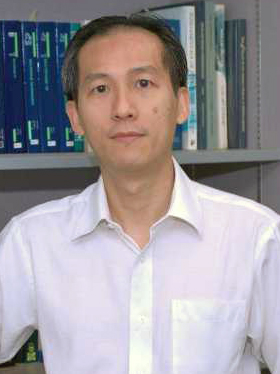
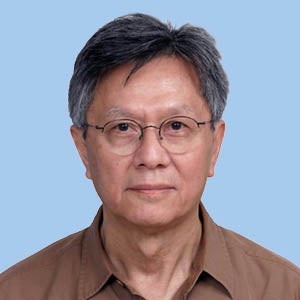
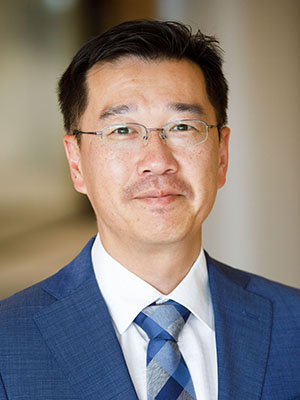
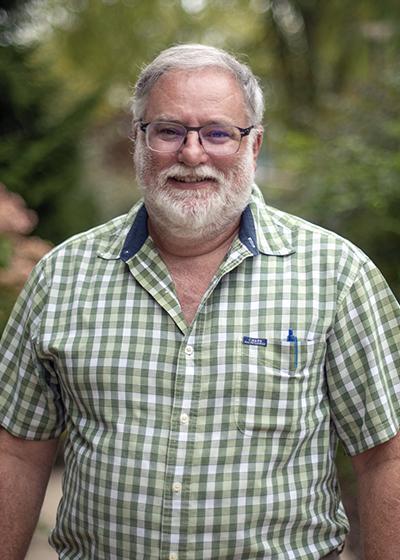
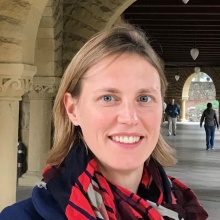
Eric Barthélemy is a University Professor at Grenoble Institute of Technology (ENSE3) and has been a member of the Laboratory of Geophysical and Industrial Flows (LEGI) since 1989. His research focuses on wave dynamics , coastal physics , and hydro-sedimentary mechanisms driving coastal evolution. Research Interests Gravity wave and soliton gas dynamics Coastal morphological changes (event and long-term scales) Vorticity dynamics in surge zones Sediment transport mechanisms (sheet/plug flow) Substrate stability under non-permanent flows Publications & Research Trends : His work spans experimental (wave channels, wind tunnels), analytical, and numerical studies of shallow water wave turbulence, rip current vorticity, sediment transport in coastal zones, and soliton gas statistics. Collaborations include N. Mordant, H. Michallet, and R. Cienfuegos. Teaching : Lectures on wave mechanics , sediment transport , and free surface flows at the master's level. Labs & Teams : Works with the MEIGE team and utilizes LEGI facilities like the wave channel and variable slope channel. Technical collaborators include J.-M. Barnoud and C. Rousseau (ENSE3).
Associate Professor LOH Wai Lam is affiliated with the Department of Mechanical Engineering at the National University of Singapore (NUS), part of the College of Design and Engineering. He coordinates the Offshore Oil & Gas Technology Specialisation and manages the Subsea Systems and Transportation Programme at the Centre of Offshore Research & Engineering (CORE). His qualifications include a PhD, MSc, and BEng from the University of Manchester, UK, with professional certifications as a Chartered Engineer (CEng) and memberships in the Royal Aeronautical Society (MRAeS) and the Society of Petroleum Engineers (SPE). His research focuses on subsea processing, multiphase flow systems, and oil/gas production optimization. Notable contributions include patented innovations in multiphase pumps, flow metering, and separation technologies. He has received prestigious awards such as the Royal Society Esso Energy Award (1998) and Hart’s Petroleum International Special Meritorious Award (1999) for engineering innovation. Before joining NUS in 2006, he spent 16 years in the UK working in R&D roles for Oil & Gas companies, leading multidisciplinary projects on production, processing, and transportation. His work emphasizes practical engineering solutions for industry challenges, blending academic research with industrial applications.
Suihong Song is a Research Fellow at Stanford University's Energy Resources Engineering department, affiliated with the Stanford Center for Earth Resources Forecast (SCERF). He collaborates closely with Professor Tapan Mukerji, focusing on integrating machine learning with geosciences. His work emphasizes reservoir characterization, geomodelling using generative adversarial networks (GANs), physics-informed neural networks (PINNs), and applications in subsurface flow simulations, CO2 storage, and hydrocarbon exploration. Education includes a Ph.D. from China University of Petroleum (2021), a visiting Ph.D. at Stanford (2020), and earlier degrees from China University of Petroleum-Beijing (B.Eng. 2013, M.Eng. 2017). His research bridges computational methods with geoscience challenges, notably through the GANSim framework, widely adopted by companies like ExxonMobil. Key research areas include machine learning-driven reservoir modeling, porous media flow simulations, decision-making under uncertainty, and geological interpretation of well logs and seismic data. His publications highlight advancements in stochastic modeling, neural operator applications, and interdisciplinary approaches between geophysics and geology. Contact: suihong@stanford.edu .
Ali Saeibehrouzi is a Doctorate Student at Coventry University's Research Centre for Fluid and Complex Systems. His research focuses on porous media dynamics, solute transport mechanisms, and pore-scale modeling in environmental and fluid systems. He investigates phenomena such as erosion impacts on dispersion, solute behavior in partially-saturated conditions, and transport properties under spatially-correlated disorder. His work bridges fluid dynamics, environmental engineering, and material science, with applications in energy storage and groundwater systems. Key contributions include studies on residence time distributions, multiphase flow dynamics, and pore-scale simulation techniques. Despite no explicitly stated awards, his research has been published in journals like Geophysical Research Letters and Earth-Science Reviews , demonstrating impactful contributions to the field. Collaborations involve institutions globally, exploring interdisciplinary approaches to porous medium challenges. His research aims to advance understanding of fluid and solute behavior in complex systems, with potential implications for environmental sustainability and energy technologies.
Rumbidzai Nhunduru is a Research Associate at the Institute of Mechanical, Process & Energy Engineering within Heriot-Watt University's School of Engineering & Physical Sciences, United Kingdom. Her research focuses on experimental and computational analysis of fluid flow in porous media with direct applications to carbon sequestration and enhanced oil recovery operations. Her core expertise spans pore-scale modeling of multiphase flow systems, specializing in fluid displacement mechanisms, wettability effects, and residual trapping phenomena. She employs advanced micromodel experiments and direct numerical simulations to investigate ganglion dynamics, surface roughness impacts, and transport kinetics in geological formations relevant to subsurface energy storage. Analysis of her publications reveals a cohesive research trajectory bridging microscopic flow observations with macroscopic reservoir behavior. Key contributions include quantifying wettability's role in dynamic fluid connectivity and elucidating surface roughness effects on residual trapping—critical insights for optimizing CO2 storage in saline aquifers and improving reservoir simulation accuracy. Dr. Nhunduru collaborates extensively with an international team led by Professor Mercedes Maroto-Valer, contributing to laser-manufactured microfluidic device development and pore-scale visualization techniques. Her work supports next-generation modeling for subsurface energy applications, with recent datasets on wettability impacts and fluid displacement kinetics publicly archived through Heriot-Watt University.
Huey W. Huang is the Sam and Helen Worden Professor Emeritus of Physics at Rice University, affiliated with the Department of Physics & Astronomy. His research focuses on membrane biophysics, particularly the functional roles of lipid matrices in cell membranes and the mechanisms of antimicrobial peptides. He pioneered techniques like oriented circular dichroism and neutron in-plane scattering to study peptide-membrane interactions. Education: B.S. from National Taiwan University (1963), Ph.D. from Cornell University (1967). Research Interests: Membrane-active peptides (Magainin, Melittin, Daptomycin), pore formation mechanisms (toroidal vs. barrel-stave models), membrane fusion intermediate structures (stalk phase), and lipid dynamics. His work includes structural studies of antimicrobial peptide pores and the role of hydrophobic matching in membrane-mediated interactions. Publications: Over 150 peer-reviewed articles, including seminal work on protegrin, magainin, and daptomycin mechanisms. Recent studies focus on daptomycin's action on bacterial membranes and lipid extraction effects. Grants & Labs: Long-term NIH funding for membrane biophysics studies. His lab developed innovative diffraction methods to visualize membrane perturbations at molecular scales.
Professor Emilie Sauret holds an ARC Future Fellowship at QUT's School of Mechanical, Medical & Process Engineering. With a PhD in Turbulence Modelling from Sorbonne University, she develops computational methods for complex fluid systems. Research focus areas: Physics-informed neural networks for microfluidics Electrohydrodynamic control of fluid interfaces Biomedical applications of computational fluid dynamics Publications showcase interdisciplinary approaches to fluid dynamics, with recent advances in predictive modelling of lung deposition and microfluidic device optimization. Her work bridges fundamental physics with energy and biomedical applications. Leadership roles include council membership in the Australasian Fluid Mechanics Society. She has secured $8M in research funding and collaborates with MIT, NASA JPL, and industry partners.
Dr. Gisuk Hwang is an Associate Professor in the Department of Mechanical Engineering at Wichita State University (WSU), part of the College of Engineering. He leads the Sustainable Energy Science and Engineering Laboratory (SESEL), focusing on thermofluid sciences to develop sustainable energy systems. His research spans advanced thermal management, energy conversion, and environmental technologies, supported by grants from NSF, NASA, and Sandia National Lab. Dr. Hwang earned his M.S. and Ph.D. in Mechanical Engineering from the University of Michigan, followed by postdoctoral work at Lawrence Berkeley National Laboratory. His expertise includes phase-change heat transfer, additive manufacturing of wicks, and machine learning applications in thermal systems. Research interests include micro/nanostructured systems for energy efficiency, thermal diodes, and sustainable cooling solutions. Key projects involve optimizing capillary evaporators, developing novel wick structures, and enhancing heat transfer in fuel cells and batteries. His team has produced over 50 peer-reviewed publications and graduated numerous Ph.D. and M.S. students. Notable awards include the John A. See Award and NSF grants. Current openings exist for Ph.D. candidates in thermofluid science and engineering. Labs/Teams: SESEL Lab. Collaborative projects focus on additive manufacturing, computational modeling, and experimental validation of thermal systems.
Qingyang Lin is a PhD Research Professor and Doctoral Supervisor at the College of Energy Engineering, Zhejiang University , where he joined in October 2020. His expertise lies in pore-scale imaging and modeling of transport in porous media, with applications across energy sectors. Prior to this, he was a Research Associate at Imperial College London (2015-2020), collaborating with Prof Martin J. Blunt (FREng). He holds a PhD (2015) in Earth Science and Engineering from Imperial College London, supervised by Prof Stephen Neethling and Prof Peter Lee (FREng). His research integrates advanced X-ray imaging, synchrotron sources, and numerical models to study micro/nano-scale transport mechanisms. Key research themes: CO 2 storage and uncertainty quantification Thermal energy storage optimization Decarbonization strategies for industries Electrochemical device design Mineral and ore processing His publications span journals like Applied Energy , AIChE Journal , and Geophysical Research Letters , reflecting interdisciplinary applications of porous media transport. While no specific awards or grants are mentioned, his work has accrued over 2900 citations with an h-index of 32. He advises doctoral students at Zhejiang University, though no advisees are named in the provided text.
Dr. Jonathan Mathews is a Professor of Energy and Mineral Engineering at Pennsylvania State University, specializing in coal science, molecular modeling, and CO 2 sequestration. He focuses on the relationship between coal structure and behavior, utilizing atomistic representations and advanced analytical techniques in collaborations across China, South Africa, and Australia. His research spans coalbed methane , carbon products from coal , porosity modeling , and combustion reactivity , with tools like HRTEM, X-ray CT, and ReaxFF simulations. Recent work includes biochar modeling and kerogen analysis. Keywords: Energy Engineering, Coal Science, Computational Modeling, Environmental Science Subfields: Molecular Dynamics, Porosity Analysis, Reactivity Simulations, Biochar Data Integration, Gasification Processes, Structural Representation Dr. Mathews has received the ACS Fellow award and mentors graduate students in coal pyrolysis, gasification, and structural analysis. He teaches courses like EGEE 411W and EGEE 100 , and develops software such as Fringe3D and Vol3D .
Matteo Cocuzza is a Full Professor at the Department of Applied Science and Technology (DISAT) , Polytechnic University of Turin , and a member of the PolitoBIOMed Lab . As Academic Advisor for the Master's program in Quantum Engineering , he leads interdisciplinary research at the intersection of micro/nanotechnologies and biomedical applications. Research Focus: Lab-on-chip systems, MEMS fabrication, organic electrochemical devices, and polymer 3D printing Leadership Roles: Scientific Responsible for collaborations with INRIM, CNR-IMEM, and IIT Key research projects include: IPER (precision oncology, 2024-2027) LIFEBLOOD (cardiac biomarker detection on-chip, 2023-2025) LOCNEURO (neuro-COVID diagnostics, 2022-2023) Scientific Recognition: Fellow at INRIM (2022-2027) Fellow at CNR-IMEM (2021-2027) Steering Committee member at AIV – Associazione Italiana di Scienza e Tecnologia (2017-) Teaching Contributions: Leads courses on Advanced Technologies and Applications , Physics of Technological Processes , and 3D Printing for Nanotechnology in both Master's and PhD programs. Supervises a multidisciplinary team including PhD candidates in Physics and Electrical Engineering. Laboratory Infrastructure: Works at the CHILAB Laboratory in Chivasso, part of the Politecnico di Torino Energy Center .
Dr. Ralph E. Flori is an Associate Professor and Assistant Chair for Undergraduate Studies in the Department of Geosciences and Geological and Petroleum Engineering at Missouri University of Science and Technology . Recognized as the Dean's Educator (2018) , he bridges petroleum engineering, geological research, and educational technology innovation. He earned all his degrees (B.S., M.S., Ph.D.) in Petroleum Engineering from Missouri University of Science and Technology, graduating in 1979 , 1981 , and 1987 respectively. His academic journey reflects a deep commitment to engineering education and applied research. Enhanced Oil Recovery (EOR) via low-salinity water flooding and thermal methods Reservoir Wettability analysis using SEM-BSE and contact angle measurements Educational Software Development , notably the BEST Dynamics system Geomechanics for wellbore stability in complex formations Machine Learning applications in petroleum engineering His 152+ scholarly works focus on unconventional reservoirs, with case studies in Kuwaiti carbonate and Southern Iraq formations. Recent publications address smart waterflooding , CO2-EOR coupling , and drilling risk mitigation via data-driven analytics. Scientific awards include the Dean's Educator (2018) for his contributions to curriculum innovation. He leads the development of multimedia-based engineering education tools and has mentored curriculum improvements for statics, dynamics, and mechanics of materials courses.
Walter Wenzel is a Full Professor of Soil Protection and Soil Management at the Institute of Soil Research, Department of Natural Sciences and Sustainable Resources, University of Natural Resources and Life Sciences (BOKU) in Vienna, Austria. With a career spanning over three decades at BOKU, he has established himself as a leading expert in soil science, particularly in soil carbon dynamics, phosphorus cycling, and remediation of contaminated sites. His research addresses critical challenges in sustainable agriculture and environmental protection. Prof. Wenzel's research interests focus on soil protection, soil management, plant nutrition, soil carbon sequestration, and remediation of contaminated sites. His work bridges fundamental soil science with practical applications for sustainable land management. He employs advanced analytical techniques including chemical imaging to study nutrient dynamics at microscale levels, particularly in the rhizosphere. His research has significant implications for climate change mitigation through soil carbon management and sustainable nutrient cycling in agricultural systems. Analysis of his recent publications (2022-2025) reveals a strong focus on soil health monitoring, particularly in Lower Austria, with emphasis on carbon sequestration potential, phosphorus dynamics, and the development of innovative analytical methods for studying soil processes. His work increasingly integrates advanced imaging techniques to visualize biogeochemical processes at microscale levels, providing new insights into nutrient availability and contaminant behavior in soils. Innovation Award Plant Nutrition, Groupe Roullier (2018) Two Elsevier Frequently Cited Author Awards for articles in Environmental Pollution (2010) Professor honoris causa, Czech University of Life Sciences, Prague (2009) Co-memorial medal, 50th Anniversary of the Czech Agricultural University, Prague (2002) Soil Culture Prize of the Vienna Chamber of Commerce (1993) Prof. Wenzel leads numerous research projects, primarily funded by Austrian federal and state governments, the European Commission, and the Austrian Science Fund. His current projects focus on soil health monitoring in Lower Austria, carbon sequestration potential, phosphorus dynamics, and the development of methods for plastic and microplastic detection in soils. He actively collaborates with multiple institutes within BOKU and international partners. His leadership extends to advising on European soil policy, as evidenced by his analysis of the European Commission's proposal for a Soil Health Directive.
Anders Nymark Christensen is an Associate Professor in the Department of Applied Mathematics and Computer Science at the Technical University of Denmark (DTU), specializing in Visual Computing. His work bridges computer vision, medical imaging, and materials science, with a strong focus on explainable AI in clinical applications and structural analysis of complex materials. Institution: Technical University of Denmark (DTU) School: Department of Applied Mathematics and Computer Science Department: Visual Computing Role: Associate Professor Christensen’s research interests include image analysis, computer vision, explainable AI, ultrasound imaging, fetal medicine, and fiber orientation in composites. He applies advanced computational techniques to solve real-world problems in healthcare and materials engineering, particularly through structure tensor analysis and deep learning. His recent publications highlight a strong trend in developing AI tools for clinical decision support in fetal medicine, structural analysis of food and composite materials, and ultrasound imaging. These works span journals such as Scientific Reports , Food Structure , and IEEE Access , reflecting interdisciplinary innovation. Clinical validation of explainable AI for fetal growth scans Characterization of anisotropy in mozzarella cheese Determining fetal orientations from ultrasound video Structure tensor analysis in composites He supervises several PhD students in projects related to AI in skin lesion analysis, cancer detection, and ultrasound imaging. His collaborative network includes key researchers at DTU such as Anders Bjorholm Dahl, Vedrana Andersen Dahl, and Mads Nielsen. He has been involved in significant research grants and is active in both medical and engineering domains, contributing to open datasets and reproducible research. Christensen leads and contributes to numerous active projects, including: Decision Support AI for Skin Lesions (2024–2027) Fighting Cancer with Generative AI (2024–2027) SONAI: Explainable AI in the Clinic (2022–2026) Deep learning for identifying biomarkers in medical images (2022–2025) His work supports UN Sustainable Development Goals related to health, innovation, and responsible consumption, particularly through advancements in medical diagnostics and sustainable materials.
Maartje Boon is an Assistant Professor at the Institute of Mechanics (MIB) , University of Stuttgart , leading the Porous Media department. Her research focuses on subsurface energy systems, particularly hydrogen and CO2 storage in geological formations. Specializes in multiphase flow dynamics and rock heterogeneity Applies microfluidics and computational modeling Collaborates with institutions like Stanford and TU Delft Research Highlights : Experimental characterization of hydrogen/brine interactions in porous rocks (2024) Microbial-induced wettability alteration for storage optimization (2024) Dynamic contact angle analysis for subsurface flow modeling (2022) Publications (2016-2024) demonstrate expertise in: Multiphase flow in heterogeneous sandstones Anisotropic saturation functions for reservoir simulation Geochemical mixing and dispersion mechanisms