Laura Blecha is an Associate Professor in the Physics Department at the University of Florida, specializing in astrophysics. Her research focuses on supermassive black hole (SMBH) and galaxy evolution through numerical simulations and observational collaborations. PhD from Harvard University (2012) Full Member of NANOGrav pulsar timing collaboration Associate Member of the LISA Consortium Her work spans three primary areas: SMBH Formation & Evolution : Origins of SMBHs, galaxy merger-driven growth, and intermediate-mass black hole demographics AGN Fueling & Feedback : Hydrodynamic simulations of AGN activation mechanisms and observational bias in AGN detection Binary SMBH Dynamics : Gravitational wave recoil effects, three-body interactions, and pulsar timing array detection strategies Recent publications (2025) focus on dual AGN detection with Keck AO, JWST studies of primordial galaxies, and NANOGrav gravitational wave background analysis. Her group develops sub-grid models for SMBH dynamics in cosmological simulations and investigates signatures of black hole mergers in galaxy clusters. Laura's research combines computational methods (Illustris, BRAHMA simulations) with observational validation through: JWST NIRSpec spectroscopy Pulsar Timing Array analysis Multiwavelength imaging campaigns
David Green is a Professor at the Vancouver School of Economics , University of British Columbia, and an International Fellow at the Institute for Fiscal Studies in London. He holds a Ph.D. from Stanford University and has served as Chair of the BC Basic Income Panel . Research Focus : Labour economics, income inequality, wage distribution, and public policy. His work bridges macro-level employment trends with micro-level identification of causal effects. Key Contributions : Analysis of minimum wage impacts on job stability, immigrant economic integration, resource boom spillovers, and basic income policy evaluation. Article Trends include: Welfare reform and health outcomes (2022) Covid-19 occupational risks (2022) Resource boom wage spillovers (2019) Post-2000 skill demand reversal (2016) Minimum wage and job tenure dynamics (2013) Scientific Recognition : Harry Johnson Prize (2000, 1995) for best articles in the Canadian Journal of Economics. International Fellow, Institute for Fiscal Studies (London). Policy Engagement : Directed the 2017-2019 BC Basic Income Panel , producing evidence-based reports on poverty reduction and workforce participation. His empirical work frequently informs national policy debates on taxation, immigration, and social assistance.
Dr. Lauren Emberson (she/her/hers) is an Associate Professor in the Department of Psychology at the University of British Columbia, Faculty of Arts. She directs the Baby Learning Lab, which is part of UBC's Early Development Research Group, a consortium focused on infant and child development. Prior to her position at UBC, Dr. Emberson was an Assistant Professor at Princeton University where she co-founded and co-directed the Princeton Baby and Princeton Kid Labs. Education: Postdoctoral Associate, University of Rochester (PI Aslin) Ph.D, Cornell University (PIs Amso, Goldstein, Spivey) B.Sc, University of British Columbia Dr. Emberson's research focuses on learning, perception (audition, vision, crossmodal or multisensory), language development, face/object perception, and attention in infants. She investigates these capacities using behavioral and neuroimaging techniques, particularly fNIRS (functional near infrared spectroscopy), working primarily with very young infants (birth through 1 year) and preterm/premature infants. Her work examines how infants' learning capacities contribute to rapid development of perception in ecological contexts, with implications for understanding how early life experiences affect later outcomes. Analysis of Dr. Emberson's recent publications reveals a consistent focus on infant perception, learning mechanisms, and neuroimaging methodology. Her work increasingly incorporates advanced fNIRS techniques while maintaining focus on fundamental questions about how infants learn from their environment. There's a growing emphasis on individual differences, cross-cultural comparisons, and applications to infants facing developmental challenges. Dr. Emberson serves on the editorial board of Infancy (journal of the International Congress of Infancy Studies) and is a consulting editor for the Journal of Cognitive Neuroscience . Her research has been published in top journals including PNAS, Current Biology, Psychological Science, Cognition, Developmental Science, and the Journal of Neuroscience. Dr. Emberson has secured significant research funding from prestigious organizations including the Bill and Melinda Gates Foundation, James S. McDonnell Foundation, Natural Sciences and Engineering Research Council (NSERC), Canadian Institutes of Health Research (CIHR), and the National Institutes of Health (NIH). She collaborates with clinicians at BC Women's and Children's Hospitals to understand how different early life experiences impact learning and brain development. Dr. Emberson is currently accepting graduate students into her research program. The Baby Learning Lab, under Dr. Emberson's direction, is part of UBC's Early Developmental Research Group and collaborates with multiple institutions. The lab strives to provide interactive research experiences for infants and families while advancing scientific understanding of early cognitive development. The lab acknowledges that it operates on the traditional, ancestral, and unceded territory of the xʷməθkʷəy̓əm (Musqueam) people.
Dr. Debraj Roy is a Visiting Professor at the University of Amsterdam (UvA), affiliated with the Faculty of Science, Mathematics and Computer Science and the Informatics Institute. His research focuses on agent-based modeling, socio-economic dynamics, environmental resilience, and blockchain technology. He investigates complex systems such as urban slums, disaster recovery, and climate adaptation using computational methods like remote sensing and machine learning. His work bridges theory and practice, offering insights into policy design for sustainable development and social equity. Key research interests include slum dynamics, poverty traps, and the application of blockchain oracles for decentralized systems. He employs advanced techniques such as global sensitivity analysis and manifold learning to explore multi-scale socio-environmental challenges. His recent articles highlight trends in carbon pricing, flood risk valuation, and multi-agent systems. Earlier work concentrated on urban inequality in cities like Bangalore and Mexico City, leveraging geospatial and statistical tools. No scientific awards or grants are explicitly listed. His advising and team collaborations are unspecified in the provided text.
Ananias A. Escalante is a Professor in the Department of Biology at Temple University's College of Science and Technology, and a core faculty member of the Institute for Genomics and Evolutionary Medicine (iGEM). He holds a PhD in Biology from the University of California, Irvine (1995), and has held roles at the CDC (1995–2005) and Arizona State University (2005–2015). His research integrates population genetics with epidemiology, focusing on malaria parasites' evolution, drug resistance mechanisms, and biodiversity. Key areas include Plasmodium falciparum resistance mutations, primate malaria origins, and molecular tools for surveillance. Education: PhD in Biology, University of California, Irvine (1995) MSc in Ecology, Universidad Simón Bolívar, Venezuela Bachelor's Degree in Biology, Universidad Simón Bolívar, Venezuela Research interests span evolutionary genomics, malaria parasite diversity, and the application of genomic tools to epidemiology. He investigates how genetic diversity in parasites influences drug resistance and transmission dynamics, with a focus on nonhuman primate malaria as a model for human malaria origins. His work includes phylogenetic studies of Plasmodium species and the development of mitochondrial genome protocols for pathogen analysis. Notable contributions include studies on Plasmodium vivax population genetics in the Americas, the impact of drug resistance mutations (e.g., pfhrp2/pfhrp3 deletions), and the molecular characterization of novel malaria parasites in reptiles and birds. He collaborates on initiatives like the Amazonian International Center of Excellence for Malaria Research. Advising and grants: While specific student names aren’t listed, his research team likely includes graduate students focused on evolutionary parasitology. Grants support projects on malaria genomics and vector ecology. He leads Temple’s iGEM lab, advancing interdisciplinary research in genomics and evolutionary medicine. Labs/Teams: Core faculty at Temple’s Institute for Genomics and Evolutionary Medicine (iGEM), collaborating on projects integrating genomics, epidemiology, and evolutionary biology.
Theo Klimstra is a Senior Lecturer at the Eliot-Pearson Department of Child Study & Human Development, Tufts University. His research focuses on adolescence and young adulthood, particularly identity and personality development. He employs advanced quantitative methods, including structural equation modeling, alongside qualitative approaches. Klimstra investigates identity formation across diverse cultural contexts and populations, such as clinical and non-clinical samples. He holds a PhD from Utrecht University (2010) and an MSc in Psychology from the University of Groningen (2005). His work explores narrative identity, the role of exemplars in identity formation, and the impact of global experiences like study abroad. He has received the EARA Outstanding Junior Mentor Award (2018). Klimstra teaches courses on developmental science, including 'Childhood Across Culture' and statistical methods. He actively contributes to academic organizations such as the International Society for Research on Identity (ISRI) and has organized conferences on identity and emerging adulthood. Klimstra’s research has been supported by grants examining identity-personality interactions and resilience. His publications span topics like identity negotiation, the longitudinal effects of parent-adolescent relationships, and psychometric scale development. He emphasizes teaching as a collaborative process that fosters students’ critical thinking and self-reflection.
Agar Brugiavini is a Full Professor at Ca' Foscari University of Venice's Department of Economics with significant institutional roles including Member of the Steering Committee of the Ca' Foscari International College, Ethics Committee member, and Coordinator of the Master's Degree Programme in Data Analytics for Business and Society. Her research focuses on: Economics of aging and retirement systems Social security policy evaluation Health economics and long-term care Labor market dynamics for older workers Impacts of demographic changes on social policies Her recent publications demonstrate strong emphasis on pandemic impacts on labor markets, social care systems, and elderly populations, with methodological approaches spanning econometric analysis of survey data and cross-national comparative studies. The research shows consistent focus on vulnerable populations and policy-relevant outcomes. Dr. Brugiavini maintains active research collaborations as evidenced by multi-country studies using SHARE survey data and participates in key academic leadership positions within her institution.
Yana Suchy is a Professor in Clinical Psychology and Neuropsychology at the University of Utah. She leads the ConVExA Lab and Executive Lab, focusing on executive functions and their role in daily living. Her research spans neuropsychological assessment, aging, and cognitive vulnerabilities in neurodegenerative conditions. Education: Ph.D. in Psychology (University of Wisconsin-Milwaukee, 1998), Postdoctoral fellowship in Clinical Neuropsychology (Evanston Hospital, 1998-2000) Labs: ConVExA Lab, Executive Lab Contact: Office 1301b BEHS, Phone 801-585-0796, Email yana.suchy@psych.utah.edu Her research explores executive functions as a stable yet fluctuating trait that determines daily behavior in healthy aging and clinical populations (e.g., dementia, brain injury). She developed the Contextually Valid Executive Assessment (ConVExA) model to address gaps in ecological validity, emphasizing how task complexity and environmental factors influence functional outcomes. Recent publications analyze executive function testing (D-KEFS), emotion regulation, diabetes management, and intra-individual variability. She mentors graduate students in advanced research methods and clinical applications. Her work highlights the interplay between executive functioning, sleep quality, pain, and self-regulation in older adults, with implications for personalized medicine and neuropsychological assessment.
Dr. Steven Manson is a Professor in the Department of Geography, Environment, and Society at the University of Minnesota's College of Liberal Arts, where he also served as Associate Dean for Research and Graduate Programs. He directs the Human-Environment Geographic Information Science (HEGIS) laboratory and leads major data science initiatives like the National Historical Geographic Information System (NHGIS) and IPUMS Terra. PhD in Geography, Clark University (2002) BA Honours in Geography, University of Victoria (1995) His research focuses on geographic information science and human-environment systems , using agent-based modeling and big data to analyze land use change, urban dynamics, and sustainability challenges. Recent work explores spatiotemporal data harmonization and geospatial cyberinfrastructure . The articles reveal trends in GIScience methodology , urbanization analysis , and data-intensive sustainability research . Key contributions include self-organizing map applications for health data and hybrid statistical-GIS techniques for environmental policy. Scientific accolades include: Ecological Society of America Sustainability Science Award NASA Earth System Science Fellow McKnight Land Grant Professorship As Principal Investigator for NHGIS and IPUMS Terra, he secured over $40M in NSF, NIH, and DOJ grants for spatiotemporal data infrastructure. Outreach initiatives include developing open geospatial textbooks adopted globally and collaborating with Twin Cities K-12 programs.
LEE Mong Li is a Professor of Computer Science at the National University of Singapore (NUS) and serves as Director of the NUS Centre for Trusted Internet and Community. She holds a Ph.D., M.Sc., and B.Sc. (First Class Honours) in Computer Science from NUS, where she was awarded the IEEE Singapore Information Technology Gold Medal as the top Computer Science student in 1989. Her academic career includes a visiting fellowship at the University of Wisconsin-Madison (1999) and consultancy with QUIQ USA (2000). Her research spans Data Management, Spatio-temporal Databases, Biomedical Informatics, and Retinal Image Analysis . She has pioneered work in data cleaning, data fusion, and analysis of semistructured data, with applications in social media analytics and healthcare. Her recent publications demonstrate strong interdisciplinary focus, particularly in AI-driven medical diagnostics including diabetic retinopathy screening and chronic kidney disease detection from retinal images. She co-authored foundational books on 'Designing Semi-structured Database' and 'Temporal and Spatio-Temporal Data Mining'. Her 150+ publications in major database conferences and journals reflect leadership in both theoretical and applied research. Recent work shows significant emphasis on Medical AI applications (retinal analysis, kidney disease prediction) Temporal fact verification systems Misinformation detection in multimodal environments Privacy challenges in large language models Key honors include: Singapore's President Technology Award (2014) for co-inventing an AI system screening eye conditions IEEE Singapore Information Technology Gold Medal (1989) She actively contributes to government-funded multidisciplinary projects building practical deployable systems. Her leadership extends to program committees of prestigious database conferences and directing the NUS Centre for Trusted Internet and Community. She teaches BT5110 Data Management and Warehousing and has co-developed an AI system for diabetic retinopathy screening deployed in Singapore's national teleophthalmology program.
Professor Guy Woodward is a Professor of Ecology at Imperial College London's Department of Life Sciences (Silwood Park), part of the Faculty of Natural Sciences. He leads the NERC ERCITE Programme and holds affiliations with the Freshwater Biological Association, serving on its Board of Directors. His research focuses on the impacts of stressors like chemical pollution, climate change, and habitat alteration on aquatic ecosystems, particularly food web dynamics and metabolic theory. Woodward has secured over £13M in grants, including a £2.5M ERCITE grant, and collaborates with international experts such as Dr. Jose Montoya and Prof. Owen Petchey. His work emphasizes individual-based approaches to ecological networks and the application of allometric scaling laws. Key contributions include studying geothermally heated streams in Iceland and experimentally warming mesocosms to understand climate impacts. Woodward has supervised numerous PhD students, including Dr. Gabriel Yvon-Durocher, Dr. Julia Reiss, and Dr. Eoin O'Gorman. Education: PhD in Ecology from the University of London and BSc (Hons) in Ecology & Environmental Management from Cardiff University. His research spans over 20 years, with notable grants from NERC, the European Science Foundation, and AXA Insurance. He co-authored the Next Generation Biomonitoring series and serves as Series Editor for Advances in Ecological Research (Elsevier). Current affiliations include the Georgina Mace Centre for the Living Planet and the Grantham Institute. Research highlights include quantifying climate-warming effects on food webs, developing metabolic theory applications, and investigating synergistic stressor impacts. His team explores ecological resilience, with projects like 'Restoration of Chalk Rivers' and 'Climate Change Impacts on Freshwater Food Webs'. Woodward's work bridges theoretical and applied ecology, aiming to inform conservation and ecosystem restoration strategies.
Robert D. Gregg, IV is a Professor of Mechanical Engineering, Robotics, and Electrical & Computer Engineering at the University of Michigan. He serves as Associate Director for Graduate Education at Michigan Robotics and directs the Locomotor Control Systems Laboratory. His research focuses on control systems for wearable robots, prosthetics, and orthotics, emphasizing biomimetic principles and nonlinear control theory. Gregg holds a PhD from the University of Illinois at Urbana-Champaign (2010) and prior academic roles at the University of Texas at Dallas and Northwestern University. Education: PhD, Electrical and Computer Engineering, University of Illinois at Urbana-Champaign, 2010 MS, Electrical and Computer Engineering, University of Illinois at Urbana-Champaign, 2007 BS, Electrical Engineering and Computer Sciences, University of California, Berkeley, 2006 Research Interests: Gregg’s work spans control mechanisms for bipedal locomotion, wearable robotics, nonlinear control theory, and rehabilitation engineering. His lab develops high-performance control systems for prosthetic legs and exoskeletons to enhance mobility for individuals with disabilities. Key areas include energy-efficient control strategies, adaptive impedance systems, and biomechanical modeling of human movement. Grant & Award Highlights: $3M NIH R01 Grant (2023): Modeling and control of agile powered prosthetic legs for varied activities. $1.7M NIH R01 Grant (2021): Modular powered orthoses for broad patient populations. NSF CAREER Award (2017) NIH New Innovator Award (2013) Advising & Labs: Gregg mentors PhD students in robotics and biomechanics, emphasizing independent research and collaborative team environments. His lab supports over 15 researchers and has produced notable alumni like Dr. Cara Welker (University of Colorado Boulder faculty). The lab’s work is supported by NIH, NSF, and industry partnerships. Recent Contributions: Recent work includes phase-variable control for stair climbing, energy shaping methods for exoskeletons, and open-source robotic leg platforms. Gregg also chairs major robotics conferences (e.g., IROS 2023) and advises on clinical translation of wearable robotics.
Lena Jäger is a Professor in the Department of Computational Linguistics at the University of Zurich (UZH). Her research focuses on the intersection of linguistics, computational cognitive science, and machine learning, particularly analyzing cognitive mechanisms underlying human language processing through experimental psycholinguistics, computational modeling, and NLP methods. She holds an MA in Chinese Language and Culture, an MSc in Experimental and Clinical Linguistics, a PhD in Cognitive Science, and a BSc in Computer Science. Prior to UZH, she led a Machine Learning Junior Research Group funded by the German Federal Ministry of Education and Research (2020) and conducted postdoctoral research at the University of Potsdam. Her work emphasizes developing machine learning methods for analyzing eye-tracking data to uncover cognitive processes reflected in eye movements. Notable contributions include creating multilingual eye-tracking corpora (e.g., MultiplEYE, PoTeC) and advancing tools like pymovements for data processing. Her research spans applications in language comprehension, biometric identification, and clinical diagnostics (e.g., ADHD detection via eye movements). Education: BA/MA: Chinese Language and Culture (University of Freiburg, Tongji University, Beijing Language and Culture University, Université Paris 7) MSc: Experimental and Clinical Linguistics (University of Potsdam) PhD: Cognitive Science (University of Potsdam) BSc: Computer Science (concurrent with PhD) Awards: Machine Learning Junior Research Group Grant (2020). Labs/Teams: Leads computational linguistics and machine learning research groups at UZH, collaborating on projects like ScanDL and CoLAGaze. Her recent work bridges AI and cognitive science, exploring how language models emulate human reading behaviors and developing frameworks for ethical AI applications. Ongoing projects include improving fairness in biometric identification systems and analyzing individual differences in reading through synthetic data.
Gerda de Vries is a Professor in the Department of Mathematics & Statistical Sciences at the University of Alberta, Faculty of Science. Her research focuses on mathematical physiology, dynamical systems, and mathematical modeling, particularly in cellular biophysics, pattern formation, and systems biology. She has contributed extensively to understanding complex biological systems through interdisciplinary approaches combining mathematics and biology. Her work spans applications in radiation biology (e.g., cell cycle dynamics and low-dose radiation effects), biophysics (microtubule organization, motor proteins), ecology (predator-prey interactions, forest fire modeling), and education (adapting primary literature for STEM teaching). Recent research highlights include analyzing saddle-node bifurcations, bystander effects in radiation, and collective behavior in animal groups. De Vries has published over 50 peer-reviewed articles since 2000, with a focus on bridging abstract mathematical theory to concrete biological phenomena. Notable contributions include models of pancreatic β-cell dynamics, immune system versatility, and educational frameworks for mathematical biology. Her academic career includes leadership in curriculum development and interdisciplinary research, though no specific grants or awards are explicitly listed in the provided information.
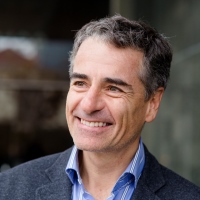
Andrés Velasco is Dean of the School of Public Policy at the London School of Economics and Political Science (LSE). Formerly, he served as Chile's Minister of Finance (2006–2010) and held academic positions at Columbia University and Harvard Kennedy School. He specializes in macroeconomics, economic policy, populism, and development. His research explores fiscal policy, inflation targeting, and crisis management in emerging economies. He has authored over 100 academic articles and books, including Liberalismo en Tiempos de Cólera and Contra la Desigualdad . Velasco has advised governments globally and chairs international commissions like the Global Panel on Multilateral Lending Institutions. Awards include the Inter-American Development Bank's Excellence in Research Award (2006). His work bridges academic rigor and policy relevance, addressing global challenges in finance, development, and governance. Education: BA/MA Yale University, PhD Columbia University, Postdoctoral Fellowship at Harvard/MIT. Awards: Multiple recognitions for economic research and policy contributions. Publications: Over 100 articles, books on macroeconomic policy, and policy analyses. Professional Roles: G20 Eminent Persons Group member, Board roles at Adecoagro and Itaú-Unibanco. Research focuses on fiscal rules, commodity-driven booms, and the political economy of policy reforms. His recent work addresses pandemic economics, inflation dynamics, and populism's impact on governance.