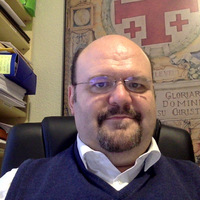
Dr. Richard Gauvain is a Lecturer at the University of Chester's Faculty of Arts, Humanities and Social Sciences , based in the Humanities, Cultures and Environment department. He holds a Ph.D. in Theology and Religious Studies from the University of Glasgow (2002) with specialization in Islamic Studies. His academic career spans universities in the Middle East, Europe, and the UK, encompassing diverse teaching roles in Religious Studies, History, Political Science, and Middle East Studies. Dr. Gauvain's research focuses on Islamic law , Salafism , ritual theory , and Anglican studies , particularly in Middle Eastern contexts. Notable themes include Salafi ritual practices in Egypt, the socio-political dynamics of Islamic reform movements, and the interplay between tradition and modernity in religious discourse. Recent work examines Egyptian Anglican Orthodoxy and UAE national identity narratives . His publications span International Journal for the Study of the Christian Church , Oxford Handbook of Ritual and Worship , and Routledge Handbook of Islamic Ritual , reflecting interdisciplinary engagement with anthropology, theology, and political science. No scientific awards are explicitly mentioned, but his extensive fieldwork and ethnographic contributions highlight scholarly rigor. Teaching expertise includes research methods and theory across undergraduate and graduate levels. His academic language proficiency includes Arabic (fluent) and Spanish (academic competence).
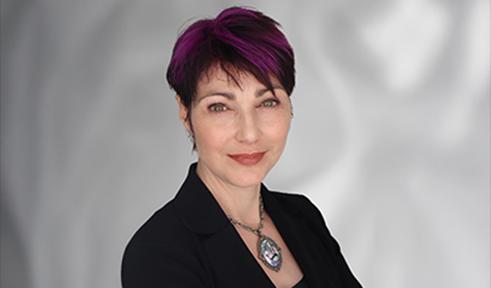
Katherine R. Larson is a Professor at the University of Toronto Scarborough (UTSC) and Vice-Dean of Teaching, Learning, and Undergraduate Programs. Her academic work bridges Early Modern Literature, Gender Studies, and Musicology through groundbreaking research on 16th-17th century women’s writing, embodiment, and song culture. Current projects: Special issue of Sidney Journal , The Post-Pandemic University (Routledge), and Cambridge Companion to Mary Wroth Collaborative initiatives: Co-developer of Early Modern Songscapes digital platform with Sarah Williams and Scott Trudell Research Focus: Integrates feminist theory with textual analysis of early modern poetry, drama, and musical practices. Key themes include gendered soundscapes, spatial production of songs, and critical pedagogy innovations. Awards: John Charles Polanyi Prize for Literature Rhodes Scholarship 2014 Co-Editor Recognition from Society for the Study of Early Modern Women Grant Support: Funded by SSHRC, Connaught Foundation, Folger Shakespeare Library, and Jackman Humanities Institute.
Dr. Richard David Williams is a Reader in Music and South Asian Studies at SOAS University of London , where he works in the School of Arts and Department of Music . His research bridges musicology, cultural history, and religious studies, focusing on South Asian music's evolution during colonialism and early modernity. BA and MPhil in Theology and Modern South Asian Studies from the University of Oxford PhD in Music from King’s College London Williams' research investigates how music and sound interact with literature, religion, and multilingual environments across South Asia. His first book, The Scattered Court: Hindustani Music in Colonial Bengal (2023), reconstructs interregional musical dialogues between north India and Bengal, centering on the exiled Nawab Wajid ‘Ali Shah's influence. His second book explores Ragamala, an early-modern fusion of musical imagery with poetry, while collaborating with Professor Makoto Kitada on translating the Gulshan-e-‘Ishq epic. His recent publications trace global music historiography, courtesan performance, and sonic dimensions in Shi'ah and Vaishnava traditions. Williams supervises PhD candidates on diasporic music, film song poetics, and Sri Lankan Tamil musical dislocations. He has held a Leverhulme Early Career Fellowship and is a Fellow of the Higher Education Academy (FHEA). Scientific Awards: Leverhulme Early Career Fellowship Fellow of the Higher Education Academy
Karin Vélez serves as Associate Professor of History at Macalester College, specializing in pre-1800 Global History since joining the faculty in 2011. Her academic journey includes a doctorate from Princeton University (2008) and undergraduate studies at Williams College where she participated in the Mellon-Mays Undergraduate Fellowship program. Her research centers on the Atlantic World, early modern Iberian and French empires, and transnational religious phenomena. Key interests include spiritual encounters, comparative empire dynamics, Catholic devotion networks, indigenous women's frontier experiences, and communal myth formation. Current projects examine refugee-driven Catholic diffusion in the late 1600s involving Dalmatian Slavs, Canadian Huron, and Peruvian Moxos Indians, alongside investigations of weeping, displacement, and failed miracles in religious contexts. Her methodological approach combines archival research across Lisbon, Sevilla, Madrid, Paris, Rome, Toronto, Québec, and the Bolivian Amazon with analysis of transoceanic exchanges like flying Holy Houses and wampum gifting. Professor Vélez teaches diverse courses spanning oceans history, magic-science intersections, conquest-conversion dynamics, and cultural intermediaries, alongside foundational world history and humanities writing seminars. Her pedagogical philosophy emphasizes reinventing historical narratives to serve contemporary relevance, connecting classroom instruction with her archival research on how past interpretations evolve for present utility.
Jorge Manuel Rodríguez Almenar is a faculty member at the University of Valencia, affiliated with the Faculty of Law, where he serves in the Department of Civil Law. He holds the academic rank of Titular de Escuela Universitaria, equivalent to Associate Professor, and is actively engaged in teaching and research. His research centers on the intersection of law, sacred art, and religious history, with a particular focus on Christian relics such as the Shroud of Turin, the Sudarium of Oviedo, and the Holy Chalice of Valencia. His work employs interdisciplinary methodologies combining art history, forensic analysis, and theological inquiry. Sacred Art Eucharistic Theology Sacred Architecture Historical Art Analysis Religious Relics Interdisciplinary Studies of Faith and Science His publications reveal a consistent scholarly engagement with the historical, artistic, and scientific dimensions of Christian relics. He explores how faith and reason intersect in the study of sacred objects, often analyzing their cultural, theological, and forensic significance. His work bridges legal scholarship with religious and artistic studies, contributing to a deeper understanding of religious heritage within civil and canonical frameworks. Notable scientific contributions include comparative studies of the Sudarium of Oviedo and the Shroud of Turin, analyses of the Holy Chalice of Valencia, and comprehensive historical-artistic investigations into the Shroud. While no formal awards are listed, his publications demonstrate scholarly recognition in niche interdisciplinary domains. He has not listed any students or formal advising roles, nor has he mentioned grants or research teams. However, his academic profile suggests independent and collaborative research in religious and legal studies. His work continues to contribute to academic and ecclesiastical discussions on the authenticity and significance of Christian relics.
Beth Quitslund is Professor of English and Chair in the Department of English at Ohio University’s College of Arts and Sciences, where she teaches courses in early modern literature, poetry, and religious texts. She holds a Ph.D. in English from the University of California, Berkeley, and an A.B. in History & Literature from Harvard College. Ph.D. in English, University of California, Berkeley, 1997 A.B. in History & Literature, Harvard College, 1991 Her research focuses on early modern British literature, particularly devotional texts such as the Book of Common Prayer, the King James Bible, and metrical psalms. She has published extensively on Milton, Spenser, and the cultural and musical dimensions of religious poetry. Her work bridges literary studies, theology, and book history, emphasizing how early modern communities engaged with sacred texts through print, performance, and personal devotion. Her recent publications reflect a sustained inquiry into the intersections of liturgy, biblical interpretation, and poetic form. Themes include sacred violence, devotional subjectivity, and the reception of the King James Version across centuries. Her scholarship often appears in interdisciplinary forums, highlighting the enduring cultural resonance of Reformation-era texts. Selected awards and fellowships include: Konneker Fund for Learning and Discovery Grant (co-investigator, 2020–22) Mid-Atlantic Conference Academic Leadership Development Program Fellowship (2017–18) Ohio University Chapman/Clapp Outstanding Advisor Award (2015) Calvin Center for Christian Scholarship Grant (2012–13) Folger Shakespeare Library Short-term Fellowship (2010) Beth Quitslund has been actively involved in academic leadership and curriculum development, notably as co-investigator on a major grant to reimagine general education at Ohio University. She advises students at all levels and has been recognized for her excellence in advising. Her teaching spans introductory courses like Introduction to Poetry and Drama to advanced seminars on Paradise Lost and capstone literature projects. She co-edits major scholarly editions, including The Whole Book of Psalms , and contributes to critical editions and essay collections that shape the field of early modern studies. Her current projects include editing the King James Bible for the Oxford University Study Bible series and new work on sermons and the Book of Common Prayer from 1540 to 1660.
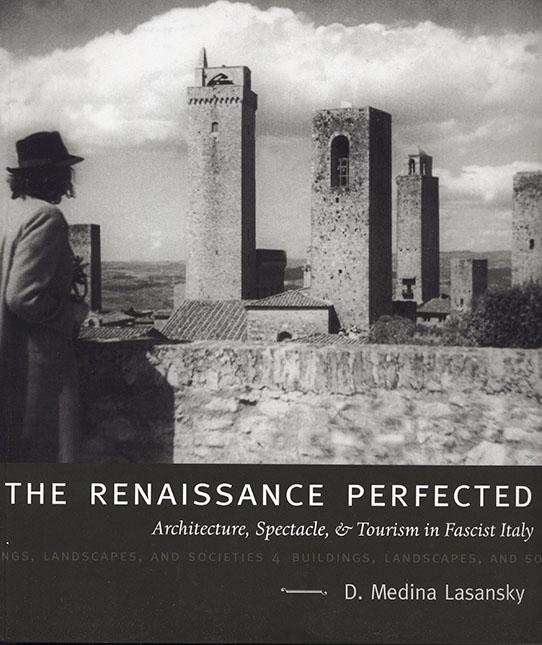
D. Medina Lasansky is a Professor in the Department of Architecture at Cornell University, within the College of Architecture, Art, and Planning. Her work bridges architectural history, theory, and popular culture, exploring how built environments reflect and shape political and social dynamics. Her research interests include architectural history, architectural theory, the politics of space, tourism, sensory experience in architecture, and the mediation of architecture through popular media. She has developed innovative courses such as Archi.Pop , Gastro-Porn , and Sensational Space , which challenge students to critically engage with everyday cultural forms as spatial practices. The publications and essays she has authored or edited, such as Playing Place and Renaissance Perfected , demonstrate a consistent focus on how architecture interacts with broader cultural narratives, from fascist Italy to contemporary board games. Her work often reveals hidden or overlooked histories embedded in both monumental and mundane environments. Her scientific awards and fellowships include the Provost's Award for Distinguished Scholarship, a Fulbright to Italy, and residencies at the Wolfsonian, the Canadian Centre for Architecture, and the Society for the Humanities at Cornell. Provost's Award for Distinguished Scholarship (2005) Fulbright to Italy Faculty Fellow, Society for the Humanities, Cornell (2003–04) Research Fellow, the Wolfsonian-FIU (2003) Research Fellow, University of Turin (2003) Visiting Scholar, Canadian Centre for Architecture (2004) Lasansky has advised and collaborated with numerous scholars and students, including Ph.D. candidates and alumni such as Chad Randl. She has received significant research grants that have supported archival work in Italy and interdisciplinary collaborations. Her editorial projects, such as Playing Place , involve wide networks of contributors from across disciplines and institutions, reflecting her commitment to engaged, public-facing scholarship. Though not explicitly affiliated with a named lab or research center, her work is closely tied to the intellectual life of Cornell’s architecture department and the Society for the Humanities. Her courses and publications foster collaborative, cross-disciplinary inquiry into the cultural dimensions of architecture.
Carl Watkins is a Professor of British History at the University of Cambridge, affiliated with Magdalene College where he directs studies in history. His research focuses on medieval religious culture, particularly beliefs about the supernatural, theological concepts like purgatory, and the interplay between 'high' theology and popular religious practices. He supervises M.Phil and PhD students in medieval British and European religious and political history. His teaching spans British political, religious, and social history from c.1000–1500 CE, alongside European history from c.900–1250. Key publications include History and the Supernatural in Medieval England (2007) and The Undiscovered Country (2013), which explore medieval perceptions of the afterlife and supernatural phenomena. Recent work addresses medieval wonder stories and the cultural significance of death and the dead. Watkins has contributed to edited volumes on topics like medieval providence, landscape and belief, and the historiography of medieval social structures. His research bridges textual analysis with methodological inquiry, emphasizing how medieval people conceptualized divine intervention and the spiritual realm.
Katrina B. Olds is a Professor and Chair of the History Department at the University of San Francisco. She specializes in early modern European and Latin American history, with a focus on Counter-Reformation Catholicism, religious belief, and the intersection of humor, sexuality, and sacred practices. Her research explores topics such as historical forgeries, relics, and the cultural politics of memory. Olds holds a PhD and MA in History from Princeton University and a Master of Theological Studies from Harvard Divinity School. She has held significant administrative roles, including Chair of the History Department (2023–2025), Director of the Saint Ignatius Institute (2019–2022), and Academic Advisor for USF Study Abroad programs in Oxford. She has also served on tenure and promotion committees and the Deans Medal Selection Committee. Her notable works include Forging the Past: Invented Histories in Counter-Reformation Spain (Yale, 2015), which won the John Gilmary Shea Prize. She is co-editing the forthcoming Cambridge Companion to Counter-Reformation Saints and Sainthood . Her current research projects investigate blasphemy in the Spanish Enlightenment and the role of laughter in early modern sacred contexts. Awarded the USF Distinguished Research Award (2017) and multiple fellowships, Olds is actively engaged in interdisciplinary teaching through the Saint Ignatius Institute and Honors College, emphasizing the humanities' relevance to contemporary issues.
Jimmy Yu is the Sheng Yen Associate Professor of Chinese Buddhism and Religion at Florida State University's Department of Religion (part of the College of Arts and Sciences). He holds a Ph.D. in Asian Religions from Princeton University (2008). His research focuses on Chinese Buddhist history (1100–1800), Chan/Zen studies, and bodily rituals in East Asian religions. He teaches courses on Chinese and Japanese religious traditions, including Buddhism, Daoism, and Shintō. Yu serves as Editor of the Journal of Chinese Buddhist Studies and Series Editor for the Sheng Yen Series in Chinese Buddhist Studies (Columbia University Press). He advises the Chung-Hwa Institute's Buddhist Studies fellowships for graduate students. His publications include Sanctity and Self-Inflicted Violence in Chinese Religions (1500–1700) (Oxford UP) and Reimagining Chan Buddhism (Routledge). He has presented globally at venues like the American Academy of Religion and Oxford Symposium on Religious Studies. Education: Princeton University (Ph.D. 2008), University of Kansas (MA 2002) Editorial Roles: Journal of Chinese Buddhist Studies, Journal of Religion and Violence Key Interests: Chan/Zen lineage formation, religious violence, and embodied religious practices Yu oversees graduate studies in East Asian Buddhist Studies and mentors students through the Dharma Drum tradition. His work bridges historical scholarship with contemporary Buddhist praxis, emphasizing Chan's doctrinal and ritual innovations.
Christopher Witulski is an Associate Teaching Professor of Ethnomusicology at Bowling Green State University's College of Musical Arts, where he has served since 2016. He holds a PhD in Ethnomusicology from the University of Florida (2014). His research focuses on Moroccan ritual music, North African musical practices, and the intersection of music with religion, globalization, and cultural identity. Witulski is the author of two major works: The Gnawa Lions: Opportunity and Authenticity in Moroccan Ritual Music (2018) and Focus: Music and Religion of Morocco (2019). His articles explore how musicians navigate listener expectations, global markets, and ritual aesthetics in contemporary North Africa. Witulski is an active performer on violin, 'ud, and banjo, with professional experience in orchestras and festivals across Morocco, Florida, Georgia, and Michigan. His performance interests include Arabic music, American old-time music, and building banjos. Additional research interests incorporate computational music analysis, ethical dimensions of religious music, and interdisciplinary music studies. His scholarly articles (2014–2023) consistently analyze Moroccan musical scenes, Sufi rituals, and global music dynamics. No scientific awards are explicitly listed, though his publications indicate prestigious contributions to ethnomusicology. He previously taught at Florida State University before joining BGSU. No lab affiliations or grant details are provided in the text.
Sergio Luzzatto is Professor and the Emiliana Pasca Noether Chair in Modern Italian History at the University of Connecticut, Department of History. He joined UConn in 2020 after nearly twenty years as a full professor of European Modern History at the University of Turin. His career bridges French and Italian historical scholarship with a focus on Modern Europe's political evolution. His educational background includes dual Ph.D. credentials: one from Scuola Normale Superiore in Pisa, Italy, and another from École des Hautes Études en Sciences Sociales in Paris, France. Luzzatto's research spans nineteenth-twentieth century Italian history, eighteenth-nineteenth century French history, and twentieth century Jewish studies. His work explores the longue durée of Modern Europe's political cultures—from Thermidorian Reaction to Italian Risorgimento, Interwar France to Post-WWII Italy—with particular expertise in Fascist Italy, Holocaust studies, and religious history. He examines how political rituals, collective memory, and ideological transformations shape national identities. His publications reveal evolving scholarly trajectories: early French Revolution studies transitioned to Italian Fascism and Jewish history, culminating in recent works on Red Brigades terrorism, Primo Levi's legacy, and Holocaust orphans. These demonstrate methodological range across political, cultural, and transnational history frameworks. Scientific recognition includes: Cundill History Prize (2011) for Padre Pio —notably the only non-English original work to win this prestigious award As a public intellectual, Luzzatto actively engages broader audiences through television productions ( L’Altra Storia on La7, 2002-2003) and regular contributions to La Stampa , Corriere della Sera , and Il Sole 24 Ore . His current research investigates the Marquis de Morès' proto-fascist legacy in late nineteenth-century France, with a book forthcoming from Harvard University Press (2026).
Dr. Marie Kawthar Daouda serves as a Stipendiary Lecturer in French at Oriel College, University of Oxford, where she teaches both literature and language courses across the undergraduate curriculum. Her academic work is situated within the French Department of Oxford's Faculty of Medieval and Modern Languages, one of the leading language departments in the UK. Dr. Daouda completed her academic training in French and English literature at La Sorbonne and the Université de Bretagne Occidentale. She earned her PhD with a thesis titled "L'Anti-Salomé, représentations de la féminité bienveillante au temps de la Décadence (1850-1920)", which was published as a monograph by Oxford, Peter Lang in 2020. Her second book project, "La Prière désespérée, de Baudelaire à Bernanos", is forthcoming from Garnier, continuing her exploration of spiritual dimensions in French literary tradition. Dr. Daouda's research focuses on challenging conventional understandings of femininity in literary history, particularly examining benevolent feminine figures in fin-de-siècle novels who counter the dominant "femme fatale" stereotype. Her work spans multiple interdisciplinary domains including the evolution of exoticism and orientalism from the Napoleonic era to the Third Republic, intersections between visual arts and literature, children's literature of the Second Empire, and the religious dimensions of literary works from the late 18th century through the 1930s. She demonstrates particular expertise in the literary movements of Naturalism, Decadence, and Symbolism and their complex interrelationships. Her scholarly publications reveal a consistent engagement with French literary traditions from the 19th and early 20th centuries, with special attention to Baudelaire's enduring influence, the reinterpretation of classical myths and fairy tales, and the complex relationship between religious thought and literary production. Dr. Daouda's research methodology demonstrates remarkable interdisciplinary breadth, connecting literary analysis with historical, theological, psychological, and gender studies perspectives to examine how literary figures negotiate authority, legitimacy, and creative expression within specific historical contexts. Monograph: "L'Anti-Salomé, Représentations de la féminité bienveillante au temps de la Décadence (1850-1920)", Oxford, Peter Lang, 2020 Monograph (forthcoming): "La Prière désespérée, de Baudelaire à Bernanos", Paris, Garnier As an educator, Dr. Daouda teaches across the full undergraduate curriculum at Oxford, covering Prelims Papers I-IV and Finals Papers I, II, VIII, and X. Her teaching spans major periods of French literature, from 17th-century works by Pascal and Racine to 20th-century texts by Proust and Camus. She has developed particular expertise in fin-de-siècle literature, teaching both canonical figures like Baudelaire and Mallarmé alongside less-studied authors such as Rachilde, Vivien, and Lorrain. Additionally, she serves as the Visiting Students Coordinator at Oriel College, supporting international students in their academic journey at Oxford.
Ronald K. Rittgers is a Professor of Reformation Studies, History of Christianity, and History at Duke University’s Divinity School and Trinity College of Arts & Sciences. He joined Duke in 2021 after holding roles at Valparaiso University, Yale University, and Harvard University. His research focuses on Reformation-era theology, spirituality, and the interplay between religion and culture in early modern Europe. Rittgers earned a Ph.D. in History from Harvard University (1998), an M.T.S. from Regent College (Canada, 1992), and dual B.A.s from Wheaton College (1987). His work challenges traditional narratives of the Reformation’s role in secularization, emphasizing Scripture’s sacramental role in Protestant spirituality. Key publications include The Reformation of the Keys (2009) and A Widower’s Lament (2021), exploring themes of suffering, mysticism, and lay piety. He has held prestigious fellowships at the Herzog August Bibliothek and National Endowment for the Humanities. Rittgers teaches courses on Reformation history, early modern Christianity, and Lutheran theology. His leadership roles include Chair of the Historical Division at Duke Divinity School and editor of the Reformation and Renaissance Review . Current projects include a book on early Protestant views of Scripture as an enchanted medium of divine encounter.
Samantha Katz Seal is an Associate Professor of English and the Pamela Shulman Professor of European and Holocaust Studies at the University of New Hampshire, specializing in gender, race, and embodiment in medieval English literature with particular expertise in Chaucer and premodern medical discourses. Her educational foundation includes a B.A. from Washington University in St. Louis and advanced degrees from Yale University: B.A., Washington University - St Louis M.A., Yale University M.Phil., Yale University Ph.D., Yale University Dr. Seal's research interrogates how medieval texts construct identity through intersections of gender, race, disability, and religion, with groundbreaking work on Jewish studies in medieval contexts and the history of reproduction. Her interdisciplinary methodology bridges literary analysis with feminist theory, disability studies, and critical race theory to expose the complexities of medieval subjectivity and its modern implications. Recent publications demonstrate an intensified focus on race-making processes in late medieval England, particularly the racialization of Christianity and Jewish identity, while maintaining her signature exploration of gender and reproduction as seen in her digital project cataloging premodern maternal mortality. Her scholarly recognition includes: ACLS Fellowship (2019-2020) Pamela Shulman Professor of European and Holocaust Studies Dr. Seal has secured significant research funding including the ACLS Fellowship supporting her book on medieval race ideologies. She actively shapes her field through editorial leadership on Speculum: A Journal of Medieval Studies and the MLA Chaucer Forum Executive Committee, while co-editing special journal issues that advance feminist medieval scholarship. Her service extends to mentoring emerging scholars through intersectional frameworks. She directs the digital humanities initiative Death in Childbirth: Memory, Maternity, and Premodern Europe, 1000-1700 and collaborates on feminist theory projects, demonstrating sustained commitment to innovative scholarly communication and community building.