Dr Simidele Dosekun is an Assistant Professor in the Department of Media and Communications at the London School of Economics and Political Science (LSE). She serves as Programme Director for the MSc Global Media and Communications (LSE and Fudan) and MSc Global Media and Communications (LSE and UCT). Her research focuses on African women's experiences of gender, race, and power in global contexts, particularly through the lens of media and cultural studies. Education: PhD in Gender and Cultural Studies from King’s College London. Research Interests: Gender and Media, Postfeminism, Black Feminist Thought, African Cultural Studies, Qualitative Research Methodologies, Representation in Global Media. Publications: Author of Fashioning Postfeminism: Spectacular Femininity and Transnational Culture (2020), co-editor of African Luxury: Aesthetics and Politics (2019). Recent work explores intersections of feminism and capitalism, transnational beauty practices, and discourses around gendered violence. Professional Roles: Programme Director (MSc Global Media Programmes), Editorial Board Member (Feminist Media Studies), and frequent contributor to academic conferences on African feminisms.
Clinton E. Arnold is a Research Professor of New Testament and former Dean of Talbot School of Theology at Biola University. He specializes in New Testament studies, particularly the letters of Paul and the Acts of the Apostles, with a focus on historical and cultural contexts. Arnold is renowned for editing the Zondervan Illustrated Bible Backgrounds Commentary and authoring works like Powers of Darkness and The Colossian Syncretism . He holds a Ph.D. from the University of Aberdeen and has published extensively in journals such as New Testament Studies and Journal for the Study of the New Testament . Education: Ph.D., University of Aberdeen; M.Div., Talbot Theological Seminary; B.A., Biola University. His research interests include early Christian practices, spiritual warfare, and biblical exegesis. He served as President of the Evangelical Theological Society (2011) and contributes to translation oversight for the ESV. Arnold’s work bridges academic rigor and pastoral application, emphasizing the relevance of biblical scholarship for contemporary faith communities. He has led Talbot’s extension programs in Kyiv and New York and advocates for the inerrancy of Scripture. His writings often address theological challenges in modern contexts, such as mental health, biblical authority, and missional theology. Awards include leadership roles in major theological societies and recognition for editorial contributions to biblical resources. His legacy includes shaping evangelical scholarship through commentaries, teaching, and mentoring future theologians.
Iain Robert Smith is a Senior Lecturer in Film Studies at King’s College London, specializing in transnational cinemas, cult film studies, and transnational adaptation. He previously held a Senior Lecturer position at the University of Roehampton (2010–2016). His research challenges hegemonic views of cultural globalization by examining how Hollywood films are remade and adapted across cultures. He co-founded the SCMS Transnational Cinemas group and led the AHRC-funded 'Media Across Borders' research network (2012–). Smith holds a PhD and MA in Film Studies (Distinction) from the University of Nottingham and a First-Class MA (Hons) in English Literature and Film Studies from the University of Glasgow. His research interests include Transnational Cinemas post-1945, Global Hollywood, Popular Cinemas of Asia (especially India and Turkey), and Cult/Exploitation Horror Cinema. He co-edited Transnational Film Remakes (2017) and Media Across Borders (2016), and authored The Hollywood Meme (2016). Current projects include a book on global Batman adaptations and a decolonizing critique of cult film studies. Awards: AHRC/BBC New Generation Thinker (2018), Senior Fellow of the Higher Education Academy (2018) Teaching: Specializes in film history, world cinema, and cult/exploitation cinema. Organized festivals like the Turkish Film Remakes event (2022) and the Turkish Star Wars UK tour (2018). Publications: Over 30 peer-reviewed articles and edited volumes, with recent focus on global horror dynamics, decolonizing film studies, and transnational giallo remakes. He serves on editorial boards for Transnational Screens and Intensities: Journal of Cult Media , and founded the 'Remakesploitation Film Club' at The Cinema Museum. His work bridges academic research with public engagement through film screenings and director Q&As.
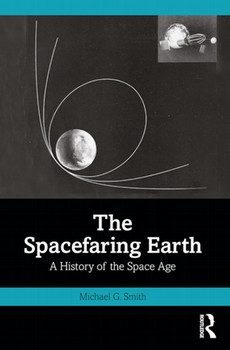
Michael G. Smith is a Professor of History at Purdue University's College of Liberal Arts, specializing in Russian History and Aerospace History. His office is located in BRNG 6170, where he holds office hours by appointment and before or after class. Dr. Smith teaches a diverse range of courses including History of Russia to 1861 (HIST 238), History of Russia from 1861 (HIST 239), History of Aviation (HIST 384), and History of the Space Age (HIST 387), along with numerous advanced seminars on Russian history, aerospace history, and global historical topics. Dr. Smith earned his Ph.D. from Georgetown University in 1991 and has established himself as a leading scholar in both Russian revolutionary history and aerospace history. His research demonstrates remarkable interdisciplinary breadth, connecting linguistic studies with political history in the Soviet context while simultaneously exploring the cultural dimensions of space exploration and aviation history. His scholarly output reveals two major research trajectories: deep investigations into the Russian Revolution with particular focus on language policy, nationalities issues, and revolutionary violence in Azerbaijan and the Caucasus region; and pioneering work on the history of aerospace, space exploration, and the cultural dimensions of the Space Age. These dual interests converge in his examination of how technological innovation intersects with political ideology and national identity formation. Dr. Smith has successfully mentored numerous undergraduate and graduate students whose research has resulted in publications in respected journals such as the Journal of Purdue Undergraduate Research, Quest: The History of Spaceflight Quarterly, and Astropolitics. His students have explored diverse topics including Purdue's aviation pioneers, NASA mission insignia, Shuttle-Mir program, and regional impacts of space programs. Working closely with the Purdue Archives, Dr. Smith has developed innovative archival-research seminars that have produced multiple student publications and special projects including Flight Paths: Purdue University's Aerospace Pioneers and Purdue Students Study Boilermaker Eugene Cernan's Remarkable Career. His commitment to connecting historical research with contemporary technological heritage has created unique opportunities for students to engage with primary sources related to aerospace history.
Dong Hoon Kim is an Associate Professor in the Cinema Studies department at the University of Oregon's College of Arts and Sciences . His work bridges media history and cultural studies, focusing on the ideological and visual frameworks of cinema in East Asia and beyond. Research Interests: His scholarship critically examines colonial cinema , socialist cinema , transnational media flows , and the intersection of media spectatorship with national identity. His studies span East Asian film, media, and popular culture, emphasizing historical and discursive formations. University of Oregon | Cinema Studies Email: donghoon@uoregon.edu Office Hours: Mondays 12-1:30p.m., Winter 25 Key Publications: Kim authored Eclipsed Cinema: The Film Culture of Colonial Korea (2017) and co-edited The Bloomsbury Handbook of North Korean Cinema (2025). His articles explore topics like socialist star-making in North Korea, transcolonial benshi practices, and the global impact of South Korea's Parasite . Teaching: Courses include Introduction to Korean Cinema , Studio Ghibli Animation , and seminars on Japanese New Wave cinema, transnational film genres, and violence in Korean cinema. He emphasizes interdisciplinary approaches to East Asian cultures.
Samuel Hayat is a CNRS-affiliated Research Fellow at the Center for Political Research (CEVIPOF) at Sciences Po, specializing in political representation and 19th-century revolutionary movements. His work intersects the history of ideas, historical sociology, and political theory. Current affiliation: Sciences Po (CEVIPOF) Visiting researcher: Maison Française d'Oxford (2020) Research focuses on: Political representation and embodiment 19th-century working-class movements Historical sociology of political concepts Democratic theory and participatory practices Recent publications explore: Yellow Vest Movement dynamics Working-class intellectual history Evolution of republican thought Conceptual history methodologies Co-editor of interdisciplinary works on: Democratic dispositifs Critical participation dictionary Political spokesperson roles
Mark Andrejevic is a Professor in the School of Media, Film, and Journalism at Monash University. He specializes in the socio-cultural implications of digital surveillance, data mining, and automated decision-making. His research spans Big Data ethics, privacy regulation, and the impact of technology on democracy. He leads major projects like the ARC Centre of Excellence for Automated Decision-Making and Society, focusing on AI’s societal implications. Andrejevic has been awarded Fellow of the Australian Academy of Humanities and the Nancy Baym Book Award. His work intersects with UN Sustainable Development Goals addressing justice and innovation. Research interests include automated surveillance systems, digital privacy policies, and the ethical governance of emerging technologies. He collaborates on projects such as facial recognition technology ethics and pandemic-era surveillance practices. His recent publications analyze platform accountability, algorithmic bias, and the societal effects of workplace monitoring technologies. He actively contributes to public discourse via media engagements and policy-focused talks on topics like facial recognition in education and pandemic-era data collection. Projects: ARC QEII Fellowship ($390k, 2010–2014), Australian Public Attitudes to AI, and facial recognition ethics studies. Grants: Over $390k from ARC for privacy research, plus ongoing funding through collaborative initiatives. Awards: Australian Academy of Humanities Fellowship (2020), Nancy Baym Book Award (2014). He supervises graduate students in Digital Media, Surveillance Studies, and Critical Theory. His interdisciplinary work bridges academia, policy, and industry to address technology’s societal challenges while advocating for democratic values.
Sujatha Fernandes is a Professor of Sociology at the University of Sydney, joining in 2016. Previously, she held positions at Queens College and the City University of New York’s Graduate Center, and was a Wilson-Cotsen Fellow at Princeton University. She earned a PhD in Political Science from the University of Chicago. Her research focuses on social and labor movements, global Black cultures, migrant workers, and anti-Blackness in the Americas. She has authored six books, including The Cuban Hustle (2020) and Curated Stories (2017), and her work explores storytelling, climate justice, and marginalized communities. Dr. Fernandes has received grants such as the Australian Research Council’s Discovery Project (2021) and contributed to initiatives like the Racial Justice and the Curriculum Project at the University of Sydney. She has been featured in global media, including The New York Times , NPR , and Orion Magazine . Her writing spans academic articles, creative nonfiction, and op-eds addressing climate displacement, migrant rights, and cultural policy. Notable works include analyses of Venezuela’s urban movements, Cuba’s cultural politics, and domestic worker advocacy. She sits on the editorial board of Transition: The Magazine of Africa and the Diaspora . Her interdisciplinary approach bridges sociology, anthropology, and literature, with ongoing projects in climate fiction and interlinked short stories.
Laura Toni is an Associate Professor in the Department of Electronic and Electrical Engineering at University College London's Faculty of Engineering Sciences. She serves as the leader of a research team focused on advanced signal processing and machine learning applications, documented at https://lasp-ucl.github.io . Additionally, she holds prestigious affiliations as an ELLIS (European Laboratory for Learning and Intelligent Systems) Member and Turing Fellow Alumni. PhD in Electrical Engineering, University of Bologna (2009) MS in Electrical Engineering, University of Bologna (2005) Professor Toni's research spans theoretical and applied aspects of machine learning with particular emphasis on graph-based approaches. Her work integrates signal processing techniques with modern AI methodologies to address complex problems in communication systems, multimedia processing, and scientific discovery. She has made significant contributions to reinforcement learning theory, graph signal processing, and their applications across diverse domains including drug discovery and immersive technologies. Analysis of her recent publications reveals a strong focus on graph-based machine learning approaches, with increasing emphasis on reinforcement learning applications. Her work demonstrates a progression from theoretical foundations to practical implementations, particularly in multimedia processing, network science, and drug discovery applications. Many of her recent papers combine graph neural networks with diffusion models and reinforcement learning for complex prediction and generation tasks. Professor Toni has received notable recognition through her ELLIS membership and Turing Fellow Alumni status, which represent significant achievements in the European AI research community. ELLIS (European Laboratory for Learning and Intelligent Systems) Member Turing Fellow Alumni As an academic leader, Professor Toni supervises postgraduate students and leads a research team at UCL, focusing on cutting-edge projects at the intersection of signal processing and machine learning. Her team has secured research funding through various channels including European initiatives and industry partnerships, enabling them to pursue ambitious projects in graph learning, reinforcement learning, and multimedia processing. The team actively collaborates with institutions worldwide, including previous connections with UCSD and EPFL. Professor Toni leads the LASP research group at UCL (https://lasp-ucl.github.io), which focuses on Large-scale Adaptive Signal Processing for intelligent systems. The team comprises researchers working on graph signal processing, reinforcement learning, and multimedia applications, with strong connections to both theoretical foundations and practical implementations across various domains including healthcare, communications, and immersive technologies.
Christopher Ferrie is an Associate Professor at the University of Technology Sydney (UTS), where he is affiliated with the Faculty of Engineering and Information Technology and the Centre for Quantum Software and Information (QSI). His academic career spans quantum information science, machine learning, and scientific education, with a strong emphasis on both theoretical research and public engagement through science communication. Full-time faculty member at UTS Active researcher in quantum information science Director of the Centre for Quantum Software and Information Author of numerous scientific publications and popular science books Dr. Ferrie earned his PhD in Applied Mathematics from the Institute for Quantum Computing and University of Waterloo in Canada in 2012. His doctoral work focused on quantum information and laid the foundation for his subsequent research career in quantum computing and related fields. Dr. Ferrie's research interests span several interconnected domains within quantum information science. His primary focus is on quantum estimation and control, with particular emphasis on applying machine learning techniques to solve statistical problems in quantum information science. He investigates how quantum systems can be characterized, controlled, and optimized for practical applications. His work bridges theoretical quantum physics with practical implementations, exploring how quantum phenomena can be harnessed for computational advantage. Recent research directions include quantum machine learning, quantum neural networks, and quantum optimization algorithms, with applications ranging from quantum state tomography to solving combinatorial optimization problems. Analysis of Dr. Ferrie's recent publications reveals a strong focus on practical quantum computing challenges. His work consistently addresses the intersection of quantum information theory and machine learning, with particular emphasis on making quantum algorithms more efficient, interpretable, and robust against noise. A significant portion of his recent research explores variational quantum algorithms and their optimization, reflecting the current priorities in near-term quantum computing. His publications also demonstrate growing interest in quantum machine learning applications and the development of techniques for quantum error mitigation and characterization. Dr. Ferrie has secured multiple research grants supporting his work in quantum computing and related fields. His funded projects span quantum control, quantum probability, quantum machine learning, and statistical decision theory, reflecting the breadth of his research program. While specific major awards aren't detailed in the available information, his sustained funding and publication record indicate significant recognition within the quantum information science community. Dr. Ferrie is actively involved in research supervision and teaching, with current funding supporting multiple PhD students and postdoctoral researchers. His teaching responsibilities include courses on quantum computing, where he introduces students to the fundamentals of quantum information processing. His research group at the Centre for Quantum Software and Information focuses on developing novel quantum algorithms and exploring the practical implementation challenges of quantum computing. The Centre for Quantum Software and Information at UTS serves as the primary research environment for Dr. Ferrie's work. This center brings together researchers working on various aspects of quantum computing, from hardware development to algorithm design and applications. Dr. Ferrie's team within the center focuses specifically on quantum software development, quantum algorithm design, and the application of machine learning techniques to quantum information problems. The collaborative environment enables interdisciplinary research that bridges theoretical quantum physics with practical computing applications.
Prof. Dr. Gert-Ludwig Ingold is a Professor of Theoretical Physics at the Institute of Physics, Faculty of Mathematics, Natural Sciences, and Materials Engineering, University of Augsburg. His research spans multiple areas of theoretical physics with emphasis on quantum phenomena in nanoscale systems. His work on the Casimir effect explores interactions between various geometries including spheres, plates, and dielectric materials, with applications in nanotechnology and biophysics. His research on dissipative quantum systems investigates thermodynamic anomalies and quantum Brownian motion. In mesoscopic physics, he studies charge transport through nanoscale structures and quantum interference effects. His work on quantum systems in phase space connects classical and quantum dynamics, while his semiclassical research examines quantum revival patterns and phase-space trajectories. Prof. Ingold's publications reveal a strong focus on the Casimir effect, with numerous papers examining interactions between different geometries and materials. His work demonstrates expertise in both theoretical modeling and numerical methods, as evidenced by his development of the CaPS software for Casimir effect calculations. He frequently collaborates with international researchers, particularly with Paulo A. Maia Neto, Tanja Schoger, and Benjamin Spreng. Prof. Ingold has made significant contributions to physics education through textbooks and popular science books, including Quantentheorie: Grundlagen der modernen Physik and Die 101 wichtigsten Fragen: Moderne Physik . He has co-authored the Python-based educational resource Numerische Physik mit Python and maintains extensive online teaching materials including lecture notes and video tutorials.
Tyran K. Steward is an Assistant Professor of History at Williams College, specializing in African-American and Modern U.S. History. His research intersects political, labor, and social history with analyses of popular culture and sport, particularly focusing on racial dynamics in the North during the early twentieth century and the American Interwar Period. Education: B.A., Morehouse College (2000) M.A., Eastern Michigan University (2009) Ph.D., Ohio State University (2013) Steward’s forthcoming book, The Benching of Willis Ward , examines the 1934 racist benching of a Black football player at the University of Michigan, using this incident to trace the emergence of black conservatism and northern Jim Crow structures. His work highlights how sports serve as critical sites for racial hierarchy and political reimagining. His publications include analyses of racial liberalism in academia, Black women's citizenship struggles, and reviews of seminal works in African-American Studies. Steward has advised senior theses on topics like reparations and Black internationalism, and previously held a Mellon Postdoctoral Fellowship at Carleton College.
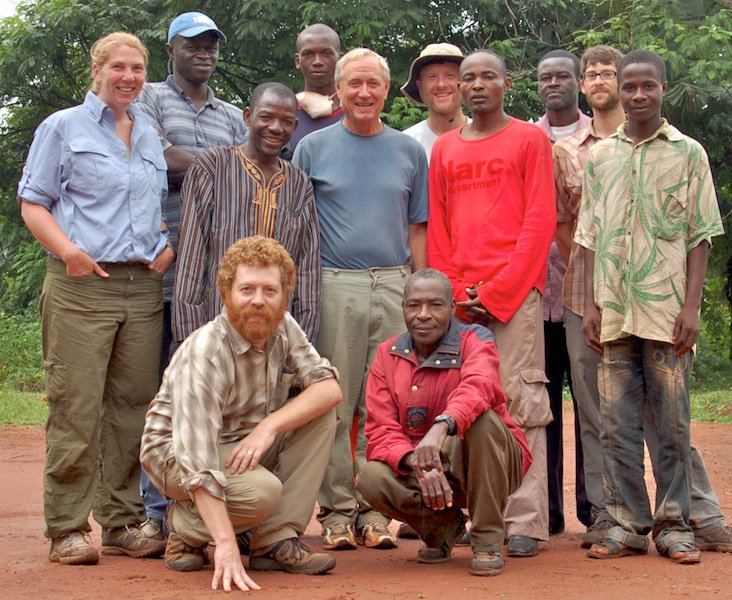
Edward H. Hagen is a Professor of Evolutionary Anthropology at Washington State University, Vancouver. He holds a BA in Mathematics from UC Berkeley and a Ph.D. in Anthropology from UC Santa Barbara (1999). His postdoctoral work was at Humboldt University, Berlin, under Peter Hammerstein. Since 2007, he has been at WSU, leading the Bioanthropology Lab. His research integrates evolutionary approaches to medicine, focusing on substance use, mental health, child development, and leadership evolution. Key themes include evolutionary medicine, signaling theory in depression/suicidality, and the role of pharmacological plant use in human evolution. He has conducted fieldwork in the Central African Republic, Ecuador, and India. Hagen's work spans theoretical models (e.g., depression as bargaining signals) and empirical studies (e.g., tobacco use and helminth infection in hunter-gatherers). He has secured over $387,000 in grants, including NSF funding for projects on leadership, child signals of need, and smoking behavior. His lab explores topics like music's evolutionary roots (credible signaling hypothesis) and predator deterrence. He is active in academic discourse, critiquing popular theories like Dunbar's social bonding hypothesis for music evolution. His publications span evolutionary psychology, anthropology, and medical journals, emphasizing interdisciplinary approaches.
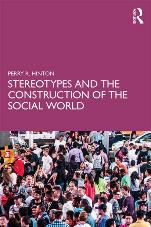
Perry Hinton is a Professor (Teaching Focused) in the Centre for Applied Linguistics at the University of Warwick, part of the Faculty of Social Sciences. He contributes to the interdisciplinary degree in Language, Culture and Communication, drawing on his expertise in psychology and cultural studies. University: University of Warwick School: Faculty of Social Sciences Department: Centre for Applied Linguistics Academic Rank: Professor Email: P.R.Hinton@warwick.ac.uk His research centers on the psychology of interpersonal perception, especially the interplay between cognition and culture. Key areas include stereotyping as a cognitive and cultural phenomenon and Western (particularly British) interpretations of Japanese culture, including media portrayals and anime. He also has a strong commitment to statistical education, having authored multiple textbooks on SPSS and data analysis. The recent publications reflect a consistent focus on cultural psychology, intercultural communication, and social representation. Themes include the construction of identity, media influence, cultural stereotypes, and cognitive biases in person perception. His work often takes a multidisciplinary approach, integrating insights from psychology, linguistics, and media studies. Perry Hinton has authored and co-authored several influential books in his field, particularly on stereotypes and statistical methods. While no formal scientific awards are listed, his sustained publication record in peer-reviewed journals and with major academic publishers (Routledge, Bloomsbury, Palgrave) indicates significant scholarly recognition. He has supervised or co-edited collaborative works, such as the 2023 volume on intercultural relations, suggesting advisory and mentoring roles. His career path includes positions at five British universities, progressing from lecturer to Head of Department, with extensive experience teaching psychology across disciplines including linguistics, education, and media studies. He joined Warwick's Centre for Applied Linguistics at the inception of its Language, Culture and Communication program in 2014. Hinton works within a multidisciplinary academic environment, contributing to a research culture that bridges psychology and applied linguistics. His collaborations, particularly with Troy McConachy, suggest active participation in intercultural research teams and scholarly networks focused on global communication and cultural understanding.
Catherine Stinson is an Assistant Professor and Queen’s National Scholar in Philosophical Implications of Artificial Intelligence at Queen's University. She holds joint appointments in the School of Computing and the Philosophy Department, blending technical and philosophical expertise to address ethical challenges in AI. PhD in History & Philosophy of Science, University of Pittsburgh (2013) MSc in Computer Science, University of Toronto (2013) Dr. Stinson's research focuses on methodological and ethical dimensions of artificial intelligence, including: Bias and explanation in machine learning Computational psychiatry Embodied intelligence Community-led design AI ethics education Her recent publications analyze corporate influence in NLP, privacy implications of large language models, and documentation practices in AI datasets. They explore intersections between technical performance, ethical responsibility, and societal impact. Scientific awards include: Queen’s National Scholar Finalist for Outstanding Certification at Transactions in Machine Learning Research As director of the Ethics and Technology Lab at Queen's, she leads interdisciplinary projects challenging algorithmic bias, investigating AI creativity, and developing tools to resist targeted violence. Current initiatives include: Critical evaluation of chatbots for mental health support Tracking (In)justice project on police-involved deaths in Canada