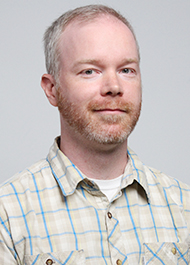
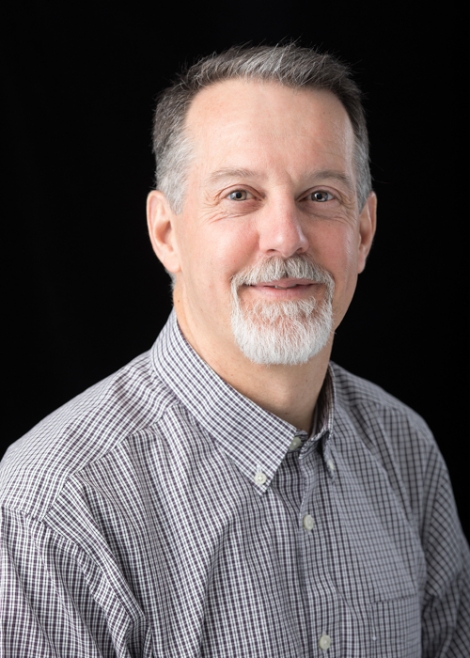
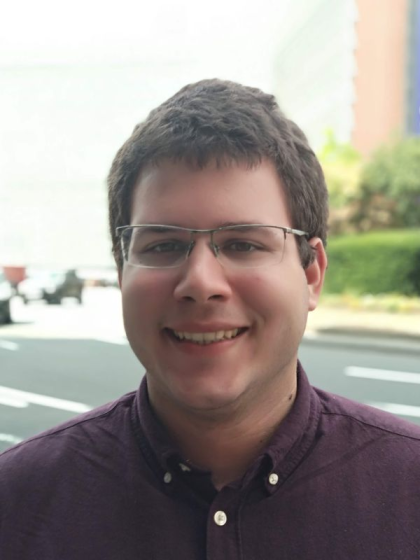
Liselotte Karulf is a Doctoral Researcher in the Doctoral Programme in Chemistry and Molecular Sciences and a Visiting Scholar at the Department of Chemistry, University of Helsinki. Her research focuses on CO2 utilization , particularly in the development of CO2-based polyurethane foam as part of sustainable chemistry and materials science. She collaborates internationally on carbon dioxide conversion projects. Scientific Contributions : 2025 publication in Journal of CO2 Utilization reviewing trends in CO2-based polymer synthesis.
Mark Lynch is an Associate Professor in Biochemistry and Chemistry at the University of Southern Queensland's School of Agriculture and Environmental Science. He holds a PhD from Australian National University (ANU) and has held academic roles at both ANU and the University of Sydney. Senior Lecturer Associate Head (Learning, Teaching, and Student Success) Program Director for multiple degrees Lynch's research spans diverse areas including: Discovery of chemotherapeutics from endophytic fungi Food waste valorisation in circular economies Fire-retardant and self-healing polymers Nutrition and health implications Water quality management His recent publications (2021-2025) show strong focus on: Waste-to-resource strategies Fire-retardant material design Endophyte-driven bioactive compound discovery Green polymer chemistry Water treatment innovations Science education methods As a supervisor, Lynch has guided doctoral students in: Antimicrobial endophyte research Groundwater desalination systems Fire-retardant biocomposites Waste-derived functional materials
Roberto Cerioni is a Professor in the Department of Engineering and Architecture at the University of Parma, where he has been a faculty member since 2002, previously serving as an Assistant Researcher from 1990. He holds an MS in Civil Engineering from the University of Ancona (1983) and has taught extensively in both Civil Engineering and Architecture programs, including courses such as Construction Techniques, Analysis and Control of Structures, and Design of Structures. His research focuses on the structural behavior of reinforced and prestressed concrete, masonry systems (particularly AAC masonry), nonlinear analysis, and finite element modeling. He investigates critical aspects such as shear and torsion in RC members, constitutive modeling for simulation, and the performance of building components under extreme conditions like high temperatures. Recent publications (2022–2023) highlight his active engagement in experimental and numerical studies on concrete tunnel linings under fire, mechanical characterization of AAC masonry, fracture properties of foams, and structural performance of lintels. These works reflect a strong trend toward sustainable construction materials and advanced structural analysis techniques. He has authored or co-authored over 80 scientific papers. While no specific awards or fellowships are mentioned in the provided text, his sustained research output and teaching across multiple programs underscore his academic contributions. Roberto Cerioni mentors students in civil and architectural engineering disciplines, though specific advisees are not listed. There is no mention of external grants or funding sources. He is involved in laboratory activities such as the Laboratory for Structure Design and Control, indicating hands-on teaching and research supervision. His work is closely tied to practical and sustainable construction solutions, with ongoing research in material performance, structural safety, and innovative design methods. He continues to be an active academic as of the 2024/2025 academic year.
Andrew Robak is a Professor of Chemistry at Keuka College since Fall 2007, specializing in organic chemistry. He serves as the primary instructor for organic chemistry courses and advises the college's chemistry club, fostering student engagement and research initiatives. Ph.D. in Chemistry, University of Oregon M.S. in Chemistry, University of Oregon B.S. in Environmental Chemistry, Rochester Institute of Technology His research spans diverse domains, including: Exploring click chemistry for organic synthesis Developing eco-friendly surfboard coatings using polyurethanes Designing chemistry experiments for homeschooled high school students Integrating chemistry with photography to promote interdisciplinary science-art collaborations Creating environmentally sustainable lab experiments Investigating polymer/plastic applications Demonstrating explosive chemistry for educational purposes
Dr. Jeff Ramsdell is a Professor in the Department of Sustainable Technology and the Built Environment at Appalachian State University. His academic and professional work bridges materials science, engineering, and sustainable construction technologies. Education: Ph.D., Materials Science and Engineering, University of Central Florida, 2002 M.B.A., Crummer Graduate School of Business, Rollins College, 1996 B.S., Mechanical Engineering, University of Florida, 1990 His research focuses on materials characterization , surface science , innovative construction materials , and alternative fuels . His interdisciplinary work applies advanced materials analysis to challenges in construction and sustainability. He teaches courses in construction technology, materials, project management, and sustainable building systems, including TEC 2708, TEC 3039, TEC 4718/5718, and TEC 3548/5548 with an international component in the Dominican Republic. The publications reflect a strong focus on materials behavior under industrial processing conditions, particularly in semiconductor and construction contexts. Key themes include polymer surface degradation, nanomaterial synthesis, and metallization reliability, indicating a career-long emphasis on applied materials engineering. Professional Affiliations: American Society of Mechanical Engineers (ASME) Electrochemical Society ASM International Tau Beta Pi Engineering Honor Society Materials Research Society Associated Builders and Contractors The Minerals, Metals & Materials Society Leadership Seminole Habitat for Humanity Dr. Ramsdell advises students in sustainable technology and construction-related programs. Though specific grants and funded projects are not mentioned, his research output and professional engagement suggest active contributions to applied research in sustainable materials and construction processes. No formal lab or research team is specified in the available text.
Emrah Çakmakci is an Associate Professor in the Department of Organic Chemistry at the Faculty of Arts and Sciences, Marmara University. His academic career has been entirely based at Marmara University, where he completed his undergraduate, master's, and doctoral studies, and later advanced to associate professor in 2017. He is actively engaged in research and university-industry collaboration, contributing significantly to applied polymer science. His research interests lie at the intersection of organic and materials chemistry, with a strong emphasis on functional polymers. Key areas include: Photocurable materials for industrial applications Development of flame retardant additives Polyurethanes and polyimides with enhanced properties Nanomaterial integration in polymer matrices Biobased and sustainable polymers for green chemistry His work bridges academic innovation and industrial implementation, particularly through consultancy and collaborative R&D projects. With over 127 publications in Web of Science, 60 in Scopus, and an exceptionally high h-index of 821 in Google Scholar, his research impact is substantial. He has contributed to 17 funded projects and holds 7 intellectual property rights, reflecting his innovative output. Dr. Çakmakci has supervised 7 theses, demonstrating his role in mentoring the next generation of chemists. He is actively involved in advancing sustainable chemistry and materials engineering through both academic and industrial partnerships. He has been recognized for his contributions through extensive project involvement and intellectual property development, though specific scientific awards are not listed in the provided text. His laboratory and research team focus on polymer synthesis and characterization, working on cutting-edge materials with applications in coatings, electronics, and sustainable manufacturing. The group collaborates with industrial partners under university-industry cooperation frameworks, aiming to translate research into real-world solutions.
Prof. Dr. Memet Vezir Kahraman is a full Professor in the Department of Chemistry, Faculty of Sciences, Marmara University, where he has been serving since 1994, progressing from Research Assistant to Professor in 2016. He has held leadership roles including Vice Chair of the Chemistry Department (2006–2009) and Deputy Director of the Institute of Natural Sciences (2010–2014). His work bridges academic research and industrial applications through numerous industry-university collaborations. His primary research interests include Organic Chemistry , Polymer Science , and Advanced Materials , with a focus on thiol-ene polymers, polyurethane systems, UV-curable coatings, flame-retardant materials, phase change materials (PCM), UV-reactive electrospinning, cyanate esters, and resin/boya systems. These areas reflect strong interdisciplinary work in materials science, chemical engineering, and applied chemistry. Prof. Kahraman has authored over 200 SCI-indexed articles, holds 3 patents, and has been cited over 4,500 times with an h-index of 35. He has supervised more than 60 Master’s and Doctoral theses, demonstrating a strong commitment to academic mentorship and research training. 3 Patents in polymer and coating technologies Over 200 SCI-indexed publications h-index: 35 (Web of Science), over 4,500 citations Executive Board Member, Turkish Chemical Society (2012–2021) He actively leads externally funded industry-academia collaboration projects, contributing to innovation in materials and chemical technologies. His work emphasizes practical applications of polymer chemistry in industrial settings. He is affiliated with Marmara University’s Goztepe Campus, Faculty of Science, Chemistry Department, and maintains an active research laboratory focusing on functional polymers and smart materials development.
Prof. Sevim Karataş is a faculty member in the Department of Chemistry at the Faculty of Arts and Sciences, Marmara University, where she has been serving as a Professor since 2016. She previously held the positions of Associate Professor (2011–2016) and Research Assistant (1995–2011). Her research is centered on polymer chemistry, particularly UV-curable coatings, hybrid and nanocomposite materials, and sol-gel processes. Doctorate: Marmara University, Faculty of Arts and Sciences, Chemistry (2001) Postgraduate: Istanbul University, Institute of Graduate Studies in Sciences, Organic Chemistry (1993) Undergraduate: Istanbul University, Faculty of Engineering, Department of Chemistry (1990) Her research interests include organic and polymer chemistry , with a focus on UV-curable polyurethane acrylates , fluorinated and siloxane-containing polymers , nanocomposites , and hybrid coating materials . She utilizes sol-gel techniques and photopolymerization to develop advanced functional materials for industrial and environmental applications. Her work often integrates phosphorus, fluorine, and silica-based components to enhance flame retardancy, hydrophobicity, and mechanical performance. Her recent publications (2022–2024) reveal a strong trend toward the development of ureidopyrimidinone-functionalized and POSS-vinyl-based nanohybrids , fluorosiloxane hybrids , and epoxy acrylate-clay nanocomposites , all aimed at improving coating performance under UV curing. These studies emphasize polymer synthesis, material characterization, and structure-property relationships. Synthesis and characterization of ureidopyrimidinone-functionalized polyurethane acrylates and their hybrid nanocomposites for UV coating applications (2024) POSS-vinyl-urethane acrylate-based nanohybrid coating materials (2024) Synthesis of polyurethane acrylate hybrids containing fluorine and siloxane by the sol–gel method for UV-curable coatings (2023) Preparation and characterization of UV‑cured epoxy acrylate‑based nanocomposite coatings containing organonanoclay (2022) Prof. Karataş has supervised multiple graduate students and led several research projects funded by higher education institutions. Her leadership in research is evident through her role as executive in projects such as Development of UV-curable waterborne polymeric materials and Biyo-eseslı Polimer Nanokompozit Malzemelerin Sentezi ve Kaplama Uygulamaları . She collaborates extensively with researchers like N. Kayaman Apohan, M. V. Kahraman, and Y. Menceloğlu. She is actively involved in laboratory-based research, focusing on polymer synthesis, sol-gel processing, and coating formulation. Her team works on developing sustainable, high-performance materials for applications in protective coatings, electronics, and industrial surfaces.
Ivan Julian Rochina is a Professor in the Department of Nursing at the Faculty of Nursing and Chiropody, Universitat de València, where he holds a permanent academic position. His work is centered within the FROG (Frailty and Cognitive Impairment) research group, aligning his expertise with clinical and geriatric nursing challenges. His research interests lie at the intersection of nursing practice and patient biomechanics, particularly in the context of aging populations. Key areas include wound care , pressure ulcer prevention , frailty assessment , and cognitive impairment in elderly patients . His doctoral work investigated the transmission of pressure on the posterior calcaneal tuberosity using polyurethane foam dressings, reflecting a strong foundation in evidence-based clinical interventions. The absence of listed publications in the provided text prevents a detailed analysis of article trends; however, his affiliation with the FROG research group suggests a consistent focus on multidisciplinary approaches to aging-related health issues. Scientific Awards: No awards were mentioned in the provided information. There is no information available regarding student supervision, research grants, or funded projects. Dr. Rochina is likely involved in collaborative research within the FROG group, contributing to studies on frailty and cognitive decline, though specific team structures or lab details are not described in the source text.
Tania Webb is Principal Lecturer in Pharmacology and Pharmacy Programme Leader at the Leicester School of Pharmacy, Faculty of Health and Life Sciences, De Montfort University. She plays a key academic and leadership role in the MPharm program and contributes significantly to pharmacology education. BSc (Hons) in Biochemistry, University of Wales PhD in Molecular Neurobiology, Cambridge University Her research centers on the molecular pharmacology of G protein-coupled receptors, particularly P2Y and P2X receptor families. She has investigated their cloning, functional characterization, signaling mechanisms, and roles in neuronal and vascular systems. Her expertise includes mammalian cell expression of therapeutic targets and pharmacogenomics. She has secured research funding from the Wellcome Trust and BBSRC, focusing on receptor dimerization and functional properties. The publications reflect a strong and consistent research trajectory in purinergic signaling, with emphasis on P2 receptor subtypes across various models including mammalian, neuronal, and parasitic systems. Key themes include receptor structure-function, calcium signaling, DNA synthesis regulation, and neurotransmitter dynamics. Dr Webb supervises postgraduate research, currently serving as second supervisor for Norbert Nwankwo. She has contributed to teaching in Physiology, Pharmacology, Pharmacogenomics, and Bioinformatics, and is involved in delivering the MPharm and MSc Pharmaceutical Biotechnology programs.
Jorge José López Beceiro is a full-time Professor in the Department of Naval and Industrial Engineering at the Ferrol Engineering Polytechnic University College, Universidade da Coruña. His work spans teaching, research, and industrial collaboration, with a strong focus on materials science, particularly thermal and rheological characterization of polymers, composites, and sustainable materials. His research interests include: Thermal and rheological properties of materials Polymer processing and 3D printing Nanomaterials and composite characterization Sustainable textiles and biopolymers Viscoelasticity and soft matter physics Kinetic studies of curing and degradation The recent publications reflect a strong trend in sustainable materials, industrial applications (textiles, construction, aerospace), and advanced characterization techniques like thermal analysis and rheometry. His work bridges fundamental science with real-world engineering solutions. Scientific contributions include: Patents on material characterization and thermal analysis methods Collaborative research with INDITEX, NAVANTIA, and CNRS Supervision of numerous master’s and final-year theses Active participation in national and international R&D projects He mentors students across multiple programs including Industrial Engineering, Nanoscience, Textile Technology, and Fashion Management. His research team focuses on thermal analysis, rheology, and sustainable material development. Current projects involve eco-friendly coatings, recycled 3D printing filaments, and advanced curing techniques for thermosets.
María Jesús Rodríguez Guerreiro is a faculty member in the Department of Chemical Engineering at the Ferrol Engineering Polytechnic University College, Universidade da Coruña (UDC), Spain. She teaches in various engineering and master’s programs, including Industrial Technology Engineering, Mechanical Engineering, Naval Architecture, and the Master’s Degree in Occupational Risk Prevention and Common Risks. Her academic work spans teaching, research, and thesis supervision, with a strong emphasis on environmental and chemical engineering applications. Department: Chemical Engineering School: Ferrol Engineering Polytechnic University College University: Universidade da Coruña (UDC) Her research interests focus on environmental engineering, occupational risk prevention, water treatment technologies, cleaner production, and sustainable industrial processes. She actively investigates sustainable solutions in marine and industrial contexts, including wastewater treatment, coastal protection, and circular economy practices in engineering. The recent publications of María Jesús Rodríguez Guerreiro reflect a consistent trend in environmental sustainability, particularly in marine and industrial systems. Her work spans life cycle assessments, nature-based solutions, microplastics, and renewable energy integration in water treatment. These studies are published in high-impact journals such as Journal of Cleaner Production , Environments , and Estuarine, Coastal and Shelf Science , highlighting interdisciplinary research at the intersection of engineering, ecology, and public health. ORCID: 0000-0001-6883-8385 Researcher ID: AAF-8974-2019 Scopus ID: 54584226400 She has supervised numerous master's theses on risk assessment in industrial, hospitality, and public service settings. Her research is supported by multiple R&D projects funded by regional (Xunta de Galicia), national, and international (Alcoa Foundation) agencies, demonstrating strong collaborative and grant-writing capabilities. She has co-authored patents and utility models related to engineering solutions, often in collaboration with Luis Carral Couce and other UDC researchers. María Jesús Rodríguez Guerreiro is an active member of the 'Reactividad Química y Fotorreactividad' research group and collaborates extensively in multidisciplinary teams focusing on marine engineering, environmental safety, and sustainable technology development.
Gábor Érsek is a Postdoctoral Researcher at the University of Groningen, affiliated with the Faculty of Science and Engineering and the Zernike Institute for Advanced Materials. His research focuses on advanced materials science, particularly in chemical materials science, coatings, and physical engineering applications. Érsek holds an MSc and recently completed a PhD (2025) on the structural analysis of polyurethane/polyacrylate coatings via X-ray studies. His research interests span organic electronics, polymer degradation mechanisms, electrochemical energy storage systems, and sustainable materials development. He employs advanced characterization techniques such as X-ray analysis and colloid science to investigate material performance under environmental stresses. Recent work includes optimizing interlayers for organic solar cells, analyzing humidity effects on polyurethane film formation, and developing bifunctional electrocatalysts for water electrolysis. These studies highlight his interdisciplinary approach bridging chemistry, materials engineering, and environmental sustainability. Érsek collaborates extensively with institutions like the Zernike Institute, focusing on both fundamental and applied research. His contributions address global challenges such as renewable energy systems and biodegradable material design.
Hacer Ayşen Önen serves as a Professor in the Department of Chemistry at Istanbul Technical University, Istanbul, Turkey. Her research spans 35+ years with 83 publications, 6 funded projects (2014-2024), and 1466 Scopus citations (h-index 21), focusing on advanced polymer composites and nanofiber applications. Her research expertise centers on material science and polymer chemistry , particularly nanofiber technology for sound absorption, thermal insulation, and environmental remediation. Key areas include graphene oxide fiber development for $$\text{SO}_2$$ adsorption, electrospun thermoplastic polyurethane composites, and UV-curable soybean oil-based coatings. Her fingerprint reveals 100% specialization in composite materials, with 96% emphasis on cationic polymerization and 74% on nanofiber systems. Recent publications (2019-2022) demonstrate a cohesive trajectory in sustainable material design: thermoplastic polyurethane nanofibers dominate acoustic/thermal insulation studies (2021-2022), while graphene oxide fibers drive gas adsorption research (2019). Interdisciplinary work bridges polymer chemistry, textile engineering, and environmental science, with consistent industry applications in coatings and insulation. Scientific awards: Özel Ödül (1998) Teşvik Ödülü (1999) Proje Performans Ödülü (2018) Proje Performans Ödülü (PPO) (2020) Professor Önen has supervised 22 students and secured 6 research grants as Principal Investigator, including SRP-funded projects on soybean oil-based coatings (2023-2024), graphene oxide fibers for $$\text{SO}_2$$ adsorption (2017-2018), and smart polymeric materials (2016-2017). Her collaborative network spans textile engineering, environmental science, and polymer chemistry departments. Her laboratory work integrates electrospinning, material characterization, and environmental testing facilities, with recent focus on continuous graphene oxide fiber production and elastomeric nanofiber webs for acoustic applications. Current projects emphasize green chemistry solutions for industrial insulation and pollution control.
Professor Belkıs Ustamehmetoğlu is a distinguished faculty member in the Department of Chemistry at Istanbul Technical University's Faculty of Science and Letters. With an h-index of 17 and 849 citations according to Scopus, she has established herself as a leading researcher in polymer chemistry and materials science. Her research interests span multiple areas within polymer science, with particular expertise in conductive polymers, electropolymerization techniques, and energy storage materials. Professor Ustamehmetoğlu's work focuses on developing smart polymers, supercapacitors, and advanced polymerization methods involving carbazole, pyrrole, and thiophene derivatives. Her fingerprint analysis reveals significant contributions to copolymer research (100%), polymerization (96%), carbazole chemistry (79%), pyrrole chemistry (79%), polycarbazole (73%), electropolymerization (60%), film materials (52%), and thiophene-based polymers (48%). Professor Ustamehmetoğlu has published 68 research outputs and led 7 research projects, with recent work demonstrating strong trends in energy storage applications, electrochromic materials, and novel polymerization techniques. Her most recent publications (2022-2024) show a clear focus on developing advanced materials for supercapacitors, flexible electronics, and energy storage devices, often combining multiple polymer systems to achieve bifunctional properties. She has supervised 13 students throughout her career, indicating her commitment to academic mentorship. Her research has been supported by multiple grants, including projects funded by TÜBİTAK and other research councils, with recent work focusing on applications in lithium-ion batteries, supercapacitors, and conductive textiles.