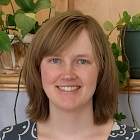
Dr Didier Ndeh is a researcher at Newcastle University, specializing in the biochemistry and microbiology of complex glycan metabolism within the human gut microbiota. His work focuses on enzymatic degradation of carbohydrates, host-microbe interactions, and the identification of novel catalytic functions in gut bacteria. Research Interests Glycan utilization mechanisms by gut microbes Characterization of carbohydrate-active enzymes (CAZymes) Human microbiome-glycosaminoglycan interactions Structural and functional analysis of bacterial enzymes Evolution of microbial metabolic pathways Publications Key studies on glycoside hydrolases, polysaccharide lyases, and sulfation resistance in gut bacteria Contributions to understanding microbial degradation of pectin, arabinogalactan, and glycosaminoglycans Collaborative work with Professor Harry Gilbert and Dr Alan Cartmell on bacterial metabolic systems
Dr. Arnaud Basle is a Researcher at Newcastle University , specializing in structural biology and biochemistry. His work focuses on bacterial physiology, glycan metabolism, and metal homeostasis, with a particular emphasis on enzyme mechanisms and protein structure-function relationships. Research Themes : Structural analysis of bacterial enzymes (e.g., polysaccharide lyases, glycoside hydrolases), copper transport systems, and outer membrane protein complexes. Collaborations : Professor Bert van den Berg, Dr. Alan Cartmell, Professor Harry Gilbert (Emeritus), and Dr. Jon Marles-Wright. Recent Trends : Studies on glycan uptake systems in gut Bacteroidetes, thermostable biocatalysts, and ribosome hibernation factors.
Juan Gonzalez is a Professor and Dean of Graduate Education in the Department of Biological Sciences at the University of Texas at Dallas, School of Natural Sciences and Mathematics. He holds a Ph.D. in Microbiology and Molecular Genetics from UCLA and completed postdoctoral training at MIT. His research focuses on bacterial communication in rhizobia, particularly quorum sensing in Sinorhizobium meliloti , and its role in symbiotic nitrogen fixation with leguminous plants. Education: Postdoctoral Fellow - Department of Biology, Massachusetts Institute of Technology (1996) Ph.D. - Microbiology and Molecular Genetics, University of California Los Angeles (1991) B.S. - Microbiology and Public Health, Michigan State University (1985) His research interests center on quorum sensing , exopolysaccharide production , host-bacterium signaling , and gene regulation in nitrogen-fixing bacteria. He investigates how signal molecules like flavonoids and N-acyl-homoserine lactones mediate the establishment of symbiosis between rhizobia and legumes. His work has revealed that quorum sensing regulates motility, conjugation, polysaccharide synthesis, and symbiosome development. The most recent publications highlight a consistent focus on quorum sensing mechanisms in Sinorhizobium meliloti , particularly the Sin/ExpR system, its interaction with host plants, and its regulatory role in exopolysaccharide production, motility, and symbiosis. Earlier works emphasize the biochemical and genetic basis of exopolysaccharides in nodule invasion. Collectively, the research spans microbial genetics, molecular signaling, and plant-microbe symbiosis. Scientific Awards: National Science Foundation Career Award (1998-03) Jane Coffin Childs Memorial Fund Postdoctoral Fellowship (1991-95) University of California President's Dissertation Year Fellowship (1989-90) Rittenberg Award for Outstanding Microbiology Graduate Research (1988-89) Multiple Graduate Fellowships and Conference Travel Awards Mentored students awarded first prize at scientific conferences Dr. Gonzalez has secured substantial research funding, including a $1.5 million NIH grant and a $600,000 NSF award, supporting projects on quorum sensing and exopolysaccharide roles in symbiosis. He has mentored numerous graduate and undergraduate students and serves as an academic advisor for over 50 biology majors. He is actively involved in professional societies such as the American Society for Microbiology and the International Society for Molecular Plant-Microbe Interactions. He leads a research team investigating bacterial communication and has delivered over 50 invited talks at institutions and conferences worldwide. His lab has explored topics including quorum sensing interference, cyclic glucan synthesis, and host plant effects on bacterial signaling. Future work likely continues to unravel the complexity of microbial communication in symbiotic systems.
Natalia Korotkova, PhD, is an Associate Professor in the Department of Microbiology, Immunology, and Molecular Genetics at the University of Kentucky's College of Medicine. She holds an additional affiliation with the Molecular and Cellular Biochemistry department. Her research focuses on understanding the structural organization and functional roles of the cell envelope in Gram-positive bacteria, particularly Streptococci. Research Interests: Dr. Korotkova investigates polysaccharide components of bacterial cell walls, their biosynthesis pathways, and their critical roles in antibiotic resistance, metal ion homeostasis, and evasion of host immune defenses. Her work aims to identify novel therapeutic targets for antibiotics and vaccines. Key Themes: Cell division mechanisms in Gram-positives Antimicrobial resistance mechanisms Host-pathogen interactions Labs/Teams: Directs the Korotkova Lab, which hosts a multidisciplinary research team focused on structural and functional studies of bacterial cell envelopes. The lab's website provides further details about ongoing projects and collaboration opportunities.
Caroline Szczepanski is an Associate Professor in the Department of Chemical Engineering and Materials Science at Michigan State University's College of Engineering. Her research focuses on polymer engineering, materials science, and biomimicry, with applications in biomaterials, adhesives, coatings, and membranes. Her lab develops bioinspired materials that mimic natural functionalities, emphasizing hierarchical structures and dynamic behaviors. Education: Ph.D., Chemical & Biological Engineering, University of Colorado - Boulder (2014) B.S., Chemical Engineering, Lafayette College (2009) Research Interests: The Szczepanski group explores polymer networks for adaptive materials, chitin-based biomaterials, and surface-functionalized coatings. Current projects include designing amphipathic surfaces via photopolymerization, enhancing dental adhesives with dynamic networks, and exploring waste-derived chitin sources (e.g., dung beetles). Her work bridges engineering, physics, and dentistry, with a focus on sustainability and bioinspired solutions. Grants & Collaborations: National Science Foundation: Gel rupture under dynamic loading (2023–2026) National Institutes of Health: Self-recovering dental adhesives (2020–2025) Henry Ford Health System: Proregenerative wound-healing patches (2023–2025) Labs & Teams: The Szczepanski lab collaborates with institutions like Magna Services of America Inc. and focuses on translating research into commercial materials. Key projects involve electropolymerization-based nanotube formation and bioinspired surface patterning.
Adrienne Edkins is a Professor in Biochemistry and holds the South African Research Chair (SARChI) in Molecular and Cellular Biology of the Eukaryotic Stress Response at Rhodes University. She leads the Biomedical Biotechnology Research Unit (BioBRU), established in 2011, and has been a permanent academic staff member since 2009. Her research focuses on protein homeostasis, chaperone biology, and drug discovery, with applications in cancer and infectious disease. Edkins has authored over 70 peer-reviewed articles and secured prestigious grants including the UKRI Medical Research Council African Research Leader’s scheme and Tres Cantos Open Lab Fellowship with GSK. Education: PhD in Biochemistry and Molecular Biology (University of Glasgow, UK) M.Res. in Molecular Basis of Disease (University of Glasgow) M.Sc. in Forensic Science (King’s College London) B.Sc. Biochemistry and Microbiology (Rhodes University) Research interests include chaperone interactions, extracellular matrix regulation, and anticancer drug development. Her work bridges basic science and translational medicine, with contributions to understanding Hsp90’s role in cancer and viral infections. Edkins is an NRF-rated scientist and a Fellow of the African Academy of Sciences and Cell Stress Society International. Awards: Rhodes University VC Distinguished Research Medal (2015) SAWiSA Award for Distinguished Young Scientist (2018) NRF Y1 rating (2014–2019) Her lab, BioBRU, emphasizes collaborative research, training over 65 graduate students. Current projects involve HSP90 inhibitors, KSHV lytic replication, and fucoidan-based therapies. Edkins advocates for African inclusion in global drug discovery initiatives, emphasizing local bioresearch potential.
Murat Kaya is a Professor at the Department of Molecular Biology and Genetics, Istanbul Technical University. His research focuses on biomaterials, bioinspired materials, nanotechnology, and their applications in drug delivery, food preservation, and environmental engineering. He is actively involved in projects exploring chitin-based nanomaterials, superhydrophobic surfaces, and sustainable seed coatings. Key research interests include chitin and chitosan properties, antimicrobial activity, nanoparticle synthesis, and biomaterial design. His recent work involves developing biodegradable coatings for food preservation and advanced materials for medical applications like bone regeneration and cancer therapy. He leads projects such as 'Sustainable Natural Seed Coatings' and 'Bioinspired High-Strength Materials'. His publications span over 137 articles, with a focus on nanomaterial characterization, drug delivery systems, and environmental adsorption technologies. Collaborations include international teams in Turkey, Europe, and beyond. Awards and grants are not explicitly mentioned, but his research has attracted significant attention, with over 6,238 citations and an h-index of 46.
Helge Dorfmueller is a Senior Lecturer and Principal Investigator in Molecular Microbiology at the University of Dundee. His research focuses on vaccine development against Group A Streptococcus (GAS), particularly targeting polysaccharide antigens. He leads projects such as the 'Upscale Strep A Vaccine' and 'Decoding the Biosynthesis Machinery of Group A Carbohydrate,' emphasizing recombinant production platforms and outer membrane vesicle-based vaccines. Dorfmueller has contributed to over 35 peer-reviewed articles and holds multiple awards including the 2021 University of Dundee Venture Pitch 1st Place and the Biological and Biomedical Sciences Education Learning and Teaching Award. His work bridges glycobiology, immunology, and molecular biology to address global health challenges. Research Interests: Vaccine design against bacterial pathogens Glycobiology of bacterial surface polysaccharides Mechanisms of Streptococcal pathogenesis Recombinant protein expression systems Awards: Gold award for Education in Biomedical Sciences (2021) Innovator of the Year (2020) People's Award (2019) Grants & Activities: Dorfmueller oversees active grants totaling £2.3M+ and participates in 49+ academic activities including invited talks at the European Glycoscience Community and the Strep GBI meeting. He has supervised 3 PhD students and actively engages in public outreach through lectures and exhibitions. Labs & Teams: Leads the Molecular Microbiology lab at Dundee, collaborating with international teams on vaccine development and glycobiology. Key partners include the Wren Lab (London) and the Bactivac consortium.
Dr. Vivek Bharadwaj is a Staff Scientist in the Computational Molecular Science department at the National Renewable Energy Laboratory (NREL) , where he has worked since 2018. His research integrates computational molecular modeling , quantum mechanics , and finite element methods to advance bioenergy technologies and chemical conversion systems . PhD (2015): Chemical Engineering, Colorado School of Mines Master's (2011): Chemical Engineering, Colorado School of Mines Bachelor's (2008): Chemical Engineering, Sardar Vallabhbhai National Institute of Technology Surat Vivek's research focuses on: Elucidating biomass biosynthesis mechanisms in plants Investigating the biophysics of plant cell wall pectins Modeling enzymatic biomass deconstruction pathways Developing intrinsic kinetics models for catalytic systems Studying electron transport in biological systems His publications demonstrate expertise in molecular dynamics , machine learning applications in enzyme analysis, and catalyst surface characterization . Key collaborations include work with the Center for Bioenergy Innovation and Consortium for Computational Physics and Chemistry . 2015: American Chemical Society Chemical Computing Group Research Excellence Award 2014: NVIDIA Best GPU Poster Award
Hatice Funda Karbancıoğlu Güler is a Professor at the Department of Food Engineering , Istanbul Technical University , specializing in applied microbiology, fermentation technologies, and food preservation. Her work bridges probiotic research with biotechnological innovations for agro-industrial waste valorization. Research Focus: Antimicrobial agents, bioactive compounds, nanostructured materials for food/wound applications, and sustainable fermentation processes. Awards: Symposium Participation Grant (2002) Current Projects: Probiotic Bacillus strain isolation for industrial use (2025–2026) AI-driven probiotic functionality analysis (2025–2028)
Florence Uruakpa is an Assistant Teaching Professor in the Human Biology program at the University of Wisconsin-Green Bay , affiliated with the College of Science, Engineering and Technology . Her research focuses on food science, nutritional analysis, and functional foods with emphasis on plant proteins, sensory evaluation, and agricultural biotechnology. Full Name: Florence Uruakpa Institution: University of Wisconsin-Green Bay Department: Human Biology Academic Rank: Assistant Professor Email: uruakpaf@uwgb.edu Dr. Uruakpa's research spans multiple dimensions of food science and nutrition. Key areas include: Plant protein functionality and gelling behavior Development of plant-based meat alternatives Physicochemical properties of tropical crops Nutritional and sensory evaluation of food products Dietary behavior interventions for health equity Hydrocolloid and starch interactions in food systems Her publication record demonstrates expertise in food structure engineering, legume biotechnology, and sustainable food product development. While no formal awards are documented in this data, her work contributes significantly to applied nutrition and food processing research.
Karissa Tilbury is an Associate Professor at the Graduate School of Biomedical Science and Engineering at the University of Maine. She leads the Tilbury Biophotonics Group, focusing on advanced optical imaging techniques to study biological systems, particularly in the context of disease pathology and tissue engineering. Her research interests include: Biomedical Engineering Cancer and Extracellular Matrix Remodeling Cellular Metabolism Non-linear Microscopy, especially Second Harmonic Generation (SHG) and Multiphoton Microscopy Spatial Frequency Domain Imaging STEM Education The recent publications highlight a consistent focus on SHG microscopy for label-free, high-resolution imaging of collagen in various diseases, especially cancer and fibrosis. Her work spans pancreatic, ovarian, and breast cancers, pulmonary fibrosis, adipose tissue, and cartilage, demonstrating a multiscale approach from molecular to tissue-level analysis. The integration of polarization, 3D texture analysis, and open-source instrumentation (e.g., OpenSFDI) reflects a strong emphasis on methodological innovation and accessibility. Scientific contributions and collaborations are evident through publications in high-impact journals such as Frontiers in Oncology , eLife , Journal of Biomedical Optics , and Scientific Reports . She advises students through her research lab and has been involved in numerous collaborative grants and projects, particularly in developing imaging platforms for cancer and tissue analysis. While specific grants are not listed, her work involves instrumentation development, computational image analysis, and translational applications. Karissa leads the Tilbury Biophotonics Group, which develops and applies cutting-edge optical tools to understand biological interactions at spatio-temporal scales relevant to disease progression and therapeutic response.
Stéphanie Bordenave-Juchereau serves as a Lecturer-researcher with HDR (Habilitation to Supervise Research) at La Rochelle University, France. She is affiliated with the BCBS research team and holds leadership as Head of the Master 2 program in Biotechnology Engineering and Management in Agro-industries, specifically directing the BIOCHEMISTRY course. Her institutional roles include serving as CNRS scientific institute referent for INEE and partner of the GDR Sea Pro (Sustainable Exploitation of Aquatic Product), demonstrating deep integration within France's marine biotechnology research ecosystem. Her research centers on peptide bioactivity with direct applications for metabolic syndrome pathologies. She investigates enzymatic generation of bioactive peptides from marine co-products, conducting both in vitro and in vivo validation studies. This work bridges fundamental biochemistry with industrial valorization, particularly targeting waste streams from marine processing industries. Her methodology spans enzymatic hydrolysis optimization, bioactivity screening (ACE inhibition, anti-angiogenic effects), and structural characterization of marine-derived compounds, establishing a clear trajectory from molecular discovery to potential nutraceutical or pharmaceutical applications. Analysis of her 15 most recent publications reveals consistent focus on marine biotechnology and metabolic health. Key thematic clusters include ACE-inhibitory peptides from fish hydrolysates (2002-2017), heparanase-targeting marine compounds for cancer applications (2014-2017), and enzymatic valorization of seafood processing waste (2006-2017). Her work demonstrates methodological evolution from basic peptide characterization toward complex in vivo models and advanced analytical techniques like UPLC-MS/MS, while maintaining strong industry-relevant applications in food, health, and marine resource utilization. No scientific awards were documented in the provided materials. Information regarding graduate student mentorship or competitive research grants was not disclosed in the available documentation. Her laboratory work operates within the BCBS research team framework at La Rochelle University, with active collaboration through the GDR Sea Pro network. This positioning facilitates access to marine biomass resources and industrial partners for co-product valorization projects. Her research group specializes in enzymatic processing of marine materials, bioactivity screening platforms for metabolic and cardiovascular targets, and structural analysis of marine-derived bioactive molecules, creating an integrated pipeline from raw biomass to functional applications.
Klas Udekwu serves as an Assistant Professor in the Department of Biological Sciences within the University of Idaho's College of Science, conducting interdisciplinary research at the nexus of microbiology and mathematical modeling. His work addresses critical challenges in antibiotic resistance dynamics, microbiome functionality, and pathogen transmission in urban environments. He earned his PhD in Molecular Microbiology (2007) and MSc in Molecular Biology (2002) from Uppsala Universitet, establishing foundational expertise in bacterial molecular mechanisms. His academic journey reflects a strategic integration of experimental microbiology with quantitative approaches. Dr. Udekwu's research program emphasizes antibiotic resistance modeling , gut microbiome dynamics in metabolic diseases , and urban aerobiome characterization . He investigates how mathematical frameworks can predict treatment failure in antibiotic cycling while examining specific bacterial associations (e.g., Phocaeicola vulgatus) with diabetic complications. His work on public transit aerobiomes reveals geographical resistance patterns through the MetaSUB consortium. Analysis of his 15 most recent publications (2022-2025) demonstrates three converging themes: computational platforms for antibiotic therapy optimization, microbiome-functional impairment linkages in type 2 diabetes, and global urban microbiome mapping. These studies consistently integrate wet-lab microbiology with mathematical modeling to address antimicrobial resistance from ecological and clinical perspectives. He co-directs the Marx-Udekwu Joint Lab , which functions as an interdisciplinary hub for collaborative research where experimental microbiology interfaces with dynamical systems theory. The lab's work on invariant set theory for antibiotic cycling represents a novel mathematical approach to treatment protocol design.
Mary Burtnick is a Professor in the Department of Microbiology and Immunology at the University of Nevada, Reno. Her research focuses on the molecular mechanisms of Burkholderia pseudomallei pathogenesis, particularly its intracellular survival strategies and secretion systems. She has over 20 years of expertise in bacterial genetics, host-pathogen interactions, and antigen discovery. Education : B.Sc., Biology, University of British Columbia Ph.D., Bacterial Pathogenesis, University of Calgary Her work aims to develop vaccines and diagnostics for melioidosis by analyzing host-pathogen dynamics. Recent publications highlight advancements in capsular polysaccharide-based vaccines, immunoassay development, and integrated medical countermeasures against Burkholderia infections. Key scientific contributions include collaborations on antigenic epitope characterization, biofilm regulation, and immunogenicity of bacterial proteins. Her lab employs murine models to study pathogen clearance and immune response mechanisms.


-400x490.jpg)