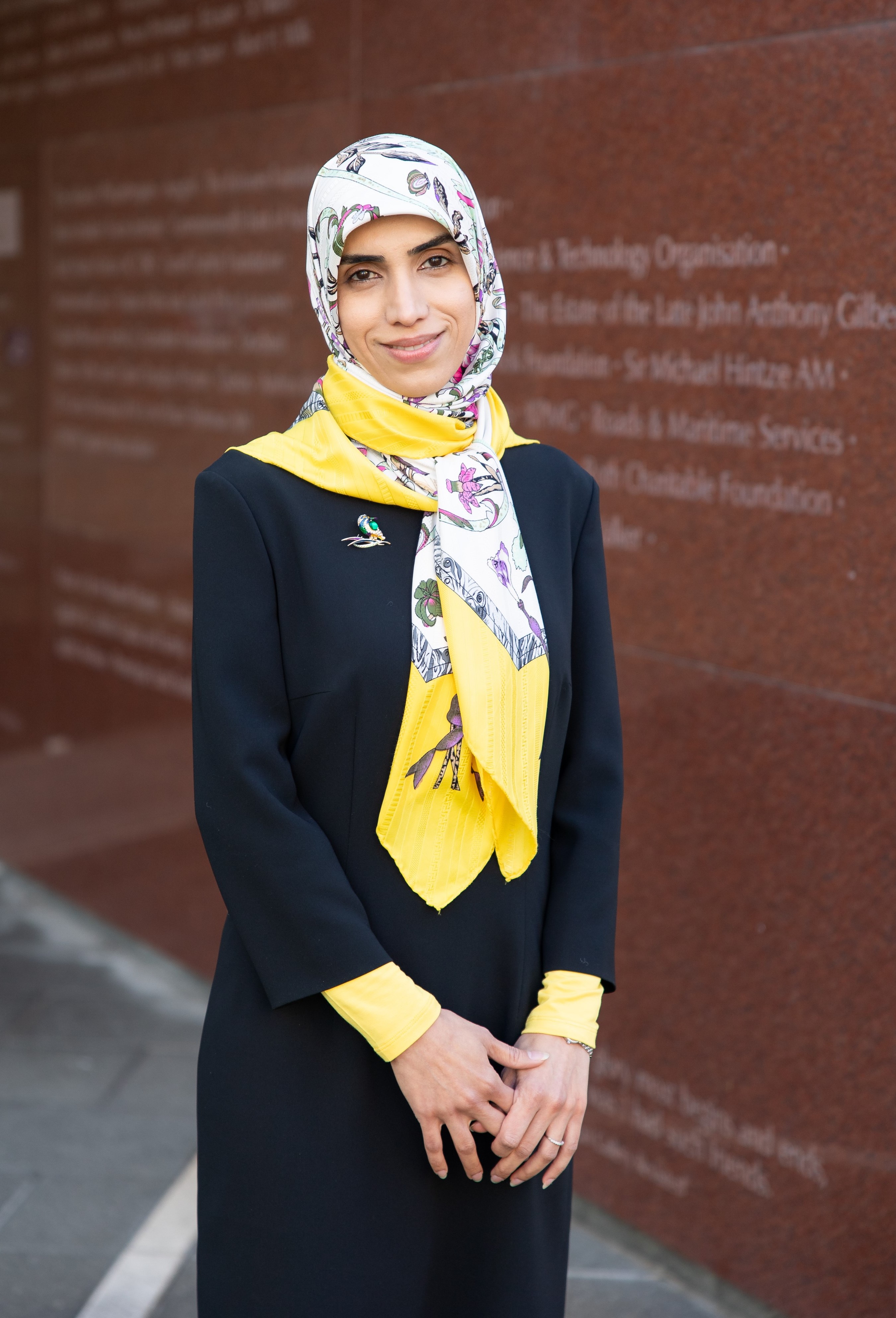
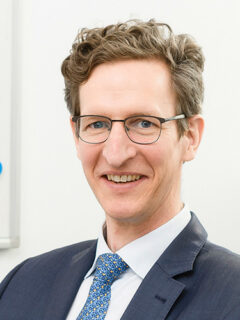
Professor Yuichi Mori is a leading academic at the University of Oslo , affiliated with the Faculty of Medicine and the Department of Health Management and Health Economics . He serves as a Consultant Gastroenterologist at Oslo University Hospital and a Visiting Lecturer at Showa University Northern Yokohama Hospital in Japan. His work focuses on the implementation of artificial intelligence in clinical gastroenterology , particularly in colonoscopy and colorectal cancer detection.
Hugo Lewi Hammer er professor ved Oslo Metropolitan University, tilhørende Faculty of Technology, Art and Design og Department of Information Technology – Mathematical Modeling . Hans forskning fokuserer på forbedring av pålitelighet og transparens i maskinlæring, forsterkende læring og dyb læringsmodeller gjennom metodikk innen modelltolkning, usikkerhetskvantifisering, robust statistikk og kausal inferens. Hans nylige arbeid inkluderer: AI-drevet optimering i assistert reproduksjonsteknologi (embryoutvalg og sædcelleanalyse) Medisinsk bildebehandling (polypdeteksjon, meibomkertutgang) Neural nettverkstolkning og usikkerhetsmodellering i EEG-analyse Biomekanisk prediksjon av muskelutmatting Hans publikasjoner viser mangfoldige anvendelser av AI i medisin og teknologi, med spesialvekt på: Explainable AI (XAI) i diagnostikk og behandling Usikkerhetskvantifisering i dyb læring Automatisering av medisinske prosedyrer (ICSI, embryoanalyse) Stokastisk simulering og kausal inferens Hammer er engasjert i forskningsgruppene Applied Artificial Intelligence og Mathematical Modeling og har publisert over 130 vitenskapelige artikler og 7 forskningsrapporter.
Joanne Gray is Professor of Health Services Research at Northumbria University, leading studies in health economics and clinical trials. Her work spans cardiovascular outcomes, geriatric rehabilitation, and health policy evaluation. Major projects include the ETTAA study on thoracic aortic aneurysms and RECOVERY trial contributions to COVID-19 therapeutics. Research often employs mixed-methods designs and economic evaluations of healthcare interventions. Publications demonstrate expertise in colonoscopy quality metrics, mental health crisis response systems, and home adaptation programs for older adults. Recent work also explores ethical dimensions of environmental health and species justice.
Zafer AYDIN is an Associate Professor at the Computer Engineering Department of Abdullah Gul University. He obtained his B.Sc. and M.Sc. from Bilkent University (Turkey) and his Ph.D. from Georgia Institute of Technology (USA). His research focuses on machine learning applications in bioinformatics, health informatics, and industrial problems. PhD: Georgia Institute of Technology (2008) Postdoc: University of Washington (2008-2011) Previous: Assistant Professor at Bahcesehir University (2011-2014) Research Interests include protein structure prediction, medical imaging analysis, network security, and financial data modeling. His work spans both fundamental bioinformatics research and practical industrial applications. Scientific Awards : 2nd in T0 phase of Respiratory Viral Dream Challenge (2016-2017) 1st in both question 1 and 2 prediction tasks of COVID-19 DREAM Challenge (2020-2021) Teaching includes undergraduate courses in Bioinformatics, Machine Learning, and Algorithms, and graduate courses in Deep Learning and Pattern Recognition.
Aly A. Farag is a Professor of Electrical and Computer Engineering at the University of Louisville, where he founded the Computer Vision and Image Processing (CVIP) Laboratory. His research focuses on imaging science, computer vision, and biomedical imaging, with applications in cancer detection and medical visualization. He has authored over 350 technical papers and two upcoming textbooks. Dr. Farag holds patents in imaging technologies and has led projects funded by NSF, DoD, NIH, and industry. Educations: B.S. in Electrical Engineering, Cairo University, 1976 M.S. in Bioengineering, University of Michigan, 1984 M.S. in Biomedical Engineering, Ohio State University, 1981 Ph.D. in Electrical Engineering, Purdue University, 1990 Research Interests: Scene analysis, multimodal imaging reconstruction, statistical segmentation, and biomedical visualization. His work has advanced tubular topology visualization, colon segmentation, and lung nodule analysis. Collaborations span medical institutions and federal agencies. Awards: 2002 University Scholar designation for technical achievements. Served as associate editor for IEEE Transactions on Image Processing and general co-chair of IEEE ICIP-09. Grants & Advising: Principal investigator on NSF/NIH-funded projects. Advised 15 PhD and 26 MS students, trained 10 postdocs, and introduced new ECE curriculum topics. Labs/Teams: CVIP Lab pioneers innovations in medical imaging and AI-driven diagnostics. Active in interdisciplinary teams for STEM education engagement metrics.
Joseph T Ferrucci is a distinguished Professor of Radiology at UMass Chan Medical School's T.H. Chan School of Medicine, specializing in Abdominal Imaging within the Department of Radiology. With over four decades of academic and clinical experience, Dr. Ferrucci has established himself as a leading authority in gastrointestinal radiology, particularly in CT colonography and virtual colonoscopy techniques. His educational foundation includes an AB in Liberal Arts from Harvard University, an MD from Tufts University School of Medicine, Radiology Residency at Massachusetts General Hospital, and a Teaching Fellowship in Radiology at Harvard Medical School. This rigorous training provided the foundation for his subsequent contributions to abdominal imaging and interventional radiology. Dr. Ferrucci's research interests focus on advancing gastrointestinal imaging techniques, with particular emphasis on CT colonography, virtual colonoscopy, and interventional approaches to abdominal conditions. His work has significantly influenced clinical practice guidelines for colorectal cancer screening and the standardization of CT colonography reporting. Analysis of his publication history reveals consistent scholarly output with particular concentration on virtual colonoscopy development between 1998-2006, where he contributed to establishing both technical standards and clinical applications of this important screening modality. His most impactful publications include the highly cited 2003 colorectal cancer screening guidelines (611 citations) and the 2005 CT colonography reporting standards consensus (156 citations), demonstrating his leadership in shaping clinical practice in gastrointestinal radiology. Dr. Ferrucci's work spans both technical innovations in imaging methodology and practical clinical applications, with particular strength in translating research findings into clinical practice. Throughout his career, Dr. Ferrucci has maintained active involvement in both the academic and clinical aspects of radiology, contributing to the education of future radiologists while advancing the field through his research. His collaborative approach is evident in the numerous multi-institutional studies he has participated in, particularly in establishing consensus guidelines for colorectal cancer screening and CT colonography implementation.
Michael Alexander Riegler is a full-time Professor at Oslo Metropolitan University's Faculty of Social Sciences, specifically in the Department of Social Work, Child Welfare and Social Policy. While his formal academic affiliation focuses on social sciences, his research interests span interdisciplinary domains including computer technology, information and communication systems, medical technology, and mathematics/natural sciences. Current research projects: Strengthening solidarity for democratic unity across border (SOLIDEM) addressing trust erosion in European welfare states, and Artificial intelligence in assisted reproduction technology improving embryo/sperm selection Recent publications (2025) focus on AI applications in healthcare (wearable sensors, ECG reconstruction), anomaly detection in time-series data, multimodal healthcare data analysis, and psychiatric motor activity datasets
Associate Professor Fatemeh Vafaee is a leading researcher at the University of New South Wales (UNSW) , holding appointments as Associate Professor in the School of Biotechnology and Biomolecular Sciences (BABS) and Deputy Director (Science) of the UNSW AI Institute . She previously served as Deputy Director of the UNSW Data Science Hub (uDASH) and has held academic positions at the University of Toronto and the University of Sydney. PhD in Artificial Intelligence from University of Illinois at Chicago Postdoctoral Fellowships at University of Toronto and University of Sydney Founded the AI-Enhanced Biomedicine Laboratory in 2017 Her research focuses on deploying advanced AI techniques to address biomedical challenges through: Biomarker Discovery for cancer and neurodegenerative diseases Single-Cell Multi-Omics data integration and analysis Computational Drug Repositioning and network pharmacology Multi-Omics Data Fusion and temporal network modeling Recent publications demonstrate expertise in liquid biopsy development , single-cell imaging , and AI-driven cancer diagnostics . Her methodological contributions include novel deep learning architectures for omics data analysis and graph neural networks for drug synergy prediction. Scientific accolades include: Winner, Women in AI Asia-Pacific Health Award (2023) Runner-Up, WAI-APAC Innovator of the Year (2023) Top 10 Women in AI in Asia-Pacific (2023) Australian Bioinformatics and Computational Biology Society Research Excellence Award (2023) She supervises PhD candidates across computational biomedicine and AI in healthcare , with significant grant achievements exceeding $17M in competitive funding, including schemes from ARC Discovery , NHMRC , and Medical Research Future Fund .
Peter Hommelhoff is a Professor in the Chair of Laser Physics at Friedrich-Alexander University Erlangen-Nürnberg (FAU) . His research focuses on dielectric laser acceleration , nanostructured electron sources , and quantum nanophotonics . Key Research Areas: Quantum-coherent control of free electrons Attosecond electron pulse generation Ultrafast dynamics in 2D materials (graphene, hexagonal systems) On-chip photonic particle acceleration Light-driven electron emission from nanotips Quantum interference in electron-photon interactions Recent Publications highlight advancements in dielectric laser accelerators (Nature, 2023), auto-ponderomotive beam control (Phys. Rev. Lett., 2024), and non-classical electron emission (Nature Physics, 2024). His work also explores graphene valley control and Bloch electron interferometry for material band-structure analysis. Laboratory Context: The Chair of Laser Physics at FAU investigates nanostructured electron sources , photonic control of charged particles , and quantum applications in electron microscopy and sensing. Collaborations span quantum nanophotonics , attosecond science , and integrated photonic circuits .
Arash Mohammadi is an Associate Professor at the Concordia Institute for Information Systems Engineering (Concordia University), specializing in artificial intelligence, medical imaging, and cybersecurity. His research focuses on advancing AI-driven solutions in healthcare diagnostics, autonomous systems, federated learning, and edge computing. He supervises graduate programs in Information Systems Security, Electrical and Computer Engineering, and related disciplines. Key research interests include medical image classification using deep learning, reliability of autonomous driving systems, and secure communication in smart grids. His work integrates transformer architectures, Bayesian methods, and graph neural networks to address challenges in healthcare, robotics, and network optimization. Notable contributions include frameworks for lung nodule malignancy prediction, ECG-based emotion recognition, and secure federated learning in resource-constrained environments. Dr. Mohammadi has published extensively in top-tier venues such as IEEE conferences and journals, with a focus on practical applications of AI in healthcare and engineering systems. He actively engages in interdisciplinary projects involving biomedical signal processing, human-computer interaction, and resilience engineering for cyber-physical systems.
Dr. W.J. (Wilson) dos Santos Silva is an Assistant Professor at the Faculty of Science , University of Utrecht, specializing in AI & Data Science and Biology . His research focuses on creating explainable and robust AI models for multimodal multi-centre medical data , with emphasis on privacy-preserving machine learning and out-of-distribution generalization . PhD in Electrical and Computer Engineering (2022), University of Porto Master's and Bachelor's in Electrical and Computer Engineering (2016), University of Porto Research Interests include: Explainable AI for medical decision-making transparency Privacy-Preserving Machine Learning in healthcare Multi-Centre Data Analysis across institutions Medical Imaging applications in oncology and neurology Recent Publications demonstrate expertise in: Medical image segmentation techniques Cross-modal learning approaches Federated learning for privacy Biomedical data interpretation Generalization in heterogeneous datasets Scientific Contributions include organizing the iMIMIC workshop at MICCAI 2024 and mentoring students receiving competitive awards. Students & Collaborators : PhD Candidates: Valentina Corbetta, Daan Boeke, Miriam Cobo, Aniek Eijpe, Jan van Eck Postdoctoral Researchers: Soufyan Lakbir Former Students: Tingyang Jiao, Laura Latorre, Filipe Campos, etc. Laboratory develops AI solutions for medical imaging , multi-centre collaboration , and ethical AI in healthcare contexts.
Mohamed O. Othman, M.D. is the Section Chief of Gastroenterology and Hepatology at Baylor College of Medicine and holds the Martha Ann and Harold M. Selzman, M.D. Endowed Chair. He practices at Baylor St. Luke's Medical Center in Houston, Texas, where he specializes in advanced endoscopic procedures and gastrointestinal disorders. Dr. Othman's educational background includes: BS from University of Mansoura School of Medicine (2003) - Mansoura, Egypt (M.B.Bch degree; Excellent with Grade of Honor) Residency at University of New Mexico School of Medicine (2007) - Internal Medicine Resident Fellowship at University of New Mexico School of Medicine (2010) - Gastroenterology and Hepatology Fellow Fellowship at Mayo Clinic Jacksonville (2011) - Advanced Endoscopy Fellow Dr. Othman is a leading expert in advanced endoscopic procedures with research interests spanning endoscopic submucosal dissection (ESD), endoscopic mucosal resection (EMR), Barrett's Esophagus management, pancreatic disorders including chronic pancreatitis and pancreatic cysts, endoscopic ultrasound, ERCP, and innovative procedures like Per-Oral Endoscopic Myotomy (POEM). His work bridges clinical practice with cutting-edge research to improve outcomes for patients with complex gastrointestinal conditions. He has published extensively on endoscopic techniques and their applications in gastrointestinal diseases. Dr. Othman has received numerous prestigious awards including: 2014 Diversity Award from the American Society for Gastrointestinal Endoscopy President's Young Investigator Award from Texas Tech University (2012) Multiple ACG Presidential Poster Recipients awards (2012) Alpha Omega Alpha National Medical Honor Society Membership (2008) Multiple GRG/AGA DDW Fellow Travel Awards (2007, 2009) Multiple House Officer and Resident Research Awards from the University of New Mexico (2006-2007) Dr. Othman has secured significant research funding, including a grant from the American College of Gastroenterology for a prospective study of the risk of bacteremia in directed cholangioscopic examination of the common bile duct. His clinical expertise encompasses tissue resection techniques, management of pancreatic disorders, and advanced endoscopic procedures. Fluent in Arabic and Spanish, Dr. Othman serves a diverse patient population while maintaining an active research program that continues to advance the field of therapeutic endoscopy.
Professor Mark Molloy is a leading researcher in proteomics and cancer biomarker discovery at the University of Sydney , affiliated with the Faculty of Medicine and Health and Northern Clinical School . Previously, he served as interim Head of the Department of Chemistry and Biomolecular Sciences at Macquarie University until 2017 and directed the Australian Proteome Analysis Facility (APAF) from 2010 to 2018. Education: BSc(Hons) from Macquarie University (1995), PhD in proteomics (2000) Research Focus: Biomarkers, proteomics, translational research, and molecular mechanisms of colorectal and other cancers His work leverages mass spectrometry and proteomic technologies to identify prognostic/predictive biomarkers, particularly in bowel cancer , and explores the role of the gut microbiome in cancer development. Recent studies include blood microsampling for cancer detection and microbiome-metabolite interactions . His 15 most recent publications span topics in colorectal cancer proteomics , Alzheimer's disease biomarkers , microbial biofilms , and precision medicine . Collaborations include institutions in Australia , Germany , and USA . Key Associations: Australasian Proteomics Society, American Association for Cancer Research, Human Proteome Organisation
Øyvind Holme is a Professor at the University of Oslo's Department of Health Management and Health Economics. His research focuses on colorectal cancer screening methodologies, endoscopy quality improvement, and clinical epidemiology. He leads projects such as the European Polyp Surveillance (EPoS) trials and EndoBRAIN (AI-aided colonoscopy diagnostics). Expertise: Colorectal cancer screening, endoscopy quality metrics, public health interventions Key contributions: Pioneering studies on adenoma removal outcomes, AI applications in endoscopy, and comparative screening effectiveness His recent work emphasizes optimizing screening strategies through advanced diagnostics and addressing disparities in healthcare access. Holme collaborates internationally on trials evaluating colonoscopy techniques, bowel preparation protocols, and surveillance practices.
Fons van der Sommen is an Associate Professor in Electrical Engineering at Eindhoven University of Technology, specializing in Video Coding & Architectures. He leads research on computer-aided detection systems for early cancer diagnosis, particularly focusing on esophageal and colorectal neoplasia through advanced AI and computer vision techniques. His research interests span medical image analysis, AI-assisted diagnostics, and developing robust systems for clinical deployment. Recent publications focus on overcoming real-world implementation challenges of AI in endoscopy and enhancing the trustworthiness of diagnostic systems. Recent research trends show strong emphasis on surgical AI applications (robot-assisted procedures), generative models for medical data augmentation, and quality assurance frameworks for clinical AI deployment. His work integrates deep learning with clinical validation across gastrointestinal and pulmonary oncology. TU/e Best PhD Thesis Award (2018) Best Poster Presentation (2017, 2013) He coordinates multiple research projects including TASTI-XECS221002 (Advanced AR for AI-based Servitization) and XL-ARGOS (extended reality solutions). Manages collaborations with medical centers on AI implementation for cancer screening.