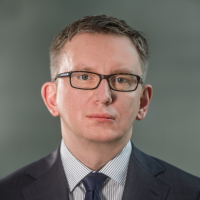
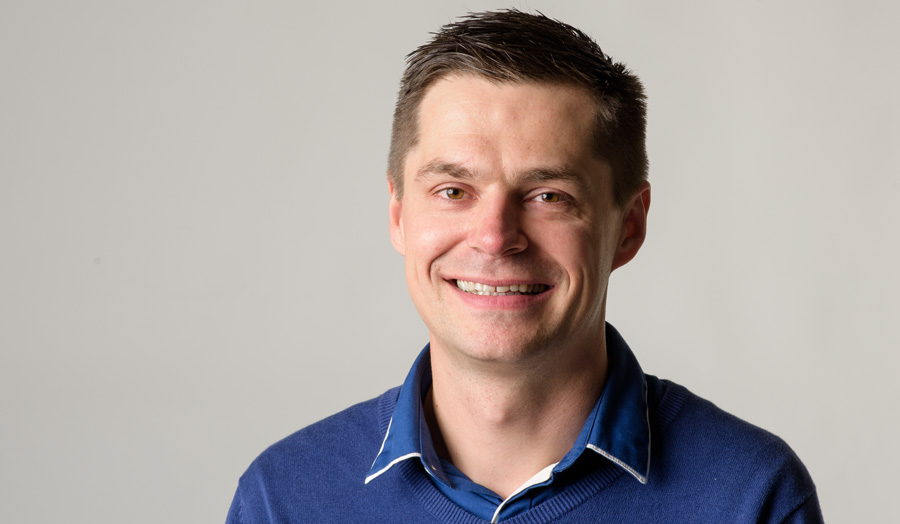
Thomas Brunold is a Professor of Chemistry at the University of Wisconsin–Madison, focusing on the geometric and electronic properties of metal centers in proteins and cofactors . His work integrates spectroscopic techniques (electronic absorption, circular dichroism, magnetic circular dichroism, resonance Raman, electron paramagnetic resonance) with density functional theory (DFT) and quantum mechanics/molecular mechanics (QM/MM) calculations to validate bonding descriptions and explore catalytic intermediates. Bio-organometallic cofactors (adenosylcobalamin, methylcobalamin, NiF430) Metal-dependent superoxide dismutases (Ni-, Fe-, Mn-SODs) Polynuclear NiFeS enzymes (ACS, CODH) His research spans vitamin B12 chemistry , metalloenzyme specificity , and redox-active clusters , with a focus on resolving substrate-bound intermediates and mechanistic debates in catalytic cycles. Recent publications emphasize ligand dynamics , second-sphere residue effects , and metal-cofactor interactions . Scientific awards include the Taylor Teaching Award (2024) , Kellett Mid-Career Award (2020) , and NSF-CAREER Award (2003) . He mentors students in the Brunold Lab, including Ryan Hall , Laura Elmendorf , and Maddy Rodemeier (co-advised with Andrew Buller), with multiple Outstanding TA Awards to lab members.
Piotr Skurski serves as Professor and Head of the Department of Theoretical Chemistry at the Faculty of Chemistry, University of Gdańsk, while maintaining a concurrent Professor of Chemistry position at the Henry Eyring Center for Theoretical Chemistry, University of Utah since 2006. His leadership spans multiple research units including the Laboratory of Quantum Chemistry at UG since 2014. His educational background includes: MSc in Chemistry (1993) from University of Gdańsk under Prof. Wiesław Wiczek PhD in Chemical Sciences (1997) supervised by Prof. Maciej Gutowski (PNNL, USA) Habilitation (2001) leading to Professor title (2005) by Presidential decree Skurski's research pioneers quantum chemical investigations of molecular anions, superhalogens, and reaction mechanisms. His work spans from fundamental electron binding phenomena to applied materials design, particularly focusing on superhalogen anions with electron affinities exceeding 15 eV, DNA repair processes, and polymerization mechanisms. His molecular design innovations include synthons, peptide crosslinks, and superacids. Analysis of his 15 most recent publications reveals a dominant focus on superhalogen chemistry (7 articles), with significant contributions to molecular synthons (4 articles) and environmental applications like PFAS degradation (2 articles). His methodology consistently combines high-level quantum mechanical calculations with machine learning approaches for materials prediction. His accolades include: Karol Taylor Scientific Award (2021) Prime Minister's Award for habilitation work (2002) 15+ Rector's Awards from University of Gdańsk (1995-2023) Foundation for Polish Science Scholarship (1997) Skurski has supervised 10 doctoral students while securing major EU grants including MULTIPOL (FP6), PARYLENS (FP7), ENERLIQ (Polish-Swiss Program), and MAGENTA (Horizon 2020). His 198 publications with 5,371 citations (h-index 42) demonstrate substantial research impact. He leads the Laboratory of Quantum Chemistry at UG and maintains active collaborations with University of Utah's Henry Eyring Center.
Prof. Iwona Anusiewicz is a distinguished faculty member at the University of Gdańsk , affiliated with the Faculty of Chemistry and the Department of Theoretical Chemistry . Her research focuses on advanced quantum chemistry, superhalogen anions, superacids, and electron attachment mechanisms. Current Position: Professor, Department of Theoretical Chemistry, University of Gdańsk Research Themes: Quantum chemical modeling, superhalogen/superalkali systems, CO2 activation, and biomolecule-nanomaterial interactions Contact: iwona.anusiewicz@ug.edu.pl Her recent publications explore ambiphilic inorganic compounds, dative bonding in alkaline earth metal systems, and hybrid molecular simulation frameworks for biomolecule adsorption. Key subfields include anion stability , electron transfer , and acid-base catalysis . While no formal awards or student advisement details are listed, her work contributes significantly to theoretical and computational chemistry. For consultation hours: Fridays 11:00 AM - 1:00 PM (room B327).
Dr. Horst Puschmann is a Professor in Practice at Durham University, affiliated with the Department of Mathematical Sciences and the Department of Chemistry. He specializes in crystallography, computational crystallography, and structural refinement techniques, with particular expertise in X-ray structure determination, Hirshfeld atom refinement, and metal-organic frameworks. His research bridges theoretical and experimental approaches, focusing on advanced structural analysis of coordination polymers and biological interactions of metal complexes. His recent work explores the application of crystallographic software for precise structural modeling, including studies on ruthenium-based antitumor agents (2024), anomalous dispersion corrections (2022), and Cu Kβ radiation for crystalline sponges (2022). He has extensively contributed to the development of Olex2, a molecular graphics tool for small-molecule crystallography, enabling automated refinement and data visualization. Publications highlight his interdisciplinary collaborations in photocatalysis, magnetic properties, and bioactive coordination compounds. As a co-developer of Olex2, he has pioneered accessible crystallographic software through open-source frameworks and virtual teaching platforms. His projects integrate structural analysis with biological applications, such as DNA/protein binding, cytotoxicity, and luminescent properties of metal complexes. While no specific student names or scientific awards are mentioned in the provided data, his work demonstrates sustained innovation in crystallography education and computational methodologies.
Associate Professor Suzanne Neville is a distinguished researcher in the School of Chemistry at the University of New South Wales (UNSW), specializing in molecular magnetism and spin-crossover materials. Her work focuses on designing and developing advanced functional materials with applications in modern technology. Professor Neville received her Bachelor of Science (Hons) from the University of Sydney in 2000 and completed her Ph.D. in Chemistry there in 2005. She then pursued postdoctoral research at Monash University's Molecular Magnetism Group (2006-2008) followed by a Marie Curie Fellowship at the Institut de Chemie de la Matière Condensée de Bordeaux, France (2008-2009). She served as Laboratory Manager at CSIRO's Process Science and Engineering in Melbourne (2010), held Australian Research Fellowships at Monash University (2011-2012) and the University of Sydney (2013-2016), before joining UNSW as a Future Fellow and Associate Professor in Chemistry in 2017. Her research interests center on molecular switching nanomaterials, particularly spin-crossover materials that exhibit reversible changes in magnetic and optical properties in response to external stimuli. She investigates the structure-property relationships of coordination polymers and framework materials, with special focus on Hofmann-type frameworks. Her work spans synthetic inorganic chemistry, crystal engineering, and in situ structure-function studies of materials under various conditions. Professor Neville's publication record demonstrates consistent high-impact research in the field of molecular magnetism, with a particular emphasis on spin-crossover phenomena in coordination frameworks. Her recent work explores multistep spin transitions, guest-induced switching behavior, and the effects of structural modifications on magnetic properties. This research has significant implications for the development of molecular switches and sensors. RACI Inorganic Division Alan Sargeson Lectureship 2018 for significant and innovative contributions to the field Sandy Mathieson Medal for distinguished contributions to science involving X-ray, neutron, or electron diffraction Professor Neville currently leads several major research projects including a Future Fellowship (FT17) on "Molecular switching nanomaterials for modern technology," a Discovery Project (DP20) on "Emergent behaviours in spin crossover materials," and a Cooperative Research Centre Project on "Novel processing of pyrite ore to produce battery grade cobalt and sulfur." Her research group develops new synthetic approaches to create functional materials with applications in sensing, information storage, and energy technologies. Her laboratory focuses on the design and synthesis of polynuclear coordination materials, porous frameworks, and molecular switches that respond to thermal, light, and guest-induced stimuli. The team employs advanced characterization techniques including single-crystal and powder X-ray diffraction, magnetic susceptibility measurements, and spectroscopic methods to understand structure-property relationships in these materials.
Daniel Sykes is the Course Leader for Chemistry BSc (Hons) and Head of Chemical and Pharmaceutical Sciences at London Metropolitan University . He earned his MChem (Hons) with year in industry from the University of Manchester and a PhD under Professor Stephen Faulkner. Research: Photophysical measurements of metal complexes, cell imaging, luminescence for diagnostics Teaching: Inorganic chemistry, practical skills, project supervision Awards: Fellow of Advance HE (FHEA) His recent work focuses on d-f energy transfer mechanisms , cell imaging probes , and supramolecular architectures . He supervises BSc, MSc, and PhD students and has secured grants from the Royal Society of Chemistry. His publications span photophysics, coordination chemistry, and bioimaging applications. Scientific Awards Fellow of Advance HE (FHEA) RSC UG research student bursary RSC Research Fund
F. Richard Keene is a Professor at James Cook University (JCU), specializing in coordination chemistry and the design of metal complexes for biological applications. His research focuses on ruthenium-based compounds, exploring their interactions with DNA, antimicrobial properties, and applications in drug delivery and diagnostics. Key areas include supramolecular assemblies, intervalence charge transfer phenomena, and the development of novel agents for cancer and parasitic diseases. His work spans over four decades, with a strong emphasis on understanding the structural and electronic properties of metal complexes and their biological implications. He has collaborated extensively with researchers in chemistry, biology, and pharmacology, contributing to advancements in materials science and medicinal chemistry. Notable contributions include studies on dinuclear and polynuclear ruthenium complexes as antimicrobial and anticancer agents, their mechanism of action, and their interactions with nucleic acids. His research also delves into the use of ruthenium complexes as probes for DNA/RNA structures and for targeting extracellular vesicles in cancer biology. Dr. Keene’s publications highlight a consistent focus on interdisciplinary approaches, combining synthetic chemistry with advanced spectroscopic and computational techniques to unravel complex molecular behaviors. His work has implications for drug development, diagnostics, and fundamental understanding of metallo-supramolecular systems.
Vladimir M. Amirkhanov is a Professor at Taras Shevchenko National University of Kyiv since 2004, with continuous academic service since 1981 progressing from Engineer to Professor through roles including Assistant Professor (1987-1993), Associate Professor (1993-1998, 2000-2003), and Postdoctoral Studies (1998-2000). His academic credentials include: 1987: Chemist (MSc equivalent) from Taras Shevchenko National University of Kyiv 1990-1994: Post-graduate studies in Macromolecular Chemistry 1996: Candidate of Science (PhD) in Inorganic Chemistry 2002: Doctor of Science (DSc) in Inorganic Chemistry Amirkhanov's research centers on carbacylamidophosphates (CAPh) and sulfonylamidophosphates (SAPh) ligand systems, with emphasis on synthesizing luminescent lanthanide complexes for MOLED devices, heterobinuclear 3d-4f compounds, and exploring magnetic/catalytic properties. His work bridges molecular electronics, bioinorganic chemistry, and advanced materials science through innovative coordination chemistry approaches. Analysis of his 2013-2016 publications reveals dominant focus on structural characterization of lanthanide-CAPh/SAPh complexes using X-ray crystallography and spectroscopy, with applications in optical materials and catalysis. Key trends include energy transfer mechanisms in phosphors, magnetic behavior in polynuclear clusters, and solvent extraction properties for nuclear applications. He maintains extensive international collaborations, particularly with Polish research groups, as evidenced by co-authorship patterns. His laboratory at Taras Shevchenko National University focuses on ligand design and functional coordination compounds, contributing to both fundamental science and materials development through sustained publication output.
Guillaume Calvez is an Assistant Professor at INSA Rennes, affiliated with Pr O. Guillou’s research group since 2011. His expertise spans coordination chemistry, solvothermal synthesis, and luminescent materials. He teaches crystallography to first-year students and oversees the group’s IT infrastructure and the iscr-csm.insa-rennes.fr subdomain. Professional memberships include the SCF. His research focuses on lanthanide-based polynuclear complexes and their applications, as evidenced by two key publications in Coordination Chemistry Reviews and Accounts of Chemical Research (2016). Technical roles include maintaining servers and laboratory equipment. He previously held a temporary lecturer position (2010) and completed his PhD at INSA Rennes in 2009.
Dr. Jemma Rowlandson is a Senior Lecturer at the University of Bristol's School of Electrical, Electronic and Mechanical Engineering and a key member of the Bristol Composites Institute. Holding a PhD, MRes, and MChem, she leads cutting-edge research in sustainable materials with emphasis on hydrogen storage solutions and composite engineering, including her role as Principal Investigator for the Great Western Supercluster of Hydrogen Impact for Future Technologies project. Her academic qualifications include: PhD MRes MChem Rowlandson specializes in developing sustainable materials for energy and environmental applications, with core expertise in hydrogen storage using lignin-derived nanoporous carbons, castor oil-based polyurethane foams, and environmental impact assessment. Her research integrates experimental characterization, computational modeling, and life cycle analysis to optimize material performance while addressing sustainability challenges across multiple sectors. Analysis of her 15 most recent publications (2018-2025) reveals dominant themes in biomass-derived carbon materials for hydrogen storage, sustainable polyurethane composites, and feasibility studies for hydrogen applications in aviation and heating systems. The work demonstrates increasing integration of environmental impact assessment and circular economy principles, with strong focus on lignin valorization and bio-based polymer engineering. Her teaching excellence has been recognized through prestigious university awards: Bristol Teaching Award: Inspiring and Innovative Teaching Award for Faculty of Engineering (2023) Bristol Teaching Award: Vice Chancellor’s Award for Education (2023) As Principal Investigator for the £7.8M Great Western Supercluster of Hydrogen Impact for Future Technologies (2024-2027), she directs major research initiatives while mentoring engineering students. Her collaborative approach extends to the Engineering Education Research Group where she develops innovative pedagogical methods for sustainable engineering education. Rowlandson actively contributes to the Bristol Composites Institute and Engineering Education Research Group, driving interdisciplinary collaboration between materials scientists, mechanical engineers, and sustainability experts to advance clean energy technologies and sustainable material solutions.
Rex Handford is an Assistant Professor in the Department of Chemistry at the University of California, Irvine. His research focuses on designing molecular inorganic architectures to study metal-metal and metal-element bonds in catalytic systems, leveraging synthesis, spectroscopy, and theory. Key areas include polymetallic reactivity, polar heterobimetallic systems, and transition-metal main group cooperativity. Handford completed his B.Sc. at the University of British Columbia under Prof. Peter Legzdins, PhD at UC Berkeley with Prof. T. Don Tilley, and a postdoc at Harvard with Prof. Theodore Betley. Research Interests: Catalytic mechanisms of heterogeneous and bioinorganic systems, small-molecule activation, and molecular models for industrial catalysts. Lab Members: Undergraduates April Miramontes and Daniel Heo. Publications: Over 20 peer-reviewed articles in J. Am. Chem. Soc. and Angew. Chem. Int. Ed. , focusing on metal clusters and catalytic systems. His lab emphasizes synthetic innovation and interdisciplinary approaches to uncover new reactivity pathways for fuel production and clean energy.
Prof. Dr. Mihail Atanasov is a Research Group Leader at the Max Planck Institute for Coal Research since 2018. His work focuses on ab initio quantum chemical methods for studying magnetic and spectroscopic properties of transition metal and lanthanide/actinide complexes. Current Research Group: Molecular Magnetism Key Areas: Magnetic Anisotropy, Spin–Phonon Coupling, Ligand Field Theory, Electronic Structure Analysis Contact: Kaiser-Wilhelm-Platz 1, 45470 Mülheim an der Ruhr, Germany His research aims to enhance magnetic anisotropy and decouple spin centers for applications in molecule-based magnetic storage media. Collaborations with synthetic and spectroscopic groups drive predictive modeling of open-shell systems. Recent publications highlight advancements in transition-metal ion modeling , single-ion magnet design , and spin–phonon coupling analysis . The work spans theoretical and experimental approaches to molecular magnetism, with a focus on computational chemistry. Key trends in his publications include Ab initio ligand field theory Magnetic relaxation mechanisms Jahn-Teller and pseudo-Jahn-Teller effects Design of high-anisotropy molecular systems Spin–orbit coupling analysis Multireference correlation methods Research team includes Dr. Shashank Vittal Rao (Postdoc) and collaborations with leading synthetic and spectroscopic labs. Current projects explore molecular engineering for magnetic storage applications.
Christophe Lescop is a CNRS Researcher at the Institute of Chemical Sciences of Rennes (ISCR, UMR 6226) within the National Institute of Applied Sciences Rennes (INSA Rennes). He joined CNRS in 2002, was promoted to Directeur de Recherche in 2019, and has contributed extensively to coordination and supramolecular chemistry of luminescent molecular materials. 1996: Engineer in Chemistry, École Nationale Supérieure de Chimie de Paris 2000: PhD in Chemistry, University of Grenoble I His research focuses on the coordination chemistry of Cu(I) complexes with bridging phosphane ligands, enabling the synthesis of supramolecular metallacycles for optoelectronic applications . He explores adaptive coordination-driven reactions to control thermochromism, vapochromism, and mechanochromism in polymetallic systems. His work highlights the labile coordination sphere of Cu(I) as a tool for multifunctional solid-state materials . Leveraging 15+ publications in top-tier journals like Acc. Chem. Res. , J. Am. Chem. Soc. , and Angew. Chem. Int. Ed. , his studies emphasize luminescence tuning , supramolecular self-assembly , and metallacycle formation . Awards include the CNRS Prime d'excellence scientifique (2011) and a Humboldt Fellowship (2012-2015). At INSA, he teaches practical general chemistry courses since 2014 and collaborates with institutions in Germany, Hong Kong, France, and Sweden. Notable co-authors include Karine Costuas, Manfred Scheer, and Vivian W-W. Yam.
Eric Eitrheim serves as an Associate Professor within the Chemistry Department at the University of Central Oklahoma, where he has taught undergraduate courses including General Chemistry, Environmental Chemistry, and Inorganic Chemistry since joining the faculty in August 2017. His instructional responsibilities encompass both lecture and laboratory components across foundational and specialized chemistry curricula. His academic credentials include a Ph.D. in Chemistry from The University of Iowa (2017) and a B.A. in Chemistry from Luther College (2012), establishing expertise in both theoretical and applied chemical sciences. These qualifications underpin his dual research focus on chemical education and radiochemistry. Dr. Eitrheim's research program investigates undergraduate chemistry learning experiences with particular emphasis on laboratory safety pedagogy and student success factors in general chemistry. Concurrently, his radiochemistry work addresses environmental radioactivity challenges, especially concerning Naturally Occurring Radioactive Materials (NORM) associated with unconventional energy extraction and nuclear waste streams. This interdisciplinary approach connects classroom instruction with real-world environmental and nuclear safety issues through publications spanning chemistry education journals and environmental radiochemistry outlets. Analysis of his 15 most recent publications reveals a consistent trajectory toward interdisciplinary collaboration, with increasing focus on practical applications in nuclear waste management, energy sector environmental monitoring, and chemistry curriculum innovation. The work demonstrates strong integration of educational scholarship with technical radiochemistry research, often involving multi-institutional teams addressing complex challenges in nuclear materials analysis and chemical safety. His scholarly contributions have received significant recognition: UCO CETTL 21st Century Pedagogy Institute Lifetime Teacher-Scholar (2021) UCO CETTL 21st Century Pedagogy Institute Distinguished Teacher-Scholar (2019-2021) UCO CETTL 21st Century Pedagogy Institute Teacher-Scholar (2018) VIPEr Fellowship funded by NSF IUSE grant (2018-2020) Dr. Eitrheim's research activities are supported by external funding including the VIPEr Fellowship from the National Science Foundation, which advanced innovations in chemistry education methodology. His collaborative publication record indicates active mentorship of undergraduate researchers and participation in multi-institutional projects, though specific student advising details are not documented in available materials. His radiochemistry work implies access to specialized instrumentation for nuclear materials analysis within UCO's chemistry infrastructure or through partner institutions.
Dr. Johannes Karges leads the Karges Group at the Ruhr-University Bochum within the Faculty of Chemistry and Biochemistry . His research focuses on Medicinal Inorganic Chemistry , developing metal complexes for biological/medical applications. Specializes in photodynamic therapy , chemotherapy , and immunotherapy for cancer treatment Key collaborations include RESOLV Cluster of Excellence and international institutions Recent publications highlight innovations in NIR photoactivation , albumin binding , and multimodal therapy using metal-based agents. His work addresses drug resistance and targeted delivery via DNA nanostructures. Scientific Awards include the 2024 Paul Ehrlich Early Career Award and 2023 Life Sciences Bridge Award. The group actively mentors Bachelor/Master students and postdoctoral researchers.