Liu Pei is an Assistant Professor in the Department of Mathematics and Systems Engineering at Florida Institute of Technology's College of Engineering and Science. Based in Crawford Building (101 or 314), he can be contacted via pliu@fit.edu or (321) 674-3030. His research focuses on developing mathematical frameworks for complex physical and biological systems. Research interests span: Mathematical modeling of fluid dynamics, electrophysiology, and transport phenomena Computational methods for partial differential equations and integral equations Statistical mechanical theories including density functional approaches for complex fluids Electrokinetic phenomena and nonequilibrium thermodynamic systems Publication analysis reveals consistent emphasis on: Electrohydrodynamic systems and modified Poisson-Nernst-Planck frameworks Variational principles applied to reaction-diffusion and transport processes Advanced numerical solvers for electrostatic problems in complex geometries Biophysical applications including DNA organization and viral capsid structures Dr. Liu actively recruits graduate students and advises undergraduate capstone projects in mathematical modeling and computational methods, though specific student names aren't listed. No awards or grants are mentioned in available materials.
Rolf van Benthem is a Professor at the Department of Chemical Engineering and Chemistry (Physical Chemistry group) at Eindhoven University of Technology , holding this part-time position since 2002. He also serves as Chief Scientist for Materials Science & Engineering at Shell Global Solutions BV since 2022, following 26 years at DSM as Corporate Science Fellow.
Martha Grover is a Professor and Thomas A. Fanning Chair in Equity Centered Engineering at the Georgia Institute of Technology's School of Chemical and Biomolecular Engineering within the College of Engineering. She also holds the ADVANCE Professor position, reflecting her leadership in promoting equity in engineering education and research. Education: B.S. 1996, University of Illinois M.S. 1997, California Institute of Technology Ph.D. 2003, California Institute of Technology Dr. Grover's research focuses on understanding macromolecular organization and the emergence of biological function through the development of tractable approaches for engineering macroscale behavior via explicit consideration of molecular and atomic scale interactions. Her work spans chemical evolution in the origins of life, feedback control of colloidal crystallization for photonic materials, modeling and control of pharmaceutical and nuclear waste crystallization, and process-structure-property relationships in polymer organic electronics. She employs stochastic modeling, model reduction, machine learning, experimental design, and robust parameter design in her research. Her recent publications demonstrate strong activity in nuclear waste processing, pharmaceutical manufacturing, and polymer informatics, with particular emphasis on applying computational methods to complex chemical systems where traditional modeling approaches face challenges. Her group has published extensively on crystallization processes, self-assembly kinetics, and the development of practical engineering solutions for challenging chemical systems. Scientific Awards and Recognition: Superior Paper recognition at Waste Management Symposium (2024) Roy G. Post scholarship at Waste Management Symposium (2024) Future Leaders in Polymeric Material Science and Engineering award (2024) Multiple first-place awards at AIChE Nuclear Engineering Division sessions NSF funding for Transuranic Chemistry Center of Excellence ($11.6 million, 2023) Dr. Grover has successfully advised over 40 graduate students who have gone on to diverse careers in academia and industry. Her research has been supported by numerous grants from NSF, DOE, NASA, and industry partners. She actively engages in outreach activities including collaborations with theater and music to communicate science to broader audiences. The Grover Research Group maintains strong connections with national laboratories and industry partners, particularly in nuclear waste processing and pharmaceutical manufacturing. Current projects focus on chemical evolution, pharmaceutical manufacturing, polymer informatics, and nuclear waste separation, with significant funding from multiple federal agencies.
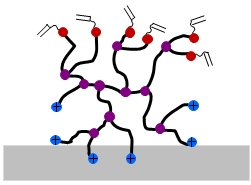
Prof. Dr. Uwe Beginn is a faculty member at the Department of Organic Chemistry at the University of Osnabrück . His research focuses on the synthesis and application of functional macromolecules with tailored architectures, including Palm Tree polymers , Double Comb polymers , and Gradient Copolymers . These materials are designed for surface modification, ion/molecule recognition, biological activity, and energy storage. Research Interests Polymer Chemistry and Macromolecular Design Controlled Radical Polymerization (ATRP, FRP) Surface Science and Functionalization Self-Assembly and Gradient Materials Applied Chemistry in Material Science Article Trends : Prof. Beginn’s work spans the development of gradient and graft copolymers, surfactants, and primer molecules. His publications emphasize microphase-segregated structures , kinetic modeling , and surface-adhering polymers for applications like carbon fiber-epoxy adhesion and ultrathin coatings.
Prof. Dr. Ivanka Popović is a Professor at the Department of Organic Chemical Technology, Faculty of Technology and Metallurgy, University of Belgrade. Her primary research focuses on polymer engineering, including sustainable polymers, biomaterials, packaging design, and advanced processing techniques. She teaches courses in polymer processing, elastomers, packaging technology, and sustainable materials. Her research explores polymer networks, hydrogels, biocomposites, and functional materials for applications ranging from biomedical devices to sustainable packaging. Key interests include pH-responsive systems, polymer modification, waste material utilization, and structure-property relationships in complex polymer systems. Publications consistently address polymer synthesis, characterization methods, and applications in materials engineering, with recent work emphasizing sustainable biomaterials and advanced composites. Research demonstrates strong interdisciplinary connections between chemistry, materials science, and environmental engineering. She actively mentors graduate and undergraduate researchers, supervising 3 doctoral candidates, 8 master's students, and over 50 bachelor's students. Mentored projects focus on polymer synthesis, composite materials, packaging optimization, and sustainable material development. She conducts research through the Department of Organic Chemical Technology laboratories and collaborates with the Faculty's Research and Development Center.
Dr. Urara Hasegawa is an Assistant Professor in the Department of Materials Science and Engineering at Pennsylvania State University, where she leads innovative research in polymeric nanomaterials for biomedical applications. Prior to joining Penn State in 2020, she held academic positions at Kansas State University (2017) and Osaka University (2011). Education: B.S. & M.Eng. in Applied Chemistry, Waseda University, Japan Ph.D. in Biomedical Science, Tokyo Medical and Dental University, Japan Research Focus: Her work centers on developing stimuli-responsive polymeric nanomaterials that modulate cellular redox signaling through controlled delivery of gasotransmitters (NO, CO, H2S) and antioxidant compounds. Key projects investigate the therapeutic potential of redox-active nanosystems in cardiovascular protection, cancer treatment, and inflammatory disease management using advanced polymerization techniques like RAFT and aqueous dispersion methods. Publication Trends: Recent publications demonstrate expertise in designing nanocarriers with precise chemical functionalities for targeted delivery of bioactive molecules. Research spans from fundamental polymer synthesis to biological evaluation in complex disease models, with a particular emphasis on cardiovascular and oncological applications. Awards & Recognitions: NSF CAREER Award (2020) Warren and Gisela Keystone Research Scholar (2019) Osaka University Presidential Award for Encouragement (2015) JSPS Research Fellowship (2006-2008) Research Environment: As part of Penn State's Intercollege Graduate Degree Program in Materials Science and Engineering, her lab fosters interdisciplinary collaboration across chemistry, biology, and engineering disciplines.
María de los Ángeles Pérez Fernández is a Full Professor in the Department of Physical, Chemical and Natural Systems within the Faculty of Experimental Sciences at Universidad Pablo de Olavide. Her academic foundation includes a Doctorate from the University of Salamanca (1996) with thesis research on shrub legume seed germination under ecological factors supervised by Dr. José Manuel Gómez Gutiérrez. Her research focuses on Ecology, Soil Microbiology, and Legume-Rhizobia Symbiosis , particularly examining nutrient cycling mechanisms in nutrient-deficient ecosystems. Key interests include plant-microbe interactions in Mediterranean and South African grasslands, cycad conservation biology, and rehabilitation of degraded soils through legume-based systems. Her work bridges fundamental ecological principles with practical applications in soil restoration and sustainable agriculture. Analysis of her 15 most recent publications (2023-2025) reveals dominant trends in nutrient acquisition strategies (especially nitrogen and phosphorus cycling), microbial symbiosis in extreme environments (hypersaline, nutrient-poor soils), and conservation physiology of endangered cycads . Her methodology emphasizes controlled greenhouse experiments, field studies in South African and Iberian ecosystems, and molecular characterization of microbial communities. 2025: 5 publications on Encephalartos-Vicia-Cajanus systems 2024: 3 publications on light-microbe interactions and coastal ecosystems 2023: 7 publications spanning cycad ecology, metabolic regulation, and symbiotic trade-offs Her doctoral program supervision includes Biodiversity and Conservation Biology at Universidad Pablo de Olavide. While specific grant details aren't provided, her extensive publication record on soil remediation and nutrient cycling suggests sustained research funding in ecological restoration. Her work maintains strong international collaborations, particularly with South African institutions studying native legumes and cycads. Pérez Fernández leads research in Mediterranean and South African ecosystems, directing laboratory investigations into rhizosphere processes while conducting fieldwork in nutrient-limited environments. Her team integrates soil enzymology, microbial ecology, and plant physiology to address challenges in ecosystem restoration under climate change pressures.
Oliver Germershaus is Professor for Pharmaceutical Technology of Macromolecular Drugs at the University of Applied Sciences and Arts Northwestern Switzerland (FHNW) , where he serves as Head of Institute for Pharma Technology and Biotechnology . He holds a School of Life Sciences affiliation and licenses as a pharmacist in Germany. Academic background includes: PhD in Pharmaceutical Sciences (University of Marburg, 2007) MSc in Pharmacy (University of Halle-Wittenberg, 2003) University of Marburg education (2002) Research focuses on drug delivery systems for large molecules including peptides, proteins, and nucleic acids. His work spans biopharmaceutical formulation development , excipient interaction analysis , and packaging compatibility studies . Key methodologies include white light interferometry for medical device characterization, self-assembling peptide hydrogels for localized drug delivery, and MMP-responsive systems for bioactive material design. Recent publications demonstrate expertise in: Standard particle fabrication via micro 3D printing (2024) PS20 surfactant degradation patterns in mAb formulations (2024) Alternative surfactant selection for biopharmaceuticals (2023) Silk fibroin modification for implant applications (2018) Medical device lubrication analysis (2018) Matrix metalloprotease responsive systems (2018) Professional memberships include: Swiss Academy of Pharmaceutical Sciences (SAPhW) Controlled Release Society (CRS) Germany Chapter Swiss Society of Industrial Pharmacists (GSIA) Parenteral Drug Association (PDA) American Chemical Society (ACS) Academic leadership roles: Co-Organizer PharmaLunch Basel Editorial Board, Asian Journal of Pharmaceutical Sciences Reviewer for German Research Foundation and 10+ journals
Professor Jon Beves is a distinguished academic in the School of Chemistry at the University of New South Wales (UNSW), where he was promoted to Professor in 2025. His academic journey began with a BSc (Hons) and MSc from the University of Sydney, followed by a PhD in Basel, Switzerland under Professors Ed Constable and Catherine Housecroft. He completed postdoctoral work at the University of Edinburgh and Nanjing University before joining UNSW in 2013. Professor Beves' research spans supramolecular and applied coordination chemistry, with particular expertise in crystal engineering, molecular sensors, and light-switchable molecular devices and machines. His work demonstrates a consistent focus on creating and controlling molecular systems that respond to external stimuli, particularly light. The trajectory of his research shows an evolution from fundamental coordination chemistry toward increasingly sophisticated molecular machines and responsive materials. Analysis of his recent publications (2022-2025) reveals a strong emphasis on photoswitchable molecular systems, with significant contributions to molecular cages, light-responsive catalysis, and molecular devices controlled by visible light. His work bridges fundamental chemistry with potential applications in materials science, sensing, and nanotechnology. The research consistently employs advanced techniques including NMR spectroscopy, crystallography, and photophysical characterization to understand molecular behavior. ARC Future Fellowship (2017) Professor Beves has established a productive research group that has generated numerous high-impact publications in top chemistry journals. His work often involves interdisciplinary collaborations across chemistry, materials science, and physics. The Beves Group maintains an active research program focused on developing novel molecular systems with controllable properties, particularly those responsive to light stimuli. Current projects appear to focus on molecular machines, photoswitchable catalysts, and light-controlled assembly processes with potential applications in smart materials and nanotechnology.
Peng Chen is the Peter J. W. Debye Professor in the Department of Chemistry and Chemical Biology at Cornell University’s College of Arts and Sciences. His research focuses on single-molecule imaging and manipulation techniques to study nanomaterials and biomacromolecules, with applications in energy conversion and disease prevention. PhD, Stanford University (2004) Postdoc, Harvard University (2004–2005) BS, Nanjing University (1997) Chen’s work spans biophysical chemistry , chemical biology , and materials science , emphasizing single-molecule super-resolution imaging , nanoscale catalysis , and bioinorganic chemistry . His lab’s recent publications highlight breakthroughs in microbe–semiconductor hybrids for energy conversion, polymer growth dynamics , and metal homeostasis in bacteria. Key trends in his 2025–2022 publications include single-molecule catalysis , nanoscale reactivity , and polymer conformational control , often leveraging super-resolution microscopy and mechanochemical analysis . Collaborations with institutions like the University of Michigan and Stanford University are frequent. Scientific Awards 2024 ISE-Elsevier Prize in Experimental Electrochemistry 2024 Member, American Academy of Arts and Sciences 2019 Chemical Pioneer Award 2018 AAAS Fellow 2009 Alfred P. Sloan Research Fellow 2007 NSF Career Award Chen mentors students and postdocs, several of whom have established independent careers (e.g., Aaron Keller, Tai-Yen Chen). His lab’s interdisciplinary projects, such as the $2M grant for bioenergy conversion, reflect his leadership in merging chemistry, biology, and materials science.
Gilles Doisneau is a researcher at Université Paris-Saclay's Institut de Chimie Moléculaire et des Matériaux d'Orsay (ICMMO - UMR 8182), specializing in bioorganic and bioinorganic chemistry with a focus on bacterial cell envelope modifications. His work intersects chemical synthesis, spectroscopy, and bacterial physiology. Key research areas: Protein mycoloylation, glycolipid conformations, bioorthogonal labeling, and oxidative stress-responsive materials Collaborations: Team SM2ViE (Synthèse de Molécules et de Macromolécules pour le Vivant et l’Environnement) and other ICMMO teams Recent publications (2025-2014) demonstrate expertise in synthesizing mycolate derivatives for bacterial proteomics, developing borinic acid-based hydrogen peroxide sensors, and analyzing glycolipid structures via mass spectrometry and computational simulations. His work spans fundamental studies in carbohydrate chemistry and applied projects in bacterial cell biology. Scientific Awards: VIP (Very Important Paper) - Angew. Chem. Int. Ed., 2014 He contributes to interdisciplinary projects involving molecular catalysis, NMR in oriented media, and material synthesis modeling at ICMMO.
Stefan Zauscher is a Professor in the Thomas Lord Department of Mechanical Engineering and Materials Science at Duke University's Pratt School of Engineering. He serves as the Director of Graduate Studies in MEMS and is also a Professor of Chemistry and Biomedical Engineering. As a Bass Fellow and Director of the Duke Materials Initiative, Dr. Zauscher leads significant research and educational initiatives at Duke. Dr. Zauscher received his M.S. from Oregon State University in 1992 and his Ph.D. from the University of Wisconsin, Madison in 1999. His academic career has been marked by numerous leadership roles and prestigious appointments across multiple departments at Duke University. His research lies at the intersection of surface and colloid science, polymer materials engineering, and biointerface science. Dr. Zauscher's lab focuses on fundamental behaviors of soft-wet materials on surfaces and interfaces, with particular emphasis on: Fabrication, manipulation, and characterization of stimulus-responsive biomolecular and bio-inspired polymeric nanostructures on surfaces Nanomechanics of soft-wet materials and hybrid biological/non-biological microdevices The role of glycoproteins in boundary lubrication of cartilage Analysis of Dr. Zauscher's recent publications reveals a strong focus on nanoscale characterization techniques, particularly atomic force microscopy, and the development of biomimetic materials for medical applications. His work frequently bridges fundamental materials science with biomedical challenges, especially in the areas of cartilage lubrication, drug delivery systems, and biosensors. Recent papers demonstrate increasing sophistication in DNA-based nanostructures and their applications in nanomedicine. Dr. Zauscher has received numerous prestigious awards throughout his career, including: Fellow of the American Vacuum Society (2020) Dean of the Graduate School Award for Inclusive Excellence in Graduate Education from Duke University (2016) Marion and Capers McDonald Award for Excellence in Teaching and Research from Duke's Pratt School of Engineering (2012) ICCES Young Investigator Award from the International Center for Computational Engineering Sciences (2008) Faculty Early Career Development (CAREER) Program award from the National Science Foundation (2003) Dr. Zauscher actively mentors graduate students, currently advising PhD candidates Tyler Corazao and Haoqing Xu, as well as Masters students Richard Sandvoss and Guang Yang. His research has been supported by significant grants from the National Science Foundation and other funding agencies, enabling the development of innovative techniques in nanoscale measurement and biomaterial design. His laboratory, the Zauscher Lab, is a hub for interdisciplinary research that combines principles from mechanical engineering, chemistry, and biomedical engineering to address fundamental questions about material interfaces and their biological applications.
Alessio Enzo is a Full Professor of General and Inorganic Chemistry at the University of Trieste, Department of Chemical and Pharmaceutical Sciences. He serves as Coordinator of the Doctoral Studies Boards for Chemistry (Cycles XXXVI-XXXVIII) and is a member of various departmental committees including the Head's Office as Delegate for Quality Assurance. His research group is internationally recognized for contributions to coordination chemistry and medicinal inorganic chemistry. Professor Enzo's research focuses on two main areas: the development of metal complexes for photocatalysis and supramolecular assemblies (within the Energy, Environment and Sustainable Chemistry research area), and the development of metal complexes for imaging and therapy (within the Drug Design, Synthesis and Formulation research area). His work in medicinal inorganic chemistry has led to significant breakthroughs, most notably the development of NAMI-A, the first ruthenium compound worldwide to be investigated on human beings in a clinical study for non-small cell lung carcinoma. His extensive publication record includes 169 peer-reviewed articles with an h-index of 47 and over 6,300 citations. His recent work spans diverse areas including ruthenium-based catalysts, metal-porphyrin conjugates, anticancer compounds, and supramolecular assemblies, reflecting a career dedicated to advancing both fundamental coordination chemistry and its biomedical applications. Professor Enzo has received significant recognition for his contributions: Development of NAMI-A, which progressed to clinical trials Editor of the book 'Bioinorganic Medicinal Chemistry' for Wiley-VCH (2011) Member of Editorial Boards for Journal of Inorganic Biochemistry (2012-present), European Journal of Inorganic Chemistry (2012-present), and Inorganica Chimica Acta (2014-present) With over 30 years of teaching experience since 1992, Professor Enzo has supervised more than 35 master's students and 3 PhD students in Chemistry. His research group, typically composed of one PhD student and several master's students, benefits from a tight network of collaborations within the Department (with Dr. Gabriele Balducci, Prof. Elisabetta Iengo and Prof. Barbara Milani) and with other Departments, local Institutions (Callerio Foundation, ELETTRA Synchrotron Trieste), and international universities (University of Florence, University of Zurich). Professor Enzo's research group operates within the Department of Chemical and Pharmaceutical Sciences at the University of Trieste, with strong connections to multiple research areas including Energy, Environment and Sustainable Chemistry, and Drug Design, Synthesis and Formulation. His work bridges fundamental coordination chemistry with practical applications in catalysis and medicine.
Laurent Gallais is a Full Professor at Centrale Marseille and leads the PICSEL deepening option in laser engineering. His research at the Institut Fresnel focuses on high-power laser-materials interactions , particularly laser damage of optical components , laser processing , and thermal stress analysis for nuclear applications. He has supervised doctoral students like Carlos Cifuentes and Maxime Lemetais. Research Expertise: Laser damage thresholds, optical coatings, nuclear ceramics, and photonic metasurfaces Key Techniques: Lock-in thermography, Z-scan measurements, finite element thermal modeling Recent publications analyze CO2 laser silica microablation , sub-picosecond UV laser contamination , and tungsten recrystallization under extreme heat . His work spans industrial laser applications, nuclear fuel studies, and advanced optical metrology. Collaborations include institutions like ITER and Lawrence Livermore National Laboratory .
Carola Esposito Corcione is an Associate Professor at the University of Salento's Department of Innovation Engineering, where she teaches Transport Phenomena in Materials. She holds the academic rank of Associate Professor (Professore di II fascia) in the competitive sector ING-IND 24 and has been qualified for the position of Full Professor through the ASN 2013 process. Dr. Esposito Corcione earned her Master's degree in Chemical Engineering from University Federico II of Naples in October 2000, followed by a PhD in Materials Science and Technology from the University of Salento in May 2004. Her doctoral research focused on the development and kinetic characterization of new materials for stereolithography processes. Her research spans Materials Science and Technology with emphasis on rheological, thermal, and transport properties of polymeric materials and nanocomposites. She has published approximately 95 papers in international journals and presented at around 50 international conferences, with work covering energy storage, cultural heritage preservation, biomedical engineering, and sustainable materials. Her publications reveal a strong focus on innovative polymer-based materials, particularly in the areas of nanocomposites, protective coatings, and advanced manufacturing techniques including 3D printing. Dr. Esposito Corcione serves as a referee for international journals and is a guest editor for Nanomaterials and Nanomaterials and Nanotechnology. She has supervised numerous Master's and PhD theses, contributing significantly to materials science education. She also co-authored two international patents on organic-inorganic hybrids, one of which has been licensed to an Italian company.