Professor Justin Chalker is the Matthew Flinders Professor and Research Leader at Flinders University 's College of Science and Engineering, affiliated with the Flinders Institute for NanoScale Science and Technology. He works at the intersection of organic chemistry, chemical biology, and materials science , focusing on sustainable chemistry solutions for environmental and technological challenges. Education: B.S. in Chemistry and B.A. in History/Philosophy of Science (University of Pittsburgh, 2006); D.Phil. in Chemistry (University of Oxford, supervised by Benjamin Davis) Career: Assistant Professor at University of Tulsa (2012-2015); Lecturer (2015) and Senior Lecturer (2017-present) at Flinders University His lab develops chemical tools for biological system interrogation and novel materials like sulfur-based polymers for mercury remediation, recyclable composites, and zinc-ion battery cathodes. Current projects include inverse vulcanization, waste valorization, and environmental applications of sustainable chemistry. His research aligns with UN Sustainable Development Goals for environmental protection and resource efficiency, particularly in material science (vulcanization, composite materials, polysulfides) and chemical biology (cysteine modification, protein chemistry). Key scientific recognitions: 2016 Tall Poppy Award, 2017 Dream Chemistry Award Finalist, Eureka Prize Finalist (2018), SA STEM Educator of the Year (2018), AMP Tomorrow Maker Award (2018) Prospective students can contact Dr. Chalker directly for Ph.D. and Honours opportunities. The lab website ( www.chalkerlab.com ) provides details on their research in sulfur chemistry, recyclable polymers, and chemical sustainability .
Bradley D. Olsen is a full professor in the Department of Chemical Engineering at the Massachusetts Institute of Technology (MIT), where he leads research at the intersection of polymer science, soft matter physics, and bioengineering. His work focuses on designing materials for critical applications in biotechnology, hemostasis, and sustainable polymer development while advancing fundamental understanding of polymer network mechanics and self-assembly. Education: Ph.D. in Chemical Engineering, University of California Berkeley (2007) S.B. in Chemical Engineering, Massachusetts Institute of Technology (2003) Olsen's research spans protein-based materials, block copolymer phase behavior, and mechanochemical hydrogels. He has pioneered methods for quantifying polymer network topology, developing hemostatic nanoparticles, and creating bio-inspired materials for selective biomolecular transport and medical applications. His recent publications emphasize data-driven approaches to polymer characterization and educational outreach in materials science. Scientific Awards: American Physical Society (APS) Fellow (2023) Fulbright Amazonia Scholar (2023) Alexander and I. Michael Kasser Chair in Chemical Engineering (2021) ACS Macro Letters Young Investigator Award (2021) MIT Committed to Caring Honor (2019) AIChE Owens Corning Early Career Award (2019) APS Dillon Medal (2018) Kavli Emerging Leader in Chemistry (2017) ACS Polymer Division Fellow (2016) Camille Dreyfus-Teacher Scholar (2015) Alfred P. Sloan Research Fellow (2014) NSF Career Grant (2013) NIH Postdoctoral Fellowship (2008-2009) Hertz Fellow (2003-2007) Barry M. Goldwater Scholarship (2002) Olsen has received significant grant support including NSF Career (2013) and AFOSR (2012) awards. His teaching activities include innovative international outreach like the 2025 soccer-themed science camp in Brazil. The Olsen Group at MIT explores advanced materials with applications ranging from trauma care to sustainable polymers.
Catherine Pinel is a Research Director (DR2) at the Institute for Research on Catalysis and Environment of Lyon (IRCELYON, UMR 5256), a joint research unit of the French National Center for Scientific Research (CNRS) and Claude Bernard University Lyon 1. She has held this senior research position since October 2008, following progression from CR1 (1998-2008) and CR2 (1994-1998) roles at the same institution. Her academic journey includes postdoctoral research at Cambridge University (1992-1993) under Professor S.V. Ley and with Professor M. Lemaire (1993-1994). Her educational foundation includes: Diplôme Universitaire de Technologie in Chemistry from Paris XI University (1986) Engineering Degree from École Nationale Supérieure de Chimie de Paris (1989) Advanced Studies Diploma in Organic Chemistry from Paris VI University (1989) PhD in Organic Chemistry from Paris VI University (1992) on chiral ruthenium complexes and enantioselective reductions Habilitation à diriger des recherches from Lyon I University (1999) on catalysis and fine chemistry Dr. Pinel's research pioneers sustainable catalytic processes with emphasis on biomass valorization, green chemistry, and heterogeneous catalysis. Her work bridges fundamental catalyst design with industrial applications, particularly in hydrogenation, oxidation, and biorefinery processes. Current focus areas include catalytic conversion of biomass-derived platform molecules (glucose, succinic acid, polyols), development of bimetallic catalysts, and valorization of hemicellulose streams. Her approach integrates advanced catalyst characterization with reaction engineering to create environmentally benign chemical transformations. Analysis of her recent publication trajectory (2019-2025) reveals evolving expertise from fundamental organometallic chemistry toward applied sustainable catalysis. Key trends include increasing focus on biomass-derived feedstocks (glucose, succinic acid, polyols), development of metal-carbide/nitride catalysts, and optimization of aqueous-phase reactions for industrial biorefineries. Her work demonstrates strong interdisciplinary collaboration across catalysis, materials science, and green chemistry, with growing emphasis on circular economy principles and renewable chemical production. No scientific awards were explicitly mentioned in the source materials. Dr. Pinel actively contributes to academic training through graduate instruction at University of Lyon (Master 2 'Catalysis and Physical Chemistry' since 2007) and University of Savoie (M2 courses in New Catalysts in Organic Chemistry since 1999 and Coordination Chemistry since 2012). While specific grant details aren't provided, her extensive publication record across high-impact journals indicates sustained research funding. She maintains collaborative networks within IRCELYON and internationally, particularly in biomass conversion and catalyst characterization. As a core researcher at IRCELYON (celebrating 60 years of catalysis research in 2021), she operates within a world-class facility housing specialized equipment for catalyst synthesis, characterization (including in situ techniques), and testing. Her work aligns with the institute's focus on sustainable catalysis for energy transition, air/water depollution, and biomass valorization, contributing to France's strategic research priorities in green chemistry.
Dr. Yogambha Ramaswamy is a Senior Lecturer in the School of Biomedical Engineering at The University of Sydney and a member of the Sydney Nano Institute. She holds a Master’s in Biotechnology from the University of Queensland and a PhD in Biomedical Engineering from the University of Sydney (2009). Her postdoctoral career began as a Vice-Chancellor’s Postdoctoral Research Fellow at the University of New South Wales, followed by a Peter Doherty Early Career Fellowship in 2013 before joining the University of Sydney in 2015. Dr. Ramaswamy’s research focuses on biomaterials, tissue engineering, and mechanobiology, with a particular emphasis on developing calcium silicate-based ceramics and biopolymers for orthopedic and regenerative applications. Her recent work explores the role of physical cues in modulating stem and cancer cell behavior. She teaches courses such as AMME1961 (Introduction to Biomedical Engineering B) and AMME5962 (Introduction to Mechanobiology). Her research has been supported by grants including the NHMRC Early Career Fellowship and collaborations with institutions like the CSIR-Indian Institute of Chemical Technology and the University of Otago. Her publications span biomaterials, nanotechnology, and mechanobiology, with recent work addressing atherosclerosis, hydrogel design, and nanomedicine. She currently supervises PhD students Frank (biomaterials) and Alexander (atherosclerosis research).
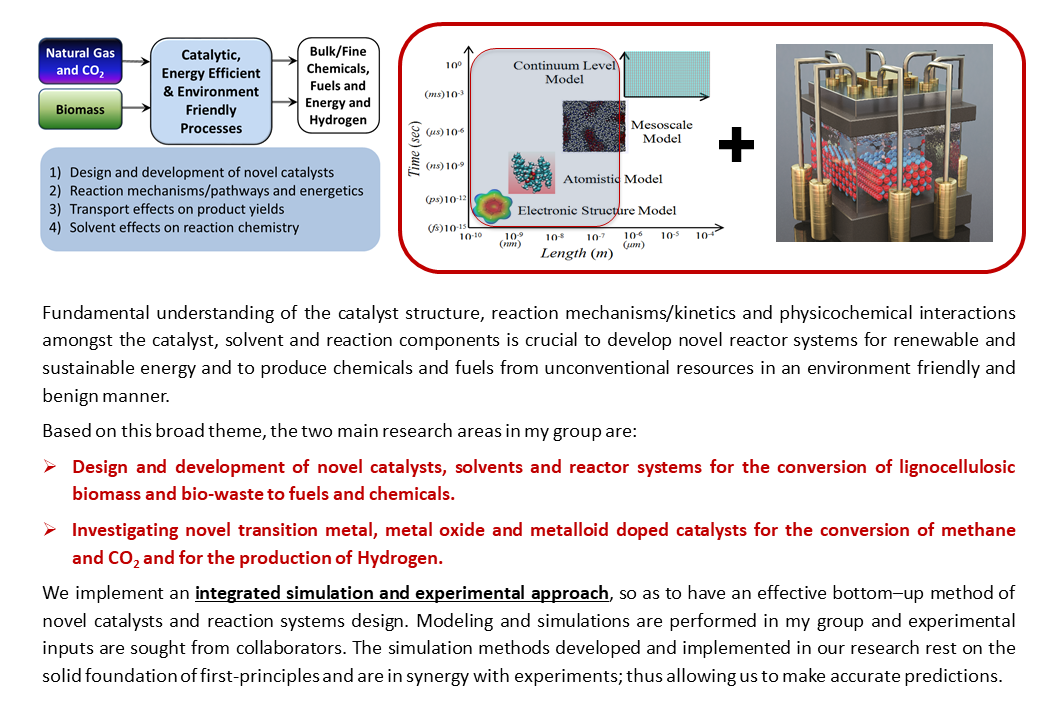
Dr. Samir H. Mushrif is a Professor in the Department of Chemical and Materials Engineering at the University of Alberta . Prior to this role, he served as faculty at the School of Chemical and Biomedical Engineering at Nanyang Technological University (NTU), Singapore . He holds a PhD in Chemical Engineering from McGill University and completed postdoctoral research at the University of Delaware, USA . Education : PhD (Chemical Engineering, McGill University), Postdoc (University of Delaware) His research focuses on computational catalysis , molecular modeling , and reaction engineering for biomass conversion and CO2 reduction . He develops novel catalysts, solvents, and reactor systems using integrated quantum mechanical and classical molecular simulations , synergized with experimental data to enable sustainable energy and chemical production . Recent publications highlight trends in condensed phase chemistry for biomass reactions, machine learning applications in solvent configuration prediction, and mechanistic studies of lignin-carbohydrate complex deconstruction. His work bridges methane activation on metal oxides, hydrodeoxygenation of bio-oil compounds, and polymerization pathways in lignin structures. Scientific Awards include: NSERC Doctoral and Post-doctoral Fellowships Discovery International Award 2017 (Australian Research Council) NANYANG EDUCATION AWARD 2016 (Singapore) SCBE Teaching Excellence Awards (Silver 2015, Gold 2016) Bharat Gaurav (Pride of India) Award 2014 Dr. Mushrif's NSERC Discovery Grant (2018), CFI John R. Evans Leaders Fund Grant (2022), and AcRF Tier-2 Grant (Singapore, 2015) have advanced his work. Current PhD and Master's students include José Carlos Velasco Calderón , Arul Mozhi Devan Padmanathan , and Sagar Bathla , among others. The CARES Lab (Catalysis Research for Sustainability) under his leadership combines ab initio molecular dynamics , machine learning potentials , and Density Functional Theory to design materials for renewable energy . Collaborations span institutions in France , Canada , India , and the UK .
Virgil Percec is the P. Roy Vagelos Professor of Chemistry at the University of Pennsylvania, affiliated with the School of Arts & Sciences and the Department of Chemistry. His research focuses on organic, supramolecular, and macromolecular chemistry, with an emphasis on self-assembly, drug delivery systems, and biomimetic nanosystems. He holds a B.S. and Ph.D. from institutions in Jassy, Romania, and conducted postdoctoral research at the University of Freiburg and the University of Akron. Research Interests: Percec’s work integrates synthetic methods, catalysis, and structural biology to design functional nanosystems. Key areas include hierarchical folding, supramolecular chirality, and synthetic mimics of biological membranes. His lab explores mRNA delivery systems using Janus dendrimers and studies self-organized structures like helical columns and quasicrystals. Recent Articles: His recent publications highlight advancements in mRNA delivery mechanisms, supramolecular architectures, and polymer synthesis innovations. The group’s work often involves interdisciplinary collaborations, bridging chemistry, materials science, and bioengineering. Awards: Percec was elected a Foreign Member of the Academia Europaea (2020) and delivered the inaugural ACS Kavli Lecture (2011). His lab has trained numerous students and postdocs, including Juncheng Lu (Master’s Capstone Award recipient) and Devendra Maurya (SET-LRP research). Labs & Teams: The Percec Research Laboratory at Penn develops cutting-edge biomaterials and supramolecular systems. The group collaborates globally, with projects funded by grants exploring nanotechnology and drug delivery.
Prof. Dr. Armido Studer is a Full Professor of Organic Chemistry at the Institute of Organic Chemistry, Faculty of Mathematics and Natural Sciences, University of Münster (WWU Münster), Germany. He has been serving as a Full Professor (W3) since November 2009, following his appointment as a Full Professor (C4) in 2004. Studer also serves as the Spokesman of the International Research Training Group IRTG 2678 'Functional π-Systems: Activation, Interaction and Application (pi-Sys)' since 2021 and previously led the Collaborative Research Center SFB 858 'Synergetic Effects in Chemistry - From Additivity towards Cooperativity' from 2010 to 2021. Studer received his education at ETH Zürich, where he completed his diploma thesis and doctoral studies under Prof. Dr. D. Seebach. He conducted postdoctoral research at the University of Pittsburgh with Prof. Dr. D. P. Curran before returning to ETH Zürich for his habilitation. His academic career includes positions as Associate Professor at Philipps-Universität Marburg (2000-2004) and subsequent professorships at WWU Münster. Professor Studer's research focuses on radical chemistry, particularly in the development of new synthetic methods using radical intermediates. His work spans free radical chemistry, electron catalysis, and the application of nitroxides in organic synthesis. Recent research directions include 'Radical Chemistry with the Hydrogen Atom Through Water Activation (H-dot)' and 'The Electron as a Catalyst: e-cat', both funded by ERC Advanced Grants. His group has made significant contributions to C-H functionalization, skeletal editing of heterocycles, and cooperative catalysis involving photoredox and N-heterocyclic carbene systems. The research has applications in pharmaceutical chemistry, materials science, and sustainable chemical synthesis. Studer's publication record shows a strong focus on heterocyclic chemistry, radical reactions, and catalytic methodologies. His recent work demonstrates expertise in meta-selective functionalization of heteroarenes, skeletal editing techniques, and the development of novel radical cascade reactions. The group has published extensively in high-impact journals including Nature, Science, JACS, and Angewandte Chemie. Adolf-von-Baeyer-Denkmünze (2025) Arthur C. Cope Late Career Scholars Award of the American Chemical Society (2024) ERC Advanced Grants (2024, 2016) Multiple Highly Cited Researcher designations (2017-2022) Elected member of multiple academies (European Academy of Sciences, Academia Europaea, German National Academy of Sciences Leopoldina) Pedler Award of the Royal Society of Chemistry (2019) Professor Studer has mentored over 100 PhD students and postdoctoral researchers who have gone on to successful careers in academia and industry worldwide. His research is supported by significant grants including multiple ERC Advanced Grants and funding from the German Research Council (DFG) for collaborative research centers. The Studer Group maintains numerous international collaborations, particularly with institutions in Japan, China, and the United States, reflecting his global impact in organic chemistry. The Studer Group operates state-of-the-art laboratories at the University of Münster, equipped for advanced organic synthesis, photochemistry, and materials characterization. The group is known for its collaborative culture and has been featured in numerous group photos documenting its evolution since the early 2000s, first at Philipps-Universität Marburg and then at WWU Münster.
Professor George Britovsek (FRSC) is a leading figure in catalysis and sustainable carbon management at Imperial College London . As Director of the MRes in Catalysis & Engineering and Head of Teaching in Inorganic Chemistry, he bridges academic leadership with cutting-edge research. His work focuses on transition metal complexes for converting ethylene , alkanes , biomass , and CO₂ into valuable chemicals and fuels through industrial collaborations. Education : M.Sc. (Technical University of Aachen, 1990), Ph.D. (Aachen, 1993) under Prof. W. Keim Postdoctoral Training : University of Tasmania (1994-1996), Imperial College London (1996-2000) His research interests span: Selective oxidation of alkanes using bio-inspired iron complexes Alkene conversions to functional polymers via novel catalysts CO₂ valorization into polymers and cyclic carbonates Biomass-derived feedstocks for chemical synthesis Recent catalysis trends highlight his work on: Designing Fe-N/C catalysts for epoxidation Developing PN3P pincer ligands for H₂ activation Creating degradable polyethylene via iron-catalyzed chain growth Modeling alternating α-olefin distributions in chromium systems Awards : Fellow of the Royal Society of Chemistry (FRSC) Students & Collaborators actively engage in: Photocatalytic polymer degradation Electrocatalytic CO₂ conversion Functionalized polymeric materials 3D-printed catalytic scaffolds His Britovsek Research Group operates at the Molecular Sciences Research Hub, White City Campus, advancing both homogeneous and heterogeneous catalysis through experimental and computational approaches.
Dieter Braun is a Professor in the Faculty of Physics at Ludwig Maximilian University of Munich (LMU), leading the Functional NanoSystems research group. He serves as speaker of the CRC 235 Emergence of Life and coordinates the Molecular Origins component of the Origins Cluster. Dr. Braun holds an ERC Synergy Grant (starting April 2025), leads the CRC 392 Molecular Evolution (starting April 2024), and is a Fellow in the Max Planck School Matter to Life (since October 2023). His research focuses on understanding the physical mechanisms that could have led to the emergence of Darwinian evolution from prebiotic molecules on early Earth. Braun's laboratory investigates non-equilibrium settings, particularly asymmetrically heated open cracks in rocks, which create intricate wet-dry cycles, temperature gradients, and fluidic effects that could drive molecular evolution. His work bridges physics, chemistry, and biology to explore how dead molecules might combine through physical forces into autonomous mechanisms of evolution. Analysis of Braun's recent publications reveals a strong focus on thermal gradients and non-equilibrium physics in prebiotic environments. His research demonstrates how heat flows can concentrate molecules, drive polymerization, create pH gradients, and enable non-enzymatic replication of nucleic acids. The publications span high-impact journals including Nature, Nature Physics, and Nature Chemistry, showing interdisciplinary work connecting physics, chemistry, geology, and biology in the context of life's origins. Klung-Wilhelmy Weberbank Price (2011) Technology Transfer Price of the DPG (with LMU and NanoTemper) Deutscher Innovationspreis (2012) Step Award (2012) Dr. Braun has successfully mentored numerous PhD students, including Stefan Duhr and Philipp Baaske who founded the award-winning startup NanoTemper Technologies. His research is supported by multiple prestigious grants including ERC Starting, Advanced, and Synergy Grants, as well as funding from the Simons Collaboration on the Origins of Life. His laboratory collaborates extensively with other researchers across disciplines and institutions, particularly with Hannes Mutschler in the new ERC Synergy project. The Braun laboratory operates within the CRC 235 Emergence of Life and the Origins Cluster at LMU Munich, with strong connections to the Max Planck Society through the Max Planck School Matter to Life. The research group maintains active collaborations with geochemists, biophysicists, and molecular biologists to create comprehensive experimental models of prebiotic environments.
Kumar Varoon Agrawal is an Associate Professor at École Polytechnique Fédérale de Lausanne (EPFL), holding the Gaznat Chair for Advanced Separations. He is affiliated with the School of Basic Sciences (SB), the Institute of Chemical Sciences and Engineering (ISIC), and the Laboratory of Advanced Separations (LAS) in Sion, Switzerland. Additionally, he contributes to the Swiss Doctoral School in Chemical and Bioengineering (SCGC) and serves as Vice President of the Confédération des Chimistes et des Génie Chimique (CCE). Research Focus: Material Chemistry & Engineering at the Ångström scale for high-performance inorganic and hybrid membranes, emphasizing energy-efficient molecular separations. Teaching: Courses include Fundamentals of separation processes , Diffusion and mass transfer , and Chemical engineering product design . Scientific Contributions: His 15 most recent publications (2025-2020) span topics like graphene pore engineering , 2D material synthesis , carbon capture , and gas separation membranes , with keywords such as Nanotechnology , Materials Science , and Molecular Transport . Subfields include Atomic-Scale Pores , Membrane Stability , and Industrial Scalability . Students and Collaborations: He advises 10 current PhD students and has mentored 9 past PhD candidates in areas like graphene membranes , ion separation , and MOF films . He is an Academic Referent for the EPFL Carbon Team and a committee member for the EDCH Doctoral Program in Chemistry and Chemical Engineering.
Dr. Claudia Fernandez Martin is a Senior Lecturer (Associate Professor) in Chemical Engineering at the University of Aberdeen, School of Engineering. She is actively involved in research and teaching, with a focus on carbon capture technologies and sustainable materials. She serves as Coordinator of Level 5 and Coordinator of the Environmental & Biodiversity Theme in the School of Engineering, and as Champion of the Circular Economy Theme at the Centre for Energy Transition. Dr. Fernandez Martin's educational background includes: PhD in "Microporous adsorbents from organic polymers. Application in precombustion CO 2 capture processes" (2011) from the University of Oviedo, Spain (Summa Cum Laude) MSc in Research in Technology, Diversification, Quality and Energy Saving (2009) from the University of Oviedo, Spain MEng in Environmental Sciences, 1st Class (2000-2005) from the University of Granada, Spain Her research interests focus on materials and gas separation processes for carbon capture, including the synthesis of advanced materials for CO 2 capture, characterization of adsorbents, enhancement of CO 2 recovery through novel regeneration technologies, and recycling of polymeric waste. She has developed expertise in microwave-assisted technologies for carbon capture intensification and plastic waste conversion into valuable materials. Dr. Fernandez Martin's recent publications demonstrate a strong focus on sustainable solutions for carbon capture and waste valorization. Her work spans from developing novel adsorbents from waste materials to exploring microwave-assisted processes for more energy-efficient carbon capture. She has made significant contributions to understanding transfer hydrogenation of CO 2 and the conversion of plastic waste into functional materials for environmental applications. Her scientific achievements have been recognized through several awards: Fellow of the Higher Education Academy (Advance HE) - 2020 Santander Mobility Award - 2017 ETP-PECRE Award - 2017 Santander Mobility Award - 2016 PhD Scholarship 'JAE-PreDoc' funded by the Spanish Research Council (CSIC) - 2007-2011 As an educator, Dr. Fernandez Martin teaches courses including Environmental Engineering (EA4027), Air & Water Pollution Control (EX501U), and supervises individual and group design projects at both undergraduate and postgraduate levels. She is also the General Secretary of AMPERE (Association for Microwave Power in Europe for Research and Education), highlighting her leadership in microwave research applications. She actively supervises PhD students and welcomes new PhD candidates interested in her research areas, particularly in engineering with a focus on carbon capture, sustainable materials, and waste valorization technologies.
Dr. Matthew Kimber is a Professor in the Department of Molecular and Cellular Biology at the University of Guelph. His research focuses on structural biology of bacterial systems, particularly bacterial polysaccharides and microcompartments. He employs x-ray crystallography to study molecular architectures, with current projects exploring mechanisms of bacterial surface polysaccharide assembly and bacterial microcompartment function. Education: B.Sc. (Hons) Molecular Genetics and Molecular Cell Biology from the University of Toronto (1993), Ph.D. in Molecular and Medical Genetics from the University of Toronto (2000). Research Interests: Structural basis of polysaccharide assembly and modification, bacterial microcompartment structure-function relationships, and enzyme mechanisms. Key projects include studies on glycosyltransferases, carboxysomes, and aminoacetone degradation pathways. Lab Members: Current graduate students include Laura Seidel, Liam Noseworthy, Manitabhai Govind, and Shaoqian Zong. Former members include Patrick Ryan, Evan Mallette, and Tom Keeling. Lab Focus: Probing structural details of biological molecules to understand function, with emphasis on bacteria’s strategies for polysaccharide modification and microcompartment assembly. Recent work includes characterization of enzymes involved in O-antigen biosynthesis and microcompartment shell proteins.
Kay Severin is a full professor at the Laboratory of Supramolecular Chemistry (LCS) within École Polytechnique Fédérale de Lausanne (EPFL) , Switzerland. His research focuses on the design and reactivity of metal-ligand assemblies, including coordination cages, metalloligands, and supramolecular receptors. He has pioneered the use of metalloligands for constructing heterometallic architectures and developed systems for anion extraction and stimuli-responsive hydrogels. Key funder: Swiss National Science Foundation (FNS) Collaborative work with Rosario Scopelliti and Farzaneh Fadaei Tirani Research Interests: Severin's work spans supramolecular chemistry, organometallic synthesis, and functional materials. Recent projects include: Dynamic palladium-based hydrogels with anion-responsive crosslinks Gold(I)-driven nano-onion structures via π-stacking Triazene-derived ligands for Sandmeyer-type reactions Metalloligand assembly of Fe/Pd/Au heterotrimetallic cages Publication Trends: Over 300 publications since 1994, with recent emphasis on: Coordination-driven self-assembly (2024: 6 articles) Triazene and diazoolefin reactivity (2025: 4 articles) Metal-ligand interactions in nanogels and vesicles (2024-2025: 3 articles) Environmental applications in anion extraction (2025: 1 article)
Jessica R. Lamb is an Assistant Professor and McKnight Land-Grant Professor at the University of Minnesota, Department of Chemistry. Her research spans catalysis, physical organic chemistry, and polymer chemistry. Developing switchable N-heterocyclic carbene organocatalysts Designing sustainable non-isocyanate polyurethanes for high-temperature applications Combining polymerization mechanisms for novel materials The Lamb group emphasizes interdisciplinary training and mechanistic investigations, with a focus on sustainable synthesis. Recent publications highlight structure-property relationships in polymers and NHC-CDI adducts. Dr. Lamb is recognized for her contributions via the McKnight Land-Grant Professorship. Her lab receives funding from NSF, ACS PRF, and 3M NTFA, among others. The Lamb Research Group actively mentors graduate students and prioritizes diversity, equity, and inclusion in STEM. They are currently accepting new graduate research students.
Prof. Dr.-Ing. Selin Kara is a Professor at the Institute of Technical Chemistry, Faculty of Natural Sciences, Leibniz University Hannover. She leads research in biocatalysis and bioprocessing, with a focus on sustainable and innovative enzyme-based technologies. Her leadership roles include Spokesperson of the Curriculum and Teaching Committee for Life Science and Chairperson of the Admissions Board for MSc Life Science. Full Name: Selin Kara Institution: Leibniz University Hannover Faculty: Faculty of Natural Sciences Department: Institute of Technical Chemistry Academic Rank: Professor Email: selin.kara@iftc.uni-hannover.de Her research interests center on biocatalysis and bioprocessing , particularly in redox biocatalysis , enzyme immobilization , non-conventional media such as deep eutectic solvents, biocatalytic cascades , and flow biocatalysis . She explores enzyme kinetics and process engineering to enhance efficiency and sustainability in chemical synthesis. Her group develops novel reactor systems and materials, including hydrogels and 3D-printed microfluidics, for advanced biocatalytic applications. She emphasizes green chemistry principles, aiming to replace traditional chemical processes with eco-friendly enzymatic alternatives. The most recent publications (2024–2025) demonstrate a strong trend in deep eutectic solvents , fusion enzymes , immobilization techniques , and sustainable synthesis of bio-based chemicals . Her work integrates experimental and computational methods to understand enzyme behavior and optimize reaction systems. Key themes include process intensification, solvent engineering, and industrial scalability, with applications in pharmaceuticals, fragrances, and sustainable materials. She holds leadership positions in academic governance, including: Spokesperson, Curriculum and Teaching Committee, Life Science (BSc/MSc) Chairperson, Admissions Board for MSc Life Science Executive Board Member, Institute of Technical Chemistry Deputy Representative for Professors in Faculty Council and Examination Boards Her research is highly collaborative, involving interdisciplinary teams and international partners, and is consistently published in high-impact journals such as Green Chemistry , ACS Catalysis , and ChemSusChem . While specific scientific awards and student advisees are not listed in the provided text, her extensive publication record and leadership roles reflect significant academic contributions.