- Solar Physics
- Space Weather
- Coronal Mass Ejections
- +۵ مورد دیگر
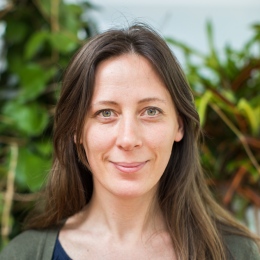
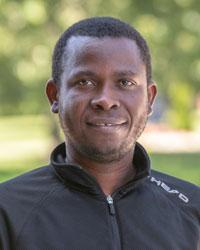
Dr. Tatiana Podladchikova serves as Associate Professor, Director of the Center for Digital Engineering, and Director of the Engineering Systems Master's Program at Skolkovo Institute of Science and Technology (Skoltech). Her work bridges fundamental solar physics research with operational space weather services to protect critical infrastructure including satellites, aviation systems, and power grids from solar-induced geomagnetic disturbances. Her research centers on solar activity dynamics—particularly solar cycles, eruptive flares, coronal mass ejections (CMEs), and high-speed solar wind streams—and their terrestrial impacts. She develops predictive models for space weather phenomena using advanced data analysis techniques, with recent work integrating deep learning frameworks for solar observation translation and physics-informed neural networks for magnetic field extrapolation. Her research directly addresses infrastructure vulnerabilities during extreme space weather events through operational forecasting systems. Dr. Podladchikova's publications demonstrate a clear evolution toward AI-enhanced space weather prediction, combining multi-point solar observations (including Solar Orbiter mission data), coronal dimming analysis for early CME detection, and innovative applications like the DIRECD method for real-time propagation tracking. Her work spans fundamental solar physics, engineering applications for satellite systems, and environmental monitoring techniques. Her scientific recognition includes: International Alexander Chizhevsky Medal for Space Weather and Space Climate (2015, Belgium) Skoltech Best Professor Award (2018-2020) Outstanding Achievements in Education and Research (2022-2023) As an educator, she directs Skoltech's Engineering Systems Master's Program, leads the Space Weather Laboratory, and teaches Experimental Data Analysis and Data Analysis for Space Weather courses. Her leadership extends to public outreach initiatives including science communication events like 'Mysteries of the Sun: Space Weather of the 21st Century' lectures. She heads the Skoltech Space Weather Laboratory where her team develops operational forecasting tools, analyzes multi-spacecraft solar observations, and advances CubeSat technologies including the Skoltech-F mission. Current projects focus on real-time geomagnetic storm prediction systems and AI-driven translation of historical solar datasets to maintain observational continuity.