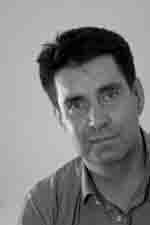
Adam Bonica is an Associate Professor in the Department of Political Science at Stanford University . His research integrates data science and politics , focusing on money in politics , campaigns and elections , judicial politics , and political methodology . Research Interests : Data Science, Political Ideology, Campaign Finance, Judicial Polarization, Quantitative Modeling Contact : Encina Hall West, Room 307, Stanford, CA 94305-6044 | Email : bonica@stanford.edu | Phone : (650) 725-7987 His work has been published in leading journals such as the American Journal of Political Science , Political Analysis , Journal of Economic Perspectives , Journal of Law, Economics, and Organization , and JAMA Internal Medicine . Bonica co-authored The Judicial Tug of War , which explores the politicization of the American judiciary. He has developed comprehensive databases like DIME (Database on Ideology, Money in Politics, and Elections) to advance research on political ideology and campaign finance. Recent publications include analyses of ideological persuasion in U.S. elections, judicial reform dynamics, and supervised machine learning applications in political methodology. His research spans topics such as clerk hiring as ideological indicators , professional networks in fundraising , and polarization trends among physicians and legal professionals .
Francisco Panizza is a Professor at the Department of Government, London School of Economics and Political Science (LSE). He holds a PhD in Politics from the University of Essex and has expertise in Democracy, Human Rights, Latin American Politics, Populism, and MERCOSUR. Previously worked at Amnesty International (1991-1995), joined LSE in 1995. On sabbatical 2022/2023. Languages spoken: English, Spanish. Education: Law degree from Universidad de la República (Uruguay), MA and PhD in Politics from University of Essex. Research focuses on political patronage in Latin America, democratic governance, populist discourses, and left-wing politics in Latin America. Key works include 'Handbook of Politicization and Political Patronage' (2025), 'Populism and the Mirror of Democracy' (2005), and studies on Argentina's and Uruguay's public administration reforms. Teaches courses such as GV245: Democracy and Democratisation, GV443: The State and Political Institutions in Latin America, and GV320: Populism. Active in comparative politics research, editing the Routledge Series 'Conceptualizing Comparative Politics.' Research emphasizes political appointments, public sector reform, and the interplay between populism and democracy. No specific scientific awards listed, but holds prominent academic standing in political science.
Jared Eutsler is an Associate Professor of Accounting in the Department of Accounting at the G. Brint Ryan College of Business, University of North Texas, where he has been a faculty member since 2016. He holds multiple professional certifications including CPA, CMA, CFM, and CFE, and brings industry experience from Ernst & Young and the PCAOB to his academic role. His educational qualifications are: Ph.D. in Business Administration-Accounting from the University of Central Florida Masters in Accountancy and Information Systems from Arizona State University Bachelors in Accountancy from Grand Canyon University Dr. Eutsler specializes in auditing research with core interests in audit regulation, fraud detection mechanisms, and professional skepticism dynamics. His scholarly work examines behavioral aspects of auditor judgment, regulatory impacts on audit quality, and fraud vulnerabilities across contexts including education systems and public health reporting. He has published in premier outlets such as Accounting Organizations and Society and Auditing: A Journal of Practice and Theory, demonstrating methodological diversity through experimental, archival, and case-based approaches. Analysis of his 15 most recent publications reveals consistent focus on auditor-client interactions and regulatory compliance, with growing emphasis on real-world applications. Recent work extends into emerging domains like equity crowdfunding decision-making and politicization of financial reporting data, while maintaining strong connections to foundational auditing principles. His research increasingly employs behavioral experiments to model professional skepticism threats and mitigation strategies in complex audit scenarios. Dr. Eutsler has been recognized with the G. Brint Ryan College of Business Teaching Innovation Award for his excellence in classroom instruction. His professional service includes significant public-sector engagement through the Audit & Finance committee for the City of Corinth and the Board of Directors for Denton County Transportation Authority, where he applies academic expertise to governmental financial oversight. No information on student advising or research grants was provided in the source material. No research labs or specialized teams are mentioned in the available documentation.
Przemysław Kordos is a Professor at the University of Warsaw , affiliated with the Faculty of Liberal Arts , where he serves as Coordinator for the Development of the Modern Greek Philology Program . He holds two PhDs in Humanities (2007, 2019) and was awarded the Loukis Papaphilippou Seat of Advancement in Modern Greek scholarship. Education: MA in Ethnology and Cultural Anthropology (University of Warsaw, 2001) MS in Sociology (University of Warsaw, 2002) PhD in Humanities (University of Warsaw, 2007) Second PhD in Humanities (University of Warsaw, 2019) His research interests span: Contemporary Modern Greek and Cypriot literature Polish-Greek cultural relations (philhellenism) Social and ethnographic issues in Greece and Cyprus Travel literature analysis Fantasy literature's cultural implications His scientific work reveals a focus on linguistic assimilation in foreign language learning (via fMRI studies), historical parallels between Polish and Greek independence movements, and critical analyses of Cypriot folk culture's politicization. Key scientific awards include: Loukis Papaphilippou Seat (University of Warsaw) Internships at EKPA and IKY (Greece) Scholarships at IMXA (Greece) and MUNI (Czech Republic) His academic contributions include cataloging 60+ Polish travel accounts to Greece, analyzing the shift from travel literature to tourism discourse, and examining the Hellene-Romios dichotomy's role in modern Greek identity construction.
David L. Andrews is a Professor in the Department of Kinesiology at the University of Maryland, affiliated with the School of Public Health. His research critically examines physical culture through interdisciplinary lenses including cultural studies, assemblage theory, and Frankfurt School critiques. He focuses on sport, fitness, and neoliberalism's societal impacts. His recent works analyze sport's politicization in Trump-era America and pandemic-era transformations. Education: PhD (1993), MS (1991) from University of Illinois at Urbana-Champaign; B.Ed. (1985) from College of St. Mark and St. John. Key roles include associate editor of the Journal of Sport and Social Issues, editorial board memberships across 6 journals, and co-editor of the Global Culture and Sport book series (Palgrave Macmillan). Current projects explore pandemic-era sport assemblages and long-term neoliberal governance effects on physical culture. Publications span 5 authored/edited books since 2006, including major works on sport-commerce dynamics and neoliberalism's cultural implications. His research bridges macro-sociological trends with micro-bodily practices, emphasizing power structures in late capitalism.
Joost de Moor is an Assistant Professor in Political Science at Sciences Po’s Centre for European Studies and Comparative Politics (CEE) . His research bridges Environmental Politics , Social Movements , and Political Participation , with a focus on climate activism, lifestyle politics, and post-political strategies. He holds a PhD in Social Sciences: Political Science from the University of Antwerp (2016) and has held postdoctoral positions at Keele University (2016-2018) , Stockholm University (2018-2021) , and Leiden University (2021) . A visiting scholar at the University of Mannheim (2015) , his work spans urban environmentalism, climate summit dynamics, and strategic movement adaptation.
Andrew Neal is a Professor of International Security and Director of Postgraduate Research Programmes at the University of Edinburgh’s School of Social and Political Science. His research focuses on critical security studies, parliamentary security politics, and the evolution of security discourse. He leads the National Security and Defence Documents Dataset (1987–2024), analyzing global security priorities across 119 countries. Education: BA (Hons) in Politics from Lancaster University PhD in Politics from Keele University Research Interests: Security policy communication and transparency Non-traditional security threats Global North-South security dynamics Parliamentary roles in security governance Grants & Projects: Funded by the Scottish Council on Global Affairs, BA/Leverhulme, and FCDO Current projects include a history of security threats and green energy transition challenges Labs/Teams: Directs the National Security and Defence Documents Dataset project, a collaborative open-access resource.
Holger Straßheim is Professor of Political Sociology at Bielefeld University, affiliated with the Faculty of Sociology, Department 4 – Politics and Society. He also holds leadership roles as co-director of the Institute for Interdisciplinary Studies of Science (ISOS) and the Institute for World Society Studies, and is an elected member of the university’s Senate. He coordinates the MA program in Political Communication and serves on multiple examination and ethics committees. University: Bielefeld University School: Faculty of Sociology Department: Department 4 – Politics and Society Research Institutes: ISOS, Institute for World Society Studies Administrative Roles: Program Coordinator MA Political Communication, Member of BA/MA Examination Boards, Habilitation Committee His research centers on the interplay between science and politics, particularly the role of expertise and evidence in public policy. Key areas include behavioral public policy, climate and consumer policy, Arctic geopolitics, and the temporal dimensions of governance. He investigates how knowledge is produced, legitimized, and used in policy-making across transnational contexts. The most recent publications reflect a strong focus on evidence cultures, ethical expertise in crises, and the global spread of behavioral governance. These works analyze how expert advice functions under uncertainty, the paradoxes of evidence-based policy, and the institutionalization of ethical guidance during emergencies like the COVID-19 pandemic. The research often employs comparative and interdisciplinary methods, engaging with science and technology studies, political sociology, and policy analysis. Best Dissertation Award, University of Tübingen (2011) Visiting Fellow, Harvard Kennedy School (2014) Visiting Research Fellow, Collège d’études mondiales, Paris (2018) Visiting Research Fellow, University of Bologna (2022) Straßheim has supervised and advised in various research projects and PhD initiatives, particularly through his leadership in DFG and ESRC-funded programs. He has secured significant third-party funding, including projects on Arctic knowledge co-production and ethics in crisis governance. He is actively involved in academic service, reviewing for major journals and research councils, and shaping policy discourse through editorial roles in Critical Policy Studies and the Advances in Critical Policy Analysis book series. He leads the Straßheim Research Group, fostering interdisciplinary collaboration on science-policy interfaces. He is a key figure in research networks such as the Science and Democracy Network (Harvard) and the International Arctic Science Committee. His work bridges academic inquiry with real-world policy challenges, emphasizing democratic accountability, epistemic pluralism, and the ethical dimensions of expertise.
Norma Claire Moruzzi is an Associate Professor in Political Science and Gender and Women’s Studies at the University of Illinois at Chicago (UIC). She also serves as Director of the International Studies Program and Co-Chair of the Middle East and Muslim Societies Cluster at UIC. Her research focuses on the intersection of gender, religion, and nationalism, with particular emphasis on Iran and the Middle East. She employs political theory, feminist theory, archival research, and ethnographic methods in her work. Education: PhD in Political Science from Johns Hopkins University (1990). She conducted extensive fieldwork in Iran from 1998-2008, collaborating with women’s groups and contributing to local journals. Her forthcoming book Tied Up in Tehran: Women, Social Change, and the Politics of Daily Life in Postrevolutionary Iran (Cambridge University Press, 2025) examines transformations in Iranian women’s lives since 1979. Research Grants and Fellowships include: UIC Great Cities Faculty Scholar Fellowship (2009-2010), UIC Humanities Institute Fellowship (2005-2006), and a NEH community grant (2013-2014) for public programming on Muslim cultures. Her work has been recognized with the 2002 Gradiva Award for her book Speaking through the Mask: Hannah Arendt and the Politics of Social Identity . Professional Roles: Associate Editor of Iranian Studies , former chair and editorial committee member of Middle East Report . Active in interdisciplinary collaborations, affiliated with UIC’s History and Art History departments. Her scholarship bridges theory and practice, addressing topics like feminist cinema, revolutionary movements, and the politicization of daily life.
Serguei A. Oushakine is a Professor of Anthropology and Slavic Languages and Literatures at Princeton University, and Program Director of Russian, East European and Eurasian Studies (REEES) at the Princeton Institute for International and Regional Studies. He holds a PhD in Anthropology from Columbia University (2005). His research focuses on transitional cultural processes in post-Soviet societies, combining anthropological methods with postcolonial, materialist, and visual studies frameworks. Education: PhD in Anthropology (Columbia University, 2005) with distinction. Notable fieldwork locations include Siberia, Belarus, and Kyrgyzstan. Research Interests: Oushakine explores the intersection of emotion, memory, and power in transitional societies. His work analyzes how new national cultures emerged post-Soviet collapse, and investigates postcolonial legacies of communism. Current projects include: Early Soviet media’s role in shaping spectatorship (1920s-1930s) Comparative postcolonial frameworks for postcommunist studies Awards: Recipient of prestigious fellowships including Guggenheim (201?), ACLS Burkhardt Residential Fellowship, and Institute for Advanced Study membership (Princeton). Advising & Grants: While specific advising/grant details aren’t listed, his program director role suggests leadership in shaping academic initiatives. His publications indicate engagement with interdisciplinary collaborations. Labs/Teams: Active in Princeton’s REEES program, fostering collaboration between social sciences and humanities scholars studying Eurasia.
Monica W. Varsanyi is a Professor of Geography at CUNY Graduate Center and Political Science at John Jay College, CUNY. She serves as Associate Provost for Academic Affairs and Dean of Humanities and Social Sciences at the Graduate Center. Her work bridges migration studies, political development, and state policy. PhD in Geography, UCLA MA in Geography, University of Washington BA in Geography-Environmental Studies and International Development Studies, UCLA Varsanyi specializes in immigration federalism, unauthorized migration, and geographies of citizenship. Her research explores how local and state governments navigate federal immigration policies, the intersection of neoliberalism and nativism, and historical roots of voter disenfranchisement. Recent projects analyze archival methodologies and long-term immigration policy trends in New Mexico and Arizona. Her publications reveal a focus on jurisdictional conflicts, racialization processes, and the role of local law enforcement in immigration policing. Key themes include the politicization of personhood, urban governance challenges, and methodological innovations in migration research. Winner of the 2018 Outstanding Book in Policing Award (American Society of Criminology) Varsanyi’s career includes funding from the National Science Foundation and National Endowment for the Humanities. She is affiliated with multiple academic organizations, including the American Political Science Association and Law and Society Association.
Kees van Veen is an Associate Professor at the University of Groningen, affiliated with the Faculty of Behavioural and Social Sciences and the Department of Sociology. His expertise spans Corporate Governance , Policy Evaluation , and Sustainable Food Systems , with significant contributions to International Business & Management and Social Psychology during the pandemic. Education : MSc in Sociology (cum laude) from the University of Groningen. Research Focus : Interdisciplinary work bridging organizational behavior, prosociality, and global health behaviors, leveraging machine learning for cross-national pandemic analysis. His recent publications analyze prosocial behavior , conspiracy beliefs , and lockdown psychology through multi-country longitudinal data, emphasizing UN Sustainable Development Goals . He supervises MSc theses in Business Administration and Sociology and collaborates on open datasets like PsyCorona .
Mia Fuller is the Gladyce Arata Terrill Distinguished Professor of Italian Studies at the University of California, Berkeley. A cultural anthropologist and urban-architectural historian, she explores connections between physical space and political power, particularly in the context of Italian colonialism and fascism. Her work has earned the International Planning History Society book prize. Current projects include a revised Italian edition of Moderns Abroad and a new book Monuments and Mussolini . On sabbatical leave during Fall 2024. Research focuses on: Colonial architecture and urban planning in Italian colonies (Libya, Ethiopia, Eritrea) Memory studies and fascist-era monuments Discourse on modernism under authoritarian regimes Cultural identity formation through built environments Postcolonial mobility and architectural legacies Her recent publications (2015-2025) analyze Italian colonial cities, fascist architecture, and postcolonial urban studies, demonstrating consistent engagement with architectural history, urban planning, and political power dynamics. Key themes include colonial memory, modernist design's politicization, and spatial manifestations of authoritarianism. Scientific awards: International Planning History Society book prize for Moderns Abroad: Architecture, Cities, and Italian Imperialism Contact: miafull@berkeley.edu
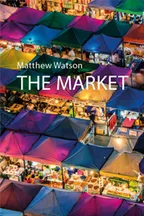
Matthew Watson is a Professor of Political Economy at the University of Warwick's Department of Politics and International Studies, and an ESRC Professorial Fellow (2013-2019). His work explores the intersection of political economy and the history of economic thought, focusing on how markets are ideologically framed as naturalized institutions and the political implications of such framing. He leads the 'Rethinking the Market' project and serves as Department REF Lead and Director of Academic Staff Development. PhD from University of Birmingham Joined Warwick in 2007 Watson's research investigates the cultural and political evolution of market ideology, tracing its roots in economic theory and its pervasive influence on public discourse. He challenges the dominance of mathematical market models across social sciences, critiques the historical underpinnings of comparative advantage theory, and examines the role of narratives like Robinson Crusoe in shaping economic subjectivity. His work also extends to analyzing austerity policies post-financial crisis and the politicization of economic expertise. His recent publications include False Prophets of Economics Imperialism (2024), which critiques the ontological separation between abstract economic models and empirical realities, and The Market (2018), which unpacks the ideological construction of market forces. Articles span topics such as epistemic injustice in budgetary politics, financialization's impact on state action, and the raced market frames in economics education. ESRC Professorial Fellow (2013-2019) Over 20 years of academic leadership Watson supervises PhD and postdoctoral researchers in political economy and history of thought, emphasizing alignment with his 'Rethinking the Market' project. He has mentored 20 postdoctoral fellows and 38 PhD students to completion, with six current supervisees. His insights are disseminated through academic presentations, blog posts, and podcasts.
Jenny Huangfu Day, a Professor of History and the Francis Young Tang '61 Chair in China Studies at Skidmore College, specializes in the intellectual, diplomatic, and legal history of late imperial and modern China. She earned a PhD from the University of California San Diego (2012) and a BA from the University of Washington (2007). Education: PhD in History, University of California San Diego (2012) BA in History, University of Washington (2007) Research Interests: Her work bridges intellectual history , legal history , and diplomacy to examine how China negotiated sovereignty and political legitimacy from the Qing Dynasty to the Republican era. Current projects analyze the politicization of historical education and transnational legal negotiations . Her publications include monographs on Qing diplomatic missions and extradition law , alongside peer-reviewed articles in Law and History Review , Modern Asian Studies , and 中华文史论丛 . She has also contributed to digital humanities projects like Visualising China and public intellectual forums such as 澎湃新闻 . Scientific Awards: Outstanding Academic Title of 2019 by ACRL Choice for *Qing Travelers to the Far West* Academic Leadership: As Interim Chair of the History Department at Skidmore College (Fall 2025), she oversees curriculum development and faculty mentorship, with a focus on integrating interdisciplinary methodologies into China studies.