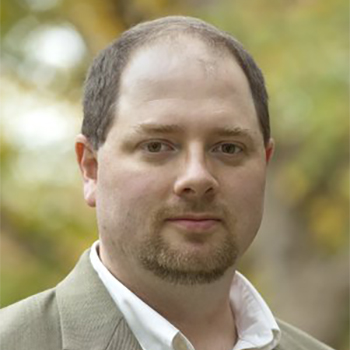
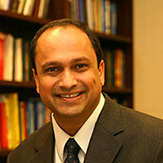
Vesa Pursiainen is an Associate Professor at the School of Business and Economics , University of St. Gallen (SBF-HSG). His research focuses on corporate finance, fintech, environmental economics, crowdfunding, and behavioral finance, with a particular emphasis on how technology, social dynamics, and crises impact financial decisions and market behavior.
Regula Hänggli Fricker is a Full Professor at the Department of Communication and Media Sciences, Faculty of Economics and Social Sciences and Management, University of Fribourg, Switzerland. She previously held positions at the Amsterdam School of Communication Research (ASCoR) and has been a visiting researcher at ETH Zurich (TdLab and COSS initiative), Northwestern University, and the University of Bergen. Her research focuses on Political communication Comparative perspectives on institutional reforms Digital democracy Public debate and opinion formation Media dialogue in political contexts Analysis of her 15 most recent publications reveals trends in participatory budgeting, digital governance, media framing of religious/political topics, and computational social science applications. These works span disciplines like political science, computer science, and media studies, with subfields including AI debates, voting system design, religious representation, and polarization dynamics. Her academic credentials include a PhD from the University of Zurich and a Master's in Political Science (major) and Economics (minor) from the University of Bern. Collaborations with Evangelos Pournaras, Dirk Helbing, and others highlight interdisciplinary projects in smart city ethics and democratic innovation.
Emily Cross is a Full Professor at the Department of Humanities, Social and Political Sciences at ETH Zurich, leading the Social Brain Sciences Professorship since spring 2023. She previously held professorships at Bangor University (Wales), University of Glasgow (Scotland), Macquarie University (Australia), and Western Sydney University's MARCS Institute (Australia). Her research centers on how embodied experience shapes social learning and perception across diverse contexts. Key contributions include identifying neural signatures of embodied expertise using dancers, developing embodied neuroaesthetics theory, uncovering neurocognitive foundations of visual learning across lifespans, and pioneering paradigms for human-robot social engagement. Her interdisciplinary approach bridges technology, performing/visual arts, and social sciences to explore experience-dependent plasticity at brain and behavioral levels. Recent publications (2024-2025) demonstrate intense focus on human-robot interaction dynamics, aesthetic movement perception, and context-dependent social cognition. Work increasingly examines self-disclosure mechanisms to robots, cultural influences on robot acceptance, and neural correlates of movement synchrony, reflecting her expanding influence at the neuroscience-robotics intersection. Scientific awards include: Philip Leverhulme Prize for Psychology Jacob Bronowski Award from British Science Foundation Young Talent Award from Dutch Neuroscience Society RoboHub and Insight Analytics top women in robotics listings Australia’s Superstars of STEM (2022) Cross passionately trains next-generation scientists with emphasis on research ethics. Her work attracts major funding from ERC, NIH, Fulbright Commission, ESRC, EPSRC, and UK Ministry of Defence. She serves on UNESCO’s International Bioethics Committee (co-rapporteur for neurotechnology ethics report) and as Associate Editor for International Journal of Social Robotics. She leads ETH Zurich's dynamic Social Brain Sciences group, which embraces interdisciplinarity through research paradigms bridging technology, performing/visual arts, and biological/social sciences, while maintaining active roles in editorial boards and conference committees including Intelligent Virtual Agents and Affective Computing meetings.
Leonora C Angeles is a Professor at the University of British Columbia's School of Community and Regional Planning (SCARP), serving as Admissions Chair with joint appointments as Associate Professor in Women's and Gender Studies and Director of the Institute for Gender, Race, Sexuality and Social Justice. Previously a Faculty Research Associate at UBC's Centre for Human Settlements, she conducted international development projects across Southeast Asia, Brazil, and Vietnam. Her academic credentials include a Diploma, Bachelor of Arts, Master of Arts, and Doctor of Philosophy from Queen's University, reflecting foundational training in interdisciplinary social sciences. Angeles' research critically interrogates community development through participatory planning, governance, and transnational feminist frameworks. She examines how gender, race, class, sexuality, and (dis)ability intersect in planning processes, with deep regional expertise in Southeast Asia. Her scholarship challenges conventional development paradigms by centering feminist participatory action research that prioritizes community agency and social justice, particularly in agrarian transitions and urban governance contexts. Analysis of her recent publications reveals consistent interdisciplinary engagement with political economy, disaster resilience, and feminist planning methodologies. Her work demonstrates methodological rigor in qualitative and participatory approaches while maintaining regional specificity in Philippine and Southeast Asian contexts. Key thematic threads include pandemic governance, food security, transnational marriage systems, and climate adaptation, all analyzed through intersectional power dynamics. As Graduate Program Advisor for the Centre for Women's and Gender Studies, Angeles mentors emerging scholars in critical methodologies. Her international research collaborations, particularly in the Philippines and Vietnam, have generated significant insights into participatory governance and capacity building, though specific grant mechanisms are not detailed in available sources. She actively shapes UBC's research ecosystem through leadership in the Institute for Gender, Race, Sexuality and Social Justice and Centre for Women's and Gender Studies, driving interdisciplinary scholarship at the nexus of planning, gender, and social justice while maintaining strong community-university partnerships in the Global South.
Graham T. Allison, Jr. is the Douglas Dillon Professor of Government at Harvard Kennedy School, where he has taught for five decades. He previously served as the Founding Dean of Harvard's John F. Kennedy School of Government and as Director of the Belfer Center for Science and International Affairs until 2017. His career spans academia, government service, and international policy analysis, with significant contributions to national security studies and international relations. Dr. Allison's educational background includes: Davidson College Harvard College (B.A., magna cum laude, in History) Oxford University (B.A. and M.A., First Class Honors in Philosophy, Politics, and Economics) Harvard University (Ph.D. in Political Science) As a leading analyst of national security, Dr. Allison specializes in nuclear weapons policy, US-Russia relations, US-China relations, and decision-making processes in international crises. His research has profoundly influenced how scholars and policymakers understand great power competition and conflict prevention. He is particularly renowned for developing the concept of the "Thucydides Trap" to analyze the historical patterns when a rising power threatens to displace an established power. Dr. Allison's recent scholarly output demonstrates consistent focus on contemporary geopolitical challenges, particularly US-China strategic competition, nuclear weapons policy, and conflicts in the Middle East and Eastern Europe. His publications bridge academic rigor with policy relevance, often providing historical context to current crises while offering concrete recommendations for policymakers. The breadth of his work spans traditional academic journal articles, policy briefs, and commentary in major media outlets, demonstrating his commitment to engaging both scholarly and public audiences. Dr. Allison has received numerous prestigious awards for his contributions to national security: Defense Department's highest civilian award, the Defense Medal for Distinguished Public Service Distinguished Public Service Medal (awarded twice - first by Secretary Cap Weinberger and second by Secretary Bill Perry) Throughout his career, Dr. Allison has advised multiple presidential administrations, serving as Assistant Secretary of Defense in the Clinton Administration and Special Advisor to the Secretary of Defense under President Reagan. He has been a member of the Secretary of Defense's Advisory Board for every Secretary from Weinberger to Mattis. His work has been supported by significant sponsored projects including the "Russia Matters Web Portal" funded by the Carnegie Corporation of New York and programs to help students train for Russia-related jobs funded by the U.S. Russia Foundation. Dr. Allison has maintained strong connections with the Belfer Center for Science and International Affairs, which he directed until 2017 and which remains ranked as the "#1 University Affiliated Think Tank" in the world. Through the Belfer Center, he has fostered relationships with international security experts from around the world, particularly with Israeli security officials and analysts with whom he has collaborated extensively.
Professor Paul Jackson is a leading political economist and Professor of African Politics at the University of Birmingham, affiliated with the International Development Department within the College of Social Sciences. His work focuses on conflict analysis, post-conflict reconstruction, and governance, particularly in African contexts. PhD Public Policy (University of Birmingham) MSc Information Management (University of Central England) MA Development Studies (University of East Anglia) BA Economics and Politics (University of York) His research interests center on the creation, destruction, and reconstruction of states, with a focus on liberal state-building, security sector reform (SSR), DDR processes, and the interplay between security and development. He has extensive field experience in Sierra Leone, Rwanda, Uganda, Zimbabwe, Iraq, Bhutan, India, China, and Nepal, working with institutions like the World Bank and local civil society organizations. His publications highlight trends in security and development, including books on SSR in Sierra Leone, state-building, and fragile states. Recent works analyze post-conflict justice systems and the role of donor agencies in stabilization. He has contributed to journals like Peacebuilding , Third World Quarterly , and Contemporary Security Policy . Scientific recognition includes being elected Fellow of the Royal Society for the encouragement of the Arts, Manufactures and Commerce (FRSA) based on his academic management role in public policy education. He also serves as an assessor for the University of Birmingham's Certificate in Teaching and Learning. As Programme Leader for the British Academy's Sustainable Development Programme and advisor to the Governance and Social Development Resource Centre, he engages in policy discussions with European governments, the EU, UN, World Bank, and UK Government. He previously led the School of Government and Society (until 2010) and chairs the University's Chaplaincy Committee, integrating student welfare into his roles.
Erik C. Nisbet is a Professor and the Owen L. Coon Endowed Professor of Policy Analysis & Communication at Northwestern University's School of Communication. He directs the Center for Communication & Public Policy (CCPP) and is affiliated with the Institute for Policy Research (IPR), Russian, Eurasian, and East European Studies (REES), USC Center on Public Diplomacy, and OSU Mershon Center. Education: Ph.D. in Communication and Comparative Politics, Cornell University M.S. in Communication, Cornell University B.A. in Government and International Relations, Cornell University His research focuses on the intersection of communication, public opinion, and policy in science, technology, environmental policy, democracy, elections, and international security. Current projects examine cross-national survey methodology, field experiments, and misinformation dynamics in countries like Russia, Ukraine, Turkey, and Iran. Recent research trends emphasize misinformation's impact on democratic satisfaction, emotional drivers of online political expression, and cross-cultural media effects during crises like the COVID-19 pandemic. Grants: National Science Foundation (NSF) Office of the Director of National Intelligence (ODNI) U.S. Department of State
Renita Coleman is an Associate Professor at the University of Texas at Austin's School of Journalism and Media, where she has taught since 2005 after achieving tenure in 2009. With expertise in agenda-setting theory, visual communication, and media ethics, she has authored over 30 peer-reviewed articles and two influential books: 'Designing Experiments for the Social Sciences' (2018) and 'The Moral Media' (2005). Her research examines how visual elements shape ethical reasoning and public perception in news media. Her academic credentials include: Ph.D. in Journalism, University of Missouri (2001) M.A. in Journalism, University of Missouri (1997) B.S. in Journalism, University of Florida (1979) Coleman's research program centers on the intersection of visual communication and moral decision-making in journalism. She investigates how photographs influence ethical reasoning among journalists, the framing of health news through visual elements, and racial dynamics in journalistic ethics. Her work employs experimental methods to analyze affective agenda-setting, where emotional responses to visual stimuli shape public priorities. This approach bridges communication theory with practical journalism ethics. Recent publications reveal intensifying focus on polarization mechanisms, climate change communication, and fact-checking efficacy. Coleman's scholarship increasingly examines how adaptive framing strategies overcome audience resistance, particularly regarding scientific consensus issues. Her methodological rigor in experimental design provides robust evidence for how visual and emotional elements drive media effects beyond traditional textual analysis. Professor Coleman has received extensive recognition for scholarly excellence: Multiple AEJMC top paper awards across divisions (2002-2014) Teacher of the Year at LSU (2002-2004) Ranked #1 for AEJMC convention productivity (1999-2008) She teaches doctoral seminars in qualitative methods and experimental design while mentoring graduate students in visual communication and ethics research. As associate editor of Journalism & Mass Communication Quarterly, she shapes scholarly discourse in the field. Though specific grant funding isn't detailed in available materials, her sustained publication record demonstrates consistent research activity. Coleman's background as a 15-year newspaper professional (including roles at the Raleigh News & Observer and Orlando Sentinel) informs her applied research perspective.
Professor Damian Grimshaw is Professor of Employment Studies at King's College London's King's Business School, where he serves as Associate Dean for Research Impact. He is also London & South Forum Co-Lead for the Productivity Institute. Previously, he was Director of the Research Department at the International Labour Organisation (Geneva, 2018-19) and Professor at the University of Manchester, where he served as Head of the HR and Employment Relations and Law group and Director of the European Work and Employment Research Centre. Professor Grimshaw's research spans multiple disciplines including labour market analysis, comparative employment relations, feminist economics, sociology of work, and management. His work focuses on international comparisons of low-wage labour markets, outsourcing and HRM, technology and the future of work, precarious work, collective bargaining, and gender inequality. His research has strong policy impact across UK, European and international arenas. Recent publications reveal a clear trend toward examining the future of work through multiple lenses: collective bargaining structures, digital labor platforms, gendered impacts of pandemic policies, and regional approaches to decent work. His work consistently addresses how institutional frameworks shape employment outcomes across different national contexts and sectors. Professor Grimshaw has received significant research funding from major organizations including the British Academy, ESRC, European Commission, International Labour Organisation, Leverhulme Trust, Low Pay Commission, OECD, and Russell Sage Foundation. He coordinates a major UKRI research programme on human capital and productivity and leads the Regional Productivity Forum for London and the South alongside Marcela Miozzo and Mario Gruber. His ongoing research projects include precarious work in Europe and the gender inequalities of the Covid-19 pandemic and recession. During 2021-22, he taught 'Globalisation and Employment' on the MSc in HRM and Employment Relations and 'International HRM' to undergraduates. His research team is actively engaged in projects examining automation in knowledge-intensive business services and artificial intelligence's impact on occupations, with particular focus on the UK and US contexts.
Professor Paul Rayson is a Professor of Natural Language Processing in the School of Computing & Communications at Lancaster University, UK. He serves as Director of the UCREL (University Centre for Computer Corpus Research on Language) interdisciplinary research centre and is affiliated with multiple research institutes including Security Lancaster, the Lancaster Centre for Digital Humanities, and the Data Science Institute. Education: PhD in Computer Science, Lancaster University (2003) BSc (Hons) Computer Science and Mathematics, Lancaster University (1990) Professor Rayson's research focuses on semantic multilingual Natural Language Processing (NLP) in challenging linguistic environments with noisy language data, including historical texts, learner language, speech, email, and other computer-mediated communication. His work spans applications in dementia detection, mental health analysis, online child protection, cyber security, learner dictionaries, and text mining of biomedical literature, historical corpora, and financial narratives. He has developed semantic tagging tools like USAS (UCREL Semantic Analysis System) and Wmatrix for corpus analysis. Major Awards and Honors: FHEA (Fellow of the Higher Education Academy) MBCS (Member of the British Computer Society) Professor Rayson has supervised numerous PhD students in NLP and corpus linguistics, with eight current students and seven completed doctorates. He has led or co-investigated multiple major research projects including the £3.5m ESRC-funded Centre for Corpus Approaches to Social Science (CASS), the National Corpus of Contemporary Welsh, and projects related to mental health forums, financial narrative analysis, and cyber security. His research has been supported by ESRC, EPSRC, and other funding bodies. As Director of UCREL, he oversees research in corpus linguistics and NLP. He is also active in the Cyber Security Research Centre, Digital Health Group, and multiple Data Science Institute initiatives. His lab has developed several widely-used NLP tools including CLAWS for English POS tagging, USAS semantic analysis system, Wmatrix corpus analysis tool, and the Variant Detector (VARD) for historical texts.
Dr. Quirin Thomas Simon Vogel is a Senior Lecturer at the Department of Statistics, University of Klagenfurt. He previously held postdoctoral positions at the Technical University of Munich, New York University Shanghai, and served as an Interim Professor at Ludwig-Maximilians University of Munich. His research bridges probability theory with statistical mechanics and algorithmic applications. Current role: Senior Lecturer (2025) Previous roles: Postdoc (TUM, NYU Shanghai), Interim Professor (LMU Munich) His research focuses on: Random walks and their geometric/stochastic properties Randomized algorithms with applications in statistical models Quantum-inspired probabilistic systems (e.g. interacting bosonic loop soups) Large deviation theory for complex systems Percolation and phase transitions in particle models The articles reflect trends in probability theory, mathematical physics, and algorithmic applications. Key topics include high-dimensional percolation, Bose gas models, neural network theory, and stochastic geometry. The work combines rigorous mathematical analysis with interdisciplinary applications in physics and computer science. Scientific awards and functions cannot be determined from the provided data, as they describe other researchers. The department's research activities include projects on statistical learning, quantum models, and algorithmic probability, though Vogel's direct involvement in these specific funded projects isn't explicitly stated.
Konrad Czernichowski is an Assistant Professor at the Department of World Economy and European Integration, Faculty of Economics, Maria Curie-Skłodowska University in Lublin, Poland. He also serves as a Visiting Professor at the Department of Economics, Mathematics and Statistics, Faculty of Commerce, Jordan University College in Morogoro, Tanzania. His academic career includes positions at the University of Wrocław and extensive research on African economic development. Dr. Czernichowski's research focuses on African economic development , particularly in East Africa and Tanzania. His expertise spans economic integration, banking systems, labor markets, and development challenges in Sub-Saharan Africa. He has conducted extensive research on the East African Community's integration processes, the impact of global crises on African economies, and regional monetary cooperation. His 18 publications demonstrate consistent research output with a focus on practical economic challenges facing African nations. The research shows a clear trajectory from theoretical integration models toward applied policy analysis, particularly regarding the East African Community's development. His work bridges academic research with practical policy implications for developing economies. Member of editorial board, Journal of Economic Integration (2024-2025) Member of board, Polish African Studies Society (since 2021) Member of editorial board, Afryka journal (since 2021) Member of editorial board, Business Education Journal (since 2022) Dr. Czernichowski actively engages with international academic communities through his editorial roles and maintains research connections with African institutions. His work with the 'Maitri' movement center in Lublin (2014-2021) demonstrates practical engagement with development issues. His multilingual abilities (Polish, English, French, German, and Swahili) facilitate direct research engagement across multiple African contexts.
Arnav Arora is a PhD Fellow at the Department of Computer Science , University of Copenhagen (DIKU), specializing in Natural Language Processing . His work focuses on ethical AI, bias detection, and societal impacts of language models. Email: aar@di.ku.dk Location: Universitetsparken 1, 2100 København Ø Arnav's research explores fine-grained value alignment in language models, harmful content detection , and cross-cultural differences in AI responses. His work bridges technical NLP advancements with social responsibility, including dual use ethical frameworks and community value analysis . Key publication trends include: 2025: Bias mitigation through BiasGym framework 2024: Factcheck-Bench benchmark development 2023: Thorny Roses dual use analysis 2022: Cross-cultural value probing methods 2020: Multi-hop fact checking systems Arnav contributes to the Software, Data, People & Society (SDPS) section, collaborating with interdisciplinary teams on projects involving language model evaluation and societal impact mitigation . His work often addresses real-world AI deployment challenges through academic-industry partnerships.
Sanjeev Kulkarni is the William R. Kenan, Jr. Professor of Electrical and Computer Engineering and Operations Research & Financial Engineering at Princeton University. He is associated with the Department of Philosophy and has held significant administrative roles including Dean of the Graduate School (2014-2017), Director of the Keller Center (2011-2014), and Master of Butler College (2004-2012). His research spans Statistics , Machine Learning , Applied Probability , Information Theory , and Signal Processing , with applications to Wireless Networks , Econometrics , and Control Systems . He has co-authored over 100 publications and supervised numerous PhD and Master’s students.
Unn Røyneland is a Professor of Scandinavian Linguistics and Multilingualism at the University of Oslo 's Faculty of Humanities . She is affiliated with the Center for Multilingualism in Society Across the Lifespan (MultiLing) and has been a key figure in Norwegian language policy and standardization efforts, including the Nynorsk 2011 orthographic revision . Current Research Focus: Multilingual and multilectal practices on social media Dialect acquisition among migrants Dialect levelling and language attitudes Language and embodiment Multiethnolectal speech styles Language policy and planning Ongoing Projects: Multilectal Literacy in Education (2020-2025) (RCN-funded, Co-PI) Multilectal Practices on Social Media (2020) (with Øystein A. Vangsnes) Urban Talk and Text (MultiLing Core-group project, 2021) AquaAurora (2021, UiT The Arctic University of Norway) Her scholarly work spans 15+ years of research output, with recent publications analyzing: Language activism and social justice (2024) Multilingualism across the lifespan (2022) Migration-induced dialect acquisition (2020) Youth multilingual practices in digital spaces (2018) Nynorsk standardization processes (2016) Multiethnolectal speech patterns (2008-2010) As Co-Chief Editor of the LME Linguistic Minorities in Europe Online series at De Gruyter, she continues shaping academic discourse in multilingualism studies.