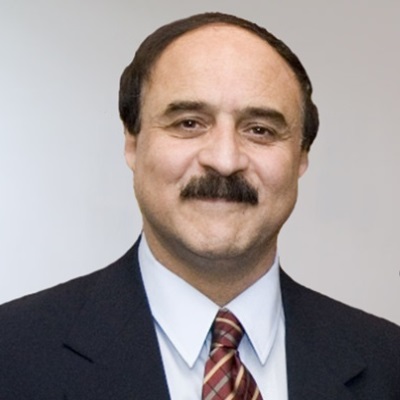
Fakhreddin Azimi is a Professor at the University of Connecticut specializing in Modern Middle East and Iranian history. He holds a D.Phil. from Oxford University and has taught at various institutions globally. His research focuses on religion-state relations, socio-political dynamics, and historiography in Iran. Education: B.A. in Political Science, Tehran University M.Sc. in Politics (Middle East), SOAS, University of London D.Phil. in History, St. Antony's College, Oxford University Research Interests: Azimi examines how power structures shape Iranian socio-cultural and political landscapes. His work bridges historical analysis with contemporary issues, particularly focusing on: Religion and Secularity in Modern Iran Authoritarian Governance Mechanisms Cultural Narratives of National Identity Historiographical Methodologies Publications: His seminal work The Quest for Democracy in Iran won multiple awards, while his Persian publications explore Iranian nationalism and Mosaddeq's legacy. Over 60 articles and book chapters span academic journals like Iranian Studies and International Labor and Working-Class History . Awards: 2008 Mossadegh Prize (Best Book on Iran) Three-time recipient of the Mahtab Mirzaie Memorial Prize Featured in Negah-e Nou intellectual journal (2020) Teaching & Scholarship: Azimi teaches medieval/modern Middle East history and historiography. His graduate seminars explore theory-method intersections in historical research. He actively contributes to the Encyclopaedia Iranica and maintains international academic collaborations.
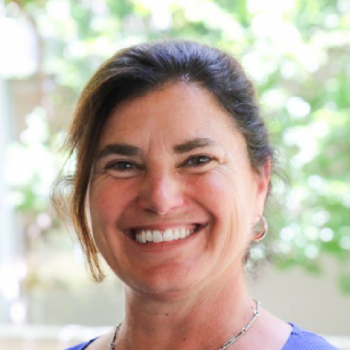
Laura K. Nelson is an Associate Professor of Sociology at the University of British Columbia , where she also directs the Centre for Computational Social Science . Her work bridges computational methods with sociological inquiry, focusing on gender inequality, social movements, and organizational dynamics. She previously held faculty roles at Northeastern University and affiliated with institutions like the NULab for Texts, Maps, and Networks and the Network Science Institute . Education: PhD in Sociology (2014), University of California, Berkeley MA in Sociology (2009), University of California, Berkeley BA in Sociology (2006), University of Wisconsin-Madison (Phi Beta Kappa) Research Interests span computational sociology, social movement strategy, intersectionality, and STEM equity. She pioneered frameworks like computational grounded theory and radical objectivity , integrating machine learning with qualitative paradigms. Recent publications analyze gender dynamics in emergency medicine, feminist movement histories, and the NSF ADVANCE program’s impact on equity. Her 2024 Social Science Quarterly paper quantifies ADVANCE’s interdisciplinary reach. Awards include the 2020 Best Meta-Reviewer at SocInfo20 and Outstanding Faculty of the Year at Northeastern University. She serves on editorial boards for American Journal of Sociology , Poetics , and Acta Sociologica . She co-PIs a National Science Foundation grant studying gender-equity dissemination in higher education networks and supervises graduate student Jinyang Yu . Her lab, Centre for Computational Social Science , drives open-source methodological innovation.
Leila M. Harris is a Professor at the University of British Columbia (UBC), holding dual appointments in the Institute for Resources, Environment and Sustainability (IRES) and the Institute for Gender, Race, Sexuality and Social Justice (GRSJ). She co-directs UBC’s Program on Water Governance and is affiliated with the Department of Geography and the Peter Wall Institute for Advanced Studies. Her work focuses on environmental governance, water equity, and social justice, particularly in marginalized communities across Africa, South Asia, and Turkey. Harris’s research examines the intersection of environmental issues with inequality, gender, and ethnicity. Key projects include analyzing non-material dimensions of water insecurity (emotions, trust, belonging), water governance shifts in South Africa, Brazil, and Canada, and the socio-political impacts of emerging water testing technologies. She has led international research networks like the SSHRC-funded WaTERS program and contributed to policy briefs on water governance in Ghana, South Africa, and British Columbia. Her scholarship bridges feminist political ecology, critical development studies, and postcolonial theory. Recent work explores participatory methods, water justice in Indigenous contexts, and the human right to water. Harris has advised on water policy reforms in Canada and globally, emphasizing equity and marginalized community voices. Education: PhD (Geography), University of British Columbia (2002) Lab/Teams: Program on Water Governance, EDGES Collaborative
Aileen Nielsen is a Ph.D. Candidate at ETH Zurich's Center for Law & Economics and a Fellow in Law & Tech. She holds a J.D. from Yale Law School, a B.A. in Anthropology from Princeton University, and advanced degrees in Applied Physics (Columbia) and Comparative Human Development (University of Chicago). Her research focuses on regulatory and judicial responses to technological innovation, particularly in AI governance, data privacy, and medical technology. She has practiced law in NYC and worked in tech startups across healthcare and political organizations. Education: Ph.D. Candidate (ETH Zurich), J.D. (Yale), M.S. Applied Physics (Columbia), M.A. Comparative Human Development (Chicago), B.A. Anthropology (Princeton) Her work combines empirical and experimental methods to address challenges like algorithmic fairness, AI liability in medicine, and public perceptions of data markets. Recent findings explore regulatory frameworks for AI systems and the ethical implications of algorithmic surveillance. She teaches courses on algorithms and fairness, law & tech research, and authentication security. Publications span law journals, cybersecurity white papers, and AI ethics conferences, with a focus on balancing innovation with societal accountability. Her books Practical Fairness and Practical Time Series Analysis further bridge technical and legal domains.
Meeyoung Cha is a Professor at KAIST and Scientific Director of the Max Planck Institute for Security and Privacy (MPI-SP) in Bochum, Germany. Her research focuses on Data Science for Humanity, encompassing computational social science, misinformation dynamics, and human-machine interaction. She holds a PhD in Computer Science from KAIST (2008) and previously served as Chief Investigator at the Institute for Basic Science and Visiting Professor at Facebook. Her work addresses societal challenges such as poverty mapping, fraud detection, and AI ethics. Key achievements include best paper awards and recognition like the Hong Jin-Ki Creator Award (2024) and Test-of-Time Awards (ACM IMC 2022, AAAI ICWSM 2020). Research interests span AI ethics, social media analysis, and interdisciplinary applications of machine learning. Notable projects include modeling climate risks via satellite imagery and analyzing chatbot interactions' societal impacts. She leads the MPI-SP's Data Science for Humanity Group, mentoring over 20 students across PhD and postdoc programs. Education: PhD in Computer Science (KAIST, 2008) Affiliations: MPI-SP (Germany), KAIST Key Awards: Hong Jin-Ki Creator Award, Korean Young Information Scientist Award, Test-of-Time Awards Her publications bridge computational methods with societal issues, including climate modeling, protein engineering, and algorithmic fairness. Current projects explore geospatial AI for economic development and ethical AI design frameworks.
Ben Green is an Assistant Professor in the University of Michigan School of Information and a courtesy Assistant Professor in the Gerald R. Ford School of Public Policy. He holds a PhD in Applied Mathematics from Harvard University with a secondary focus on Science, Technology, and Society. His research examines algorithmic ethics, fairness, and governance, aiming to reduce harms and advance social justice. Notable works include The Smart Enough City (2019) and his forthcoming Algorithmic Realism . He is affiliated with the Berkman Klein Center for Internet & Society at Harvard and the Center for Democracy & Technology. Education: PhD in Applied Mathematics, Harvard University (with secondary field in Science, Technology & Society) BS in Mathematics & Physics, Yale University Research Interests: Algorithmic fairness in public policy Human-algorithm interaction dynamics Regulatory frameworks for AI Equity-centered data science practices Urban technology policy His recent publications explore themes like the limitations of human oversight in algorithmic systems, the sociotechnical challenges of implementing ethical AI, and the intersection of legal reasoning with computational systems. His writing emphasizes actionable solutions to systemic biases in algorithmic governance. Ben’s current projects include advancing algorithmic realism – a framework for grounding data science in socially just practices – and analyzing how counterfactual explanations influence judicial decisions. He serves on multiple interdisciplinary advisory boards and frequently collaborates with policymakers to translate research into actionable strategies.
Daniel Wilhelm is a Professor of Statistics and Econometrics at LMU Munich, with a courtesy appointment in the Department of Economics. His research focuses on econometric theory, nonparametric methods, measurement error modeling, and statistical inference. He leads the Statistics and Econometrics Group at LMU and holds affiliations with the Centre for Microdata Methods and Practice (CeMMAP), Institute for Fiscal Studies (IFS), and the Centre for Research and Analysis of Migration (CReAM). Wilhelm’s work includes groundbreaking contributions to NPIV estimation, robust statistical testing, and the development of R and Stata packages for rank inference and econometric analysis. His recent publications address topics like rank-based inference, measurement error detection, and high-dimensional independence testing. He organizes academic events such as the Munich Econometrics Seminar and the LMU-Todai Econometrics Workshop. His research emphasizes methodological rigor and practical applications, with a focus on improving statistical techniques for social science and policy analysis.
Nina Torm is an Associate Professor at Roskilde University's Department of Social Sciences and Business, specializing in development economics with a focus on labor markets, informality, and environmental sustainability in sub-Saharan Africa and East Asia. She co-leads the DANIDA-funded STRESS project (2024-2029) examining resilience in Sahelian peri-urban areas and participates in the SWASH project (2022-2025) addressing sustainable water systems in Ghana. Her past work includes the SPIWORK project (2016-2022) on social protection for informal workers in East Africa. Education spans a PhD in Economics from the University of Copenhagen (2009-2013), MSc in International Development from University of Bath (2000-2001), and BA in Economics, Politics & Philosophy from University of York (1997-2000). Research interests center on regulatory frameworks, labor market dynamics in informal economies, and climate-resilient governance. Notable contributions include analyzing informal worker associations' roles in crisis response and exploring linkages between social protection and formalization in LMICs. She has published widely on training impacts, gender wage gaps in SMEs, and occupational safety in construction sectors. Teaching includes courses on ecological economics, global political economy, and informality studies. She supervises graduate students in Global Development Studies and serves as a censor at Copenhagen and Aarhus Universities. Professional roles include consultancy for ILO, World Bank, and UNU-WIDER, alongside editorial work for major journals like World Development and Journal of Development Studies.
Jeff Sahadeo is a Professor of Russian and Eurasian History at Carleton University, affiliated with the Department of History within the Faculty of Public and Global Affairs. He specializes in contemporary Central Asia and the Caucasus, with a strong focus on empire, migration, and nationalism. BA, Simon Fraser University MA, Carleton University PhD, University of Illinois at Urbana-Champaign His research explores the intersections of empire and identity in Russia and Central Asia, with particular attention to diaspora, migration, and comparative colonialisms. He investigates how historical memory shapes ethnic relations, especially in post-Soviet contexts like Kyrgyzstan and the Ferghana Valley. His work often employs oral history and interdisciplinary methods to understand the lived experiences of marginalized groups in Soviet and imperial Russia. Jeff Sahadeo's recent scholarly output reflects a deep engagement with themes of race, urban life, and empire. His publications analyze the racialization of southern migrants in Soviet cities, the imperial administration of Tashkent, and the geopolitical dynamics of contemporary Central Asia. The articles span disciplines including history, sociology, political science, and memory studies, with recurring subfields such as postcolonial theory, urban marginality, and historical trauma. His current research projects—funded by SSHRC—include studies on rivers and societies in Soviet Georgia and the multinational character of Soviet cities like Moscow and Leningrad. Committee Member, Reginald Zelnik Prize for Best Book in History, ASEEES (2018–2019) He has advised various research initiatives and leads the Migration Research Laboratory at South Ural State University, Russia. His public engagement includes media appearances on CBC, CTV, ABC News, and CFRA, particularly during the Ukraine crisis and on issues related to Russian foreign policy. He has also contributed to policy discussions through the Global Centre for Pluralism and the Kyrgyz Presidential Commission on Historical Science. Jeff Sahadeo teaches core courses in European, Russian, and Eurasian Studies, including graduate seminars on research methodology, imperialism, and Soviet culture. He co-teaches a course on Nazism and Stalinism, reflecting his broader interest in totalitarian regimes and comparative history.
Professor John Bone is a Personal Chair in the Department of Sociology at the University of Aberdeen, School of Social Science. His work bridges sociology, political economy, neuroscience, and environmental policy, with a strong focus on just transitions, social well-being, and the biosocial impacts of contemporary capitalism. PhD in Sociology, University of Aberdeen (2004) MA Hons in Sociology, University of Aberdeen (1998) John Bone’s research centers on political economy, social and biosocial theory, and energy justice. He has developed an original biosocial framework known as the 'social map' to analyze how human biological capacities interact with social structures, affecting identity, health, and cohesion. His recent book, The Great Decline (2024), critiques the psychological and societal harms of hyper-mediated, neoliberal societies and warns of unpreparedness for AI and climate change. His empirical work examines energy transitions, particularly in Aberdeen, where he leads the Aberdeen Just Transitions Lab. His recent publications span interdisciplinary themes in just transition, climate governance, and social theory. Key trends include the development of metrics for equitable energy transitions, stakeholder engagement in nuclear decommissioning, and the role of deliberative democracy in climate assemblies. His work frequently addresses regional policy, social inequality, and the psychological impacts of economic precarity. Philip Abrams Memorial Prize 2007 (Joint Winner, Best First Book in Sociology) John Bone has supervised numerous PhD students, including David Magee, Karen Lumsden, and Lorna Watson. He has been a co-applicant on major grants such as UKRI’s Just-Systems project (£5.7M) and NIHR’s Aberdeen Health Determinants Research Collaborative (£1.3M). His leadership roles include Head of Department (2013–2019), Social Science Enterprise Champion, and Coordinator of the Aberdeen Just Transitions Lab. He has also served as Chair of the British Sociological Association (2018–2021). He leads the Aberdeen Just Transitions Lab and collaborates with the Aberdeen Health Determinants Research Centre. His research teams engage with policymakers, NGOs, and community groups, including Aberdeen City Council, NHS Grampian, and the Just Transition Commission, to ensure research has real-world impact on policy and social equity.
Samuel Brazys is Associate Professor in the School of Politics and International Relations (SPIRe) at University College Dublin (UCD), where he also serves as Vice Principal for Research, Impact & Innovation in the College of Social Science & Law. He is the Editor of the Journal of International Development and has a strong research profile in international political economy and development. BA in Political Science/Economics, Marquette University MA in Economics, Indiana University MSc in Politics of the World Economy, London School of Economics PhD in Political Science, Indiana University Professional Certificate in University Teaching & Learning, UCD His research focuses on the political economy of development, with emphasis on foreign aid, foreign direct investment, Chinese development finance, and governance. He employs sub-national and spatial analysis methods, often using geo-referenced data to assess local-level impacts of development interventions in Africa, South Asia, and the Pacific. His work bridges comparative and international political economy, international organizations, and development studies. Recent publications reveal a consistent trend in analyzing the spatial and political dimensions of development finance, particularly Chinese aid and FDI, and their effects on conflict, governance, and public perceptions. His work increasingly engages with public diplomacy, as seen in studies on mask diplomacy and wolf warrior rhetoric, using large-scale text analysis of media and social media. Irish Research Council Grant: Trade Related Assistance for Development. Evidence from Micro-Level Evaluations (2018) UCD College of Human Sciences Research Funding Scheme (2015–2016) His research has had significant policy impact, notably cited by the U.S. State Department in decisions regarding Confucius Institutes. He is a member of major professional associations including the American Political Science Association and the International Studies Association. He teaches core modules in International Political Economy, Research Methods, and Governance and Development, and has coordinated thesis and internship programs. He leads a research agenda that critically examines donor behavior, recipient agency, and the political economy of global development, contributing to both academic discourse and policy debates.
Gil-Soo Han is a Professor in the Department of Communications and Media Studies at Monash University, Faculty of Arts, where he has been a faculty member since 2008. His interdisciplinary research bridges sociology, media studies, and cultural analysis, with a focus on intercultural communication, religious communication, health communication, and contemporary Korean society. Disciplinary Background: Sociology with applications in media, religion, and migration Institution: Monash University, Australia Department: Communications and Media Studies Teaching: Global and intercultural communications, media industries His research interests include: Intercultural and global communications Religious communication, especially Korean Christianity Health communication among migrants Media representation of ethnic minorities Nationalism and grassroots movements in South Korea Funeral rites and death culture in Korea and Australia The Korean diaspora in Australia and New Zealand His recent publications reflect a strong trend toward analyzing nationalism, identity, and socio-cultural change in South Korea, particularly through media discourse and public movements such as the 2016–2017 Candlelight Revolution. He also explores end-of-life practices among migrants, highlighting cultural continuity and change. His scientific awards include: Good Practice in Teaching, Monash University (2007) Winner of Korean Education Minister’s Book Prize (2020) He has received research funding from the Academy of Korean Studies and the Australian Research Council. He is actively involved in supervising PhD students and contributing to public discourse through media engagement. He leads an international project on Local Agency and National Responses to Globalisation and has published extensively on Korean diaspora, media, and religion. He is affiliated with the following research groups and platforms: ORCID: 0000-0003-4135-211X Google Scholar, ResearchGate, Academia.edu
Suzi Hall is Professor of Sociology and Head of Department at the London School of Economics and Political Science (LSE). Her research explores the intersections of global migration, urban marginalisation, and racialisation, with a focus on everyday life in multicultural cities. She is a leading figure in urban ethnography and contributes significantly to debates on citizenship, public space, and migrant livelihoods. University: London School of Economics and Political Science School: Department of Sociology Academic Rank: Professor Her research interests include urbanisation, migration, racialisation, livelihoods, and ethnography, with a strong emphasis on the lived realities of marginalised communities in cities. She combines sociological theory with architectural insight, drawing from her background as a practicing architect in South Africa. The recent publications of Professor Hall reveal a consistent trajectory in urban ethnography, focusing on migrant infrastructures, gendered precarity, and the politics of urban space. Her work spans high-impact journals in sociology, urban studies, and geography, demonstrating interdisciplinary reach and methodological rigor. Themes such as super-diversity, street economies, and urban belonging recur across her scholarship, often grounded in fieldwork in London, Cape Town, and other global cities. Scientific awards and recognitions include: Philip Leverhulme Prize in Sociology (2017) ESRC Future Research Leaders award (2015–2017) LSE Student Union 'Outstanding Teacher of the Year' (2025) Rome Scholarship in Architecture (1998–1999) LSE Robert McKenzie Prize for outstanding PhD research (2010) She teaches on the MSc City Design & Social Science programme and convenes an undergraduate module on Racial Borderscapes. She is part of the Urban Sociology research cluster at LSE and welcomes PhD enquiries in her research areas, though not for the 2026–27 session. She has supervised and mentored numerous students and contributes to academic leadership as Head of Department. Her major works include the books The Migrant’s Paradox (2021) and City, Street and Citizen (2012), as well as edited volumes like The Sage Handbook of the 21st Century City . She has also contributed to public scholarship through films like Ordinary Streets and the open-access website Race, Space and Architecture .
Charles Gomez is an Associate Professor in the School of Sociology at the University of Arizona. He is affiliated with the College of Information Science and the Applied Math Graduate Interdisciplinary Program (GIDP), reflecting his interdisciplinary focus. His work centers on computational and mathematical sociology, particularly the study of inequality in global scientific knowledge production, diffusion, and diversity. Dr. Gomez received his Ph.D. from Stanford University, master’s degrees from Harvard Kennedy School and Columbia University, and a B.Sc.Eng. from Duke University. Ph.D., Stanford University M.A., Harvard Kennedy School M.S., Columbia University B.Sc.Eng., Duke University His research integrates natural language processing, social network analysis, survey experiments, simulations, and interviews to explore hierarchies, complexity, and diversity in science. He is particularly interested in how political and institutional forces shape AI research and global knowledge systems. The recent publications reflect a strong focus on global science, AI, knowledge diffusion, and inequality. His work employs both computational and qualitative methods to analyze large-scale scientific networks, epistemic diversity, and the structural biases in research collaboration and dissemination. Themes include international politics in AI, peer review bias, simulation of knowledge spread, and the role of elite institutions in shaping scientific agendas. His scientific recognition includes the prestigious National Science Foundation (NSF) CAREER Award (2024–2029). He has secured over $1 million in research funding as PI or co-PI. National Science Foundation (NSF) CAREER Award (2024–2029) Dr. Gomez leads the Global Knowledge Lab and Observatory ("The Global Lab"), an interdisciplinary research group dedicated to studying science, knowledge, and innovation at a global scale. He is actively involved in mentoring and welcomes Ph.D. students and collaborators. He has published in top journals including Nature Human Behaviour , Nature Communications , Research Policy , Social Networks , and Sociological Science .
Lucio Baccaro is Director at the Max Planck Institute for the Study of Societies (MPIfG) and was Full Professor of Macrosociology at the University of Geneva, where he also served as Deputy Dean for Research (2016–2020). He has held academic positions at MIT, Case Western Reserve University, and visiting roles at the University of Turin and the University of Vienna. His primary affiliations are with MPIfG and the University of Geneva, both central to his research in political economy and sociology. Education: PhD in Management and Political Science, Massachusetts Institute of Technology (MIT), 1999 Doctorate in Labor Law and Industrial Relations, University of Pavia, 1997 Master of Business Administration, Stoa' (IRI-MIT joint venture), 1991 Laurea in Philosophy, summa cum laude, University "La Sapienza", Rome, 1989 Lucio Baccaro’s research focuses on comparative political economy, labor relations, global worker rights, and deliberative governance . His work integrates economic sociology and political sociology to analyze institutional change, social dialogue, and the impact of globalization on labor and welfare systems. He has led major comparative studies on employment models, pension reforms, and international labor standards. His scholarship emphasizes the interplay between institutions, ideas, and power in shaping economic governance. His recent publications reveal a consistent focus on institutional change, deliberative processes, labor market reforms, and global justice . Themes include path dependence in international organizations, the transformation of collective bargaining, and the role of expertise in democratic governance. His interdisciplinary approach bridges sociology, political science, and economics, with strong methodological rigor in comparative and qualitative analysis. Scientific Awards and Honors: Honorary Professor, University of Duisburg-Essen (2023) Professeur honoraire, University of Geneva (2020) International Geneva Award (2011) Outstanding Young Scholar Award, IRRA (2003) Founder's Prize, SASE (2001) Maurice F. Strong Career Development Chair, MIT (2006–2009) Multiple fellowships from SSRC, Harvard, MIT, and CUNY Alfiere del Lavoro, awarded by the President of Italy (1984) Advising and Grants: While specific student advisees are not listed, Baccaro has supervised research and mentored scholars through his roles at MPIfG and the University of Geneva. He has secured substantial research funding, including grants from the Swiss National Science Foundation (SNF) and the Swiss Network for International Studies (SNIS), supporting projects on post-Fordist growth models, employment policy, and deliberative governance. His leadership in co-principal investigator roles highlights his collaborative research approach and institutional influence. Labs and Research Teams: As Director at MPIfG, Baccaro leads a major research institute focused on the study of societal and economic institutions. He has been instrumental in shaping research agendas on political economy and governance, fostering interdisciplinary collaboration and international scholarly exchange.