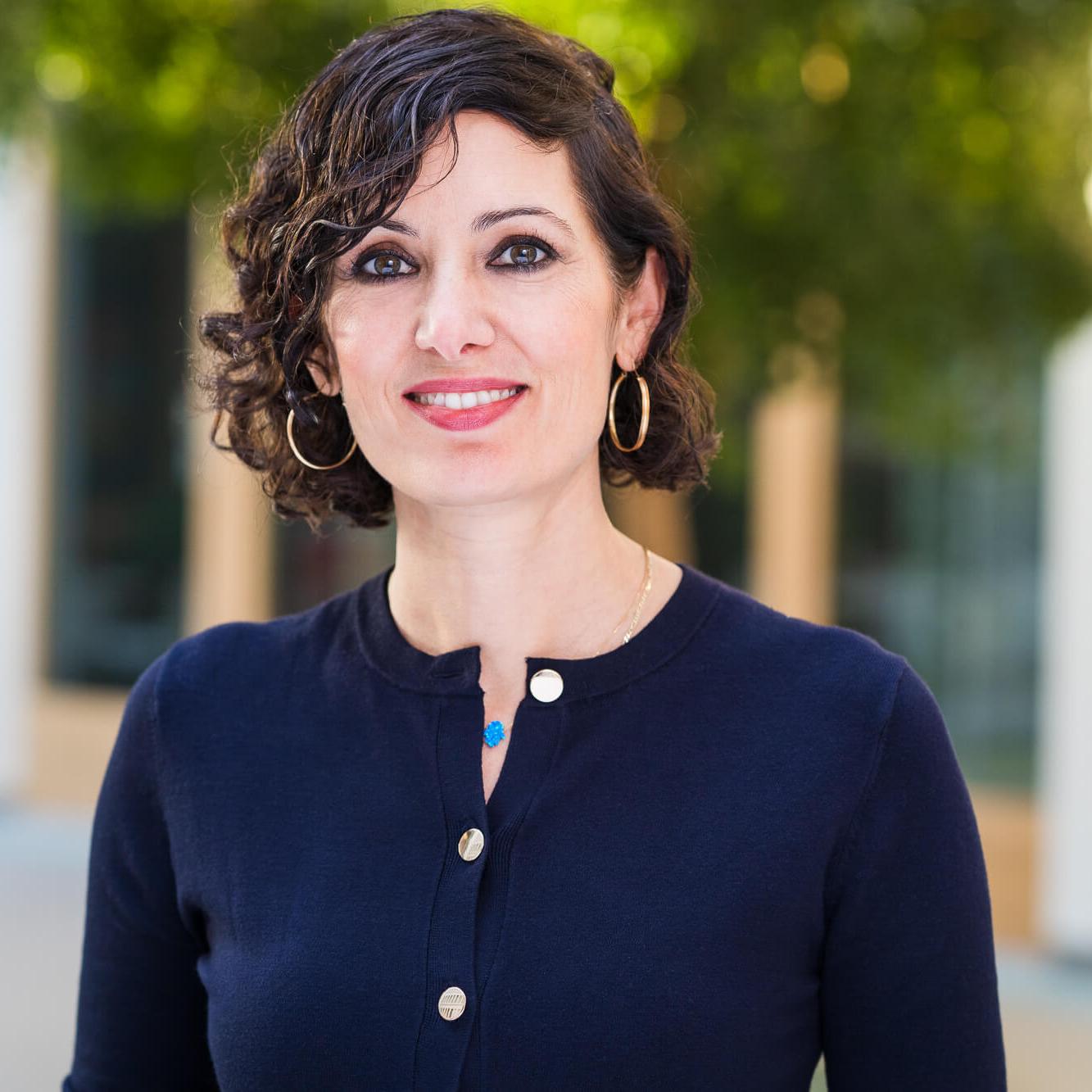
Susanne Ekman is an Associate Professor at the Department of People and Technology Organization, Ethics & Social Sustainability at Roskilde University. Her research focuses on social sustainability, welfare state analysis, and organizational ethics, particularly examining public sector challenges, workplace morale, and ethical dilemmas in modern work environments. Her work critiques systemic issues like public debt dynamics, toxic social debt in education systems, and the erosion of welfare state principles. She has published extensively on topics including employee engagement, public sector governance, and the intersection of technology with social policy. Dr. Ekman has received the Nykredits Forskningspris (2014) and is frequently engaged in media commentary on labor market trends, appearing in outlets like Politiken and Ingenioeren . Her research outputs include over 39 peer-reviewed publications and 54 media contributions, demonstrating her impactful contributions to sociological discourse. Her advisory work and grant activities are not explicitly detailed here, but her involvement with centers like the Center for Arbejdslivsforskning and Center for Organisationspsykologi underscores her interdisciplinary collaborations in workplace studies and organizational psychology.
Prof. Dr. Naika Foroutan is a leading scholar at Humboldt University of Berlin, where she holds the Professorship of Integration Research and Social Policy. She serves as Director of the German Centre for Integration and Migration Research (DeZIM) and Head of Department at the Berlin Institute for Empirical Integration and Migration Research (BIM). Her work bridges empirical migration studies, social policy, and radicalization analysis. Research Interests: Transformation of immigration societies into post-migrant societies, Islam and minority policies, radicalization, racism, Islamism, intergroup relations, and democratic pluralism. Her publications and projects explore intergenerational integration, anti-Muslim sentiment, hybrid identities, and radicalization prevention through bridging narratives. She has received prestigious awards, including the Berlin Integration Prize (2011), Fritz Behrens Science Prize (2012), Höffmann Science Prize (2016), and an honorary doctorate from Lund University (2025). Contact her directly via anfragen@dezim-institut.de for academic or institutional inquiries.
Ana Antic is a Professor in the Department of English, Germanic and Romance Studies at the University of Copenhagen, Faculty of Humanities. She is also affiliated with the Centre for Culture and the Mind, where she leads an ERC-funded project titled Decolonising madness: Transcultural psychiatry, international order and the birth of a ‘global psyche’ . Her academic journey includes a PhD in Modern European History from Columbia University (2012) and prior appointments at universities in the UK and US before joining the University of Copenhagen in August 2020. PhD in Modern European History, Columbia University (2012) Ana Antic’s research lies at the intersection of social and cultural history, focusing on the history of modern Europe, war and violence, and the 'psy' sciences—particularly psychiatry and psychoanalysis. Her work critically explores the decolonisation of psychiatric practices and concepts in the second half of the 20th century, examining how transcultural psychiatry emerged in the aftermath of WWII and during decolonisation. She investigates how Western and non-Western experts redefined the relationship between culture, race, and the individual psyche, and whether new frameworks succeeded in moving beyond colonial legacies. Her recent publications reflect a strong trend in global and transnational history, especially in the fields of transcultural psychiatry, Cold War science, and postcolonial mental health. The articles span interdisciplinary journals in history, global health, and medical humanities, often emphasizing decolonial critique and the politics of knowledge. A recurring theme is the role of experts from the Global South and Eastern Europe in shaping global psychiatric discourse. She has received multiple prestigious awards, including: Fraenkel Prize for Contemporary History (2016) British Academy Rising Star Engagement Award (2017) ERC Starting Grant (2019) Dan David Prize (March 2023) Ana Antic is actively involved in research leadership and academic collaboration. She currently heads the DNRF Centre for Culture and the Mind and leads a major ERC-funded project. She has organized international conferences and workshops, including the DECOLMAD Workshop and New Perspectives in Transcultural and Postcolonial Psychiatry . While no direct list of PhD students is provided, her leadership roles suggest active supervision and mentorship. Her work bridges history, psychiatry, and global health, contributing to a deeper understanding of the cultural and political dimensions of mental health. She is involved with the Centre for Culture and the Mind, a research environment that fosters interdisciplinary work on the intersections of culture, cognition, and history. Her project Decolonising madness brings together historians, anthropologists, and mental health professionals to re-examine the foundations of global psychiatric knowledge.
Britta Timm Knudsen is a Professor at Aarhus University, affiliated with the School of Communication and Culture, where she contributes to both the Experience Economy and Scandinavian Studies programs. Her research spans critical cultural theory, decolonial practices, digital media, and affective experimentation. University: Aarhus University School: School of Communication and Culture Position: Professor Email: norbtk@cc.au.dk Location: Jens Chr. Skous Vej 2, 8000 Aarhus C, Denmark Her research interests focus on cultural heritage, film and video, aesthetics, colonial legacies, and affective ambivalence. She explores how media and artistic practices engage with decolonial resistance, emotional geographies, and urban cultural memory. Her work often intersects with Indigenous perspectives, digital activism, and experimental methodologies. The recent articles reflect a strong engagement with decolonial visualities, translocal media events (such as the George Floyd video in Denmark), and playful resistance through internet memes. Her scholarship combines critical heritage studies with affect theory, digital culture, and postcolonial critique, forming a cohesive trajectory around memory, power, and representation. Britta Timm Knudsen has been involved in significant research projects such as Playing with Ghosts and ECHOES: European Colonial Heritage Modalities in Entangled Cities . She has supervised visiting PhD students, including Shama Patel, and secured external research funding. Her editorial roles in journals like International Journal of Heritage Studies and Nordicom Review demonstrate her academic leadership. Playing with Ghosts - Affective ambivalence in decolonial art practices (2023–2025) ECHOES: European Colonial Heritage Modalities in Entangled Cities (2018–2021) Emotionel geografi netværk (2008–ongoing) She is actively engaged in public discourse, having contributed to Danish media outlets such as DR P1 and various radio programs, discussing topics ranging from nostalgia in film to existential themes. Her work bridges academic research and public engagement, particularly in the context of colonial heritage and cultural memory.
Professor Lene Hansen is a leading scholar at the Department of Political Science , University of Copenhagen , with expertise in International Relations Theory and Security Studies . Her work integrates poststructuralism , feminism , and constructivism , focusing on the role of visual culture in shaping security narratives. She directed the Images and International Security project (2014–2017), funded by The Danish Council for Independent Research (7.4 million DKK). Education: Ph.D., M.A., and B.A. in Political Science from the University of Copenhagen (1998, 1994, 1992). Research Interests: Hansen explores the intersection of identity , discourse , and visual politics in international security. Her contributions include methodological frameworks for discourse analysis and critiques of securitization theory through feminist lenses. Article Trends: Her recent work emphasizes visual security practices (e.g., HIV/AIDS, refugee crisis), poststructuralist theory , and cultural analysis , often addressing how images and emotions shape international crises and policy. Scientific Awards: Elite Research Prize (2011) Multiple grants from The Danish Council for Independent Research (2013, 2009) Editorial Roles: She has served on editorial boards of International Theory , European Journal of International Relations , and Security Dialogue , and as Editor-in-Chief of European Journal of International Relations (2008–2013).
Jan Damsgaard is a Professor at the Department of Digitalization, Copenhagen Business School, where he conducts research at the intersection of digital technology and business transformation. His work spans multiple domains including artificial intelligence, blockchain, digital platforms, and payment systems, with significant contributions to understanding how organizations navigate digital disruption. Professor Damsgaard's research interests focus on digital transformation , artificial intelligence implementation , blockchain applications , and digital sovereignty . He examines how organizations can strategically leverage emerging technologies while addressing governance challenges and societal implications. His work particularly emphasizes practical applications in the public sector, financial systems, and small-to-medium enterprises. His recent publications reveal a strong focus on AI adoption in Danish businesses , digital sovereignty challenges , and blockchain applications for sustainable commerce . The research demonstrates increasing attention to regulatory frameworks, national security implications of technology dependence, and practical implementation strategies for emerging digital tools across various sectors. With over 132 publications including books, journal articles, and conference contributions, Damsgaard has established himself as a leading voice in digitalization research. His work extends beyond academia through extensive media engagement, with over 1,122 press appearances where he discusses current technology trends and their societal implications. Professor Damsgaard actively participates in public discourse through media contributions, expert panels, and advisory roles. His research connects academic insights with practical business applications and policy recommendations, particularly regarding digital governance, payment systems, and AI implementation strategies across sectors.
Arnav Arora is a PhD Fellow at the Department of Computer Science , University of Copenhagen (DIKU), specializing in Natural Language Processing . His work focuses on ethical AI, bias detection, and societal impacts of language models. Email: aar@di.ku.dk Location: Universitetsparken 1, 2100 København Ø Arnav's research explores fine-grained value alignment in language models, harmful content detection , and cross-cultural differences in AI responses. His work bridges technical NLP advancements with social responsibility, including dual use ethical frameworks and community value analysis . Key publication trends include: 2025: Bias mitigation through BiasGym framework 2024: Factcheck-Bench benchmark development 2023: Thorny Roses dual use analysis 2022: Cross-cultural value probing methods 2020: Multi-hop fact checking systems Arnav contributes to the Software, Data, People & Society (SDPS) section, collaborating with interdisciplinary teams on projects involving language model evaluation and societal impact mitigation . His work often addresses real-world AI deployment challenges through academic-industry partnerships.
Ann-Dorte Pedholt Christensen is a Professor of Sociology at Aalborg University’s Department of Sociology and Social Work, affiliated with The Faculty of Social Sciences and Humanities. She leads research initiatives within CASTOR (sociological/criminological research on social differentiation) and MIX (Center for Displacement, Migration and Integration). Her research focuses on gender and masculinity studies through an intersectional lens, examining how gender interacts with class, ethnicity, generation, and migration. Key themes include citizenship, social movements, identity formation, military masculinities, and everyday life practices. She employs qualitative methods, notably the biographical narrative approach, collaborating with artists and municipal archives to bridge academic and public spheres. Christensen has coordinated AAU’s PhD program in Sociology and Social Work, served as head of the CASTOR research group, and contributed to editorial boards of international journals. Her work addresses UN SDGs related to gender equality and social inclusion. Recent projects include studies on migrant narratives (MultiAalborg), military family dynamics, and the evolving constructions of masculinity in Nordic contexts. Her publications span journals like Armed Forces and Society and Childhood , with book chapters in Palgrave handbooks. She actively engages in public discourse through media commentary and museum collaborations, addressing topics like gender equality backlash and refugee integration.
Lars Boje Mortensen is a Professor at the Department of Culture and Language, University of Southern Denmark. His work spans Latin literature, Nordic medieval studies, and the history of textual heritage, with a particular focus on classical reception in medieval Europe and the transformation of cultural knowledge through manuscript studies. Key Research Areas: Latin literature; Nordic medieval literature; Cultural heritage; Manuscript transmission; Historical periodization; Digital humanities applications Awards: Recipient of Dronning Margrethes Romerske Pris (2016), Fyns Stifttidendes Forskerpris (2014), Jarl Gallén Prize (2013), and Københavns Universitets guldmedalje (1985) His recent publications emphasize book historical perspectives, comparative analysis of medieval literatures, and the materiality of textual traditions. He co-edited A Companion to Saxo Grammaticus (2024), exploring Denmark's national epic through cross-cultural lenses. Active in public humanities, Mortensen contributes to the Mægtige Middelalder podcast, challenging traditional period labels like 'Middle Ages' in episodes such as Hvornår er middelalderen? (2025). His projects include CODICUM (2025-2031), examining medieval book networks, and AntCom (2023-2026), bridging classical heritage with modern citizen humanities.
Troels Schultz Larsen is an Associate Professor in the Department of Social Sciences and Business at Roskilde University, specializing in Social Dynamics and Change. With a PhD and MSc in Public Administration, he has been with Roskilde University since 2005, progressing from PhD fellow to his current position as Associate Professor since 2014. His work focuses on urban sociology, territorial stigmatization, and the dynamics of marginalized urban areas within the Danish welfare state context. Dr. Schultz Larsen's academic journey includes: 2014-Present: Associate Professor, Department of Social Sciences and Business, Roskilde University 2009-2014: Assistant Professor/Post-Doc, Department of Society and Globalization, Roskilde University 2005-2009: PhD Fellow, Department of Society and Globalization, Roskilde University 1998-2005: MSc (Public Administration equivalent), Department of Social Science, Roskilde University Identifying his theoretical position as "Historically-Specific Praxis-Theory," Dr. Schultz Larsen draws inspiration from Bourdieu, Wacquant, Gramsci, and other critical theorists. His research spans urban sociology, territorial stigmatization, welfare state dynamics, and public innovation. He examines how marginalized urban areas are produced and maintained through intersecting social, economic, and political processes, with particular attention to the Danish context and its "ghetto list" policies. His work challenges simplistic interpretations of urban marginality, emphasizing the complex interplay between housing markets, labor markets, education systems, and family structures in reproducing spatial inequalities. Dr. Schultz Larsen's recent publications reveal a deepening focus on territorial stigmatization as both a theoretical concept and practical policy issue. His 2024-2025 work, including the book "Fragmenting Cities: The State, Territorial Stigmatization and Urban Marginality," develops a comprehensive framework for understanding how state policies actively produce spatial inequalities. He critically analyzes Denmark's controversial "ghetto list" policy, demonstrating how such classifications function as mechanisms of dehumanization and social exclusion. His research increasingly adopts comparative perspectives, connecting Danish urban marginality to broader European and global patterns of spatial inequality. Dr. Schultz Larsen's scholarly contributions include: Active participation in major research projects including EU-HORIZON24's RURALITIC Membership in the Royal Danish Academy (2025-2027) Extensive media engagement on urban policy issues With over 15 years of teaching experience at Roskilde University, Dr. Schultz Larsen has supervised numerous student projects across social sciences, politics, and public administration. His supervision spans diverse topics including urban policy, social integration, housing, labor market policies, and public innovation. He has been involved in several significant research grants, most notably as a participant in the CLIPS project (Collaborative Innovation in the Public Sector), a major multi-institutional collaboration examining innovation in public services. His current research includes the EU-HORIZON24 project RURALITIC and the BOSID project on housing stigmatization in Denmark. Dr. Schultz Larsen is actively involved in research networks focused on urban marginality and territorial stigmatization. He collaborates closely with Dr. Katrine Nørgaard Delica on multiple projects and publications, including their forthcoming book "Fragmenting Cities." His work with the North Seeland Police Department on the "TRYK Politi" initiative represents a significant practice-oriented research partnership examining citizen engagement in crime prevention. As a member of the Royal Danish Academy (2025-2027), he contributes to national scholarly discussions on urban policy and social governance.
Giulio Cimini is Associate Professor of Theoretical Physics in the Department of Physics at the University of Rome Tor Vergata and a Research Associate at the 'Enrico Fermi' Research Center. He is a statistical physicist with a strong interdisciplinary focus on complex networks and their applications in socio-economic systems. His research interests include: Statistical Physics of Complex Networks Reconstruction and Validation of Economic Networks Social Network Interactions and Financial Markets Systemic Risk and Financial Contagion Scientific Success, Fitness, and Complexity Adaptive Social Recommendation Codon Usage Bias and Protein Interaction Networks His recent publications reveal a strong trend in applying statistical physics to real-world networks, particularly in finance and social systems. Key themes include the modeling of systemic risk in supply chains and financial networks, the dynamics of collective action on platforms like Reddit (e.g., the GameStop short squeeze), and the development of network reconstruction methods using maximum entropy and optimal transport frameworks. His work often combines empirical analysis with theoretical modeling. Scientific awards and recognitions include: Associate Editor, Frontiers in Physics – Interdisciplinary Physics Board Member, Network Science Society Member, Council of the Complex Systems Society Steering Committee, CCS/Italy He has advised or collaborated with numerous researchers, particularly in projects related to economic networks and complex systems. His work has been supported by Italian national grants such as PRIN and PNRR. He leads or co-leads research projects including RENet and C2T. His research is conducted within interdisciplinary teams involving physicists, economists, and computer scientists, often in collaboration with institutions like ISC-CNR, IMT Lucca, and the Network Science community.
Christina Lubinski is a full professor at the Department of Business Humanities and Law at Copenhagen Business School (CBS), serving as Director of the Centre for Business History Entrepreneurship, Ethics & Leadership Unit. She holds a PhD in business history from the University of Göttingen (2009) and has held visiting roles at the University of Southern California (2018–2019). Her research focuses on entrepreneurship in society, business history, and the interplay between nationalism and multinational corporate strategy. Her work bridges historical methods with contemporary entrepreneurship studies, particularly examining German and Indian business dynamics. Key projects include the Carlsberg Foundation Semper Ardens grant exploring 'Rethinking Entrepreneurship in Society,' emphasizing discourse analysis and societal challenges. She edits Business History and advises institutions like the Ahlers Center for International Business. Research interests span entrepreneurship's societal impact, family business governance, and historical approaches to organizational change. Notable awards include the John F. Mee Award (2023) and Henrietta Larson Award (2015). Her recent publications analyze nationalism in trade, entrepreneurial culture via 'hype,' and labor strategies in colonial contexts. Lubinski's academic contributions span over 69 peer-reviewed works, including monographs like Navigating Nationalism in Global Enterprise (2023). She actively engages with global academic networks, organizing conferences on generational dynamics and entrepreneurship history.
Stuart James Ward is Professor of Imperial and Global History at the Saxo Institute, University of Copenhagen, specializing in settler colonialism and decolonization legacies across Africa, South Asia, Canada, the Caribbean, and Australia. His research examines imperial retrenchment's impact on post-war Britain, culminating in Untied Kingdom: A Global History of the End of Britain (2023). Education: BA (Hons) in History, University of Queensland PhD in History, University of Sydney Ward's work centers on global historical trajectories of empire dissolution, with emphasis on Australia's post-colonial transformation and Britain's internal political fractures following imperial collapse. His methodology integrates transnational perspectives to analyze how decolonization reshaped national identities and geopolitical alignments across settler colonies. Recent publications (2023-2024) reveal intensified focus on Brexit-era reckonings with imperial legacies, Scottish separatism within post-imperial frameworks, and Australia's evolving relationship with British heritage. These works demonstrate consistent engagement with contemporary political discourse through historical analysis. Scientific Awards: No specific scientific awards are mentioned in the provided text. Ward has held visiting fellowships at Australian National University (2018) and Nuffield College Oxford (2023), reflecting international scholarly recognition. As Provost of Regensen since 2010 and former Head of the Saxo Institute (2018-2023), he maintains significant academic leadership roles. His 90+ publications indicate extensive supervision and research direction despite no explicit student listings. No specific laboratories or dedicated research teams are referenced in the source material.
Lise Lotte Hansen is an Associate Professor at Roskilde University's Department of Social Sciences and Business, affiliated with the Changing Societies: Welfare and Diversity program. She holds roles in the CARE Centre and VELNET network. Her work focuses on labour market dynamics, gender equality, and welfare state sustainability. Research interests span leadership and gender, global female workers in Nordic labour markets, and the interaction between state and market mechanisms like flexicurity. She employs qualitative methods including discourse analysis and critical theory of justice frameworks. Recent projects include leadership of the Nordic Network analyzing care crises and gender equality, and participation in initiatives on trade union solidarity and diversity in political work. She has been active in policy networks and media debates on care crises, parental leave pressures, and gender equality policies. Notable outputs include edited volumes on Nordic welfare challenges and peer-reviewed analyses of care work dynamics. Her interdisciplinary research bridges sociology, political science, and gender studies to address contemporary welfare state challenges.
Emil Søbjerg Falster is a researcher at the Department of Sociology and Social Work, Faculty of Social Sciences and Humanities at Aalborg University. His work focuses on disability studies, austerity policies, and special needs within Danish societal contexts. Institutional Affiliation: Aalborg University Department: Sociology and Social Work Academic Rank: Researcher Research Interests: Falster explores critical perspectives on disability, including the impacts of austerity on vulnerable groups, the concept of 'special needs,' and disability identity formation. His work intersects with themes of governmentality, crip-solidarity, and inclusive societal design. Publications: Recent articles address topics like the normalization of disability in Denmark, critical reflections on special needs, and austerity's effects on living conditions. His research often employs qualitative interviews and interdisciplinary collaborations. Collaborations: Works with Bevica Fonden and collaborates with scholars like Dan Goodley and Jos Boys. His projects align with UN Sustainable Development Goals and Danish social policy frameworks.