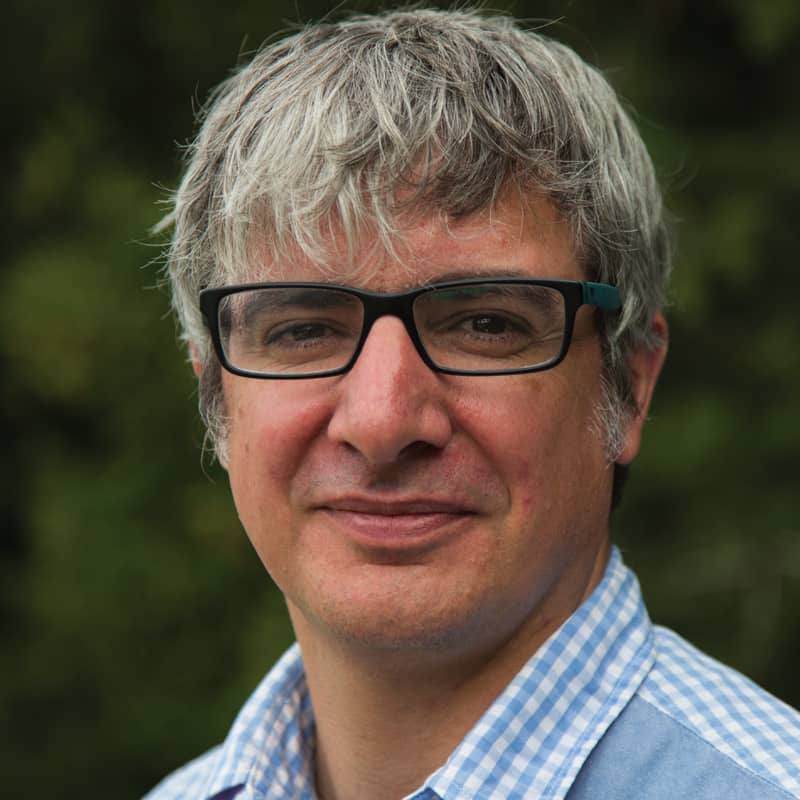
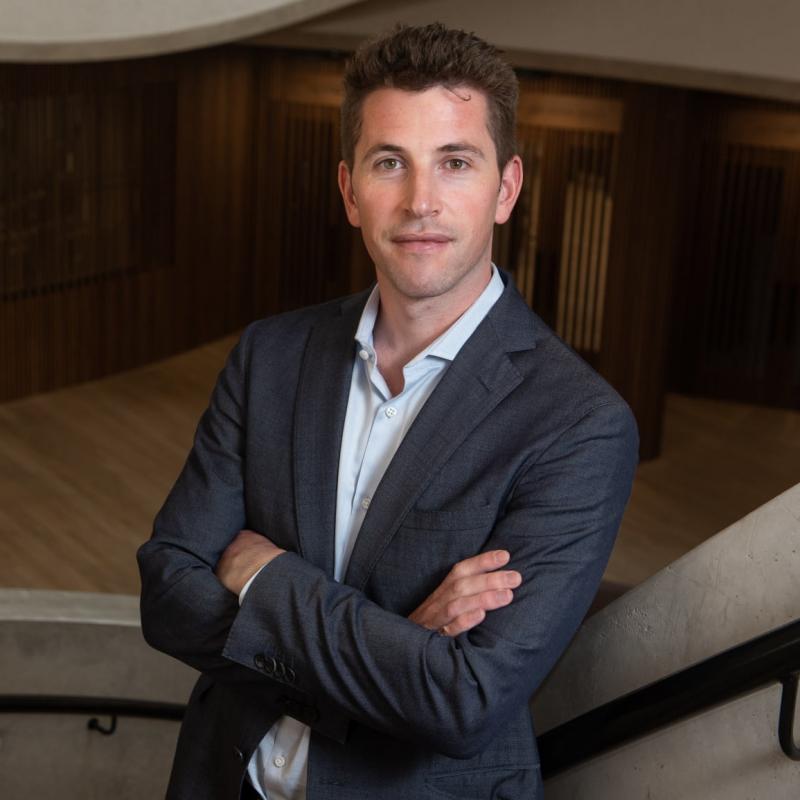
Hisham Zerriffi is an Associate Professor at the University of British Columbia (UBC) in the Department of Forest Resources Management, Faculty of Forestry. He also serves as Associate Dean for Equity, Diversity, and Inclusion. His research intersects technology, energy, and the environment, focusing on rural areas in the Global South. Affiliation: BioProducts Institute Affiliation: Clean Energy Research Centre Affiliation: Institute for Resources, Environment and Sustainability His research examines institutional factors in technology diffusion, household energy choices, and welfare impacts of energy use. Current projects include analyzing forest density's ecological impact, clean cooking transitions in India, and decentralized energy systems. Recent publications address just transitions, biomass energy economics, and policy misalignments in Indigenous communities. He has authored works on climate change mitigation via forest carbon credits and rural electrification strategies. Scientific Award: Ivan Head South/North Research Chair As a PhD supervisor, he has guided Natalie Payer on urban energy poverty in the U.S. He collaborates on interdisciplinary grants and leads the Energy Resources, Development and Environment Lab (ERDELab).
Kyeyoung Park is Professor of Anthropology and Asian American Studies at UCLA, holding the Korea Times-Hankook Ilbo Endowed Chair in Korean-American Studies. She is a sociocultural anthropologist whose work focuses on inequality, social justice, and the migration of people, particularly displaced populations and their relationship to political economy, critical race theory, and transnationalism. Her research spans Korean American communities in the United States and Korean diaspora communities in Latin America, examining how structural forces shape cultural beliefs and ideologies across different contexts. Ph.D., City University of New York (1990) Professor Park's research centers on urban anthropology, inequality across race, class, and gender dimensions, migration and diaspora studies, and transnational processes. She examines how structural imperatives of migration lead to transformations in gender, kinship, family, politics, and religion among Korean diaspora communities. Her work employs intersectional analysis to understand multi-ethnic relations, with particular focus on Korean communities in both the United States and Latin America, exploring how axes of inequality impact racial minorities and their relationships with each other in global contexts. Her recent scholarship demonstrates consistent focus on Korean diaspora communities across the Americas, bridging urban anthropology with critical race theory to examine how race, class, and gender intersect in immigrant experiences. She has made significant contributions to understanding Korean-Latino relations in Los Angeles and Korean immigrant entrepreneurship in South American textile industries, reflecting her broader interest in immigrant adaptation and inter-ethnic dynamics across diverse geographic settings. Professor Park has received numerous prestigious awards and grants for her scholarship: 1998 Outstanding Book Award from the Association for Asian American Studies for "The Korean American Dream: Immigrants and Small Business in New York City" 1997-98 Visiting Scholar Award from the Russell Sage Foundation 2016-19 Research Grant from The Republic of Korea's Ministry of Education and Korean Studies Promotion Service 2008-09 Translation Grant from The Overseas Korea Foundation for "The Korean American Dream" 2008-09 AAP Faculty Recognition Award from UCLA Professor Park has secured substantial research funding throughout her career, including multiple grants from The Academy of Korean Studies, Korea Foundation, and UCLA research programs. Her funded projects have examined Korean diaspora communities across the Americas, with particular focus on transnational connections between Korean American and Latin American contexts. She has served as Principal Investigator on projects exploring Korean routes of migration in the Americas and second-generation Korean American transnationalism, demonstrating her sustained commitment to understanding immigrant experiences through anthropological and interdisciplinary lenses. Professor Park has been actively involved with UCLA's Center for Korean Studies (CKS) and the International Institute, where she served as Deputy Program Chair for Korean Studies in Latin America from 2006-2011. Her collaborative work extends to research teams examining Korean diaspora communities across the Americas, including partnerships with scholars in Latin America. She has also participated in interdisciplinary initiatives such as UCLA's Urban Humanities Institute Faculty Research Seminar, reflecting her commitment to cross-disciplinary approaches to understanding migration, diaspora, and transnational processes.
Thomas Hale is Professor in Public Policy (Global Public Policy) at the Blavatnik School of Government, University of Oxford, and Director of the Master of Public Policy. His research tackles transnational governance challenges, emphasizing climate change, global health, and economic interdependence. He holds a PhD in Politics from Princeton University, a master's in Global Politics from the London School of Economics, and an AB in Public Policy from Princeton. His research explores the evolution of political institutions to address globalization, with foci on: Climate governance mechanisms like the Paris Agreement and net-zero transitions Global health policy, including pandemic response tracking Transnational commercial disputes and cooperation frameworks His recent publications (2022-2024) predominantly analyze climate policy effectiveness, net-zero accountability, pandemic governance, and geopolitical energy shifts. Trends show consistent emphasis on institutional design, multi-stakeholder action, and data-driven policy assessment across environmental and health crises. He leads major initiatives including the Oxford COVID-19 Government Response Tracker and co-leads the Net Zero Tracker and Climate Policy Hub , collaborating with global policymakers to translate research into governance frameworks.
Jeff Sayer is a Professor in the Department of Forest and Conservation Sciences at the University of British Columbia (UBC) Faculty of Forestry . His research focuses on applied conservation science and the human dimensions of environmental change , with fieldwork spanning Indonesia, West and Central Africa, and Southeast Asia. Current projects include sustainable landscapes in Indonesia (since 2010), forest transitions in Ghana and the Congo Basin (since 2000), and new approaches to conservation science (since 2000). Research emphasizes integrated natural resource management, landscape-scale decision-making, and reconciling agriculture with biodiversity conservation. Key research themes: Integrated landscape approaches for multifunctional landscapes Forest governance and tenure conflicts Policy coherence for Sustainable Development Goals Human-environment interactions in tropical regions Recent publication trends show interdisciplinary focus on deforestation-free trade policies, agroforestry systems, forest governance challenges, and transdisciplinary science applications across tropical Asia, Africa, and Canada.
Murat FİDAN serves as an Associate Professor in the Department of Economics at Kastamonu University's Faculty of Economics and Administrative Sciences, where he has been a full-time faculty member since 2020. Previously, he held academic positions at Gaziantep University and Kilis 7 Aralık University, specializing in Ottoman economic history and price dynamics. His career spans over two decades of teaching and research in Turkish higher education. His academic credentials include a PhD in Islamic History and Arts from Ondokuz Mayıs University (2003), a Master's in Islamic Law from İnönü University (1996), and a BA in Theology from Ankara University (1993). His foreign language proficiency includes English (YÖKDİL score 60, 2017). FİDAN's research centers on Ottoman economic structures, with particular expertise in price history, trade relations, and institutional analysis. His work bridges Ottoman history with economic methodology, examining narh (price control) records, guild systems, and international trade dynamics. He has published extensively on Kastamonu's regional economy, Ottoman-Russian commercial relations, and the evolution of monetary systems, contributing significantly to understanding pre-modern economic mechanisms through primary source analysis. His publication portfolio shows consistent output with 43 total works including 19 journal articles, 14 conference papers, 2 books, and 8 book chapters. The research demonstrates chronological depth from 2004 to 2024, with recent focus on waqf (endowment) institutions, comparative economic thought, and Eastern Mediterranean maritime history. Methodologically, he combines archival research with economic analysis, primarily using Ottoman-era price records and customs tariff documents. FİDAN has successfully supervised 13 master's theses focusing on Ottoman economic history, Turkish women's labor participation, and regional price dynamics. His sole research project (2016-2018) examined price movements in Kastamonu between 1673-1806 using narh records. He maintains active collaborations with scholars like Serkan Dilek and Tolga Ulusoy, co-authoring multiple publications on economic history topics.
Steven D. Levitt is the William B. Ogden Distinguished Service Professor of Economics at the University of Chicago, where he directs the Becker Center on Chicago Price Theory. He has been affiliated with the university since 1997, following a PhD from MIT and BA from Harvard. Fields of Interest: Economics, Criminology, Education Policy, Real Estate, Political Economy, Social Policy, Game Theory Levitt's research spans empirical economic analysis across diverse domains, including crime, education, politics, and behavioral economics. His work often employs unconventional data sources and focuses on identifying causal relationships through natural experiments. Recent publications highlight intersections between incentives, social behavior, and policy outcomes. Notable awards include the John Bates Clark Medal (2004) and recognition as one of Time magazine's 100 People Who Shape Our World (2006). He is widely known for co-authoring the Freakonomics book series and blog, which popularized the application of economic principles to real-world phenomena. Contact: SLevitt@UChicago.edu
Erik Velldal is a Professor in the Language Technology Group (LTG) at the Section for Machine Learning , Department of Informatics, University of Oslo . With over 25 years of experience in machine learning and natural language processing (NLP), he leads the SANT project focused on sentiment analysis and contributes to major research initiatives including MediaFutures , NorwAI , and Integreat (Norwegian Center for AI Research). His work bridges linguistic theory and computational methods, emphasizing semantic modeling and uncertainty detection. Research interests include sentiment analysis , language modeling , event extraction , and machine learning applications to NLP. Recent publications address cross-domain sentiment classification , generative event analysis , and multilingual model adaptation . He co-developed the Norwegian Review Corpus (NoReC) and Norwegian Anaphora Resolution Corpus (NARC) , foundational resources for Norwegian NLP. His projects often involve collaboration with international institutions, reflected in publications at venues like ACL, COLING, and EMNLP. Current efforts focus on entity-level sentiment analysis , diagnostic datasets for Norwegian , and evaluating compositional generalization in language models. No public record of scientific awards or part-time appointments exists.
Professor Kjetil Grimastad Lundberg serves at the Institute for Welfare and Participation, Western Norway University of Applied Sciences (HVL), appointed Professor of Welfare Sociology in 2020 after joining HVL in 2018. A University of Bergen PhD graduate (2012), he previously worked as Researcher II at Uni Research Rokkansenteret (2011-2018). His academic credentials include: PhD in Sociology, University of Bergen, 2012 Master's in Sociology, University of Bergen, 2007 Lundberg's research critically examines intersections of welfare systems, poverty, and marginalization through institutional ethnography. He investigates street-level bureaucracy in NAV (Norwegian Labour and Welfare Administration), digitalization impacts, and child/family perspectives in low-income contexts, emphasizing stigma, power dynamics, and activation policies. His work bridges theoretical sociology with practical welfare challenges. His 15 most recent publications (2017-2024) reveal consistent focus on welfare-state dynamics, with recurring themes of work inclusion mechanisms, user experiences in complex interventions, and poverty's structural dimensions. Methodologically, he employs qualitative institutional ethnography across European Societies, European Journal of Social Work, and Social Policy and Society, demonstrating longitudinal analysis of policy evolution. Lundberg supervises multiple PhD candidates on work inclusion and poverty interventions while leading the NAV-funded project 'Barneperspektiv i Nav' (2023-2027) and participating in three additional studies addressing long-term poverty effects and cross-sectoral coordination. His grant portfolio spans NAV-FOU, Sparebankstiftelsen, and NFR funding. He contributes to HVL's 'Rights, Democracy and Welfare' research group, advancing critical welfare sociology through teaching in social science, sociology, and social work programs while examining urban poverty, bureaucratic practices, and marginalized family experiences.
Cristina Bicchieri is the S. J. Patterson Harvie Professor of Social Thought and Comparative Ethics at the University of Pennsylvania , where she also holds appointments as Professor of Philosophy and Psychology and Professor of Legal Studies at the Wharton School. She founded and directs the Penn Center for Social Norms and Behavioral Dynamics , the Philosophy, Politics & Economics Program , and the Master of Behavioral and Decision Sciences . Education : PhD in Philosophy from Cambridge University and a Laurea (Summa cum Laude) from the University of Milano . Her research lies at the intersection of philosophy , game theory , and cognitive psychology , focusing on: Judgment and Decision-Making : Fairness, trust, cooperation, and how expectations influence behavior. Social Norms : Their nature, evolution, measurement, and application in policy (e.g., sanitation, corruption). Epistemic Foundations of Game Theory : Rational choices under bounded knowledge and computational models for game solutions. Her recent articles explore topics like norm stability , language framing effects , and sanitation interventions in India . These works emphasize behavioral dynamics , cognitive psychology , and public policy applications . Scientific Awards : Member, American Academy of Arts and Sciences (2021) Member, German Academy of Sciences (2021) Honorary Fellow, Wolfson College, Cambridge (2016) Pufendorf Medal (2015) Cavaliere Ordine al Merito della Repubblica Italiana (2007) She leads the Behavioral Ethics Lab and collaborates with organizations like UNICEF , the World Bank , and the Gates Foundation to implement norm-based interventions globally.
Søren Holm is a Professor at the Center for Medical Ethics , University of Oslo. His work spans medical ethics, bioethics, and research ethics , with a focus on artificial intelligence in healthcare, pandemic ethics, and organ transplantation . Primary Affiliation: University of Oslo, Faculty of Medicine Research Themes: AI diagnostics, informed consent, research integrity, end-of-life ethics Key Collaborations: Thomas Ploug, Bjørn Hofmann, Daniel Warrington Recent Publications (2023-2025) analyze ethical challenges in AI-driven healthcare regulation, pandemic research ethics, and data governance . Notable topics include contestable AI diagnostics , equipoise in clinical trials , and conflict of interest disclosure . Contact: Email via soren.holm@medisin.uio.no . No scientific awards or student advisement details explicitly mentioned in the scraped text.
Giuseppe Marcocci serves as Professor of Early Modern Global History at the University of Oxford and holds the position of Official Fellow at Exeter College. His academic career spans institutions across Italy and the United Kingdom, with a focus on transnational historical frameworks connecting Iberian empires to global developments. Marcocci completed his undergraduate education at the University of Pisa before earning his PhD from the Scuola Normale Superiore in 2008. His doctoral research examined early modern Portuguese imperial ideology, establishing the foundation for his subsequent scholarly trajectory. His research interrogates power dynamics within Iberian global empires through three interconnected lenses: imperial ideology and visual dissent (particularly political iconoclasm in colonial contexts), religious transformations (centering on the Inquisition, missionary activity, and convert agency), and global knowledge production. Marcocci employs microhistorical approaches to reveal transnational networks, as evidenced by his current projects on Portuguese mercenary systems in India and the material dimensions of heresy. Analysis of his publication record reveals a consistent methodological innovation—bridging archival discoveries from five continents with theoretical frameworks that challenge Eurocentric narratives of early modernity. His work consistently demonstrates how marginalized voices and visual practices shaped imperial structures across Portuguese and Spanish domains. Marcocci actively mentors the next generation of historians through supervision of eight doctoral candidates whose research spans Iberian global history. He contributes significantly to Oxford's academic infrastructure as Chair of the Oxford Centre for European History and convenor of the Iberian History Seminar series. His collaborative initiatives—including international workshops on visual dissent and material culture—demonstrate commitment to building interdisciplinary research communities. Current projects examining same-sex marriage memory distortion and revising Portuguese Inquisition historiography further extend his impact across gender studies and religious history.
Prof. Dr. Kirsten Meyer is a full professor for Practical Philosophy and Philosophy Education at the Institute of Philosophy, Faculty of Philosophy, Humboldt University of Berlin. She has held this position since the summer semester of 2011, after serving as a junior professor from 2008 to 2011. Her work bridges philosophical theory with educational practice, with a particular focus on ethics and intergenerational justice in the context of contemporary challenges like climate change. Dr. Meyer's interdisciplinary educational background reflects her unique scholarly perspective: Diploma in Biology (1999, University of Münster/Bielefeld/St. Andrews) State Examination in Philosophy (2000) Doctorate from Bielefeld University (2002) Kirsten Meyer's research program spans several interconnected domains of philosophical inquiry. Her primary focus is on intergenerational ethics, where she examines humanity's moral obligations to future generations, particularly regarding climate change and resource consumption. She has made significant theoretical contributions to educational philosophy, exploring how philosophical reasoning can be practically integrated into school curricula. Her work on educational justice addresses complex questions about talent development, equal opportunity, and the relationship between education and conceptions of the good life. Meyer also contributes to environmental ethics, analyzing the intrinsic value of nature and our responsibilities toward it, informed by her background in biology. Analysis of her recent publications reveals a consistent thematic trajectory focused on intergenerational justice and educational philosophy. Meyer frequently examines how abstract philosophical concepts can inform practical educational policy, particularly regarding talent development and educational equity. She has become a prominent voice in climate ethics, connecting theoretical debates about future generations to concrete policy proposals like using estate tax as a climate protection instrument. Her interdisciplinary approach, combining insights from biology, philosophy, and education, allows her to address complex ethical questions with both theoretical rigor and practical relevance. Professor Meyer is deeply engaged in public philosophical discourse, regularly contributing to media discussions on intergenerational justice, climate ethics, and educational policy. She has participated in numerous interviews with major German media outlets including Deutschlandfunk, BR, ZDF, and RBB, helping translate complex philosophical concepts for broader audiences. Her practical contributions extend to educational initiatives, including the development of teaching materials for philosophy education through philovernetzt on topics ranging from 'What should I become? Work and the good life' to 'Fake News' and 'Consent.'
Anthony Bebbington is the Milton P. and Alice C. Higgins Professor of Environment and Society at Clark University’s Graduate School of Geography. He also holds roles as a Research Associate at the Centro Peruano de Estudios Sociales (Peru) and a Professorial Research Fellow at the University of Manchester (UK). His expertise spans political ecology, extractive industries, socio-environmental conflicts, and rural development in Latin America. With a PhD in Geography from Clark University (1990), he has conducted extensive research across Peru, Ecuador, Bolivia, and El Salvador. His work examines the interplay between resource extraction, governance, and community rights, with a focus on addressing inequality and environmental justice. His research has been supported by major grants from the Economic and Social Research Council (UK), Ford Foundation, and National Science Foundation. Notable collaborations include partnerships with organizations such as Rimisp-Latin American Center for Rural Development, the Salvadoran Ministry of Environment (MARN), and the University of Manchester. Bebbington is a member of the US National Academy of Sciences and has held fellowships from institutions like the Stanford Center for Advanced Studies and the Fulbright Commission. Research interests include institutional innovations in resource governance, the socio-environmental impacts of mining, and political settlements shaping extractive industry policies. His publications address topics like infrastructure’s role in environmental degradation, community-based development, and the governance of extractive industries. Recent work highlights the global drivers of environmental change linked to mining and the need for equitable resource management frameworks. Awards: US National Academy of Sciences membership, multiple fellowships from leading institutions. Key Projects: Studies on mining governance in El Salvador, Honduras, and Peru; analyses of deforestation linked to extractive industries; and frameworks for sustainable infrastructure development. Bebbington’s advisory and grant work emphasizes bridging academic research with policy impact. He collaborates with NGOs and governments to design inclusive strategies for natural resource management, emphasizing participatory approaches and environmental accountability.
Edith Hemaspaandra is a Professor in the Department of Computer Science at the Rochester Institute of Technology (RIT), located in the Golisano College of Computing and Information Sciences. She holds a BS, MS, and Ph.D. in Computer Science from the University of Amsterdam (the Netherlands). Her research focuses on computational social choice, computational complexity theory, logic complexity, and formal methods. She teaches courses such as CSCI-262/263 (Introduction to Computer Science Theory) and CSCI-664 (Computational Complexity). Her work explores the algorithmic aspects of voting systems, including election manipulation, control, and bribery, with a focus on their computational complexity. She has also contributed to formal methods for automata theory, educational tools like JFLAP extensions, and the study of complexity classes such as LWPP and WPP. Her research bridges theoretical computer science with practical applications in social choice theory and algorithm design. Her grants include an NSF-funded project on computationally protecting elections from manipulation (2011). She actively publishes in top venues like STACS and ISAAC, addressing topics ranging from graph reconstruction to hybrid election models. Though no awards are explicitly listed, her extensive publication record highlights her contributions to theoretical computer science. Her advising and grant activities include collaborative research projects and educational tool development. She is affiliated with RIT’s Department of Computer Science and maintains a personal website and ORCID profile.
Raquel E. Aldana is the Martin Luther King Jr. Professor of Law at UC Davis School of Law, where she rejoined as a full-time faculty member in 2020 after serving as Associate Vice Chancellor for Academic Diversity (2017–2020). She holds a J.D. from Harvard Law School and B.A. degrees in English and Spanish from Arizona State University (summa cum laude). Her academic career includes prior roles at the McGeorge School of Law and the University of Nevada, Las Vegas, as well as a Fulbright Scholarship in Guatemala (2006–2007). Her research focuses on transitional justice, criminal justice reform, sustainable development in Latin America, and immigrant rights. Aldana has authored or edited five books and over thirty law review articles, earning recognition through grants such as the UC Davis Academic Senate Interdisciplinary Grant for the project Building Bridges: Narrowing the Legal-Scientific Divide in Immigration Forensic Assessments . She teaches courses on immigration law, asylum, comparative forced displacement, and critical race theory. Aldana leads the Aoki Center for Critical Race and Nation Studies, co-directing its mission to advance interdisciplinary scholarship on race, ethnicity, and law. She co-founded the Critical Race Theory Book Series with UC Press, aiming to globalize and diversify critical race discourse. Her awards include the ABA’s Margaret Brent Women Lawyers of Achievement Award and the UC Davis Chancellor’s Achievement Award for Diversity. Her service includes roles on the American Law Institute, American Bar Foundation, and the Council on Foreign Relations. She chairs the ABA’s Latin America and Caribbean Council and co-chaired the UC Davis taskforce to achieve Hispanic Serving Institution (HSI) status, realized in 2024. Her work integrates legal education, policy reform, and grassroots advocacy to address systemic inequities in migration, criminal justice, and global development.