Besa Kadriu is an Associate Professor at the Contemporary Social Sciences Faculty of South East European University in Tetovo, North Macedonia. With a Doctor of Sciences in Public Governance and Administration (2015-2019), her work focuses on policymaking in multiethnic states, public administration reforms, and governance challenges. Native Albanian, C2 Macedonian, C1 English, and A2 German speaker Her research interests span public governance frameworks, integration challenges in Western Balkans, pension system sustainability, and youth migration dynamics. She has published extensively on policy implementation in post-conflict societies and institutional development. Recent publications demonstrate expertise in multiethnic governance (2016-2021), educational reforms (2015), and social inclusion policies (2019). Her work combines theoretical analysis with practical case studies from North Macedonia's political and administrative landscape.
Can Güler is an Assistant Professor in the Department of Lifelong Learning and Adult Education at the Faculty of Education, Anadolu University, Turkey. Previously, from 2002 to 2023, he served as a Lecturer in the Department of Distance Education at the Faculty of Open Education, Anadolu University. His academic career spans over two decades with continuous contributions to open and distance education systems. His educational background includes: Bachelor's degree in Computer and Instructional Technologies Education, Anadolu University (2002) Master's degree in Distance Education, Institute of Social Sciences, Anadolu University (2007) Ph.D. in Distance Education, Institute of Social Sciences, Anadolu University (2022) Güler's research centers on open and distance learning methodologies, educational technology integration, and instructional material development. He specializes in video-based learning systems, interactive media design, and gamification strategies for enhancing learner engagement. His work addresses practical challenges in digital content creation and accessibility for diverse learner demographics, particularly adult populations. Analysis of his publication trajectory reveals consistent innovation in multimedia applications for distance education, with recent emphasis on generative AI awareness among educators and interactive video transformation techniques. His research frequently employs design-based methodologies and institutional case studies from Anadolu University's open education infrastructure. Scientific Awards: None mentioned in available sources. Advising and Grants: No information provided regarding student supervision or research funding in current documentation.
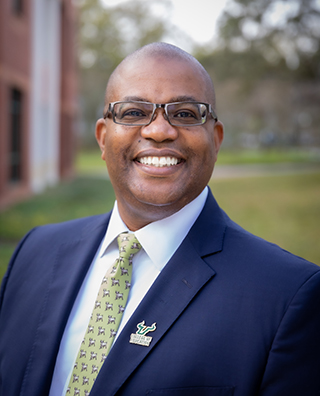
R. Anthony Rolle is a Professor at the University of South Florida’s College of Education, specializing in the Department of Leadership, Policy, and Lifelong Learning. He previously served as Dean of the USF College of Education from 2021 to 2024, and earlier as Dean at the Alan Shawn Feinstein College of Education & Professional Studies at the University of Rhode Island, as well as in leadership roles at the University of Houston and Texas A&M University. Dr. Rolle is a nationally recognized scholar in K-12 education finance and economic policy , known for developing models measuring school system effectiveness and efficiency . His work spans special needs education funding , educational productivity , and policy reform , with a focus on international collaboration and community partnerships. Scientific Awards & Affiliations: President, National Education Finance Academy Distinguished Research Fellow, Shanghai Academy of Education Sciences Research Fellow, National Education Policy Center (Education and Public Interest Center & Education Policy Research Unit) Editorial/Advisory Board Member, multiple national education associations
Unn Røyneland is a Professor of Scandinavian Linguistics and Multilingualism at the University of Oslo 's Faculty of Humanities . She is affiliated with the Center for Multilingualism in Society Across the Lifespan (MultiLing) and has been a key figure in Norwegian language policy and standardization efforts, including the Nynorsk 2011 orthographic revision . Current Research Focus: Multilingual and multilectal practices on social media Dialect acquisition among migrants Dialect levelling and language attitudes Language and embodiment Multiethnolectal speech styles Language policy and planning Ongoing Projects: Multilectal Literacy in Education (2020-2025) (RCN-funded, Co-PI) Multilectal Practices on Social Media (2020) (with Øystein A. Vangsnes) Urban Talk and Text (MultiLing Core-group project, 2021) AquaAurora (2021, UiT The Arctic University of Norway) Her scholarly work spans 15+ years of research output, with recent publications analyzing: Language activism and social justice (2024) Multilingualism across the lifespan (2022) Migration-induced dialect acquisition (2020) Youth multilingual practices in digital spaces (2018) Nynorsk standardization processes (2016) Multiethnolectal speech patterns (2008-2010) As Co-Chief Editor of the LME Linguistic Minorities in Europe Online series at De Gruyter, she continues shaping academic discourse in multilingualism studies.
Mark Burris is the Herbert D. Kelleher Professor in the Department of Civil & Environmental Engineering at Texas A&M University's College of Engineering, where he also serves as Division Head of Transportation & Materials Engineering. He is additionally a Research Engineer with the Texas A&M Transportation Institute, demonstrating his dual commitment to academic research and practical transportation solutions. With a career spanning over two decades since joining Texas A&M in 2001, Burris has established himself as a leading expert in transportation economics and traveler behavior. Burris's research focuses on the intersection of transportation economics, behavioral psychology, and infrastructure management. His work primarily investigates traveler responses to pricing mechanisms, particularly value pricing and high-occupancy toll (HOT) lanes. He has pioneered research combining traditional transportation engineering with behavioral economics to understand seemingly irrational traveler choices, such as paying to use express lanes that are sometimes slower than toll-free alternatives. His research has significantly advanced the understanding of travel time value, reliability valuation, and how psychological factors influence transportation decisions. Analysis of Burris's recent publications reveals a strong trend toward integrating behavioral economics with transportation engineering, with increasing attention to equity considerations in road pricing, the impacts of emerging technologies like autonomous and connected vehicles, and innovative methods for measuring traveler responses. His work consistently addresses practical transportation challenges while advancing theoretical understanding of travel behavior. Burris has served in prominent leadership roles, including a six-year term as chair of TRB's transportation economics committee. He has advised numerous federal agencies, serving on NCHRP panels and participating in FHWA expert forums on road pricing. His expertise is widely recognized in both academic and professional transportation circles. As an educator, Burris has advised over 60 graduate students and numerous undergraduates, teaching core courses including CVEN 307 (Introduction to Transportation Engineering), CVEN 454 (Urban Planning for Engineers), and CVEN 632 (Transportation Engineering: Economics). His research portfolio includes substantial funding from FHWA, NCHRP, and various state transportation agencies, with recent projects focusing on behavioral economics applications to managed lanes, vehicle miles traveled fee equity, and the impact of emerging mobility technologies.
Tatsuhiro Ueno serves as Professor at Waseda University's Faculty of Law and School of Law, specializing in Intellectual Property Law, Copyright Law, and Information Law. He currently holds leadership positions as Director of the Institute of Comparative Law (since 2024) and President of SARLIB (Society for Administration of Remuneration for Public Transmission by Libraries or Similar Facilities). With extensive international experience including visiting scholar positions at Ludwig Maximilian University of Munich and the Max Planck Institute for Intellectual Property and Competition Law, Professor Ueno has established himself as a leading authority in copyright law reform and international intellectual property matters. Professor Ueno earned his Master of Law from Kyoto University following undergraduate and graduate studies there. His academic career includes teaching positions at Rikkyo University College of Law and Politics and Seijo University Faculty of Law before joining Waseda University in 2013, where he now contributes to shaping Japan's legal education landscape. His research focuses on the critical intersection of intellectual property law with emerging technologies, particularly artificial intelligence systems and digital platforms. Professor Ueno has pioneered work on text and data mining exceptions, copyright limitations in digital environments, and creator-oriented copyright frameworks. His scholarship bridges theoretical analysis with practical policy development, influencing both domestic legislation and international copyright discourse. His recent publications demonstrate a concentrated focus on AI and copyright law, with numerous articles examining the legal challenges posed by generative AI systems, text and data mining exceptions, and the evolving landscape of copyright protection in the digital era. Professor Ueno's work consistently addresses the balance between protecting creators' rights and ensuring public access to knowledge. KDDI Foundation Book Publishing Grant (January 2025) for "Creator-Oriented Copyright System" Professor Ueno actively participates in numerous government committees shaping Japan's copyright law, including serving as Chairman of the Law and Computers Society and as a longstanding member of the Copyright Subcommittee of the Council for Cultural Affairs. His research is supported by multiple grants from the Japan Society for the Promotion of Science, including ongoing projects examining human portraits and voices in the AI age (2025-2029) and AI and intellectual property rights systems (2024-2029). He regularly presents at international forums including WIPO Summer Schools, ATRIP conferences, and copyright forums worldwide, establishing his reputation as a key thought leader in global copyright policy development.
Satoshi Miyazaki is a Professor at Waseda University's Graduate School of Japanese Applied Linguistics and affiliated with the Faculty of International Research and Education . With a Ph.D. from Monash University, his work bridges Japanese language education, second language acquisition, and cross-cultural communication. Education Background: Doctor of Philosophy (Japanese Applied Linguistics) - Monash University (1997) Graduate School of Japanese Applied Linguistics - Waseda University (1982) Research Interests focus on Japanese language pedagogy, natural acquisition mechanisms, and interactional strategies for non-native learners. His innovative use of Eye Mark Recorders (EMR) and Event-Related Potentials (ERP) has advanced understanding of cognitive processes in language learning. Recent Articles (2011-2001) reveal trends in Japanese language education reform, cross-cultural learning challenges, and technology-enhanced teaching methods. Key themes include correctional language programs for foreign inmates, immersion environments, and brain processing studies using advanced neuro-linguistic techniques. Research Projects have received continuous funding from Japan Society for the Promotion of Science, including prison language education programs, foreign care worker competence frameworks, and EMR-based lecture comprehension analysis. His work extends to international collaborations with institutions in Australia, the U.S., and Europe.
Dyanna Jolly is a Senior Lecturer in the Department of Environmental Management at Lincoln University, Aotearoa New Zealand. She is of Whitebear First Nations (Cree, Saulteaux, Nakota, Dakota) heritage from Treaty 4 territory in Saskatchewan, Canada, and was adopted into the Kakakaway, Shepherd, Maxie family. Her work centers on Indigenous-led environmental decision-making processes grounded in Te Tiriti o Waitangi principles. Her educational background includes: PhD from University of Otago, Dunedin MNRM from University of Manitoba, Winnipeg BA (Hons) from University of Regina, Regina Jolly's research focuses on transformative engagement through Indigenous planning, environmental management, and impact assessment. She has over two decades of experience developing Iwi Management Plans and cultural impact assessments while collaborating with iwi, hapū, industry, and government. Her work bridges Western scientific approaches with Māori environmental knowledges (Mātauranga Taiao) and global Indigenous studies, emphasizing epistemic justice in environmental health risk assessment and soil science applications. Her publications reveal strong thematic trends in Indigenous authority within impact assessment frameworks, cultural impact assessment effectiveness in Aotearoa New Zealand, and knowledge-weaving methodologies connecting soil science with Indigenous land management practices. Recent works highlight decolonial approaches to environmental decision-making and the integration of Māori perspectives in horticultural land use studies. Key recognitions include: University of Otago Humanities Divisional List of Exceptional Doctoral Theses (2020) New Zealand Geographical Society Best Doctoral Thesis in Geography Award (2022) Jolly actively supervises Master's and PhD students while leading significant research initiatives including 'Te Rua o mahara - Stories stored in the depths' (2024) and 'Building the Autonomy of Indigenous Communities to Make their Data Work for Decision-Making' (2025). She serves as Programme Convenor for the Master of Planning Programme and maintains extensive professional engagement through the New Zealand Association for Impact Assessment Core Group, EIANZ Impact Assessment Special Interest Group, and as Chair of the Mana Whenua Advisory Group for Te Hapū o Ngāti Wheke and Lyttelton Port Company. Her collaborative work with the Tāwhaki Joint Venture demonstrates practical application of Indigenous planning theory in environmental management contexts, creating tangible pathways for community-led environmental governance.
Ellen E Meade is a Research Professor of Economics at Duke University's Trinity College of Arts & Sciences, joining in 2022 after 25 years at the Federal Reserve Board. Her academic career includes roles as Special Adviser to the Fed Board of Governors and Senior Adviser in the Division of Monetary Affairs. She holds a Ph.D. from Princeton University (1988) and a B.A. from Duke University (1979). Her research focuses on monetary policy mechanisms, central bank transparency, decisionmaking processes, and communications strategies. Notable projects include analyzing FOMC discourse patterns using AI and examining gender representation in economics publications. Recent media engagements include commentary on Federal Reserve policies under Jay Powell and Janet Yellen. Teaching includes courses on inflation dynamics, modern monetary policy, and independent research supervision. Her work bridges academic research with practical central banking challenges, emphasizing institutional governance and policy effectiveness. No formal advisees are listed, but her courses engage advanced economics students in critical policy analysis.
McKenzie F. Johnson is an Assistant Professor at the University of Illinois Urbana-Champaign's Department of Natural Resources and Environmental Sciences (NRES), part of the College of Agricultural, Consumer and Environmental Sciences. She is also affiliated with the Institute for Sustainability, Energy, and Environment (ISEE). Her research focuses on global environmental politics, environmental justice, and human security, with a particular interest in how environmental governance initiatives impact marginalized communities. Education: Began with fisheries governance studies, earned a Master of Arts in Conservation Biology from Columbia University (2007), and a PhD in Environmental Policy from Duke University. Her Fulbright scholarship in West Africa (2010s) focused on extractive industries and social justice linkages. Research Interests: Explores intersections between environment, institutions, and justice through projects in South Asia, Africa, and South America. Current U.S.-focused work examines environmental impact assessments and pipeline development's effects on communities. The (in)Secure Landscapes Lab she leads investigates environmental governance's role in creating human security and justice. Key Themes in Publications: Energy infrastructure conflicts (e.g., Dakota Access Pipeline), environmental peacebuilding in post-conflict regions (Colombia, Afghanistan), carbon market equity, and invasive species governance. Her work critiques neoliberal environmental governance models and advocates for inclusive decision-making processes. Lab Activities: The IL Lab analyzes environmental governance's societal impacts, emphasizing participatory approaches. Current projects include studying soil carbon markets' equity implications and climate change adaptation strategies in conflict zones.
Mai Hassan is an Associate Professor of Political Science at the Massachusetts Institute of Technology (MIT), where she serves as faculty co-director of MIT-Africa. Her research focuses on comparative politics, with particular emphasis on bureaucracy, public administration, the state, contentious politics, state repression, and the politics of Africa and the Middle East and North Africa region. Her academic journey includes: PhD in Government from Harvard University Previous position as Associate Professor at the University of Michigan Professor Hassan's research examines topics that span across authoritarian regimes, bureaucracy and public administration, and contentious politics. Her first book, "Regime Threats and State Solutions: Bureaucratic Loyalty and Embeddedness in Kenya," was selected as a Best Book of 2020 by Foreign Affairs, won the American Political Science Association's 2021 Robert A Dahl Award, and received the African Studies Association 2021 Bethwell A. Ogot Award. Her work has been published in prestigious journals including the American Journal of Political Science, American Political Science Review, and the Journal of Politics. Professor Hassan has been particularly active in providing expert commentary on Sudanese politics, drawing on her personal connection to the country (her family immigrated from Sudan to the United States when she was young). She has written op-eds for Foreign Affairs, The New York Times, and The Washington Post, and has been featured in media outlets including The New Yorker, NPR, and Vox. Her scientific awards include: American Political Science Association's 2021 Robert A Dahl Award African Studies Association 2021 Bethwell A. Ogot Award Foreign Affairs' Best Book of 2020 designation for "Regime Threats and State Solutions" Professor Hassan is actively involved in mentoring graduate students and has recently become a mother to her daughter Nadeen. She serves as faculty co-director of MIT-Africa, where she helps facilitate opportunities for MIT students to engage with African institutions through internships and research projects. Her current work includes a new book on mobilization under autocracy, as well as ongoing research on bureaucracy and state-society relations in Africa.
Professor Tatiana Damjanovic is a Professor of Economics at the University of Durham's Business School since 2015. She holds a PhD from the Stockholm School of Economics (supervised by Lars Ljungqvist) and prior roles include Associate Professor at the University of Exeter and positions at the University of St. Andrews. Her research focuses on Macroeconomics, Monetary Policy, Banking, and Public Economics. Notable contributions include studies on fiscal policy design, financial intermediation, and gender equality's interplay with economic growth. Affiliations: Business School, Department of Economics, University of Durham. Education: BSc in Functional Analysis (Moscow State University), MSc from New Economic School, PhD (Stockholm School of Economics). Research Interests: Her work bridges macroeconomic policy analysis with institutional frameworks, emphasizing monetary policy's welfare impacts, banking sector dynamics, and fiscal frameworks. Recent studies explore heterogeneous firms, loan-to-collateral ratios, and gender equality's macroeconomic dimensions. Esteem Indicators: 2019: MMF Committee Member (Money Macro and Finance Research Group). 2019: FCT Evaluation Panel Member (Portuguese Science Funding Agency). 2017: Academy of Finland Review Panel Member (Economics). Publications Trends: Over 30 peer-reviewed articles since 2003, with a focus on monetary policy design, banking stability, and fiscal frameworks. Recent work highlights include 2024's analysis of heterogeneous firms in monetary policy, 2021's Ramsey policy contributions, and 2020 studies on financial bailouts and gender equality. Advising & Grants: While specific student names are not listed, her work implies significant academic mentorship. Grant details are not explicitly mentioned in the text. Labs/Teams: No dedicated lab affiliations noted, but collaborative work with institutions like the MMF Group and FCT suggests active network engagement.
Mark Bailey is a Professor of Late Medieval History at the University of East Anglia's School of History and Art History, working part-time. He previously taught at the University of Cambridge. His research focuses on late medieval England's economic and social history, particularly the socio-economic impact of the Black Death and the decline of serfdom. He is an award-winning scholar, recognized as Ford Lecturer in British History (2019) and a Visiting Fellow at All Souls College, Oxford (2018). Teaching includes organizing the module 'The Catastrophic Fourteenth Century' and contributing to the Medieval History Masters program. His research interests span urban governance, agricultural history, and demographic shifts. He actively participates in professional networks, serving as President of the Suffolk Institute of Archaeology and History and on the Economic History Society's board. Key publications include After the Black Death (2021) and The Decline of Serfdom in Late-Medieval England (2014). His recent work explores labor legislation post-Black Death and gender dynamics in servile migration. He holds leadership roles in academic organizations, shaping policy on manorial documents and medieval archives.
Prof. Alexander Geissler holds the position of Full Professor of Health Care Management at the School of Medicine (Med-HSG) within the University of St. Gallen. His research focuses on health systems research, health economics, and health policy, with particular emphasis on digital transformation in healthcare and patient-reported outcomes. He has contributed extensively to studies on healthcare quality improvement, public reporting systems, and the integration of artificial intelligence in medical diagnostics and screening programs. His work spans topics like optimizing hospital digital maturity (e.g., German DigitalRadar project), analyzing surgical outcomes (robotic vs. open prostatectomies), and evaluating patient empowerment through quality information. He has pioneered methodologies for interpreting patient-reported outcomes (e.g., EQ-5D-3L) and designing clinical dashboards to enhance care delivery. Recent research highlights include investigating AI applications in breast cancer screening and cost-effectiveness of remote patient monitoring post-joint replacement surgery. Geissler’s publications demonstrate a strong focus on healthcare policy implications, such as hospital capacity planning, payment systems for specialized care, and cross-country comparisons of healthcare transparency initiatives. His work frequently bridges academic rigor with practical policy recommendations, particularly in Switzerland and Germany. Notably, he has addressed low-value care reduction, price sensitivity in healthcare demand, and the socio-demographic factors influencing healthcare utilization. While no specific awards are listed, his prolific research output reflects sustained leadership in health systems analysis. His academic contributions are disseminated through the Alexandria Research Platform and international peer-reviewed journals.
Dr. Gëzim Krasniqi is a Lecturer in Nationalism and Political Sociology and Programme Co-Director of the MSc Nationalism in Global Perspective at the University of Edinburgh's School of Social and Political Science. His work focuses on nationalism, citizenship, and state-building in Southeast Europe, particularly Kosovo and the Balkans. He holds a PhD from the University of Edinburgh and has taught courses like Theorising Nationalism and Nationalism, Populism and Democracy . Education: PhD in Sociology, University of Edinburgh MA in Sociology, Central European University MA in Sociology, University of Sarajevo and University of Bologna BA in Sociology, University of Prishtina Research Interests: Dr. Krasniqi specializes in political sociology and nationalism, with emphasis on citizenship in contested states, ethnic conflicts, and post-Yugoslav state-building. His work examines how nationalism shapes intra-group power dynamics and citizenship policies in liminal polities like Kosovo and Northern Cyprus. He is an Associate Editor of Identities and Book Review Editor of Nations and Nationalism . Key Themes in Publications: His articles analyze EU-Kosovo relations, citizenship laws, and the geopolitical role of Great Powers in the Balkans. Recent work explores the EU's influence on state-building and the socio-political implications of passports for marginalized groups. Awards & Grants: No explicitly listed awards, but he has secured institutional support for research projects on Kosovo policy-making and EU integration. Labs/Teams: He co-leads the ASEN Edinburgh branch, advancing studies on ethnicity and nationalism. His supervision includes PhD projects on Romani activism, digital ID systems, and micro-level nationalism.