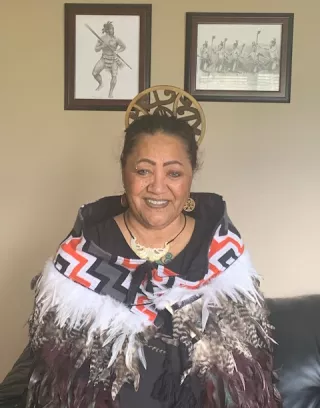
معرفی
Dyanna Jolly is a Senior Lecturer in the Department of Environmental Management at Lincoln University, Aotearoa New Zealand. She is of Whitebear First Nations (Cree, Saulteaux, Nakota, Dakota) heritage from Treaty 4 territory in Saskatchewan, Canada, and was adopted into the Kakakaway, Shepherd, Maxie family. Her work centers on Indigenous-led environmental decision-making processes grounded in Te Tiriti o Waitangi principles.
Her educational background includes:
- PhD from University of Otago, Dunedin
- MNRM from University of Manitoba, Winnipeg
- BA (Hons) from University of Regina, Regina
Jolly's research focuses on transformative engagement through Indigenous planning, environmental management, and impact assessment. She has over two decades of experience developing Iwi Management Plans and cultural impact assessments while collaborating with iwi, hapū, industry, and government. Her work bridges Western scientific approaches with Māori environmental knowledges (Mātauranga Taiao) and global Indigenous studies, emphasizing epistemic justice in environmental health risk assessment and soil science applications.
Her publications reveal strong thematic trends in Indigenous authority within impact assessment frameworks, cultural impact assessment effectiveness in Aotearoa New Zealand, and knowledge-weaving methodologies connecting soil science with Indigenous land management practices. Recent works highlight decolonial approaches to environmental decision-making and the integration of Māori perspectives in horticultural land use studies.
Key recognitions include:
- University of Otago Humanities Divisional List of Exceptional Doctoral Theses (2020)
- New Zealand Geographical Society Best Doctoral Thesis in Geography Award (2022)
Jolly actively supervises Master's and PhD students while leading significant research initiatives including 'Te Rua o mahara - Stories stored in the depths' (2024) and 'Building the Autonomy of Indigenous Communities to Make their Data Work for Decision-Making' (2025). She serves as Programme Convenor for the Master of Planning Programme and maintains extensive professional engagement through the New Zealand Association for Impact Assessment Core Group, EIANZ Impact Assessment Special Interest Group, and as Chair of the Mana Whenua Advisory Group for Te Hapū o Ngāti Wheke and Lyttelton Port Company.
Her collaborative work with the Tāwhaki Joint Venture demonstrates practical application of Indigenous planning theory in environmental management contexts, creating tangible pathways for community-led environmental governance.