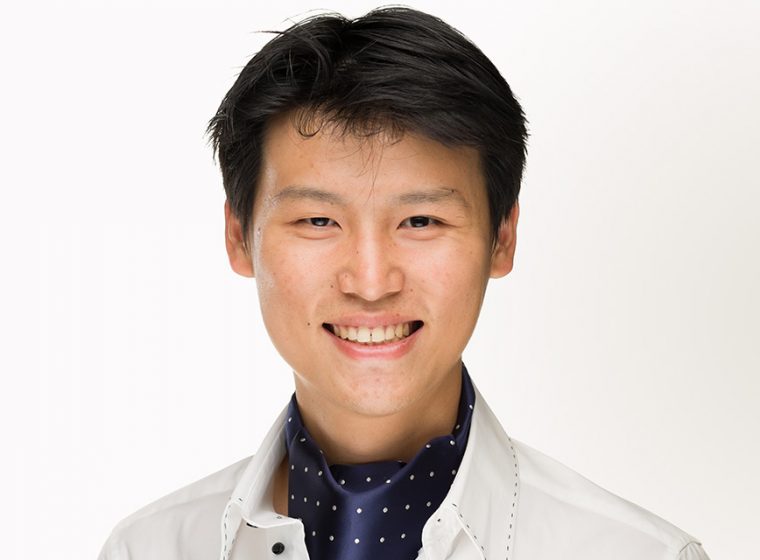
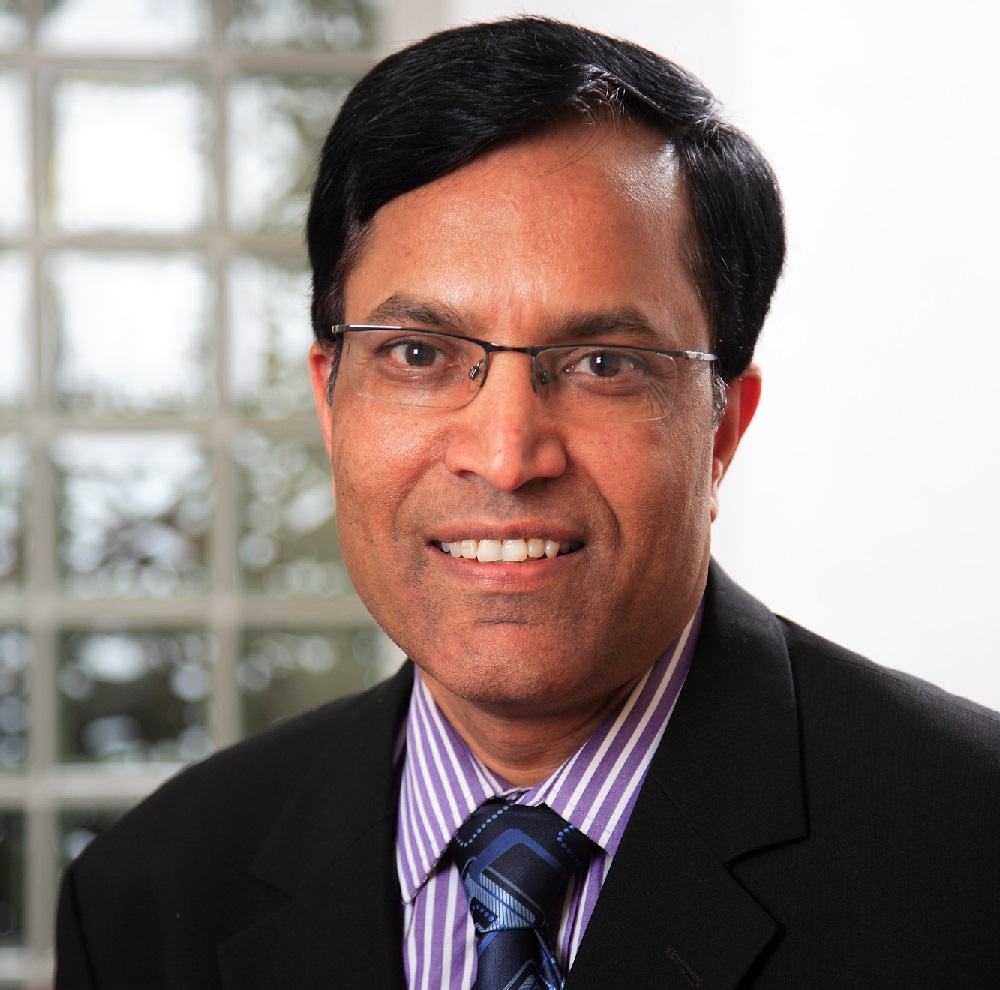
Alastair Fraser is a Senior Lecturer in the School of Economics at The University of Sydney. He specializes in environmental economics and climate finance, with a focus on electricity system decarbonization and investor climate mitigation strategies. He is affiliated with the Sydney Environment Institute and the Net Zero Institute. His research explores transition risks, portfolio emissions metrics, and household energy behavior under conservation policies. Fraser has advised one current research student investigating energy storage technologies in Australia. Research Interests: Environmental Economics, Energy Economics, Climate Finance, International Trade Affiliations: Sydney Environment Institute, Net Zero Institute His publications span environmental policy analysis, energy economics, and nanotechnology. Advising activities include supervision of projects on battery storage systems. Grants and funding details are not explicitly documented in provided texts. Labs/Teams: Active member of interdisciplinary climate research groups at The University of Sydney.
Associate Professor Chinthaka Damith Balasooriya is a nationally recognized expert in Medical Education at UNSW Sydney. He holds the academic rank of Associate Professor in the Department of Medical Education, Faculty of Medicine. His research focuses on Educational Design Research, addressing practical challenges in medical and higher education through grants such as a Category 1 award from the National Heart Foundation of Australia. His work includes developing tools like the Guideline Enhancement Tool (GET) and the Collaborative Learning Development Exercise (CLeD-EX), which enhance clinical and collaborative learning. Dr. Balasooriya’s expertise has earned awards including the Faculty of Medicine Teaching Excellence Award and an Australian Learning & Teaching Council Citation. His research interests span medical education pedagogy, curriculum design, teamwork, and the integration of technology in healthcare training. He has supervised doctoral projects leading to innovations in collaborative learning and clinical practice. His publications span 40+ journal articles, book chapters, and conference papers, addressing topics like AI in education, continuing medical education, and healthcare workforce development. He actively contributes to global health education through international collaborations and scoping reviews of medical education practices in Asia and the Eastern Mediterranean. Dr. Balasooriya’s work emphasizes practical solutions for educational challenges, bridging theory and application in medical training. His current projects explore future trends in health professional education and the ethical implications of AI in medical learning environments.
Dr. Kuan Yee Han is a Research Fellow at Tembusu College and Assistant Dean of Students in the Office of Student Affairs at the National University of Singapore (NUS). He holds a B.Eng (Hons) in Mechanical Engineering and a Ph.D. in Biomedical Engineering from NUS. His academic journey includes leadership roles in the NUS Students’ Union and work at Voyage Medical, Inc. in Silicon Valley, shaping his focus on medtech engineering. His research explores cardiovascular hemodynamics, medical device design, and renal disease solutions, with projects at the Singapore-Stanford Biodesign Program. Dr. Han’s teaching emphasizes negotiation, ageing, and experiential learning. He co-facilitates negotiation workshops and is a certified LEGO® SERIOUS PLAY® facilitator, promoting innovative educational methods. His pedagogical approach integrates authentic learning and hands-on activities to enhance student engagement. **Awards:** AY18/19 Residential Colleges Teaching Excellence Award AY17/18 Residential Colleges Teaching Commendation Certificate **Advising & Grants:** Dr. Han mentors student coaches and oversees out-of-classroom learning initiatives. His current role in the Office of Student Affairs involves strategic student welfare and academic support programs. **Labs/Teams:** He contributed to the Singapore-Stanford Biodesign Program, focusing on medical device development for end-stage renal disease patients.
Philippe Cinquin is a Professor of Medical Informatics and Director of TIMC-IMAG (UMR5525), a CNRS-Université Joseph Fourier research unit. He leads the CAMI (Computer Assisted Medical Interventions) Labex and co-heads INSERM's CIC-IT 803 clinical investigation center. With a PhD in Applied Mathematics and Medical Doctor qualification, he pioneered surgical robotics and computer-aided interventions since 1984, benefiting over 100,000 patients through startup innovations. His recent work focuses on symbiotic implantable devices, energy scavenging for medical implants, and hydrogen therapy. He received the 2013 CNRS Innovation Award and 2014 Ambroise Paré Surgical Award. Research interests span biomimetic devices, medical robotics, and innovative therapies including transdermal hydrogen delivery. He has developed implantable systems like intestinal reactors and biosensors, with applications in diabetes treatment and pandemic response. His work integrates mathematics, signal processing, and nanotechnology to advance minimally invasive surgery and autonomous medical implants. Key contributions include virtual fluoroscopy systems for navigation, enzymatic biofuel cells, and reusable PPE sterilization methods during the pandemic. His interdisciplinary teams collaborate across engineering, medicine, and computer science to address clinical challenges through technological innovation. Education: PhD in Applied Mathematics; Medical Doctorate Grants & Startups: Founded multiple companies commercializing surgical navigation systems and diagnostic devices Labs: TIMC-IMAG, CAMI Labex, CIC-IT 803 clinical innovation center
Hoang Nguyen is a Lecturer at the Wicking Dementia Research Education Centre (University of Tasmania), specializing in dementia care, healthcare communication, and rural health systems. His research focuses on improving dementia literacy, nature-based interventions for cognitive health, and educational programs for healthcare professionals. He has supervised three doctoral students investigating nature-based therapies and health literacy in dementia care. Key research interests include cross-cultural education, public health policy, and the intersection of technology with aging populations. His work spans over 70 peer-reviewed articles and funded projects such as the 'Dementia Education Program' (2022–2025) and evaluations of rural health initiatives. Collaborations include partnerships with Tasmanian Health Services and international stakeholders in stroke care quality (e.g., Vietnam stroke registry studies). Hoang has contributed to community engagement through projects like the 'Healthy Communities Initiative' and media publications on rural healthcare access. His teaching and supervision emphasize practical applications of research in real-world health challenges.
Professor Helen Lloyd is a Professor of Applied Social and Cultural Psychology at the School of Psychology (Faculty of Health), University of Plymouth. She serves as Associate Head of School for Internationalisation, overseeing global initiatives. Her research focuses on using mixed methods to address health and social inequalities, particularly for marginalized groups, incorporating psychology, anthropology, and medical sociology. Notable projects include NIHR-funded work on refugee mental health interventions and Gamble Aware-funded studies on online gaming harms. Her academic roles include teaching Advanced Research Methods, Ethical and Professional Practice, and modules on race, racism, and clinical care. She supervises 4 PhD students, 18 MSc CAPS students, and contributes to education across undergraduate and postgraduate levels. Dr. Lloyd leads the Person Centred Coordinated Care (P3C) collaborative, improving care experiences for those with long-term conditions through applied health services research. Research Interests: Structural determinants of health inequality, digital harm, racial identity in healthcare, and participatory action research. Key Projects: P3CEQ development, loot box addiction studies, and community-based interventions. Impact: Contributed to national health policy reforms and patient-reported experience measures. Her work aligns with UN SDGs focused on health equity and well-being. Recent publications explore climate psychology, young carer representation, and collaborative care models.
Dr. Tammo Steenhuis is a Professor in Biological and Environmental Engineering at Cornell University with adjunct appointments at the University of Bahir Dar, Ethiopia. His research focuses on landscape hydrological processes across multiple continents, emphasizing sustainable agriculture and environmental conservation. Education includes: Doctorate from University of Wisconsin (1977) Master of Science from University of Wisconsin (1975) Ir from State Agricultural University of Netherlands (1972) Bachelor of Science from State Agricultural University (1969) Research explores hydrological processes in diverse terrains (Northeastern US, Ethiopian Highlands, China) with focus areas including: sustainable farming practices, self-organizing watershed dynamics, pesticide transport mechanisms, and gully erosion prevention. Recent work integrates climate impacts on water resources and innovative conservation techniques. Publications since 2023 predominantly address: climate-water-agriculture nexus, watershed restoration, and water quality innovations. Trends show increasing focus on satellite hydrology, nanoparticle transport, and nature-based solutions for ecosystem management. Awards: American Geophysical Union Fellow (2009) AGU International Award (2011) CSREES/USDA Partnership Award (2008) Advises PhD candidates at Bahir Dar University and leads the Soil and Water Lab at Cornell. Teaches courses including Water Measurement Methods (BEE 5270) and Introduction to Groundwater (BEE 6710), emphasizing real-world environmental problem-solving.
Federico Pigni serves as Dean of Faculty, Pedagogy, and Research at Grenoble Ecole de Management (GEM), where he holds a full Professorship in Information Systems within the Management of Technology and Strategy department. His academic journey includes a cum laude Business Administration degree and a Ph.D. in Management Information Systems and Supply Chain Management. He has held teaching roles at institutions including Carlo Cattaneo University, the Catholic University of Milan, and Università Commerciale Luigi Bocconi in Milan. Beyond academia, Pigni co-founded Lab4Consulting (2000–2006), a web and software consultancy focused on IT innovation in banking, and completed a post-doctorate at France Télécom R&D in Sophia Antipolis, developing inter-organizational ICT adoption methodologies. His research focuses on strategic applications of information systems, particularly in interorganizational contexts and digital technologies for customer service innovation. Notable projects include the EU-funded EpilepsyPOWER initiative promoting workplace inclusion for epilepsy patients, and the TRIPBAM project leveraging digital data streams for pandemic resilience. His work spans digital transformation frameworks, cybersecurity investments, and big data analytics' impact on competitive advantage. He has authored over 100 publications, including seminal works on IT ambiguity, DevOps frameworks, and supply chain digitalization. Pigni has led collaborative initiatives like the ECOLEAD network supporting SMEs' interorganizational systems and contributed to projects such as the SOLMED solar energy desalination initiative. His expertise bridges academic research with industry practice, emphasizing real-world applications of emerging technologies to drive organizational value creation and societal impact.
Roya Haratian serves as Principal Academic (equivalent to Associate Professor) in Electronic Science and Engineering at Bournemouth University's Department of Design and Engineering within the Faculty of Science and Technology. As Deputy Head of Department and Athena SWAN lead, she spearheaded the department's successful Bronze Award in 2021 for gender equality initiatives. Her leadership extends to curriculum development in Mechatronics and Robotics programs across undergraduate and postgraduate levels. Her academic credentials include a BSc (First Class Honours) and MSc (Distinction) in Electrical and Electronic Engineering, followed by a PhD in Electronic Engineering from Queen Mary University of London (2014). Prior to her current role, she worked as an Associate Lecturer at QMUL and Research Associate at Bristol Robotics Lab, focusing on on-body sensing systems and bio-signal processing for human-machine collaboration. Haratian's research centers on electronic engineering applications in human-robot interaction, with particular emphasis on on-body sensing technologies, signal processing, and machine learning. Her work bridges theoretical innovation with industrial implementation, developing assistive technologies for healthcare and safety-critical systems. Recent projects address diabetic foot ulcer prevention, emotion recognition in VR, and human-machine collaboration safety protocols, demonstrating strong translational impact across medical and industrial domains. Analysis of her 15 most recent publications reveals a strategic progression from foundational signal processing techniques toward integrated human-machine systems. Her work increasingly incorporates game theory for resource allocation, AI-driven predictive modeling, and inclusive design principles, with growing emphasis on real-world implementation challenges and ethical considerations in assistive technologies. Key recognitions include: Athena SWAN Bronze Award (Advance HE, 2021) for departmental gender equality leadership Senior Fellowship of Higher Education Academy (2021) BU Doctoral College Outstanding Contribution Award (2025) Design Review Award from Institute of Mechanical Engineering (2023) Student Experience 'You are Brilliant' Award (2017) As Recognised Research Supervisor (UK Council for Graduate Education), she currently co-supervises five PhD students on topics including AI surveillance, biomechatronics, and digital twin simulation. Her £1.2M+ research portfolio features strategic partnerships with Zimmer-Biomet, Computational Mechanics Wessex Institute, and Daido Industrial Bearing, with recent grants including HEIF-funded AI emotion recognition systems (2025) and QR-funded human-machine safety protocols (2024). She actively mentors through AdvanceHE's Aurora program and leads BU's Inclusivity Curriculum Evaluation project. Haratian directs the department's Athena SWAN initiative and collaborates with the Royal Institute on STEM outreach, designing bioelectronic masterclasses for GCSE students. Her public engagement includes 'Café Scientifique' discussions on machine emotion recognition and keynote addresses at Brockenhurst STEM Awards, focusing on translating on-body sensing research into real-world health applications.
Tamilselvan Gajapriya is an Assistant Professor in the Department of Aviation Science at Saint Louis University, part of the School of Science and Engineering. He holds a Ph.D. in Aviation Science from Florida Institute of Technology, and master’s and bachelor’s degrees in Avionics and Electronics Engineering from Anna University, India. His research focuses on aviation safety, pilot selection/training, human factors, and physiological monitoring in flight environments. He directs the Aviation Safety, Aviation Physiology, and Ergonomics (ASAPE) Lab, which uses advanced equipment like EEG sensors and eye-tracking devices to study pilot performance under stress. Key research areas include cognitive workload assessment during emergencies, UAV privacy concerns, and consumer attitudes toward autonomous aircraft. He has published extensively in journals like Safety Science and Journal of Unmanned Vehicle Systems , with peer-reviewed work on topics ranging from pilot retention strategies to electronic chart usability. Professional affiliations include the Human Factors & Ergonomics Society and Women in Aviation International. His lab investigates physiological markers (e.g., galvanic skin response, EEG) to evaluate pilot decision-making and stress levels during simulated emergencies. Current projects explore factors influencing pilot career retention in commercial aviation and public acceptance of unmanned systems. Dr. Gajapriya collaborates with industry partners to translate research into practical aviation safety solutions.
Anil Namdeo is a Professor of Air Quality Management at Northumbria University, holding dual chartered statuses as a Chartered Environmentalist and Chartered Scientist. He is a Fellow of the Royal Meteorological Society and the Institute of Air Quality Management. His research bridges engineering, social sciences, and public health, focusing on air quality monitoring, modeling, and management, with an emphasis on health impacts and environmental justice. Professional roles include membership in the Civil Aviation Authority’s Environmental Sustainability Panel and Defra’s Air Quality Expert Group (AQEG). He contributes to the US Transportation Research Board’s Committee on Transportation and Air Quality (ADC20). His work spans global collaborations in Africa, Asia, Europe, and South America. Research interests include climate change adaptation, net-zero strategies, and the interplay of land use, transportation, and social deprivation with air quality. Recent studies examine EV charging infrastructure, indoor air quality interventions, and green-blue-grey infrastructure’s role in pollution abatement. Key grants: Insights North East (Co-Investigator, £989,422) Advising: Supervision of Abeer Ayidh G Alomiri’s PhD on afforestation in Saudi Arabia Awards: NICE Public Health Advisory Committee contributions to guideline NG70 His interdisciplinary approach addresses policy, technology, and societal dimensions of environmental sustainability.
Dr. Pedro Linares Llamas is a Professor at the ICAI School of Engineering, Universidad Pontificia Comillas, and Director of the BP Chair on Energy and Sustainability. He leads the Economics for Energy research group at the Institute for Technology Research (IIT) and serves as Affiliate Researcher at MIT CEEPR. His roles include Director of the International Doctoral School and co-founder of Economics for Energy. Linares specializes in energy economics, environmental policy, and decision-making frameworks, focusing on sustainability integration across economic, environmental, and social dimensions. His research addresses energy transition challenges, decarbonization strategies, renewable integration, and policy design. Key areas include energy poverty analysis, multi-criteria decision analysis, and strategic energy planning under uncertainty. Linares has advised numerous public and private entities in Spain, Europe, and Latin America, contributing to over 100 peer-reviewed publications and 100+ projects. He has supervised 12 PhD students and actively participates in international conferences. His work bridges academia and policy, emphasizing robust methodologies for sustainable energy systems. Current projects include assessing energy storage needs, hydrogen use cases, and EU energy market reforms. Linares' contributions span modeling tools like openMASTER and policy frameworks for resilient energy transitions.
Tadashi Hirai is an Assistant Professor at the IQS School of Management (IQS), Department of Economics and Business Finance. His work focuses on the intersection of sustainability, economics, and ethics, particularly in areas such as human development, sustainable development goals (SDGs), and happiness studies. He holds an ORCID identifier (0000-0001-9468-0980) and contributes to interdisciplinary research projects like the SEE: Sustainability, Economics, and Ethics initiative funded by AGAUR (2022–2025). His research interests include development indicators, capability approach methodologies, and the application of poset analysis to sustainability metrics. Key projects involve analyzing historical trajectories of economic growth versus sustainable development and evaluating the ethical dimensions of global development policies. Recent work emphasizes measuring human well-being through composite indicators that incorporate environmental and social dimensions. He has authored/co-authored over 14 peer-reviewed publications, including influential papers on SDG measurement frameworks and happiness in emerging economies. His articles frequently integrate economic theory with empirical analysis, addressing issues such as adaptive preferences, deprivation, and trust in governance systems. Current research focuses on refining development metrics to better align with ethical principles and real-world policy needs, particularly in contexts like Ukraine and BRICS nations. His work bridges theoretical foundations from Amartya Sen and Martha Nussbaum with practical applications in sustainable development policy.
Dr. Philip Shaw is an Associate Professor of Economics at Fordham University's Department of Economics. His research focuses on computational macroeconomics, nonparametric econometrics, and the economic impacts of corruption. He holds a Ph.D. from the University of Connecticut and specializes in macroeconomic theory, economic growth, and computational methods. Shaw teaches advanced courses such as Macroeconomic Theory II, Monetary Policy, and Nonparametric Econometrics. His work explores topics like educational corruption's effects on economic growth, nonparametric instrumental variable estimation, and stochastic general equilibrium models. He has published extensively in journals like the Journal of Econometric Methods, Contemporary Economic Policy, and Economics Letters. His teaching emphasizes computational tools like R and MATLAB for econometric analysis. Shaw's research bridges theoretical frameworks with practical computational solutions in macroeconomics and finance. Education: Ph.D., University of Connecticut Key Research Themes: Nonparametric econometric methods Computational solutions to DSGE models Educational corruption and its macroeconomic implications Instrumental variable estimation techniques Teaching Responsibilities: Graduate courses: Computational Economics, Econometrics I & II, Monetary Policy Undergraduate courses: Introductory Econometrics Recent Articles: Shaw's recent work includes analyzing corruption's role in educational choices (2023), nonparametric approaches to stochastic growth models (2014), and the determinants of educational corruption in Ukraine (2015). His methods often integrate advanced computational techniques to address econometric challenges.
Travis Southin is a Research Fellow at the School of Public Policy and Administration, Carleton University. He holds a PhD in Political Science from the University of Toronto (2022). His current work focuses on net-zero industrial policy, examining political barriers to innovation policy shifts in Canada, the UK, and Australia, particularly transitioning from neutral to targeted instruments. He collaborates with James Meadowcroft and the Transition Accelerator on climate policy research. Education: Ph.D. Canadian Government & Politics (University of Toronto, 2022), M.G.A. (University of Toronto), B.A. Honours (Carleton University) Research interests center on innovation policy dynamics, climate policy design, and the role of the state in facilitating economic transitions. His dissertation analyzed 70+ interviews with Canadian tech CEOs and civil servants to explore why Canada struggles to adopt targeted innovation policies. Current projects emphasize global comparisons of net-zero policy frameworks and industrial decarbonization strategies. Publications span innovation clusters (e.g., Toronto’s ICT sector), SME innovation in IoT technologies, and EU gender quota governance. His work bridges political science and policy analysis to address real-world challenges in public sector decision-making.