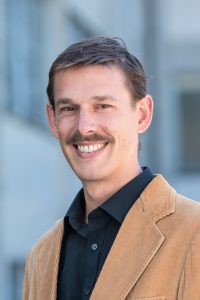
Michael A Osborne is Professor of Machine Learning at the University of Oxford and leads the Bayesian Exploration Lab . He serves as Director of the EPSRC Centre for Doctoral Training in Autonomous Intelligent Machines and Systems and co-directs the Oxford Martin AI Governance Initiative. His research focuses on Bayesian optimization, Gaussian processes, and probabilistic numerics with applications in quantum devices, battery modeling, and AI governance. Key Positions: Professor of Machine Learning, University of Oxford Official Fellow, Exeter College Co-founder of Mind Foundry Lead Researcher, Oxford Martin Programme on Technology and Employment Research Themes: Probabilistic modeling for quantum systems Uncertainty quantification in energy storage AI safety and societal impact analysis Automated experimental design Quantum device calibration Probabilistic numerical methods Technical Contributions: Bridging reality gap in quantum devices Efficient Bayesian quadrature techniques Personalized neurostimulation algorithms Automated measurement protocols Quantum-classical hybrid ML
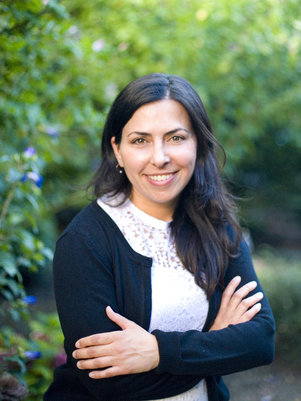
Joselyn Muhleisen serves as a Lecturer in the Department of Public Affairs at the Marxe School of Public and International Affairs, Baruch College, City University of New York. She teaches core courses including Citizenship and Public Affairs, Comprehensive Public Policy & Administration, and capstone seminars in Public and International Affairs, with active teaching assignments extending through Spring 2025. Her academic foundation includes: PhD in Political Science, The Graduate Center, CUNY (2016) MPhil in Political Science, The Graduate Center, CUNY MA in European Union International Relations and Diplomacy, College of Europe Brugge, Belgium BS in Public Affairs and English, Baruch College Dr. Muhleisen's research centers on international regimes, regulatory politics, and global governance , with specialized expertise in trade/financial regulation within transatlantic frameworks. Her scholarship critically examines EU-US regulatory convergence, Brexit's implications for global finance, and the institutional dynamics of international organizations. She has established herself as a leading voice in comparative policy analysis through foundational texts and systematic field reviews. Her 2016-2020 publications reveal a cohesive scholarly trajectory focused on advancing methodological rigor in comparative policy studies. The works collectively analyze historical evolution, theoretical frameworks, and cross-national applications of policy analysis, with particular emphasis on European and transatlantic contexts. This body of work demonstrates consistent engagement with both classical scholarship and contemporary developments in governance studies. Her honors include: Fulbright Study Grant to European Union (2007-2008) Getting to Know Europe Grant (European Commission) Doctoral Student Research Grant (2011) 23rd Street Scholarship for Excellence in Public Affairs (2007) Alfred Zweifach Award (2007) Colin Powell Fellowship (2007) Grant for Internship Travel to Romania (2005) USA Today Best and Brightest Nomination (2005) As Faculty Advisor since 2015, she mentors honors students and serves on multiple committees including the Excelsior Service Fellowship Committee and Undergraduate Honors Program Committee. Her grant portfolio features significant research funding including Fulbright and European Commission support for transatlantic regulatory studies. She actively contributes to academic governance through the Journal of Comparative Policy Analysis Award Committee and International Comparative Policy Analysis Forum leadership. She maintains active collaboration with the International Comparative Policy Analysis Forum as an officer and regularly presents at major conferences including the European Union Studies Association. Her research network includes prominent scholars like Iris Geva-May and Diane Hoffman, with ongoing projects examining post-Brexit financial governance structures.
Celestine Mendler-Dünner is a Principal Investigator at the ELLIS Institute in Tübingen, co-affiliated with the Max Planck Institute for Intelligent Systems and the Tübingen AI Center. She leads the Algorithms and Society research group, focusing on machine learning in social contexts and the role of prediction in digital economies. Her work bridges theoretical machine learning with practical societal impact, developing tools for safe, reliable, and equitable AI ecosystems. Her educational background includes a PhD from ETH Zurich in collaboration with IBM Research, followed by an SNSF postdoctoral fellowship at UC Berkeley hosted by Moritz Hardt. She was previously a group leader at the Max Planck Institute for Intelligent Systems before joining the ELLIS Institute. Mendler-Dünner's research spans several interconnected themes including performative prediction (where predictions change the behavior they aim to predict), algorithmic collective action (how participants can steer AI systems toward common goals), and the role of LLMs in social science research. Her work combines theoretical foundations with practical implementations, addressing challenges in interactive machine learning, optimization in dynamic environments, and context-specific evaluation of AI systems. She particularly examines how algorithmic predictions mediate services and platforms at societal scale, exploring concepts of economic power in digital markets. Her publication record shows a clear evolution from system-aware machine learning algorithms (including foundational work on IBM Snap ML) toward increasingly sociotechnical questions at the intersection of machine learning, economics, and policy. Recent work focuses on measuring performative power in digital economies, evaluating LLMs as risk scores, and developing frameworks for algorithmic collective action in recommender systems and labor markets. Among her notable recognitions are the ETH Medal for her dissertation, the IBM Research Division Award, the Fritz Kutter Award, and the IBM Eminence and Excellence Award. She is an ELLIS Scholar, a fellow of the Elisabeth-Schiemann-Kolleg, and affiliated with several prestigious research programs including the International Max Planck Research School for Intelligent Systems and the Max Planck ETH Center for Learning Systems. ETH Medal (dissertation award) IBM Research Division Award Fritz Kutter Award IBM Eminence and Excellence Award SNSF Early Postdoc Mobility Fellowship Mendler-Dünner actively mentors the next generation of researchers, advising PhD student Patrik Wolf and supervising research interns including Joachim Baumann, Haiqing Zhu, and Anna Badalyan, as well as Master's student Dorothee Sigg. She serves as core faculty for the International Max Planck Research School and associated faculty for the Max Planck ETH Center for Learning Systems. Her group has secured significant research funding through fellowships and institutional support, enabling work on projects like Powermeter (measuring search engine influence) and Snap ML (resource-efficient machine learning library with over 1 million PyPI downloads). She leads the Algorithms and Society research group, which examines machine learning as part of broader sociotechnical ecosystems. The group explores human-population interactions with algorithmic systems and incorporates these insights into learning system fundamentals. Current projects include investigating economic incentives in digital platforms, developing tools for systematic LLM evaluation in social science contexts, and creating frameworks for collective action in algorithmic systems. Mendler-Dünner also co-organizes the Algorithmic Collective Action workshop at NeurIPS 2025, demonstrating her leadership in emerging research directions at the AI-society interface.
Prof. Dr. Olena Palko is a historian specializing in Eastern Europe, the Soviet Union, and Ukraine. She holds the SNSF Professorship at the University of Basel's Department of History, focusing on East European History. Her research emphasizes Soviet minority policies, cultural politics, and national identity formation in interwar Ukraine. She is a leading scholar with notable works including Making Ukraine Soviet (2021), awarded the 2023 Alexander Nove Prize. Her current SNF-funded project, Red Tower of Babel , examines Soviet minority experiments in Ukraine. Education: PhD from University of East Anglia (2017); Kandydat nauk from National Academy of Sciences of Ukraine (2013). Research Interests: Soviet nationality policy, minority history, Ukrainian twentieth-century history, transnational border dynamics. Her work bridges archival analysis with transnational perspectives, addressing contested borderlands between Poland and the USSR. Key publications include co-edited volumes like Making Ukraine (2022) and Ukraine's Many Faces (2023). She actively contributes to academic governance roles, including co-convening the BASEES Study Group for Minority History and serving on the Scientific Advisory Council of the Council of Europe's history observatory.
Patrick Overeem is an Associate Professor at the Faculty of Social Sciences and Humanities (Vrije Universiteit Amsterdam), specializing in Political Science and Public Administration. He holds a PhD from Leiden University (2010) and advanced degrees in Public Administration and Political Science from the same institution. His research focuses on democratic theory, value pluralism, statesmanship, and EU governance. He is affiliated with the Multi-layered Governance (MLG) research group and serves on editorial boards, including the American Review of Public Administration . Overeem's work emphasizes ethical leadership, compromise in politics, and the interplay between democracy and pluralism. Key contributions include his 2012 book on the politics-administration dichotomy and his neo-Aristotelian analyses of political virtue. He has led projects like the EU-funded RECONNECT initiative (2018–2022), exploring democratic reconciliation in Europe. He advises Dutch parliamentary integrity committees and contributes to public debates on ethics and governance through media engagements. His research bridges classical political theory with contemporary challenges, addressing topics like postliberalism, moral dilemmas in governance, and constitutional frameworks. Overeem teaches courses on political theory, democratic systems, and the history of political thought, fostering critical engagement with ethical and institutional dimensions of power.
Dr. Alex Bigazzi is an Associate Professor and Associate Head (Undergraduate Program) in the Department of Civil Engineering at the University of British Columbia (UBC), with a joint appointment in the School of Community and Regional Planning. He leads the REACT Lab, focusing on active transportation, micromobility, and sustainable infrastructure design. His research emphasizes the intersection of physics, physiology, and behavior in active travel, particularly for pedestrians and cyclists, and addresses emissions reduction and equitable urban mobility. Bigazzi holds a B.M. in Jazz Saxophone from the University of Miami and a Ph.D. in Civil Engineering from Portland State University. His career includes academic and practical contributions, such as founding the REACT Lab and leading projects on e-bike incentives, air pollution exposure, and infrastructure design. His work has earned awards like the 2024 Wall Legacy Award for inclusive transport design and the 2023 Climate Action Award. He teaches courses on pedestrian/bicycle facility design and capstone projects, mentoring students through UBC’s Civil Engineering programs.
Dr. Dong Nguyen is an Associate Professor in Leadership Management and Change in Education at Durham University's School of Education. He serves as Director of the Master’s Programme in Educational Leadership and Change, which focuses on leadership, management, and research in education. Additionally, he is Editor-in-Chief of the International Journal of Educational Management (IJEM), a core journal in educational leadership. His career includes roles as a lecturer (Assistant Professor) and Programme Leader at the University of Glasgow, a Research Associate at Nanyang Technological University, and a teacher in Vietnam. Nguyen’s research emphasizes building leadership capacity in the Global South, comparative education studies, and innovation in education. He has led projects such as an impact evaluation of a Rwanda school leadership development program (2023–2026) funded by VVOB and a review of school leadership’s role in teacher retention funded by the Education Endowment Foundation (EEF). His work explores leadership practices across sectors like education, business, and healthcare, with a focus on equitable systems and professional learning. Nguyen has received a Discretionary Award from Durham University (2023) and has delivered numerous invited talks, including at the Chinese University of Hong Kong (2024), the Asian Conference on Business and Economic Studies (2024), and Stockholm institutions (2023). He has served as an external examiner for UK universities (e.g., Leeds, Newcastle) and evaluator for grants like UK Research & Innovation and Swiss National Science Foundation. His supervision focuses on topics like school leadership, inter-organizational collaboration, and professional development. Nguyen’s recent articles highlight leadership’s role in teacher retention, autonomy, and PLCs in the Global South. He advocates for leadership practices that foster teacher collaboration, instructional support, and participatory decision-making, particularly in contexts like Singapore and Vietnam. His funded projects and editorial roles underscore his commitment to evidence-based educational policy and practice.
Brendan Russo serves as an Associate Professor in the Department of Civil Engineering, Construction Management, and Environmental Engineering at Northern Arizona University, where he conducts influential research in transportation safety and traffic engineering. His work focuses on improving safety outcomes for vulnerable road users through rigorous analysis of crash data, traffic operations, and emerging mobility technologies, with significant contributions to Arizona-specific transportation challenges and national safety practices. Russo's research program centers on bicycle and pedestrian safety, crash severity analysis, and the integration of autonomous systems into transportation networks. He employs advanced methodologies including spatial analysis, statistical modeling (e.g., random parameters bivariate probit models), and observational studies to investigate traffic stress levels, intersection safety, and the impacts of infrastructure treatments. His work consistently bridges theoretical transportation engineering with practical applications for safer community design. Analysis of Russo's recent publications reveals a strong emphasis on emerging transportation technologies and their safety implications, particularly regarding autonomous delivery robots and vehicle-pedestrian interactions, while maintaining core focus on traditional safety concerns like bicycle crash frequency and severity. His research demonstrates increasing integration of spatiotemporal analysis and scenario-based testing methodologies, with a clear geographic concentration on Arizona metropolitan regions that provides valuable localized insights applicable to broader transportation contexts. No scientific awards were mentioned in the provided text. No specific information about advising responsibilities or grant funding was provided in the text, though his extensive publication record and dataset contributions indicate active research leadership. Russo collaborates within a robust research network centered on transportation safety, frequently partnering with colleagues including Gehrke, Smaglik, and Holliday on projects involving field data collection, bicycle infrastructure evaluation, and safety performance metrics. His work leverages both observational studies and simulation approaches to develop data-driven guidance for transportation practitioners, with particular attention to Arizona's unique transportation environment and metropolitan planning challenges.
Dr. Haneen Farah is an Associate Professor in the Department of Transport & Planning at Delft University of Technology and co-director of the Traffic and Transportation Safety Lab. She also serves as head of the Traffic Systems Engineering section. Her research focuses on road infrastructure design, road user behavior, and traffic safety, integrating transportation engineering, human factors, and econometrics. Prior to TU Delft, she was a postdoc at KTH Royal Institute of Technology and earned her M.Sc. and Ph.D. in Transportation Engineering from the Technion-Israel Institute of Technology. Her work includes national/international projects like SAMEN (mixed automated/human traffic implications), AfroSAFE (road safety in Africa), and XCARCITY (sustainable city mobility). She teaches undergraduate and graduate courses on road design and traffic safety, including online programs for low/middle-income countries. Farah supervises multiple PhD and Master students in her research areas, contributing to over 50 peer-reviewed publications. Key research themes include infrastructure design for automated vehicles, driver behavior modeling, cyclist safety, and policy implementation of the Safe System approach. Her interdisciplinary approach bridges engineering and psychology to enhance traffic safety and efficiency through advanced analytics and simulation models.
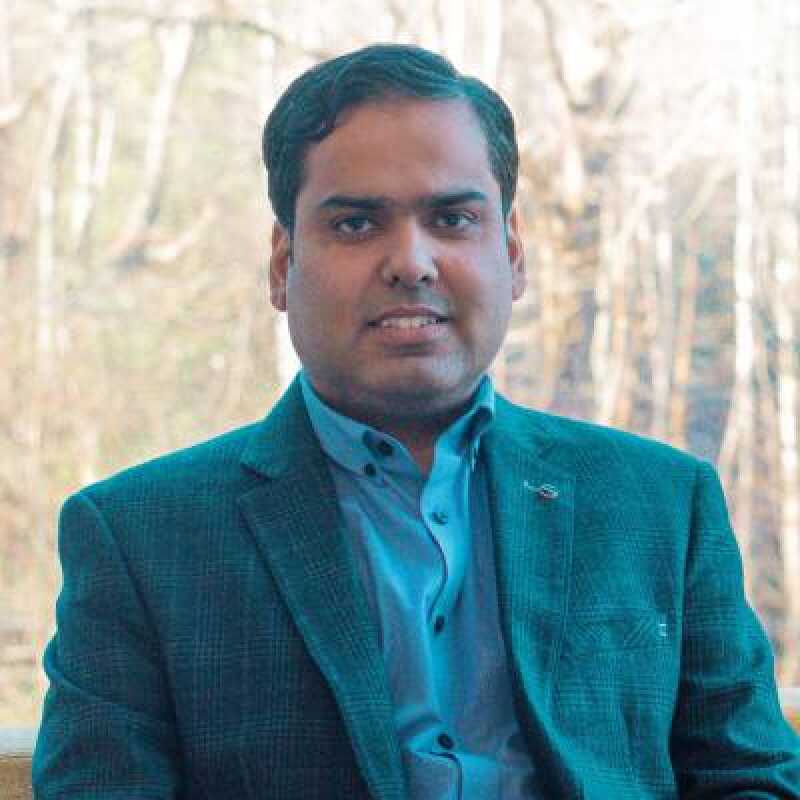
Rizwan Ahmed is a Senior Lecturer in Accounting and Finance at the University of Kent 's Kent Business School . He serves as Director of Studies for the Department for Accounting and Finance, with prior experience as an Assistant Professor at institutions like the University of Birmingham, Cardiff Business School, and Birkbeck University of London. His research focuses on Sustainable Finance , FinTech , and Corporate Governance , with funding from the Economic and Social Research Council (ESRC) for collaborative projects. Fellowship of Higher Education Academy (HEA-UK) Associate Fellow Member, Chartered Institute of Securities and Investment (CISI-UK) His publications in journals like Energy Economics and International Journal of Finance and Economics examine intersections between climate risk, financial markets, and regulatory frameworks. He supervises PhD research in areas including Sustainable Finance, Climate Finance, and Corporate Governance in the financial sector. Research Trends Recent articles analyze climate change impacts , energy market spillovers , and ESG performance under sanctions, utilizing empirical methods and data from the UK, China, and emerging economies. Methodological innovations include cross-quantilogram analysis and portfolio optimization frameworks. Scientific Awards Fellowship of Higher Education Academy (HEA-UK) Associate Fellow Member, Chartered Institute of Securities and Investment (CISI-UK) Rizwan also acts as a peer reviewer for journals including International Review of Financial Analysis and Technological Forecasting & Social Change .
Dr. Elaine T. Jurkowski serves as Professor in Social Work at Southern Illinois University's College of Health and Human Sciences, holding multiple leadership roles including Graduate Program Director (2021-present) and Program Director for Gerontology Programs (2020-present). She maintains cross-appointments as Adjunct Professor in the School of Medicine's Family Practice Residency Program and Professor in the Department of Health Education, demonstrating her interdisciplinary impact. B.S.W. (Industrial Social Work), University of Manitoba, Canada M.S.W. (Policy and Administration), University of Manitoba, Canada Ph.D., Public Health, University of Illinois at Chicago M.B.A., Southern Illinois University Carbondale (2022) Dr. Jurkowski's research program centers on health disparities, access to mental health services, aging, and disability issues, with particular focus on rural populations. Her work bridges public health, social work, and gerontology through innovative approaches to program evaluation, technology-enhanced teaching, and culture change in long-term care settings. She has developed expertise in international health planning and inter-professional collaboration across diverse cultural contexts. Her publication portfolio shows consistent thematic development across decades, with recent work focusing on medical tourism during the pandemic, rural-urban health disparities, and technology applications in gerontology education. These publications reflect her commitment to addressing healthcare access challenges for vulnerable populations through both scholarly inquiry and practical interventions. Great Cities Research Fellow in Health Provost Faculty Fellow (2018) Provost Assessment Fellow (2016) Student Hotspotting certification (2018-present) A.P.M. Assessment Academy certification (2016, 2017) Dr. Jurkowski has successfully secured over $1 million in research funding from agencies including Health Resources and Services Administration, The Hartford Foundation, and Administration on Aging. Her grant portfolio demonstrates sustained commitment to improving services for older adults and people with disabilities, particularly in rural settings. She has served as Graduate Program Director twice (2003-2014, 2021-present), mentoring numerous social work students through their academic and professional development. Her professional activities extend beyond campus through international consulting in West Africa, Hong Kong, India, China, Russia, and Egypt, and community engagement via the "Dare to Care" radio show and board service with Caring Counseling Ministries, Supporting People in Need, and UNA/USA Southern Illinois Chapter.
Zaw Myo TUN is a Research Fellow (Adjunct) at the Saw Swee Hock School of Public Health, National University of Singapore, and serves as Senior Manager (Research and Evaluation) at IRD Global Singapore. His academic career includes roles such as Postdoctoral Fellow (2022) and Research Associate (2013–2021) at the same school. He holds a PhD from NUS (2016–2021), an MSc in Epidemiology from the London School of Hygiene & Tropical Medicine (2011–2012), and an MBBS from the University of Medicine, Mandalay, Myanmar (2003–2008). His research focuses on epidemiology, global health, tuberculosis vaccines, and public health policy. Key interests include maternal vaccination coverage in low-resource settings, hospital-acquired infections (e.g., MRSA), antibiotic resistance, and the ethical implications of pandemic control measures. He has contributed to studies on SARS-CoV-2 transmission dynamics, road traffic injury patterns in Bhutan, and malaria drug policy compliance in India. His publications analyze public perceptions of health policies, such as during the COVID-19 pandemic, and explore factors influencing healthcare behaviors in diverse populations. His work bridges clinical data (e.g., electronic medical records) and population-level health surveillance to inform evidence-based interventions. While no awards are explicitly mentioned, his research has addressed critical global health challenges like tuberculosis control in Myanmar and antimicrobial stewardship in Singapore primary care settings. Zaw Myo TUN’s career emphasizes translational research, linking academic findings to real-world health system improvements. His roles span academia and non-profit sectors, reflecting a commitment to addressing public health disparities through collaborative, policy-driven solutions.
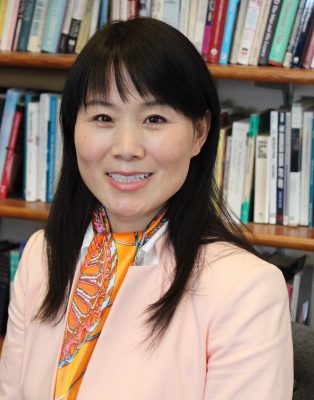
Jing Lei is a Professor at Syracuse University , serving as Associate Dean for Academic Affairs . Her research explores how information and communication technologies can prepare future citizens for a globalized, digitized world. Education: Ph.D. in Learning, Technology, and Culture, Michigan State University M.S. in Higher Education and Comparative Education, Peking University B.S. in School Education, Henan University Her scholarly focus includes technology integration in schools , social-cultural and psychological impacts of technology , emerging technologies for education , and technology-supported subject learning . Recent publications address critical edtech challenges and cultural perspectives in Asian education. Her work has been funded by organizations like the Kauffmann Foundation , National Science Foundation , and IREX . She has also served as a review expert for the NSF and contributed to influential journals such as The Teachers College Record . Dr. Lei teaches courses in technology integration , instructional design , and development and evaluation . Her research has been highlighted in media outlets like USA Today , US News & World Report , and Education Week .
Hernan Galperin is a Professor of Communication and Director of Doctoral Studies at the USC Annenberg School for Communication and Journalism. His expertise lies in Internet policy, digital inequality, and the intersection of technology adoption with social stratification. He holds affiliations with institutions like the Annenberg Research Network on International Communication (ARNIC) and the USC Annenberg Innovation Lab. Galperin has authored four books and published in leading journals such as Telecommunications Policy and New Media & Society. His research, funded by organizations like the Pew Charitable Trust and the Inter-American Development Bank, focuses on broadband accessibility, digital inclusion, and policy impacts. Notable awards include membership in the World Economic Forum’s Global Future Council and top paper awards from the International Communication Association (2020, 2022). Education background: While not explicitly detailed in the provided text, his academic roles and publications imply advanced training in communication studies, public policy, or related fields. His work integrates quantitative methods with policy analysis to address global challenges in technology access. Research highlights include studies on broadband’s role in poverty reduction (Ecuador), geographic discrimination in the gig economy, and the gender digital divide in Latin America. He has contributed policy briefs on the Affordable Connectivity Program and digital inclusion in public housing, demonstrating real-world policy impact. His affiliations with global institutions reflect a focus on international collaboration in addressing digital divides. Grants and awards: His funding sources include the Pew Charitable Trust, IDRC-Canada, and the Internet Society. Awards highlight his contributions to cyberpolicy and global media governance. His work often bridges academic research with actionable policy recommendations, particularly in underserved regions. Labs and teams: He directs ARNIC and collaborates with the USC Annenberg Innovation Lab and USC Price Center for Social Innovation, fostering interdisciplinary approaches to communication and technology challenges.
Dr. Ana Radulovic is a researcher at the University of Singidunum, Serbia, with expertise in leadership, organizational behavior, and management. She earned her PhD in Management from Aston Business School, UK, focusing on relational leadership and the impact of leader-follower relationships on outcomes. Her academic journey includes two master's degrees—one in Management from the Faculty of Organizational Sciences, University of Belgrade, and another in Postmodern English Literature from the Faculty of Philology, University of Belgrade—as well as undergraduate studies in English language and literature at the Faculty of Philology and management studies at Indiana University of Pennsylvania. PhD: Management, Leadership (Aston Business School, UK, 2012–2016) Master's: Management (University of Belgrade, 2010–2012) Master's: Postmodern English Literature (University of Belgrade, 2010–2011) Undergraduate: English language and literature (University of Belgrade, 2006–2010); Management (Indiana University of Pennsylvania, 2008–2009) Her research interests center on Leadership , with a focus on relational dynamics, interdependence theory, and quantitative/experimental methodologies. She explores how social media, crises, and virtual environments influence leadership effectiveness and organizational sustainability. Dr. Radulovic has received numerous scholarships and awards, including multiple Fund for Young Talents scholarships, a full scholarship for her doctoral studies at Aston University, a US government scholarship for Indiana University, and recognition for TESOL curriculum design and academic achievement. She has also contributed to the field through grants like the US Government Grant for Sustainable Development Program implementation. Scholarship from the Fund for Young Talents (2009/2010, 2012/2013, 2013/2014, 2014/2015) Full scholarship for doctoral studies (Aston University, 2012–2015) US government scholarship (Indiana University, 2008/2009) Ministry of Education, Science and Technological Development scholarship (2007/2008, 2010/2011) Best curriculum design award in TESOL (2009) Dean's Award for Academic Achievement (2008/2009) US Government Grant for Sustainable Development Program (2010) ERSTE Bank 'Club 27 Superstars' finalist (2011) Her work spans theoretical and applied research, with publications on topics like forgiveness in leader-member exchange relationships, servant leadership for sustainability, and charismatic leadership during crises. She has also participated in international conferences, presenting on leadership dynamics in virtual teams and social media integration.