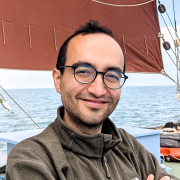
Servane Barrault is a Senior Lecturer in the Department of Psychology at the University of Tours, affiliated with the Quality of Life and Psychological Health (QualiPsy) research unit (UR 1901) and the Faculty of Arts and Humanities. She specializes in behavioral and product addictions, focusing on gambling, sex, video games, shopping, and internet addiction, with a particular emphasis on psychological and psychopathological determinants, vulnerability and protection factors, and treatment and prevention strategies. Her research integrates clinical psychology , social psychology , and research methodology . She supervises master’s and doctoral research in these areas, including theses on emotional regulation, personality traits, and behavioral addictions. Her publications explore the interplay between cognitive distortions, anxiety, depression, and gambling practices, with a focus on online and live poker players. Key activities include serving on pedagogical committees for addiction-related diplomas at the Faculty of Medicine, reviewing for national and international journals, and participating in research grant evaluation committees. She is also a member of the National Network for Prevention and Care of pathological gambling (RNPSJP).
Dr. Barış Çelik is a University Teacher at the School of Sociological Studies, Politics and International Relations at the University of Sheffield, where he contributes to teaching and research in international relations and security studies. Dr. Çelik holds a PhD from the University of Kent, an MA from the University of Sheffield, and a BA from Gazi University. His educational background has provided him with a strong foundation in political science and international relations. Dr. Çelik's research primarily focuses on security and defence policies in Europe , non-Western international relations approaches , pacifist and non-violent perspectives in security and defence studies , and the European Union's environmental policies . As a critical security scholar, he challenges conventional wisdom in security studies by examining non-violent alternatives and questioning Western-centric approaches to international relations. His work on EU climate diplomacy has been particularly influential in understanding how the EU positions itself as a climate leader while navigating complex interests and responsibilities. Dr. Çelik's publication record demonstrates a consistent focus on European security architecture, institutional overlaps in security cooperation, and the EU's role in climate governance. His recent work has examined forum-shopping behaviors in European security, the EU's multifaceted approach to climate diplomacy, and the complexities of international security assistance through overlapping institutions like the EU and NATO. Senior Fellow of the Higher Education Academy (SFHEA) Dr. Çelik teaches a range of undergraduate and postgraduate modules including Contemporary Global Security, Political Economy of Global Environmental Change, Middle East Politics, The Politics and Government of the European Union, Political Analysis, and Political Violence. His teaching reflects his research expertise, connecting theoretical frameworks with contemporary security and environmental challenges. Based at the Elmfield Building at the University of Sheffield, Dr. Çelik is an active member of the School's research community, contributing to discussions on critical approaches to security and European integration.
Professor Kathleen Riach is a Professor of Organisation Studies at the University of Glasgow's Adam Smith Business School. She serves as a UK Delegate for the G20 engagement group (W20), an Academic Fellow of the CIPD, and a visiting professor at the Monash Centre for Health Research and Implementation in Australia. Professor Riach is a member of the School's Human Resource Management and Organisational Behaviour research cluster and has established herself as a world leader in workplace inequality research. Professor Riach's research focuses on the lived, bodily experience of inequality and work across the life course, with particular emphasis on occupational health and wellbeing, aging as economic and cultural phenomena, and how women and underrepresented groups navigate different forms of inequality across their careers. Her pioneering research on menopause at work is globally recognized, having launched MIPO in 2019 - one of the world's first online free resources to help managers support menopause in the workplace, accessed over 18,000 times in 50 countries. She has worked with various public, private, and national governments to introduce menopause policies, including leading research that resulted in national employee guidelines for NHS Scotland. In 2024, she became chair for the forthcoming ISO Standard on Menopause, Menstruation and Menstrual Health in the Workplace. Her research portfolio spans organizational discrimination, diversity and inclusion, with special focus on aging, gender, and illness at work. She also explores professional identity and emotions in the workplace, employing qualitative methods informed by sociomateriality and feminist theory. Professor Riach's work regularly features in media outlets across Australia, the UK, and Europe, including ABC National, The Conversation, and the BBC. Professor Riach's extensive publication record demonstrates her leadership in workplace health and gender equality research. Her recent work analyzes depression as a public feeling in Peru, organizational injustice among female police officers, menopause in workplace contexts, and the intersection of gender, work, and philosophy through Judith Butler's lens. Her research consistently bridges academic theory with practical workplace applications, particularly in health contexts and diversity initiatives. AACSB's Influential Leader of the year (2024) Herald Higher Education Awards winner (2025) Imaginative Educator award by the Scottish Institute of Enterprise As a dedicated mentor, Professor Riach supervises doctoral students working on topics including complex mental health at work, inclusive early careers in virtual workplaces, and cultural heritage security. She serves on editorial boards for Human Relations and Organization journals, and provides expert review for major research councils including the Austrian Science Fund, ESRC, and SSHRC. Her international academic influence extends through visiting positions in Sweden, Denmark, and Germany as a Mercator Professorial Fellow, and her collaborations with government, private, and public sector organizations worldwide demonstrate the real-world impact of her research.
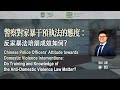
Dr. Kai Lin is a Lecturer in Criminology at the Faculty of Design and Society, University of Technology Sydney , where he has been employed since January 2023. He previously held academic positions at California State University (Assistant Professor, 2020-2023), University of Vermont (Lecturer, 2019-2020), and Quinnipiac University (Visiting Assistant Professor, 2018-2019). Education: Ph.D. in Sociology from the University of Delaware, USA His research focuses on violence in physical/digital spaces , victimization dynamics , and criminal justice responses . He examines lifestyle exposure theory , routine activity patterns , and social control mechanisms across diverse populations, including Chinese youth , left-behind children in rural China , and sexual minority groups in the US . The 15 most recent publications analyze topics such as cyber-fraud risk factors , victim-offender overlap in digital crimes , and police responses to domestic violence in China. His work employs multivariate regression , latent class analysis , and cross-national comparisons to inform evidence-based policy development . Grants include funding from the Social Sciences and Humanities Research Council of Canada (2024) and the UTS ECR Research Capabilities Development Initiative (2024). He emphasizes teaching as a transformative process , aiming to help students contextualize abstract concepts through criminal justice and technology-focused courses .
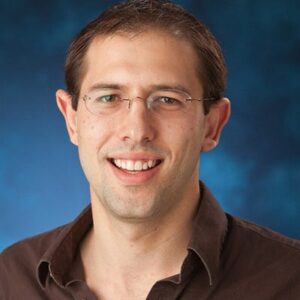
David A. Schroeder, Ph.D., serves as Interim Dean at the Henry C. Lee College of Criminal Justice and Forensic Sciences, University of New Haven. His academic affiliation spans multiple roles including faculty member and researcher. Education: Ph.D., John Jay College of Criminal Justice (2007) M.Phil., John Jay College of Criminal Justice (2005) M.A., University of Hull, United Kingdom (1999) B.A., University of California, Irvine (1992) Professor Schroeder specializes in homicide investigation dynamics and forensic evidence utilization, particularly DNA analysis. His research explores aberrant criminal behavior patterns, defense investigation methodologies, and tolerance issues within law enforcement practices. Recent publications focus on forensic evidence impact in homicide case clearance, with specific emphasis on DNA technology integration in detective workflows. Trends show consistent contributions to understanding evidence-based law enforcement decision-making. Scientific recognition includes: Centenary Medal from Polish National Police (2017) He teaches core criminal justice courses including: Introduction to Criminal Justice (CJ 100) Principles of Criminal Investigation (CJ 201) Criminology (CJ 311) Criminal Justice Problems Seminar (CJ 400) In 2014, secured grant funding for research on forensic evidence's impact on arrest outcomes.
Gabriel César Ferreira Pestana is an Assistant Professor in the Department of Information Systems at Universidade Europeia , with a PhD in Information Systems from the Technical University of Lisbon. His research focuses on Data Science , Visual Analytics , and Context-Aware Systems , particularly in applications for security, healthcare, and business intelligence. He has led international R&D projects like ROCSAFE and TRILLION, developing geospatial dashboards and gamification frameworks for real-time monitoring and decision support. PhD: Technical University of Lisbon His work emphasizes Human-Computer Interaction through innovative graphical interfaces, metadata integration, and dynamic dashboards. Pestana's applied research spans sectors like security (airport environments, community policing) and healthcare (patient monitoring, anxiety detection in older adults). The analysis of publications reveals expertise in Business Process Management , Analytics-as-a-Service , and Enterprise Architecture , with recurring themes in gamification, visual analytics, and situational awareness. Notable contributions include predictive modeling and rule engines for collaborative data analysis. As an educator, Pestana has over a decade of experience teaching informatics and computer science while mentoring master’s theses on topics like situation-awareness solutions and user interaction design. He has coordinated academic events and served as project manager in R&D initiatives.
Amir Rostami is a Professor of Criminology at Södertörn University since 2025 and previously at the University of Gävle (2022). A former police commissioner, he holds a PhD in Sociology (Stockholm University, 2016) and a police degree from the Swedish Police Academy (2004). Research Focus: Criminal collaborations (organized crime, violent extremism, gang networks), network analysis, and longitudinal register data. Affiliations: Homeland Security Committee (IACP), Institute for Futures Studies (Sweden), Miller Center (Rutgers University), and University of Ottawa (Distinguished Fellowship). His peer-reviewed work (2024-2025) examines cross-border extremist networks , Nordic cybercrime determinants , and Swedish gang dynamics . Awards include the University of Ottawa Distinguished Fellowship . He leads interdisciplinary teams using econometric modeling and network analysis to map criminal organizational structures.
University of Maryland, Baltimore CountyUnited States
Dr. Nkiru Nnawulezi is an Associate Professor in the Department of Psychology at the University of Maryland, Baltimore County (UMBC) , affiliated with the Human Services Psychology graduate program’s Community Track. Her research focuses on gender-based violence, survivor empowerment, and intersectional approaches to understanding Black women’s experiences with abuse and organizational responses. Education: Ph.D. from Michigan State University (2015) Lab Location: Sondheim 508 Contact: Office in Math/Psychology 339, Phone (410) 455-8781 Her recent work examines: (1) relationship violence intervention programs through survivor perspectives, (2) police intervention dynamics affecting survivor safety, and (3) formal/informal help-seeking patterns. These studies intersect with community psychology, gender studies, and criminal justice systems, emphasizing intersectionality and organizational behavior. Dr. Nnawulezi is accepting undergraduate and graduate students and offers training opportunities in her lab. She currently holds no listed scientific awards but contributes significantly to violence prevention literature through mixed-methods research.
Josh Pasek is a Professor of Communication and Media and Political Science at the University of Michigan, with additional affiliations as a Faculty Associate at the Center for Political Studies (Institute for Social Research) and Core Faculty member at the Michigan Institute for Data & AI in Society. He serves as MIDAS Associate Director and focuses on how new media and psychological processes shape political attitudes, public opinion, and behaviors. Research Interests Examines political information environments and psychological mechanisms in public opinion formation Specializes in nonprobability sample analysis and social trace data integration Develops statistical tools like R's anesrake and weights packages Recent Work Trends 2024-2025 publications focus on AI-enhanced survey analysis, mode effects in polling 2023-2024 research addresses vaccine adoption rationales and judicial perceptions 2020-2022 studies connect social media patterns to political behavior and polarization Impact His work appears in top journals like Public Opinion Quarterly , Political Communication , and Communication Research , with methodological contributions spanning causal inference, data visualization, and machine learning applications in social science.
D. Watkins serves as an Assistant Professor at the University of Baltimore's Yale Gordon College of Arts and Sciences. A prominent Editor at Large for Salon, his work appears in The New York Times, The Guardian, Rolling Stone, and other major publications. He founded the BMORE Writers Project to support Baltimore's literary community. Education : Master's in Education from Johns Hopkins University and MFA in Creative Writing from the University of Baltimore Watkins' research and writing focus on African American experiences, social justice, cultural identity, and urban life. His work bridges creative nonfiction with critical commentary on systemic racism, media representation, and educational equity. His articles explore themes like racial profiling, linguistic authenticity, and the ethics of public apologies. Recent publications analyze hip-hop culture, food sovereignty, and trauma narratives. Scientific Awards & Honors : BMe Genius Grant Ford’s Men of Courage Richtopia's 200 Most Influential Writers in the World Hurston Wright Legacy Award Finalist Books for A Better Life Finalist Watkins has lectured globally and appeared as a commentator on NBC’s Meet the Press, CNN’s The Erin Burnett Show, Democracy Now, and NPR’s Monday Morning. His work emphasizes amplifying marginalized voices in both academic and media contexts.
Jennifer Earl is a Professor and Chair of the Department of Sociology and Criminal Justice at the University of Delaware. She holds a B.A. from Northwestern University and M.A./Ph.D. from the University of Arizona. Her research focuses on social movements, digital activism, youth political engagement, and the impact of digital media on protest dynamics. Earl previously served as faculty at the University of California, Santa Barbara (2002–2011) and the University of Arizona (2012–2023). She directed the Center for Information Technology and Society and the Technology and Society PhD Emphasis at UCSB. Her work integrates studies of social movement repression, digital media usage, and youth activism. Key research interests include: (1) how digital tools reshape protest strategies, (2) generational differences in political engagement, and (3) state responses to activism. Notable publications include *Digitally Enabled Social Change* (MIT Press, 2011), which explores internet affordances in activism. Earl has received over $1.25M in grants, including an NSF CAREER Award (2006–2011). Honors include induction into the Sociological Research Association (2016) and university awards for teaching and mentoring. She has advised numerous projects on topics like counterdemonstrations, online misinformation, and protest policing. Her work bridges academia and public policy, addressing how digital platforms both empower and constrain activism in modern democracies.
Tammy L. Anderson is a Professor in the Department of Sociology and Criminal Justice at the University of Delaware, part of the College of Arts & Sciences. Her research focuses on substance abuse, opioid epidemics, deviance, crime, culture, gender, and social control. She holds a Ph.D. from American University and has authored influential books such as *Understanding Deviance* and *Neither Villain nor Victim*. Anderson has secured over $2 million in grants from NSF, NIH, and other agencies. She is the founder of the HeNN smartphone app for substance abuse resources and serves as Editor-in-Chief of the *Sociological Forum*. She actively participates in Delaware’s Prescription Drug Opioid Distribution Commission and chairs its Public Outreach committee. Her work bridges criminal justice, public health, and data science, addressing disparities in drug enforcement and overdose trends. Her research publications analyze opioid-stimulant trends, genetic testing motivations, and neighborhood impacts on drug-related arrests. She emphasizes policy-relevant outcomes, such as telehealth programs and community outreach strategies.
John McGarry is a Senior Lecturer in Law at Leeds Beckett University, with prior roles at institutions like Staffordshire University and Edge Hill University. He holds a PhD from the University of Central Lancashire (2009) and an LL.B from the same institution (1997). His research focuses on public law, legal theory, and contempt of court, with notable work on judicial review, parliamentary sovereignty, and the Human Rights Act. He has published extensively, including monographs, textbooks, and edited volumes. McGarry is a member of the Society of Legal Scholars, Socio-Legal Studies Association, and the Higher Education Academy. His teaching includes Tort Law and Public Law, and he advises PhD students on topics like contempt of court and constitutional statutes. His recent work addresses modern challenges in legal reporting and executive power, emphasizing the balance between free expression and fair trial rights. Education: PhD in Law, University of Central Lancashire (2009) LL.B in Law, University of Central Lancashire (1997) Research Interests: Public Law, Legal Theory, Contempt of Court, and Judicial Review. His work explores the theoretical underpinnings of judicial review and the implications of modern media on legal proceedings. He has contributed to parliamentary inquiries and governmental consultations, advocating for clearer contempt laws in the digital age. Recent Trends in Articles: McGarry’s recent publications analyze the interplay between social media, legal ethics, and executive power. His 2025 analysis of police communication practices highlights the tension between transparency and trial fairness, while his 2023 critique of the Attorney General’s role underscores systemic legal conflicts. Earlier works, such as the 2017 Finsbury Park incident report, emphasize the evolving challenges of media reporting under legal constraints. Awards & Memberships: Fellow of the Higher Education Academy. Active in professional organizations like the UK Constitutional Law Group and the European Consortium for Political Research’s Law and Courts Standing Group. Grants & Labs: Organized conferences on asylum law, refugee issues, and Hans Kelsen’s jurisprudence. Engaged in interdisciplinary research on crime, justice, and security through Leeds Beckett’s academic networks.
Netherlands Institute for the Study of Crime and Law EnforcementNetherlands
Stijn Ruiter is a Professor of Evidence-Based Policing at the Department of Criminology, Vrije Universiteit Amsterdam , and a Senior Researcher at the Netherlands Institute for the Study of Crime and Law Enforcement (NSCR) . He holds a PhD in Social Sciences (2008) and MA in Sociology (2002) from Radboud University Nijmegen. His research focuses on geographic/environmental criminology, evidence-based policing, and quantitative methods, with a specialization in offender decision-making and crime location patterns. Education : PhD in Social Sciences, Radboud University Nijmegen, 2008 MA in Sociology, Radboud University Nijmegen, 2002 (cum laude) Research Interests : Evidence-Based Policing, Spatial and Temporal Crime Patterns, Cybercrime, Victimization Risk, Criminal Decision-Making, and Open Science. He explores how offenders’ awareness spaces and environmental opportunities influence crime location choices, with recent work on cybercrime targeting and police response optimization. Articles Overview : Recent work includes studies on hacker forum behavior, victim satisfaction with police, and cybercrime efficiency. His research bridges theory and practice, aiming to inform policing strategies through data-driven insights. Grants & Labs : He leads the Evidence-Based Policing research group at NSCR and has secured funding for projects like the NWO Vidi grant (2012) on offender spatial decision-making. His work is applied to predictive policing and crime harm index frameworks.
Dr. Ajay Sandhu is an Associate Professor in the Department of Criminology at Toronto Metropolitan University. He specializes in qualitative criminological research, with a focus on the interplay between surveillance technologies and police authority. His work examines how smartphone cameras and body-worn devices transform police accountability and visibility. Education: PhD in Sociology (2016, University of Alberta) MA (2011, York University) BA (2009, York University) Research Focus: Sandhu investigates digital surveillance's impact on policing dynamics, including public monitoring of police via smartphone cameras, body-worn camera cinematography, and predictive policing technologies. His research reveals how digital tools reconfigure accountability, transparency, and legitimacy in law enforcement. Teaching: Courses include CRM 302 (Criminology Theory), CRM 350 (Cyber Criminology), and CRM 8202 (Crime and Technology), emphasizing theoretical and technological dimensions of modern criminology.