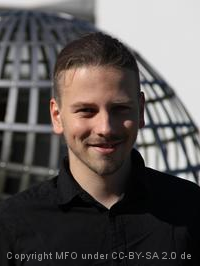
Ilie Grigorescu is an Associate Professor at the University of Miami , affiliated with the College of Arts and Sciences and the Department of Mathematics . He also collaborates with the Computer Science division within the same college. Research Interests: Stochastic Processes Probability Theory Mathematical Biology Evolutionary Modeling Interacting Particle Systems Applied Mathematics Recent Publications focus on branching diffusions, evolutionary fixation times, stochastic game theory, and neuronal phase transitions. His work connects probabilistic models to biological and network systems, including studies on hydrodynamic limits and risk-averse optimal stopping. Contact: Email at i.grigorescu@miami.edu or call (305) 284-2146.
Erhun Kundakcıoğlu is a Professor in the Department of Industrial Engineering at Ozyegin University's Faculty of Engineering. He received his Ph.D. in Industrial and Systems Engineering from the University of Florida (2009) with a minor in Computer and Information Science and Engineering, following an M.S. in Industrial Engineering at Sabancı University (2004) and B.S. at Bilkent University (2002). He served as Assistant Professor at University of Houston (2009-2013) and Director/Distinguished Scientist at Optym (2019-2021). Ph.D.: Industrial and Systems Engineering, University of Florida (2009) M.S.: Industrial Engineering, Sabancı University (2004) B.S.: Industrial Engineering, Bilkent University (2002) His research focuses on combinatorial optimization and decision making under uncertainty , with applications in healthcare analytics , sustainable energy systems , supply chain management , and data science . He has developed optimization models for inventory control, lot sizing, and routing problems under uncertain demand/supply conditions, particularly in healthcare and humanitarian contexts. His work with the Datart Lab integrates mathematical programming into practical solutions for industry partners. Recent publications highlight his expertise in disaster relief inventory simulation, healthcare inventory management, and time series decomposition optimization. He supervises active graduate students including Deniz N. Yoltay (Ph.D.) and Buket İpek Akbal (M.S.). Early Career Award, TUBITAK Teaching Excellence Award, University of Houston Florida Chapter Scholarship, HIMSS Foundation As Associate Editor for the Journal of Global Optimization , Optimization Letters , and SN Operations Research Forum , he contributes to academic discourse in optimization and analytics. His consulting firm Datart R&D Management Consulting bridges academic research with industry applications in Turkey and abroad.
Professor Salah Mehdi is a distinguished mathematician at the University of Lorraine, where he serves as Head of the Analysis and Number Theory research team at the Institut Elie Cartan de Lorraine (IECL), a joint research unit (UMR 7502) of the CNRS. He also holds an Adjunct Professor position at Georgia Tech Europe. Previously, he has held positions at the University of Paris Ouest and has had visiting appointments at prestigious institutions worldwide including New York University Abu Dhabi, Oklahoma State University, Mathematisches Institut in Göttingen, and Tata Institute of Fundamental Research in Mumbai. Professor Mehdi completed his doctoral thesis in mathematics at Denis Diderot University - Paris VII in December 1996, followed by his accreditation to supervise research (Habilitation) in December 2004. His academic journey has included two full-time delegations to the CNRS (2012 and 2019-2020) and leadership roles including heading the mathematics department of the UFR MIM at the University of Lorraine (2014-2018). His research focuses on the deep connections between harmonic analysis on Lie groups, representation theory, and mathematical physics. Professor Mehdi's work spans Dirac operators on homogeneous spaces, Dirac cohomology, nilpotent orbits, quantization, and the spectral theory of locally symmetric spaces. His approach combines algebraic, geometric, and analytic techniques to address fundamental questions in modern mathematics. He has published 39 research papers with recent work concentrating on Dirac cohomology and its relationship to Howe's Θ-correspondence, approximation of nilpotent orbits, and the spectrum of semisimple locally symmetric spaces. Professor Mehdi actively contributes to the mathematical community through organizing international conferences such as 'Excursions in Mathematical Physics' (2024), 'Representation Theory and harmonic analysis' (2023), and 'Groups and representations' (2024), which honor prominent mathematicians in his field. As head of the Analysis and Number Theory team, he leads a vibrant research group of approximately fifty members including doctoral students, fostering the next generation of mathematicians in Lie theory and related areas. His research has significant implications for theoretical physics, particularly in understanding the mathematical structures underlying quantum mechanics and particle physics. Professor Mehdi continues to be an active contributor to both pure mathematics and its applications, maintaining collaborations with leading researchers worldwide including Pavle Pandžić, David Vogan, and Martin Olbrich.
Filip Lindskog is a Professor of Insurance Mathematics at Stockholm University (SU) , where he heads the Mathematical Statistics division within the Department of Mathematics . With a background in financial mathematics and actuarial science, his research focuses on quantitative risk management, non-life insurance pricing, and applications of biostochastics and biostatistics. He has co-authored the textbook Risk and Portfolio Analysis: Principles and Methods (Springer, 2012) and supervises PhD students in actuarial mathematics. Education \n \n MSc in Engineering Physics, KTH Royal Institute of Technology (2000) \n PhD in Mathematical Statistics, ETH Zürich (2004) \n Research Interests Filip's work spans actuarial mathematics , financial risk modeling , and insurance analytics . He investigates stochastic processes in regime-switching environments, capital requirements for insurers, and mathematical frameworks for claims reserving. His recent publications emphasize machine learning applications in risk adjustment, asymptotic analysis of Poisson models, and regulatory compliance under IFRS 17.\n Scientific Contributions \n \n Editor, Scandinavian Actuarial Journal (2018–present) \n Director of SU's Master's Program in Actuarial Mathematics (2016–present) \n Head of SU's Mathematical Statistics Division (2018–present) \n \n Students and Collaborations Current and former PhD students include Nils Engler , Lina Palmborg , Jonas Alm , and Johan Nykvist . Former postdocs include Julie Thøgersen , Abhishek Pal Majumder , and Kristoffer Lindensjö . His research group explores discrete random structures, financial applications of biostatistics, and insurance modeling under capacity constraints.\n
Panagiotis Papastamoulis serves as Assistant Professor at the Department of Statistics within the School of Information Sciences and Technology at Athens University of Economics and Business (AUEB). He joined AUEB in April 2020 after working as an Adjunct Lecturer from 2018-2019 and completing extensive postdoctoral research at prestigious institutions including the University of Manchester (2012-2018) and INRA in France (2011-2012). His educational background includes a BSc in Mathematics from the University of Patras (2003), an MSc in Applied Statistics (2006), and a PhD in Statistics (2010) from the University of Piraeus. His doctoral thesis addressed the label switching problem in Bayesian analysis of mixtures of distributions under the supervision of Professor G. Iliopoulos. Dr. Papastamoulis's research program centers on Bayesian and computational statistics, with particular expertise in finite mixture models, model-based clustering, and bioinformatics applications. His methodological contributions span theoretical developments in label switching solutions, reversible jump MCMC algorithms, and practical implementations for RNA-seq data analysis. His work demonstrates a consistent trajectory from foundational statistical theory to real-world biological applications. Analysis of his publication record reveals a strong focus on developing statistical methodology for complex data structures, with significant contributions to mixture modeling, Bayesian factor analysis, and bioinformatics. His most recent work (2023-2025) extends into cure rate modeling, directional data analysis, and multinomial mixture models for spatial data, showing continued innovation while maintaining connections to his core research themes. As an educator, he teaches undergraduate courses including Linear Models and Bayesian Inference Methods, and graduate courses such as Statistical Genetics-Bioinformatics and High Dimensional Statistics. He has also developed multiple open-source R packages that have become standard tools in the statistical community, including label.switching, BayesBinMix, and fabMix, which address fundamental challenges in mixture model analysis. Dr. Papastamoulis actively contributes to the academic community through organizing research seminars at AUEB and participating in conference committees, including the 22nd European Young Statisticians Meeting in 2021. His research integrates theoretical statistical development with practical computational implementations, creating tools that advance both methodology and application in multiple scientific domains.
Eugene Demidenko, PhD, is a Professor with multiple appointments at Dartmouth College, holding positions in Biomedical Data Science, Community and Family Medicine, Mathematics, and Engineering at the Geisel School of Medicine. His academic career spans several decades with significant contributions to statistical methodology and applications. Dr. Demidenko earned his PhD from the Central Economics-Mathematics Institute of Academy of Sciences in 1975 and an MSD from Moscow Pedagogical University in 1971. His educational background laid the foundation for his interdisciplinary approach to statistics and data science. His research focuses on developing exact optimal statistical inference methods for small samples, challenging traditional approaches that rely on asymptotic approximations. Dr. Demidenko's work bridges theoretical statistics with practical applications in biomedical research, epidemiology, and engineering. He has pioneered the M-statistics framework, which combines maximum concentration (MC) and mode (MO) approaches under a single methodological umbrella. His research extends to statistical analysis of images, tumor regrowth modeling, ill-posed inverse problems, and optimal portfolio allocation. Dr. Demidenko's publications demonstrate a consistent focus on improving statistical methodology across diverse fields. His work shows particular strength in developing exact inference procedures that avoid the limitations of traditional methods when sample sizes are small. The progression from his earlier work on mixed models to his recent M-statistics framework reveals an evolving research trajectory focused on addressing fundamental limitations in statistical practice. Ziegel Book Award in Statistics 2022 for "M-statistics: Optimal Statistical Inference for a Small Sample" Ranked among Top 2% World scientists according to Stanford University database Dr. Demidenko teaches a range of courses including QBS 124 (Advanced Biomedical Data Science), QBS 180 (Data Visualization), QBS 177 (Methods of Statistical Learning for Big Data), and mathematics courses on probability and statistical inference. While specific grant information isn't detailed in the provided text, his research output suggests substantial funding support for his methodological developments and applications. His work has significant implications for biomedical research where small sample sizes are common. His laboratory and research team focus on developing and implementing novel statistical methodologies, with a GitHub presence showing active development of R code for statistical methods. This computational approach enables practical implementation of his theoretical advances for researchers across disciplines.
Professor Oliver T Johnson is Head of the School of Mathematics at the University of Bristol. His research spans probability theory, statistics, and information theory, with both theoretical and applied focuses. Develops theoretical frameworks for entropy properties in limit theorems (Central Limit Theorem, Poisson convergence) Works on group testing algorithms and their information-theoretic capacities Applies information theory to communication systems (interference alignment, spectrum sensing) His research outputs include foundational work on discrete analogues of entropy inequalities and converse bounds for inference problems. Current projects explore efficient algorithms for change-point detection and information geometry of graphs. He actively supervises PhD students and engages in public outreach through media appearances and educational talks. Recent collaborative projects include: Interdisciplinary work with Electrical Engineering and Computer Science Investigations into discrete transport equations and Shepp-Olkin conjectures Applications of group testing to spectrum sensing and epidemic modeling
Prof. Dr. Benedikt Wirth is a Professor of Mathematics at the University of Münster, Germany, affiliated with the Institute for Analysis and Numerics within the Department of Mathematics and Computer Science. He is an active researcher and educator specializing in optimization and calculus of variations, with significant contributions to mathematical imaging and shape analysis. His research interests include image processing, scientific computing, numerical analysis, optimization, shape spaces, geodesics in shape space, variational methods, elastic deformation, and optimal transport. Wirth has developed innovative mathematical frameworks for shape analysis, particularly focusing on Riemannian metrics for shape spaces and variational approaches to shape comparison and optimization. His recent publications (2023-2025) demonstrate continued leadership in mathematical optimization, with particular focus on PET reconstruction, dimension reduction techniques, manifold embeddings, and branched transport theory. His work bridges theoretical mathematics with practical applications in medical imaging and computer vision, showing particular strength in connecting geometric analysis with computational methods. CRC 1450 - A05: Targeting immune cell dynamics by longitudinal whole-body imaging and mathematical modelling CRC 1450 - A06: Improving intravital microscopy of inflammatory cell response by active motion compensation EXC 2044 - C1: Evolution and asymptotics EXC 2044 - C2: Multi-scale phenomena and macroscopic structures EXC 2044 - C3: Interacting particle systems and phase transitions EXC 2044 - C4: Geometry-based modelling, approximation, and reduction Prof. Wirth actively supervises numerous bachelor's and master's students, with over 40 theses completed under his guidance since 2015. His teaching portfolio includes courses on inverse problems, numerical methods for partial differential equations, shape spaces, optimization, and optimal transport. He has consistently maintained an active research program while contributing significantly to the education of the next generation of mathematicians.
Khanh Duy Trinh is a Professor (non-tenure-track) at Waseda University's Global Center for Science and Engineering, specializing in probability theory and its applications to random matrix theory and stochastic topology. He holds a PhD from Osaka University (2012) and has held academic positions at Tohoku University and Kyushu University. Current affiliation: Waseda University (2025-present) Past roles: Associate Professor at Waseda (2019-2025), Tohoku University, Kyushu University Research areas: Beta ensembles, Random topology, Spectral measures, Stochastic geometry His work demonstrates universal behavior in random matrix models through spectral analysis and topological persistence. Key contributions include central limit theorems for eigenvalue statistics, Poisson approximations in high-temperature regimes, and geometric interpretations of persistence diagrams. His recent papers focus on generalized beta processes and higher-dimensional complex structures. Current projects include: JSPS Grant 2024-2029: Universal approaches in random matrix theory Past JSPS Grant 2019-2023: Multi-aspects of beta ensembles Teaching activities at Waseda include: Introduction to Probability and Statistics Advanced Probability and Statistics Master's Thesis advising in Pure and Applied Mathematics
Yasutaka Shimizu is a Professor at the Department of Applied Mathematics , Waseda University , with prior positions at Osaka University and as Visiting Professor at the Institute of Statistical Mathematics. His work bridges mathematical statistics , stochastic processes , and actuarial science . Education : Ph.D. in Mathematical Science (University of Tokyo, 2007) Key Research : Survival energy models for mortality prediction, threshold estimation for jump-diffusions, ruin theory, fractional Brownian motion inference Recent Publications focus on high-frequency data analysis, survival energy hypothesis applications, and statistical methods for financial/actuarial risks. His 2023 work includes threshold estimation under small noise and survival energy models with functional data analysis. Scientific Awards include the Research Achievement Award (Japan Statistical Society), Ogawa Research Encouragement Award , and Competition Outstanding Report Award . Grants from Japan Society for the Promotion of Science cover topics like statistical modeling of stochastic processes, mortality prediction, and financial risk measurement. He maintains professional memberships in the Japan Statistical Society, Mathematical Society of Japan, and Institute of Actuaries of Japan.
Christophe Garban is a Professor at Université Lyon 1 and Visiting Professor at the Courant Institute, NYU (2025–2026). He obtained his PhD from Université Paris-Sud (2008) and his Habilitation (HDR) in 2013. His research focuses on probability theory, statistical mechanics, conformal invariance, and critical phenomena, including SLE processes, percolation, Liouville quantum gravity, and lattice gauge theories. His work bridges mathematical rigor with physical intuition, exploring phase transitions, Gaussian fields, and disordered systems. Key themes include scaling limits of random processes, noise sensitivity, and geometric aspects of statistical physics. Recent projects analyze turbulence models, branching Brownian motion, and symmetry breaking in spin systems. Garban has received numerous awards, including the ERC Consolidator Grant (2021), Prix Marc Yor (2018), and Rollo-Davidson Prize (2011). He serves as editor for journals like Annals of Probability and Probability and Mathematical Physics . He mentors doctoral and postdoctoral researchers, with alumni at institutions like EPFL, CNRS, and TIFR.
Renaud Raquépas is a Phillip Griffiths Assistant Research Professor in the Department of Mathematics at Duke University, where he has been working since 2025 under the mentorship of Professor Jonathan C. Mattingly. Prior to his position at Duke, he was a Courant Instructor in the Mathematics Department of the Courant Institute at New York University (2022-2025), hosted by Professor Lai-Sang Young, and a postdoctoral researcher at CY Cergy Paris Université (2021-2022), working with Professor Armen Shirikyan. His educational background includes a PhD in Mathematics from McGill University and Université Grenoble Alpes (2017-2020), where he was jointly supervised by Professors Vojkan Jakšić and Alain Joye. His doctoral thesis focused on "Tools and results in the study of entropy production." He also earned an MSc in Mathematics and Statistics from McGill University (2016-2017) under the supervision of Professor Vojkan Jakšić, with a thesis on "Heat full statistics and regularity of perturbations in quantum statistical mechanics." His undergraduate studies were completed at McGill University, where he also earned his Master's degree over a period of approximately five years. Raquépas's research primarily focuses on mathematical physics, with particular emphasis on time-dependent aspects of statistical mechanics and entropy production in both quantum and classical systems. His work bridges several mathematical disciplines including probability theory (particularly large deviations and stochastic differential equations), dynamical systems and ergodic theory (covering recurrence, mixing, theory of C*-algebras, and random dynamical systems), and operator theory (focusing on spectra, resolvents, perturbation theory, and one-parameter semigroups). His research addresses fundamental questions about nonequilibrium statistical mechanics, quantum information, and the mathematical foundations of thermodynamics. The most recent publications by Raquépas demonstrate a consistent focus on entropy production, large deviation principles, and the mathematical structure of statistical mechanical systems. His work spans both classical and quantum domains, with particular attention to the connections between information theory, probability, and physics. A significant portion of his research examines return times, waiting times, and their relationship to entropy estimators, while other papers explore quantum measurement processes, fermionic systems, and diffusions with various types of noise. His publications appear in prestigious journals including Communications in Mathematical Physics, Annales Henri Poincaré, and Journal of Mathematical Physics. Raquépas has presented his research at numerous international conferences and seminars, including the IEEE International Symposium on Information Theory, the International Congress of Mathematical Physics, and various departmental seminars at institutions worldwide. His work has been featured at specialized workshops on entropy, dynamical systems, and mathematical physics. As an educator, Raquépas has taught a variety of undergraduate mathematics courses at multiple institutions. At Duke University, he is scheduled to teach Probability in the Fall 2025 semester. Previously at NYU, he taught courses including Ordinary Differential Equations, Introduction to Mathematical Modeling, Linear Algebra, and Applied Complex Variables. He has also taught mathematics courses in French at CY Cergy Paris Université and Université Grenoble Alpes, demonstrating his bilingual capabilities (French is his first language, with fluency in English). Raquépas was born in the 1990s in the Province of Québec and has been involved in mathematical outreach activities, including service on the committee of the Seminars in Undergraduate Mathematics in Montréal and work on the website of the French-language mathematics magazine Accromath.
Dr. Philipp Bringmann is a postdoctoral researcher at the Institute of Analysis and Scientific Computing , Technische Universität Wien (TU Wien), where he has worked since February 2023. His research focuses on adaptive finite element methods, particularly for fourth-order partial differential equations and Stokes problems, with emphasis on optimal convergence rates and parameter-free implementations. His work includes the development of C0 interior penalty methods for the biharmonic equation, discontinuous Petrov-Galerkin schemes for nonlinear problems, and rigorous convergence analysis for adaptive least-squares finite element methods. He has contributed to a posteriori error estimation , discretization stability , and nonconforming mesh techniques. His publications span journals such as Numerische Mathematik , arXiv.org , and Computers and Mathematics with Applications , with recurring themes in numerical analysis and computational mathematics. Collaborators include Prof. Carsten Carstensen and Prof. Dirk Praetorius.
Giulia Cereda serves as Associate Professor in the Department of Statistics, Computer Science, and Applications 'G. Parenti' (DiSIA) at the University of Florence since 2025. Her academic journey includes prior roles as Fixed-term Researcher (RTD-b, 2022-2024), Research Fellow (2021-2022), and Swiss National Science Foundation Postdoc Mobility Fellow (2019-2021) at Leiden University and University of Florence. She holds a Joint PhD in Statistics from Leiden University and University of Lausanne (2011-2016), complemented by Master's and Bachelor's degrees in Mathematics from the University of Milan. Her research spans forensic statistics with focus on rare type match problems in DNA evidence evaluation, medical statistics applied to SARS-CoV-2 pandemic modeling, and machine learning implementations for biogeographical ancestry prediction. Recent publications demonstrate methodological innovations in Bayesian approaches for forensic evidence, compartmental modeling of epidemic dynamics, and supervised learning applications in population genetics. Analysis of her 14 most recent publications (2020-2025) reveals dual research thrusts: (1) forensic statistics addressing DNA mixture interpretation and rare haplotype matching through Bayesian frameworks, and (2) epidemiological modeling of smoking dynamics and SARS-CoV-2 transmission using compartmental models with uncertainty quantification. Her work bridges theoretical statistics with practical public health and forensic applications, frequently employing machine learning for complex prediction tasks. Supported by the Swiss National Science Foundation for postdoctoral research (2019-2021), she has contributed to pandemic response through Tuscan regional modeling and school-based screening strategies. Current office hours are Thursdays 3:00-4:00 PM by appointment, with ongoing research in forensic identification systems and epidemic forecasting methodologies.