معرفی
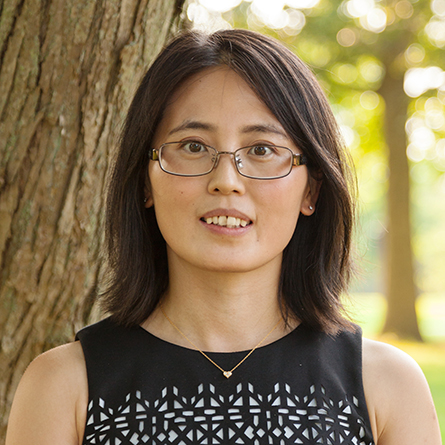
Eugene Demidenko, PhD, is a Professor with multiple appointments at Dartmouth College, holding positions in Biomedical Data Science, Community and Family Medicine, Mathematics, and Engineering at the Geisel School of Medicine. His academic career spans several decades with significant contributions to statistical methodology and applications.
Dr. Demidenko earned his PhD from the Central Economics-Mathematics Institute of Academy of Sciences in 1975 and an MSD from Moscow Pedagogical University in 1971. His educational background laid the foundation for his interdisciplinary approach to statistics and data science.
His research focuses on developing exact optimal statistical inference methods for small samples, challenging traditional approaches that rely on asymptotic approximations. Dr. Demidenko's work bridges theoretical statistics with practical applications in biomedical research, epidemiology, and engineering. He has pioneered the M-statistics framework, which combines maximum concentration (MC) and mode (MO) approaches under a single methodological umbrella. His research extends to statistical analysis of images, tumor regrowth modeling, ill-posed inverse problems, and optimal portfolio allocation.
Dr. Demidenko's publications demonstrate a consistent focus on improving statistical methodology across diverse fields. His work shows particular strength in developing exact inference procedures that avoid the limitations of traditional methods when sample sizes are small. The progression from his earlier work on mixed models to his recent M-statistics framework reveals an evolving research trajectory focused on addressing fundamental limitations in statistical practice.
- Ziegel Book Award in Statistics 2022 for "M-statistics: Optimal Statistical Inference for a Small Sample"
- Ranked among Top 2% World scientists according to Stanford University database
Dr. Demidenko teaches a range of courses including QBS 124 (Advanced Biomedical Data Science), QBS 180 (Data Visualization), QBS 177 (Methods of Statistical Learning for Big Data), and mathematics courses on probability and statistical inference. While specific grant information isn't detailed in the provided text, his research output suggests substantial funding support for his methodological developments and applications. His work has significant implications for biomedical research where small sample sizes are common.
His laboratory and research team focus on developing and implementing novel statistical methodologies, with a GitHub presence showing active development of R code for statistical methods. This computational approach enables practical implementation of his theoretical advances for researchers across disciplines.