Professor Emese Lazar serves as Professor of Finance and Deputy School Director of Teaching and Learning at the ICMA Centre, Henley Business School, University of Reading. She joined the institution in 2005 and is an active member of the Econometrics with Data Science research cluster, focusing on quantitative finance applications. Her educational background includes: PhD in Finance from the University of Reading BSc in Finance and Banking from the University of Economic Studies, Bucharest BSc in Computer Science from the University of Bucharest Research interests span risk measurement and management , model risk , financial econometrics , derivatives pricing , green finance , climate risk in finance , and machine learning applications . Her work bridges theoretical finance with practical risk management challenges, particularly in climate-related financial risks and algorithmic risk modeling. Recent publications reveal a pronounced shift toward integrating climate risk metrics with traditional financial models and developing neural network-based forecasting for tail risk measures. Her research demonstrates consistent innovation in volatility modeling, model risk quantification, and climate finance applications across top-tier journals. Professor Lazar teaches postgraduate modules in Market Risk and Climate Change and Risk Management, supervising PhD students in her specialized research areas. She actively contributes to the Econometrics with Data Science research cluster, fostering interdisciplinary collaboration between finance, data science, and climate risk modeling.
Christian Desrosiers is a Research Professor at the Department of Software Engineering and IT, École de technologie supérieure (ÉTS), with a Ph.D. from Polytechnique Montréal. His research focuses on data mining, machine learning, and computer vision, particularly in medical imaging and optical network analysis. Research Units: Zebra Research Chair in Computer Vision for Industrial Applications, LIVE – Interventional Imaging Laboratory, LIVIA – Imaging, Vision and Artificial Intelligence Laboratory Research Axes: Intelligent and autonomous systems, Health technologies His expertise spans medical image analysis, domain adaptation, and computer vision. Recent publications highlight advancements in 3D point cloud learning, MRI harmonization, domain generalization, and real-time segmentation networks. Scientific awards include the prestigious Zebra Research Chair. He has co-supervised over 30 graduate students in topics ranging from optical network diagnostics to brain imaging and machine learning applications.
Dr. Bo Li serves as an Associate Professor at the University of Southern Mississippi, where he teaches core computer science courses including Artificial Intelligence, Computer Graphics, and Database Management Systems. His academic foundation spans institutions across three countries, reflecting a globally oriented research perspective in visual computing and machine learning. His educational background includes: PhD in Computer Science from Nanyang Technological University (2012) MS in Computer Science from Texas State University (2015) MS in Computer Science from Xi'an Jiaotong University (2005) BS in Computer Science from Xi'an Jiaotong University (2005) Dr. Li's research centers on 3D shape retrieval systems, where he pioneers methods for sketch-based and image-based 3D model search. His work bridges computer vision, graphics, and machine learning through innovative approaches to 3D scene analysis, semantic modeling, and cross-modal translation. Recent investigations extend into social media analysis and speech emotion recognition, demonstrating methodological versatility within artificial intelligence. Analysis of his 15 most recent publications reveals a sustained focus on 3D shape retrieval benchmarking through SHREC competitions, evolving from traditional descriptor methods to deep learning frameworks. Key trends include multimodal query processing, large-scale dataset handling, and applications in real-world image denoising. His research consistently addresses challenges in partial/non-rigid model matching and semantic scene understanding. Dr. Li has not been documented with scientific awards in the provided information. Regarding academic mentorship and funding, no details about student supervision, research grants, or sponsored projects are available in the source material. Similarly, information about laboratory facilities, research teams, or collaborative groups is not provided in the current documentation.
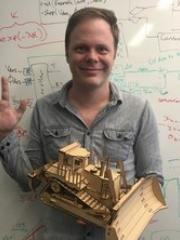
Dr. Tyson Phillips serves as Senior Lecturer and Director of Teaching and Learning at The University of Queensland's School of Mechanical and Mining Engineering within the Faculty of Engineering, Architecture and Information Technology. He is an active Affiliate of the Future Autonomous Systems and Technologies research group, focusing on translating robotics innovations into practical mining applications. His academic leadership includes curriculum development for engineering programs and direct industry engagement with major mining equipment manufacturers. He earned his Doctor of Philosophy (PhD) from The University of Queensland in 2016, with thesis research centered on LiDAR-based perception systems for autonomous excavators. His doctoral work established foundational methods for object pose verification in mining contexts. Phillips' research specializes in robotics perception for extreme mining environments, developing LiDAR-centric solutions for autonomous equipment operation amid dust, fog, and unstructured terrain. Key contributions include evidential reasoning frameworks for uncertainty management, real-time pose estimation algorithms, and sensor fusion techniques for excavators and bulldozers. His work bridges theoretical computer vision with industrial deployment, targeting operational safety and efficiency in mineral extraction. Publication analysis reveals consistent focus on mining robotics since 2012, with recent works (2021-2024) emphasizing minimal-sensor configurations, probabilistic terrain mapping, and vibration-assisted gripper technology. His 14 scholarly outputs demonstrate evolution from sensor evaluation (2012-2015) toward integrated autonomy systems (2018-2024), predominantly in Journal of Field Robotics and Sensors . He actively supervises graduate researchers as Principal Advisor for a PhD on multimodal perception mapping and Associate Advisor for two PhD projects involving spreader systems and physics-informed neural networks. Completed supervision includes a 2024 PhD on bulldozer terrain mapping and a 2021 Master's on shovel/hopper interaction strategies. Research funding spans 14 projects from 2012-2026, including current Australian Coal Association Research Program support (2025-2026) and major Caterpillar Inc. collaborations for ERS self-protection and articulated truck automation. Phillips operates within The University of Queensland's Future Autonomous Systems and Technologies group, which develops field-deployable autonomy solutions for mining partners. This team conducts real-world testing of perception systems using Caterpillar and FMG operational sites as validation environments.
François Goulette is a Professor and Deputy Director of the Computer Science and Systems Engineering Unit (U2IS) at ENSTA Paris, part of Institut Polytechnique de Paris. His research focuses on 3D point cloud processing, LiDAR perception, and autonomous systems within the Robotics Center (CAOR). His primary research interests lie in 3D point cloud processing , LiDAR perception , and autonomous systems . His work spans fundamental algorithm development to practical applications in autonomous driving, cultural heritage digitization, and robotics. He has made significant contributions to domain generalization of LiDAR perception, semantic segmentation of 3D point clouds, and point cloud registration techniques. The analysis of his recent publications reveals a strong focus on domain generalization for LiDAR perception systems, with multiple papers addressing challenges in 3D semantic segmentation across different environments. His work combines multi-scale architectures , unsupervised learning , and dataset creation to advance the state-of-the-art in autonomous systems perception. The research spans both theoretical algorithm development and practical applications in urban environments. François Goulette leads research activities within the Robotics Center (CAOR) at ENSTA Paris. His team develops advanced techniques for 3D environment understanding, with applications in autonomous vehicles, cultural heritage preservation, and industrial robotics. The research combines computer vision, machine learning, and robotics to solve challenging problems in 3D perception and scene understanding.
Dr. Yuhan Jiang is an Assistant Professor in the Department of Built Environment at North Carolina A&T State University's College of Science and Technology. He serves as the Founding Director of the HUD Center of Excellence for Innovation in Affordable Housing and Sustainable Communities (CIAHSC). Dr. Jiang leads a multidisciplinary research team focused on integrating robotics, artificial intelligence, and Building Information Modeling in construction operations and infrastructure management. Ph.D. in Civil Engineering from Marquette University M.M. in Construction Management from Guangzhou University Additional Construction Management degree from Guangzhou University Dr. Jiang's research primarily focuses on artificial intelligence applications in architecture, engineering, construction, and operations (AECO). His work integrates robotics and remote sensing for data collection, computer vision and machine learning for data processing, and BIM, GIS, and AR/VR for data visualization. His research enables more efficient construction operations, building inspection, and infrastructure management. Additionally, he has extensive experience in community redevelopment planning and complex systems simulation, including investigating urban village formation mechanisms. Analysis of Dr. Jiang's recent publications reveals a strong focus on applying drone technology, computer vision, and deep learning to construction and infrastructure challenges. His work spans multiple domains including façade modeling, pavement evaluation, sidewalk inspection, earthwork calculation, and 3D reconstruction. A consistent theme across his research is the development of automated systems that improve efficiency, accuracy, and safety in construction and infrastructure management through AI and robotics. N.C. A&T and CoST Junior Faculty Teaching Excellence Award 2024-25 N.C. A&T and CoST Rookie Researcher of the Year Award 2024 ASCE Journal of Architectural Engineering Best Paper Award 2022 ASCE CI & CRC Joint Conference Best Paper Award 2024 AAAS HBCU Making and Innovation Showcase 1st Place 2024 CoST SciTech Week Innovation Challenge awards (2023-2025) N.C. A&T Provost's Faculty Fellow (2023 & 2024) Dr. Jiang has successfully secured over $4.5 million in research funding as PI or Co-PI, including a $2.5 million HUD Center of Excellence grant. He has mentored students who won 1st and 3rd place in the 2023 & 2024 Sci-Tech Week Innovation Challenge competitions and 1st place at the 2024 AAAS HBCU Making and Innovation Showcase. His funded projects span AI-driven BIM education tools, smart farming with robotics, drone-based façade modeling, and digital twin applications for infrastructure management. As Founding Director of the HUD Center of Excellence for Innovation in Affordable Housing and Sustainable Communities (CIAHSC), Dr. Jiang leads a multidisciplinary team focused on innovative approaches to affordable housing and sustainable community development. His lab work integrates drone technology, computer vision, and AI to create practical solutions for real-world construction and infrastructure challenges.
Leila De Floriani is a Professor at the University of Maryland, with appointments in the Department of Geographical Sciences and the University of Maryland Institute for Advanced Computer Studies (UMIACS). She previously served as a professor at the University of Genova (Italy) since 1990, where she developed Italy's first undergraduate and graduate curricula in computer graphics and directed the Ph.D. program in Computer Science for eight years. Her professional activities include serving as the 2020 President of the IEEE Computer Society and currently as IEEE Division VIII Director for 2023-24. Professor De Floriani's research spans geometric modeling, data visualization, spatial data representation and processing, computer graphics, shape analysis, and topological data analysis. Her work focuses on developing mathematical models and algorithms for representing, analyzing, and visualizing complex spatial data, particularly through hierarchical models, mesh-based representations, and topology-based approaches. Her research group, the GeoVis group, investigates applications in terrain modeling, environmental data analysis, and forest structure mapping using LiDAR technology. Analysis of her recent publications reveals a strong focus on terrain representation and processing, with increasing emphasis on topological data analysis, machine learning integration, and efficient algorithms for large-scale spatial data. Her work bridges theoretical foundations in computational topology with practical applications in geospatial sciences, demonstrating consistent innovation in data structures and visualization techniques. Scientific Awards & Recognitions Fellow of IEEE (2016) for contributions to geometric modeling and scientific visualization Fellow of International Association for Pattern Recognition (IAPR) (1998) for contributions to geometric modeling and image analysis Fellow of Eurographics Association (2020) for outstanding contributions to computer graphics and visualization Pioneer of Solid Modeling Association (2017) for seminal work in solid and feature-based modeling Inducted Member of IEEE Visualization Academy (2020) IEEE Computer Society Golden Medal Award (2018) Inducted Member of IEEE Honor Society Eta Kappa Nu (2019) Multiple best paper awards at major conferences including Shape Modeling International (2015), IEEE/EG Symposium on Volume and Point-Based Graphics (2008), and ACM SIGSPATIAL (2008) Professor De Floriani has successfully advised numerous PhD students including Xin Xu, Yunting Song, and Noel Dyer, whose recent dissertations focused on topology-based individual tree mapping, efficient terrain analysis, and bathymetric data visualization respectively. Her research has been funded by prestigious agencies including the National Science Foundation, NASA, and the European Commission. As the leader of the UMD GeoVis group, she oversees a research program that develops open-source tools for spatial data analysis available on GitHub, with current projects focusing on forest point cloud processing and topology-based geospatial data visualization. The GeoVis group, affiliated with the Department of Geographical Sciences, UMIACS, and the Center for Geospatial Information Sciences, maintains a strong collaborative environment with ongoing projects in geometric modeling, spatial data structures, topology-based machine learning, and mesh-based terrain modeling. The group has received recent funding from NASA's HPOSS program for developing an open-source library for forest point cloud processing based on topological data analysis.
Laurent Condat is a Senior Research Scientist at King Abdullah University of Science and Technology (KAUST) in Saudi Arabia, where he conducts research in optimization algorithms and their applications. He is affiliated with the College of Engineering, Department of Computer Science, and has previously held research positions at CNRS in France, working at GREYC in Caen and GIPSA-Lab in Grenoble. Dr. Condat received his PhD in 2006 from Grenoble Institute of Technology, followed by a 2-year postdoc in Munich, Germany. He was recruited as a permanent researcher by CNRS in 2008 and has been on leave from CNRS since November 2019 to work at KAUST. In February 2025, he was promoted to 'chargé de recherche hors classe' (senior research scientist) by CNRS. His research focuses on deterministic and stochastic optimization algorithms, convex relaxations, and applications to machine learning, signal and image processing. His work spans theoretical foundations of optimization methods to practical implementations for distributed and federated learning systems. He has developed several influential algorithms including RandProx, TAMUNA, and LoCoDL that address communication efficiency in distributed optimization. His recent publications demonstrate strong trends in communication-efficient distributed optimization, with particular emphasis on federated learning, compression techniques, and local training methods. His work bridges theoretical optimization with practical machine learning applications, showing consistent innovation in algorithmic design for large-scale problems. Best reviewer award at AISTATS 2025 Meritorious Service Award from Mathematical Programming Stanford's list of world's top 2% most influential scientists Dr. Condat has co-supervised PhD students including Daniele Picone and Julien Baderot. He serves as an Associate Editor for IEEE Transactions on Signal Processing and has presented his work at numerous international conferences including plenary talks at major optimization workshops. His research is supported through KAUST funding and collaborative projects with researchers worldwide.
Pentti Juhana Henttonen is an active Researcher at the University of Helsinki, affiliated with the Swedish School of Social Sciences and the Institute of Humanities and Social Sciences. He serves as a Doctoral Researcher in the Doctoral Program in Human Behavior and works as a project planner, contributing to multiple research initiatives focused on human interaction and psychological phenomena. His research interests span cognitive science with particular emphasis on narcissism, sisu (the Finnish concept of inner strength and perseverance), second language acquisition, and physiological responses during social interactions. Henttonen employs diverse methodologies including physiological measurements, conversation analysis, and experience sampling methods to investigate how individuals process emotions, interact with others, and demonstrate mental fortitude in challenging situations. His publication record shows significant activity with 49 publications spanning from 2009 to 2025, with particular concentration in recent years (2023-2025). His work appears across interdisciplinary journals in psychology, linguistics, and social sciences, demonstrating a trend toward increasingly sophisticated methodologies combining physiological measurements with conversational analysis. Recent publications focus on narcissistic traits and their physiological correlates, the cultural phenomenon of sisu, and second language learner behavior. Henttonen actively contributes to the academic community through peer review services for journals including Scientific Reports, BMC Psychology, and Heliyon. He has organized academic events such as the HSSH workshop on motion energy and pose analysis and the HSSH seminar on VR methodology, demonstrating leadership in advancing methodological approaches in social science research. His research is supported through multiple projects funded by institutions including the Academy of Finland (Suomen Akatemia), with his most recent work focusing on patterns in second language learners' behavior (2023-2024) and previous projects examining narcissism (2019-2023) and neighbor dialogues (2018-2020). His work bridges theoretical psychological concepts with practical applications, as evidenced by his media appearances discussing narcissism and sisu for broader public understanding.
Associate Professor Feng Chen is a faculty member at the School of Mathematics & Statistics, University of New South Wales, specializing in statistical methodology development and applications. His research bridges theoretical statistics and practical implementations across financial modeling, spatiotemporal processes, and public health analysis. PhD in Statistics from University of Hong Kong (2008) MSc in Applied Probability & Statistics from Lanzhou University (2004) BSc in Mathematics from Lanzhou University (2001) Research focuses include: Nonparametric and semiparametric statistical methods Point process modeling with emphasis on Hawkes processes Statistical computing and algorithm development Applications to financial data, earthquake analysis, and public health Recent publications demonstrate methodological advances in: Hawkes process estimation with complex data structures Renewal process applications in seismology GARCH modeling with missing data Spatiotemporal clustering analysis Scientific recognition includes: UNSW Science Staff Impact Award (2023) Professional roles: Director of Research Postgraduate Studies (2023--) Associate Editor for multiple journals Statistics Honours Coordinator (2013-2018) Active participant in statistical societies
Siegfried Eggl is an Assistant Professor in the Department of Aerospace Engineering at the University of Illinois at Urbana-Champaign , with additional affiliations as an Affiliate Faculty in the Department of Astronomy (2022–present) and the National Center for Supercomputing Applications (NCSA) (2021–present). His research bridges astrodynamics, planetary defense, and celestial navigation, focusing on spacecraft trajectory optimization, asteroid deflection, and autonomous navigation systems. Education: B.S., Astrophysics, University of Vienna (2005) M.S., Astrophysics, University of Vienna (2008) M.S., Computational Physics, University of Vienna (2009) Ph.D., Astrophysics, University of Vienna (2013) Research Interests: Eggl investigates astrodynamics for planetary defense, including momentum transfer in asteroid impacts (e.g., NASA’s DART mission). He develops algorithms for celestial navigation using variable stars and studies space domain awareness to address satellite constellation interference. His work also explores dynamical systems in binary star environments and computation/data-driven approaches to orbital mechanics. Recent Publications highlight advancements in planetary defense simulations , celestial navigation algorithms , and asteroid impact dynamics . Topics include state transition matrix computation , ejecta momentum analysis , and binary asteroid system modeling . Scientific Awards: LSST Architect Award (2021) Space Foundation 2023 Space Achievement Award (DART Team) AIAA Award for Engineering Excellence (DART Team, 2023) Asteroid 2000 GT167 named 'Eggl' (2023) 2024 Engineering Council Outstanding Advisors Best paper award at AIAA Guidance, Navigation, and Control Conference (2024) Eggl contributes to professional societies such as the AIAA , American Astronomical Society (Division on Dynamical Astronomy) , and International Astronomical Union , where he co-leads the Centre for the Protection of the Dark and Quiet Sky. His APEX research group at UIUC focuses on planetary defense and astrodynamics.
Xin Li is a Professor in the Department of Electrical and Computer Engineering at Duke University and serves as the Associate Vice Chancellor at Duke Kunshan University. He holds a Ph.D. from Carnegie Mellon University (2005) and has held leadership roles in research consortia like the FCRP Focus Research Center and the Center for Silicon System Implementation (CSSI). His research bridges integrated circuits , machine learning , and cyber-physical systems , with applications in autonomous driving, battery lifetime prediction, and smart buildings. Education : Ph.D., Carnegie Mellon University (2005); M.S., Fudan University (2001); B.S., Fudan University (1998) His work emphasizes robust design methodologies for analog/RF circuits, data-driven predictive modeling , and Bayesian inference for high-dimensional variation spaces. Recent publications focus on generative adversarial networks for circuit design, multi-view imputation for incomplete data, and knowledge-driven autonomous systems . He has received numerous accolades, including the NSF CAREER Award (2012) , IEEE Donald O. Pederson Best Paper Awards (2013, 2016) , and IEEE Fellow (2017) . He has served as Editor for journals like IEEE Transactions on Biomedical Engineering and as Chair for conferences including ISVLSI and CAD/Graphics.
Dr Walter Wojciech M. Kozlowski is an Adjunct Associate Professor at the School of Mathematics and Statistics of the University of New South Wales . He has been actively engaged in research in functional analysis, fixed point theory, and their applications since the 1980s. Additionally, he is a professional in Information and Communication Technology, serving as Head of Architecture at Telstra Network Cloud and elected Technology Co-Lead of the Common NFVI Telco Taskforce (CNTT) in 2019. Research Interests: Dr Kozlowski specializes in functional analysis , fixed point theory , and modular function spaces . His work explores the convergence of iterative processes, nonlinear operator theory, and applications in Banach spaces. Recent Publications: His 2024 studies focus on implicit iterative processes, modular versions of fixed point theorems, and convergence analysis. Earlier works (2013-2017) examine nonlinear differential equations, pointwise Lipschitzian mappings, and common fixed points in modular spaces. Scientific Awards: Fulbright Scholar
Dag Olav Hessen is a Professor at the University of Oslo , leading the Center for Biogeochemistry in the Anthropocene (CBA) . The center integrates expertise from the Department of Life Sciences, Earth Sciences, and Chemistry to investigate climate-carbon-ecosystem interactions in northern latitudes. Research Focus: Climate change impacts on freshwater and marine ecosystems Key Areas: Ecological stoichiometry, genome size, pelagic food webs, permafrost thaw Methodology: Interdisciplinary approaches combining fieldwork, lab experiments, and modeling His recent publications address critical issues like greenhouse gas dynamics in thawing permafrost , tipping points in lake ecosystems , and global change effects on zooplankton communities . Collaborative work spans Arctic char vulnerability, DOM-contaminant interactions, and climate governance frameworks.
Dr. Sahani Pathiraja is a Lecturer (tenure track assistant professor) at UNSW Sydney , specializing in Data Science . Her research bridges mathematical and statistical foundations with practical applications in environmental and biomedical sciences. Research Focus : Sequential Bayesian inference, Monte Carlo methods, stochastic analysis of non-linear filtering, uncertainty quantification, and real-time parameter estimation. Current Projects : Co-investigator in the ARC Industrial Transformation Training Centre: Data Analytics for Resources and Environment (DARE) and the Next Generation Graduate Program (NGGP) in Sports Data Science and AI . Research Supervision : Dr. Pathiraja supervises PhD students in areas including: Bayesian inference Stochastic differential equations Data assimilation Non-linear filtering Scientific Collaborations : Her work intersects with environmental science, biomedical applications, and machine learning. Projects include stochastic hydrology, SDEs, and operator learning for environmental systems. Contact Information : Email: s.pathiraja@unsw.edu.au Phone: +61 2 8065 0836 Office: Room 2070, Level 2, The Red Centre, UNSW Sydney