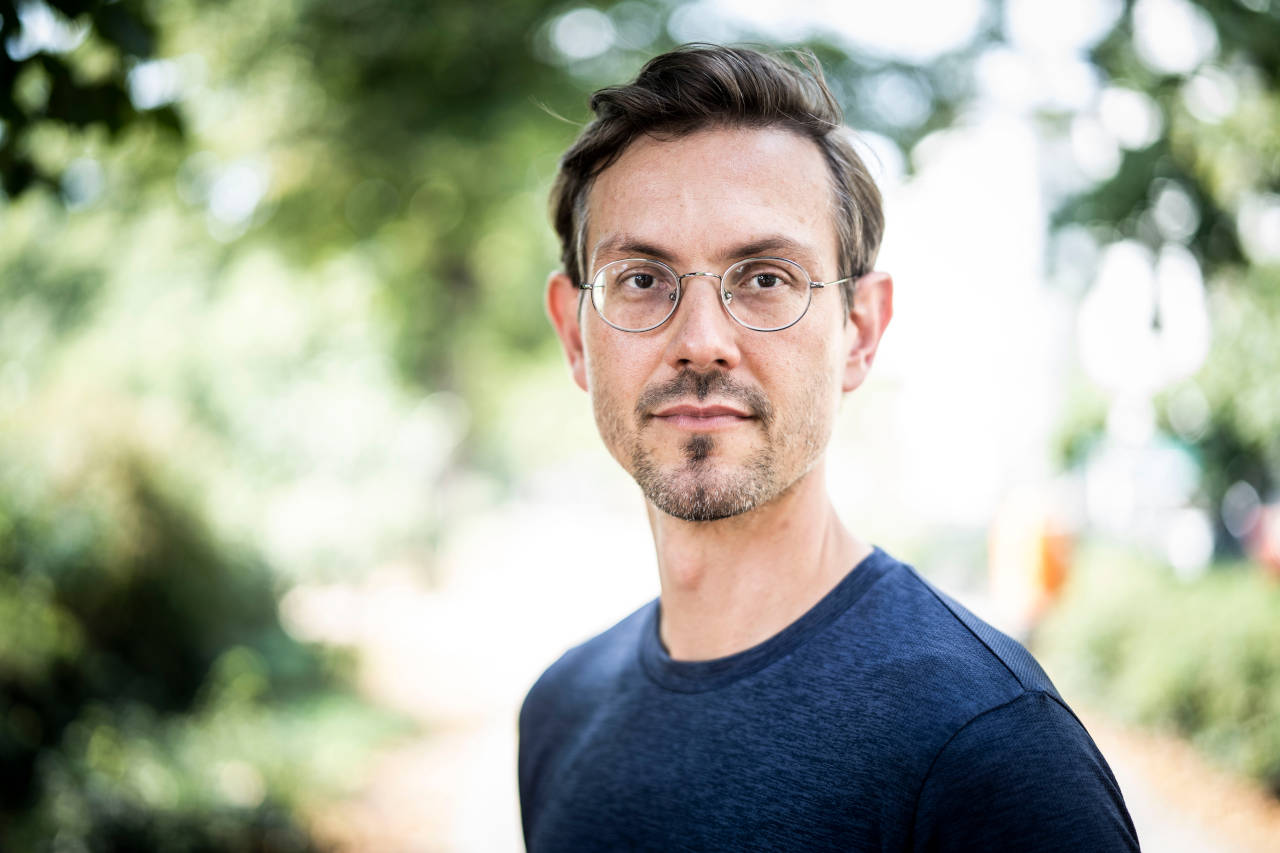
Shakeel Gavioli-Akilagun is a Research Fellow in the Department of Statistics at the London School of Economics and Political Science (LSE), part of the Time Series and Statistical Learning research group. He holds a BSc in Economics and Econometrics from the University of York and an MSc in Statistics (Research) from LSE, where he completed an ESRC studentship. His primary research focuses on changepoints, feature detection, multiscale statistics, and causal inference, with applications in time series analysis and machine learning. His academic contributions include developing algorithms for non-standard change point problems and has published in journals like Electronic Journal of Statistics and Journal of the Royal Statistical Society Series B . He teaches courses such as Distributed Computing for Big Data and Graph Data Analytics at LSE. Recent invited talks include presentations at the Institute of Mathematical Statistics Asia Pacific Rim Meeting (2026) and the EcoSta conference on change point detection (2025).
Prof. Dr. Benedikt Jahnel is a Professor at the Institute of Mathematical Stochastics, Carl Friedrich Gauss Faculty, Technical University of Braunschweig, and Head of the Leibniz Junior Research Group on Probabilistic Methods for Dynamic Communication Networks. His research focuses on the modeling and analysis of spatially embedded systems with interacting random components, with applications in physics, epidemiology, and telecommunications. Education: PhD in Organismic and Evolutionary Biology from Ruhr University Bochum (2011), Diploma from Technical University of Berlin. Research interests: Uses tools from statistical mechanics and stochastic geometry to study phase transitions, percolation theory, and spatial random processes. Current projects investigate continuum percolation, interacting particle systems, and probabilistic methods for communication networks. Recent publications demonstrate strong emphasis on spatial stochastic processes and percolation theory, with applications to network connectivity and epidemic modeling. Trends include mathematical analysis of phase transitions in random environments and dynamics of communication networks. Scientific awards include leadership of Leibniz Junior Research Group, EURANDOM Ambassador appointment, and election to the board of the Probability and Statistics Group of the German Mathematical Society. Leads a research team including 3 postdocs and 3 predoctoral researchers. Current projects funded by DFG, ERC, and Math+ Cluster of Excellence. Heads the DYCOMNET research group at Weierstrass Institute Berlin, focusing on dynamic spatial random systems.
Thomas Bernhardt is a Lecturer in Financial Mathematics and Probability at The University of Manchester. Previously, he held positions at Humboldt University of Berlin (studies in model theory and stochastic), LSE (PhD in stochastic analysis and financial mathematics), Heriot-Watt University (pension plan optimization project), and the University of Michigan during the pandemic. His research focuses on stochastics' applications in actuarial science, financial mathematics, and statistics, particularly decumulation strategies for pension funds. Education: PhD in Stochastic Analysis and Financial Mathematics from LSE, studies in model theory and stochastic at Humboldt University of Berlin. Research interests include stochastic tools beyond Itô Calculus, pooled annuity fund dynamics, wealth heterogeneity analysis, and optimal stopping problems in financial contexts. He contributed to THE ACTUARY (May 2021) discussing pooled annuity funds as viable retirement solutions. His work aligns with UN Sustainable Development Goals, particularly addressing prosperity through innovative financial instruments. No formal grants or awards are explicitly noted in the provided texts.
Professor Harry Zheng is a Professor of Mathematics at Imperial College London's Faculty of Natural Sciences, Department of Mathematics. He is affiliated with the CFM-Imperial Institute of Quantitative Finance and Mathematical Finance. His research focuses on stochastic control, optimization, and financial mathematics with applications in banking, numerical methods, and statistics. Key research areas include stochastic control theory, mean field games, financial derivative pricing, and machine learning integration in financial systems. His work addresses optimal investment strategies, risk management, and systemic risk modeling in dynamic markets. Notable contributions include applying deep learning to solve high-dimensional stochastic control problems and analyzing governance dynamics using mean field frameworks. Recent publications span innovations in neural network-based solvers for Hamilton-Jacobi-Bellman equations, robust optimization under uncertainty, and behavioral finance models incorporating transaction costs and prospect theory. Professor Zheng collaborates with institutions like the CFM-Imperial Institute to advance quantitative finance methodologies. His research bridges theoretical advancements with practical applications in portfolio management, risk assessment, and computational finance.
Dr. Cheng Cheng is a Senior Research Officer at the Australian National University's School of Engineering. He holds a Bachelor of Engineering (Honours) and PhD from ANU. His research focuses on renewable energy integration, decarbonization pathways, energy system modeling, and GIS analysis. He specializes in optimizing off-river pumped hydro energy storage systems. Cheng leads multiple renewable energy projects funded by government and industry grants, and has developed methodologies for energy demand forecasting and least-cost optimization. His work bridges theoretical energy modeling with practical implementation through collaborative outreach activities. Education: B.Eng(Hons) & PhD (Australian National University) Research interests emphasize sustainable energy transitions, with particular attention to geospatial analysis for energy infrastructure planning. His recent projects include developing frameworks for integrating renewable generation with storage solutions. Over 150 publications span machine learning applications in energy systems, astrophysics, and bioinformatics. Awards include academic fellowships supporting his interdisciplinary work. Cheng collaborates with industry partners to translate research into policy and technology. He directs the ANU's Renewable Energy Integration Lab (RE100), advancing grid stability solutions through innovative storage technologies. His work has been recognized in special issues of journals focusing on robust machine learning applications.
Christopher Hare is an Associate Professor in the Department of Political Science at the University of California, Davis, since 2015. He holds a Ph.D. from the University of Georgia and specializes in statistical modeling, quantitative methodology, and their applications in political behavior, public opinion, and political campaigns. His research integrates advanced computational tools, including machine learning, to analyze electoral dynamics and ideological structures. Education: Ph.D., University of Georgia His work emphasizes understanding voter decision-making processes, policy preferences, and the role of issue salience. Notable contributions include co-authoring Analyzing Spatial Models of Choice and Judgment and developing methodologies like basicspace and anominate for spatial analysis of political data. Since 2017, Hare has taught ICPSR workshops on machine learning in social sciences. His publications appear in top journals such as the American Journal of Political Science , British Journal of Political Science , and Political Behavior . His research spans topics like polarization, ideological constraint in the U.S. electorate, and the impact of scientific literacy on pandemic policy compliance. He explores how demographic and ideological factors shape political coalition formation and voting behavior.
Prof David Dritschel is a Professor in the School of Mathematics and Statistics at the University of St Andrews, affiliated with the Vortex Dynamics Research Group. His research focuses on combining theoretical analysis and numerical computation to study atmospheric and oceanic fluid dynamics, particularly vortex dynamics and potential vorticity conservation. Key areas include numerical methods for shallow-water flows, gravity wave dynamics, and three-dimensional stratified flows. He collaborates with institutions like the European Centre for Medium-range Weather Forecasting and the UK Meteorological Office to develop realistic atmospheric and oceanic models. His work emphasizes Lagrangian techniques and innovative numerical methods such as the Elliptical Parcel-In-Cell (EPIC) method, which enhance accuracy in conserving potential vorticity. Research interests span vortex filamentation, merging/splitting dynamics, and the role of gravity waves in geophysical flows. He has supervised PhD students including Felipe Arevalo Escobar, Stefan Faaland, and Sarah Suber. Publications highlight contributions to fluid mechanics, computational physics, and geophysical fluid dynamics, with recent work appearing in journals like Journal of Fluid Mechanics and Physical Review D . Collaborations extend to particle physics topics involving Higgs field interactions. His methods address challenges in both two- and three-dimensional fluid systems, with applications to weather forecasting and ocean modeling. Labs/Teams: Active leadership within the Vortex Dynamics Research Group, fostering interdisciplinary research between mathematics and geophysical sciences.
Prof Peter Cargill is an Honorary Professor at the School of Mathematics and Statistics, University of St Andrews. His research focuses on solar and astrophysical plasma physics, particularly coronal heating mechanisms, magnetohydrodynamic (MHD) processes, and numerical modeling of solar phenomena. He collaborates extensively on projects involving coronal magnetic field modeling, plasma dynamics, and solar transition region physics. His work contributes to understanding energy release processes in the solar corona through MHD avalanches and coronal loop dynamics. Key research areas include: Coronal heating mechanisms via MHD avalanches Thermodynamic responses in coronal null points High-resolution X-ray spectroscopy of solar active regions Computational models linking plasma evolution across solar layers Prof Cargill has led projects funded by STFC, focusing on plasma theory in solar and magnetospheric contexts. His research integrates numerical simulations with observational data to study plasma dynamics in extreme environments. Notable contributions include adaptive conduction methods for solar transition region modeling and comparative analyses of coronal magnetic field reconstruction techniques. Recent publications emphasize thermal non-equilibrium effects in coronal loops, plasma evaporation responses to heating, and the quest for detecting hot plasma in active regions through advanced spectroscopic methods. His work bridges theoretical models with observational astrophysics to advance solar physics understanding.
Henry Towsner is a Professor of Mathematics and Undergraduate Chair in the Department of Mathematics at the University of Pennsylvania. His research focuses on mathematical logic, proof theory, combinatorics, and their applications. He holds an office at 4N51 DRL and can be contacted via email or phone. His work bridges foundational mathematics with combinatorial and analytical methods, particularly in hypergraph regularity, reverse mathematics, and epsilon substitution. Research Interests: Towsner’s research spans proof theory, reverse mathematics, combinatorics (including hypergraph regularity and Ramsey theory), and applications of logic to analysis. He explores foundational questions in logic while developing tools for extracting computational content from proofs. His work on ultraproducts and exchangeable structures connects model theory with probability theory. Recent Trends in Articles: His publications from 2023-2017 highlight advancements in hypergraph regularity, Borel combinatorics, and proof-theoretic methods. Key themes include algorithmic extraction from proofs, nonalgorithmic combinatorial proofs, and applications of logic to functional analysis. His work often intersects with computability theory and effective bounds in algebraic structures. Advising and Grants: While specific grant details are not listed, his active research program suggests involvement in NSF or institutional grants typical for a senior faculty member. He advises graduate students in logic and combinatorics, though specific names are not provided in the text. Labs/Teams: No dedicated lab is mentioned, but his collaborations span pure mathematics disciplines, including work with researchers in combinatorics, functional analysis, and set theory. His research group likely engages in interdisciplinary projects within the mathematics department.
Dmitry Belyaev is a Professor of Mathematics at the University of Oxford and a Tutorial Fellow at St. Anne's College. His research focuses on the intersection of analysis and probability, particularly Gaussian fields, critical phenomena, and Schramm-Loewner Evolution (SLE). He has made significant contributions to understanding the geometry of random functions, including work on zeros of random plane waves and Diffusion-Limited Aggregation models. His teaching includes advanced courses such as Metric Spaces, Complex Analysis, and Continuous Martingales. Research Interests: Geometry of Gaussian fields and critical points Stochastic processes in complex systems SLE and conformal maps Random fractals and percolation theory Harmonic measure and multifractal analysis Publications highlight studies on nodal domains, excursion sets, and critical point correlations in Gaussian fields. His work often bridges probability theory with geometric analysis, addressing questions about universality, continuity, and phase transitions. Supervised students include notable researchers in stochastic processes and mathematical physics.
Christian LÉGER is a Professor in the Department of Mathematics and Statistics at the University of Montreal , affiliated with the Faculty of Arts and Science . He holds a Ph.D. from Stanford University (1988). His research focuses on advancing statistical methodologies, particularly in resampling techniques like the bootstrap, adaptive estimation, and model selection, with applications in diverse fields such as biomedical research and industrial reliability. Research Interests: LÉGER’s work emphasizes leveraging computational power to enhance statistical methods. Key areas include bootstrap methodology for variance estimation, confidence interval construction, and parameter tuning (e.g., bandwidth selection in kernel density estimation). Recent projects explore inference in post-variable-selection regression models and the validity of bootstrap for estimators with non-standard convergence rates (e.g., least median of squares). Recognition: He received the Prix d'excellence en enseignement in 2000 from the Faculty of Arts and Sciences for outstanding teaching in the sciences. Advising & Collaboration: He has supervised multiple graduate students, including two industrial fellowships through the CRSNG program. His applied work includes consulting projects, with one leading to a master’s thesis. He collaborates on interdisciplinary topics such as age replacement policies in reliability engineering and statistical methods in medical imaging. Publications: Over 15 peer-reviewed articles since 1987 reflect his contributions to bootstrap theory, nonparametric methods, and statistical applications in fields ranging from biostatistics to operations research.
Josephine Evans is Assistant Professor at the University of Warwick's Mathematics Institute and a Royal Society University Research Fellow. Her research focuses on mathematical aspects of kinetic theory, complex dynamics, and transport phenomena, with applications to biological systems and statistical mechanics. Research interests include: Kinetic Theory : Analysis of BGK-type equations and convergence to equilibrium Mathematical Biology : Modeling bacterial motion through run-and-tumble processes Hypocoercivity Methods : Quantitative convergence rates for degenerate kinetic equations Her publications demonstrate consistent application of functional analysis to transport equations, with recent studies examining nonequilibrium steady states and bacterial chemotaxis. Article analysis reveals strong emphasis on rigorous convergence proofs and interdisciplinary connections to physics and biology. She currently organizes KinneticNet, a UK network of kinetic theorists supported by the INI. Her research has been funded by Fondation Science Mathematiques de Paris and Leverhulme Trust.
Jimmy Jessen Nielsen is an Associate Professor in the Department of Electronic Systems at Aalborg University, under The Technical Faculty of IT and Design, Denmark. His research focuses on wireless communications, particularly in ultra-reliable low-latency communication (URLLC), 5G/6G networks, Internet of Things (IoT), satellite communications, and energy-autonomous networks. He is actively involved in several EU- and ESA-funded research initiatives such as PAINLESS, WILLOW, ONE5G, and SATNEX V, where he serves as principal investigator or key participant. His research interests lie at the intersection of wireless access technologies, network optimization, and cyber-physical systems. He explores topics including network slicing, UAV-based access points, software-defined radio, and indoor localization using building plans. His work contributes to UN Sustainable Development Goals in Communication and Informatics, Mathematics and Statistics, and Energy Engineering. His recent publications show a strong trend toward real-time adaptive networking, human-in-the-loop control over wireless links, and infrastructure-less communication systems. These works often involve collaborations with leading researchers such as Petar Popovski and Bosch Soret, and are published in high-impact IEEE venues including IEEE Transactions on Haptics and IEEE Open Journal of the Communications Society. Scientific Awards: Best Paper Award (2021) – for research on Micro Aerial Vehicle Networks and Access Points Nielsen has supervised and examined multiple PhD students and has been an active academic reviewer and committee member. He led the Department of Electronic Systems as chair starting in 2022 and has participated in numerous PhD defenses as both internal and external examiner. He also contributes to public discourse through media appearances on topics like Wi-Fi optimization and future mobile networks for robotics. He is affiliated with the Connectivity section at Aalborg University and maintains an active research profile with ongoing projects extending into 2025. His work emphasizes practical, deployable solutions for next-generation communication systems.
Kelly Ramsay is an Assistant Professor in the Department of Mathematics and Statistics at York University, Faculty of Science, Toronto, Canada. Her research is focused on developing nonparametric and robust statistical tools for complex data, with a strong emphasis on differential privacy, functional data analysis, and high-dimensional statistics. She bridges theoretical statistics with real-world applications and computational implementation. Education: PhD in Statistics, University of Waterloo (2018–2022) MSc in Statistics, University of Manitoba (2016–2018) BSc (Honours) in Statistics and Actuarial Science, University of Manitoba (2012–2016) Her research interests include differential privacy, robust inference, functional data, changepoint detection, and data depth. She develops methods that are both theoretically sound and computationally feasible, with applications in f-MRI and privacy-preserving data analysis. Her work often integrates simulation studies and real data applications, reflecting her background in statistical consulting and technical analysis. The recent trend in her publications centers on differentially private statistical methods, particularly for multivariate and functional data. She has made significant contributions to differentially private medians, boxplots, scale testing, and changepoint detection, leveraging data depth and robust estimation techniques. Her work combines theoretical guarantees with practical utility in sensitive data environments. Scientific Awards and Funding: NSERC Discovery Grant (2023) NSERC Launch Supplement (2023) Canada Graduate Scholarship - Doctoral (NSERC, 2019) Sprott Scholarship, University of Waterloo (2021) Canada Graduate Scholarship - Masters (NSERC, 2016) SSC Student Presentation Award (2017) Outstanding Research by an M.Sc. Student, University of Manitoba (2019) Kelly Ramsay has extensive experience in statistical consulting and applied data analysis, having worked at the University of Waterloo and Bison Transport. She has contributed to R packages and large-scale web scraping projects. She actively presents her research at major conferences such as ICORS, SSC, JSM, and SIAM/CAIMS. She has collaborated with researchers including Shoja Chenouri, Dylan Spicker, and Aukosh Jagannath. There is no indication of advising graduate students yet, but her collaborative research suggests strong mentorship and teamwork. She is involved in academic seminars and research days at institutions such as McGill University and through CANSSI. Her work is disseminated via arXiv, peer-reviewed journals, and conference proceedings, highlighting her active role in the statistical research community.
Thordis Linda Thorarinsdottir is a Professor of Statistics and Data Science at the University of Oslo's Department of Mathematics, affiliated with the Faculty of Mathematics and Natural Sciences. She previously worked as a Chief Research Scientist and Research Leader for Climate and Environment at the Norwegian Computing Center (2006–2023). Her research focuses on developing stochastic models for environmental sciences, emphasizing uncertainty quantification and probabilistic prediction in climate, weather, and hydrology. Key areas include spatial and spatio-temporal modeling, Bayesian frameworks, and forecast evaluation. **Education**: PhD in Mathematical Statistics from Aarhus University (2006). **Research Interests**: Environmental applications in climate science, spatial modeling, probabilistic forecasting, and extreme event analysis. She collaborates with experts in meteorology, hydrology, and climate science to address data deficiencies and real-world challenges. **Projects**: Leads initiatives like CONFER (Climate Futures) and is part of the Integreat research group. Her work integrates statistical theory with environmental process understanding to enhance predictive accuracy and decision-making under uncertainty. **Awards**: Not explicitly listed, but her contributions to climate and environmental statistics are recognized internationally. **Grants & Labs**: Active in interdisciplinary collaborations, including the Norwegian Research Council-funded projects. Her team focuses on probabilistic modeling and ensemble forecasting techniques.