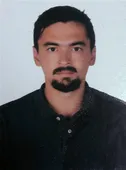
Murat Kendir, M.Sc., is a researcher at the Chair of Geoinformatics at the Technical University of Munich (TUM), with over 5 years of involvement in teaching and research activities since 2018. His work focuses on geospatial data modeling, semantic transformations, and 3D city visualization. Technical University of Munich, Chair of Geoinformatics (Arcisstraße 21, 80333 Munich) His research spans CityGML standards , point cloud processing , and web GIS technologies , with a particular emphasis on integrating semantic 3D models with traffic simulation data for urban analysis. Recent publications highlight his contributions to dynamic 4D visualization frameworks. He has co-authored peer-reviewed publications in geoinformatics and participated in projects like Smart Sustainable Districts and CityGML Utility Network ADE . Contact: murat.kendir@tum.de
Evdokia Saiti is a Postdoctoral Fellow at the Norwegian University of Science and Technology (NTNU), affiliated with the Department of Chemical Engineering. Her research spans interdisciplinary topics in 3D registration, multimodal data analysis, and microfluidic methods. Research Interests: Evdokia focuses on developing automated frameworks for 3D registration of multimodal and differential data, with applications in cultural heritage preservation and material science. Her work also investigates particle dynamics in porous media using microfluidic techniques. Recent Publications (2020–2025): Her articles highlight advancements in 3D point cloud registration, cross-modal alignment of CT volumes, and microfluidic analysis of silica particles. These contributions integrate computer science with cultural heritage monitoring and chemical engineering. Education: She earned a PhD in 2023 from NTNU, focusing on deep learning frameworks for 3D registration.
Simon Bartels is a researcher affiliated with the Department of Computer Science at the University of Copenhagen , contributing to the Machine Learning section. His work spans interdisciplinary applications of artificial intelligence, including quantum computing, healthcare diagnostics, and environmental modeling. Research activities at the department cover both theoretical and applied machine learning, with participation in the SCIENCE AI Centre . Key domains include medical data analysis , remote sensing , sustainability , and biological data modeling . Recent publications highlight contributions to quantum-inspired neural networks , geospatial biodiversity analysis , and energy-aware AI systems . Collaborations include rare disease research (e.g., MOSAIC framework ) and quantum computing optimizations.
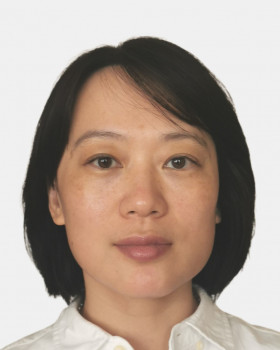
Qianni Zhang is a Senior Lecturer and PhD/PDRA Engagement Lead at the Centre for Multimodal AI within the School of Electronic Engineering and Computer Science at Queen Mary University of London. She leads research initiatives at the intersection of artificial intelligence and healthcare applications, with a particular focus on medical image analysis. Dr. Zhang's research interests center on machine learning and computer vision with specific applications in medical image computing . Her work spans multiple domains including medical imaging analysis for cardiology, ophthalmology, and oncology. She has developed numerous deep learning approaches for image segmentation, registration, and analysis, particularly focused on intravascular ultrasound, optical coherence tomography, and MRI applications. Her research bridges theoretical computer vision with practical clinical needs, creating tools that have potential to improve diagnostic accuracy and treatment planning in healthcare settings. Her recent publications demonstrate a clear trajectory toward increasingly sophisticated multimodal AI approaches for medical imaging. The trend shows progression from basic image segmentation techniques to complex fusion networks that combine multiple imaging modalities and incorporate anatomical knowledge. Many of her papers focus on cardiovascular applications, particularly intravascular ultrasound analysis, while others address ophthalmological and general medical imaging challenges. The consistent theme across her work is the application of cutting-edge deep learning techniques to solve real-world medical imaging problems with clinical relevance. ARCNET (Barts and the London Charity, £15,496, 2025-2026) Deep Learning based Multispectral Image Analysis for Retinal Lesion Detection (Royal Society, £12,000, 2022-2025) Anatomical And Functional Analysis Of The Soft Palate (Barts Health NHS, £132,620, 2022-2025) Machine learning for improved graphics in sport broadcast (Innovate UK, £214,061, 2022-2024) Dr. Zhang supervises a diverse group of PhD students working on various aspects of medical image computing and multimodal AI. Her students' projects span multiple healthcare domains including cardiovascular imaging, ophthalmology, dentistry, and general medical diagnostics. She has established herself as a leading researcher in applying deep learning to medical imaging challenges, with particular expertise in segmentation, registration, and multimodal fusion techniques for clinical applications.
Dr. Fabio Giulio Tonolo is an Associate Professor at the Politecnico di Torino , Department of Architecture and Design (DAD), specializing in geomatics and remote sensing for urban and environmental applications. His work bridges emergency cartography , UAV photogrammetry , and climate change monitoring through advanced geospatial techniques. Academic Roles : Teaching Satellite Remote Sensing and GIS and Advanced Geospatial Data Management at various cycles of the PhD in Urban and Regional Development Research Leadership : Scientific Director for projects like MOHYCAM (hydrogeological hazards) and EMERITUS (environmental crimes), with collaborations on glacier monitoring and cultural heritage preservation Scientific Affiliations : Secretary of AIT - Italian Remote Sensing Association (2019-2026), former President of IWG-SEM, and active member of ISPRS working groups Key Research Themes : Multi-source geospatial data integration, 3D modeling for heritage conservation, satellite-based climate impact analysis, and emergency mapping protocols His 15 most recent publications focus on remote sensing , glacier monitoring , and cultural heritage digitization , with methodologies spanning from UAV LiDAR to AI-based image segmentation . Dr. Tonolo has received ASITA Federation Best Poster Awards and contributes to editorial boards like ISPRS International Journal . He supervises PhD students in Urban and Regional Development, leads commercial projects such as 3D metric surveys in Assisi, and participates in international conferences including GISTAM and Gi4DM. His work aligns with SDG 11 (Sustainable Cities) and ERC PE10_14 (Earth Observations).
Matthew Gibson-Lopez is an Associate Professor in the Department of Computer Science at the University of Texas at San Antonio (UTSA). He is affiliated with the San Antonio Geometry Algorithms (SAGA) research lab, focusing on algorithms for image segmentation, digital geometry, visibility, and cloud computing. His academic background includes a Ph.D. in Computer Science from the University of Iowa (2010), where he also completed his M.S. and B.A., followed by a postdoc in Electrical and Computer Engineering at the University of Iowa. Research Interests: Algorithm design and analysis Computational geometry (polygon decomposition, visibility problems) Medical image segmentation Cloud computing (scheduling, workload characterization) Advising & Labs: SAGA Lab oversees three Ph.D. students (Mohammad Shahedul Islam, Serge Zamarripa) and one Master’s student (Safwa Ameer) Prior advisees include Mahmuda Ahmed (co-advised), Iffat Chowdhury, and Qing Wang Labs/Teams: The SAGA Lab develops practical algorithms for image processing, geometric optimization, and cloud resource management, emphasizing both theoretical foundations and real-world applications.
Dr. Dena Bazazian is a Lecturer in Robotics and Machine Vision at the University of Plymouth's School of Engineering, Computing and Mathematics. Previously, she held positions as a Senior Research Associate at the University of Bristol's Visual Information Laboratory, Research Scientist at CTTC (Barcelona), and postdoctoral researcher at Universitat Autònoma de Barcelona, where she earned her PhD in 2018. Her international research includes visiting positions at Barcelona Supercomputing Center (2024), NAVER LABS Europe (2019), and University of Florence (2017). Her research focuses on robotic vision, underwater technologies, and AI-driven applications. Key interests include: 3D reconstruction and neural rendering techniques Anomaly detection using graph neural networks Underwater perception systems for marine environments Intergenerational co-design of immersive technologies Point cloud processing and geometric deep learning Publication analysis reveals strong emphasis on computer vision applications across robotics, industrial inspection, heritage preservation, and marine technology. Recent works increasingly integrate human-centered approaches with XR technologies and underwater systems. She currently supervises 8 PhD students across robotics, healthcare, and environmental monitoring domains: Offshore wind turbine maintenance drones (EPSRC-UDLA funded) Autonomous sea vessel swarms for climate forecasting (ARIA funded) AI for marine biodiversity monitoring (Cefas funded) Elderly fall detection systems (URS General funded) Healthcare anxiety detection through visual analysis (EPSRC DTP HMT funded) Dr. Bazazian leads modules including Artificial Vision and Deep Learning and Computer Vision . She co-organizes workshops including the Deep Learning for Geometric Computing series (CVPR/ICCV) and Women in Computer Vision workshops (CVPR/ECCV).
Minhong Wang is a Professor at the Faculty of Education, University of Hong Kong, with additional affiliation at the University of Edinburgh's Usher Institute. With an extensive publication record spanning over two decades from 2005 to 2025, Wang has established themselves as a leading researcher in educational technology and learning sciences. Their work bridges the gap between computer science and education, developing innovative technology-enhanced learning environments that support complex skill development and knowledge construction. Wang's research interests focus on educational technology, learning analytics, computer-supported collaborative learning, and cognitive mapping approaches. Their work examines how technology can enhance problem-solving processes, support self-regulated learning, and improve educational outcomes across various contexts. Recent research has expanded into multimodal learning analytics, teacher professional development through technology, and the application of advanced computational methods to educational challenges. Wang's approach integrates theoretical frameworks with practical implementations, creating systems that transform how educators and learners interact with digital environments. Analysis of Wang's recent publications (2023-2025) reveals a strategic expansion of research scope while maintaining core educational technology focus. The work demonstrates increasing sophistication in learning analytics methodologies, with growing integration of computer vision techniques and advanced machine learning approaches. This reflects a trend toward more comprehensive multimodal analysis of learning processes, moving beyond traditional text-based interactions to incorporate visual, spatial, and behavioral data in educational contexts. The research maintains strong practical applications while advancing theoretical understanding of how technology mediates learning. Wang has collaborated extensively with researchers across multiple institutions globally, particularly in Hong Kong, mainland China, and international partners. Their work demonstrates consistent funding support through numerous research projects, though specific grant details aren't visible in the publication record. The collaborative nature of the work suggests leadership in research teams focused on developing and evaluating innovative educational technologies.
Nikolaos Vassilas serves as Professor in the Department of Informatics and Computer Engineering at the University of West Attica, Greece, with leadership roles including Director of the Intelligent Knowledge, Image & Information Systems research Laboratory (ISLab) since 2019 and former Director of the Joint Greek-French Master Degree Program (2016-2020). His academic journey includes research positions at NCSR "Demokritos" and EPFL. His educational credentials feature a Diploma in Electrical Engineering from Aristotle University of Thessaloniki (1983), and M.S.E.E. and Ph.D. degrees from the University of Minnesota (1987, 1990). Professional affiliations include IEEE Computational Intelligence Society, Hellenic Society of Artificial Intelligence, and Greek Computer Society. Professor Vassilas' research centers on Computer Vision and Neural Networks with applications in urban analysis and remote sensing. His work integrates deep learning for building extraction from aerial/LiDAR data, semantic modeling in 3D urban environments, and neural network-based environmental prediction systems. Key methodological focuses include mean-shift algorithms, Hough transforms, and multisource spatial data fusion. Analysis of his recent publications reveals consistent specialization in computer vision techniques for urban infrastructure analysis, particularly building contour detection and 3D reconstruction using convolutional neural networks. The integration of aerial imagery with elevation data and robust line detection algorithms represents a dominant research trajectory across his 70+ publications. No scientific awards were documented in the source materials. He has coordinated two European Union co-funded research programs and participated in multiple national projects, with expertise in environmental data processing and intelligent spatial analysis systems. His leadership extends to directing research laboratories and international academic programs, demonstrating significant grant management experience. Professor Vassilas leads the Intelligent Knowledge, Image & Information Systems research Laboratory (ISLab), which focuses on advancing computer vision techniques for urban planning and environmental monitoring applications through interdisciplinary team collaboration.
Kai Eivind Wu is a Researcher at the University of Sheffield’s School of Electrical and Electronic Engineering, specializing in many-objective optimization with applications in pharmaceutical engineering and polymer chemistry. His work focuses on advancing computational methods for process optimization, automation, and machine learning integration in complex systems. Research interests include developing novel decomposition strategies for evolutionary algorithms, improving diversity metrics in multi-objective optimization, and applying these techniques to real-world problems such as continuous pharmaceutical production and nanoparticle synthesis. Collaborations involve cross-disciplinary projects with cloud computing and automated laboratory systems. Publications highlight contributions to self-optimizing laboratory platforms, constraint-handled manufacturing processes, and visualization methods for Pareto front analysis. His work bridges theoretical optimization advancements with practical industrial applications. No scientific awards are explicitly listed. Advising and grant details are not provided in the text. Wu is affiliated with the Amy Johnson Building in Sheffield and contributes to research teams focused on automation and high-dimensional optimization challenges.
Dasith de Silva serves as a Research Fellow in the Department of Computer Science and Software Engineering at The University of Western Australia's School of Physics, Maths and Computing. His research focuses on advancing 3D computer vision through innovative point cloud processing techniques. His core research spans: Point cloud normal estimation and filtering algorithms Contrastive and representation learning for 3D data Deep learning architectures for geometric computer vision Height map-based 3D reconstruction methods He develops state-of-the-art solutions addressing fundamental challenges in point cloud analysis and processing. Analysis of his 2019-2024 publications reveals an evolution from soft matter physics toward specialized computer vision work. His recent contributions (2022-2024) demonstrate increasing sophistication in deep learning approaches for point cloud tasks, with significant advances in iterative filtering and joint normal estimation techniques published in top venues like CVPR and IEEE Transactions on Visualization and Computer Graphics. No scientific awards are documented in available sources. Current information indicates no formal academic advising responsibilities or research grant disclosures. His collaborative network shows international partnerships primarily in computer vision research.
Jordan Vice is a Research Fellow at The University of Western Australia's School of Physics, Maths and Computing, specializing in Computer Science and Software Engineering. They hold a Ph.D. in Mechatronic Engineering from Curtin University (2023) and a 1st Class Honours degree in the same field (2020). Their research focuses on AI transparency, fairness, security, and reliability, with expertise in generative models, explainable AI, and robotics. Education: Ph.D. in Mechatronic Engineering (2020-2023), Curtin University, Thesis: Accountable, Explainable Artificial Intelligence Incorporation Framework for a Real-Time Affective State Assessment Module Bachelor of Mechatronic Engineering (2015-2019), Curtin University, Thesis: Bi-modal Affect-Based Authentication Machines Research Interests: AI ethics, generative models, cybersecurity in AI systems, facial expression analysis, and AI applications in healthcare. They advocate for transparent and accountable AI deployment while addressing security and privacy challenges. Recent work explores bias quantification in text-to-image models and backdoor attacks in generative systems. Key Trends in Publications: Focus on adversarial machine learning, generative model vulnerabilities, and ethical AI frameworks. Notable contributions include frameworks for real-time affect assessment and methodologies to quantify bias in text-to-image systems. Awards: Chancellor's Commendation (2023) Proxima Consulting Prize (2020) RTP Scholarship (2019) Advising & Grants: No explicitly listed advisees or grants, though their work suggests involvement in collaborative research projects. Labs/Teams: Affiliated with the School of Computer Science and Software Engineering at UWA, contributing to interdisciplinary AI research groups.
Foo Ji Jinn is a Senior Lecturer in Mechanical Engineering at Monash University Malaysia, specializing in heat transfer and turbulence mechanics. He holds a PhD from Nanyang Technological University and has held roles including Associate Professor and Research Director at SEGi University. His research focuses on novel heat transfer methods using fractal geometry to enhance thermal dissipation, funded by MOHE and DAIAKIN R&D. Key projects include fractal-induced turbulence optimization and thermochemical ablation for cancer treatment. Education: BS/MS (Mechanical Engineering, National Chung Cheng University), PhD (Mechanical Engineering, Nanyang Technological University) Postdoc: Max Planck Institute (2004–2008) Research interests revolve around turbulence-induced heat transfer enhancement, biomedical applications of fluid dynamics, and sustainable thermal systems. Collaborations span institutions in Malaysia, Singapore, Germany, and Taiwan. Notable work includes optimizing fractal grids for heat exchangers and computational studies on sonothrombolysis and thermochemical ablation. Active in UN SDG 7 (Affordable Clean Energy) and 3 (Good Health & Well-being). Publications (2013–2024) emphasize computational fluid dynamics, biomedical engineering, and turbulence modeling. Projects include 'Fractal Generated Turbulence' and 'Thermochemical Ablation Mechanisms'. Teaching commitments include MEC3458 (Experimental Project) and MEC4417 (Refrigeration & AC Systems).
Peter Jan Van Leeuwen is a Professor specializing in data assimilation methodologies with applications across geophysical sciences. His research develops advanced techniques for high-dimensional systems with particular emphasis on particle filtering approaches. His research innovations include: Development of implicit equal-weights particle filters for high-dimensional systems Nonlinear data assimilation frameworks using particle flow filters Ensemble methods for model error estimation Advanced Bayesian inference techniques for geophysical applications Novel approaches for causal discovery in complex systems Recent publications demonstrate wide applications from oceanography and atmospheric science to flood forecasting and astrophysics. His work consistently addresses fundamental challenges in high-dimensional uncertainty quantification and nonlinear system behavior. Research contributions include significant methodological advances in: Particle filter efficiency for ocean and atmospheric models Time-correlated model error estimation Riemannian data assimilation frameworks Causal inference in non-intervenable systems Preconditioning strategies for 4D-Var assimilation Dr. Van Leeuwen has collaborated extensively on projects including the SEASTAR satellite mission concept for ocean submesoscale dynamics and contributed to major data assimilation initiatives like MERCATOR and MERSEA.
Raúl Rojas is the Fred D. Gibson, Jr. Endowed Professor in Science at the University of Nevada, Reno (UNR), affiliated with the College of Science. His research focuses on Artificial Intelligence, Robotics, Autonomous Cars, and Number Theory. He teaches courses such as Linear Algebra, Calculus, and Statistical Machine Learning. Rojas holds a PhD H.c. in Computer Science from Inastituto Nacional de òptica y Electrónica (2016), a Habilitation in Computer Science from Freie Universität Berlin (1994), and a PhD in Economics (1988). His notable publications include books like Konrad Zuse’s Early Computers (2023) and The Language of Mathematics (2025), alongside influential papers on topics ranging from early computing history to LiDAR-based autonomous vehicle systems. His work bridges historical computing milestones with modern robotics and mathematical theory. Rojas’ research has been presented at major conferences like IEEE ICRA and futuRetro, highlighting contributions to autonomous systems and computational heritage. His interdisciplinary approach integrates theoretical mathematics with applied robotics, reflecting a career dedicated to advancing computational science and its societal impacts.