Chris Atkeson is a Professor at the Robotics Institute of Carnegie Mellon University. His research focuses on achieving human-level competence in machines through humanoid robotics and human-aware environments. He explores machine learning techniques such as reinforcement learning, nonparametric methods, and memory-based learning to develop robots capable of complex tasks like manipulation, locomotion, and perception. His work emphasizes bridging the gap between simulation and real-world applications (sim2real transfer), with contributions to tactile sensing (e.g., FingerVision), dynamic walking control, and human-robot collaboration. Notable projects include participation in the DARPA Robotics Challenge with Team WPI-CMU, where his team developed reliable humanoid behavior for disaster response scenarios. Atkeson’s research spans robotics, computer vision, and control systems, with a focus on enabling robots to perceive, learn, and act in unstructured environments. His recent work includes advancements in 3D scene capture, soft robotics, and energy-based planning for compositional tasks.
Professor Sara Baker is a Professor of Developmental Psychology and Education at the University of Cambridge's Faculty of Education and a Fellow at Darwin College, where she served as Vice Master from 2021-2024. She is also a 2022 Senior Fellow in the Science of Learning with UNESCO-IBE/IBRO. Her work bridges cognitive science and educational practice, focusing on how children develop executive functions and self-regulation skills. Baker leads the Early Years Library project, co-founded the Research Centre for Play in Education, Development and Learning (PEDAL), and is a founding member of the Global Executive Functions Initiative. Sara Baker specializes in the science of learning, with research aimed at improving children's lives by identifying factors at home and school that support their agency over learning. Her work emphasizes developing executive functions and self-regulation through playful learning approaches. She uses lab-based experiments and collaborates with educators to translate cognitive science research into educational contexts. Her research spans multiple countries including the UK, USA, Mexico, Denmark, Slovakia, South Korea, Ghana, Rwanda, Nigeria, Kenya, South Africa, and more, reflecting a strong commitment to culturally relevant and globally applicable educational practices. Analysis of Professor Baker's recent publications reveals a strong focus on executive functions, self-regulation, and playful learning across diverse cultural contexts. Her work increasingly addresses cultural adaptation of assessment tools and educational practices, particularly for Global Majority countries. There's a clear trajectory from basic cognitive research toward practical applications in educational settings, with growing emphasis on teacher training, culturally relevant assessment, and the role of play in early childhood development. Her interdisciplinary approach connects developmental psychology, educational theory, and practical classroom applications. 2022 Senior Fellow in the Science of Learning with UNESCO-IBE/IBRO Professor Baker leads the doctoral program in the Faculty of Education and serves as an Academic Project Director in the School of Humanities and Social Sciences. She is the Cambridge academic lead on the Close the Gap partnership between Cambridge and Oxford, focused on postgraduate widening participation. Her research has been funded by prestigious organizations including the Newton Trust, Cambridge Humanities Research Grant, Economic and Social Research Council, LEGO Foundation, Nuffield Foundation, and Office for Students/Research England. She actively supervises doctoral students and seeks highly motivated candidates for October 2026 entry whose research aligns with her focus areas. Professor Baker co-founded and is actively involved with the Research Centre for Play in Education, Development and Learning (PEDAL), which investigates how children's play affects their development. She leads the Early Years Library project, a curated collection of evidence-based practices for early years educators, and is a founding member of the Global Executive Functions Initiative. Her work with the Connections international professional learning network focuses on self-regulation, while the Close the Gap project addresses widening participation in postgraduate education between Oxford and Cambridge.
Andres Lucero is Associate Professor of Interaction Design at Aalto University's Department of Art and Media, specializing in human-computer interaction for mobile devices and interactive surfaces. His research integrates human-computer interaction, design methodologies, and playful interfaces. He holds a PhD from Eindhoven University of Technology and has industry experience from Nokia, where he led user-centered design projects as Senior Researcher. Research explores tangible interfaces, social wearables, museum experience design, human-AI collaboration, and cross-cultural co-design approaches. Recent projects investigate conversational agents in design processes, persona generation workflows, and freeform interactive devices. Dr. Lucero received the Honourable Mention Award at MUM 2020 for innovative interaction research. His work advances design methods through first-person perspectives, AI integration, and novel interaction paradigms.
Michael S. Horn is a Professor of Learning Sciences and Computer Science at Northwestern University, serving as Program Coordinator for Learning Sciences. He holds a PhD in Computer Science from Tufts University and a ScB in Computer Science from Brown University. His research focuses on the intersection of human-computer interaction and learning, emphasizing the use of emerging technologies in museums, classrooms, and informal settings. Notable projects include multi-touch tabletops in natural history museums, tangible programming languages for early education, and the TIDAL Lab’s innovative exhibits like Build-a-Tree and DeepTree. Education background includes: PhD in Computer Science (Tufts University, 2009) MS in Computer Science (Tufts University, 2006) ScB in Computer Science (Brown University, 1997) Research interests span tangible interaction design, computational literacy, and museum-based learning. He has led projects such as the ‘Energy Monsters’ board game and the TunePad music-coding platform. His work integrates technology with pedagogical practices to foster collaborative and exploratory learning environments. Active collaborations include the Computer History Museum and the California Academy of Sciences. Advising contributions include mentoring doctoral students like Dr. Mmachi Obiorah and Pei-Yi. His lab, TIDAL, explores interactive technologies for education, with grants from NSF and industry partnerships. Recent articles highlight innovations in computational thinking integration, music-coding hybrid practices, and AI-driven qualitative analysis.
Mathias Funk is an Associate Professor in the Industrial Design department at Eindhoven University of Technology (TU/e), leading the Things Ecology lab. His research focuses on designing with data and systems behavior, particularly in IoT and medical technology contexts. He co-founded UXsuite GmbH and developed the OOCSI communication framework. With a PhD in Electrical Engineering from TU/e (2011), Funk has held academic roles since 2013, including postdoctoral positions in Electrical Engineering and Industrial Design. He teaches courses like 'Data-enabled design' and supervises projects on AI, data foundry, and OOCSI applications. His work bridges engineering and design, addressing sustainability and human values through systemic design approaches. Education: PhD in Electrical Engineering, TU/e (2011) Computer Science background from RWTH Aachen Postdoc at TU/e's Electrical Engineering and Industrial Design departments Research Interests: Data-driven design methodologies, IoT systems, medical technology innovation, sustainable design practices, and interactive systems for musical expression. Recent work emphasizes telemonitoring efficacy in heart failure care and federated learning applications. Awards: Best Paper Award (2014) Honorable Mention (2021) Grants/Projects: Leading initiatives like MEDICAID (medtech solutions), ACACIA (interpretable AI), and Data-Driven Servitizing in Professional Printing. Active in clinical workflow prototyping and cardiovascular disease detection projects. Lab Activities: Manages the Things Ecology lab, focusing on systemic design challenges in smart ecosystems. Collaborates internationally through spin-offs and visiting lectureships.
Florian 'Floyd' Mueller is a Professor of Future Interfaces at Monash University in Melbourne, Australia, where he directs the award-winning Exertion Games Lab within the Department of Human-Centred Computing (ranked among the top 20 HCI departments globally). Previously, he held positions at RMIT University, Stanford, University of Melbourne, Microsoft Research, MIT Media Lab, Fuji-Xerox Palo Alto Labs, Xerox Parc, and Australia's CSIRO. Mueller is a member of the prestigious ACM SIGCHI Academy, an honorary group recognizing leaders who have made substantial contributions to Human-Computer Interaction (HCI). Professor Mueller's research focuses on the intersections between technology, the human body, and play. He originated the concept of "Exertion Interface," arguing that we should not just design "easy-to-use" interactions when "hard-to-use" interactions can also be beneficial. His work spans movement-based interactions, whole-body interfaces, uncomfortable interactions, somaesthetics, and exertion games. Mueller's research methodology often employs research through design, design ethnography, and autoethnography to explore these novel interaction paradigms, incorporating mixed-reality, augmented reality, virtual reality, electronic muscle stimulation, biosensors, wearables, and drones. His recent publications demonstrate a continued focus on bodily interactions and human-computer integration, with particular emphasis on emerging subfields like WaterHCI and SportsHCI, brain-computer interfaces, and gustosonic (taste and sound) experiences. Mueller's work has evolved from foundational exertion game concepts to more sophisticated explorations of human-computer integration where technology becomes seamlessly woven into the fabric of human experience. Professor Mueller's contributions have been widely recognized with numerous awards including: Inaugural honouree of the Australian Design Centre's Design Honours Tall Poppy award for "intellectual and scientific excellence" 10 "Best Paper Honorable Mentions" (top 5%) from premier HCI conferences 2 "Best Paper" awards (top 1%) at CHI PLAY and CHI Shortlisted for the European Innovation Games Award (alongside Nintendo's WiiFit) Nokia Mindtrek Ubimedia Award Mueller has successfully secured some of Australia's largest and most competitive research grants, achieving a remarkable 14% success rate on Australian Research Council Discovery Project applications. He has served as General co-Chair for CHI PLAY'18 and CHI'20, becoming the first Australian-based researcher to spearhead HCI's highest-ranked publication outlet, and is currently General co-Chair for CHI'24. He is Associate Editor for tier A journals including Elsevier's IJHCS (International Journal of Human-Computer Studies) and ACM's IMWUT (Interactive, Mobile, Wearable and Ubiquitous Technologies). As director of the Exertion Games Lab, Mueller leads a research team whose innovations have been experienced by over 20,000 users across 3 continents and featured on the BBC, ABC, Discovery Science Channel, and Wired magazine. The lab has produced groundbreaking work in bodily interfaces, co-founding the CHI PLAY conference series and establishing new research directions in SportsHCI and WaterHCI through recent "Grand Challenges" papers. Mueller's lab continues to push boundaries with projects exploring brain-to-brain interfaces, lucid dreaming induction, and novel gustosonic experiences.
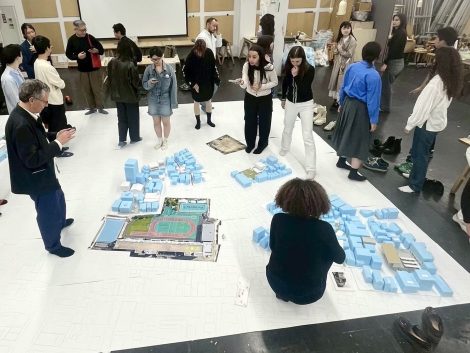
Keigo Kobayashi is an Associate Professor at Waseda University's Faculty of Science and Engineering, School of Creative Science and Engineering, Department of Architecture. He has served in this position since 2016, previously holding the rank of Assistant Professor from 2012 to 2016. His professional journey includes significant experience at the Office for Metropolitan Architecture (OMA) in Rotterdam, where he worked as a Senior Architect and Project Architect from 2007 to 2012. His educational background includes a Master of Architecture II from Harvard University's Graduate School of Design (2005), a Master of Architecture from Waseda University's Graduate School of Science and Engineering (2003), and a Bachelor's degree in Architecture from Waseda University's School of Science and Engineering (2002). Kobayashi's research focuses on architectural planning and city planning, with particular interests in food-related architecture, spatial behavior, and sustainable design. His work explores the intersection of architecture with everyday life, examining how spatial configurations influence human behavior and community formation. Recent research has investigated food systems in urban contexts, playful approaches to spatial design, and the relationship between architectural form and environmental performance. His publications demonstrate a strong focus on practical applications of architectural theory, with projects spanning from food truck design in Shodoshima to zero-energy housing solutions and innovative approaches to architectural education. His work shows a consistent interest in how architecture can respond to contemporary social challenges while maintaining theoretical rigor. Excellence in Concrete Construction Award 2019, American Concrete Institute (ACI), Qatar National Library / OMA Kobayashi actively contributes to architectural education through various committee memberships, including serving as Chief of the Subcommittee on Strategies for International Compatibility in Architectural Education at the Architectural Institute of Japan and leading the Caberra Accord Correspondence Subcommittee at the Japan Accreditation Board for Engineering Education. His teaching portfolio at Waseda University is extensive, covering architectural design studios from undergraduate to doctoral levels. He leads several research initiatives, including the Wakusei Project in Tosa, Kochi, NPO PLAT (Platform for Architectural Thinking), and the European Thinkbelt/McDonald's Radio University project which represents an innovative approach to architectural education and community engagement, particularly in contexts of migration and cultural exchange.
Dr Justine Howard is an Associate Professor in Education and Childhood Studies at Swansea University's Faculty of Humanities and Social Sciences. She holds Chartered Psychologist status and is an Associate Fellow of the British Psychological Society. Her research focuses on developmental psychology, educational psychology, and the role of play in early childhood development. With over 15 years of experience in higher education, she teaches and supervises PhD students in education-related topics. Her work emphasizes play-based learning, therapeutic play, and inclusive education. Notable contributions include publications on play's developmental benefits, teacher perspectives, and the implementation of play curricula. She has presented globally on topics like play advocacy and child well-being in crisis contexts. Awards include recognition from the British Psychological Society. Current PhD supervision includes projects on social justice in Bangladesh, music education impacts, and therapeutic play in healthcare settings. Howard's research spans international collaborations and policy engagement, such as advising on Welsh educational initiatives.
Rosella Gennari is an Associate Professor in Computer Science at the Faculty of Engineering, Free University of Bozen-Bolzano, where she conducts research and teaches in Human-Computer Interaction (HCI). Her work is centered on designing interactive technologies for children, focusing on physical-digital (phygital) artefacts, Technology-Enhanced Learning (TEL), and inclusive design. She leads the Research Unit Human-Centred Intelligent Systems and is actively involved in institutional leadership, including serving on the Third-Mission Board. Ph.D. : Computer Science, Amsterdam University (2002) Postdoctoral Experience : CWI, Amsterdam (ERCIM Alain Bensoussan Fellow); FBK-irst, Trento Leadership : Scientific & Technological Coordinator of the FP7-EU TERENCE project Her research explores how children interact with and design smart technologies, including IoT and AI, through playful and tangible interfaces. She investigates socio-emotional learning, digital well-being, and responsible design, often employing participatory and action research methods. Her work bridges computer science, education, and social impact, aiming to empower young learners as co-creators of technology. The analysis of her recent publications reveals a strong trend in developing and evaluating toolkits and frameworks for children and pre-teens to engage in designing smart things, IoT systems, and sustainable cities. Her work consistently emphasizes inclusivity, reflection, and responsible design, often in collaboration with teachers and learners. The publications span top HCI venues and journals, demonstrating a focus on practical applications in educational settings and the impact of technology on young users. Scientific Awards and Recognition ERCIM Alain Bensoussan Fellowship for talented young researchers Editorial Board Member, Journal of Child Computer Interaction (Elsevier, Q1) Regular reviewer for top HCI conferences and journals Advising and Grants : While specific advisees are not listed, her leadership role in the FP7-EU TERENCE project and numerous other research initiatives indicates extensive experience in securing and managing competitive grants. She mentors students through her research group and teaching, fostering the next generation of HCI researchers. Her collaborative network is extensive, with frequent co-authorship with researchers such as Alessandra Melonio, Maristella Matera, and Mehdi Rizvi. Labs and Teams : She leads the Human-Centred Intelligent Systems research unit, which serves as her primary lab and team. This group focuses on placing humans at the center of computer science and information engineering research. She is also a core member of the organizing committee for the MIS4TEL international conference series, highlighting her role in building and sustaining a global research community in Technology-Enhanced Learning.
Wolfgang Mayer is a Professor for Performative Practice at the State Academy of Fine Arts Stuttgart , teaching collaborative artistic processes. He co-founded the art group Discoteca Flaming Star (DFS) in 1998 with Cristina Gómez Barrio, focusing on performative works that challenge memory and institutional frameworks. 1990–1995: Studied at Academy of Fine Arts Munich 1996–1997: DAAD scholarship at School of Visual Arts NYC 2005–2006: Whitney ISP participant Mayer’s research integrates performative practice , body theory , and collaborative art . His works interrogate memory , feminist narratives , and public space dynamics through sculptures , performances , and experimental music . Recent projects like Momentum:synthesize.r (2024) and Love Any Out of (90 Seconds) End (2023) explore temporal structures and emotional labor . Scientific honors include: 2013 Fundacion Estrenos Grant 2006–2007 Pollock-Krasner Scholarship 1993 Salzburg Summer Academy scholarship He emphasizes non-formalized artistic development through Sound & Body modules, public space interventions , and critical response protocols . Mayer’s DFS collective has shown globally at institutions like The Kitchen , Whitney Museum , and Tate Modern , often collaborating with figures like Rita McBride and Jeremiah Day.
Yoshiko Matsumoto is the Yamato Ichihashi Professor in Japanese History and Civilization and Professor of East Asian Languages and Cultures at Stanford University, with a courtesy appointment in Linguistics. She has been a faculty member at Stanford since 1992, progressing from Assistant Professor to her current distinguished position. Matsumoto also serves as coordinator of the Japanese Language Program and has held significant administrative roles including Chair of the Department of Asian Languages (2003-2005) and Interim Chair of the Department of East Asian Languages and Cultures (2016). Matsumoto earned her Ph.D. in Linguistics from the University of California, Berkeley (1989), following M.A. degrees in Linguistics from UC Berkeley and General and Applied Linguistics from the University of Tsukuba, an M.I.A. in American Studies from the University of Tsukuba, and a B.A. in English Language & Literature from Japan Women's University. Professor Matsumoto's research focuses on linguistic pragmatics from cross-linguistic perspectives, with particular expertise in Japanese language. Her work spans structural and sociocultural aspects of language in use, including noun-modifying clause constructions, honorifics, discourse markers, and the intersection of language with gender and aging. She has pioneered research on conversational narratives of older adults, examining how ordinary framing strategies help individuals navigate difficult experiences. Her current projects explore intergenerational communication through haiku, communicative abilities of people with dementia, and noun-modifying constructions across Eurasian languages. Matsumoto's scholarship consistently bridges theoretical linguistics with practical applications for understanding human communication in diverse social contexts. Matsumoto's recent publications reveal a growing focus on practical applications of linguistic research for social benefit, particularly in intergenerational communication and dementia care. Her work increasingly integrates arts-based approaches, especially haiku poetry, to bridge generational divides and enhance communication with elderly populations. The research shows a consistent trajectory from theoretical linguistic frameworks toward applied, human-centered language studies that address real-world challenges in aging societies, with particular attention to how ordinary language practices help individuals navigate life transitions and difficult experiences. Dean's Award for Distinguished Teaching, School of Humanities and Sciences, Stanford University (2000) Richard E. Guggenhime Faculty Scholar, Stanford University (2000-2003) Violet Andrews Whittier Fellow, Stanford Humanities Center (2019-2020) Faculty Research Fellow, Michelle R. Clayman Institute for Gender Research (2014-2015) Research Fellow, Japan Foundation (2002) Internal Fellow, Stanford Humanities Center (2005-2006) Presidential Fund for Innovation in the Humanities, Stanford University (2009-2011) Professor Matsumoto has mentored numerous students through her teaching in Japanese language and linguistics courses, including specialized offerings on language and aging, points in Japanese grammar, and haiku-based communication. Her research has been supported by prestigious grants from the National Endowment for the Humanities, the Japan Foundation, and Stanford's Presidential Fund for Innovation in the Humanities. She has served on multiple editorial boards including the Journal of Pragmatics since 1992, demonstrating long-standing leadership in her field. Matsumoto has also advised students through individual studies and thesis projects in East Asian Languages and Cultures. Matsumoto leads several collaborative research initiatives including the 'Sharing Conversations' project which examines intergenerational communication through haiku, and research on communicative abilities of people with dementia. Her work often involves interdisciplinary teams spanning linguistics, gerontology, and creative arts, with fieldwork conducted in both Japan and the United States. The 'Noun-Modifying Constructions in Languages of Eurasia' project represents a major international collaboration examining linguistic structures across cultural boundaries. She also directs the 'Language, Old Age and Gender in Japan' project supported by the Stanford University/Japan Foundation, and the 'Difficult Conversations Continue: Memories of the 3.11 Disaster and Bereavement Narratives' project focused on post-disaster communication.
Dmitri Tymoczko is a Professor of Music at Princeton University, where he has taught composition and theory since 2002. His work bridges the gap between academic music theory and contemporary composition, creating a unique interdisciplinary approach that has earned him recognition as a leading figure in modern music scholarship and creation. Tymoczko's research interests focus on the geometric modeling of musical structures, polystylistic composition that draws from genres spanning Renaissance to rock, and the mathematical foundations of tonality. His theoretical work explores how harmonic structures can be represented geometrically, revealing fundamental patterns that connect diverse musical traditions. He approaches composition as 'a logical deduction from absurd premises,' blending rigorous structural thinking with playful musical exploration. His scholarly publications and compositions reveal a consistent interest in the intersection of mathematical precision and expressive freedom. The articles demonstrate expertise across music theory, composition, and the cognitive aspects of musical perception, with recurring themes of geometric modeling, tonal structure, and genre hybridization. His work often challenges traditional boundaries between academic and popular music forms. Guggenheim fellowship Rhodes Scholarship Leonard Bernstein fellowship from Tanglewood Fellowship from the Radcliffe Institute for Advanced Study Block lectureship from the Society for Industrial and Applied Mathematics First music-theory article published in Science magazine Tymoczko maintains an active performance career alongside his academic work, with his compositions performed by leading ensembles including the Brentano Quartet, Newspeak, and Roomful of Teeth. His teaching integrates theoretical insights with practical composition, fostering a generation of musicians who understand music's structural foundations while embracing creative freedom. He has developed innovative tools like the musical programming language 'arca' to explore new compositional possibilities.
Lucca Geurts is a Senior Lecturer at the Faculty of Industrial Engineering Sciences at KU Leuven, where he is affiliated with the Department of Computer Science. He serves as chairman of the Leuven Centre for Accessible Health Technology, subdivision head of Subdivision 3, Campus Group T Leuven, and Head of Education of the OC Innovative Health Technology. Additionally, he is an active member of DigiSoc – KU Leuven Institute for Digital Society. His research focuses on Technology for Tangible and Playful Interactions, particularly in healthcare applications. Dr. Geurts leads numerous research projects including therapeutic games for children with visual disorders, flexible activity measurement systems, intimate interactive systems, and early-stage glaucoma screening platforms. His work bridges human-computer interaction with accessible health technology, emphasizing user-centered design principles and practical healthcare solutions. Dr. Geurts' publication record demonstrates a consistent trajectory from fundamental interaction techniques to applied healthcare contexts. His recent work shows increasing sophistication in squeeze interactions, emotion regulation through tangible interfaces, and medical applications of interactive technology. The research trends indicate a growing focus on accessible medical diagnostics, therapeutic applications, and user experience in healthcare technology. As an educator, Dr. Geurts teaches across multiple domains including Electronics, Computer Architectures, Health Entrepreneurship, Sensors and Circuits for Healthcare Applications, and Extended Reality. His educational leadership extends to Master's theses and internships in health engineering, reflecting his commitment to training the next generation of healthcare technologists. Committee for Culture, Art and Heritage Faculty Council of Industrial Engineering Sciences Evaluation Committee of the Faculty of Industrial Engineering Sciences POC Advanced Education Faculty of Industrial Engineering Sciences Secretary of the OC Innovative Health Technology Departmental Council for Computer Science Interfaculty Council for Global Development (as substitute member) Dr. Geurts maintains an active research profile with numerous publications in top-tier human-computer interaction conferences and journals. His work shows a clear progression toward increasingly impactful healthcare applications, with strong emphasis on accessibility and user experience in medical technology development.
Joost Raessens is Professor of Media Theory at Utrecht University's Faculty of Humanities, Department of Media and Culture Studies, where he leads research in Media and Performance Studies. He coordinates the Horizon Europe-funded project STRATEGIES: Sustainable transition for Europe's game industries (2024-2028), focusing on how games, AI, and extended reality impact the climate crisis. His research spans several interconnected areas focused on the intersection of digital media, gaming, and environmental sustainability. Raessens explores how immersive experiences like Games and XR for Change contribute to advancing UN Sustainable Development Goals through his Green Media Studies framework. His work examines the environmental impact of the gaming industry while investigating how games can foster ecological citizenship and climate awareness. He has pioneered research on "ecogames" - games designed to engage players with climate crisis issues through playful perspectives. Raessens' recent publications reveal a clear trend toward examining gaming's dual role in the climate crisis - as both a contributor to environmental problems and a potential solution. His work analyzes how games like Collapsus, SpaceBuzz, and Symbiosis create meaningful engagement with ecological issues, while also addressing the carbon footprint of the gaming industry itself. This research sits at the intersection of game studies, environmental humanities, and digital media theory. His notable recognition includes: Incentive for the development of an International Master Degree Game Studies (2011) Raessens actively supervises multiple PhD projects including 'The becoming-playful of warfare in the Netherlands' (2021-2025) and 'Experiencing the past: Bridging art, history, and young people's media environment through multisensory XR engagement' (2022-2026). He leads significant research initiatives including the NWO-funded project on "Long-term consumer and community empowerment in energy applications through inclusive Game design, Artificial Intelligence and system Modelling" (2022-2026) and previously directed the Utrecht University Graduate Programme "Game Research" (2015-2021). He co-founded and directed the Utrecht Center for Game Research (2014-2024), creating a hub for interdisciplinary game studies that connected humanities scholars with computer scientists. This center facilitated numerous collaborative projects examining the societal impact of games, from persuasive gaming to citizen science applications.
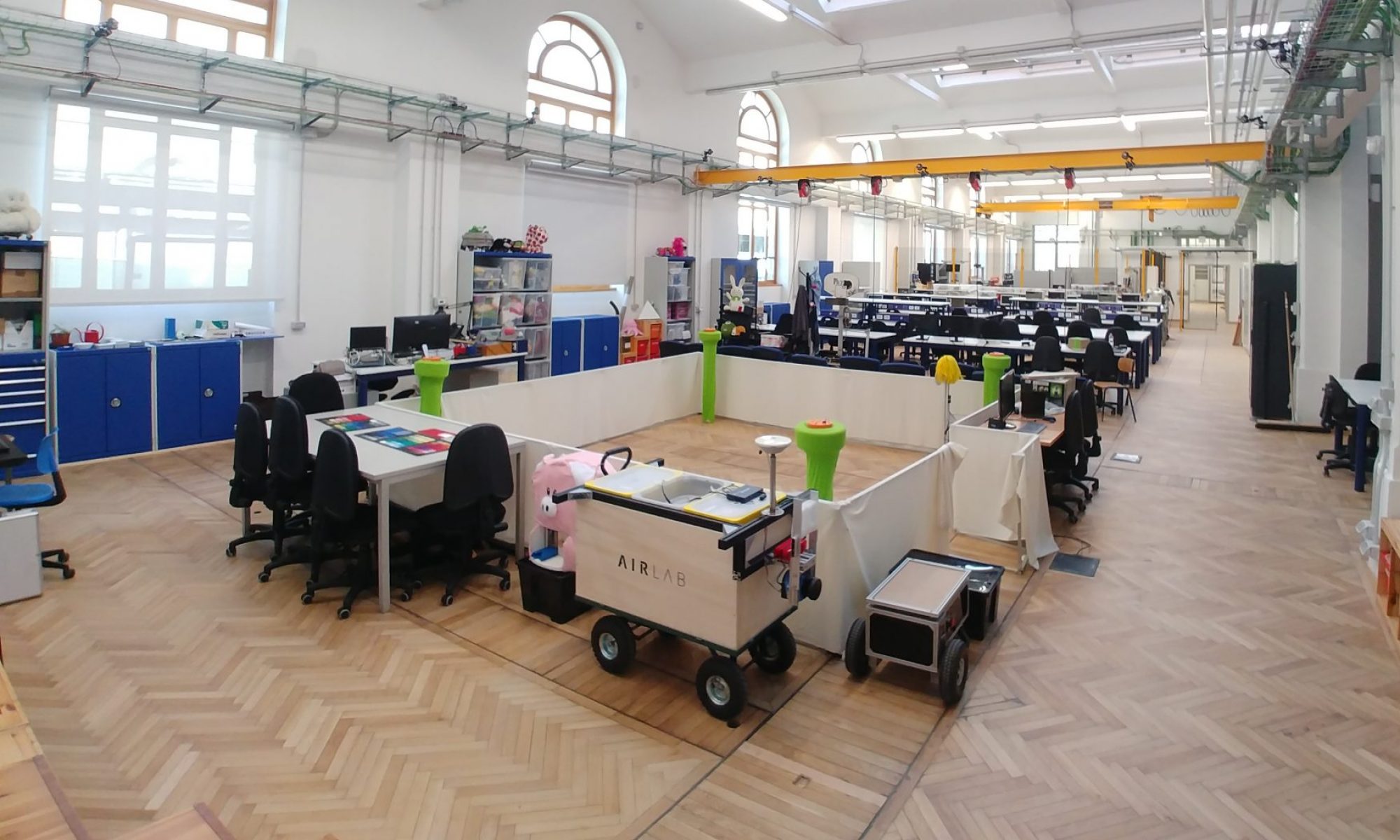
Andrea Bonarini is a Professor at the Department of Electronics, Information, and Bioengineering (DEIB) within the School of Industrial and Information Engineering at Politecnico di Milano. His research focuses on Artificial Intelligence , Robotics , and Human-Robot Interaction , particularly in assistive technologies for children with disabilities and autism therapy. Key Research Areas: Reinforcement Learning, Social Robotics, Affective Computing, Accessibility in Robot Design Notable Projects: Development of frameworks like Mushroomrl and datasets like POLIMI-ITW-S for robotics research His recent publications highlight advancements in playful robotics for neurodevelopmental disorders, emotion projection in non-bio-inspired robots, and safety experiments for small social robots interacting with children. He also contributes to ethical, social, and psychological challenges in robotics applications.