Dr. Rocco Porreca is a Senior Lecturer in Marketing at Oxford Brookes Business School, specializing in sport business and cryptocurrency sponsorship. He teaches undergraduate and postgraduate courses including Marketing in Context and Customer Insight. His research examines betting behaviors, employability in sport management, and societal impacts of sports technologies. Recent publications analyze corruption in elite sports and psychological barriers to cryptocurrency adoption. Porreca presents at international conferences like EASM and collaborates on NSF-funded projects. His industry experience includes roles in professional tennis with the USTA Player Development program.
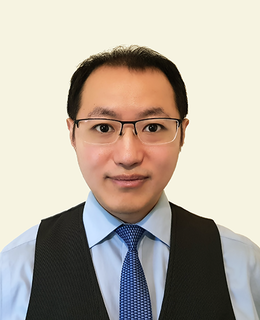
Shu (Scott) Li is an Assistant Professor in the School of Communication at the University of Akron. His research focuses on interpersonal influence, health persuasion campaigns, and nutrition intervention for healthy eating, particularly exploring how health messages spread through interpersonal communication to affect individual outcomes. He holds a Ph.D. from Pennsylvania State University (2022), an M.A. from Wake Forest University (2016), and a B.A. from the University of Shanghai for Science & Technology (2009). Dr. Li's work investigates the dynamics of campaign-induced conversations, including message effects, fear appeals, and reactance in health communication contexts. His research has been published in journals like Health Communication , Human Communication Research , and Journal of Gaming & Virtual Worlds . He teaches courses in Health Communication, Persuasion, and Communication Research Methods. His areas of responsibility include strategic communication and organizational communication.
Martha Murray, MD, is Professor of Orthopedic Surgery at Harvard Medical School and Orthopedic Surgeon-in-Chief in the Department of Orthopedics and Sports Medicine at Boston Children’s Hospital. An internationally recognized authority on ACL injuries, she pioneered the FDA-approved Bridge-Enhanced ACL Restoration (BEAR) technique that enables the torn ligament to heal without graft harvest. Her clinical practice focuses on knee injuries in athletes of all ages, while her NIH- and NFL-PA-funded research program integrates tissue engineering, quantitative MRI, and translational large-animal models to prevent post-traumatic osteoarthritis. Education & Training BS, Mechanical Engineering, University of Delaware, 1987 MS, Materials Science and Engineering, Stanford University, 1990 MD, University of Pennsylvania, 1994 Internship, Massachusetts General Hospital, 1995 Residency, Harvard Combined Orthopedic Residency Program, 1999 Fellowships, Pediatric Orthopedics & Sports Medicine, Boston Children’s Hospital, 2002 Research Focus Dr. Murray’s work centers on understanding why the ACL fails to heal and developing in-situ biologic solutions that restore native ligament anatomy while limiting secondary osteoarthritis. Her laboratory has created collagen-platelet scaffolds, optimized quantitative MRI biomarkers (T2*, volumetrics), and leveraged multi-omics profiling to monitor ligament remodeling. Recent efforts apply deep-learning models to predict reinjury risk and integrate telehealth to reduce disparities in pediatric sports-medicine care. Scientific Awards Kappa Delta Award – highest research honor in orthopedic surgery Cabaud Memorial Award – premier award in sports-medicine research Clinical Trials & Funding She is principal investigator on FDA-regulated first-in-human and multi-center randomized trials validating the BEAR technique, supported by the NIH and the NFL Players Association. These studies demonstrated non-inferiority to traditional ACL reconstruction at two years while preserving proprioception and native anatomy. Ongoing work examines six-year outcomes and long-term osteoarthritis prevention. Labs & Teams Dr. Murray directs the Sports Medicine Research Laboratory at Boston Children’s Hospital, uniting orthopedic surgeons, bioengineers, imaging scientists, and data scientists to advance ligament repair technologies from bench to bedside.
Patrick Maillé is a Researcher at IMT Atlantique , affiliated with the Dionysos team at IRISA . He holds a PhD in applied mathematics (2005, IMT Atlantique) and a habilitation (HDR, 2015, Rennes 1 University). His academic career includes visiting appointments at Columbia University (2006) and UC Berkeley (2014-2015). Research Interests: Maillé specializes in telecommunications economics with a focus on Network neutrality and ICT regulation Game theory applications in network resource allocation Smart grid economics 5G/6G network slicing economics IoT network optimization Scientific Contributions: His recent work addresses strategic bandwidth pricing in next-generation networks, network neutrality monitoring tools, and auction mechanisms for 5G spectrum sharing. Notable publications examine the economic implications of network slicing, smart grid management via bandit algorithms, and regulatory impacts of the Digital Markets Act. Awards: Best paper award at IEEE SDP 2016 Best short paper award at LANOMS 2015 Academic Service: Guest Editor for special issues on Network Economics and Regulation in the Internet of Things and Net Neutrality. Served as TPC co-chair for ICQT 2017 and NetGCOOP 2016 conferences. Teaching: Coordinator of the final-year networks specialization program (360 hours per student) at IMT Atlantique's Rennes campus, covering IoT, mobile networks, and cybersecurity tracks.
Matthew Guzdial is an Assistant Professor in the Department of Computing Science at the University of Alberta, part of the Faculty of Science. He specializes in artificial intelligence, machine learning, and their applications in game design and human-AI collaboration. His teaching includes MMA 606: Machine Learning for Business II, focusing on advanced techniques for unstructured data analysis in business contexts. Research interests include procedural content generation via machine learning (PCGML), reinforcement learning, and AI-driven solutions for healthcare and game development. He explores topics like human-AI interaction frameworks, co-creative systems, and ethical considerations in AI integration. His work spans interdisciplinary areas such as generative AI, explainable AI, and AI-assisted design tools. Recent contributions emphasize real-world applications of reinforcement learning in personalized exposure therapy and complex environments. He also investigates AI's role in enhancing player experiences through dynamic game content generation and balancing. Publications highlight advancements in neural network architectures, level design algorithms, and AI-driven creative processes. No scientific awards are explicitly mentioned in the provided texts. His advising and grants activities are not detailed here, but his extensive publication record indicates active research collaboration and project leadership in AI and game development domains.
Michael Haupert is a Professor of Economics at the University of Wisconsin-La Crosse. His expertise lies in economic history with a focus on cliometrics and the economics of sports and entertainment. He teaches courses like Global Macroeconomics and American Economic Development. His research explores topics ranging from baseball's financial history to institutional development in professional sports. Notably, he authored work on the origins of the Chicago White Stockings, highlighting foundational contributions to modern professional sports. His scholarship bridges economic theory and historical analysis, with a strong emphasis on quantitative methods in understanding historical economic phenomena. Dr. Haupert's publications span over three decades, addressing issues like labor market dynamics in sports, financial strategies of franchises, and methodological innovations in cliometrics. His work frequently intersects with institutional economics, examining how organizational structures shape economic outcomes in entertainment industries. Though no awards are explicitly listed, his extensive publication record underscores his scholarly impact. He maintains an active presence in economic history circles, contributing to both theoretical and applied research in the field.
Dr. Nathan Prestopnik is Professor of Virtual & Augmented Reality and Co-Director of the Shenandoah Center for Immersive Learning (SCiL) at Shenandoah University. He holds a Ph.D. in Information Science from Syracuse University, along with degrees in film production, history, and new media. Prestopnik's research bridges game design, historical simulation, and interactive storytelling. Current projects include "Ghosts of the Argonne" (WWI VR experience), "Wilton House VR" (historical plantation recreation), and "Caged Birds AR" (augmented reality for live performance). His work emphasizes immersive technologies for education, historical preservation, and artistic expression. With over 15 years of interdisciplinary research, Prestopnik has published extensively on game design, citizen science, and human-computer interaction. He brings professional experience as a UI/UX designer and filmmaker to his academic work, creating innovative approaches to immersive media design and evaluation.
Ginger Killian, Ph.D. is an Associate Professor of Marketing at the Crummer Graduate School of Business, Rollins College. Her academic career focuses on integrating real-world marketing strategies into educational frameworks. She previously held an academic role where she repositioned an MBA program, achieving 200% growth in two years, and currently advises a start-up in the direct mailing industry. Dr. Killian holds a Ph.D. from the University of Georgia, an MBA from Tennessee Tech University, and a BSBA from the University of Tennessee at Chattanooga. Before academia, she worked in Fortune 500 companies like Philips Electronics and American Honda Motor Company, gaining expertise in advertising, sales, CRM, and logistics. Her research explores marketing education innovation, consumer behavior during life transitions, digital marketing ethics, and social media strategy. Notable themes in her work include societal impact in classrooms, cross-cultural consumer responses to emerging technologies like deepfakes, and the intersection of gaming mechanics with brand engagement. Dr. Killian’s teaching emphasizes problem-solving through real-world case studies, reflecting her industry experience. She advocates for integrating quantitative skills into marketing curricula and has developed co-creation frameworks for university-industry partnerships. No specific grants or labs are explicitly noted, though her start-up involvement suggests applied research collaboration.
Professor Aristea Koukiadaki serves as Professor of Labour Law and Industrial Relations at the University of Manchester's School of Law, where she joined in September 2014. She maintains significant external affiliations as Research Associate at the University of Cambridge's Centre for Business Research, the London Centre for Corporate Governance and Ethics (Birkbeck College), and the New Zealand Work and Labour Market Institute. Her professional standing includes membership in the Transnational Trade Union Rights Experts' Group of the European Trade Union Institute and the executive committee of the Institute of Employment Rights. Her research expertise spans empirical socio-legal analysis with specialized focus on labour law systems, industrial relations frameworks, and EU social policy development. Key methodological approaches include social systems theory and the capability approach applied to supranational regulation. Current investigations examine the evolution of remedial rules across national labour law systems through the ERC-funded CURE project, while recent work has addressed public procurement's role in promoting decent work and the enforcement challenges of EU labour law. Analysis of her publication trajectory reveals consistent engagement with critical labour law challenges including collective bargaining adaptation during economic crises, judicial impacts on industrial action, and regulatory responses to precarious work. Her scholarship demonstrates strong interdisciplinary connections between legal doctrine, industrial relations practice, and social policy implementation across European contexts. ERC Consolidator Grant (2024-2029) for Classifying and Understanding Remedies in Comparative Labour Law (CURE) Leverhulme Trust Research Fellowship European Commission and European Foundation funding for multiple comparative projects Global Players' Union (FifPro) research collaboration Professor Koukiadaki has secured substantial research funding from the Economic and Social Research Council, European Commission, European Foundation for the Improvement of Living and Working Conditions, and International Labour Organisation. Her policy impact extends through expert consultancy for the European Parliament, European Trade Union Confederation, and Council of Europe committees. Current leadership of the Work and Equalities Institute research beacon demonstrates her institutional commitment to advancing labour market equality research.
Asen Ivanov is a Professor in the School of Economics and Finance at Queen Mary University of London. He holds a PhD from The Ohio State University (2007) and specializes in public economics and behavioral economics. His work focuses on taxation policy, social choice theory, and experimental analysis of decision-making under uncertainty. Education: PhD in Economics, The Ohio State University, 2007 Research Interests: Public policy design and optimal taxation Behavioral biases in economic decisions Experimental methods in social choice and game theory His recent work addresses societal disagreements over tax systems and explores dynamic inconsistency in strategic environments. Professional Activities: Maintains an active research agenda with over 15 peer-reviewed publications Teaches advanced courses in public economics and behavioral decision theory Office: GC422 | Email: a.ivanov@qmul.ac.uk
Dr. Michaela MacDonald is a Senior Lecturer in Law and Technology at Queen Mary University of London's School of Electronic Engineering and Computer Science. Her teaching focuses on interdisciplinary modules such as Cybersecurity Law, IoT Product Development and Management, and Product Development and Marketing through the BUPT joint programme. These courses address legal implications of emerging technologies, digital privacy challenges, and innovative business strategies in technology sectors. Her research explores intersections between technology and law, particularly in areas like intellectual property in digital environments, video game industry regulation, and ethical challenges posed by autonomous systems. She has published extensively on topics including copyright enforcement in gaming, digital colonialism critiques, and legal frameworks for virtual property. Notable areas of focus include: Regulatory responses to emerging technologies Copyright law adaptation for digital content Psychological and legal aspects of gaming mechanics Historical legal analogies for modern AI governance Ethical considerations in IoT and product development Her work bridges technical innovation with legal scholarship, addressing both substantive legal challenges and procedural gaps created by rapid technological advancement. Current research trends emphasize digital rights management, platform liability, and the evolving role of law in mediating technological progress.
Prof. AF (Frank) van der Stappen is a Professor of Robotics and Automation at Utrecht University's Faculty of Science, Department of Information and Computing Sciences. He also holds a position at University College Roosevelt. His research focuses on robotics (grasping, manipulation, motion), algorithmic automation, simulation, computational geometry, and computer animation. He has been an IEEE Fellow since 2017. His work emphasizes geometric computing and its applications in automation, with contributions to form-closure grasping, path planning, and virtual character animation. Education: PhD in Motion Planning from Utrecht University (1994), MSc in Distributed Data Structures from Eindhoven University of Technology (1988). Research Interests: Robotics (manipulation/grasping), algorithmic automation, geometric algorithms, computer animation, and crowd simulation. His work bridges theoretical foundations with practical applications in manufacturing, virtual environments, and agricultural robotics. Awards: IEEE Fellow (2017). Advisees/Grants: No explicitly listed students, but extensive collaborative work with researchers like Elon Rimon, Ken Goldberg, and Mark Overmars. His research includes grants related to motion planning, caging, and automation. Labs/Teams: Involved in geometric computing and robotics teams at Utrecht University, contributing to Game Research themes and interdisciplinary projects.
Dr. Mathieu Barthet is a Senior Lecturer in Digital Media at Queen Mary University of London (School of Electronic Engineering and Computer Science). He leads research in Music Information Retrieval, Affective Computing, and Extended Reality (XR), with a focus on AI-driven musical interfaces and human-computer interaction. His work spans music emotion recognition, smart instruments, and participatory music systems. Education: MSc in Electronics & Computer Science (Paris VI University/Ecole Polytechnique de Montréal) MSc in Acoustics (Aix-Marseille II University/Ecole Centrale Marseille) PhD in Acoustics, Signal Processing & Computer Science applied to Music (Aix-Marseille II University/CNRS-LMA) Research: Over 100 peer-reviewed publications in fields like audiovisual interfaces, music recommendation, and AI ethics Key projects include the Internet of Musical Things (IoMT), AudioCommons, and mood-driven interactive systems Develops tools for music production collaboration (e.g., Open Symphony, Playsound.space) Grants & Collaborations: Lead on EU Horizon 2020 grants (IoMT, AudioCommons) Co-director of the EPSRC Centre for Doctoral Training in AI & Music Industry partnerships with companies like Music Tribe and Innovate UK Labs & Teams: Member of the Centre for Multimodal AI Conducts research through the Digital Music Lab (DML) initiative
Richard Zhao is an Assistant Professor in the Department of Computer Science at the University of Calgary. He leads the Serious Games Research Group , focusing on developing immersive technologies (e.g., VR, eye-tracking) and AI algorithms to enhance training, learning, and education through serious games. His work emphasizes adaptive experiences and automated content generation for educational applications. Research Interests: Serious Games for Education Artificial Intelligence in Virtual Environments Immersive Technologies (VR/AR) Collaborative Systems Procedural Content Generation Recent Work Trends: Recent publications highlight advancements in AI-driven poetry generation, VR interaction techniques, and collaborative problem-solving models. His work often bridges computational methods with human-centric design, particularly in manufacturing simulations and educational VR systems. Labs/Teams: He oversees the Serious Games Research Group, hosting projects like the Immersive Virtual School (IVS) and GEARS: Gearing up for Education . These initiatives integrate AI and VR to address real-world training challenges in engineering and education. Teaching: Teaches graduate and undergraduate courses on Game AI, Game Development, and introductory computer science. Courses include CPSC 686 (Research in Game AI) and CPSC 586 (Game AI) .
Fredrik Breien is an Associate Professor at the University of Bergen, affiliated with SLATE (Centre for the Science of Learning & Technology). He leads educational programs at SLATE and oversees development of the Interdisciplinary Master in Artificial Intelligence and Learning Sciences, launching in 2026. His research focuses on collaborative design frameworks like eLuna, which empowers stakeholder participation in creating narrative-driven game-based learning tools. With 20+ years of industry experience, he has designed over 60 game-based learning systems for museums, education sectors, and public initiatives. Education background includes advanced qualifications in informatics and media studies. Research emphasizes narrative structures in serious games, specifically evaluating how non-linear narratives enhance engagement and learning outcomes. Key contributions include the eLNVM model for categorizing narratives in educational games and the mixed-reality visual language system in eLuna framework. Current work bridges academic research with practical applications, collaborating with science centers and educational institutions to develop immersive learning experiences. His interdisciplinary approach addresses challenges in stakeholder collaboration, situational awareness in teams, and curriculum integration through game-based methods.








-(1).jpg)