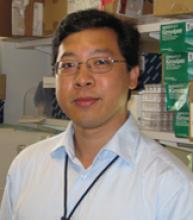
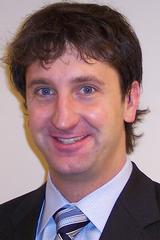
Dr. Wouter Frencken is a researcher at the University of Groningen , affiliated with the Department of Human Movement Sciences under the Faculty of Behavioural and Social Sciences. His work focuses on: Sports Science Performance Dynamics Psychophysiological Interactions Talent Scouting Resilience in Sports Data-Driven Sports Analysis Recent publications emphasize network approaches to athlete performance and non-ergodic processes in load-recovery dynamics. He received the Young Investigator Award for Best Poster Presentation (2022) for collaborative research with international institutions. Frencken co-organizes the Football Science Groningen Award series and contributes to open-access datasets on platforms like DataverseNL.
Dr. Carl Singleton is a Senior Lecturer in Economics at the University of Stirling's Stirling Business School, where he leads research in macroeconomics, labor economics, and sports analytics. He maintains active affiliations as an IZA Research Fellow and contributes to the ESRC/UKRI Wage and Employment Dynamics project. His research examines wage determination mechanisms, labor market inequalities, and behavioral economics applications in sports. Singleton's recent work integrates natural experiments with large-scale data analysis to study: Wage policy impacts on labor mobility and firm behavior Referee decision biases in sports under varying conditions Economic implications of superstar athletes on consumer markets Methodological innovations in labor survey data analysis Publication analysis reveals three dominant themes: 1) Advanced econometric studies of wage structures and inequalities, 2) Behavioral economics applications in sports officiating and prediction markets, and 3) Policy evaluations of minimum wage impacts using novel datasets. His 2024-2025 articles demonstrate increased focus on gender/ethnic wage gaps and cross-disciplinary sports economics research. Key recognitions include: MIT Sloan Sports Analytics Research Paper Award (2025) IZA Research Fellowship Singleton coordinates with the Sport Social Science Research Group and maintains active collaborations on labor economics projects examining wage rigidity and employment dynamics across UK firms.
Dennis Kramer is an Assistant Professor of Orthopedic Surgery at Harvard Medical School and an orthopedic surgeon at Boston Children's Hospital specializing in pediatric sports medicine. He serves as the Team Physician and Orthopedic Consultant for the University of Massachusetts at Boston and previously served as the head orthopedic team physician for the 2012 USA under-19 men's lacrosse team. Education: BA in Molecular Biology, Princeton University (1997) MD, New York University School of Medicine (2001) Residency in Orthopedic Surgery, Johns Hopkins University (2006) Fellowship in Pediatric Sports Medicine Surgery, Boston Children's Hospital (2006) Dr. Kramer specializes in knee, shoulder, and ankle injuries in children and young adults, with particular expertise in ACL injuries, patellar instability, meniscus tears, and pediatric fracture care. His research focuses on biomechanics, surgical outcomes, psychological aspects of recovery, and innovative techniques in pediatric sports medicine. As a former NCAA champion lacrosse player at Princeton, he brings a unique athlete's perspective to his clinical practice and understands the physical and emotional aspects of sports injuries. Dr. Kramer's research portfolio demonstrates a strong emphasis on evidence-based approaches to pediatric sports medicine, with numerous publications in top orthopedic journals. His work often involves large cohort studies and innovative methodologies including machine learning applications in predicting surgical outcomes. Certifications: American Board of Orthopedic Surgery (General) American Board of Orthopedic Surgery (Sports Medicine) Dr. Kramer maintains an active clinical practice focused on collaborative care with patients and families. He is involved in teaching medical personnel and peers, and serves on committees for national medical societies including POSNA, AAP, and AOSSM. His clinical philosophy emphasizes understanding the injury, discussing treatment options, and making fully informed decisions with patients to optimize healing.
Mathias Hegele is a Professor at the Faculty of Psychology and Sports Science, Justus-Liebig Universität Gießen. His research focuses on motor learning, predictive error processing, and the neural mechanisms underlying human agency and sports performance. Project B6: Investigates predictive error perception in natural environments Project C5: Explores animate-inanimate distinctions in action and language perception His work combines neurophysiological methods with behavioral experiments, spanning studies on elite basketball players, schizophrenia patients, and general motor adaptation. Collaborators include Prof. Dr. Hermann Müller and Dr. Lisa Maurer. Recent publications analyze: Mechanisms of outcome prediction in sports Neural correlates of error valuation Agency perception in biological motion tracking Sensory signal integration in motor tasks He advises PhD students Theresa Brand and Lea Junge-Bornholt, with email contact mathias.hegele@sport.uni-giessen.de.
Nenad Rogulj is a Full Professor at the Faculty of Kinesiology, University of Split, Croatia. With a career spanning decades, his academic work focuses on handball biomechanics, talent identification, and kinesiological engagement in students. He has led curriculum development for handball at Split’s Faculty of Kinesiology and contributed to innovative methodologies in sports training and performance evaluation. His research spans handball tactics , motor ability testing , and anthropological analysis of athletes, particularly goalkeepers. He pioneered the use of expert systems for talent scouting and explored the impact of exercise motivation on youth. Recent publications analyze Olympic performance of Croatian regions, gender differences in physical activity, and age-adapted sports equipment design. While no specific awards are listed, his extensive publication record (over 15 recent articles) highlights his expertise in handball performance metrics, kinesiological engagement, and health behavior analysis. He has also contributed to curriculum design for mini-handball, beach handball, and sports coaching certifications.
Corey Clark, Ph.D., serves as Deputy Director of Research and Assistant Professor in the Department of Computer Science and Engineering at Southern Methodist University's Lyle School of Engineering. He leads the Human and Machine Intelligence (HuMIn) Game Lab, pioneering research at the intersection of gaming, artificial intelligence, and human computation to solve large-scale problems in healthcare, education, and national security. Dr. Clark holds a Ph.D., M.S., and B.S. in Electrical Engineering from The University of Texas at Arlington, where he graduated Magna Cum Laude for his undergraduate degree. His doctoral research focused on nanoscale modeling and simulation techniques for Molecular Beam Epitaxy and Chemical Vapor Deposition of exotic materials. His research spans Artificial Intelligence, Game Development, Human Computation, Distributed Computing, Machine Learning, Computational Biology, and Educational Technology. Clark is renowned for transforming commercial video games into distributed computing platforms through human computation, enabling breakthroughs in medical diagnostics and educational technology. His technical innovations in HTML5/JavaScript multithreading have been featured at major international game conferences. Analysis of Clark's 15 most recent publications (2022-2024) reveals a dominant focus on generative AI applications integrated with gaming mechanics, particularly for knowledge graph enhancement, medical diagnostics, and computational thinking education. Key trends include explainable AI systems, human-AI collaboration through gameplay, blockchain applications, and privacy-preserving machine learning, demonstrating consistent innovation in applying game-based approaches to real-world problems. Dr. Clark has secured over $1.7 million in competitive research funding, including: Human Computation for Ocular Tomography Analysis ($62,924) with Retina Foundation Cryptocurrency Transactional Analysis via Gaming ($60,000) with Raytheon Game-Based Adult Literacy (XPrize) ($480,000) Flexible Electronics for Airborne Laser ($820,000) with Missile Defense Agency Networked C4ISR Chip ($850,000) with US Army As CTO for Dallas-based game technology companies, Clark has helped raise over $12 million in startup funding. His HuMIn Game Lab currently develops immersive gameplay systems for cancer treatment research using crowdsourced computation and machine learning, with recent projects including therapeutic discovery platforms and blockchain-based task completion systems.
Andreas Ihle is an Assistant Professor in the Department of Psychology at the University of Geneva's Faculty of Psychology and Educational Sciences, where he conducts interdisciplinary research on human development across the lifespan. He is affiliated with the LIVES Centre (Interdisciplinary Centre for Research on Vulnerability and Social Inequalities across the Lifespan) and serves as a Research Group Leader focusing on cognitive aging and vulnerability. Dr. Ihle received his PhD in Psychology from the University of Geneva in 2013 and completed his M.Sc. in Psychology at Technische Universität Dresden, Germany in 2010. His academic career at the University of Geneva has progressed from Post-Doctoral Research Assistant (2013-2015) to Research and Teaching Fellow (2015-2021), Senior Research Associate (2021-2022), and currently Assistant Professor since 2022. His research spans multiple domains of lifespan development with particular emphasis on cognitive aging, vulnerability processes, and cognitive reserve mechanisms. Dr. Ihle investigates how physical activity, health literacy, and social factors influence cognitive functioning in later adulthood, with numerous studies examining longitudinal relationships between these variables across European populations. His work frequently employs advanced statistical approaches to analyze large-scale interdisciplinary longitudinal datasets, with a methodological focus on mediation and cross-lagged analyses. Analysis of his recent publications reveals a strong concentration on gerontological research with particular attention to cognitive reserve mechanisms, physical activity interventions, and mental health outcomes in older populations. His work demonstrates consistent application of sophisticated longitudinal methodologies across multiple European countries, with increasing focus on sex differences in aging processes and the interplay between physical and cognitive health domains. As a Research Group Leader at the Center for the Interdisciplinary Study of Gerontology and Vulnerability, Dr. Ihle has supervised numerous research projects and collaborated extensively with international colleagues across Europe. His research has been supported through various institutional and collaborative funding mechanisms, though specific grant details are not provided in the available documentation. His laboratory work primarily involves secondary data analysis of large longitudinal studies of aging, with recent expansion into experimental approaches including dual-task physical-cognitive training interventions. Dr. Ihle's research has significant implications for developing interventions to maintain cognitive health in later life and understanding the complex interplay between physical activity, cognitive reserve, and mental health outcomes across the aging process.
Dr. Stefan Muljo serves as Chief of the Integrative Immunobiology Section within the Laboratory of Immune System Biology at the National Institutes of Health (NIH). Appointed as a tenure-track investigator in 2008 and promoted to tenured Senior Investigator in 2016, he leads a research program focused on understanding post-transcriptional regulation of immune system development. His section is part of NIAID's Division of Intramural Research located at the NIH Main Campus in Bethesda, MD. Dr. Muljo earned his Ph.D. from The Johns Hopkins University School of Medicine, with dissertation work partially conducted at UC Berkeley. Following a postdoctoral fellowship at Harvard Medical School's Immune Disease Institute, he joined NIAID in 2008. He currently serves as faculty for the NIH-OxCam and NIH-Penn graduate partnership programs, mentoring the next generation of immunologists and RNA biologists. His research centers on RNA biology within the immune system, specifically investigating how gene expression programs are regulated post-transcriptionally through RNA-binding proteins, long non-coding RNAs, and microRNAs. Key research areas include hematopoietic stem cell differentiation, fetal versus adult hematopoiesis, regulation of human endogenous retroviruses, and the function of innate-like B-1 cells. His work has identified important molecular players like Lin28b as lineage-determining factors for fetal hematopoietic stem cells, with significant implications for regenerative medicine. Analysis of Dr. Muljo's publication record reveals consistent contributions to understanding post-transcriptional regulation in immunology, with recent work focusing on RNA-binding proteins like MATRIN3 and RBM4, macrophage polarization in allergy, and B lymphocyte development. His research spans fundamental mechanisms of gene regulation to potential therapeutic applications, particularly in manipulating microRNAs for immune modulation. Dr. Muljo actively participates in training through the NIH-OxCam Partnership Program, offering joint doctoral studentships to study fetal hematopoiesis in both mouse models and human systems. His laboratory employs an integrative systems biology approach combining genome-wide measurements with experimental perturbations to reverse engineer molecular logic of cellular differentiation. His laboratory maintains an active research program investigating how post-transcriptional regulation contributes to immune system development and function, with particular interest in translating basic discoveries to improve human health, especially for conditions like sickle cell disease and beta-thalassemia. The section's work on fetal hemoglobin production has led to a pending patent application with potential therapeutic applications.
Daniel Cortes is an Associate Professor in the Department of Mechanical and Nuclear Engineering at Pennsylvania State University, affiliated with the Center for Acoustics and Vibration. His research focuses on biomechanics, developing non-invasive diagnostic techniques for musculoskeletal disorders. Research Areas: Biomechanics, Mechanobiology, Biomaterials, Medical Imaging, Finite Element Analysis, and Musculoskeletal Disorders. Publication Trends include applications of shear wave/MR elastography, radiofrequency ablation analysis, and computational modeling of tendon, muscle, and spinal disc mechanics. Recent work explores integrating deep learning into thermal therapy prediction and virtual reality for engineering education. Advising includes PhD students like Ali Sadeghi (defended 2019) and Tugba Kumru , alongside MSc student Heer Patel . His lab has contributed to journals such as Journal of Orthopaedic Research and ASME Journal of Medical Diagnostics . Laboratory Activities center on non-invasive muscle/tendon diagnostics, RFA effects on spinal function, and educational innovation via VR applications. The team presented at conferences like SB3C and CMBBE.
Dr. S. Ganesh is a Professor in the Department of Biological Sciences & Bioengineering at the Indian Institute of Technology Kanpur (IIT Kanpur). His research focuses on neurodegenerative disorders, stress biology, and human molecular genetics. Dr. Ganesh received his PhD from Banaras Hindu University in 1996, MSc from University of Madras in 1990, and BSc from University of Madras in 1988. His research interests center around neurodegenerative disorders, which are characterized by progressive loss of neural tissues resulting in movement abnormalities, cognitive decline, and in certain cases early death. His major research focus is to identify and characterize molecular players in neurodegenerative pathways through genetic screens in affected families and cellular/animal models for testing and validating hypotheses. His publications demonstrate significant contributions to understanding neurodegenerative pathways, particularly related to Lafora disease and protein misfolding disorders. His work spans molecular biology, cell biology, and genetics with applications in understanding and potentially treating neurodegenerative conditions. Fellow, National Academy of Sciences, India (2012) Ramanna Fellowship (Dept. of Science & Technology) (2012-2015) CDRI Award for Excellence in Drug Research (CDRI, Lucknow) (2012) DAE-SRC Outstanding Research Investigator Award (Dept. of Atomic Energy, Govt. of India) (2010) B.M. Birla Science Prize in Biology (BM. Birla Science Centre, Hyderabad) (2008) Dr. Ganesh teaches courses in Molecular Cell Biology and Human Molecular Genetics. His research has been supported by various prestigious fellowships and awards, enabling his laboratory to make significant contributions to the field of neurodegenerative disorders. His laboratory at IIT Kanpur focuses on identifying critical molecular players in neurodegeneration, which is considered the first step toward developing effective therapeutics for these conditions.
Michael A Terry, MD serves as Professor of Orthopaedic Surgery and Medical Education at Northwestern University Feinberg School of Medicine, holding the Dr. Charles and Leslie Snorf Professorship. He is Head Team Physician and Medical Director for the Chicago Blackhawks, Team Physician for USA Volleyball and U.S. Ski Team, and Team Physician for Northwestern University Varsity Athletics. MD: University of Chicago (1998) Residency: Hospital for Special Surgery (2003) Fellowship: Steadman-Hawkins Clinic, Orthopedic Sports Medicine (2004) MBA Candidate: Northwestern Kellogg School of Business (2026) Dr. Terry's research focuses on sports injury mechanisms, arthroscopic techniques, and joint preservation with emphasis on shoulder and knee pathologies. His clinical work bridges engineering principles with orthopedic surgery, particularly in minimally invasive procedures for athletes across age groups. Current investigations include biomechanical analysis of sports injuries and outcomes of cartilage repair techniques. His recent publications demonstrate expertise in basketball injury prediction models, ACL revision risk factors, and geriatric shoulder instability management. Key trends show increasing focus on data-driven injury prevention and personalized surgical approaches for high-performance athletes. Chicago Top Doctor - Orthopedic Surgery (2023) Feinberg Outstanding Teacher Award (2022) Charles Neer Award for Shoulder Research (2012) Alpha Omega Alpha Honor Medical Society (1997) As Program Director for the Orthopedic Sports Medicine Fellowship, Dr. Terry mentors future sports medicine specialists while managing complex clinical cases across multiple elite athletic organizations. His NHL role involves 24/7 medical oversight for player trades and family healthcare needs, demonstrating unique integration of academic medicine with professional sports. Current grants focus on concussion safety protocols and joint preservation techniques. Dr. Terry leads Northwestern's collaboration with the NHL Team Physician Society as Vice President, driving research on hockey injury patterns through the NHL Research Committee. His clinical team develops protocols for rapid injury assessment during games and implements engineering-based rehabilitation strategies.
Ruben Schlagowski is a scientific employee at the Chair for Human-Centered Artificial Intelligence , part of the Faculty of Applied Informatics at the University of Augsburg . His work bridges Human-Computer Interaction with Musical XR , Sonic Interaction Design , and Extended Reality , focusing on creativity support systems and immersive experiences. Research spans Mixed Reality , AI ethics , and physiological computing Active in IEEE International Workshop on the Musical Metaverse (IWMM) and reviewing for CHI , ISMAR , and other top venues Recipients of multiple Honorable Mentions at IEEEVR , C&C , and CHI Supervised 8 Master's theses and 5 Bachelor's theses in interactive systems Publishes on AI explainability , creative tools , and physiological human-machine symbiosis , with recent work on XR-based music production , GAN manipulation , and AI bias awareness through VR. His projects integrate computer vision , audio analysis , and user-centered design to create systems that adapt to human needs. Scientific accolades include: IEEEVR 2022 - Honorable Mention C&C 2022 - Honorable Mention CHI 2024 - Honorable Mention HCMKDT Best Driver Awards (2023) His research explores the intersection of music technology , immersive systems , and ethical AI , with a focus on user experience optimization in mixed reality environments and alterfactual explanation frameworks for AI transparency.
Tim Murray is an Adjunct Assistant Professor in the Department of Economics at Bentley University and a Research Statistician and Health Economist at the U.S. Army Research Institute of Environmental Medicine (USARIEM), where he also serves as Director of the Data and Decision Sciences Program. Dr. Murray received his Ph.D. from the University of Connecticut in 2019, and holds an M.B.A. and M.A. from Old Dominion University (2013), as well as a B.A. in Economics with a minor in Applied Mathematics from the same institution. His research focuses on applying quasi-experimental statistics and machine learning to medical records, administrative records, surveys, and experimental data to study how policies and interventions impact the health and performance of Warfighters. His work spans several key areas of economics including Health Economics, Labor Economics, Urban Economics, and Public Economics. Dr. Murray has presented research on the Army's Health and Holistic Fitness Program (H2F) at the Military Health System Research Symposium, examining its impact on Soldiers' metabolic health. He works extensively with the Soldier Performance, Health, and Readiness Database (SPHERE), a comprehensive health economic and epidemiological tool. Health Policy Health Outcomes Warfighter Health and Performance Retirement Spending and Savings Public Policy Dr. Murray was recently honored as one of Old Dominion University's top 40 under 40 alumni. He is also an avid basketball player and fan.
Rodolfo Aramayo serves as Associate Professor in the Department of Biology at Texas A&M University, specializing in genetics, genomics, and computational approaches to biological information systems. His interdisciplinary work bridges molecular biology, bioinformatics, and epigenetics with significant editorial contributions to PeerJ across 20+ life science disciplines. His academic journey includes: B.S. in Molecular Biology, University of Brasilia (1982) M.S. in Molecular Biology, University of Brasilia (1986) Ph.D. in Genetics, University of Georgia (1992) Postdoctoral Training, University of Wisconsin Madison (1993) Postdoctoral Training, Stanford University (1997) Dr. Aramayo pioneered Digital Biology, a framework for converting biological information into digital formats to uncover genomic patterns through computational analysis. His laboratory investigates meiotic silencing in Neurospora crassa, focusing on how unpaired DNA triggers RNA-mediated silencing during meiosis. This work explores connections between fungal epigenetic mechanisms and analogous processes in nematodes and mammals, employing genetic, molecular, and biochemical approaches to identify key molecular players. His 15 most recent editorial contributions reveal a research trajectory spanning molecular diagnostics, cancer genomics, microbial ecology, and computational tool development. Articles demonstrate consistent focus on RNA mechanisms, genomic pattern recognition, and cross-species epigenetic comparisons, with increasing emphasis on computational biology applications since 2020. No scientific awards were documented in the provided materials. Dr. Aramayo maintains an active research laboratory investigating Digital Biology applications and meiotic silencing mechanisms. His editorial leadership at PeerJ demonstrates commitment to advancing life sciences scholarship, with recent contributions covering emerging RNA therapeutics, ancient DNA analysis, and sustainable agricultural microbiology. Current work extends Digital Biology approaches from animal genomes to fungal, plant, and bacterial systems.
Hamish Oliver serves as a Lecturer in Digital Screen within the Faculty of Arts at the University of Canterbury since 2006. Holding a Master's degree in composition, he bridges academic instruction with extensive professional practice in audio for interactive media and performance. His research focuses on interactive music systems for video games , adaptive audio implementation , and orchestral arrangement of contemporary music . Oliver pioneers techniques for dynamic audio that responds to user input in gaming environments while maintaining artistic integrity. His work explores the intersection of traditional composition and emerging technologies in live performance contexts. Notable achievements include the 2015 APRA Professional Development Award for video game composition, supporting his development of middleware proficiency (Wwise). His publications demonstrate expertise in VR training systems, game audio constraints, and theatrical game integrations. As musical director for major civic events including Christchurch earthquake memorials attended by international dignitaries, Oliver demonstrates leadership in large-scale audio production. His professional activities span performance with major orchestras, international touring, and commission work for New Zealand's leading cultural institutions.