معرفی
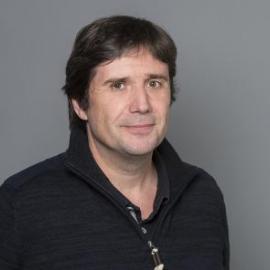
Andreas Ihle is an Assistant Professor in the Department of Psychology at the University of Geneva's Faculty of Psychology and Educational Sciences, where he conducts interdisciplinary research on human development across the lifespan. He is affiliated with the LIVES Centre (Interdisciplinary Centre for Research on Vulnerability and Social Inequalities across the Lifespan) and serves as a Research Group Leader focusing on cognitive aging and vulnerability.
Dr. Ihle received his PhD in Psychology from the University of Geneva in 2013 and completed his M.Sc. in Psychology at Technische Universität Dresden, Germany in 2010. His academic career at the University of Geneva has progressed from Post-Doctoral Research Assistant (2013-2015) to Research and Teaching Fellow (2015-2021), Senior Research Associate (2021-2022), and currently Assistant Professor since 2022.
His research spans multiple domains of lifespan development with particular emphasis on cognitive aging, vulnerability processes, and cognitive reserve mechanisms. Dr. Ihle investigates how physical activity, health literacy, and social factors influence cognitive functioning in later adulthood, with numerous studies examining longitudinal relationships between these variables across European populations. His work frequently employs advanced statistical approaches to analyze large-scale interdisciplinary longitudinal datasets, with a methodological focus on mediation and cross-lagged analyses.
Analysis of his recent publications reveals a strong concentration on gerontological research with particular attention to cognitive reserve mechanisms, physical activity interventions, and mental health outcomes in older populations. His work demonstrates consistent application of sophisticated longitudinal methodologies across multiple European countries, with increasing focus on sex differences in aging processes and the interplay between physical and cognitive health domains.
As a Research Group Leader at the Center for the Interdisciplinary Study of Gerontology and Vulnerability, Dr. Ihle has supervised numerous research projects and collaborated extensively with international colleagues across Europe. His research has been supported through various institutional and collaborative funding mechanisms, though specific grant details are not provided in the available documentation.
His laboratory work primarily involves secondary data analysis of large longitudinal studies of aging, with recent expansion into experimental approaches including dual-task physical-cognitive training interventions. Dr. Ihle's research has significant implications for developing interventions to maintain cognitive health in later life and understanding the complex interplay between physical activity, cognitive reserve, and mental health outcomes across the aging process.