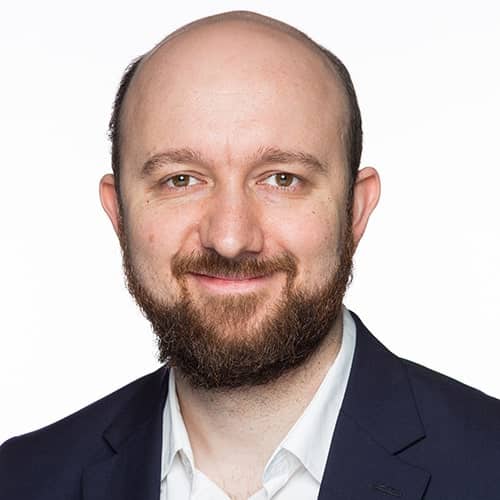
Konstantinos Kalogeropoulos is an Assistant Professor at the Department of Biotechnology and Biomedicine, Technical University of Denmark (DTU), leading research at the Cell Diversity Lab. His work bridges proteomics, computational biology, and snake venom research. Current projects: "The Proteomic Landscape during Influenza Infection" (2022-2025) Supervisor for PhD projects on protease network rewiring in psoriasis and wound exudate degradomics Research interests include: Proteomic analysis of inflammatory diseases Snake venom toxin structure prediction Extracellular matrix biomechanics De novo peptide sequencing algorithms Computational modeling of protease networks Recent article trends demonstrate his work in • Database-free proteomics (InstaNovo/InstaNexus) • Snake venom pathophysiology (V-ToCs clustering) • Inflammatory disease biomarkers (psoriasis, impaired healing) • Extracellular matrix mechanics (fibronectin tension, gut inflammation) Advising: Supervises PhD students Polhaus, C. J. M. and Haack, A. M., focusing on protease networks and wound healing.
Maria Timofeeva is an Associate Professor in the Epidemiology, Biostatistics and Biodemography (EBB) department at the University of Southern Denmark (SDU), with additional affiliation at the Danish Institute for Advanced Study (DIAS). She holds an Honorary Fellow position at the University of Edinburgh since December 2019. Her research focuses on cancer prevention and prediction, particularly studying the effects of environmental and genetic factors on cancer risk and progression. Dr. Timofeeva earned her Dr.sc.hum in Epidemiology from Heidelberg University (2005-2009), with a dissertation on genetic polymorphisms as risk factors for early onset lung cancer. Prior to her current position, she worked as a Statistical Geneticist at the University of Edinburgh (2013-2019) and as a Postdoctoral Fellow at the International Agency for Research on Cancer (2009-2013). Her research interests center around understanding the genetics of cancer risk through multi-omic analysis. She leads several significant projects, including the Interdisciplinary Project on Adherence to Colorectal Cancer Screening, meta-analysis of factors associated with false-positive and false-negative FOBT results (registered in PROSPERO ID: CRD42022315767), and the COlorectal Cancer screening Among RElatives (CoCARE) twin-family study in Denmark. Her methodological expertise spans observational epidemiological studies (case-control, population-based cohort studies, twin studies), meta-analysis, umbrella reviews, and multi-omics data analysis. Analysis of her recent publications reveals a strong focus on colorectal cancer genetics, with particular emphasis on genome-wide association studies, Mendelian randomization approaches, and trans-ancestry analyses. Her work frequently leverages large datasets including the UK Biobank and international consortia, with applications in cancer risk prediction and understanding gene-environment interactions. Dr. Timofeeva has an extensive publication record with 73 publications listed in her profile. Her research has been cited across multiple platforms, with mentions in news outlets, social media, and academic readership platforms like Mendeley. She is actively involved in academic service, serving as a peer reviewer for journals including BMC Cancer and Scientific Reports, and participating in conferences such as the 26th Nordic Congress of Gerontology. She also serves on evaluation committees, including with the World Cancer Research Fund International (April-May 2024). Her teaching activities include courses on evidence-based drug utilization and biostatistics, as well as supervision of research projects on gene expression in twins. Dr. Timofeeva has engaged with the public through media contributions, including an interview titled 'Jeg vil forstå, hvorfor vi får kræft' (November 15, 2021), where she discussed understanding why we get cancer.
Jan Damsgaard is a Professor at the Department of Digitalization, Copenhagen Business School, where he conducts research at the intersection of digital technology and business transformation. His work spans multiple domains including artificial intelligence, blockchain, digital platforms, and payment systems, with significant contributions to understanding how organizations navigate digital disruption. Professor Damsgaard's research interests focus on digital transformation , artificial intelligence implementation , blockchain applications , and digital sovereignty . He examines how organizations can strategically leverage emerging technologies while addressing governance challenges and societal implications. His work particularly emphasizes practical applications in the public sector, financial systems, and small-to-medium enterprises. His recent publications reveal a strong focus on AI adoption in Danish businesses , digital sovereignty challenges , and blockchain applications for sustainable commerce . The research demonstrates increasing attention to regulatory frameworks, national security implications of technology dependence, and practical implementation strategies for emerging digital tools across various sectors. With over 132 publications including books, journal articles, and conference contributions, Damsgaard has established himself as a leading voice in digitalization research. His work extends beyond academia through extensive media engagement, with over 1,122 press appearances where he discusses current technology trends and their societal implications. Professor Damsgaard actively participates in public discourse through media contributions, expert panels, and advisory roles. His research connects academic insights with practical business applications and policy recommendations, particularly regarding digital governance, payment systems, and AI implementation strategies across sectors.
John Rand is a Professor in Development Economics at the Department of Economics, University of Copenhagen, where he has been employed since 2021. He previously served as Professor (mso) at the Faculty of Social Sciences (2015-2020) and Faculty of Science (2011-2014), Associate Professor (2008-2011), and Assistant Research Professor (2005-2008) at the same institution. He is currently Vice-chair of The Consultative Research Committee for Development Research (FFU) and co-director of the Development Economics Research Group (DERG). Professor Rand's research focuses primarily on development economics, with specific expertise in applied econometrics, impact measurement, industrial economics, and interdisciplinary methods. His work spans topics including climate-smart agriculture, economic policy in developing countries, trade and productivity, and governance issues. He leads multiple externally funded research projects including 'Energy transition and climate-smart agriculture in Vietnam', 'Economic Research and Policy Making in Kenya', and 'Sedentarization and climate change resilience in Nigeria'. His extensive publication record shows a strong focus on empirical research in developing countries, particularly in Africa and Southeast Asia. His recent work demonstrates consistent attention to practical policy implications, with a growing emphasis on climate change adaptation, resource allocation efficiency, and the intersection of economic development with environmental sustainability. His research often employs rigorous quantitative methods to address real-world development challenges. Professor Rand is actively involved in several research networks including the Copenhagen Center for Disaster Research (COPE) as part of the steering group and the UCPH Migration Research Platform. He serves as Head of Studies for Global Development and teaches Development Economics (BA) and Theories, Facts and Current Issues (MSc Global Development). He has presented his research at numerous international conferences including UNU WIDER conferences, Nordic Conference in Development Economics, and various country-specific development forums. His work has been referenced in policy sources and picked up by news outlets, indicating its relevance to current development debates.
Matias Thuen Jørgensen is an Associate Professor and head of the Center for Tourism Research at Roskilde University, Denmark, within the Department of Social Sciences and Business. His interdisciplinary research bridges business studies, sociology, and human geography to examine tourism's societal impacts, with empirical focus on Chinese tourism markets and Nordic destinations. He holds a PhD in Tourism Management from The Hong Kong Polytechnic University (2017), awarded through the competitive Hong Kong PhD Fellowship Scheme. His educational foundation combines rigorous academic training with field expertise in tourism phenomena. The PhD research at Hong Kong Polytechnic University established his methodological approach to analyzing tourism distribution systems through Activity Theory and Actor-Network Theory frameworks. Jørgensen's research critically examines tourism's role in sustainable community development, emphasizing how mundane everyday experiences create destination value in Nordic contexts. His work explores social value creation through tourist-resident interactions, regenerative tourism models like CopenPay, and the socio-economic implications of tourism transitions in peri-urban areas. Key themes include the ethical dimensions of tourism development, community mobilization through social entrepreneurship, and the complex interplay between tourism policy and local realities. Analysis of his 15 most recent publications reveals dominant trends in regenerative tourism frameworks, micro-level host-guest interactions, and policy responses to overtourism challenges. His scholarship increasingly focuses on climate-responsive tourism models, ethical pricing mechanisms in aviation, and regulatory approaches to short-term rentals, demonstrating consistent evolution toward solution-oriented sustainability research. Notable recognitions include: Hong Kong PhD Fellowship Scheme (2014) Nomination for Danish National University Teaching Award (2023) Peter Keller Award (2022) Roskilde University Teaching Prize (2022) Teacher of the Year Award, Roskilde University (2022) As principal investigator on seven research projects totaling over 3 million DKK in funding, Jørgensen has secured grants from diverse sources including industry partnerships and public research councils. Current projects include the SeNSE initiative on sustainable nature-based tourism entrepreneurship and the Tourism Business Model Tool development. He actively supervises doctoral research on social value creation in urban tourism encounters while contributing to policy formulation through UNWTO engagements and frequent media commentary. Leading the Center for Tourism Research (CFTR), he fosters cross-disciplinary collaboration between academics, industry stakeholders, and policymakers. His recent activities include organizing the 2025 Academy of Management symposium on tourism transitions and establishing the 'Tourism and Everyday Life in Cities' research network, positioning CFTR at the forefront of contemporary tourism scholarship.
Janine Leschke is Professor in Political Economy of Labour Markets at Copenhagen Business School's Department of Management, Society and Communication and a member of CBS Sustainability's Sustainability Governance Group. Her work centers on European labour markets, welfare states, and social policy through institutional and micro-data analysis. Her research focuses on comparative European labour market and welfare state analysis, emphasizing flexibility-security dynamics. Key areas include non-standard employment, job quality, gender disparities, platform work, and social sustainability. She investigates big data and algorithmic impacts on public employment services using institutional frameworks and micro-data. Recent publications (2023-2025) highlight platform work regulation, job quality measurement in digital markets, and intra-EU migration effects on wage structures. Her work consistently examines technological change, social protection, and flexicurity models within European governance. Leschke supervises projects on labour market inequality, digital transformation, migration, and social policy using diverse methodologies. She led the EU Horizon 2020 HECAT project (2020-2023) on disruptive labour market technologies and participates in EUSOCIALCIT, ReNEW, and STYLE through ESPAnet networks. She contributes to CBS's Sustainability Governance Group and European research networks including ESPAnet and Nordic ESPAnet to advance comparative social policy analysis.
Farshad Moradi is a Professor at the Department of Electrical and Computer Engineering at Aarhus University, specializing in neuromorphic engineering, spintronics, and biomedical device design. His work focuses on integrating advanced materials and circuits for applications in neural interfaces, energy-efficient computing, and wireless biomedical systems. Research Interests include: Spintronic-based neuromorphic computing architectures Ultra-low power analog/mixed-signal integrated circuits Ultrasonically powered implantable medical devices Neural signal processing and seizure detection systems Wireless energy transfer and structural health monitoring Key Projects (2016-2026): SPICE: Spintronic-Photonic Integrated Circuit Platform PHOTON-NeuroCom: Photonic-assisted Neuromorphic Computing Neuro-Sense: Flexible bioinspired neuroprostheses CorroSense: Self-powered corrosion monitoring HERMES: Hybrid Enhanced Regenerative Medicine Systems Recent innovations include: Ultrasonically powered optogenetic implants Low-power neural amplifiers for deep-brain interfaces Spin-torque nano-oscillator-based neuromorphic hardware Energy harvesting systems for structural monitoring
Vijay Tiwari is a Professor in the Department of Molecular Medicine at the University of Southern Denmark (SDU), where he leads research in genome biology and epigenetics. He is affiliated with the Genome Biology VIP initiative and the Danish Institute for Advanced Study (DIAS), highlighting his role in interdisciplinary and high-impact scientific inquiry. His research focuses on epigenetic regulation of gene expression, particularly in the context of cancer and neuroimmunological disorders. Key areas include transcription factor dynamics, locus control regions, promoter regulation, and the role of epigenetic mechanisms in metastasis and immune responses in the central nervous system. The recent publications demonstrate a strong trend in single-cell omics, cancer immunology, and neurodegenerative disease modeling. His work bridges molecular biology with clinical applications, particularly in understanding cancer progression and regenerative failure in ageing. Articles frequently appear in high-impact journals such as Nature Communications , Cancer Research , and Molecular Cancer . Vijay Tiwari’s scientific contributions have received significant media attention, with multiple press releases from SDU highlighting breakthroughs in cancer research, including discoveries that may halt cancer spread. His work has been covered by numerous news outlets, blogs, and social media platforms, indicating broad scientific and public impact. He has advised several early-career researchers, including Inayatullah M. and Dwivedi A.K., who appear as co-authors on multiple publications. While specific grants are not listed, his consistent output and institutional affiliations suggest active funding and collaboration networks across Europe and globally. He is associated with research teams focused on genome biology and epigenetic regulation, likely operating within collaborative labs at SDU that integrate molecular, computational, and clinical approaches to biomedical research.
Anja Simonsen is an Associate Professor at the Department of Anthropology, University of Copenhagen, specializing in Somali migrant and refugee experiences across East Africa and Europe. Her research intersects with migration, social invisibility, biometric technologies, and Mediterranean migrant deaths. University of Copenhagen Department of Anthropology Active in The Young Academy and UCPH Migration & Refugee Research Platform Research Interests: Focused on migrant journeys, biometric governance, European border regimes, and the social life of deceased migrants. Key themes include temporality, clan relations, and humanitarian aid from diasporas. Grant Leadership: Principal Investigator of the ERC Starting Grant SOLID (2024) and co-participant in the Danish Free Research Fund network (2024-2027). Academic Awards: ERC Starting Grant (2024) Danish Free Research Fund (2024-2027) Carlsberg Fund Stipend (2020) VELUX Foundation Grant (2016-2019) FKK Grant (2013-2017) Teaching & Supervision: Course coordinator for advanced migration courses, supervisor for 1 PhD student (2024–), former co-supervisor for another (2022–2023), and mentor for 10+ MA/BA students since 2017. Fieldwork: Extensive ethnographic work in Italy, Greece, Somaliland, Turkey, and Ethiopia, with methodological innovations in collaborative forensic-migration studies.
Professor Christian Schultz (b. 1957) is affiliated with the Department of Economics at the University of Copenhagen under the Faculty of Social Sciences. His work spans political economy, competition economics, industrial organization, and market regulation, focusing on implications of imperfect information in economic and political systems. PhD (University of Copenhagen, 1989) Current: Professor of Economics (1995–present) Past: Director of Centre for Industrial Economics (2000–2008), Head of Department (2010–2023) His research examines how information asymmetries affect political campaigns, market collusion, and public policy effectiveness. Key contributions include work on price transparency, electoral polarization, and arms-length delegation of public services. Recent publications (2014–2024) focus on price transparency, healthcare economics, technology transfer, and market dynamics. Awards include the 2003 Invisible Hand Award for outstanding teaching. Supervised 7 PhD students and 100+ master's students. Leadership roles: Chairman of Danish Competition Council (2012–present), Chairman of Danmarks Nationalbank’s Board of Directors (2018–present). Editorial and advisory roles include membership in European Science Foundation panels and evaluation committees across Scandinavia.
Susan Løvstad Holdt is an Associate Professor at the National Food Institute, Technical University of Denmark (DTU), where she leads research in bioactives – analysis and application. Her work focuses on algal biomass for food, feed, and high-value ingredients, with expertise in cultivation, breeding, and regulatory frameworks. She is actively involved in national and international seaweed research initiatives and networks. University: Technical University of Denmark Institute: National Food Institute Research Group: Bioactives – Analysis and Application Her research interests span seaweed biotechnology, sustainable food systems, biorefinery concepts, and food safety. She investigates how algal biomass can be utilized as a biofilter, food source, and platform for extracting high-value compounds, with residual biomass used for bioenergy and fertilizer. Her work aligns with UN Sustainable Development Goals, particularly in sustainability and responsible consumption. The recent publications highlight trends in kelp processing, fermentation, nutrient retention, and enzymatic extraction of seaweed. These studies focus on species like Saccharina latissima , Alaria esculenta , and Palmaria palmata , addressing iodine reduction, flavor enhancement, and bioactivity. The interdisciplinary nature of her work bridges food science, microbiology, and environmental sustainability. Susan Løvstad Holdt supervises multiple PhD students and leads or participates in key projects such as EAT-pack and VALUEKELP, which aim to develop edible food packaging and high-value seaweed products. She has secured research funding through Danish programs like GUDP and leads initiatives that integrate academic research with industry and policy. She chairs the Seaweed Network in Denmark and serves as Secretary General of the International Seaweed Association Council. These roles involve organizing symposia, facilitating cross-sector collaboration, and promoting seaweed research. She frequently delivers keynote and invited talks at international conferences, emphasizing science, safety, and sustainability in future food systems.
Ben Wagner is a leading academic in digital rights and technology governance, holding multiple prestigious positions: University Professor of Human Rights & Technology at IT:U, Director of the AI Futures Lab on Rights and Justice at TU Delft, and Professor of Media, Technology and Society at Inholland University of Applied Sciences. He leads the Digital Rights Research Team (DRRT) and co-founded the Sustainable Media Lab (SML) in The Hague, contributing to bridging research and education. He is also a visiting researcher at Oxford University's Human Centred Computing Group and serves on the advisory board of the journal Patterns . Inholland University of Applied Sciences – Professor, Media, Technology & Society (since 2021) TU Delft – Director, AI Futures Lab on Rights and Justice IT:U – University Professor, Human Rights & Technology European University Viadrina – Founding Director, Center for Internet & Human Rights Vienna University of Economics – Director, Sustainable Computing Lab ENISA – Advisory Group Member Ben Wagner earned his PhD in Political and Social Sciences from the European University Institute in Florence in 2013, with a dissertation on freedom of expression and online content regulation. He has held research positions at Cambridge University, University of Pennsylvania, Technical University of Berlin, and European University Viadrina. His research centers on digital rights, AI governance, freedom of expression online, and the societal impact of technology. He investigates how digital infrastructures shape human rights and advocates for sustainable, accountable systems. His work spans legal, technical, and social dimensions, focusing on public sector data practices, content moderation, ethical AI, and digital inclusion. He actively promotes citizen control over technological change and interdisciplinary collaboration. The recent publications reflect a strong focus on the ethical and governance challenges of AI and data science, digital rights frameworks, and platform accountability. Themes include the gap between policy and practice in public data use, global AI ethics, content governance on social media, and co-designing digital rights labels. His work emphasizes systemic accountability, hybrid digital-physical spaces, and embedding rights into technological design. Ben Wagner is an expert advisor to the European Parliament, European Commission, OSCE, Council of Europe, and UNESCO. He is a member of the policy advisory board for ECHOES (European Cloud for Heritage OpEn Science) and contributes to high-impact publications and international discourse. His research is widely covered in global media including CNN, The Guardian, Bloomberg TV, Der Spiegel, ORF, and SWR2. He advises on and contributes to major research initiatives such as ReSocial and fabricated. He is involved in developing a new Master’s program in Data-Driven Business at Inholland and leads efforts to integrate digital rights into education and innovation. His inaugural lecture, 'The Ground Beneath our Feet,' highlights the instability of digital infrastructures and the urgent need to embed digital rights at their core. Ben co-founded the Digital Rights Research Team and the Sustainable Media Lab at Inholland, fostering collaboration across faculties and sectors. These labs focus on creating a digitally responsible society through interdisciplinary research in design, policy, and technology. The AI Futures Lab at TU Delft explores justice-oriented futures for AI, while his work at IT:U advances human rights in digital contexts.
Christian Bergqvist serves as Associate Professor at the University of Copenhagen's Faculty of Law, affiliated with the Center for Business Law and Public Regulation. He teaches Danish-language courses 'konkurrence- og markedsføringsret' and 'Konkurrenceret', alongside English-language 'EC Competition Law', while supervising Master's and PhD theses in competition law domains. His academic foundation includes a PhD from the University of Copenhagen (2006), complemented by professional experience as Assistant Professor at Copenhagen Business School (2008-2010) and legal practice at Bech Bruun and Plesner law firms. Bergqvist's research centers on EU Competition Law applications within network industries (telecom, energy, transport) and digital markets. He examines sector regulation-competition law interactions, abuse of dominance frameworks, and economic theory integration. Recent scholarship increasingly addresses AI-driven collusion mechanisms and Big Tech regulatory challenges, particularly concerning FAANG companies. Analysis of his 2024-2025 publications reveals converging trends: algorithmic pricing collusion dominates current output, while traditional sector-specific competition law analysis remains prominent in regulated industries. His work bridges theoretical antitrust frameworks with practical digital market enforcement challenges. As an active graduate supervisor, Bergqvist mentors students through the University of Copenhagen's law programs. His institutional contributions occur primarily through the Center for Business Law and Public Regulation, where he engages in collaborative research on evolving competition law paradigms.
Mojtaba Zarei is a researcher at the Department of Clinical Research, Faculty of Health Sciences, University of Southern Denmark, with additional affiliations at Odense University Hospital (OUH) and Karolinska Institutet (KI). His primary research unit is the Neurology Research Unit in Odense, focusing on advanced neuroimaging techniques and their applications in neurological and sleep disorders. Dr. Zarei's research spans multiple domains within neuroscience, with particular expertise in Positron Emission Tomography (PET), Diffusion Tensor Imaging (DTI), and cognitive function assessment. His work frequently addresses Alzheimer's Disease, Parkinson's Disease, and insomnia disorders, utilizing both clinical and computational approaches. His fingerprint analysis shows strong activity in neuroscience (100% for PET), diffusion tensor imaging (66%), cognitive function (45%), and Alzheimer's Disease (40%). His recent publications reveal a clear trajectory toward integrating multimodal imaging techniques with machine learning approaches for improved diagnosis and understanding of neurological conditions. The work on OPETIA (Odense-Oxford PET Image Analysis) demonstrates his contribution to developing standardized tools for neuroimaging analysis. His research increasingly bridges computational methods with clinical neuroscience, as evidenced by his work on image stitching algorithms and machine learning applications for insomnia classification. Dr. Zarei actively collaborates with researchers across multiple institutions, with notable external collaborations visible on the international network map. His work has been mentioned by peer review sites, picked up by news outlets, and shared across social media platforms, indicating growing impact in his field. Within his research unit of Neurology in Odense, Dr. Zarei appears to be part of a multidisciplinary team working at the intersection of clinical neurology, advanced imaging, and computational analysis, contributing to both methodological development and clinical applications of neuroimaging techniques.
Anne-Mette Hjalager is a Professor at the Department of Business and Sustainability , University of Southern Denmark, and serves as Director of the Danish Centre for Rural Research. Her work spans multiple interdisciplinary roles including membership in the SDU Climate Cluster, editorial contributions to Annals of Tourism Research , and scientific advisory roles in Nordic and EU projects like INNOTOUR.com and EU-COST initiatives. Ph.D. in Planning and Development (Aalborg University, 1986) MA in Planning Architecture (Aarhus School of Architecture, 1981) HD Business Diploma (Aarhus Business School, 1980) Her research focuses on economic development in rural areas , emphasizing job creation and business sustainability. She explores rural tourism innovation through stakeholder collaboration and digital platforms, analyzing impacts of technology and policy frameworks. Recent work addresses sustainable planning challenges including climate adaptation, coastal zone management, and multifunctional land use. Key publications examine CO₂ emissions from second homes, circular economy strategies, and SDG implementation in local governance. Her scientific contributions include the SCC Fast Track award (2024) and leadership in EU-funded projects like INNOTOUR (€330,000+ funding). She actively participates in national committees and international research networks while mentoring through editorial roles at journals like Scandinavian Journal for Hospitality and Tourism Research .