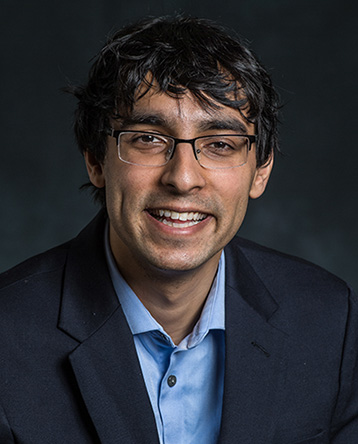
Joshua Fairfield is the William Donald Bain Family Professor of Law and Director of Artificial Intelligence Legal Innovation Strategy at Washington and Lee University's School of Law. His expertise spans digital property, data privacy, cryptocurrencies, and virtual worlds regulation. He holds a BA from Swarthmore College and a JD from the University of Chicago. Professor Fairfield's research focuses on the intersection of law and technology, particularly in digital ownership, privacy rights, and emerging technologies like IoT and blockchain. He has authored influential books, including Owned: Property, Privacy and the New Digital Serfdom (2017) and Runaway Technology: Can Law Keep Up? (2021). His work critiques corporate control over digital devices and advocates for consumer rights in the digital age. Education: BA, Swarthmore College; JD, University of Chicago Key Achievements: Fulbright Grant (2012–2013), American Law Institute Member (2013) Consulting: Advises U.S. agencies like the White House Office of Technology and Homeland Security Privacy Office His recent articles address topics such as environmental AI ethics, NFT regulation, and smart contract governance. Fairfield emphasizes the need for updated legal frameworks to protect digital rights and ensure democratic control over technology. He directs the AI Legal Innovation Strategy initiative, focusing on integrating AI into legal systems while addressing ethical and regulatory challenges.
Michael D. Smith is a Professor of Information Technology and Public Policy at Carnegie Mellon University, with joint appointments at Heinz College and Tepper School of Business. His research employs economic and statistical methods to analyze digital markets, focusing on firm and consumer behavior in online environments. Education: B.Sc. in Electrical Engineering (Summa Cum Laude), University of Maryland M.Sc. in Telecommunications Science, University of Maryland Ph.D. in Management Science and Information Technology, MIT Research Interests: Professor Smith investigates the economics of digital information markets, consumer behavior in online platforms, and policy implications of technological disruption. His work spans copyright enforcement, digital advertising, and the impact of piracy on legal media consumption. Publications: His recent studies examine AI’s role in copyright policy, effectiveness of anti-piracy measures, and market dynamics in digital streaming. Articles often bridge economics, computer science, and public policy. Awards: National Science Foundation CAREER Award Multiple Best Teacher Awards at CMU Recognized as a Top 100 Emerging Engineering Leader (NAE, 2020) Best Paper Runner-Up (Information Systems Research, 2006) Editorial and Industry Roles: Served as Senior Editor at Information Systems Research and Associate Editor at Management Science . Prior to academia, he worked in telecommunications at GTE and Booz Allen Hamilton, earning a patent for AI applications in network design. Contact: mds@cmu.edu | Office: 4800 Forbes Avenue, Hamburg Hall 2204, Pittsburgh PA 15213
Prof. Michel Clement is a Professor of Marketing & Media at the University of Hamburg Business School, holding the Chair for Marketing & Media since 2006. He previously held academic positions at the University of Passau (2005/2006) and Christian-Albrechts-University Kiel (2002–2005). His research focuses on entertainment media product management, new technologies, and donor/customer management. He has held significant administrative roles including Academic Senate Member (2013–present), Faculty Council Member (2014–present), and Director of the Research Center Media and Communication (2008–present). Education: PhD in Marketing from Christian-Albrechts-University Kiel (mentor: Prof. Sönke Albers), with a Master's in Business Administration focusing on Marketing, Innovation Management, and Psychology. Pre-academic career included management roles at Bertelsmann mediaSystems and Bertelsmann eCommerce Group, where he founded Snoopstar.com GmbH as Vice President. Research interests span digital media economics, prosocial behavior in healthcare donations, platform business models, and consumer decision-making in entertainment industries. He has contributed to understanding blood/plasma donation retention strategies, smart speaker impacts on media consumption, and pandemic-related behavioral changes. Leadership roles include supervisory board memberships at MADSACK Mediengruppe (2018–present), Studierendenwerk Hamburg (2017–present), and Universität Hamburg Marketing GmbH (2015–present). He has directed major initiatives like the Hamburg Graduate School for Media and Communication (2009–2016) and co-developed international MBA programs with Fudan University (2006–2008). Grants and collaborations include state-funded excellence initiatives and industry partnerships. His work integrates academic research with practical applications in media technology scouting, venture consulting, and digital platform governance.
Aviv Nevo is the George A. Weiss and Lydia Bravo Weiss University Professor at the University of Pennsylvania, holding joint appointments in the Department of Economics (School of Arts and Sciences) and the Marketing Department at the Wharton School. His research focuses on empirical industrial organization, antitrust economics, marketing, and econometrics, with applications to consumer packaged goods, healthcare, telecom, and real estate. Nevo earned his Ph.D. (1997) and AM (1994) in economics from Harvard University and a BSc in mathematics and economics from Tel Aviv University (1991). He joined Penn through the Penn Integrates Knowledge (PIK) program, which recognizes scholars who bridge disciplines. His work has examined price competition, merger implications, and regulatory policy, with notable contributions to understanding market dynamics in digital platforms and telecommunications. Nevo serves as a fellow of the Econometric Society, a research associate at NBER, and co-editor of Econometrica and the RAND Journal of Economics . Nevo’s research interests span antitrust analysis, consumer behavior, and applied econometrics. His recent studies address issues such as steering incentives in telecom gatekeepers, substitution effects in streaming media, and the misuse of economic metrics in merger reviews. He has advised on high-profile cases, including the Sabre/Farelogix and Aetna-Humana mergers, integrating empirical rigor into policy debates. Awards: Fellow of the Econometric Society, NBER Research Associate, Institute for Fiscal Studies International Fellow. Editorial Roles: Co-editor of Econometrica and RAND Journal of Economics . Professional Activities: PIK University Professor, Penn Integrates Knowledge initiative participant. Nevo’s work bridges academia and policy, with a focus on real-world applications of economic theory. His teaching spans both economics and marketing disciplines, reflecting his dual departmental affiliation.
Noman Shaheer is a Senior Lecturer at the University of Sydney, with a PhD in International Business from the Darla Moore School of Business, University of South Carolina (2019). His work bridges digital internationalization, digital innovations, and online entrepreneurship, with a focus on how digital platforms reshape global business dynamics. His research examines topics such as legitimacy spillovers in multinational platforms, identity signaling in digital entrepreneurship, and institutional influences on cross-border acquisitions. He has published in top-tier journals including Journal of International Business Studies , Journal of Business Venturing , and Harvard Business Review , with recent articles addressing network effects in digital markets and the evolution of non-traditional entry modes. Fields of Interest: Digital Internationalization Digital Innovations Online Entrepreneurship Global Strategy Fintech International Entrepreneurship Scientific Awards : Lazardis Award for Journal of Business Venturing’s Best Paper Temple/AIB Best Paper Award Best Reviewer Awards at AOM and AIB Charles Coker Fellowship Alan M. Rugman Most Promising Scholar Award Dean’s Citation for Teaching Excellence (University of Sydney) Teaching : He teaches courses on Digital Globalization, Global Business, Strategy in Emerging Markets, and International Entrepreneurship.
Benjamin Alarie is a Professor and the Osler Chair in Business Law at the University of Toronto Faculty of Law. He is a leading scholar at the intersection of artificial intelligence, law, and taxation, and the co-founder and CEO of Blue J, an AI-powered tax research platform used by over 3,000 organizations across North America and the UK. Education: LL.M. – Yale Law School (2003) J.D. – University of Toronto (2002), with honours M.A. – University of Toronto (2002) B.A. – Wilfrid Laurier University (1999), with high distinction Research Interests: Alarie’s research spans tax law , legal theory , judicial behaviour , and the applications of machine learning in law . He introduced the concept of the “legal singularity”—the idea that legal systems may evolve toward greater clarity and predictability through AI and computational methods. His work explores how AI can enhance legal reasoning, regulatory design, and tax compliance. He is particularly focused on the ethical and practical implications of generative AI in legal and tax practice, including liability, transparency, and the future role of human practitioners in AI-augmented systems. Scientific Awards: PROSE Award (2024) for The Legal Singularity Donner Prize shortlist (2024) for The Legal Singularity vLex Fastcase 50 Honoree (2023) Top 50 Changemaker, The Globe and Mail (2022) Alan Mewett QC Prize for Excellence (2009) Advising & Grants: Alarie is a frequent advisor to courts, government agencies, and global professional networks. His work at Blue J involves strategic partnerships with CPA.com, CPA Canada, the National Association of Tax Professionals, Big 4 accounting firms, and Tax Notes. He also serves as a faculty affiliate at the Vector Institute for AI and the Schwartz Reisman Institute for Technology and Society. Labs & Teams: As CEO of Blue J, Alarie leads a multidisciplinary team of legal scholars, engineers, and data scientists. The platform is used by tax authorities and accounting firms to deliver precise, defensible, and efficient tax research and decision-making tools.
Akshaya Jha is an Associate Professor of Economics and Public Policy at Carnegie Mellon University’s Heinz College of Information Systems and Public Policy , as well as a Faculty Research Fellow at the National Bureau of Economic Research (NBER) . His work combines economic modeling with causal inference to analyze energy and environmental policy impacts on electricity markets. Education: Ph.D. in Economics, Stanford University B.S. in Economics and Statistics, Carnegie Mellon University Research Interests span energy economics , environmental economics , industrial organization , and public policy , focusing on quantifying economic and environmental trade-offs in electricity supply policies. Recent work includes financial trading in California’s electricity market, Germany’s nuclear phase-out, rooftop solar growth in Western Australia, and electricity blackout determinants in India. Scientific Contributions appear in American Economic Review , Management Science , and PNAS . Article trends reveal expertise in regulatory distortions , market design , environmental externalities , and policy communication . Scientific Awards: Hicks-Tinbergen Award (best paper in Journal of the European Economic Association ) Heinz College Martcia Wade Teaching Award (2023) USAEE Young Professional Research Award (2021)
Kristijan Poljanec is an Assistant Professor at the Department of Business Law, Faculty of Economics and Business, University of Zagreb. He teaches commercial law, EU internal market law, and digital market law in Croatian and English. He holds a law degree and doctorate from the University of Zagreb's Faculty of Law, specializing in auction sales. His research spans commercial law, corporate governance, EU regulatory frameworks, auction mechanisms, and digital market legal challenges. He has published extensively, including the monograph Legal Theory of Auction (Routledge, 2023), exploring auction structures and modern e-commerce implications. Poljanec received the Mijo Mirković Award (2018) for research on bankruptcy proceedings and recognition from the Dr Jadranko Crnić Foundation (2023) for co-authoring Private Law of the European Union - Special Part . He participates in international projects like the EU's Corporate Sustainability initiative and leads ICC Croatia's Commercial Law Commission.
William W. Burke-White is Professor of Law at the University of Pennsylvania Carey Law School , where he is a leading scholar at the intersection of international law and international relations. He also serves as Non-Resident Senior Fellow at the Brookings Institution and Senior Advisor to White & Case LLP , bridging academic research with policy and legal practice. He previously held leadership roles as Inaugural Director of Perry World House (2014–2019) and Deputy Dean of Penn Law (2011–2014). Harvard University – A.B., J.D. University of Cambridge – Ph.D. in International Relations (Fulbright Scholar) Burke-White’s research focuses on global governance, multilateral institutions, U.S. foreign policy, human rights, and international economic law . His work examines how shifting power dynamics affect international legal structures and how sub-state actors influence global norms. He has significant regional expertise in Russia, Eastern Europe, and Latin America . His current book project explores the new geography of global governance . His recent scholarly output reveals a consistent trend toward analyzing institutional reform, legal pluralism, and the interplay between domestic and international law . He frequently publishes in top journals on topics such as investor-state arbitration, complementarity in international criminal law, and the legitimacy of global legal regimes. His work often combines doctrinal legal analysis with political science theory. A. Leo Levin Award (2008) Robert A. Gorman Award for Excellence in Teaching (2007) Burke-White has advised governments, law firms, and investment funds on sanctions, sovereign debt, and international litigation. He has served as an expert witness in international arbitrations and currently advises sovereign states on cases before the International Court of Justice . He is also active in media commentary, contributing to The Hill, CNN, The Atlantic , and others. He has taught as a visiting professor at institutions including Harvard Law, Hebrew University, and Moscow State Institute of International Relations .
Genevieve Lakier is a Professor of Law at the University of Chicago Law School and Senior Visiting Research Scholar at the Knight First Amendment Institute at Columbia University. She holds a JD (cum laude) from New York University School of Law, an MA and PhD in Anthropology from the University of Chicago, and an AB in Anthropology from Princeton University. Previously, she served as an Assistant Professor of Law (2015–2021) and Bigelow Teaching Fellow (2013–2015) at the University of Chicago Law School. Her research focuses on the evolving interpretation of the First Amendment , particularly how social media platforms challenge traditional free speech doctrine. She analyzes the role of legislatures in safeguarding speech values, the rise of anti-classificatory theories , and the tension between laissez-faire constitutionalism and state intervention in digital speech regulation. Recent publications include critiques of platform moderation in the Journal of Free Speech Law and analyses of the First Amendment's Lochner problem . Her work often addresses the intersection of constitutional history and modern tech policy, as seen in contributions to the Harvard Law Review and Yale Law Journal Forum . Scientific Awards: Harry W. Stonecipher Award (2021) Faculty Hooder Teaching Award (2022, 2023) Class Award (2022) She has collaborated with scholars like Evelyn Douek on studies of platform governance and informal government coercion . Her clerkships include Judge Leonard Sand (Southern District of New York) and Judge Martha Daughtrey (Sixth Circuit Court of Appeals).
Professor John Zeleznikow is an Honorary Associate at La Trobe University's Law School, with a distinguished career spanning 49 years across multiple institutions including the University of Edinburgh and Victoria Business School. His research focuses on AI applications in legal decision-making, dispute resolution, and autonomous vehicle technology. He has secured over $8M in research grants and supervised 20 PhD graduates. Key projects include the Split-Up system (used in high-profile divorce cases like Prince Charles and Lady Di) and Family-Winner software, which won an ABC TV innovation award. His work bridges law, technology, and ethics, with publications in leading journals like the Harvard Negotiation Law Review and Artificial Intelligence and Law . Recent research explores AI-driven online dispute resolution (ODR), autonomous vehicle regulation, and the ethical implications of technology in legal systems. He advocates for transparent, user-centric legal tech solutions to enhance access to justice and improve decision-making processes.
PD Dr. Jannis Lennartz is a Senior Lecturer in Public Law at Humboldt University Berlin, specializing in constitutional law, administrative law, and digital legal issues. He holds a habilitation (2022) and has held visiting professorships at Göttingen and Cambridge. His research focuses on intersections of law and technology, fundamental rights in the digital age, and legal theory. He has published extensively on AI copyright challenges, algorithmic governance, and constitutional limits in administrative contexts. Education: BA Political Science (Erfurt, 2008), dual法学博士 (Göttingen/Berlin, 2013-2017), habilitation (Berlin, 2022). Key awards include the Leibniz Prize. Teaching includes Constitutional History (10 006), New Developments in Law (10 603), and General Administrative Law (10 450). Research highlights: Over 30 peer-reviewed articles since 2015 across constitutional law, intellectual property, and digital governance. Notable works include Chancellor Democracy (2023) and Forbidden Fruits? (2025), examining AI's impact on artistic creation and copyright frameworks. Recent publications address algorithmic filtering, digital trust mechanisms, and AI-generated content regulation. Awards: Leibniz Prize (specific details not provided but denotes Germany's top academic recognition). Active in interdisciplinary projects like LLCon and OSAIC initiatives. Serves as associated scientist under Prof. Möllers' chair, contributing to constitutional law research and academic leadership.
Andreas Stephan is a Professor of Competition Law and Head of the School of Law at the University of East Anglia. His expertise spans Competition Law, Subsidy Control, and White Collar Crime . He advises the UK’s Competition and Markets Authority (CMA) and contributed to global legislative reforms through research on public attitudes to cartels and criminalization frameworks. He has held visiting roles at Hong Kong University and Melbourne University, and serves on UNCTAD’s Research Partnership Platform. His research focuses on cartel enforcement dynamics, private enforcement mechanisms, and post-Brexit regulatory shifts . Recent work includes analyzing the UK’s subsidy control regime and leading a landmark opt-out collective action against Amazon, successfully securing carriage rights in January 2025. Key activities include panel memberships at ICN, participation in high-profile conferences, and media commentary in major outlets like Financial Times and BBC . His projects include a Korean Government Fellowship (2016–2018) and co-leadership of the Centre for Competition Policy’s Phase 2 (2009–2014). Research trends emphasize legal-economic intersections in competition policy, with recent work addressing corporate compliance failures, post-pandemic market coordination risks, and the evolving role of private enforcement in deterring anti-competitive practices. Grants & Projects: Lead researcher on Korean Government Long-Term Fellowship (2016–2018) Principal investigator for CCP Phase 2 (2009–2014) funded by the ESRC Consultant for national competition authorities and UK Department of Business Labs/Teams: Member of UEA’s Centre for Competition Policy and Competition, Markets and Regulation research group.
Zoë Robaey is an Assistant Professor in Ethics of Technology at Wageningen University’s Philosophy Group. Her work focuses on moral responsibility in uncertain technological contexts, particularly in biotechnology and agriculture. She holds a PhD from Delft University of Technology (2017) and prior roles include postdoctoral research at Delft and work at the Rathenau Institute. She currently serves on the Management Team of the 4TU Centre for Ethics and Technology, is an Associate Editor at Science and Engineering Ethics , and actively advises on synthetic biology competitions like iGEM. Her research integrates conceptual ethics with empirical studies, addressing challenges like GMO ownership, inclusive biobased innovations, and biomimetic design. Awards include a VENI Grant (2019) and recognition in the 'Young Philosophers' program (2017). She engages widely in public debates on agriculture and technology through platforms like Pakhuis de Zwijger. Education: BA Biology (University of Ottawa, 2007), MA Science and Technology Studies (Maastricht University, 2008), MA Public Policy (Hertie School of Governance, 2011). Research interests span ethical governance of emerging technologies, responsible innovation frameworks, and the intersection of biotechnology with societal values. Recent work explores biomimetic ethics, climate change education, and safe-by-design approaches in synthetic biology. Grants include the VENI Grant (2019) supporting her work on virtues in innovation. She has advised the Dutch Ministry of Infrastructure and Water Management and collaborates internationally on projects like the Inclusive Biobased Innovations initiative (2017–2019). Labs/Teams: Active in the 4TU Centre for Ethics and Technology, contributing to interdisciplinary ethics research networks. Teaches courses on ethics of food systems, synthetic biology, and molecular life sciences.
Tridas Mukhopadhyay is the Deloitte Consulting Professor of e-Business at Carnegie Mellon University's Tepper School of Business, where he has served on the faculty since 1986. His academic journey at CMU progressed from Instructor of Information Systems (1986-1987) to Assistant Professor (1987-1993), Associate Professor (1993-1997), Professor (1998-present), and Deloitte Consulting Professor of e-Business (2000-present). He also served as Director of the MS in Electronic Commerce program from 1999-2004. Ph.D. in Computer and Information Systems, University of Michigan–Ann Arbor, 1987 M.B.A. in Computer and Information Systems, Indian Institute of Management Calcutta, 1981 B. Tech. in Electrical Engineering, Indian Institute of Technology Kharagpur, 1978 Professor Mukhopadhyay's research spans multiple critical areas in information systems and technology management. His work on strategic IT use examines how organizations derive business value from information technology investments. He has conducted extensive research on business-to-business commerce, particularly focusing on e-procurement systems, web-based marketplaces, and electronic intermediation models. His cybersecurity research investigates the economic aspects of cyber security, including liability mechanisms and patch release strategies. In software engineering, he has studied productivity, quality metrics, and offshore software development contracts. His most recent publications reveal several key trends in his research trajectory. There's a growing focus on digital platform economics, examining advertising models, virtual currency systems in gaming, and sharing economy dynamics. His work increasingly incorporates behavioral aspects, studying how users respond to personalized content and how backers exert control in crowdfunded projects. Methodologically, his research employs sophisticated analytical approaches including hierarchical Bayesian models, structural equation modeling, and natural experiment designs. CART Research Frontier Award, Carnegie Mellon, 2005 Distinguished Ph.D. Alum, Michigan Business School, 2004 Best Paper, International Conference on Information Systems, 2001 Best Paper, MIS Quarterly, 1995 Xerox Research Chair, Tepper School of Business, 1988-1989 Information Systems Society Distinguished Fellow, 2012 Professor Mukhopadhyay has served on numerous editorial boards including Information Systems Research (1994-2003), Management Science (1999-2003), and MIS Quarterly (1997-1999), demonstrating his significant contributions to the field. His consulting work with major organizations including Alcoa, Chrysler, Ford, General Motors, IBM, and governmental agencies like the United States Post Office and Pennsylvania Turnpike has provided practical insights that inform his academic research. He has been actively involved in university governance through committee service including the Business Technology Faculty Search Committee and the CMU Faculty Senate. His research has been supported through various industry partnerships and academic grants, though specific grant details aren't provided in the source material. His teaching focuses on Business Computing and Strategic IT courses, reflecting his expertise in both foundational information systems concepts and strategic applications of technology in business contexts.