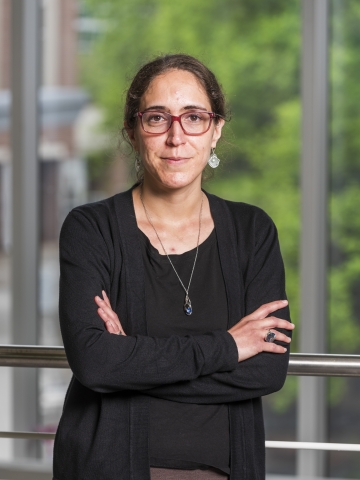
Dr. Natalia Sergeeva is an Associate Professor at the School of Design, University of Leeds, where she leads research on sustainable materials with applications in personal care, photomedicine, and water purification. She joined Leeds in 2013 after completing her PhD at the University of Leipzig, postdoctoral work at the University of Potsdam, and a research fellowship at Trinity College Dublin. Expertise: Natural colorants in healthcare, photocatalytic materials, photoprotection, sustainable resource utilization. Leadership: Deputy Director for Research, Research Ethics Lead. Her research explores functional dyes with multifunctional applications (e.g., antimicrobial agents, optical filters) and heritage science-inspired sustainable materials. She contributes to teaching colour physics and chemistry, supervises MSc research projects, and mentors PhD students. The Sergeeva Lab focuses on organic-inorganic hybrid materials for photomedicine, water purification, and smart textiles. Recent projects include graphene-titanium dioxide-dye photocatalytic systems and plant-based photoprotective materials. Former group members have presented at international conferences like Materials Chemistry and Carbon Nanoparticles Composites. She is a Fellow of the Higher Education Academy (FHEA) and a Member of the Royal Society of Chemistry (MRSC).
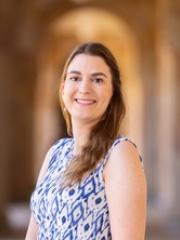
Dr. Anna Zinn is a Postdoctoral Research Fellow at the School of Business, Faculty of Business, Economics and Law, The University of Queensland, specializing in social identity applications for sustainable tourism and hospitality behavior change. Education: Doctor of Philosophy in Psychology, University of Exeter Masters (Coursework) of Research Psychology, University of Exeter Her research centers on environmental psychology and social identity theory , with pioneering work on reducing buffet waste, promoting towel reuse through anthropomorphism, and optimizing hotel sustainability practices. She employs computational-linguistic methods, experimental designs, and field studies to develop practical interventions that balance environmental goals with guest satisfaction in tourism contexts. Analysis of her 14 publications (2021-2025) reveals a consistent trajectory toward interdisciplinary solutions for sustainable tourism, integrating psychology, hospitality management, and environmental science. Key trends include leveraging social identity salience for pro-environmental behavior, refining pre-testing protocols for field interventions, and addressing implementation challenges in real-world hospitality settings. Dr. Zinn actively collaborates with Professor Sara Dolnicar's research group and has served as Principal Advisor for one PhD project ('Using Gamification to Inspire Sustainable Tourist Behaviour') and Associate Advisor for three others. Current funding includes an ARC Discovery Project (2025-2028) on behavior change mechanisms and an Energy Queensland grant (2024-2025) for electricity usage segmentation.
Elizabeth McCann is a Professor in the Environmental Studies & Sustainability department at Antioch University . She directs the Environmental Education Concentration and has a PhD in adult education with an emphasis on environmental education from the University of Wisconsin-Madison. Her work focuses on communities of practice , ecological restoration , and social justice in educational contexts. Education: PhD in Adult Education (Environmental Education emphasis), University of Wisconsin-Madison MS in Natural Resource Policy and Administration, University of Michigan-Ann Arbor BA in Environmental Education, Rhodes College McCann’s research bridges interdisciplinary environmental education , curriculum design , and community-based ecological restoration . She champions systems thinking and cultural competency , integrating natural and social sciences to address complex environmental challenges. Her teaching emphasizes two-way dialogue , equity , and interconnected systems . Recent publications highlight her contributions to urban environmental education , inclusive pedagogy , and rain garden curricula . These works reflect her commitment to community engagement and practical applications of environmental education. Scientific Awards: Russell J. Hosler Award for Outstanding Dissertation Mccann has secured multi-year grants from organizations like the Howard Hughes Medical Institute and the U.S. Environmental Protection Agency to support award-winning programs such as Earth Partnership for Schools. She has also worked with initiatives like Keene Community Garden Connections and New Hampshire’s Children in Nature Coalition , modeling change-agent behavior in environmental education.
van Khang Huynh is a Full Professor in Mechatronics and Energy Systems at the Department of Engineering Sciences , University of Agder , Norway. He is also a member of the Norwegian Academy of Technical Sciences (NTVA) and has served as an Associate Editor for IEEE Transactions on Transportation Electrification . Education: D.Sc. in Electromechanics & Electric Drives, Aalto University, Finland (2012) M.Sc. in Power Electronics and Motor Drives, Pusan National University, South Korea (2008) B.Sc. in Electrical Power Engineering, Ho Chi Minh City University of Technology, Vietnam (2002) Research Focus: His research spans applied AI in condition-based maintenance , electrical machines , power electronics , design optimization , finite element analysis , and smart energy systems . He leads the Intelligent monitoring research group and is a member of the Energy systems , Intelligent mechatronics (iTron) , and Machine design groups. Projects & Funding: Enhancing Capacity in Condition-based Maintenance of Wind Energy (ECO-WIND) Performance and Health Monitoring of Hydroelectric Power Plants Analytics for Asset Integrity Management of Windfarms Industrial Internet methods for electrical energy conversion systems monitoring and diagnostics Operational Management in Interconnected Renewable Resources with ICT Compact Electric Winches PhD Supervision: He has successfully supervised 8 PhD dissertations and mentored 2 additional PhD projects , all in areas related to mechatronics, renewable energy, and intelligent systems. Labs & Teams: He leads the Intelligent monitoring research group and collaborates closely with the Energy systems , Intelligent mechatronics (iTron) , and Machine design groups at the University of Agder.
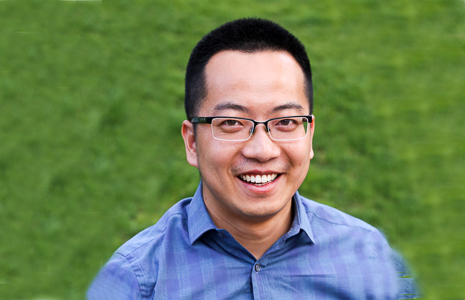
Dr. Jiangxiao Qiu is an Associate Professor of Landscape Ecology at the University of Florida's School of Forest, Fisheries, and Geomatics Sciences, based at the Fort Lauderdale Research and Education Center. His research integrates landscape ecology, ecosystem services, and sustainability science to address global environmental challenges. He employs interdisciplinary approaches including computational modeling, remote sensing, and field experiments to study human-nature interactions across scales. Research Focus: Dr. Qiu investigates how climate change, land-use intensification, and biological invasions alter ecosystems and biodiversity. Key themes include: Landscape sustainability science and social-ecological systems Ecosystem service tradeoffs in agricultural and urban landscapes Global change impacts on biodiversity-ecosystem function relationships Development of geospatial tools for environmental decision-making Recent publications (2024-2025) demonstrate strong emphasis on: Urban ecosystem services and greenspace multifunctionality Post-disturbance forest recovery using remote sensing Soil nutrient dynamics in managed grasslands Integration of cultural ecosystem services in landscape planning Scalable frameworks for biomass and biodiversity monitoring Dr. Qiu actively recruits graduate students through his Landscape Ecology and Sustainability Science Lab, focusing on transformative solutions for conservation and policy challenges. Current research explores urban-rural sustainability linkages, phosphorus cycling in subtropical systems, and climate-resilient landscape design.
Johannes Schöning is a Professor of Human-Computer Interaction at the University of St. Gallen, where he leads a research group focused on developing novel user interfaces that empower individuals and communities with data-driven decision capabilities. His work bridges rapidly advancing technologies with human needs across diverse contexts including geographic information science, public health, medical applications, and extreme environments such as space missions. He publishes extensively at premier HCI venues including ACM CHI, MobileHCI, and DIS, as well as in interdisciplinary journals like NATURE and PLOS ONE. Professor Schöning's research interests center on understanding the interplay between technology and human activities through rigorous methods from AI, computer graphics, and cognitive psychology. His work emphasizes user-centered design methodologies and mixed methods approaches to create interfaces that fit both technological possibilities and human requirements. Key focus areas include virtual and augmented reality applications, accessibility solutions, navigation technologies, and the social implications of digital interfaces in everyday life. His research mission prioritizes theoretical and practice-based inquiry to develop disruptive solutions for real-world problems. Analysis of his recent publications reveals strong trends in virtual reality applications for emotional regulation and accessibility, with increasing emphasis on generative AI integration, environmental awareness, and space-related HCI challenges. His work consistently demonstrates interdisciplinary collaboration across computer science, psychology, geography, and medical fields, with publications showing growing interest in social implications of technology, particularly regarding navigation systems and their externalities. His scientific contributions have been recognized with numerous awards including: Best Presentation Award at IEEE VR 2023 Best Paper Award & Accessibility Award at Interact 2019 10 Year Impact Award 2021 Multiple Honorable Mention Awards at top conferences Professor Schöning actively mentors students across bachelor, master, and PhD levels, with his lab seeking candidates interested in the intersection of HCI, geoinformatics, and ubiquitous computing technologies. He emphasizes creating a 'detox-free academic environment' that focuses on meaningful teaching and research outcomes rather than academic pressures. His group frequently collaborates with international researchers and institutions on projects spanning medical applications, space exploration interfaces, and public health technologies. The research laboratory led by Professor Schöning maintains strong interdisciplinary connections across multiple domains. Current projects include developing AI-powered wearables for blind and low vision users, exploring VR applications for emotional regulation, investigating navigation technologies' social impacts, and creating interfaces for space mission contexts. The lab's work on CubeSat control software and plant visualization for space greenhouses demonstrates their unique focus on extreme environment applications, while their research on citizen participation through generative AI shows engagement with contemporary societal challenges.
Claudio Sassanelli is Assistant Professor of Industrial Mechanical Plants (ING-IND/17) at the Polytechnic University of Bari, Italy, within the Department of Mechanics, Mathematics & Management. His recent scholarly output focuses on the intersection of circular economy, digital transformation and sustainable manufacturing. Research interests revolve around: Circular Economy performance measurement and rebound-effect mitigation Industry 4.0/5.0 technologies (digital twins, IoT, CPS) for servitized manufacturing Green finance instruments supporting eco-innovation in SMEs Technology-enhanced educational frameworks for sustainability upskilling Across 2023-2025 his publications exhibit a clear trend: systematic literature reviews are used to identify gaps, followed by the proposal of maturity models, readiness frameworks and competency maps that guide companies and policy makers toward data-driven, human-centric and environmentally sound industrial systems. Scientific awards & recognitions: none mentioned in the supplied material. Advising & Grants: no supervised students or funded projects are listed in the source. Labs & Teams: no dedicated laboratory or research group description is provided.
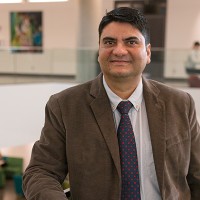
Dr. Rohit Jindal serves as Associate Professor and Chair of the Department of Decision Sciences within MacEwan University's School of Business in Edmonton, Alberta. His academic leadership spans quantitative methods, decision sciences, and sustainability-focused research with significant policy implications for businesses and communities globally. He holds a PhD from Michigan State University and an M.Sc. from the University of Edinburgh, with prior research appointments at the University of Calgary's Haskayne School of Business and the University of Alberta's Department of Resource Economics. Dr. Jindal's research integrates environmental economics, behavioral decision-making, and econometric analysis to address sustainability challenges. His work examines carbon markets, payments for ecosystem services, and risk analysis through field experiments across Africa, Asia, and Latin America. He employs choice experiments and behavioral economics to investigate how incentives shape environmental compliance and land-use decisions, particularly in developing economies. His publication trajectory reveals deepening engagement with climate policy mechanisms, evolving from foundational work on carbon forestry impacts in Africa to recent analyses of agricultural carbon offsets and forest landscape restoration. The research consistently bridges theoretical econometrics with practical policy applications in environmental management. Sustainability Reimagined Fellowship (2018) Best Paper in Social Sciences, Asia Pacific Conference (2016) Banting Fellowship, SSHRC Canada (2012) Multiple MacEwan University research grants (2018, 2016, 2014) World Bank and USAID-funded field projects Dr. Jindal mentors senior students in independent studies while leading the Behavioral Economics and Environment (BEE) Lab. This interdisciplinary research collective unites faculty from decision sciences, marketing, international business, and psychology to investigate environmental decision-making through lab and field experiments, with active collaborations across North America and globally.
Professor Ufuk Karadavut serves at Karabük University Faculty of Medicine, Department of Basic Medical Sciences, where he holds the position of Professor and currently serves as Vice Dean. Previously, he was Dean of the Faculty of Medicine from 2021-2022 and has held multiple leadership roles including Head of Department since 2020. With an extensive publication record of 493 works and significant contributions to both medical and agricultural statistics, his career spans multiple Turkish universities including Ahi Evran University and Bingöl University. PhD, Selçuk University, Institute of Science (2001-2005) Bachelor's Degree, Ankara University, Faculty of Agriculture, Department of Animal Science (1987-1991) Professor Karadavut's research spans biostatistics, medical informatics, and agricultural statistics, with particular expertise in statistical experimental design. His work bridges healthcare applications (medical informatics, clinical data analysis) with agricultural science (crop breeding, animal husbandry). He has developed statistical methodologies applicable across diverse fields, from analyzing palliative care outcomes to optimizing chickpea breeding programs for drought tolerance. His research demonstrates a consistent pattern of applying advanced statistical techniques to solve practical problems in both medical and agricultural contexts. Analysis of his recent publications reveals a strong focus on applying statistical methodologies to address contemporary challenges. In medical informatics, he examines healthcare quality, medical education, and pandemic impacts. In agricultural science, his work centers on crop improvement (particularly chickpeas and other legumes) and animal breeding. His statistical approaches include multivariate analysis, QTL mapping, growth modeling, and machine learning techniques, demonstrating methodological versatility across disciplinary boundaries. While specific awards aren't detailed in the available information, his h-index of 11 (UNIS) and 8 (WoS), along with 583 total citations, indicate significant scholarly impact. His research has attracted funding from major Turkish research bodies including TÜBİTAK and university-supported projects. Professor Karadavut has supervised 13 theses across multiple institutions and taught diverse courses ranging from medical bioinformatics to agricultural statistics. His research portfolio includes 31 projects, with recent work focusing on climate change adaptation in livestock, medical informatics applications, and advanced statistical methodologies for agricultural research. He has collaborated extensively with researchers across multiple Turkish institutions, demonstrating strong interdisciplinary networking capabilities.
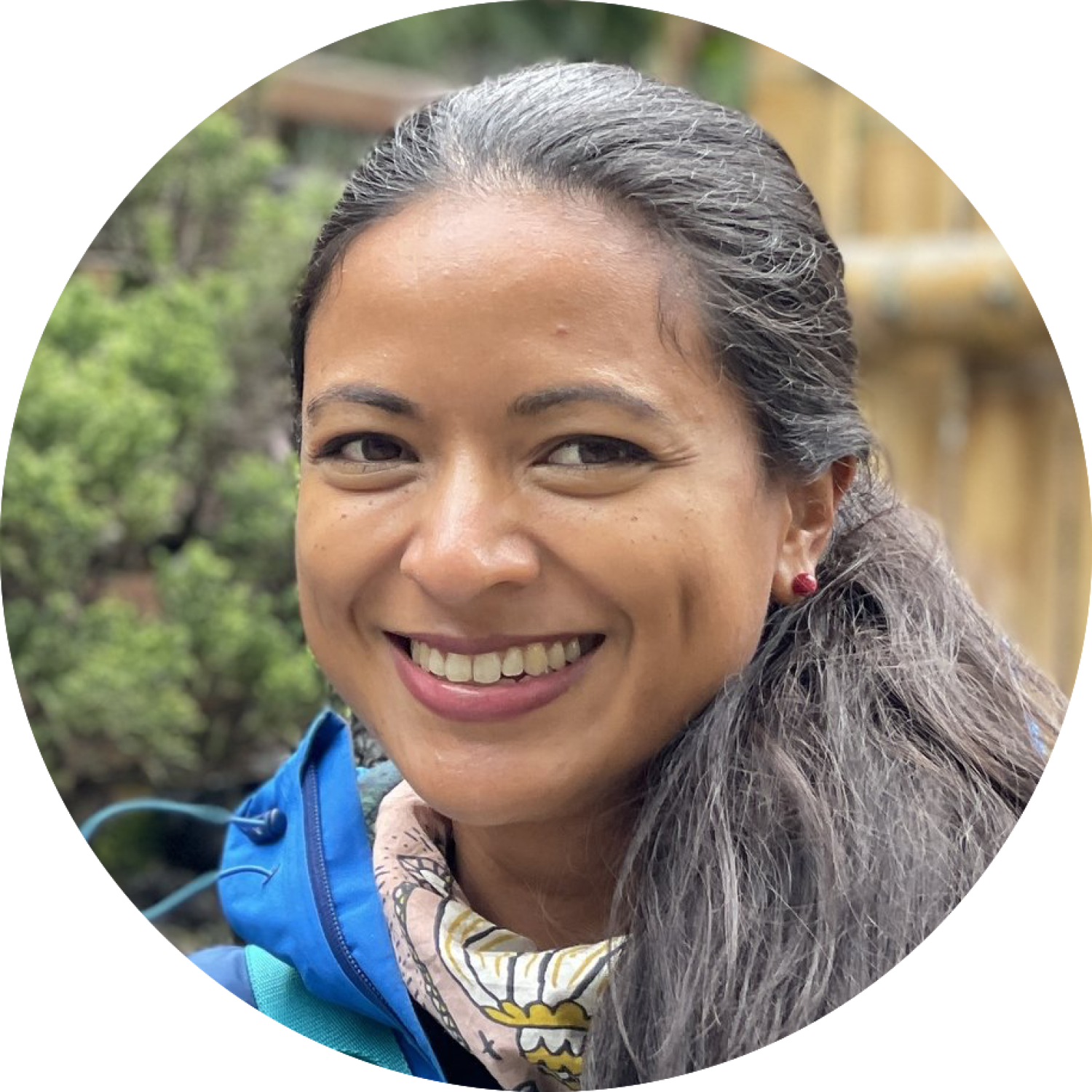
Sisimac Duchicela is an Assistant Professor in the Department of Geography at the University of Colorado Boulder and a Faculty Fellow at the Institute of Arctic and Alpine Research (INSTAAR). She is an ecologist, botanist, and biogeographer whose work centers on tropical alpine ecosystems, climate change impacts, and ecological restoration in the Andes. Education: PhD in Geography and the Environment, University of Texas at Austin, 2022 MS in Natural Resources and Environment, University of Michigan–Ann Arbor, 2015 BS in Biological Sciences, Pontifical Catholic University of Ecuador–Quito, 2011 Research Focus: Dr. Duchicela’s research sits at the intersection of biogeography , functional ecology , global change biology , and ecological restoration . She investigates how high Andean environments are responding to global environmental change and what these changes mean for Indigenous and farming communities. Her work includes climate simulation experiments, restoration monitoring, and the development of adaptation strategies in partnership with local stakeholders. She has over 15 years of experience in the taxonomy, ecology, and biology of tropical alpine vegetation , with a particular focus on páramo ecosystems. Her research also explores land-use transitions, plant functional traits, and the feedback loops between human activity and ecosystem change in alpine landscapes. Scientific Awards: Ford Foundation Fellowship Program – Dissertation Competition Honorable Mention (2020) Best Student Presentation Award – Biogeography Specialty Group, AAG Conference (2019) Teaching & Outreach: Beginning in 2025, Dr. Duchicela will teach courses through the Geography Department at CU Boulder. She has also been active in public outreach, including interviews during Latinos in Conservation Week and contributions to national science media. Collaborations & Fieldwork: She has worked closely with Andean Indigenous and farming communities to co-design ecological restoration projects and monitor their outcomes. Her interdisciplinary approach integrates ecological theory with community-based conservation and participatory research methods.
Lynn Kamerlin is a Professor at the Georgia Institute of Technology and co-leads the Kamerlin Laboratory, which operates across Georgia Tech and Lund University. Her work integrates computational chemistry and biophysics to address fundamental questions in enzyme evolution, catalysis, and protein design. Education MNatSc in Chemistry, University of Birmingham (UK) PhD in Chemistry, University of Birmingham (UK) Her research spans computational biophysics , focusing on mechanistic biochemistry , protein evolution , and enzyme engineering . Key methodologies include machine learning , molecular dynamics simulations , EVB/QM/MM modeling , and natural language models for protein structure prediction. Recent publications highlight trends in AI-driven enzyme design , conformational dynamics , and mechanistic studies of phosphoryl transfer reactions . Tools like WatCon and Q-RepEx demonstrate her commitment to method development in computational biology. Scientific Awards Georgia Research Alliance Eminent Scholar (2022-Present) Wallenberg Scholar (2020-2024) ERC Starting Grant (2012-2017) Wallenberg Academy Fellowship (2014-2019, prolonged 2019-2024) Young Academy of Europe Chair (2014-2015) Fellow of the Royal Society of Chemistry (2017) Her lab collaborates with experimental groups worldwide, leveraging enhanced sampling techniques and structural bioinformatics to engineer enzymes with tailored properties. Grants from the Swedish Research Council and European Research Council underpin her research on enzyme evolution and catalytic mechanisms. Current projects include computational design of thermostable enzymes , allosteric modulators for biomedical targets, and modular protein scaffolds . The lab also investigates non-canonical amino acid incorporation and FAIR data principles in biomolecular simulations.
Professor Tenley Conway is a faculty member at the University of Toronto Mississauga within the Department of Geography, Geomatics and Environment. Her research focuses on urban forest governance, human-environment interactions, and geospatial analysis of urban ecosystems, with specific interests in environmental justice, green infrastructure, and socio-ecological systems. PhD in Geography from Rutgers University MSc in Geography from Rutgers University BSc in Natural Resources from Cornell University Conway's work integrates environmental geography, urban ecology, and landscape ecology to examine urban forest governance structures, resident engagement with green infrastructure, and the ecological impacts of policy decisions. She employs diverse methodologies including GIS, remote sensing, statistical analyses, and community surveys to address questions about urban tree distribution equity, invasive species management, and the effects of urban greening initiatives. Recent publications demonstrate her focus on quantifying urban forest diversity using national datasets, developing cost-effective canopy monitoring techniques through Landsat imagery, and analyzing the ethical frameworks of arboricultural practices. She has contributed to understanding how invasive pests reshape distributional justice in urban forests and the relationship between tree proximity and subjective wellbeing across Canadian and Australian cities. As associate editor of Urban Forestry and Urban Greening and board member of LEAF and EcoSpark, she actively participates in urban forestry governance discussions. Her HOUSE Laboratory examines human-environment interactions across urban-suburban-exurban gradients, emphasizing community engagement in sustainable urban forest management.
Onur Ulgen is a Professor in the Industrial and Manufacturing Systems Engineering department at the University of Michigan-Dearborn , where he has held positions since at least 2011. His work focuses on applying simulation techniques to solve complex problems in manufacturing and industrial systems. Education Ph.D., Industrial Engineering , Texas Technological University M.S., Industrial Engineering , Texas Technological University B.S., Mechanical Engineering , Robert College Research Interests Professor Ulgen specializes in Discrete-Event Simulation (DES) applications across multiple domains. His work addresses Automotive Manufacturing challenges like assembly line optimization, selectivity bank modeling, and deadlock prevention. He also investigates Steel and Metal Manufacturing systems, high-speed production lines, and Medical Logistics resource allocation. Key subfields include production scheduling, software selection for industrial simulation, and integrated systems modeling. Recent Article Trends His publications from 2015 to 2007 demonstrate a sustained focus on simulation for Automotive , Aerospace , and Healthcare industries. Topics include capacity planning, material handling optimization, and simulation-based design validation. Specific methodologies emphasize discrete-event simulation , throughput analysis , and deadlock prevention in complex systems. Grants and Projects Ford Motor Company (2011-2012): Modeling selectivity buffers for conflicting constraints in vehicle assembly SAP America, Inc. (2000): Nonlinear demand forecasting and inventory management uncertainty SME Education Foundation (1996-1997): Manufacturing engineering support
Robert Czechowski, PhD , is an Assistant Professor at the Faculty of Information and Communication Technology , Wrocław University of Science and Technology , Poland, stationed in the Department of Telecommunications and Teleinformatics . His office is located in building D-20, room 421, and he holds regular consultation hours on Tuesdays 14:00–15:00, Wednesdays 15:00–17:00, and Thursdays 13:00–15:00. His research portfolio is centred on securing the next generation of electrical power systems. Core interests include: Cyber-security architectures for smart grids and micro-grids Artificial-intelligence-driven intrusion detection and prevention systems (IDS/IPS) Network protocols and time-synchronisation security in SCADA environments Simulation of information flow in complex, dynamically reconfigurable networks IPv4/IPv6 network design and security policy enforcement in power-system automation Database and expert-system solutions for real-time energy-management and fraud detection Between 2014 and 2019 he authored or co-authored more than fifteen peer-reviewed works. The publications reveal a clear longitudinal trend: early work established foundational security policies and good-practice guidelines, while later studies pivot toward advanced AI/ML techniques for anomaly detection and risk quantification in smart-metering infrastructures. A recurring theme is the integration of communication-protocol security (IEC 61850, PLC, IPv4/IPv6) with higher-level cyber-physical risk governance. Scientific recognitions: None explicitly mentioned in the supplied text. Advising & Grant activities: The provided material does not list specific doctoral or master’s students, nor does it enumerate funded projects. Laboratories & Teams: He conducts research within the Department of Telecommunications and Teleinformatics, leveraging university laboratories and the wider ICT Faculty infrastructure, although no dedicated lab name is specified.
Rasmus Hoffmann is Professor and Chairholder of Sociology, especially Social Inequality, at the Faculty of Social Sciences, Economics, and Business Administration of Otto-Friedrich University of Bamberg, Germany. His office (Room: F21/00.17a) and consultation hours (by appointment via email) confirm active faculty status within the university structure, with no indication of emeritus or former staff designation. His research focuses on: Social inequality in health and mortality Life course analysis of socioeconomic determinants Causal pathways (social causation vs. health selection) European cross-national health disparities Impact of risk factors (obesity, smoking) on mortality gradients Policy implications for reducing health inequities Recent publications (2021-2025) show intensive analysis of pandemic impacts on health behaviors, mental health, and medical attitudes, alongside sustainable consumption studies. Work consistently employs advanced statistical methods on European population data, with strong emphasis on socioeconomic dimensions of dietary transitions and complementary medicine. Scientific awards: No awards documented in source materials Advising and grants: No student advising details listed No grant funding information provided Research teams and affiliations: Core team: Dr. Alexander Patzina, Tillman Claus, Felix Rahberger KLUG - German Alliance for Climate Change and Health membership Collaboration with Emeritus Professor Hans-Peter Blossfeld