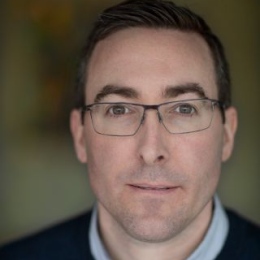
John Fitzpatrick is a Professor at the Department of Zoology, Stockholm University, leading the Fitzpatrick Lab. His research integrates experimental and phylogenetic comparative approaches to study sexual selection's role in animal evolution, focusing on pre-mating competition, mate choice, sperm competition, and co-evolutionary dynamics between sexes. Department of Zoology: Ethology Wallenberg Academy Fellow President-elect, International Society for Behavioral Ecology Co-organizer, Biology of Spermatozoa biennial meeting Key Research Areas: Trade-offs among sexual traits in halfbeak fishes Macroevolution of reproductive behaviors in sharks, rays, and mammals Sperm behavior evolution across animal phyla Coloration evolution under natural and sexual selection Scientific Leadership: Editor, Behavioral Ecology (2014-2018) Board of Reviewing Editors, Journal of Evolutionary Biology (2011-2015) Collaborative Networks: Collaborations with National University of Singapore, University of Manchester, University of Western Australia, and Stockholm University's Ecology, Environment and Plant Sciences department for pollen evolution studies. Awards: Wallenberg Academy Fellowship
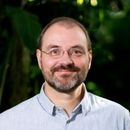
Matthew B Hufford is a Professor in the Department of Ecology, Evolution, and Organismal Biology (EEOB) at Iowa State University. He joined the faculty in 2013 as an Assistant Professor and currently holds the Cassling Family Professorship. His research focuses on the evolution and ecology of crops, particularly maize and its wild relatives, including teosintes. Key areas include demography of maize landraces, gene flow dynamics in Zea genus, and comparative genomics of grass species. Education: B.S. in Biology from Wheaton College (1999), M.S. in International Agricultural Development and Ph.D. in Ecology, both from UC Davis (2010). Research interests span genomic diversity in maize, adaptation to environmental conditions, and the role of transposable elements in genome evolution. His lab investigates genomic resources like pan-genomes and assembly tools (e.g., Gapless assemblies using long-read technologies). Recent trends in publications highlight advancements in genomic tools, climate adaptation, and comparative analyses across grass species. Labs/Teams: The Hufford Lab at Iowa State University focuses on evolutionary genomics, leveraging genomic data to understand crop domestication and adaptation. Collaborations involve bioinformatics, genetics, and ecological studies.
Zhangjun Fei is an Adjunct Professor at the School of Integrative Plant Science, Cornell University, and a faculty member at the Boyce Thompson Institute (BTI). His research spans Developing computational tools for omics data analysis Creating genomic databases for crop improvement Applying next-generation sequencing (NGS) to understand crop evolution Inferring gene regulatory networks Research interests include: Genomics and systems biology of economically important crops (tomato, cucurbits, sweetpotato, fruit trees) Integration of genome, transcriptome, proteome, and metabolome datasets Development of bioinformatics resources like Plant MetGenMAP, iAssembler, iTAK, and VirusDetect Exploration of gene regulatory networks via multi-omics data fusion Recent publications highlight trends in Super-pangenome analysis for structural variation Gene discovery in stress tolerance and domestication Molecular mechanisms of fruit quality and disease resistance Evolutionary insights across cucurbit and fruit crops Labs and teams include the Fei Lab at BTI , which has led initiatives like: Pan-African Sweet Potato Virome and Chinese Tomato Virome projects Collaborations with USDA, Meiogenix, and the Foundation for Food & Agriculture Research (FFAR) Training programs through BTI Summer Internships and Cornell graduate fields
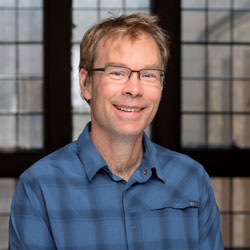
Wen Huang is an Associate Professor at the Michigan State University , affiliated with the BioMolecular Science Gateway Faculty and the Genetics & Genome Sciences Program . His research integrates genetics, genomics, and bioinformatics to study complex traits in Drosophila melanogaster and livestock species. Research Interests : Elucidating genetic architectures of quantitative traits Transposon dynamics and alternative splicing regulation Livestock genomics for agricultural improvement Publication Trends : Recent work focuses on genome-wide association studies (GWAS), telomere-to-telomere assemblies, and multi-omic analyses of gene regulation in pigs and Drosophila . Collaborative Initiatives : Co-leads large-scale projects like FarmGTEx and RT2T Consortium, aiming to improve functional annotation of animal genomes.
Phil Bates is an Associate Professor at Washington State University (WSU), affiliated with the College of Agricultural, Human, and Natural Resource Sciences (CAHNRS) and the Department of Plant Sciences. His research focuses on plant lipid metabolism, specifically understanding fatty acid flux dynamics in storage and membrane lipids across diverse plant species such as Arabidopsis, soybean, canola, and Physaria fendleri. He employs biochemical, genetic, and omics approaches, including isotopic tracing, to identify metabolic bottlenecks and engineer designer oils for food, biofuel, and industrial applications. Bates holds a Ph.D. from Michigan State University (2008). His work emphasizes interdisciplinary collaboration, with recent projects involving the Danforth Plant Science Center and the University of Alberta. He leads the Bates Lipid Lab, which investigates lipid remodeling mechanisms, stress responses, and metabolic reprogramming in oilseeds. Research interests include optimizing oilseed traits for biotechnological use, developing analytical methods for lipid quantification, and elucidating gene regulation in lipid biosynthesis pathways. His lab’s discoveries, such as the TAG remodeling mechanism in Physaria fendleri, advance efforts to produce industrially valuable oils with tailored fatty acid compositions. Despite no explicitly listed awards, his contributions to plant lipidomics and metabolic engineering are widely recognized in peer-reviewed journals. His outreach includes maintaining an active Bluesky profile and lab Facebook group, highlighting the lab’s scientific missions and challenges in lipid research.
Diane M. Beckles is an Associate Professor in the Department of Plant Sciences at the University of California, Davis. She is also an Associate Postharvest Biochemist, focusing on how pre- and postharvest environmental factors influence fruit and cereal quality and yield. Her research employs a multidisciplinary approach, integrating biochemistry, molecular biology, transcriptomics, metabolomics, and applied physics/chemistry. Her work has included genetic diversity studies of Coffea canephora in Nigeria, reclassifying coffee genotypes through genotyping-by-sequencing. Key research areas include abiotic stress tolerance in crops (e.g., chilling injury in fruits like tomato, pineapple, and cucumber), root system architecture under nitrogen deficiency, and postharvest storage technologies. She leads the Diane Beckles Lab, which explores starch metabolism, gene editing applications, and crop improvement. Recent publications emphasize genome-wide association studies (GWAS) for disease resistance and stress tolerance in cucumber, methylome/transcriptome analyses in tomato, and wild emmer wheat introgression for nitrogen tolerance. Her work bridges fundamental plant biology with applied agricultural solutions to reduce postharvest losses and enhance crop resilience.
Rafael Poyatos López is an Adjunct Professor in Ecology at the Autonomous University of Barcelona (UAB) since 2018 and a Scientist at the Max Planck Institute for Biogeochemistry, where he holds a prestigious Humboldt Fellowship for Experienced Researchers since 2019. He has served as a junior Principal Investigator at CREAF (Centre de Recerca Ecològica i Aplicacions Forestals) since 2015, where he coordinates the groundbreaking SAPFLUXNET initiative, the first global database of tree water use derived from sap flow measurements. Dr. Poyatos earned his BSc in Environmental Sciences (2002) from the Autonomous University of Barcelona and his PhD in Biology (2006) from the Institute of Earth Sciences 'Jaume Almera' (ICTJA-CSIC) and University of Barcelona. His postdoctoral career includes research positions at Solfranc Tecnologías (2007-2008), Durham University, UK (2008-2009), and CREAF (2009-2015), complemented by research visits at the University of Edinburgh (2012) and Ghent University (2017). His research program focuses on plant functioning across multiple spatial and temporal scales, with particular emphasis on trees and forests in the context of global environmental change. Dr. Poyatos investigates plant water and carbon fluxes, examining the complex interactions between plant traits, whole-plant physiology, and ecosystem processes. His work bridges field measurements with theoretical frameworks to understand how trees respond to drought and other climate stressors. The SAPFLUXNET database he coordinates has become a critical resource for understanding global patterns of tree transpiration and drought vulnerability. Dr. Poyatos' recent publications reveal a strong focus on tree hydraulics, drought responses, and transpiration modeling, with several high-impact papers in top ecology journals. His research combines empirical measurements with theoretical modeling to address fundamental questions about plant water relations at multiple scales. Among his notable scientific achievements is the Humboldt Fellowship for Experienced Researchers, which supports his ongoing collaboration at the Max Planck Institute for Biogeochemistry in Jena, Germany. As an educator, Dr. Poyatos has contributed significantly to the academic community at UAB, teaching in the Master's program in Terrestrial Ecology and Biodiversity Management (2010-2013) and various undergraduate programs (2018-present), including courses in Genetics, Environmental Biology, and Biology. His teaching reflects his research expertise in plant physiology and ecosystem responses to environmental change. Dr. Poyatos leads the SAPFLUXNET initiative and is actively involved with research groups focusing on functional biogeography and ecosystem physiology in the context of global change. His work bridges empirical field research, ecological theory, and global-scale analyses to understand how trees and forests respond to changing environmental conditions, with particular relevance to climate change impacts on forest ecosystems worldwide.
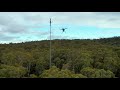
Professor Arko Lucieer is the Head of the School of Geography, Planning, and Spatial Sciences at the University of Tasmania. He holds a PhD in Remote Sensing from Utrecht University (Netherlands). His research focuses on advancing drone and remote sensing technologies for environmental monitoring, particularly in biodiversity mapping, ecosystem dynamics, and Antarctic ecology. He leads the TerraLuma research group, pioneering ultrahigh-resolution remote sensing applications. Key roles include: Established TERN DroneScape for national ecosystem monitoring Developed protocols for drone-based data collection and AI-driven analysis Recipient of the 2008 National Banksia Environmental Award Research Interests: Integration of drone technology, multispectral/hyperspectral imaging, and AI to quantify plant traits, map ecosystems, and address climate change impacts. Projects span forest health, Antarctic moss communities, and precision agriculture. Grants & Projects: TERN DroneScape: $1.6M for standardized drone-based ecosystem monitoring NatureScan: $1.2M for national biodiversity monitoring using drones and AI Supervision: Mentor to over 20 doctoral students, focusing on remote sensing applications in ecology, forestry, and environmental science. Labs/Teams: TerraLuma research group, specializing in drone remote sensing innovation and environmental data analytics.
Luke J Harmon serves as Professor in the Department of Biological Sciences within the College of Science at the University of Idaho, with additional appointments in the Initiative for Bioinformatics and Evolutionary Studies, Institute for Interdisciplinary Data Sciences, and Office of Research and Economic Development. Education: PhD in Evolution, Ecology, and Population Biology (2005) from Washington University in St. Louis BS in Zoology (1998) from Iowa State University Research Focus: Harmon's work integrates phylogenetic comparative methods with computational biology to investigate adaptive radiations , trait evolution , and biogeographic patterns . His research bridges micro-macroevolutionary scales through innovative statistical modeling, particularly in evolutionary medicine applications and speciation dynamics. As developer of key R packages ( rwty , treeducken , SSARP ), he advances methodological frameworks for analyzing evolutionary rates and character correlations. Publication Trends: Recent work (2022-2025) demonstrates increasing emphasis on software tool development for phylogenetic analysis, with significant contributions to evolutionary oncology, fire-adapted trait evolution in conifers, and niche theory applications in adaptive radiations. His publications consistently address methodological challenges in modeling rate heterogeneity, species delimitation, and cross-scale evolutionary processes. Research Infrastructure: Harmon leads the Harmon Lab, which operates within the University of Idaho's Initiative for Bioinformatics and Evolutionary Studies. The lab focuses on computational approaches to evolutionary questions, leveraging high-performance computing resources and interdisciplinary collaborations through the Institute for Interdisciplinary Data Sciences.
Anne McIntosh is an Associate Professor and Associate Dean at the Augustana Campus of the University of Alberta, with an adjunct appointment in the Department of Renewable Resources at the Faculty of Agricultural, Life and Environmental Sciences. Her research spans forest ecology, disturbance dynamics, and ecological reclamation, focusing on post-disturbance recovery of biodiversity and ecosystem services. PhD in Biology MSc in Ecology BSc (Honours) in Environmental Science Her research explores: Ecological recovery after natural and anthropogenic disturbances (mountain pine beetle, oil sands, reclamation) Microbial and plant community interactions Functional trait variability in forest ecosystems Conservation in mixed-use landscapes Teaching innovations in ecology and biology Her recent publications emphasize trait-based forest restoration, invasive species impacts, and monitoring reclaimed ecosystems globally. She leads the Ecological Recovery Lab and collaborates on cross-continental studies in Canada, Sweden, and Costa Rica. She teaches advanced courses in: AUBIO 315 - Advanced Biological Analysis (statistical methods) AUBIO 323 - Plant Biology AUBIO 253 - Ecological Interactions AUBIO 411 - Capstone Biology Perspectives AUSTA 215 - Statistical Methods for Natural Sciences Her lab focuses on long-term ecological monitoring, using field surveys and UAV technology to assess recovery trajectories in forest and grassland ecosystems.
Christian Wirth is a Professor at Leipzig University, where he serves as Director of the Botanical Garden and heads the Special Botany and Functional Biodiversity Group. He is also the founding director of the German Centre for Integrative Biodiversity Research (iDiv) Halle-Jena-Leipzig. His research integrates botany and plant ecology with species conservation, focusing on biodiversity-ecosystem functioning relationships in terrestrial ecosystems. Education includes: Diploma in Biology (1996) from University of Bayreuth PhD (summa cum laude, 2000) from University of Bayreuth Wirth's research examines how natural and human-induced biodiversity changes affect ecosystem processes like carbon storage, water consumption, and energy balance. His pioneering work includes developing trait-based approaches (TRY database) and investigating climate change impacts on forests. Current projects focus on forest conservation, functional diversity, and biogeochemical cycling using advanced facilities like the Leipzig Auwaldkran canopy crane and ARBOfun research arboretum. His publications emphasize biodiversity-ecosystem functioning relationships, with recent work exploring drought resilience in forests, root trait economics, soil microbial interactions, and remote sensing applications. Research consistently demonstrates how plant traits and community composition mediate ecosystem responses to global change stressors. Major research projects include: NFDI4BioDiversität (2021-2025): Biodiversity and environmental data infrastructure Faktencheck Artenvielfalt (2021-2024): National biodiversity assessment Quantifizierung der Kommunikationsdienstleistung durch Biodiversität (2017-2021) Wirth leads the Special Botany group investigating functional biodiversity significance and directs field research facilities including the Leipzig Auwaldkran. His team collaborates extensively within iDiv's interdisciplinary research framework.
Monique Weemstra is an Assistant Professor in the Forest Ecology and Forest Management group at Wageningen University & Research. Her work focuses on plant root systems, mycorrhizal interactions, and how trees adapt to environmental conditions. She holds an MA in Anthropology from Radboud University and a Ph.D. in Forest Ecology from Wageningen University. Her research explores root traits' role in resource acquisition, integrating above- and belowground processes. Postdoctoral research in the U.S. and France expanded her expertise in global root ecology. Current projects emphasize whole-plant strategies across elevation gradients and tropical/subtropical ecosystems. She collaborates internationally, contributing to databases like TropiRoot 1.0. Her availability and contact details are publicly listed. Her education includes a Master’s in Anthropology (Radboud University) and a Ph.D. in Forest Ecology (Wageningen University). Key research areas include root functional traits, mycorrhizal networks, and plant responses to environmental stressors. She has published extensively on root-trait covariation, tropical forest dynamics, and elevation-driven ecological changes. Research emphasizes root traits' role in plant performance, including studies on fine-root mass, specific root length, and lifespan. She investigates how roots adapt to soil conditions and interact with fungal symbionts. Her work bridges ecological theory with practical applications, such as improving vegetation models for climate change studies. Collaborations span multiple institutions, enhancing global understanding of belowground plant strategies.
Dr. Michael Rzanny is a Scientist at the Max Planck Institute for Biogeochemistry in Jena, Germany, working within the Department of Biogeochemical Integration and the Biod.AI.versity Observation & Integration research group. His work focuses on leveraging technology and citizen science to advance ecological research. Email: mrzanny@... Location: Hans-Knöll-Str. 10, 07745 Jena, Germany Dr. Rzanny's research spans several critical areas in ecology and biodiversity science. He specializes in plant phenology , using citizen science data and machine learning to monitor and predict plant life cycle events across Central European forests and grasslands. His work also explores multitrophic interactions , examining how plant diversity affects predator and herbivore specialization in complex ecosystems. Additionally, he contributes to digital taxonomy through mobile apps like Flora Incognita and Flora Capture, which enable automated plant species identification using smartphone technology. His research extends to functional diversity in grassland ecosystems, analyzing how species richness impacts ecological multifunctionality and food web stability. Dr. Rzanny's publications demonstrate a strong trend toward integrating automated image analysis with ecological monitoring . His work on phenological dynamics combines observational networks, citizen science databases, and land surface models to understand climate change impacts on plant communities. He has developed methodologies for leaf shape analysis using deep learning, validated through geometric morphometrics. His projects like Flora Incognita and Flora Capture emphasize the potential of mobile applications in transforming biodiversity research and public engagement with natural environments.
Eric Lamb is a Professor in the Department of Plant Sciences at the University of Saskatchewan, affiliated with the College of Agriculture and Bioresources. He is also the Curator of the WP Fraser Herbarium. His research focuses on plant ecology, fire ecology, and grassland conservation. He holds a Ph.D. from the University of Alberta, an M.Sc. from Lakehead University, and a B.Sc. from the University of British Columbia. Dr. Lamb teaches undergraduate courses including Plant Ecology, Grassland Soils and Vegetation, and Advanced Plant Ecology, as well as graduate courses in statistical and experimental analysis methods. His research explores ecosystem services, invasive species impacts, soil microbiology, and fire management strategies in grassland ecosystems. Key Research Themes: Fire effects on plant communities, microbial interactions in root systems, and conservation strategies for grassland biodiversity. Notable Contributions: Pioneering studies on prescribed fire reintroduction, microbial community dynamics during invasions, and the ecological impacts of grazing regimes. His recent publications emphasize global grassland drought vulnerabilities, Arctic soil biodiversity under climate change, and the role of microbial networks in ecosystem resilience. Dr. Lamb collaborates widely on interdisciplinary projects bridging ecology, conservation, and land management. Lab/Team Activities: Active in the WP Fraser Herbarium’s specimen curation and fieldwork initiatives, focusing on Saskatchewan’s endemic plant species and Arctic tundra restoration.
Gaurav Baruah is a researcher in the Faculty of Biology at the University of Bielefeld , specializing in Theoretical Biology . His work explores ecological systems through mathematical and network-based approaches, aligning with the university’s strategic research area on the Changing World , which investigates societal and environmental dynamics under uncertainty. Research Focus: Network science in ecological systems, including food web recovery, mutualistic networks, and climate change impacts on biodiversity.Eco-evolutionary feedbacks and trait-based modeling for species coexistence and population resilience. Grants & Collaborations: Participation in interdisciplinary projects under DFG Collaborative Research Centres and European Commission-funded initiatives, emphasizing complex systems and global change biology. Contact: Email gaurav.baruah@uni-bielefeld.de | Office: UHG W4-113 | Phone: +49 521 106-5572