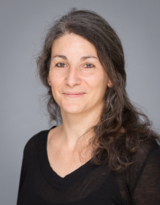
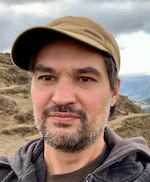
Josefine Friederike Weiß is a researcher at the Alfred Wegener Institute (AWI) , affiliated with the Polar Terrestrial Environmental Systems department in Potsdam, Germany. Her work focuses on marine sedimentary ancient DNA to investigate carbon dynamics between terrestrial and marine ecosystems. She explores how ancient genetic material preserved in sediments reveals historical climate and ecological interactions. Her research integrates advanced molecular techniques such as metabarcoding and sedimentary DNA analysis to trace land-plant carbon sources, phytoplankton blooms, and biogeochemical processes in polar regions. Key projects include studying Phaeocystis blooms' role in carbon sequestration and Arctic sub-mesoscale filament dynamics. Publications highlight interdisciplinary approaches combining high-resolution oceanographic measurements with paleoenvironmental reconstructions. While no explicit awards are listed, her contributions bridge genetics, geology, and climate science in polar environments. Josefine collaborates on long-term observational systems like the LTER Observatory HAUSGARTEN and participates in Arctic and Antarctic expeditions. Her work supports understanding climate change impacts on marine and terrestrial carbon cycles.
Brian B. Laird is Professor and Department Chair of Chemistry at the University of Kansas. He earned dual B.S. degrees in Chemistry and Mathematics from the University of Texas at Austin (1982) and a Ph.D. in Theoretical Chemistry from UC Berkeley (1987). His career includes postdoctoral positions at Columbia University, Forschungszentrum Jülich (NATO Fellowship), University of Utah, University of Sydney, and University of Wisconsin, with visiting appointments at the University of Mainz, University of Leicester, and UC Davis. Research focuses on applying statistical mechanics and molecular simulation to materials science, with three primary areas: (1) structure and thermodynamics of condensed-phase interfaces, (2) phase coexistence under nanoscale confinement, and (3) advanced molecular dynamics algorithms. His publications demonstrate strong emphasis on surface thermodynamics, nanomaterial interactions, and ecological applications of computational methods. Honors include the NSF CAREER Award. Professor Laird directs an active research group mentoring 19+ graduate students/postdocs. The Laird Lab frequently collaborates internationally with institutions in China, Germany, and the UK.
Christian Wirth is a Professor at Leipzig University, where he serves as Director of the Botanical Garden and heads the Special Botany and Functional Biodiversity Group. He is also the founding director of the German Centre for Integrative Biodiversity Research (iDiv) Halle-Jena-Leipzig. His research integrates botany and plant ecology with species conservation, focusing on biodiversity-ecosystem functioning relationships in terrestrial ecosystems. Education includes: Diploma in Biology (1996) from University of Bayreuth PhD (summa cum laude, 2000) from University of Bayreuth Wirth's research examines how natural and human-induced biodiversity changes affect ecosystem processes like carbon storage, water consumption, and energy balance. His pioneering work includes developing trait-based approaches (TRY database) and investigating climate change impacts on forests. Current projects focus on forest conservation, functional diversity, and biogeochemical cycling using advanced facilities like the Leipzig Auwaldkran canopy crane and ARBOfun research arboretum. His publications emphasize biodiversity-ecosystem functioning relationships, with recent work exploring drought resilience in forests, root trait economics, soil microbial interactions, and remote sensing applications. Research consistently demonstrates how plant traits and community composition mediate ecosystem responses to global change stressors. Major research projects include: NFDI4BioDiversität (2021-2025): Biodiversity and environmental data infrastructure Faktencheck Artenvielfalt (2021-2024): National biodiversity assessment Quantifizierung der Kommunikationsdienstleistung durch Biodiversität (2017-2021) Wirth leads the Special Botany group investigating functional biodiversity significance and directs field research facilities including the Leipzig Auwaldkran. His team collaborates extensively within iDiv's interdisciplinary research framework.
Weihan Jia is a PhD Candidate in the Polar Terrestrial Environmental Systems department at the Alfred Wegener Institute (AWI) in Potsdam, Germany. His research focuses on ancient DNA (aDNA) and environmental DNA (eDNA) preserved in lake sediments, with a particular emphasis on reconstructing past vegetation dynamics and paleoclimatic conditions. His work spans regions including the Qinghai-Tibetan Plateau, Siberia, and Alaska, addressing questions related to biodiversity change, climate variability, and ecosystem resilience. Key research interests include the application of metabarcoding and metagenomics to analyze sedimentary DNA, assessing the preservation of genetic material in lake sediments, and linking these findings to environmental drivers such as land use changes and temperature shifts. Dr. Jia's studies contribute to understanding how high-latitude and high-altitude ecosystems respond to climatic fluctuations, providing insights into future environmental changes. His publications highlight innovations in combining sedimentary DNA with traditional proxies like pollen analysis to improve vegetation reconstruction accuracy. Recent work has explored the sensitivity of vegetation and glacial systems to summer warming in cold regions, as well as monsoon dynamics linked to ENSO activity. Collaborative efforts include projects on the Tibetan Plateau and Siberian lakes, emphasizing interdisciplinary approaches to paleoenvironmental research. While currently focused on his doctoral research, Jia actively engages in data-driven projects through platforms like PANGAEA and Google Scholar, advancing open science and environmental monitoring initiatives.
Prof. Dr. Jörg Ewald is a Research Professor in the Faculty of Forestry and Agriculture at the Technical University of Applied Sciences Weihenstephan-Triesdorf. He leads the Research Professorship on Diversity and Functions of Mountain Ecosystems and holds key leadership roles as Dean of the Faculty and Scientific Director of the Doctoral Center Sustainable Land Use Systems (SusLand). He is also a member of the steering committee for the BayWISS Joint College Life Sciences and Green Technologies. His research is centered on botany, vegetation science, and mountain ecosystems , with a strong emphasis on the impacts of climate change, land-use dynamics, and conservation in alpine and forest environments. His work spans plant ecology, biodiversity assessment, soil ecology (particularly Tangelhumus), and forest site evaluation. He teaches courses such as General Botany, Systematic Botany, Forest Communities, and Climate Change Management. His recent publications reveal a consistent focus on long-term ecological monitoring, species distribution shifts in response to warming, and the effects of land use on biodiversity across trophic levels. He employs methods like NMDS ordination, cluster analysis, metabarcoding, and GIS-based modeling. His work often involves large collaborative networks across Germany and integrates citizen science data with historical records. Prof. Ewald is actively involved in applied research for sustainable forest management and conservation policy, contributing to projects like StratALP for assessing forest degradation sensitivity. His leadership in doctoral education and interdisciplinary research initiatives underscores his central role in advancing sustainable land use science.
Prof. Dr. Daniela Beisser is a Professor at the Department of Engineering and Natural Sciences (FB 8) of the Westphalian University of Applied Sciences in Recklinghausen, Germany. Her research focuses on bioinformatics and biostatistical methods for high-throughput 'omics data, applied to biomedicine and freshwater ecology. She previously held academic roles at the University of Duisburg-Essen (2017–2023) and University Hospital Essen. 2004–2008: B.Sc. in Molecular Biology with Bioinformatics focus, FH Gelsenkirchen 2006–2008: M.Sc. in Molecular Biology with Bioinformatics focus, FH Gelsenkirchen 2008–2011: Ph.D. in Bioinformatics, University of Würzburg Her research integrates computational approaches with experimental data to study molecular responses to environmental stressors in freshwater organisms, genome analyses in human and protists, and proteomic studies in plants. She also investigates eco-evolutionary theories in microorganisms and links biodiversity to ecosystem functions. Recent publications highlight her work on amplicon sequencing (Natrix2 pipeline), metatranscriptomic analysis of microbial communities, and machine learning frameworks for environmental data. She contributes to software tools like TaxMapper and BioNet for reproducible workflows. Best Poster Award, German Conference on Bioinformatics (2013) Travel scholarships: DAAD, DAAD PROMOS, German Symposium on Systems Biology E-fellows.net scholarship (2006–2008) She has supervised numerous PhD, Master’s, and Bachelor’s students on topics such as protist community dynamics , fungal degradation processes , and stressor recovery mechanisms . Her lab collaborates on the CRC 1439 'RESIST' project and develops tools for environmental DNA analysis.
Christoph Müller is a Professor of Experimental Plant Ecology at Justus Liebig University Giessen (since 2009) and a Visiting Professor at University College Dublin's School of Biology and Environmental Science (since 2007). His work bridges soil science, plant ecology, and climate change biogeochemistry. PhD in Soil Science (Lincoln University, NZ, 1995) MSc in Soil Water Management (University of Reading, 1991) Diploma in Horticulture (FH, 1990) Research centers on climate change impacts on terrestrial ecosystems , focusing on elemental cycles and trace gas production in soils. He pioneered 15N/13C isotope tracing to quantify gross nitrogen transformations and developed Ntrace software for analyzing these processes. His landmark Giessen FACE experiment (20+ years) demonstrates how elevated CO2 alters rhizosphere microbiomes and nutrient dynamics. Recent publications (2021-2023) reveal mechanisms linking soil clay minerals to nitrogen cycling, quantify DNRA patterns across ecosystems, and explore biochar-nitrapyrin synergies for emission reduction. Grants from EPA Ireland and Department of Agriculture Ireland support his work on greenhouse gas mitigation and sustainable fertilization . Collaborations span institutions like UCD, with co-authors including Gerald Moser , Daniela Senkbeil , and Lea Meng . Current editorial roles involve European Journal of Soil Science and Frontiers in Terrestrial Microbiology . His methodology integrates stable isotope tracing , metabarcoding , and process-based modeling to unravel soil-plant-microbe interactions.
Kathrin Busch is a biological oceanographer conducting systems-oriented and interdisciplinary environmental research focused on cold and deep marine environments. Her work integrates ecological perspectives with advanced methodological approaches to study microbial communities within "deep-sea forests" formed by sponges and coral reefs. Research Interests: Ecosystem dynamics across spatial-temporal scales Matter fluxes and nutrient cycling Biodiversity assessments of marine microbiomes Abiotic-biotic interactions in extreme environments Biological networks and feedback mechanisms Connectivity in deep-sea ecosystems Methodological Expertise: In situ observational and experimental approaches Molecular ecology techniques Big data management and bioinformatics pipelines Integrative modeling frameworks Advanced data visualization "Digital ocean" technologies
Ingolf Steffan-Dewenter is Professor and Chair of the Department of Animal Ecology and Tropical Biology (Zoology III) at the Biocenter of the University of Würzburg, Germany. With over two decades of academic leadership, he directs a research group focused on understanding ecological processes across multiple scales, from local habitat management to global environmental change. His work bridges fundamental ecological research with practical applications for sustainable land use and biodiversity conservation. Dr. Steffan-Dewenter's research spans animal ecology, population and community dynamics, agroecology, and tropical landscape ecology. His work examines how habitat fragmentation, land use intensification, climate change, and invasive species affect insect diversity and their biotic interactions, particularly focusing on plant-pollinator relationships. He investigates biodiversity-ecosystem functioning relationships across spatial and temporal scales, with special emphasis on pollination services, biological pest control, and sustainable agricultural practices. His research combines field experiments, long-term monitoring, and advanced statistical modeling to address critical questions in conservation biology and ecosystem management. Analysis of Steffan-Dewenter's recent publications reveals a strong focus on pollinator conservation under global change, with particular attention to climate change impacts on pollinator communities, landscape management for biodiversity conservation, and sustainable agricultural systems that support both production and ecological integrity. His work increasingly integrates multi-trophic perspectives, examining how changes at one trophic level cascade through ecosystems. The research demonstrates a shift toward more interdisciplinary approaches, combining ecological field studies with social science components to develop practical conservation strategies. Professor Steffan-Dewenter leads multiple significant research initiatives including BetaFor (forest biodiversity), ANDIV (Andean insect diversity), SAFEGUARD (wild pollinator conservation), BeeConnected (honeybee colony monitoring), BayÖkotox (ecotoxicology), UPSCALE (sustainable agriculture in Africa), VILLAGES BEES (pollinator promotion), DIFFCacao (cacao diversification), FARMS4Biodiversity (agroecological research), and LANDKLIF (climate change effects). These projects involve extensive international collaborations across Europe, Africa, and South America, securing substantial research funding from various national and international sources. His laboratory operates within the Department of Animal Ecology and Tropical Biology at the University of Würzburg's Biocenter, featuring state-of-the-art facilities for ecological research. The department maintains long-term research sites across Germany, Tanzania (Mount Kilimanjaro), and Peru, enabling comparative studies across different biomes and climate zones. The research group includes numerous PhD students, postdoctoral researchers, and technical staff working on diverse aspects of insect ecology, landscape ecology, and conservation biology.
Dr. Julia Moll is a Scientist at the Department of Soil Ecology, Helmholtz Centre for Environmental Research - UFZ (UFZ) in Halle/Saale, Germany. She currently holds a Temporary Position for Principal Investigator (DFG SPP 1374) at UFZ since March 2023, following her postdoctoral position from August 2018 to February 2023. Her research is situated within the Ecosystems of the Future research unit, focusing on soil microbial ecology and decomposition processes. Dr. Moll earned her PhD in the Department for Soil Ecology at the Helmholtz Centre for Environmental Research - UFZ, with her thesis titled "Fungi in an arable soil: Resource-related community dynamics, contribution to belowground food web and carbon flow." Prior to her PhD, she completed her Diploma thesis at the Freie Universität Berlin with a major in ecology and minors in microbiology and zoology. Her research focuses on microbial communities and their contribution to ecosystem processes , particularly examining how land use change and management intensities affect these communities. She employs advanced molecular techniques including Next Generation Sequencing (NGS), Metabarcoding, and qPCR to study fungal, bacterial, and nematode diversity in soil and deadwood ecosystems. Her work bridges the gap between molecular ecology and ecosystem functioning, with particular emphasis on decomposition processes in forest ecosystems. Dr. Moll's publication record demonstrates a strong focus on deadwood decomposition ecology and the microbial communities associated with this process. Her research spans multiple tree species and examines spatial and temporal patterns in microbial communities. She has made significant contributions to understanding the relationships between fungi, bacteria, and nematodes in deadwood ecosystems, as well as developing molecular methods for studying these complex communities. As a scientist at UFZ, Dr. Moll contributes to several major research projects including the Biodiversity Exploratories: BELongDead (Multitrophic Functional Diversity and Fungal Functional Diversity). Her current work examines fungal fruiting bodies and wood sampling in long-term deadwood experiments, continuing her longstanding interest in the role of fungi in carbon cycling and decomposition processes. Dr. Moll is actively involved in mentoring students and welcomes those interested in molecular-ecological research for final theses, internships, and student assistant positions. Her laboratory work combines field sampling with advanced molecular techniques to unravel the complex interactions within soil and deadwood ecosystems.
Prof. Dr. Hans-Peter Grossart is a Professor of Aquatic Microbial Ecology and Functional Biodiversity at the University of Potsdam's Faculty of Mathematics and Natural Sciences, Institute of Biochemistry and Biology. He simultaneously serves as a leading researcher at the Leibniz Institute of Freshwater Ecology and Inland Fisheries (IGB), where he has been Head of the Aquatic Microbial Ecology research group since 2002 and Speaker of the research focus Aquatic Biodiversity since 2008. His academic career spans over two decades with significant contributions to understanding microbial processes in aquatic ecosystems. Grossart's research interests focus on the complex interactions within aquatic microbial communities, particularly examining macroscopic organic aggregates and their role in organic matter cycling, community structures of aquatic organisms across various ecosystems (including lakes of the Mecklenburg Lake District, the Baltic Sea, and the North Sea), and the critical roles of aquatic organisms in energy and nutrient cycles. His work increasingly addresses the diversity and ecological functions of aquatic fungi, which have historically been understudied in freshwater ecology. Over the past decade, his research has expanded to include emerging environmental challenges such as microplastic pollution, antibiotic resistance in aquatic environments, and the impacts of climate change on microbial community dynamics. Analysis of his recent publications (2022-2025) reveals a sophisticated research program that bridges fundamental microbial ecology with pressing environmental concerns. His work demonstrates a consistent focus on how anthropogenic activities and global change factors influence microbial community structure and function across multiple aquatic systems. A notable trend is his increasing use of advanced molecular techniques to investigate microbial diversity and function, particularly in relation to biogeochemical cycling. His research spans freshwater, marine, and estuarine environments with particular attention to the interfaces between these systems and terrestrial ecosystems. Grossart maintains an active research group at IGB's Experimental Limnology facility in Stechlin, Germany, where he conducts both field and laboratory investigations. His team frequently collaborates with international researchers, as evidenced by his extensive publication record with co-authors from diverse geographical locations. He also participates in significant research networks including the Research Training Group GRK 2530, focusing on estuarine ecosystems, and has contributed to major collaborative efforts addressing global lake health and freshwater conservation.
Véronique Helfer is a Senior Scientist at the Leibniz Center for Tropical Marine Research (ZMT) GmbH, working in Programme Area 4 – Ecosystem Co-Design towards a sustainable Anthropocene and the Working Group Mangrove Ecology. Her research focuses on mangrove ecosystems, their protection, restoration, and resilience to global change. Using interdisciplinary approaches, she investigates factors driving microbial, faunal, and floral community composition in mangroves and how these translate into ecosystem services. Her work spans molecular biology (eDNA metabarcoding, landscape genetics), chemical ecology, functional ecology, and species distribution modeling. Recent publications highlight her expertise in mangrove canopy gaps, Blue Carbon verification frameworks, and interdisciplinary research. She has contributed to stakeholder initiatives like the sea4soCiety project and the Floating Mangroves energy solutions publication. Her educational background includes a 2010 PhD in Conservation Genetics from the University of Lausanne (supervised by Fumagalli L), with prior educational brochures on evolutionary biology and alpine ecosystems.
Prof. Dr. Christoph Moning is a Professor of Zoology and Animal Ecology at the Weihenstephan-Triesdorf University of Applied Sciences, affiliated with the Faculty of Landscape Architecture. He serves as Vice President for Research and Knowledge Transfer, leading institutional efforts in scientific advancement and collaboration. His work integrates ecological research with practical landscape planning and nature conservation policy. His research focuses on animal ecology, biodiversity conservation, and ecological thresholds in temperate forests, particularly in mountain mixed forests. Key interests include habitat modeling using LiDAR data, species protection law, urban green infrastructure resilience, and the impacts of land-use change on insect and amphibian diversity. His work often bridges science and policy, supporting Natura 2000 implementation and sustainable urban design. The recent publications highlight a strong trend in biodiversity assessment using advanced methods like metabarcoding and phylogenetic analysis, alongside applied studies on urban infiltration swales and conservation of endangered species like the Yellow-bellied Toad. His research spans forest ecosystems, urban environments, and renewable energy conflicts, emphasizing both taxonomic and functional diversity loss. Prof. Moning has been involved in long-term field projects, such as the Spessart project, which engaged students and local communities in biodiversity monitoring and conservation planning. His leadership in research and knowledge transfer underscores active involvement in grants and interdisciplinary collaborations, particularly in nature conservation and sustainable land management. He has contributed to numerous peer-reviewed journal articles, books, and conference proceedings, often in collaboration with researchers across Germany. His work supports resilient urban greening, ecological planning, and evidence-based conservation policy. Notably, one of his projects reached the finals of the 2020 European Natura 2000 Award, reflecting its societal and environmental impact.
Prof. Dr. Alexander Keller is a Professor at Ludwig Maximilian University of Munich (LMU), based at the LMU Biocenter in Planegg-Martinsried, Germany. He leads the "Cellular and Organismic Networks" research group within the Graduate School Life Science Munich (LSM), integrating field ecology, bioinformatics, and next-generation sequencing technologies to study ecological networks. His research centers on biodiversity dynamics within the plant-microbe-pollinator triangle , examining mutualistic interactions, microbiome compositions, and genomic-level molecular processes. Key methodologies include DNA metabarcoding, phylogenetic reconstructions, and computational workflow development. His work addresses ecosystem resilience, biodiversity loss, and conservation strategies under environmental change, with emphasis on land-use impacts, urbanization, and climate gradients across tropical and temperate ecosystems. Recent publications (2025) demonstrate strong trends in pollination ecology, microbiome analysis, and biodiversity monitoring using advanced sequencing . His studies reveal how landscape heterogeneity affects bee-pollen networks, how host identity shapes microbiomes, and how urban bees adapt foraging strategies. Notable methodological contributions include the LEPY pipeline for morphological analysis and MetAnoDe for metabarcoding quality control, alongside extensive work on tropical forest regeneration and undescribed species cataloging. Scientific Awards: No awards were mentioned in the provided text. Information regarding student advising and research grants was not provided in the available text. The "Cellular and Organismic Networks" group develops open computational pipelines and laboratory protocols for ecological data analysis. They conduct fieldwork across Ecuadorian rainforests, European grasslands, and urban environments, maintaining databases for trait analysis and sequence curation while adhering to open science principles. Current projects investigate microbiome transmission in bee-flower networks, forest succession dynamics, and the molecular basis of ecological resilience under global change.
Dr. Ronny Richter is a Research Fellow at iDiv (German Centre for Integrative Biodiversity Research), focusing on advanced ecological studies integrating remote sensing technologies and field measurements. His research spans forest ecology, plant-soil interactions, climate change impacts, and biodiversity monitoring. Role: Research Fellow Institution: iDiv (German Centre for Integrative Biodiversity Research) Location: Leipzig, Germany Dr. Richter combines ecological fieldwork with cutting-edge remote sensing techniques to investigate: Forest microclimate regulation Drought response mechanisms in trees Biodiversity-ecosystem functioning relationships Plant trait coordination across species Remote sensing applications for biodiversity monitoring Tree species classification with hyperspectral data His publication record from 2025-2024 demonstrates expertise in multi-disciplinary approaches across: Earth observation methods (thermal sensing, spectral analysis, vegetation indices) Forest dynamics (canopy structure, gap effects, vitality assessment) Climate change research (drought resilience, temperature buffering) Belowground processes (root traits, nutrient uptake) Biodiversity monitoring (insect diversity, metabarcoding) Functional ecology (trait coordination, defense mechanisms)