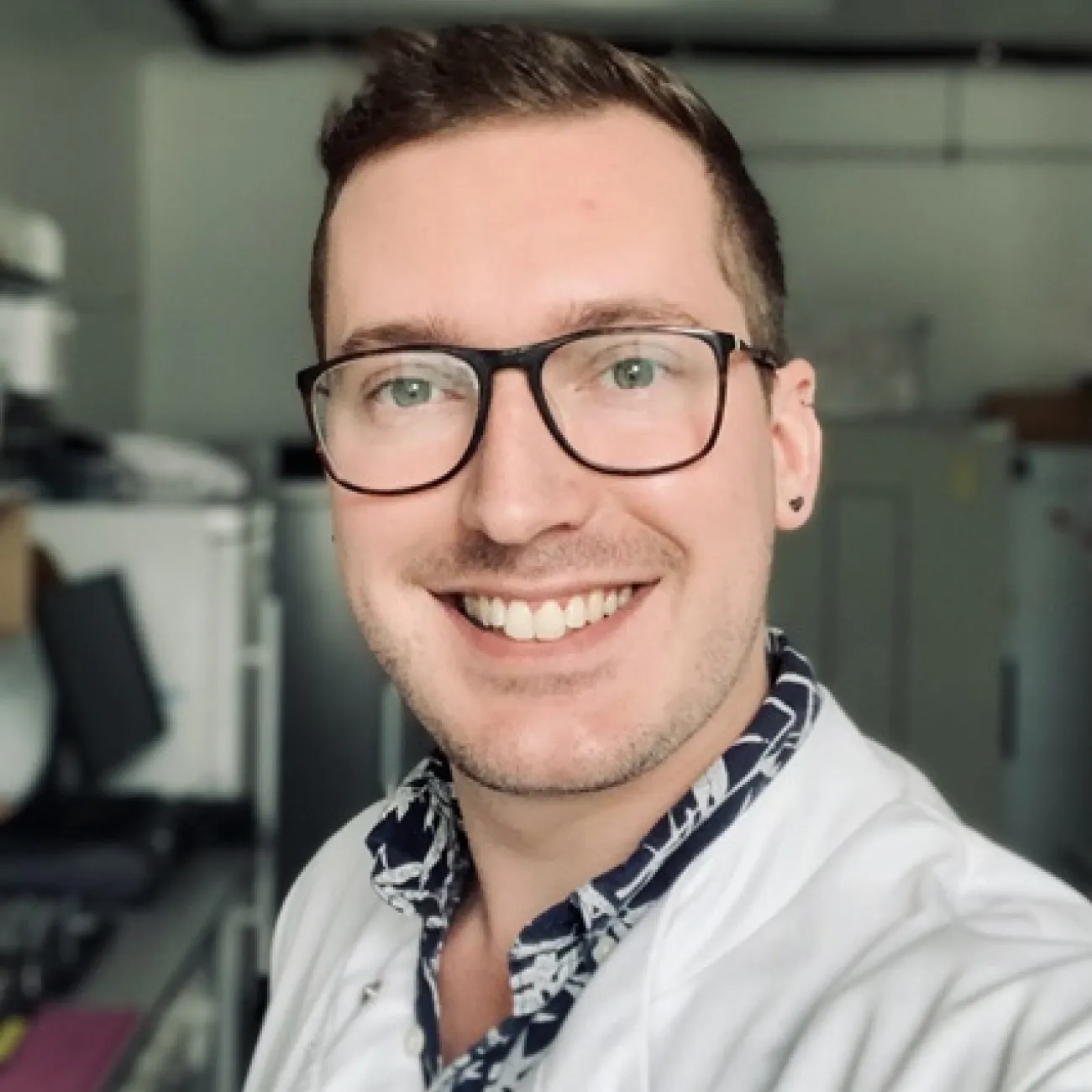
Dr. Daniel Stabler is a Lecturer in Plant-Organism Interactions at the University of Southampton, focusing on plant-pollinator interactions and nutritional ecology. He supervises PhD students in Biological Sciences and actively accepts new PhD applications. His research explores pollinator nutrition, lipid metabolism, and floral resource utilization across multi-organism systems. He is affiliated with the Plants and Food Security group, Precision Biosciences Innovation Hub, and the Institute for Life Sciences. His work combines biochemical analysis with ecological field studies to understand how environmental factors influence plant and insect physiology. Key projects include studying nectar chemistry, pollinator dietary regulation, and the impacts of air pollution on plant reproduction. Dr. Stabler has published extensively on topics such as honeybee nutrient balancing, bumblebee macronutrient regulation, and the role of caffeine in enhancing pollinator memory. His methodologies include innovative approaches for analyzing small biological samples, advancing ecological research techniques.
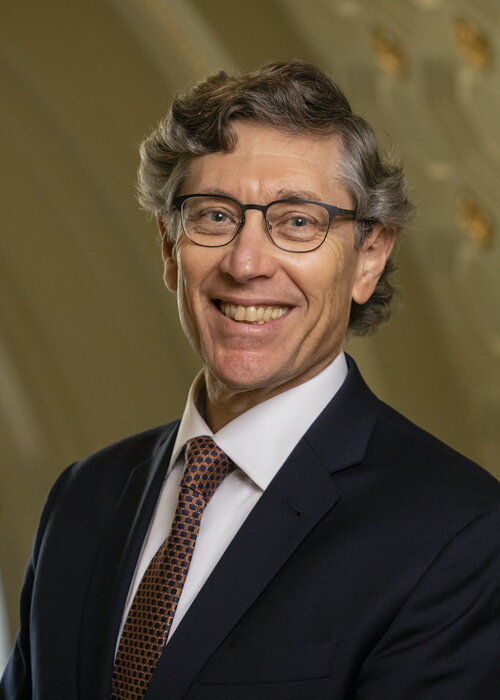
Gene E. Robinson is a Professor of Entomology and Director of the Carl R. Woese Institute for Genomic Biology at the University of Illinois at Urbana-Champaign. He holds a Swanlund Chair and multiple affiliate appointments across disciplines. His research uses genomic and systems biology approaches to study social behavior in honey bees, focusing on mechanisms of division of labor, aggression, and communication. Robinson pioneered genomics in social behavior research and led the honey bee genome sequencing effort. Education: B.A. and Ph.D. in Entomology from Cornell University (1986). Awards include the Wolf Prize in Agriculture, Guggenheim Fellowship, and membership in the National Academy of Sciences. He has trained over 35 postdoctoral researchers and 25 doctoral students, with many advancing to academic and industry roles. Research emphasizes integrative studies of social evolution, including gene regulatory networks and brain plasticity. Notable contributions include linking honey bee social behavior to autism-related genes and developing technologies for monitoring bee behavior. Current projects explore gut microbiota effects on foraging, nutritional regulation of behavior, and automated bee tracking using RFID. Awards: Over $70M in research grants, including NIH, NSF, and CZ Biohub support. Serves on National Academy committees and scientific advisory boards. Labs include the Robinson Lab and Carl R. Woese Institute, focusing on genomic and behavioral studies of social insects.
Michiel Wallis de Vries is a Special Professor at Wageningen University & Research, affiliated with the Department of Plant Ecology and Nature Conservation. His research focuses on butterfly conservation, pollinator dynamics, and the impacts of climate change and habitat fragmentation on biodiversity. Climate Change Pollinator Conservation Forest Fragmentation Grassland Ecology Recent publications highlight his work on endangered species like the Alcon Blue butterfly, phylogenetic approaches to climatic risk, and nitrogen deposition mitigation strategies in grasslands. He actively contributes to policy reports and public discourse on environmental sustainability. He serves as a promotor for PhD projects and collaborates on datasets related to insect population dynamics and ecological indicators. Notable projects include Trending Dragonflies , analyzing multi-scale ecological threats.
Davide Rassati is a Researcher at the University of Padova's Department of Agronomy, Food, Natural resources, Animals and Environment (DAFNAE). His work focuses on entomology and agricultural sciences, particularly pest management and crop protection strategies. He is based at the Agripolis campus in Legnaro, Italy. Research Focus: Dr. Rassati's expertise lies in applied entomology (academic field AGR/11), addressing insect-related challenges in agriculture through ecological and sustainable approaches. Key areas include integrated pest management, insect-plant interactions, and biodiversity conservation in agroecosystems.
Dr. Benjamin Jarrett is a Lecturer in the School of Environmental and Natural Sciences at Bangor University. He is an active researcher in evolutionary and behavioral ecology, with a strong publication record in top-tier journals such as Nature Ecology and Evolution , Science , and Proceedings of the Royal Society B . His research integrates experimental and theoretical approaches to understand adaptation, reproductive isolation, and social evolution, primarily using insect model systems including burying beetles and phytophagous bugs. His research interests center on how social interactions, parental care, and environmental change shape evolutionary dynamics. Key themes include: How sexual selection influences host plant adaptation in phytophagous insects The role of parental care in facilitating adaptation to climate change The evolutionary impacts of invasive species on native communities Phenotypic plasticity and its role in speciation His most recent work explores transgenerational effects of heat stress, climate warming impacts on beetle reproduction, and meta-analytic evidence for plasticity in reproductive isolation. He collaborates internationally, notably with Dr. Syuan-Jyun Sun in Taiwan and Dr. Farnon Ellwood on Rhododendron-associated invertebrates. He is accepting PhD students and encourages inquiries about project ideas and funding. Dr. Jarrett has contributed to discussions on academic sustainability, co-authoring a 2020 paper on postdoctoral workforce issues in Nature Ecology and Evolution . He has no listed scientific awards in the provided text. He advises postgraduate students and is involved in research projects related to urban evolution, biological control, and climate change responses. His lab uses experimental evolution, behavioral assays, and field studies to test evolutionary hypotheses. He is part of the Global Urban Evolution Project, contributing to large-scale studies on adaptation in urban environments.
Dr. Owen Osborne is a Lecturer in Zoology at the School of Environmental and Natural Sciences, Bangor University. He is an active researcher in evolutionary biology and ecology, focusing on speciation, adaptation, hybridization, and their impacts on biodiversity. His work spans diverse biological systems including plants, fungi, amphibians, fish, birds, insects, and host-associated microbiomes. His research interests center on understanding how rapid evolutionary change affects ecological interactions, particularly host-microbiome dynamics, and how these interconnected processes generate and maintain biodiversity. He employs a multidisciplinary approach combining evolutionary genomics, experimental ecology, metagenomics, and spatial ecology. Notably, he develops computational tools, including software for hypothesis testing in spatial ecology and bioinformatics, such as the R package fauxcurrence for generating null species distributions. The trends in his recent publications (2021–2025) show a consistent focus on parallel adaptation, speciation mechanisms, phylogenetic and biogeographic modeling, host-microbiome coevolution, and the development of computational methods. His work frequently appears in top-tier journals such as Nature Ecology and Evolution , PNAS , Molecular Biology and Evolution , and The ISME Journal , often in collaboration with leading researchers in the field. Dr. Osborne has no listed scientific awards in the provided texts, but his extensive publication record and software development indicate significant scholarly contributions. He advises students and likely leads or contributes to research grants, though specific names and funding details are not mentioned. His GitHub profile (ogosborne) hosts several repositories related to his research, such as fauxcurrence , Silene.uniflora.genome.project , and fasta_alignment_filters , indicating active involvement in open science and computational research. Dr. Osborne is part of research teams investigating evolutionary processes in natural populations, with a particular emphasis on integrating genomic data with ecological and spatial analyses. His lab or research group likely involves interdisciplinary collaboration and the use of bioinformatics pipelines for large-scale data analysis.
Irma-Lídia Szigyártó is an Assistant Professor at the Department of Environmental Science , Sapientia Hungarian University of Transylvania , Faculty of Sciences and Arts. She teaches courses in Botany , Hydrobiology , Indoor/Interior Environment , Environmental Imagistics/Imaging Science , and Ecotoxicology at both BSc and MSc levels. Research focus : Algology, freshwater diatom communities, biological monitoring of water quality, plant anatomy, and histology. Key publications include studies on peat bog biodiversity, diatom-environment relationships, and water quality assessments, alongside a co-authored book on plant ecophysiology. Collaborations : Active research with colleagues on aquatic ecosystems and ecological conservation.
Dr. Larba Hubert Balima is a Researcher at the Institute of Biology and Biochemistry, University of Potsdam, Germany, within the Biodiversity Research / Systematic Botany group. He also holds an affiliation with the Laboratory of Plant Biology and Ecology at the University Joseph Ki-Zerbo in Ouagadougou, Burkina Faso. His research bridges ecological science and sustainability in West African savannas. Education: Bachelor’s in Biological Sciences, Ouagadougou, Burkina Faso (2007–2010) Master’s in Botany and Plant Ecology, Ouagadougou, Burkina Faso (2011–2013) PhD in Plant Biology and Ecology / Biodiversity and Climate Change (2016–2020) His research focuses on the dynamics and productivity of West African savannas , the interface between biodiversity, ecosystem functioning, and ecosystem services , and the effects of land use and climate change on these systems. His work integrates field ecology, geospatial modeling, and allometric analysis to assess carbon stocks, species distribution, and sustainability in tropical ecosystems. Dr. Balima’s recent publications (2018–2023) reflect a strong trend in climate change impacts on African tree species, particularly Afzelia africana , and the development of biomass and carbon models for savanna ecosystems. His research spans disciplines including plant ecology, environmental monitoring, agroforestry, and ethnobotany, with a geographic focus on Burkina Faso and West Africa. Scientific Affiliations and Projects: University of Potsdam – Biodiversity Research / Systematic Botany University Joseph Ki-Zerbo – Laboratory of Plant Biology and Ecology Involved in research projects: GreenGaDe (Greenhouse Gas Determination), GCEF (Global Change Experimental Facility), and others related to savanna ecology and climate change. He maintains active scholarly profiles via ORCID, ResearchGate, and Google Scholar, and is engaged in collaborative research across Germany and West Africa. While no formal advisees are listed, his work contributes significantly to training and capacity building in ecological research in Burkina Faso.
Nan Crystal Arens is a Professor of Geoscience and Chair of the Geoscience Department at Hobart and William Smith Colleges (HWS), where she has been a faculty member since 2001. She holds degrees from The Pennsylvania State University (B.S., M.S.) and Harvard University (M.A., Ph.D.). Her academic work bridges geoscience, environmental studies, and science education. B.S., The Pennsylvania State University, 1987 M.S., The Pennsylvania State University, 1988 M.A., Harvard University, 1991 Ph.D., Harvard University, 1993 Her research spans paleobotany, macroevolution, and Earth history, with recent emphasis on environmental microplastics and the application of remote sensing to pollution mapping. She is particularly known for the 'Press-Pulse' theory of mass extinction, developed with Ian D. West, which has found applications beyond paleontology, including in cancer research. Collaborating with Prof. Emily Fisher in Psychological Science, she investigates how science education can reduce motivated reasoning about climate change. Her work often involves student co-authors, reflecting her commitment to undergraduate research mentorship. Her publications reveal a strong interdisciplinary trend, combining geoscience with psychology, environmental health, and data analytics. Key themes include climate change education, fossil flora analysis, and innovative methods for detecting environmental contamination. She teaches courses such as Introduction to Geology, Earth History, and Data Analytics Capstone, emphasizing research, statistical methods, and scientific communication. Geoscience education and motivated reasoning Environmental microplastics in precipitation Remote sensing of mercury pollution Press-Pulse theory of extinction Angiosperm evolution in the Cretaceous Nan Crystal Arens is actively engaged in professional service, including board membership at the Paleontological Research Institute and editorial work for the American Fern Journal. Her scholarly collaborations extend across disciplines and institutions, and she has mentored numerous undergraduate researchers. She has also contributed to science communication through public relations and freelance writing earlier in her career.
Inmaculada Rosa García Robles is a Full Professor in the Department of Genetics at the Faculty of Biological Sciences, University of Valencia (UV). She serves as Department Secretary and Vice-Dean of Innovation and Quality at the Faculty of Biology. Her academic and research career is deeply rooted in the UV, where she has held progressive roles since completing her PhD in 1999. She earned her degree in Chemistry, specializing in Biochemistry, from the University of Valencia in 1994, followed by a 5-month internship at Leiden University (Netherlands). Her doctoral research focused on the mode of action of insecticidal proteins from Bacillus thuringiensis . She conducted postdoctoral research at IATA (CSIC), Cavanilles Institute (UV), and EMBL Grenoble under a Specialization Grant in International Organizations. She rejoined UV with a Carmen and Severo Ochoa fellowship and served as a Senior Research Technician before becoming a Contract Professor in 2012 and a Full Professor in 2017. Her research centers on pathogen-host interactions across diverse biological systems, including bacteria-insects, phages-bacteria, insects-plants, and viruses-humans. Her work spans from fundamental molecular studies—such as phage structures, protein-protein interactions, and toxin biochemistry—to applied clinical and field applications. She contributed to the Colorado potato beetle genome annotation within the i5k initiative. Though specific recent publications are not listed, her long-standing research lines suggest continued output in molecular genetics, host-pathogen dynamics, and biotechnological innovation. FPI Grant, Generalitat Valenciana Specialization Grant in International Organizations Carmen and Severo Ochoa Postdoctoral Fellowship Quality Mention as Internship Tutor Three Recognized Five-Year Teaching Periods Three Recognized Six-Year Research Periods She has supervised 13 final degree projects and 6 Master’s theses, and successfully directed one PhD thesis (Dr. López-Galiano, 2021), currently co-supervising another. She coordinates external internships for Biotechnology students and leads the INNOCAMPUS-EXPLORA Teaching Innovation Project. She has participated in 12 educational innovation projects since 2018. As a Senior Research Technician and later Professor, she has been integral to the BIOMOLUV research group, focusing on biomolecules for agricultural and therapeutic use. She is also a co-inventor of two patents related to recombinant expression and antimicrobial/anticancer peptides, and actively participates in peer review and evaluation for journals and national agencies.
Curt McCartney is an Associate Professor in the Department of Plant Science at the University of Manitoba, Faculty of Agricultural and Food Sciences. He is based at the Fort Garry campus in Winnipeg, MB, where he conducts research and teaches in plant genetics and breeding. His primary affiliation is with the Department of Plant Science, contributing to both undergraduate and graduate programs. Education: PhD in Plant Breeding and Genetics, University of Manitoba BSc Honours in Genetics, University of Manitoba His research is centered on wheat breeding and genetics, particularly focused on improving Canada Western Red Winter (CWRW) wheat varieties for Prairie conditions. Key areas include resistance to Fusarium head blight, rust diseases, and orange wheat blossom midge, using advanced molecular techniques such as SNP marker analysis, DNA sequencing, linkage analysis, QTL mapping, association mapping, and bioinformatics. He also explores the application of UAV-mounted sensors for phenotyping in breeding programs. Although specific publications are not listed in the text, his research portfolio indicates a strong focus on genetic mapping, genomic selection, and variety development in wheat and triticale. His work supports both scientific advancement and practical agricultural applications in cereal crop improvement. Scientific Awards: No awards explicitly mentioned. Dr. McCartney advises graduate students in the Plant Science program and is involved in multiple research projects related to disease resistance and crop improvement. His lab integrates molecular genetics with field-based breeding, contributing to sustainable wheat production. He teaches PLNT 4330 (Intermediate Plant Genetics) and PLNT 7164 (Genetic Mapping in Plants), supporting the training of future plant scientists. He is associated with research facilities within the Faculty of Agricultural and Food Sciences, utilizing both laboratory and field resources for his breeding and genetic studies. His work contributes to national variety registration efforts and ongoing genomic research in cereals.
Leslie A. Weston is a Professor at Charles Sturt University (CSU) and a key figure at the Gulbali Research Institute, where she leads pioneering research in plant sciences, natural products chemistry, and sustainable agriculture. Elected as a Fellow of the Australian Academy of Science (FAA) in 2023, her work integrates chemical ecology, metabolomics, and plant physiology to understand plant-microbe-herbivore interactions in the rhizosphere. She leads major multidisciplinary projects, including the $270M Cooperative Research Centre on Marine Bioproducts, advancing applications in agrichemicals, nutraceuticals, and biocontrol. PhD in Horticulture and Natural Products Chemistry, Michigan State University, 1987 MS in Horticulture, Michigan State University, 1982 BS in Plant Sciences, Cornell University, 1980 Her research centers on secondary plant metabolites, allelopathy, and the biosynthesis and regulation of bioactive compounds in root exudates. She employs cutting-edge techniques like mass spectrometry and chemometrics to study plant defense mechanisms and microbial transformation of allelochemicals. Her work has led to the development of bioherbicides, competitive crop cultivars, and sustainable weed and pest management systems using biocontrol agents such as dung beetles. The most recent publications reflect a strong focus on metabolomic profiling of plant-microbe interactions, benzoxazinoid dynamics in wheat rhizospheres, volatile-mediated insect behavior, and economic modeling of weed-suppressive crops. These works highlight interdisciplinary trends combining analytical chemistry, agronomy, entomology, and data science to solve real-world agricultural challenges. Fellow of the Australian Academy of Science (FAA), 2023 Molisch and Grodzinsky Award for Outstanding Lifetime Research Achievement, 2005 NSW OMSR Life Sciences Research Fellowship, 2008–2012 Editor's Choice Article for The Year 2022, awarded 2023 Outstanding Publication Award, 2017 Professor Weston actively supervises HDR students and has served on examination panels for PhD theses on topics such as seed contamination in sheep and photosensitisation. She has secured significant research grants, including participation in the $270M Marine Bioproducts CRC. Her collaborations span Australia, the USA, France (Aix-Marseille University), and Poland (Warsaw University of Life Sciences). Her research contributes to UN Sustainable Development Goals related to responsible consumption, life on land, and zero hunger. She leads a dynamic research team focused on chemical and microbial diversity in the rhizosphere, bioherbicide development, and integrated pest management. The team includes collaborators such as Paul A. Weston, Gurusinghe, Rebetzke, Gurr, and Quinn, and works closely with industry partners and government agencies to translate research into practical farming solutions.
Francesc Muñoz Muñoz is an active researcher in the Department of Animal Biology, Plant Biology and Ecology at Universitat Autònoma de Barcelona. His academic career spans over two decades with significant contributions to evolutionary biology, morphometrics, and zoology. He maintains an active research profile with publications extending to 2025, demonstrating ongoing scholarly engagement in his field. Education: Masters in Experimental Biology, Universitat de Barcelona (2006) Postgraduate Diploma in Zoology, Universitat de Barcelona (2004) Degree in Biology, Universitat de Barcelona (2000) Dr. Muñoz Muñoz specializes in the morphological analysis of small mammals, particularly focusing on Mus musculus domesticus and chromosomal polymorphism. His research employs advanced geometric morphometric techniques to study evolutionary patterns, developmental stability, and adaptive radiation across various taxa. He has made significant contributions to understanding the relationship between chromosomal variation and morphological differentiation in rodent populations. His publication record shows a consistent trajectory of high-quality research, with a notable increase in output since 2016. His work spans multiple disciplines including evolutionary biology, ecology, anatomy, and entomology, with particular emphasis on geometric morphometrics as a methodological approach. Recent publications demonstrate continued innovation in applying 3D morphometric analysis to diverse biological questions ranging from amphibian phylogeography to insect vector biology. Dr. Muñoz Muñoz has supervised eight research projects according to institutional records, indicating his active role in mentoring the next generation of researchers. His work contributes to Sustainable Development Goals related to quality education and life on land through his ecological and evolutionary research. His research has been supported by projects such as 'Dinámica espacio-temporal y variación morfológica en una zona de polimorfismo Robertsoniano de Mus musculus domesticus' funded by the Spanish Ministry of Education and Science (2007-2010), demonstrating his ability to secure competitive research funding.
Dr. Cheryl Mackowiak is an Associate Professor in the Department of Soil and Water Science at the University of Florida’s North Florida Research and Education Center (NFREC). Her work focuses on agroecological systems, particularly soil health, nitrogen cycling, and sustainable forage crop management. She leads research initiatives on perennial legumes (e.g., rhizoma peanut and bahiagrass) and their integration into grazing systems to enhance soil fertility and reduce environmental impact. Research Interests: Dr. Mackowiak’s interdisciplinary research addresses challenges in agricultural sustainability, including nitrogen fixation mechanisms, pasture management optimization, mycotoxin detection in forages, and microbial community dynamics in agroecosystems. She emphasizes practical solutions for small-scale family farms, advocating for soil stewardship and conservation practices. Key Contributions: Her recent studies explore nitrogen transfer pathways in grass-legume mixtures using isotope tracing, grazing system impacts on soil health, and biochar applications for contaminated soils. She also develops extension materials to guide farmers in best practices for forage production and nutrient management. Locations: Research is conducted at NFREC-Quincy, NFREC-Marianna, on-farm sites, and public lands in Florida’s Southern Coastal Plain. This region’s unique environmental conditions (gentle Atlantic/Gulf slopes, historic land use patterns) inform her studies on agroecological resilience. Grants & Outreach: Collaborates with USDA and state agencies on projects related to cover cropping, water footprint reduction, and pasture renovation. Her work bridges academic research with farmer needs through participatory trials and educational publications.
Christine Yung Hung is a Professor at Ghent University specializing in consumer behavior, food science, and nutrition. Her research focuses on understanding consumer decision-making processes related to food choices, sustainability, and health claims. She has established herself as a leading researcher through extensive collaborations, particularly with Wim Verbeke, with whom she has co-authored 31 publications. Her research interests span multiple critical areas in food science, including consumer acceptance of novel food products such as cultured meat and microalgae proteins, food labeling effectiveness (Nutri-score, Eco-score), meat consumption patterns across different demographics, and sustainable food systems . She employs sophisticated methodologies including choice experiments, consumer segmentation, and cross-cultural comparisons to understand the complex factors influencing food choices. Her recent publications demonstrate a strong focus on sustainable protein sources , with numerous studies on consumer acceptance of alternative proteins including cultured meat and microalgae proteins. She has also conducted significant research on food labeling systems and their impact on consumer behavior, particularly examining the effectiveness of the Eco-score and Nutri-score systems in Belgium. Professor Hung has supervised PhD students, including Hélène Van der Stricht whose thesis was promoted in 2024. Her work spans multiple continents with studies conducted in Belgium, Chile, China, and Vietnam, demonstrating her international research perspective. She is actively involved in cutting-edge research addressing critical food system challenges, with recent publications extending into 2025, indicating her continued productivity and relevance in the field of food consumer science.