معرفی
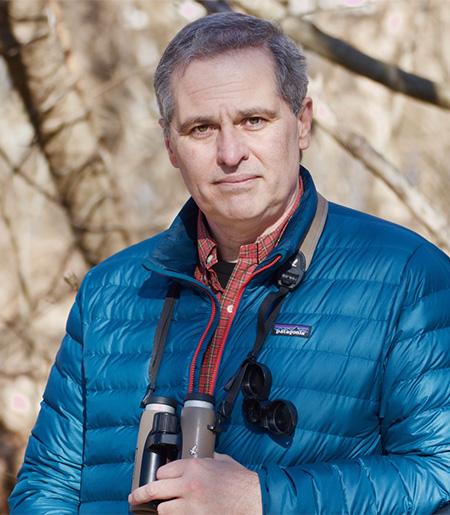
Dr. Owen Osborne is a Lecturer in Zoology at the School of Environmental and Natural Sciences, Bangor University. He is an active researcher in evolutionary biology and ecology, focusing on speciation, adaptation, hybridization, and their impacts on biodiversity. His work spans diverse biological systems including plants, fungi, amphibians, fish, birds, insects, and host-associated microbiomes.
His research interests center on understanding how rapid evolutionary change affects ecological interactions, particularly host-microbiome dynamics, and how these interconnected processes generate and maintain biodiversity. He employs a multidisciplinary approach combining evolutionary genomics, experimental ecology, metagenomics, and spatial ecology. Notably, he develops computational tools, including software for hypothesis testing in spatial ecology and bioinformatics, such as the R package fauxcurrence for generating null species distributions.
The trends in his recent publications (2021–2025) show a consistent focus on parallel adaptation, speciation mechanisms, phylogenetic and biogeographic modeling, host-microbiome coevolution, and the development of computational methods. His work frequently appears in top-tier journals such as Nature Ecology and Evolution, PNAS, Molecular Biology and Evolution, and The ISME Journal, often in collaboration with leading researchers in the field.
Dr. Osborne has no listed scientific awards in the provided texts, but his extensive publication record and software development indicate significant scholarly contributions.
He advises students and likely leads or contributes to research grants, though specific names and funding details are not mentioned. His GitHub profile (ogosborne) hosts several repositories related to his research, such as fauxcurrence, Silene.uniflora.genome.project, and fasta_alignment_filters, indicating active involvement in open science and computational research.
Dr. Osborne is part of research teams investigating evolutionary processes in natural populations, with a particular emphasis on integrating genomic data with ecological and spatial analyses. His lab or research group likely involves interdisciplinary collaboration and the use of bioinformatics pipelines for large-scale data analysis.