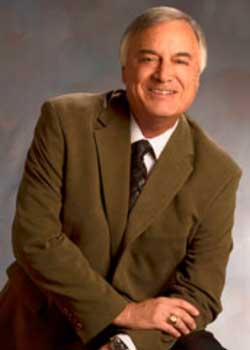
Jason H. Steffen is an Associate Professor of Physics at the University of Nevada, Las Vegas, where he leads a research group focused on exoplanetary science and astrophysics. His work spans multiple domains, including planetary formation and properties, gravitation, particle astrophysics, dark matter, dark energy, and airplane boarding optimization. Research Areas Exoplanet formation and system architecture Planetary interior structure modeling Impact of stellar chemical abundances on planet composition Collisional dynamics in planetary systems Transit timing and radial velocity analysis Airplane boarding process optimization Recent publications highlight his expertise in computational methods through tools like REBOUND and MAGRATHEA for simulating planetary dynamics and interior structures. His work addresses both fundamental astrophysical questions and practical applications in transportation efficiency.
Songqiao Wei serves as Associate Professor in both the Department of Earth & Environmental Sciences and the Department of Computational Mathematics, Science and Engineering at Michigan State University, conducting research at the intersection of seismology and computational geophysics with focus on subduction zone dynamics and Earth's deep interior. Education: Ph.D. in Earth and Planetary Sciences, Washington University in St. Louis (2016) M.A. in Earth and Planetary Sciences, Washington University in St. Louis (2012) M.S. in Geophysics, Peking University (2010) B.S. in Geophysics, Peking University (2007) Dr. Wei's research spans Seismology , Geophysics , and Tectonics , with core expertise in subduction zone processes , mantle transition zone structures , and seismic attenuation methodology . He integrates field deployment of seismic instruments with advanced computational analysis to investigate mantle discontinuities, melt/volatiles distribution, and intermediate-depth seismicity, particularly in the Tonga-Lau system and Alaska Peninsula regions. His work bridges observational seismology with geodynamic modeling to unravel complex mantle processes. Analysis of his 15 most recent publications reveals dominant research themes in subduction zone tomography (60% of works), seismic attenuation applications (25%), and machine learning integration (15%), with strong regional focus on Alaska (45%) and Tonga (35%). The publications demonstrate methodological evolution toward transdimensional Bayesian approaches and deep learning techniques for earthquake detection and structural imaging. Scientific Awards: Green Scholar Postdoctoral Fellowship, Scripps Institution of Oceanography (2016-2017) Dr. Wei's research program emphasizes field-based data acquisition through temporary seismic deployments, particularly in subduction zone settings. While specific grant details and student advisement records aren't documented in the provided materials, his active field work and computational research indicate ongoing project funding for instrumentation and data analysis. His dual departmental appointments reflect the interdisciplinary nature of his work combining geophysical observation with advanced computational methods. He maintains active involvement in seismic field campaigns for data collection and leads computational research groups focused on developing novel tomographic and machine learning approaches for seismic data analysis, with particular emphasis on subduction zone environments and deep Earth structure.
Dr. Katharina Heimerl serves as a Researcher within the Department of Physics at Utrecht University's Faculty of Science, specializing in Atmospheric physics and chemistry through the Marine and Atmospheric Research group. Her position focuses on advancing fundamental understanding of atmospheric processes and chemical interactions within Earth's climate system. Her core research domains include: Atmospheric Physics Atmospheric Chemistry Climate Science Environmental Science Within the Marine and Atmospheric Research framework, Dr. Heimerl contributes to interdisciplinary investigations of air-sea interactions, atmospheric composition dynamics, and environmental change mechanisms. The group's work integrates observational, theoretical, and computational approaches to address critical planetary-scale challenges. No scientific awards or honors were documented in the available institutional records. Student supervision activities and research grant portfolios were not specified in the provided materials, indicating either absence of such responsibilities or non-publication of these details in official university profiles. The Marine and Atmospheric Research group maintains specialized laboratories for atmospheric sampling, chemical analysis, and climate modeling, supporting field campaigns and satellite data validation efforts relevant to Dr. Heimerl's expertise.
Sevi Modestou is a Researcher at Northumbria University specializing in isotope geochemistry and paleoceanography. She manages the NICEST Lab, focusing on reconstructing Earth's past climate through clumped isotopes, stable isotopes, and elemental analysis of carbonate archives, speleothems, marine sediments, and water samples. Research Themes : Isotope geochemistry, paleoceanography, paleoclimatology, biogenic silica archives, tectonic-climate interactions Methodologies : Clumped isotope thermometry (Δ47), stable isotope analysis (δ13C, δ18O), X-ray fluorescence (XRF), paleomagnetic stratigraphy Her key publications include contributions to the International Ocean Discovery Program expeditions and high-impact journals like Nature Communications . Recent work examines Iceland-Scotland overflow water dynamics and mantle convection's climatic implications using multi-isotope systems. Collaborative Projects : NERC-funded research (2022-2024) on seawater chemistry reconstructions EGU General Assembly 2025 presentation on Eurasian continental climate Multi-institutional IODP studies across North Atlantic sites The NICEST Lab employs advanced analytical techniques to characterize modern environmental conditions and reconstruct paleoclimate data spanning Holocene to Precambrian eras.
Professor Witold Szczuciński is a distinguished geologist at Adam Mickiewicz University (AMU) in Poland, specializing in geohazards, sedimentology, marine geology, and polar research. His work focuses on sediment dynamics, extreme events like tsunamis and storms, and environmental changes preserved in geological records. Head of the Geohazards Laboratory Chairman of the Committee on Geological Sciences, Polish Academy of Sciences Member of PalaeoArc Steering Committee and AMU Sustainable Development Team Project Manager for TSUNASTORM Research Interests: Interdisciplinary studies on sediment formation, climate-environment interactions, and extreme events (tsunamis, storms, floods, meteorite impacts), utilizing sedimentological and geochemical methods (e.g., 210 Pb and 137 Cs dating). Fieldwork spans polar regions (Spitsbergen), East Asia (Japan, Thailand, Vietnam), and Poland (Baltic Sea, Tatra Mountains). Scientific Contributions: Over 15 recent publications highlight his work on tsunami deposit analysis, storm surge sedimentology, polar fjord biogeochemistry, and meteorite impact crater studies. Collaborations span institutions in Germany, Poland, Japan, and Thailand.
Matthew Barry serves as a Visiting Associate Professor in the Mechanical Engineering and Materials Science Department at the University of Pittsburgh, where he bridges historical perspectives with advanced engineering through his dual academic background. His research program integrates thermoelectric energy conversion with space exploration challenges and innovative pedagogical approaches. Education: PhD, Mechanical Engineering, University of Pittsburgh (2012-2016) MS, Mechanical Engineering, University of Pittsburgh (2010-2012) BS, Mechanical Engineering, University of Pittsburgh (2005-2010) BA, History, University of Pittsburgh (2005-2010) Nuclear Engineering Certificate, University of Pittsburgh Research Expertise: Dr. Barry's work centers on Space Power Generation via thermoelectric systems for extraterrestrial environments and Engineering Education through example-based pedagogy. His thermoelectric research explores thermal-fluid-electric coupling in waste heat recovery systems, with applications ranging from automotive exhaust to cryogenic ice melting for planetary exploration. The Journal of Electronic Materials and Energy Conversion and Management feature his breakthroughs in device performance optimization under extreme conditions. Publication Trends: Analysis of his 15 most recent publications reveals 80% focus on thermoelectric energy conversion, characterized by sophisticated multi-physics modeling of heat transfer, fluid dynamics, and electrical phenomena. Secondary threads include biomedical device innovation (smart guidewires) and petroleum engineering applications, demonstrating remarkable interdisciplinary range while maintaining core focus on energy systems. Awards: Best Poster Award, International Conference on Thermoelectrics (2017) Department of the Army Achievement Medal for Civilian Service (2009) Educational Leadership: Dr. Barry actively shapes engineering education as faculty advisor for the Society of Astronautics and Rocketry, guiding student teams in space-related design challenges. His 2020 textbook Statics and Mechanics of Materials: An Example-based Approach revolutionizes core engineering instruction through practical problem-solving frameworks, reflecting his commitment to developing the next generation of aerospace engineers.
Edward Young is a Professor at the University of California Los Angeles in the Department of Earth, Planetary, and Space Sciences. His research focuses on understanding the origins of the solar system by comparing ancient planetary bodies (e.g., the Moon, asteroids) with ongoing star and planet formation in the Galaxy. He utilizes advanced stable isotope laboratory facilities, including the Panorama mass spectrometer, for high-precision isotope analyses. Dr. Young's work spans planetary science, geochemistry, and astrophysics. He investigates the chemistry of rocks, gases, and polluted white dwarf stars to trace solar system evolution. His research includes oxygen isotopic analysis of the Moon (Δ17O), atmospheric nitrogen isotopes (15N15N), and extrasolar planet composition through white dwarf pollution studies. Recent publications highlight his team's contributions to Earth's formation mechanisms, asteroid composition analysis, isotopic tracers for planetary nitrogen, exoplanet oxygen fugacities, and lunar geochemistry. These studies often involve collaborations with international observatories, advanced spectroscopy, and computational modeling. Scientific Awards: AGU Fellow (2021) The Stable Isotope Laboratory at UCLA, led by Dr. Young, develops novel techniques like infrared laser fluorination for silicate analysis and high-precision mass spectrometry. The lab's work has been featured in major press outlets, including Nature, Science, Associated Press, and Popular Mechanics.
Dr Simon Lock is a Senior Lecturer at the School of Computer Science, University of Bristol. His research and public engagement focus on pragmatic software engineering, open data, citizen science, and interactive applications for social spaces, with an emphasis on data visualization and IoT platforms. He can be contacted at simon.lock@bristol.ac.uk . Education : Not explicitly mentioned in the text. Simon's research interests span software engineering applications in educational and social contexts, including engineering education best practices, teaching and learning innovations, and the use of technology for public engagement. His publications (via ORCID) include seminal works on planetary collisions, lunar formation, and tidal evolution, indicating interdisciplinary contributions bridging computational methods and planetary science. His recent work explores planetary impacts and their thermodynamic consequences, atmospheric loss in giant collisions, and high-level models for Earth-Moon tidal evolution. Despite his computer science role, his research outputs extend deeply into astrophysics and geophysics, particularly Moon-forming giant impacts and planetary differentiation. Grants : Not explicitly mentioned in the text. Labs/Teams : Affiliated with the Engineering Education Research Group and the UK & IE EER Network.
Hilke Schlichting is an active faculty member at the University of California, Los Angeles (UCLA), serving as the Associate Dean for Research in the Department of Geology. Her work focuses on planetary science and astrophysics, particularly the atmospheric and interior dynamics of exoplanets like sub-Neptunes and super-Earths.
Jesse Gu is a Research Fellow at Harvard University, affiliated with the Fischer Group. His research spans Geology, Geophysics, and Planetary Science, focusing on core formation, volatile element dynamics, and planetary evolution. Research Interests: Jesse’s work investigates the geochemical and physical processes during planetary accretion and differentiation, particularly the distribution of hydrogen, carbon, nitrogen, and lead isotopes. He employs interdisciplinary approaches to study Earth’s early atmosphere, mantle mineralogy, and volatile loss mechanisms. Notable Publications: His recent studies (2024–2023) include analyses of planetary volatile abundances, metal-silicate partitioning, and machine learning applications in basalt petrogenesis, with a focus on Mars and Earth analogs. Labs & Collaborations: Jesse contributes to the Fischer Group’s research on planetary formation, integrating experimental and computational methods to explore core-mantle interactions and magma ocean evolution.
Eugenia Hyung is a Postdoctoral Fellow in the Jacobsen Group at Harvard University, specializing in geobiology, geochemistry, and Earth history. Her research focuses on mantle heterogeneity, isotope analysis, and planetary science, particularly through studies of volcanic systems, meteorite spherules, and high-pressure mineral behavior. Her recent work explores the geochemical signatures of spherules from the CNEOS 2014-01-08 bolide, mantle isotope dynamics, and rift zone magmatism. She has published extensively on topics spanning extraterrestrial materials, mantle mixing rates, and analytical chemistry techniques. Her publications highlight interdisciplinary approaches bridging geochemistry, planetary science, and high-pressure physics, with a focus on early Earth processes, exoplanet radius gaps, and mantle stratification. She employs advanced chromatographic methods and isotope measurements to address fundamental questions in geodynamics and planetary formation. Contact: hyung@fas.harvard.edu
Charles E. "Chick" Woodward is Full Professor of Astronomy in the School of Physics and Astronomy at the University of Minnesota , and a core faculty member of the Minnesota Institute for Astrophysics (MIfA). He serves as Program Director for the University of Minnesota– Large Binocular Telescope (LBT) / Steward Observatories partnership, Vice-Chair of the LBT Observatory Board of Directors, and Associate Director of the MLOF & OBO observatories. Additional affiliations include membership in the Large Binocular Telescope Observatory (LBTO) consortium. Education: Ph.D. in Physics and Astronomy, University of Rochester, 1987 M.A. in Physics, University of Rochester, 1982 A.B. in Physics, Dartmouth College, 1980 Research Interests: Woodward is an international authority on XUVOIR (X-ray–UV–Optical–IR) observational astrophysics . His work addresses the physics of interstellar and circumstellar dust grains , the energetic and chemical evolution of classical nova explosions , the life cycles of evolved stars , and the thermal and compositional behaviour of comets and small Solar-System bodies . A parallel strand of research involves telescope and instrumentation development , including leadership roles in Spitzer Space Telescope legacy science planning, SOFIA airborne observatory utilisation, and interferometric exoplanet surveys with the LBT Interferometer . Recent Publication Themes (2010–2011): Recent refereed works demonstrate a breadth of inquiry spanning high-redshift galaxy spectroscopy, detailed mid-infrared analyses of cometary fragments, chemical and dust evolution in novae, multi-epoch studies of supernova remnants, and large-scale infrared surveys of evolved stellar populations and asteroids. Honours & Awards: National Science Foundation – White House Presidential Faculty Fellow National Science Foundation – Young Investigator Award Smithsonian Institution Faculty Fellow – Air & Space Museum Ford Foundation Minority Fellow Multiple University of Wyoming teaching awards (1992–1999) Advising, Grants & Infrastructure: Woodward currently mentors one post-doctoral researcher, two graduate students, and three undergraduates within the Minnesota Infrared Lab . Research is supported competitively by the NSF and NASA . The group operates a dedicated 30 TB data server and over 15 client workstations, maintained by an in-house systems administrator, for intensive data reduction and remote telescope control. Labs, Teams & Facilities: The Minnesota Infrared Lab serves as the primary research unit. Extensive access is provided to the Spitzer and SOFIA archives, the Large Binocular Telescope , Gemini Observatory , Steward Observatory facilities, and future James Webb Space Telescope programs. Woodward is also a member of the exoplanet-imaging LEECH collaboration using the LBT Interferometer .
Harry Y. McSween is a Professor in the Department of Earth and Planetary Sciences at the University of Tennessee, Knoxville, with 36 years of service. He has held significant leadership roles including twice serving as Department Head and twice as Interim Dean of the College of Arts & Sciences. His professional affiliations include President-Elect of the Geological Society of America, former President of the Meteoritical Society, and advisory positions for NASA and the National Research Council. His educational background includes: B.S. Chemistry from The Citadel M.S. Geology from University of Georgia Ph.D. Geology from Harvard University Professor McSween's research focuses on planetary materials and processes , specializing in meteorite analysis (chondrites, Martian meteorites, HED groups), asteroid thermal evolution modeling, and spacecraft data interpretation. His NASA-funded investigations examine solar system formation through: Petrogenesis of extraterrestrial rocks Remote sensing mineralogy Impact cratering dynamics Planetary differentiation processes His publication record shows strong emphasis on Martian geology and Vesta asteroid studies , with recent work dominated by Dawn mission findings. Articles frequently integrate laboratory meteorite analyses with orbital spectroscopy, revealing asteroid differentiation histories and impact processes. Significant scientific awards include: Leonard Medal (Meteoritical Society) J. Lawrence Smith Medal (National Academy of Sciences) Whipple Award (American Geophysical Union) Fellow of American Academy of Arts and Sciences SEC Professor of the Year (2013) Asteroid 5223 McSween namesake He has supervised numerous graduate students and postdoctoral researchers in meteoritics and planetary geochemistry projects. His research has been continuously funded by NASA for over three decades, supporting analytical work and mission participation. While no dedicated lab is mentioned, he leads research groups focused on planetary materials analysis.
Dr. Jenny Jenkins is an Assistant Professor in the Department of Earth Sciences at Durham University, specializing in deep Earth structure through seismic imaging techniques. Her research addresses fundamental questions about mantle convection, crustal formation, and core-mantle boundary dynamics using observational seismology. Education: PhD in Deep Earth Seismology, University of Cambridge (2013-2017) MESci Geophysics with Geology, University of Liverpool (2009-2013) Research Focus: Employing an observation-driven approach, Dr. Jenkins investigates seismic discontinuities, mantle plumes, and subduction zones. Her work integrates body wave seismic imaging , ambient noise analysis , and mineral physics to unravel Earth's structure from crustal to core-mantle boundary scales. Current projects target ultra-low velocity zones (ULVZs) and their role in planetary dynamics. Publication Trends: Recent work (2016-2025) shows evolving focus from Icelandic crustal studies to deep Earth heterogeneities, with increasing emphasis on ULVZ characterization near Hawaii. Her research bridges fundamental seismology with applied contexts like geothermal systems and infrastructure monitoring, demonstrating methodological innovation across geophysical subdisciplines. Scientific Recognition: 2018 Keith Runcorn Prize - Royal Astronomical Society PhD Thesis prize Mentorship & Service: Actively supervises graduate students while championing diversity through leadership in Durham's Earth Science EDI Group and the Unlearning Racism in Geoscience (URGE) initiative. Her departmental roles reflect commitment to inclusive geoscience practices and educational outreach. Ongoing Research: Developing advanced seismic imaging techniques to map ULVZ morphology at kilometer-scale resolution, with implications for understanding mantle thermochemical structure and core-mantle interactions.
Mike Butler is a Researcher at the Max Planck Institute for Astronomy (MPIA) in Heidelberg, Germany, where he works in the Department of Planet and Star Formation. This department focuses on fundamental astrophysical processes governing the birth of stars and planetary systems through observational, theoretical, and experimental approaches. His research spans core areas of astronomy and astrophysics with specialized expertise in planetary system formation and stellar evolution mechanisms. The department utilizes cutting-edge instrumentation from major observatories to investigate protoplanetary disk dynamics, chemical composition of star-forming regions, and exoplanet detection methodologies. Primary research domains include: Astronomy Astrophysics Planet Formation Star Formation