معرفی
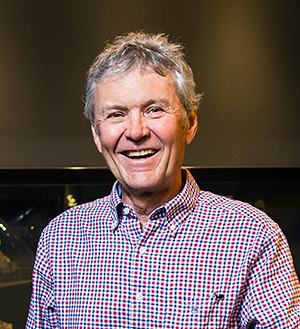
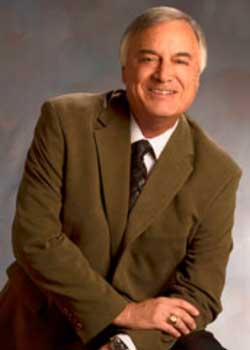
Harry Y. McSween is a Professor in the Department of Earth and Planetary Sciences at the University of Tennessee, Knoxville, with 36 years of service. He has held significant leadership roles including twice serving as Department Head and twice as Interim Dean of the College of Arts & Sciences. His professional affiliations include President-Elect of the Geological Society of America, former President of the Meteoritical Society, and advisory positions for NASA and the National Research Council.
His educational background includes:
- B.S. Chemistry from The Citadel
- M.S. Geology from University of Georgia
- Ph.D. Geology from Harvard University
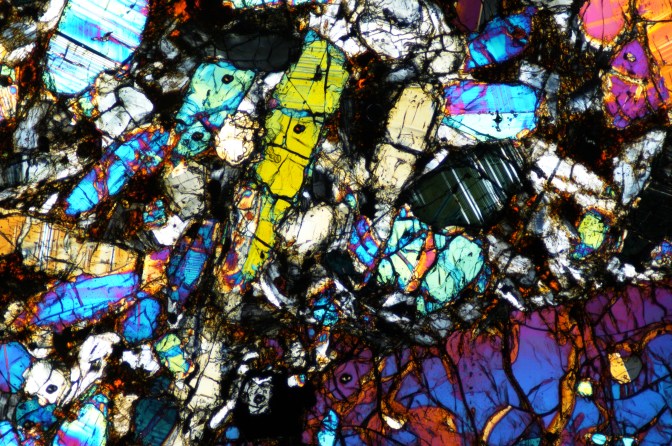
Professor McSween's research focuses on planetary materials and processes, specializing in meteorite analysis (chondrites, Martian meteorites, HED groups), asteroid thermal evolution modeling, and spacecraft data interpretation. His NASA-funded investigations examine solar system formation through:
- Petrogenesis of extraterrestrial rocks
- Remote sensing mineralogy
- Impact cratering dynamics
- Planetary differentiation processes
His publication record shows strong emphasis on Martian geology and Vesta asteroid studies, with recent work dominated by Dawn mission findings. Articles frequently integrate laboratory meteorite analyses with orbital spectroscopy, revealing asteroid differentiation histories and impact processes.
Significant scientific awards include:
- Leonard Medal (Meteoritical Society)
- J. Lawrence Smith Medal (National Academy of Sciences)
- Whipple Award (American Geophysical Union)
- Fellow of American Academy of Arts and Sciences
- SEC Professor of the Year (2013)
- Asteroid 5223 McSween namesake
He has supervised numerous graduate students and postdoctoral researchers in meteoritics and planetary geochemistry projects. His research has been continuously funded by NASA for over three decades, supporting analytical work and mission participation. While no dedicated lab is mentioned, he leads research groups focused on planetary materials analysis.