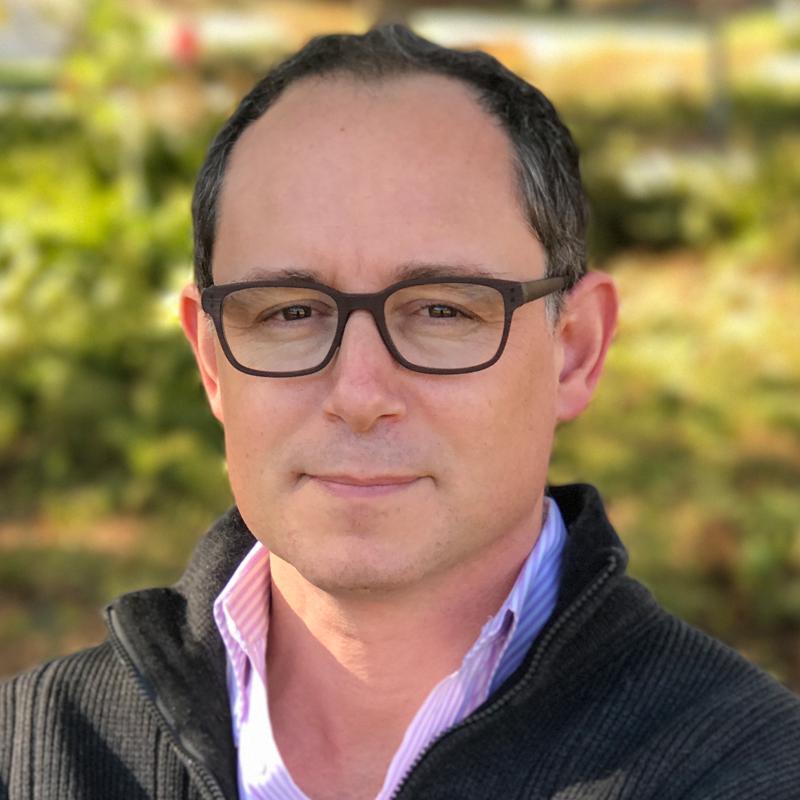
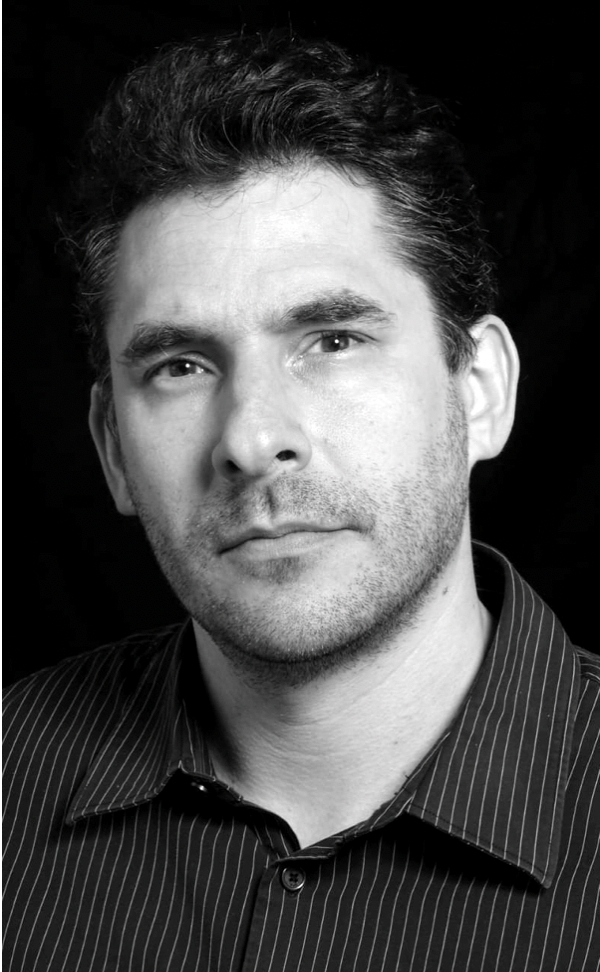
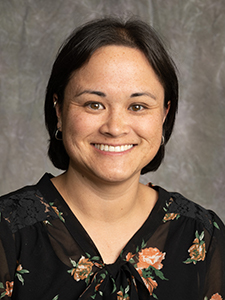
Sanne Cottaar is a researcher at the Department of Earth Sciences, University of Cambridge, specializing in seismology and deep Earth structure. Her work integrates seismic waveform analysis, mineral physics, and geodynamic modeling to investigate mantle plumes, ultra-low velocity zones (ULVZs), and core-mantle boundary dynamics. Key research areas include: Seismic imaging of deep Earth heterogeneity Core-mantle boundary and mantle transition zone structure Multidisciplinary approaches with mineral physics and geodynamics Development of seismic tools like BurnMan for thermodynamic modeling Public engagement through educational initiatives such as Deep Earth Explorers Her recent publications focus on mapping ULVZs using Sdiff and Pdiff waves, resolving mantle plume origins, and benchmarking seismic methods against geodynamic constraints. She actively supervises doctoral projects in seismology and deep Earth dynamics.
Emanuele Di Lorenzo is a Professor in the Department of Earth, Environmental, and Planetary Sciences at Brown University. Previously, he held roles as Professor and Director (2016–2022) of the Ocean Science and Engineering program at Georgia Tech, which he co-founded. He is the Chairman and co-founder of Ocean Visions, a non-profit transforming academic research into actionable ocean-based climate solutions, and co-leads the United Nations Ocean Decade Collaborative Center on Ocean-Climate Solutions. He earned a Ph.D. in ocean and climate sciences from Scripps Institution of Oceanography (2003) and has been at Brown since 2022. Education: B.S. in Marine Environmental Sciences, University of Bologna (1997) Ph.D. in Climate Sciences, Scripps Institution of Oceanography (2003) Research focuses on ocean climate dynamics, coastal systems, and solutions to climate challenges. Key areas include Large-scale ocean and climate modeling, Impacts of climate variability on marine ecosystems, Social-ecological-environmental systems, Coastal resilience strategies. He leads initiatives like the Ocean Vital Signs Network and the Global Ecosystem for Ocean Solutions (GEOS), fostering international collaboration. Publications emphasize marine heatwaves, Pacific decadal variability, and coastal flooding. Awards include the PICES SB Award (2013) and Georgia Tech’s Class of 1964 Teaching Award (2012). He advises over 36 Ph.D. students in ocean science programs and co-founded the OCE Data Science High School Internship to advance STEM equity. Labs/Teams: Leads the Di Lorenzo Research Group and collaborates with Woods Hole Oceanographic Institution. Current efforts prioritize equitable ocean solutions, coastal inundation modeling, and climate adaptation frameworks.
Mikael Wiberg is full Professor of Informatics at Umeå University, Sweden, where he leads research groups in Design Informatics and Digital Interaction & Design. He is co Editor-in-Chief of ACM Interactions and has held chaired and guest professorships at Uppsala, Södertörn and Chalmers universities. His work sits at the intersection of human-computer interaction, materiality, architecture and emerging technologies. Education: PhD in Informatics, Umeå University, 2001 Docent (Associate Professor) in Informatics, Umeå University, 2004 Research interests revolve around interactivity, mobility, materiality and architecture . Wiberg coined the notion of “materiality of interaction” to study how digital resources merge with physical materials, spaces and artefacts. Recent strands include more-than-human design, human-building interaction, autonomous systems UX, and social justice in HCI, all interrogating how interactive technologies shape—and are shaped by—human and non-human actors. Across more than two decades he has published in top venues such as ACM TOCHI, Design Issues, Int. Journal of Design, Human-Computer Interaction journal and the magazine ACM Interactions . His 2018 MIT Press monograph The Materiality of Interaction consolidates his theoretical stance and has become a touchstone for architectural and material HCI discourse. Editorial & scientific awards: Co Editor-in-Chief, ACM Interactions (2019-) Member, Royal Skyttean Society (Kungliga Skytteanska Samfundet) Board member, Professors’ Association, Umeå University He currently leads interdisciplinary projects on digital heritage archives, autonomous vehicle experiences for children with intellectual disabilities, and sustainable interaction infrastructures. Although the provided text does not enumerate specific grants or doctoral students, his continuous project leadership and editorial roles evidence sustained funding and supervisory activity. Wiberg directs the Design Informatics research environment and is a core member of Umeå’s Internet of Things group, fostering collaboration between informatics, architecture, design and social sciences. His overarching agenda asks how interactive technologies can support just, sustainable and aesthetically rich futures at architectural and urban scale.
Prof. Florian Zaussinger is a faculty member at the Faculty of Applied Computer and Life Sciences at Mittweida University of Applied Sciences. His research focuses on thermal convection, fluid dynamics, and numerical simulations in both geophysical and astrophysical contexts. He has contributed extensively to studies on microgravity experiments, including the GeoFlow and AtmoFlow projects conducted on the International Space Station (ISS). University: Mittweida University of Applied Sciences Faculty: Applied Computer and Life Sciences Department: Mathematics Contact: +49 3727 58-1381 | florian.zaussinger@hs-mittweida.de | Building 6, Room 6-131 His research involves advanced numerical modeling of complex fluid systems, including spherical convection, dielectric heating, and double-diffusive processes. He has developed and applied computational tools like the ANTARES code to simulate convection in DA white dwarfs, planetary atmospheres, and Earth's mantle. His work bridges theoretical fluid mechanics with experimental validation in space-based microgravity environments. Recent publications highlight his expertise in thermo-electrohydrodynamic convection, planetary fluid flow analysis, and microgravity-induced instabilities. While the scraped data does not list scientific awards or students directly, his academic profile emphasizes interdisciplinary collaboration with engineering and life sciences, particularly in applied mathematics for fluid dynamics and experimental data processing.
Kristen L. Rasmussen is an Associate Professor in the Department of Atmospheric Science at Colorado State University (CSU), affiliated with the Walter Scott, Jr. College of Engineering. She holds a Ph.D. (2014) and M.S. (2011) in Atmospheric Sciences from the University of Washington, and dual B.S. (Meteorology and Mathematics) and B.A. (Music) from the University of Miami (2007). Before joining CSU in 2016, she was an Advanced Study Program Postdoctoral Fellow at NCAR (2015–2016). Her research focuses on convective storms, cloud-climate interactions, mesoscale meteorology, and hydrometeorology. Key interests include analyzing extreme rainfall, tropical convective systems, and the impacts of climate change on storm dynamics. She leads the Rasmussen Group, which investigates topics like the NASA INCUS satellite mission, subtropical storms in South America, and climate modeling. Received awards such as the 2015 AMS Mesoscale Processes Conference Very Early Career Award and the 2011 NASA Earth System Science Graduate Fellowship. Active in field campaigns like RELAMPAGO in Argentina and PRECIP in Taiwan/Japan. Teaches courses on synoptic and mesoscale meteorology, hydrometeorology, and mountain meteorology. Her group includes researchers and students studying topics ranging from convective storm environments to stratospheric aerosol injection impacts. Ongoing projects include the INCUS mission and climate projections for extreme precipitation in the U.S. Midwest.
Dr. Daniel T. Dawson II is an Associate Professor of Atmospheric Science at Purdue University's Department of Earth, Atmospheric, and Planetary Sciences (EAPS). He leads the STorMLab (Storm and Tornado Modeling Laboratory), focusing on severe convective storm dynamics, tornado physics, and improving numerical prediction of severe weather. He holds a Ph.D. from the University of Oklahoma (2009) and B.S. from Purdue University (2002). His research integrates observational data from field campaigns like VORTEX2 and VORTEX-SE with advanced numerical modeling, particularly using EnKF radar data assimilation techniques. Education: Ph.D., University of Oklahoma, School of Meteorology (2009) M.S., University of Oklahoma, School of Meteorology (2004) B.S., Purdue University, Earth and Atmospheric Sciences (2002) His research interests include storm-scale microphysics, radar observations, and the role of surface drag in tornadogenesis. He collaborates with the Weather Radar Research Laboratory led by his spouse, Dr. Robin Tanamachi, and co-teaches the EAPS 59100 Severe Storms Field Work course, emphasizing hands-on storm chasing and forecasting. Dawson has extensive experience with the National Severe Storms Laboratory (NSSL), the Cooperative Institute for Mesoscale Meteorological Studies (CIMMS), and the National Center for Atmospheric Research (NCAR). His work addresses challenges in Warn-on-Forecast systems and has contributed to understanding the geographic controls of severe storm environments. He leads Purdue's mobile disdrometer operations in field campaigns like PERiLS and VORTEX-SE, emphasizing real-time data collection for improving storm prediction models. Labs/Teams: STorMLab (Purdue), Weather Radar Research Laboratory (collaboration), and the Purdue TriPIPS and XTRRA radar initiatives.
Edwin P. Gerber is a Professor of Mathematics and Atmosphere/Ocean Science at New York University’s Courant Institute of Mathematical Sciences. He holds joint affiliations with the Department of Environmental Studies and the Center for Data Science. His research focuses on understanding climate variability and dynamics, particularly the role of stratosphere-troposphere interactions and simplified climate models. Gerber earned his Ph.D. in Applied and Computational Mathematics from Princeton University (2006), following an M.A. (2002) and B.S. in Mathematics and Chemistry from the University of the South (2000). His work bridges theory and Earth System models, investigating topics like the Brewer-Dobson Circulation, sudden stratospheric warmings, and ozone layer dynamics. Key achievements include the DynVarMIP initiative for CMIP6 and contributions to gravity wave parameterization. Gerber has received awards such as the Friedrich Wilhelm Bessel Research Award (2021) and Hertz Foundation Fellowship (2000-2005). His research has been supported by grants from NSF, NASA, and international collaborations. Gerber’s lab explores machine learning applications in climate modeling, including data-driven parameterization of gravity waves. He serves as Associate Editor for the Quarterly Journal of the Royal Meteorological Society and has led initiatives like the SPARC Reanalysis Intercomparison Project (S-RIP). His recent studies address tropical teleconnections, stratospheric ozone responses to global warming, and extreme event predictability. Gerber’s teaching includes courses on atmospheric dynamics, climate change, and differential equations. He emphasizes interdisciplinary approaches, integrating theory, computation, and observational data to advance climate science understanding.
Matthew Dzieciuch is a Researcher at the Institute of Geophysics and Planetary Physics, part of the Scripps Institution of Oceanography at the University of California San Diego. His work focuses on ocean acoustic tomography and climate monitoring through ocean acoustics. He holds degrees from the University of Michigan (B.S., M.S., PhD) and has contributed to major Arctic and global ocean acoustics research initiatives. Key research areas include acoustic propagation in polar regions, Arctic climate change impacts, and the integration of acoustic networks into ocean observing systems. He has led and participated in large-scale experiments like CANAPE (Canada Basin Acoustic Propagation Experiment) and CAATEX (Coordinated Arctic Acoustic Thermometry Experiment), focusing on tomographic arrays, glider-based acoustics, and long-range acoustic measurements. His publications emphasize acoustic travel-time analysis, sea ice dynamics, and the interplay between environmental conditions and sound transmission. Dzieciuch collaborates with institutions globally to advance acoustic-based oceanography and climate monitoring, leveraging autonomous platforms like gliders and buoyancy-driven vehicles.
Giovanni Bettini is a Senior Lecturer at Lancaster Environment Centre, Lancaster University, serving as Associate Director of the Centre for Mobilities Research (CeMoRe) and Geography and Environment Pathway Lead for the ESRC North West Doctoral Training Centre. His interdisciplinary work bridges Political Geography, Environmental Humanities, and Critical Development Studies with a focus on climate-environmental governance. His research centers on three interconnected domains: human migration amid climate change, Anthropocene politics and green movements, and digital environmental governance. He investigates how planetary-scale environmental shifts generate new governance modes, subjectivities, and resistance forms, with particular emphasis on digital technologies' role in reshaping adaptation, resilience, and justice. Current projects include the Leverhulme-funded 'Digital Climate Futures', examining algorithmic climate adaptation through decolonial and justice lenses. Bettini supervises PhD candidates including Elisabeth Olsen in Critical Geographies, with expertise in qualitative studies on climate migration and digital governance. His grant leadership spans Horizon2020 CLISEL and COST Action IS1101 on climate migration. Teaching includes Perspectives on Society and Environment (convener), Climate and Society, and Geography of the Majority World. Active in Lancaster's Critical Geographies and Human Geography research groups, he contributes to 'Improving Global Stewardship' initiatives and understanding planetary change through the lens of environmental justice and decolonial theory.
Muhammad Adnan Abid is a Postdoctoral Research Assistant at the University of Oxford’s Department of Physics, specializing in Atmospheric, Oceanic, and Planetary Physics. His primary affiliation is with the Predictability of Weather and Climate research group. He holds a Researcher academic rank and is based at the Robert Hooke Building, Oxford. His research focuses on climate variability and predictability across sub-seasonal to decadal timescales, emphasizing inter-basin interactions and teleconnections between tropical oceans and extratropical regions. Key areas include ENSO teleconnections to Europe via the Indian Ocean, Indian Ocean Dipole (IOD) dynamics, and the role of inter-basin linkages in climate predictability. He utilizes intermediate-complexity models like SPEEDY-NEMO to study climate modes and their predictability. Abid is involved in the ASPECT project , which aims to integrate seasonal-to-decadal forecasts with climate projections for decision-making, particularly in European climate adaptation. He has contributed to projects like ITHACA and maintains strong ties to WCRP lighthouse activities. His work bridges climate modeling, predictability analysis, and interdisciplinary applications, with publications in journals such as Climate Dynamics , npj Climate and Atmospheric Science , and Nature Communications . His research highlights include decadal-scale Antarctic sea ice predictions and the development of climate information systems for extreme weather forecasting. Abid collaborates extensively with institutions globally and is a member of the Earth System Modeling and Climate Predictability communities. His contributions emphasize improving climate prediction accuracy for societal resilience against extreme weather and climate shifts.
Javid Bayandor serves as Associate Professor in the Department of Mechanical and Aerospace Engineering at the University at Buffalo's School of Engineering and Applied Sciences. His research bridges theoretical aerospace engineering with practical applications in space exploration and bioinspired systems. Education: Postdoctoral Research in Aerospace Structures, The Royal Melbourne Institute of Technology (2000-2001) PhD in Aerospace Engineering, The Royal Melbourne Institute of Technology (2000) His research portfolio spans eight core areas: space mission design, collision dynamics, aerospace conceptualization, space physics, ballistics, bioinspired robotics, advanced structures, and fluid-structure interactions. This interdisciplinary approach integrates computational modeling with experimental validation to solve complex engineering problems across aerospace and biological domains. Current projects demonstrate particular strength in developing innovative solutions for extreme environments including space and underwater applications. Analysis of his 15 most recent publications (2023-2025) reveals three dominant research trajectories: (1) Space mission architectures for Mercury, Venus, and Mars featuring novel entry/landing systems; (2) Impact dynamics studies covering hypervelocity collisions, bird/drone strikes on urban air mobility vehicles, and spacecraft shielding; (3) Bioinspired flight mechanics focusing on bee and bat aerodynamics under environmental stressors. These threads consistently employ fluid-structure interaction methodologies across scales. Scientific Awards: No awards or honors were documented in the provided source material While specific student advising relationships aren't enumerated, his research scope suggests supervision of graduate students in computational mechanics, space systems, and bioinspired robotics. The publication record indicates sustained grant funding for hypervelocity impact studies, space mission design, and bioflight mechanics, though specific grant details aren't provided. His work likely connects with NASA mission development programs and urban air mobility safety initiatives. The research ecosystem appears centered around computational laboratories specializing in fluid-structure interaction modeling, with potential connections to experimental impact testing facilities and biological flight observation setups for bioinspired studies.
Professor Darryn Waugh is a leading academic at Johns Hopkins University's Department of Earth and Planetary Sciences. His research focuses on large-scale dynamics and transport in the atmosphere and oceans, addressing global environmental challenges such as stratospheric ozone depletion, climate change, and urban heat. He has expanded his work to include planetary atmospheres (e.g., Mars and Titan) and air quality, collaborating with initiatives like the Baltimore Social-Environmental Collaborative (BSEC) for equitable climate adaptation. Education: Ph.D. in Applied Mathematics, University of Cambridge, 1991 M.Sc. in Mathematics, University of Waikato, 1987 B.Sc. in Mathematics & Physics, University of Waikato, 1985 Research Interests: Waugh's work spans stratospheric and oceanic dynamics , planetary atmospheres , and urban environmental science . Recent projects include investigating the Southern Ocean's ventilation patterns, the impact of climate change on jet streams, and mitigating heat exposure in urban areas like Baltimore. His research integrates observational data, numerical models, and interdisciplinary collaborations. Recent Article Trends: Recent publications emphasize planetary polar vortices , ocean carbon dynamics , and urban climate adaptation . A key focus is linking atmospheric processes (e.g., stratospheric circulation) to surface climate impacts, with applications to environmental policy and public health. Awards and Recognition: NASA Group Achievement Awards (2001, 1998, 1995) AGU Editors Citations for Excellence in Refereeing (1999, 1995) U.K. Commonwealth Scholarship (1989–1991) Advising and Grants: Has advised over 20 graduate students, many now leading roles in academia and government agencies (e.g., NASA, NOAA). Recipient of grants from NASA, the National Science Foundation, and collaborative initiatives like the BSEC. Labs and Teams: Leads the Waugh Research Group , which operates the Baltimore Community Weather Network to monitor urban heat and air quality. Collaborates internationally on projects like the Chemistry-Climate Model Initiative (CCMI).
Ajaya Ravindran is a Visiting Professor in Meteorology at the Department of Geography, Ohio University, within the College of Arts and Sciences, USA, a position he has held since August 2024. He has previously served in significant academic and research roles including Associate Professor at Abu Dhabi Polytechnic, Visiting Scientist at New York University Abu Dhabi, and Senior Research Scientist at the Centre for Prototype Climate Modelling. His career spans institutions in Canada, Japan, India, and the United States, reflecting a globally engaged research profile. His educational background includes: PhD in Atmospheric & Oceanic Sciences, Indian Institute of Science, Bangalore (2001) M.Tech in Atmospheric Sciences, Cochin University of Science and Technology (1995) M.Sc/PGDCA in Applied Physics/Computer Applications, Gandhigram Rural University (1993) B.Sc in Physics, University College, University of Kerala (1990) Ajaya Ravindran's research centers on climate modeling and monsoon dynamics, with a focus on South Asia and the Middle East. His work investigates climate extremes, monsoon variability, the simulation of Madden-Julian Oscillations (MJO) in GCMs, CMIP model evaluation, and regional climate modeling. He explores how large-scale climate patterns like ENSO, IOD, and Atlantic Zonal Mode influence monsoon behavior and extreme weather events. His studies often combine observational analysis with high-resolution and coarse-resolution climate model simulations. The 15 most recent publications demonstrate a consistent focus on monsoon systems, tropical dynamics, and climate change impacts. They span disciplines including atmospheric science, climate modeling, oceanography, and hydrometeorology. Key themes include monsoon rainfall mechanisms, cyclone dynamics, diurnal cycles in the Maritime Continent, urban climate effects, and fog formation in arid regions. His work frequently involves collaboration with international teams and utilizes models such as WRF and GCMs. No scientific awards are explicitly mentioned in the provided text. Dr. Ravindran has taught a wide range of meteorology courses including Introduction to Meteorology, Tropical Meteorology, Atmospheric Dynamics, Numerical Weather Prediction, and Planetary Boundary Layer Meteorology. While no formal advisees are listed, his extensive publication record with junior researchers suggests active mentorship and team leadership. He has been involved in climate modeling projects funded by institutions such as New York University Abu Dhabi and the Canadian Centre for Climate Modelling. He has contributed to major research initiatives including the Centre for Prototype Climate Modelling and the NEPTUNE Canada network, indicating participation in large-scale observational and modeling efforts. His work on climate data management and simulation suggests involvement in both theoretical and applied aspects of meteorology.
Philippe Riviere is an active researcher specializing in computational modeling of coupled heat transfer phenomena, with expertise spanning radiative transfer, natural convection, and plasma dynamics. His work focuses on the intricate interactions between fluid flow and radiation in complex systems including differentially heated cavities, atmospheric re-entry scenarios, and geological formations like shallow caves. His research interests center on developing advanced numerical models for radiation-convection coupling under extreme conditions. Key areas include turbulent flow regimes in cubic enclosures, non-equilibrium radiation effects in hypersonic flows, and multi-physics interactions involving moisture transport and Joule heating. He employs sophisticated techniques like Proper Orthogonal Decomposition, Large Eddy Simulation, and reduced-order modeling to analyze thermal instabilities and energy transfer mechanisms across varying Rayleigh numbers. Analysis of his 15 most recent publications (2024-2025) reveals a dominant focus on Rayleigh-Bénard convection under radiative effects, with significant contributions to modeling atmospheric re-entry phenomena and plasma applications. His work consistently addresses the computational challenges of spectral radiation modeling in turbulent media, demonstrating methodological innovations in subgrid-scale modeling and spectral vanishing viscosity approaches. Scientific Awards: No awards or honors mentioned in provided publication records Advising and Grants: No student advisement information available No grant funding details provided in publication metadata Labs and Teams: No laboratory affiliations or research team structures described Collaborative work indicates connections with VKI plasmatron facility and researchers specializing in gas radiation (Soufiani, Perrin, Soucasse)
Jun Korenaga is a Professor of Earth & Planetary Sciences at Yale University, where he leads an active research group investigating fundamental questions about Earth's evolution and planetary formation processes. His work bridges geophysics, geochemistry, and planetary science to understand the dynamics that have shaped terrestrial planets throughout the solar system. Education: B.Sc. in Geophysics, University of Tokyo (1992) M.Sc. in Earth and Planetary Physics, University of Tokyo (1994) Ph.D. in Oceanography, MIT/WHOI Joint Program (2000) Postdoctoral Fellow in Mantle Dynamics, MIT (2000-2001) Miller Research Fellow in Theoretical Mineral Physics, UC Berkeley (2001-2002) Korenaga's research focuses on Earth's mantle dynamics as the central driver of planetary evolution, with particular interest in plate tectonics, early Earth environments, and comparative planetology. His approach combines physics, chemistry, applied mathematics, and statistics to solve long-standing problems in geodynamics. Current projects include the synergy of experimental rock mechanics and geodynamical modeling, physics of protoplanetary disks, early Earth geodynamics, and seismic imaging of Earth's deep interior using USArray data. Analysis of his recent publications reveals a strong focus on early planetary formation processes, particularly magma ocean solidification, tidal interactions, impact history effects on planetary evolution, and the connections between Earth's deep interior processes and surface environments. His work spans terrestrial planets in our solar system while also providing insights relevant to exoplanet studies. Korenaga actively mentors students at all levels, with current advisees including PhD candidates and postdoctoral researchers working on diverse topics from thermal convection scaling laws to exoplanet atmosphere evolution. His research group has produced numerous significant contributions to understanding mantle dynamics, planetary formation, and Earth's thermal evolution through both theoretical and observational approaches.